
Quick Take
- Scientists discovered this tiny orange fish and immediately flagged it for extinction. Find out what they saw that set off alarm bells. See the alarm bells →
- This fish has a survival trick that sounds like science fiction, though it may not be enough to save it. Discover the survival trick →
- Its entire known world fits inside ten square miles, a fact that is exactly what makes its future so precarious. Explore its tiny range →
- One event could erase this species entirely, and that event doesn't have to be dramatic to be devastating. Understand the single threat →
Deep in the winding forest streams of the Brazilian Amazon, researchers recently discovered a new species of fish that lives only in those freshwater streams. But immediately following the discovery, the research team also called for the fish to be placed on the endangered species list.
The team’s findings were just published in the journal Zoosystematics and Evolution. Learn about this new species and why it was so quickly classified as endangered.
Meet the Tiny Orange Fish
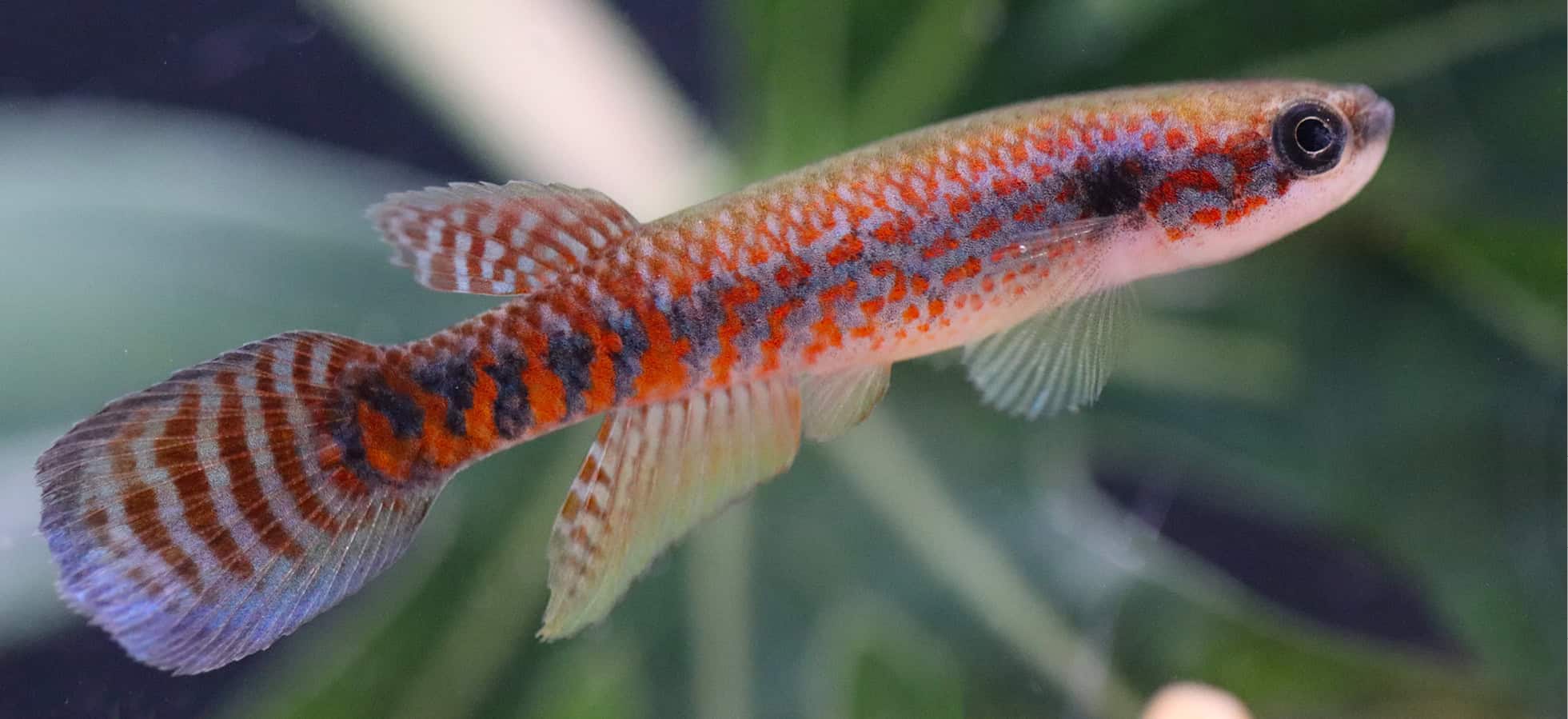
Researchers who discovered the new species named it Laimosemion laranja. Laranja is the Portuguese word for both the color orange and the fruit. It perfectly describes the discovery and also honors Laranjal do Jari, the Brazilian municipality where the discovery was made.
“We wanted to choose a name that would highlight a characteristic of the fish while also fostering a sense of connection with the people of the region where it was discovered,” lead researcher Yuri Abrantes of the Universidade Federal do Rio Grande do Norte said in a news release announcing the findings.
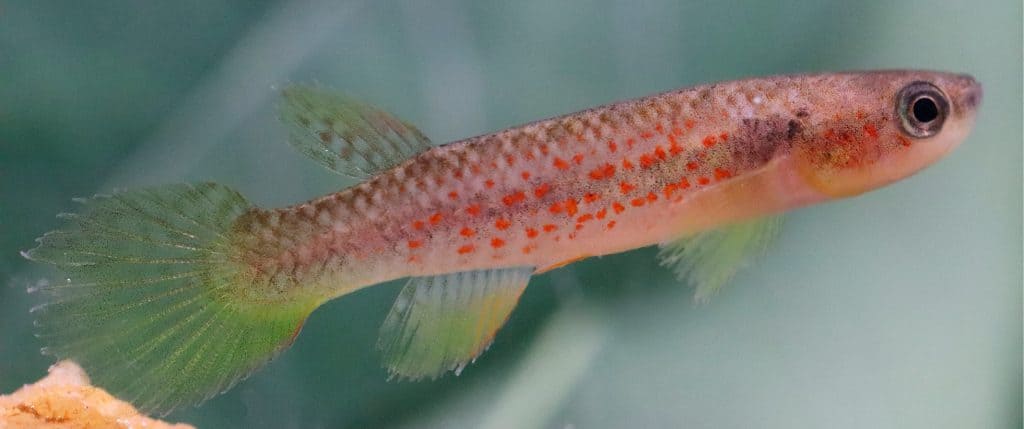
A female Laimosemion laranja, the less colorful of the species.
Males are boldly patterned with orange spots covering the front half of the body and V-shaped orange bars along the back half. These spots and bars are set against a pale gray body. The males also have bright orange and blue fins.
Females of the species are less colorful, lacking the distinctive bars found on the males. They also have fins that are yellowish or greenish.
These tiny fish are less than 1.2 inches long. They are part of the killifish family, a group of small fish found in freshwater and brackish environments across tropical and subtropical regions worldwide.
How Do Scientists Know It Is a New Species?
This new species was found during a research project investigating the evolution of life-history strategies in freshwater fishes of the family Rivulidae, Abrantes said in a news release.
“During our sampling in small rivers locally known as ‘igarapés’ in the Rio Cajari region, in Amapá state, we found this fish with a very striking coloration, which immediately caught our attention,” he said in the news release.
To the untrained eye, this new species looks very similar to other killifish already scientifically documented. The research team used body measurements, scale counts, and skeletal studies to note differences from other known killifish.
They then used mitochondrial DNA tests to determine it was, in fact, a new species. DNA testing results showed that the Laimosemion laranja differed genetically by 5.3 percent from its nearest relatives.
But the discovery came as a surprise to the research team.
“It was an unexpected moment. Initially, what most caught our attention was the impressive coloration of the males and females, which was unlike anything we had previously encountered in the study area. This sparked our admiration and a great deal of curiosity,” he said in the news release.
Killifish Have a Unique Skill
Laimosemion laranja is part of a group of Amazon killifish. Some other species within that group have developed a unique skill. Their embryos can pause development. The embryos lie dormant in damp mud until seasonal rains refill the dry pools.
Those pools are essential to the existence of killifish. Without them, there will be no future generations.
Why the New Species is Already Endangered
For the newest species, the threat to these seasonal pools could spell trouble.
The new species is currently only known to exist in three small forest pools near Laranjal do Jari. Those pools are located adjacent to the main streams running through the area.
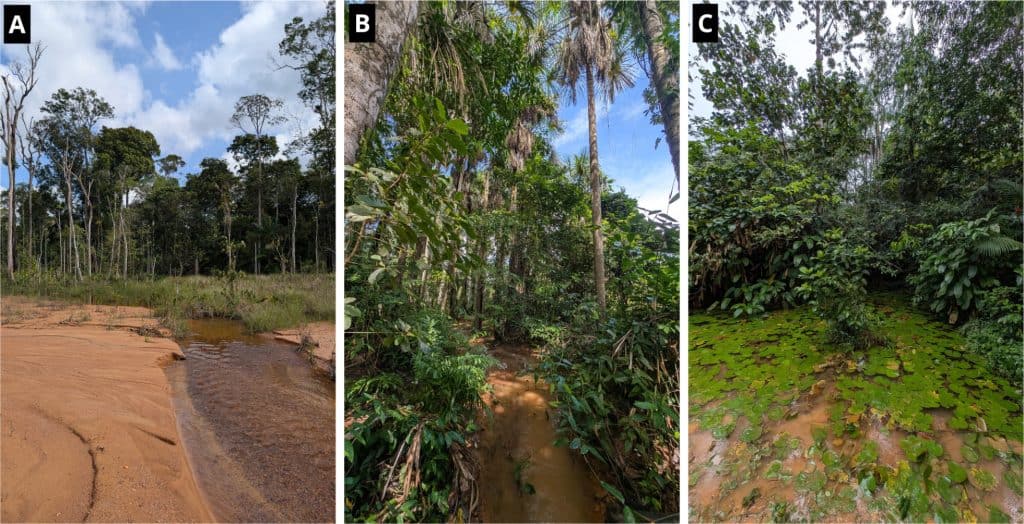
Laimosemion laranja is only known to live in three small seasonal pools within a ten square mile area.
Unfortunately, all three pools show evidence of disturbance from deforestation, mining, and urban expansion. One site shows water discoloration from mining sediment, while another is affected by plastic pollution.
The research team believes the new species’ entire range covers just under ten square miles in total. With such a small area, one disaster that wipes out one or more of the pools could also wipe out the entire Laimosemion laranja population.
It is the small area and existing threat to the three seasonal pools that caused alarm among the research team.
They believe Laimosemion laranja deserves to be classified as endangered under the IUCN guidelines. Researchers have recommended extending the boundaries of the neighboring Rio Cajari Extractive Reserve to include the new species’ known habitat. This will help protect the species for future generations.
What’s Next?
In addition to recommending the endangered classification and expansion of the nearby reserve, the research team plans to continue exploring and studying freshwater habitats across Brazil. They believe such research may reveal additional undescribed species facing similar threats to their survival.
So far, the IUCN has not added Laimosemion laranja to its endangered list.