
Quick Take
- About the size of a golf ball, this newly discovered octopus upended what scientists thought they knew about the Megaleledonidae family. See how it upended science →
- Its two-toned body is not merely a quirk but a hunting weapon that works in a fascinating way. Explore the reverse countershading →
- Scientists had only one specimen and refused to cut it open, so they found another way to prove it was a new species entirely. Discover the CT scan method →
- We're already making conservation decisions for an ocean we've barely seen, and this tiny octopus makes that problem impossible to ignore. Understand the conservation gap →
Head nearly 6,000 feet deep into the waters of the Galápagos Islands off the coast of Ecuador, and you will likely encounter species unlike any others on Earth. Scientists have recently announced the discovery of a captivating little blue octopus, about the size of a golf ball. The new species, named Microeledone galapagensis, was found by a team of researchers exploring the area near an underwater mountain during a deep-sea expedition. This incredible discovery highlights that we are making conservation decisions about ecosystems we have barely begun to explore.

The biologically diverse Galápagos Islands are home to many endemic creatures, including Darwin’s finches, giant tortoises, and marine iguanas.
©Maridav/Shutterstock.com
A Chance Encounter at 5,800 Feet
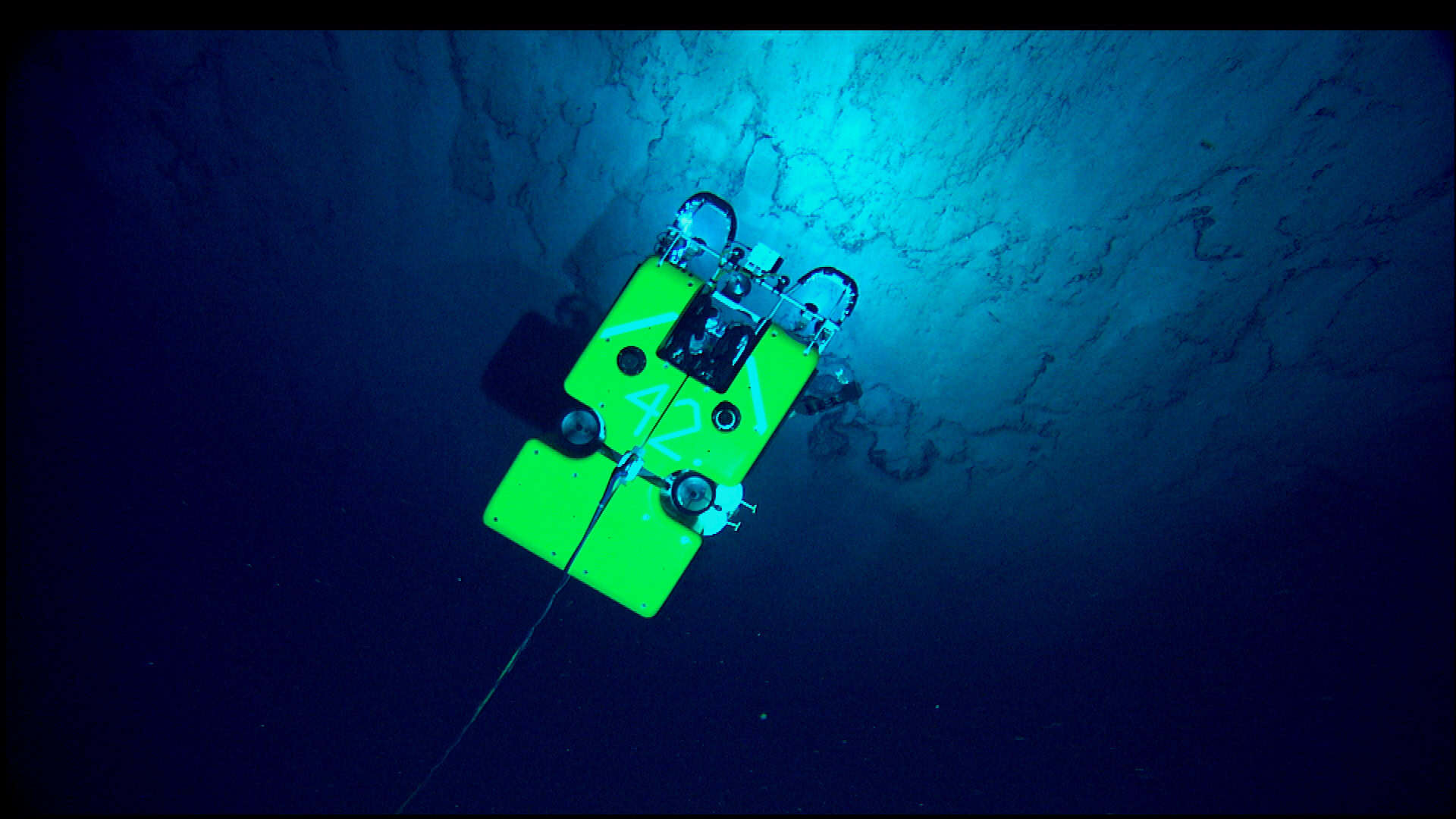
A recently published study in the journal Zootaxa identified a new species of tiny octopus, which they named Microeledone galapagensis. The specimen was collected in 2015 when deep-sea researchers were exploring the depths aboard the exploration vessel E/V Nautilus near Darwin Island in the Galápagos. The team caught footage of something unusual when the ROV Hercules was at a depth of 5,817 feet near a seamount.
A press release conveys the team’s excitement when the blue octopus was first spotted. Audio from the ROV footage captured the moment:
“He’s tiny!”
“It’s blue!”
The team collected the specimen using the ROV and captured video footage of two others that appeared to be the same species. Researchers knew they had made an exceptional find and sent the bright blue, golf ball-sized octopus to be studied at the Field Museum in Chicago.
Why This Tiny Cephalopod Shocked the Scientific World
The discovery has altered scientists’ understanding of the Megaleledonidae family of deep-sea octopuses. Previously, Megaleledonidae was thought to be a family of large-sized octopuses that are endemic to the Southern Ocean. When Janet Voight, lead author of the study, was sent a photo of the octopus, she knew she was looking at a new species. “Right away, I knew it was something really special,” she said in a statement. “I’d never seen anything like it.”
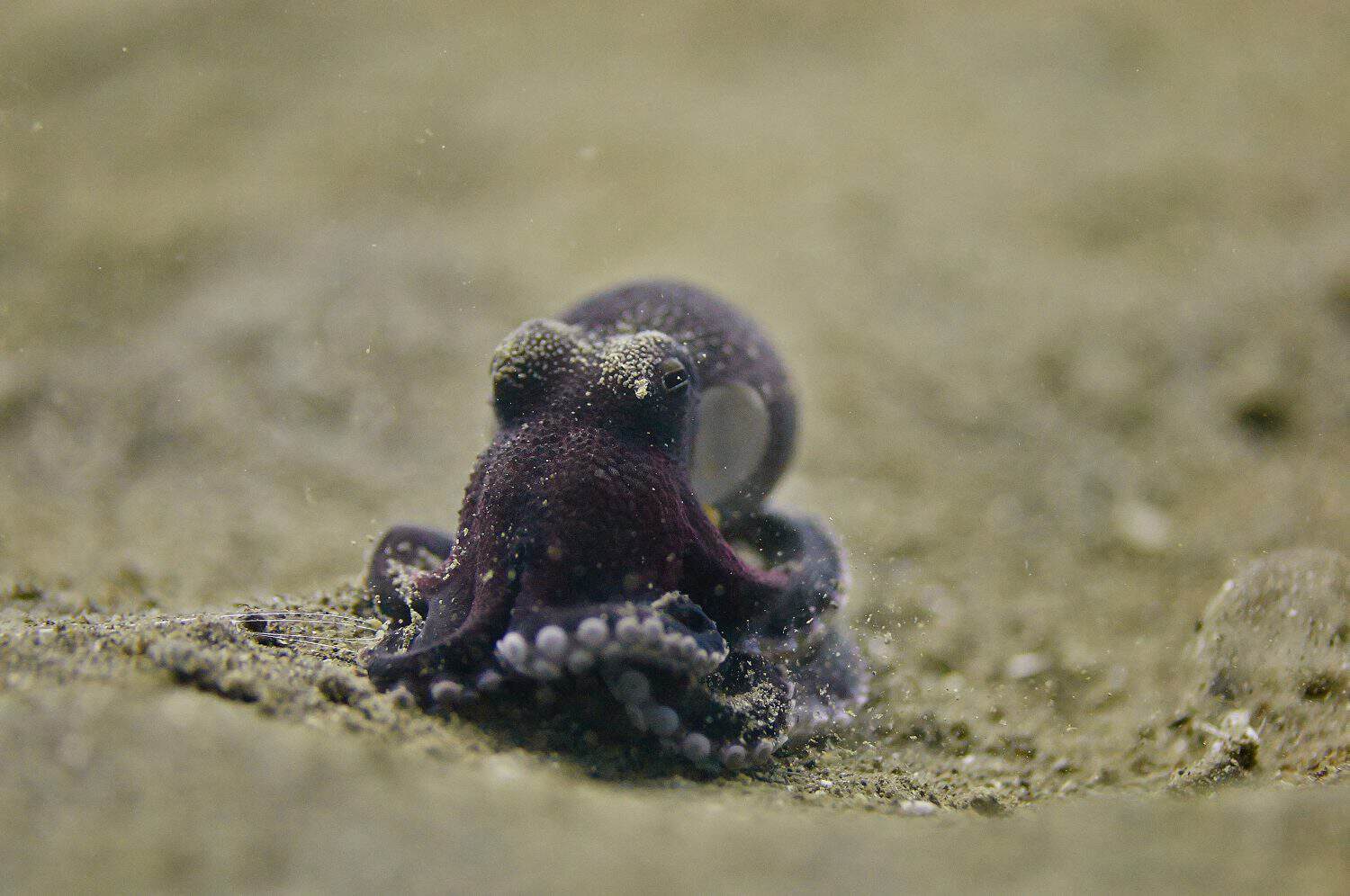
Microeledone galapagensis looks very similar to typical pygmy octopuses.
©YONG TZE WOON/Shutterstock.com
The study describes Microeledone galapagensis as a “small, squat, short-armed octopod” without an ink sac. Scientists believe the octopus uses reverse countershading as a survival tactic to catch prey and protect itself from predators. The octopus has no pigment on its back, but the inside of its mantle is a deep purple. Scientists theorize that this coloration helps the octopus hide from predators by camouflaging itself from the bioluminescent creatures it preys on. Voight told National Geographic, “When a prey is located, the octopus covers it with its dark web to make sure the light doesn’t attract predators.” Further, its light-colored back helps camouflage it from predators swimming above.
How to Peer Inside an Octopus Without a Scalpel
When Voight received the specimen, she faced a dilemma: the usual way to study a specimen is to cut into it. “When you describe a new species of octopus, you have to look at all the parts, including the mouth, the beak, and the teeth,” she explained in the release. “And to see those things, you have to cut the specimen open. We only had the one specimen, so I didn’t want to take it apart.”
The solution was to use a non-invasive technique. Researchers performed micro-CT scans, which allowed them to X-ray thin slices of the octopus’s body without making any incisions. With this information, researchers had the evidence they needed to confirm that the tiny blue octopus was a previously undiscovered species.
Why the Galápagos Deep Ocean is the New Frontier
The Galápagos Islands were created over millions of years from volcanic activity. Naturalist Charles Darwin used much of the information he learned from spending five weeks on the islands in writing his theory of evolution. They are world-famous for hosting unique wildlife found nowhere else on Earth. Galápagos penguins, the waved albatross, and flightless cormorants are just a few of the species endemic to the area. However, researchers are only beginning to discover the many unique undersea species in the region.
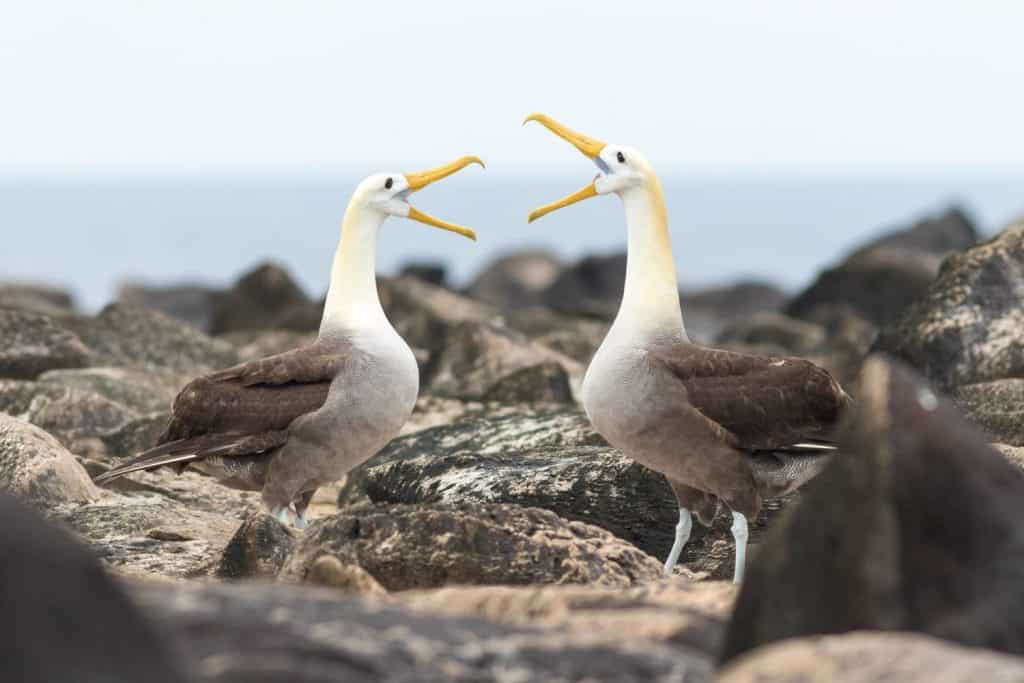
The waved albatross only breeds and nests on Española Island in the Galápagos archipelago
©Jose Rui Santos/Shutterstock.com
Salome Buglass, marine scientist and co-author of the study, said in a statement, “Discoveries like these remind us how much of the deep ocean in Galápagos remains unexplored. Every new species helps us better understand these hidden ecosystems and why protecting them matters.”
Protecting a World We’ve Barely Seen
Scientists are routinely discovering new species in deep ocean waters. According to NOAA, explorers have seen less than 0.001% of the world’s deep ocean seafloor. Every time a deep-sea research team drops an ROV into the depths, they learn something new about this fascinating realm. However, habitat loss, climate change, and pollution can cause species to go extinct before humans even become aware of their existence.