
Quick Take
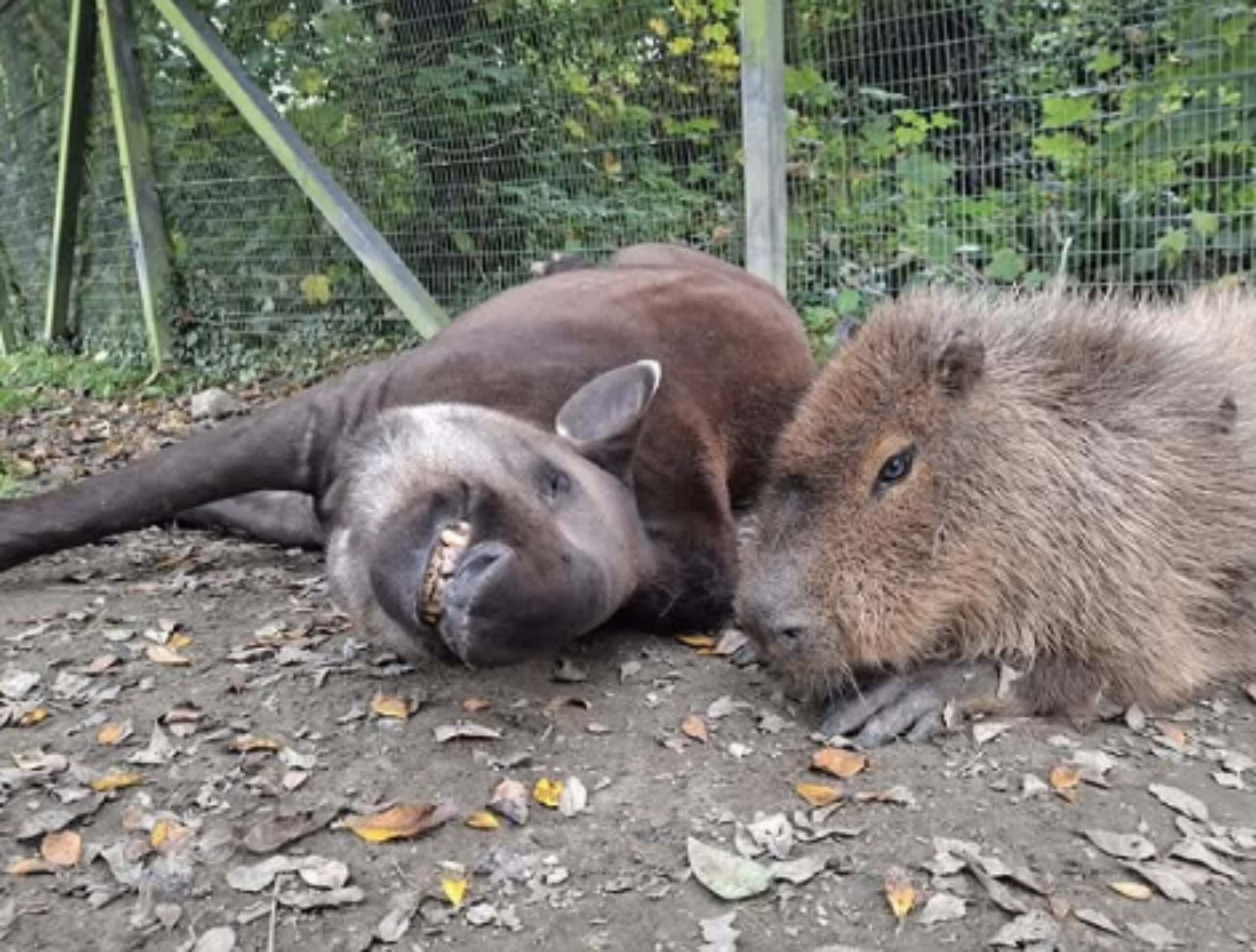
- Al and Johnson were a tapir and a capybara that became a bonded pair at the Newquay Zoo.
- Al and Johnson suffered age-related health issues, and the decision was made to humanely euthanize them.
- Al and Johnson were euthanized within hours of each other so that neither would experience loneliness.
- Tapirs and capybaras are not natural friends in the wild.
A zoo in the United Kingdom is mourning the loss of an unlikely pair. Inseparable zoo friends, a tapir and a capybara, passed away hours apart from one another. Their presence is not only missed by those who cared for and loved them, but by those in the community. Visitors and locals knew that what they witnessed between the two friends over the last several years was something special indeed.
Capybara and Tapir Bonded Pair Pass Away on the Same Day
It is never happy news when a beloved animal is euthanized due to a rapidly diminishing quality of life. When two animals, and a bonded pair at that, are lost in the same day, the situation is beyond devastating.
On February 20, 2026, the Newquay Zoo in the United Kingdom announced the passing of two beloved animals. Al, the tapir, and Johnson, the capybara, were humanely euthanized after battling age-related illnesses.
“It is with deep sadness that we announce the loss of Johnson, our nine-year-old capybara, and Al, our 20-year-old Brazilian tapir,” a statement from Newquay Zoo reads. “Following careful assessment and consultation between our veterinary and animal care teams, the difficult decision was made to humanely euthanize both animals on Friday 20 February due to age-related health decline.”
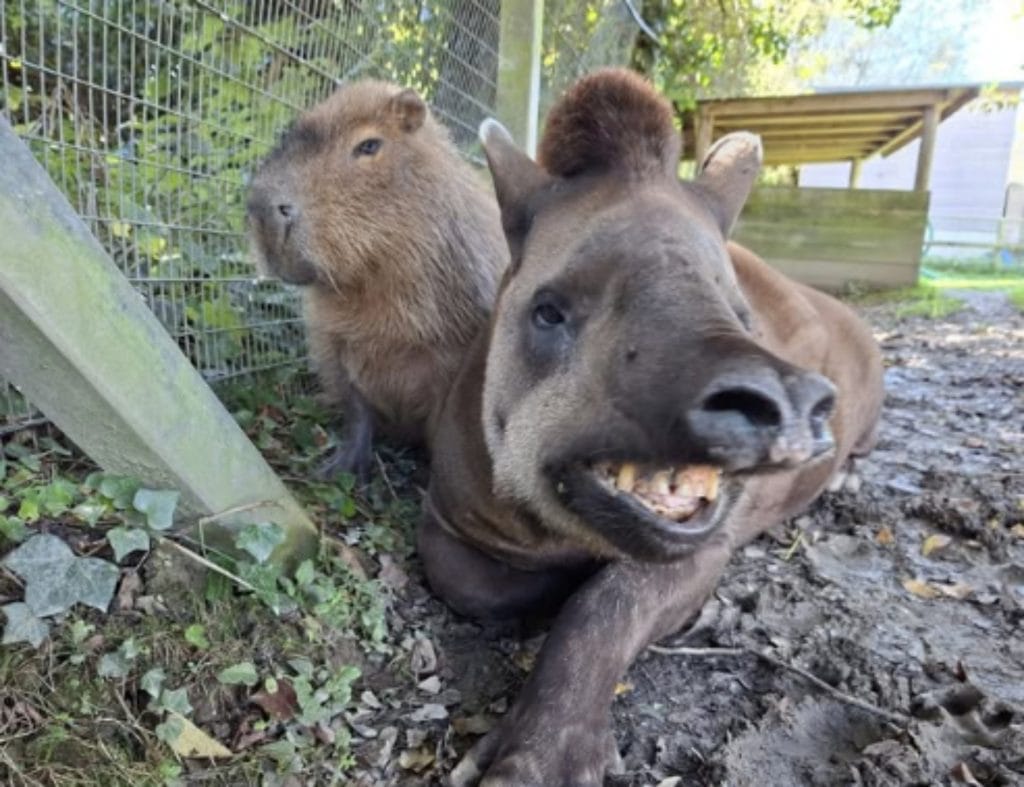
Al and Johnson were a bonded tapir and capybara who were recently euthanized at the same time due to age-related health issues.
© – Original
The statement went on to say that Al and Johnson shared a “long-standing companionship.” The two were “naturally calm” and had “developed a strong bond over the years.”
“In recent months, both Johnson and Al had been experiencing increasing health challenges that were impacting their quality of life,” the statement continues. “After careful consideration, we made the difficult decision to humanely euthanize them together, ensuring neither animal would experience isolation following the loss of a companion.”
If either Al or Johnson were left behind without their companion, it is likely that their health would have deteriorated rapidly. Consequently, the decision was made to euthanize both animals, based on both physical and mental health assessments.
Not surprisingly, visitors to the zoo were heartbroken by the news. An outpouring of love on social media has been expressed for both the capybara and tapir.
With Al and Johnson no longer residents of the zoo, it is unclear what the future holds for the South American enclosure.
How Al and Johnson Became Unlikely Friends
Al and Johnson were not raised together. The two were born in different locations and were brought to the Newquay Zoo only in the last several years. Because they were each the only individuals of their species at the zoo, the decision was made to make them enclosure mates. That decision paid off, as Al and Johnson became a bonded pair.
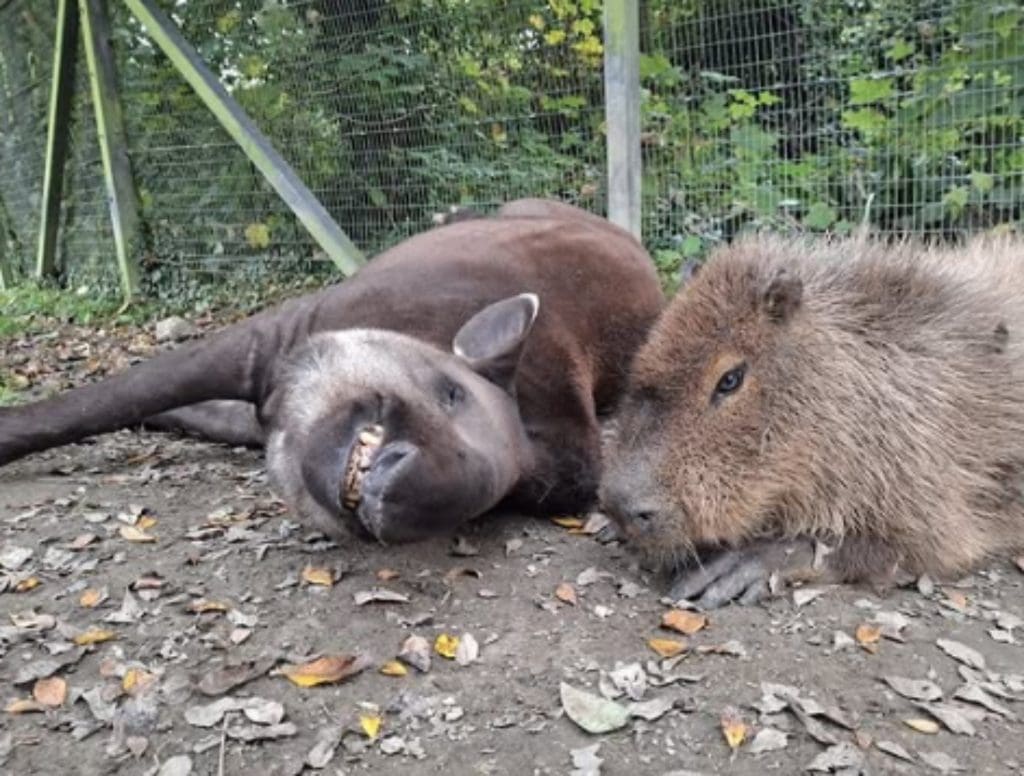
Al and Johnson became enclosure mates beginning in 2017, when Johnson was transferred to Newquay Zoo.
© – Original
Al was born in 2005 at Gdańsk Zoo. He was transferred to Newquay Zoo in 2014. Al was always very calm in his enclosure. While tapirs are solitary animals, when the opportunity came to introduce Al to another likeminded animal, Al responded well.
Johnson was born in 2016 at Chester Zoo. He was transferred to Newquay Zoo in 2017. He and Al did remarkably well in the South American enclosure. The two followed one another around, took naps together, shared meals side-by-side, and ultimately bonded. Over their close-to 10 years together, the capybara and tapir enriched one another’s lives. Because the two were so dependent on each other, zookeepers found it necessary to euthanize both on the same day once health declines were readily apparent in both animals. This way, neither animal would be forced to endure the grief of losing their only friend.
Capybaras and Tapirs Are Not Naturally Friends in the Wild
Unlike Al and Johnson, capybaras and tapirs in the wild are not friends. To be clear, they are not enemies either, but their distinct social dynamics have led the animals to stick with their own species.
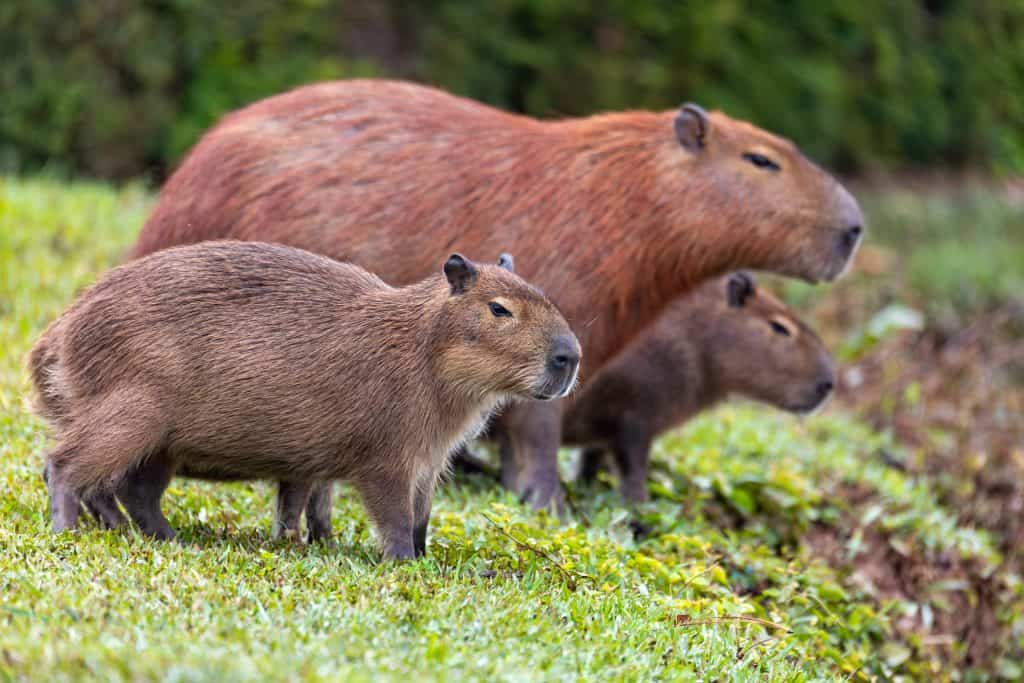
Capybaras tend to stay with their family units and do not interact with tapirs in the wild.
©Artush/Shutterstock.com
Capybaras are very social creatures. They live in small family units, foraging and playing together. Tapirs tend to be more solitary animals. Therefore, they are not often seen together in groups.
Both animals share a calm demeanor and lack of aggression, which is why it was safe to place Al and Johnson in an enclosure together. In the wild, however, any contact between tapirs and capybara would be incidental. They may cross paths while sharing a watering hole or foraging for food in the same habitat.
Tapirs and Capybaras Inhabit the Same Habitats
Despite capybaras and tapirs lacking connection in the wild, they do come into contact with one another from time to time, as the two occupy the same habitats.
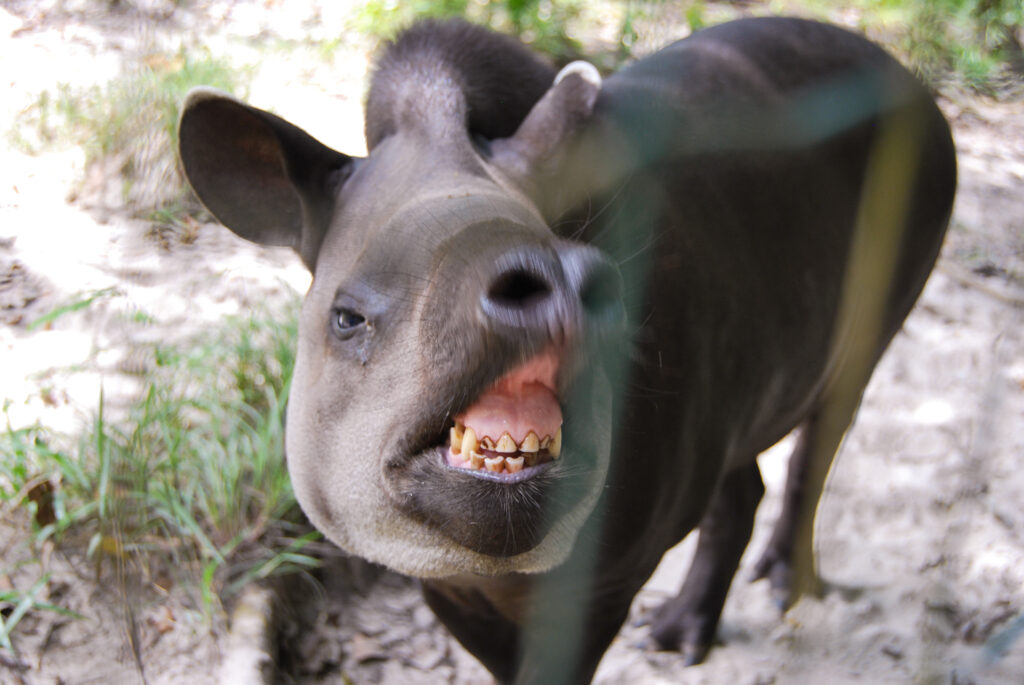
Tapirs and capybaras live in the same habitats as one another, and both are terrific swimmers.
©Margus Vilbas Photography/Shutterstock.com
Capybaras and Brazilian tapirs live in South America, specifically in Brazil, Argentina, and Paraguay (Capybaras are also located in Uruguay and Venezuela). They both enjoy habitats that are near bodies of water. Some of those habitats include:
- Savannas
- Grasslands
- Tropical forests
What makes these animals so incredible is their high adaptability to their environment, able to thrive in a range of habitats. However, the key component to their survival is a body of water. Both are excellent swimmers and semi-aquatic. Consequently, the two species are bound to cross paths. But because of their non-aggressive, peaceful nature, skirmishes are rare.
Life Expectancy for Tapirs and Capybaras
Al and Johnson were of very different ages at the time of their deaths, which raised questions regarding the life expectancy of both tapirs and capybaras.
Tapirs, which are most closely related to horses, donkeys, and zebras, have a life expectancy of 25 to 30 years, both in the wild and in captivity. Given that Al was 20 years old, zoo staff expected he had a few more years of healthy life left. Unfortunately, due to medical issues, Al’s life was cut short.
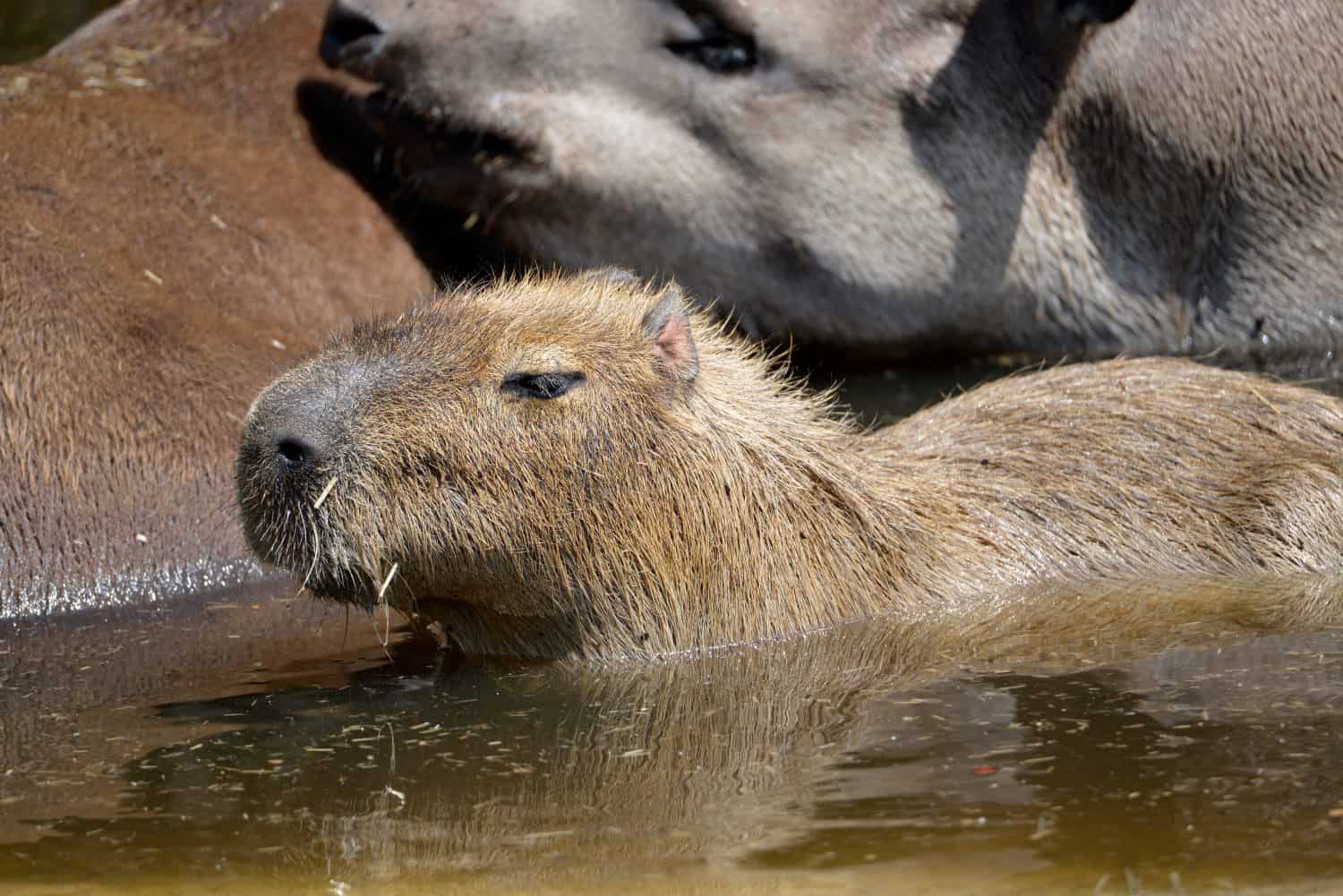
The life expectancy for tapirs and capybaras in captivity is 25 to 30 years and eight to 10 years, respectively.
©Christian Musat/Shutterstock.com
The capybara is the largest of all rodent species. In general, capybaras live only about four years in the wild. This is short lifespan is because they are prey animals. But, when in captivity, it is not unheard of for these giant rodents to live between eight and 10 years. Johnson’s lifespan fell right into this timeframe. Unfortunately, like his tapir friend, Johnson also faced health issues.
Al and Johnson touched the lives of many who saw them interact over the years, as evidenced by the outpouring of love on social media. The sweet and unlikely capybara-tapir duo will be greatly missed.