
Quick Take
- Many celebrities eventually surrendered their exotic pets to sanctuaries after realizing that wild animals cannot be safely domesticated.
- Tippi Hedren and Roy Horn experienced firsthand the inherent dangers of living with apex predators, resulting in severe injuries and a shift toward wildlife advocacy.
- For artists like Frida Kahlo, unconventional animals served as spiritual companions and creative muses.
- High-profile incidents involving celebrity pets highlight the ethical and legal conflicts that arise when exotic animals are treated as status symbols.
Whether the dreamlike flair of the Surrealists or the high-octane excess of 90s superstardom, celebrities have a long history of making domestic life anything but ordinary. However, when a house pet is a 500-pound apex predator, a rainforest mammal, or a venomous “acting coach,” the line between companionship and chaos disappears.
From the iconic to the eccentric, here is a look at the most famous — and occasionally dangerous — animals to ever live among the rich and famous.
A Chimp in the Limelight
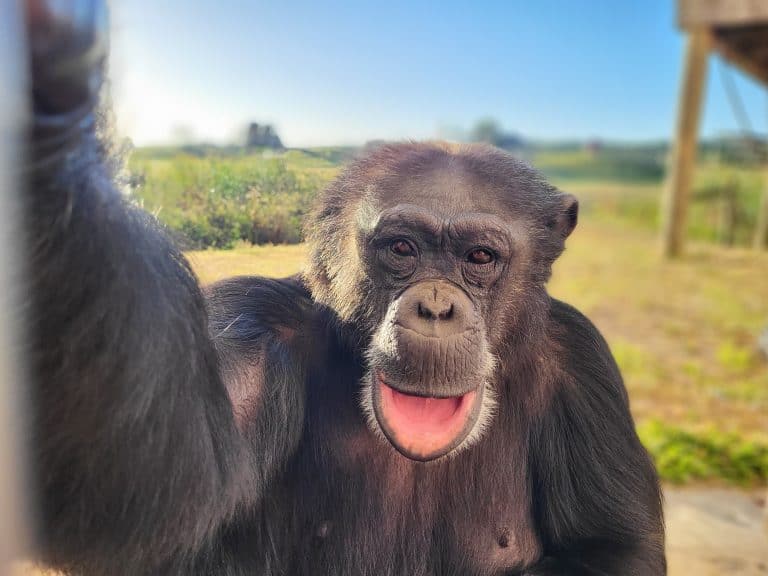
No list of celebrity pets is complete without Bubbles, the most famous chimpanzee in history. Born in 1983 and adopted by Michael Jackson as an infant, Bubbles became the ultimate symbol of 1980s celebrity eccentricity.
Raised more like a child than an animal, Bubbles lived at the Jackson family home and later the Neverland Ranch. He reportedly slept in a custom-made crib, was toilet-trained, and ate at the dining table. Bubbles was Jackson’s constant companion, famously moonwalking and joining the world tour in Japan. From custom outfits to music video cameos, Bubbles became an essential part of the Jackson brand.
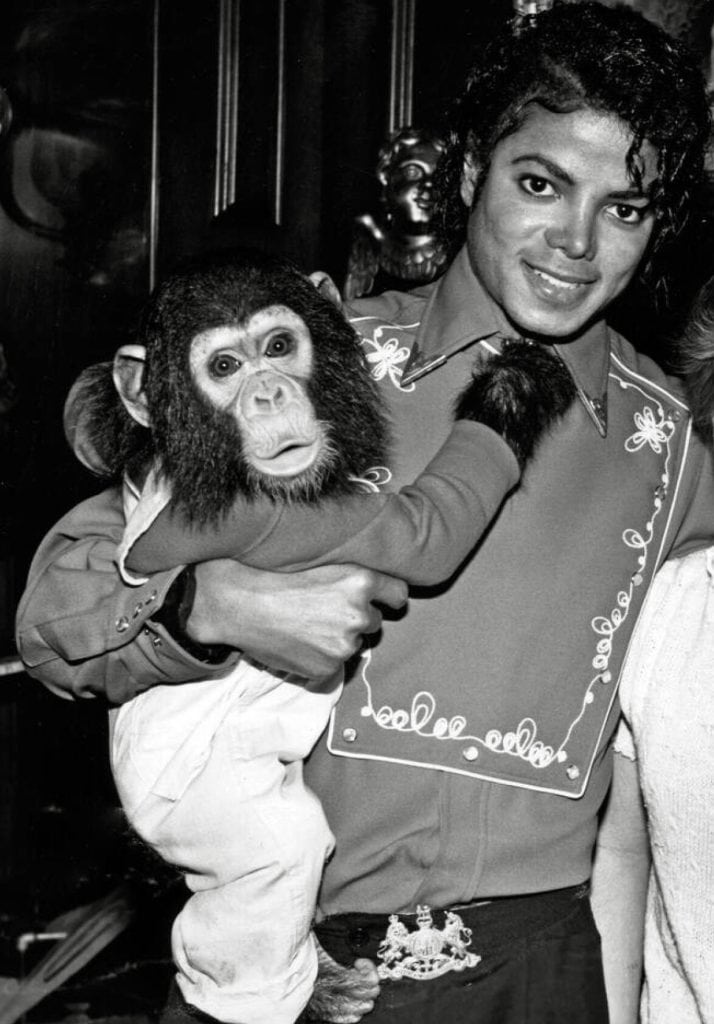
Bubbles now lives in a sanctuary in Florida.
©United Press International / Public domain / Wikimedia Commons – Original / License
As Bubbles reached adulthood, his 185-pound frame and natural strength made domestic life impossible. In 2005, he was moved to the Center for Great Apes in Florida to live in a specialized sanctuary. Bubbles is now in his 40s, having spent about two decades in a naturalistic environment. Once the world’s most photographed animal, he is now camera-shy, gentle, and a dignified leader. He spends his days painting and relaxing with his companions, Oopsie and Boma.
Nicolas Cage’s Macabre Menagerie
Nicolas Cage doesn’t just keep pets; he collects “entities.” The Oscar winner views his private menagerie as spiritual guides and “acting coaches” who help shape his eccentric on-screen presence.
Cage once housed two albino king cobras, Moby and Sheba. Rather than fearing their venom, he used them as inspiration for his role in Ghost Rider: Spirit of Vengeance, mimicking their rhythmic swaying to develop his character’s physicality. However, following neighborhood concern over the venomous snakes, Cage donated them to a zoo.
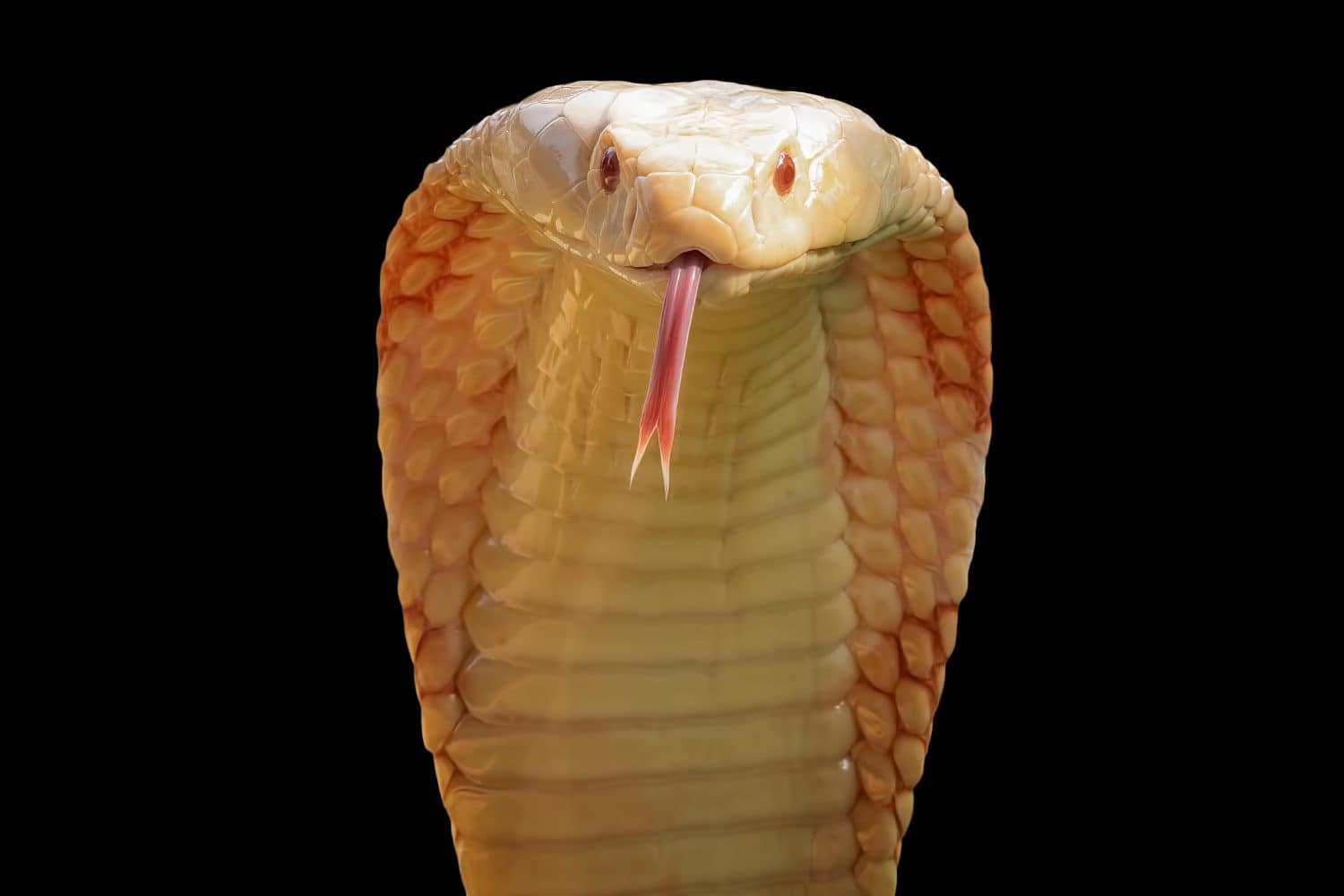
Moby and Sheba were albino king cobras, like the one pictured here.
©Kurit afshen/Shutterstock.com
Cage’s most unusual acquisition was Harvey, a rare two-headed snake. To feed this snake, Cage famously used a spatula to separate the heads to stop them from fighting over the same mouse. Later, Cage acquired a crow named Hoogan, who lived in a custom geodesic dome. The bird is well-known for his biting sense of humor and reportedly screams an obscenity at Cage whenever he leaves the room. Cage finds the insults endearing, noting that the bird’s “Gothic” personality perfectly mirrors his own.
Tippi Hedren’s Apex Predators
While most stars choose designer dogs as pets, The Birds actress Tippi Hedren shared her 1970s Sherman Oaks home with a pride of 400-pound lions. This living experiment centered around Neil, a fully grown lion treated as a family member. Neil roamed the house freely, lounged on the living room rugs, and even slept in the bed of Hedren’s teenage daughter, Melanie Griffith.

Tippi Hedren still lives on the Shambala Preserve in California.
©Larry Bessel, Los Angeles Times / CC BY 4.0 / Wikimedia Commons – Original / License
This unusual lifestyle led to the 1981 film Roar, a decade-long production involving over 100 untrained big cats. Famously known as the “most dangerous movie ever made,” the set was notoriously violent, resulting in 70 documented injuries. Hedren herself suffered a fractured leg and a neck bite. Her daughter, Griffith, required facial reconstructive surgery and 50 stitches after a mauling. Hedren now calls the decision to house lions near her daughter “stupid beyond belief.” Shifting from possession to protection, she founded the Shambala Preserve in 1983 and is now a leading advocate against private exotic ownership.
Mike Tyson’s Heavyweight Cats
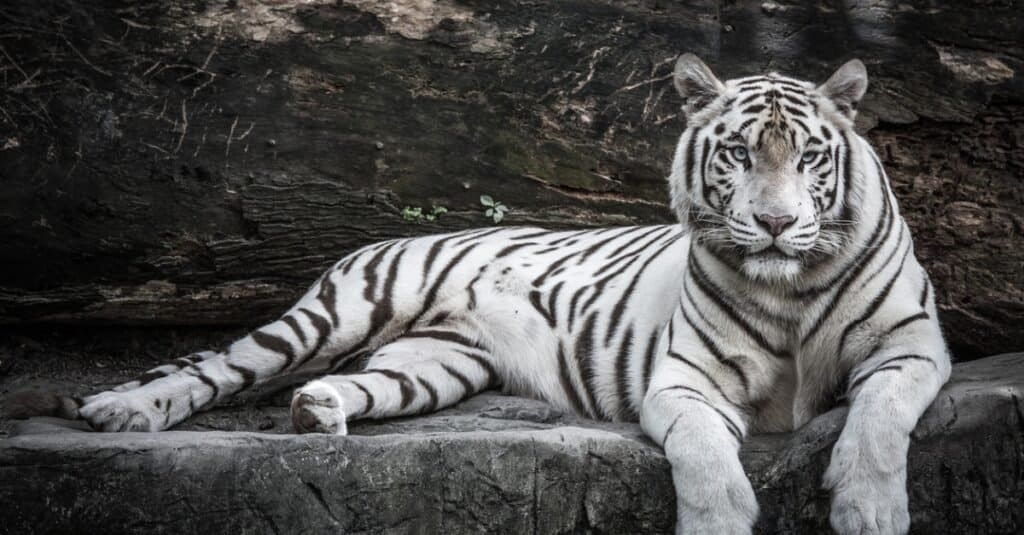
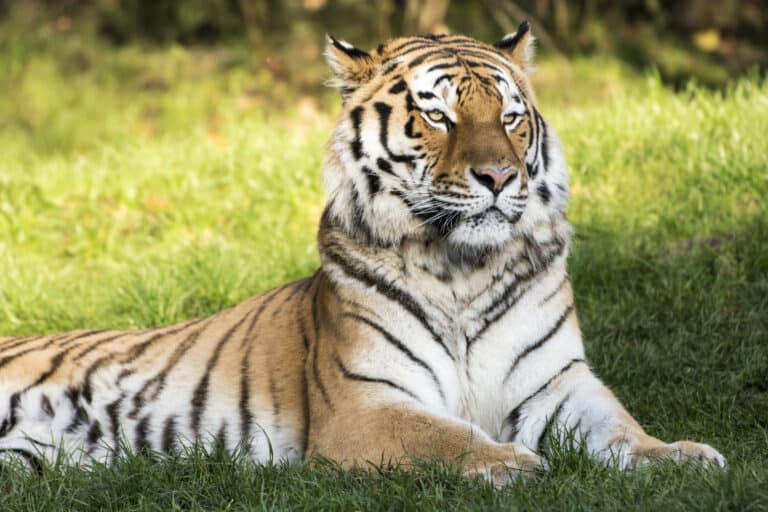
Mike Tyson’s tigers were white Bengals, like the one pictured here.
©w1snu.com/Shutterstock.com
In the 1990s, the ultimate symbol of Mike Tyson’s ego and excess was the heavyweight champion walking his 500-pound Bengal tigers on gold chains. Tyson claims that while he was incarcerated in the early ’90s, he reportedly traded a luxury vehicle for two white Bengal cubs. Upon his 1995 release, he welcomed Kenya and Storm, later adding a third male named Boris.
Tyson spent approximately $4,000 per month to feed his tigers. He wrestled with the cats and formed an intense — and high-risk — bond with Kenya, who slept with him every night. However, the luxury fantasy ended when a woman trespassed into the tiger enclosure and was attacked by Kenya. Tyson reportedly paid $250,000 to settle the legal fallout and eventually surrendered the cats to a sanctuary. He has since been vocal about his mistake and admitted that wild cats are dangerous and cannot be tamed.
A Socialite’s Rainforest Scandal
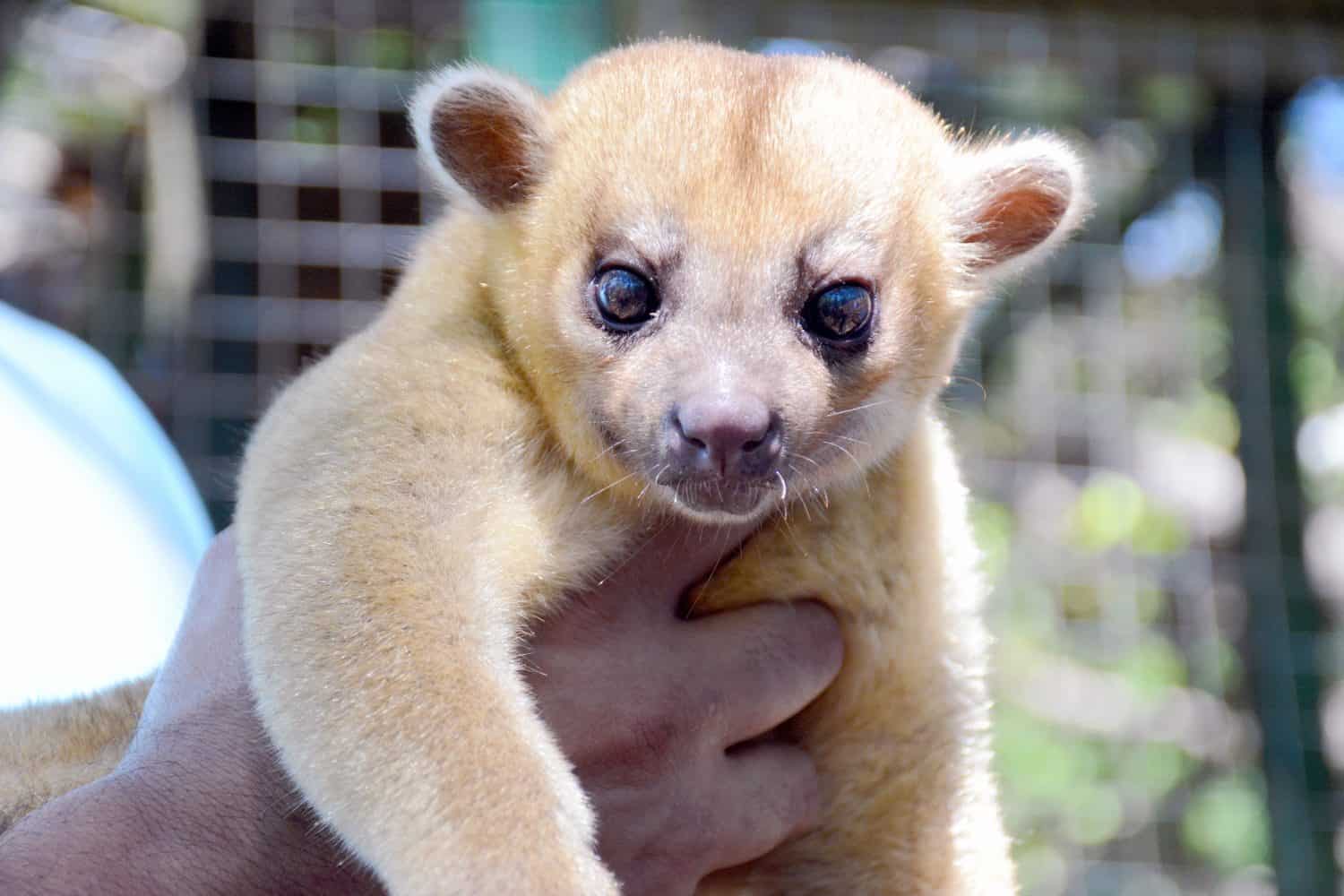
In 2006, Paris Hilton briefly traded her signature Chihuahuas for a kinkajou named Baby Luv. This small, nocturnal rainforest mammal — a relative of the raccoon — quickly became the most controversial pet of the mid-2000s.
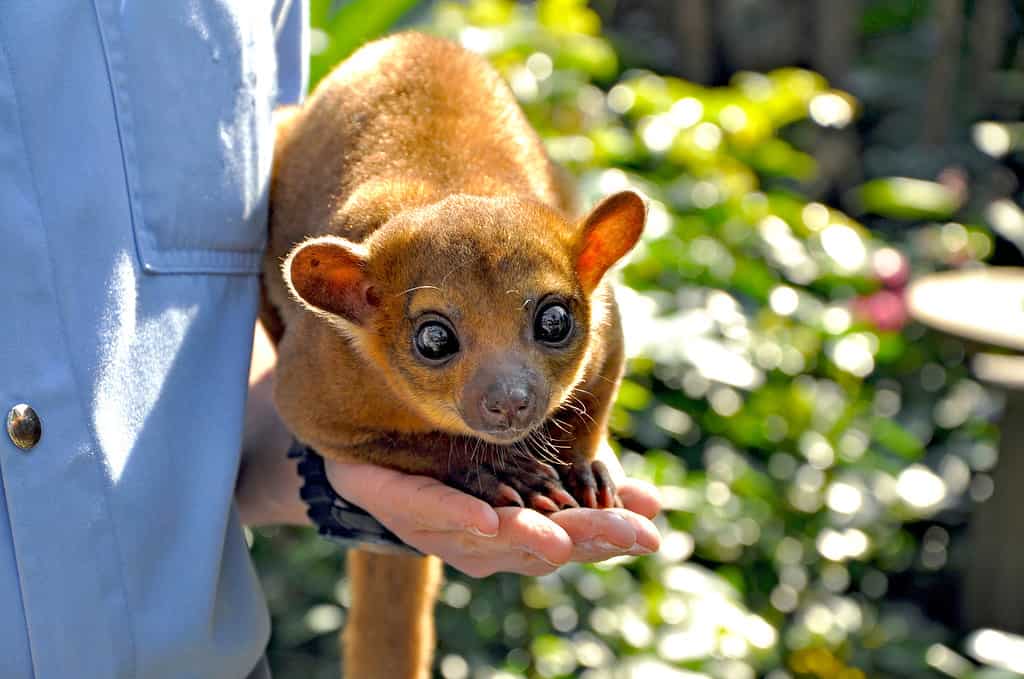
Following the bite and intense media scrutiny, Hilton rehomed Baby Luv.
©Lina Shatalova/iStock via Getty Images
The honeymoon phase between the “Queen of the Simple Life” and her exotic companion ended abruptly at 3:00 AM on a Tuesday. Baby Luv became agitated and bit Hilton on her left arm. The incident resulted in an emergency room visit for a tetanus shot and sparked immediate public outcry. Wildlife experts condemned Hilton’s choice of pet, noting that her hectic, high-fashion celebrity lifestyle is the polar opposite of a kinkajou’s quiet, nocturnal needs. Despite their “cute” appearance, kinkajous also have sharp teeth and a powerful ‘fight-or-flight’ reflex that makes them ill-suited for domestic life.
Self-Portraits and Spider Monkeys
For Mexican artist Frida Kahlo, animals were more than companions — they were her lifeline. At her home, Casa Azul, she curated a menagerie that provided comfort during her lifelong physical suffering and became central to her creative process.
After a tragic accident left her unable to have children, Kahlo’s pets — especially her spider monkeys, like Fulang-Chang — became her surrogate family. In her self-portraits, Kahlo often depicted monkeys with their arms wrapped protectively around her neck.
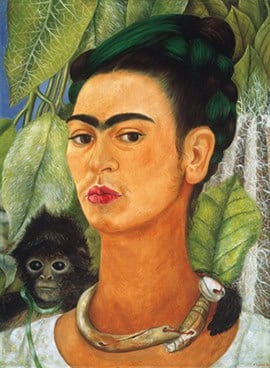
Frida Kahlo saw her monkeys as more than just pets; they were her beloved companions and had a deep connection to her personal history and heritage.
©פרידה קאלו / Public domain / Wikimedia Commons – Original / License
Monkeys weren’t her only companions; Kahlo also shared her home with several other pets rooted in Mexican heritage. She had Xoloitzcuintli, the rare, hairless dogs tied to Aztec tradition; Bonito, a loyal Amazon parrot; and an eagle named Gertrudis Caca Blanca. For Kahlo, these animals were extensions of her spirit and eternal symbols of Mexican identity and personal resilience.
George Clooney’s Longest Love
While George Clooney was once Hollywood’s most eligible bachelor, his most enduring relationship was with Max the Star, a 300-pound Vietnamese pot-bellied pig. Max remained Clooney’s constant companion for 18 years, outlasting many of his human romances.
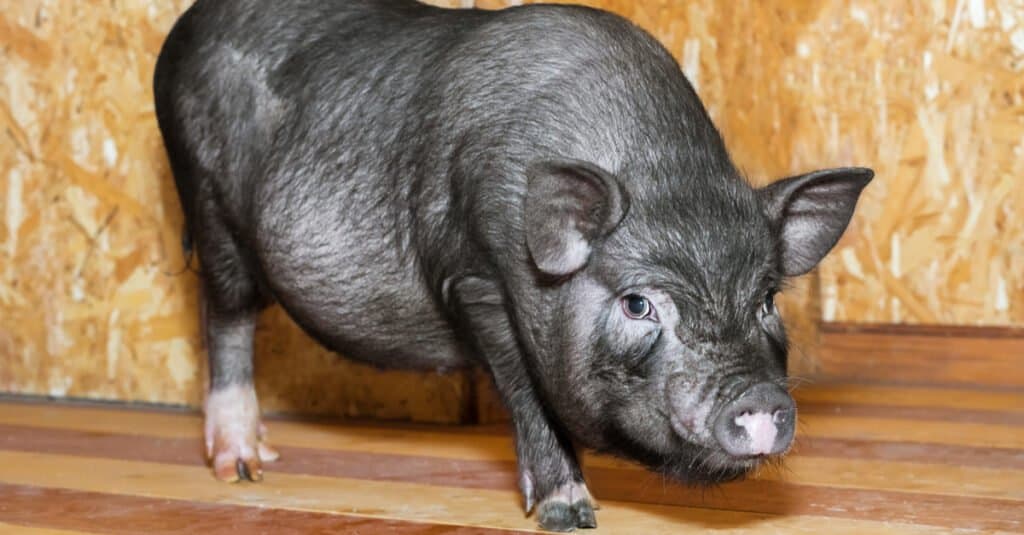
Toward the end of his life, Max was partially blind and suffered from arthritis, but Clooney ensured he was well cared for.
©Anton Watman/Shutterstock.com
Max was more than a quirky pet; Clooney credits the pig with saving his life. During the 1994 Northridge earthquake, Max sensed the danger and woke Clooney just before the tremors hit, allowing him to reach safety. Max enjoyed a life of luxury at Clooney’s estate and on film sets, frequently joining the actor on private jets and during long shoots. Despite having an outdoor pen, the 300-pound pig occasionally slept at the foot of Clooney’s bed.
Max passed away in 2006 at age 19. Heartbroken, Clooney famously honored his memory by stating he would never get another pig.
A Ocelot Named Babou
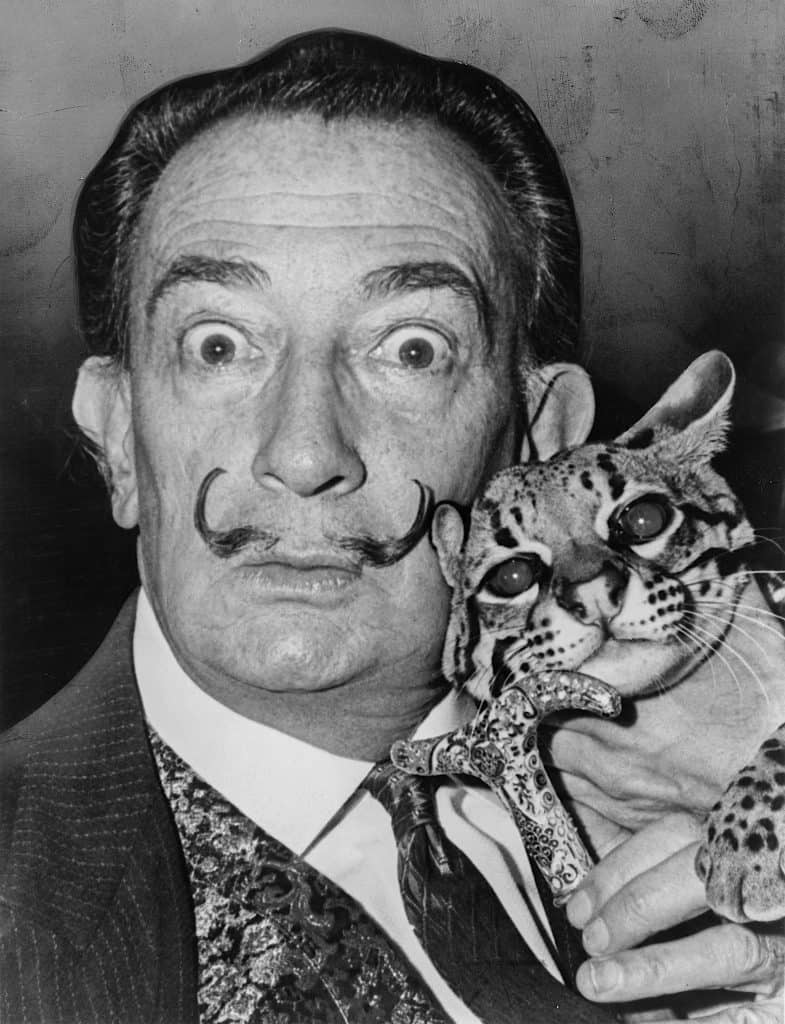
Ocelots are native to Central and South America.
©Roger Higgins, World Telegram staff photographer / Public domain / Wikimedia Commons – Original / License
Salvador Dalí’s most famous accessory was Babou, a Colombian ocelot. The wild cat served as both a constant companion and a living extension of Dalí’s surrealist performance art. Babou lived in extreme opulence, sporting a jewel-encrusted collar wherever he went. He accompanied Dalí to five-star venues like New York’s St. Regis. Dalí treated the ocelot as a domestic pet, leading to legendary public encounters. When an alarmed diner at a Manhattan restaurant spotted the jungle cat, Dalí calmly insisted Babou was a normal house cat that he had simply “painted over in an op art design.”
Despite the five-star accommodations, those close to Dalí — including muse Amanda Lear — noted that Babou was never truly content in captivity. For Dalí, the ocelot was a carefully chosen prop, much like his iconic mustache, used to reinforce his persona as a man who refused to live by the laws of reality.
Roy Horn and Mantacore
Roy Horn, half of the legendary duo Siegfried & Roy, saw his tigers as family, performing with the big cats for decades in Las Vegas. He personally raised cubs and even slept with them for their first year to force an unbreakable bond. However, on October 3, 2003 — Roy’s 59th birthday — the illusion of control was shattered. During a show at The Mirage in Las Vegas, a 400-pound tiger named Mantacore strayed from the script, bit Roy’s neck, and dragged him offstage. The incident resulted in a massive stroke, leaving Horn with permanent paralysis.
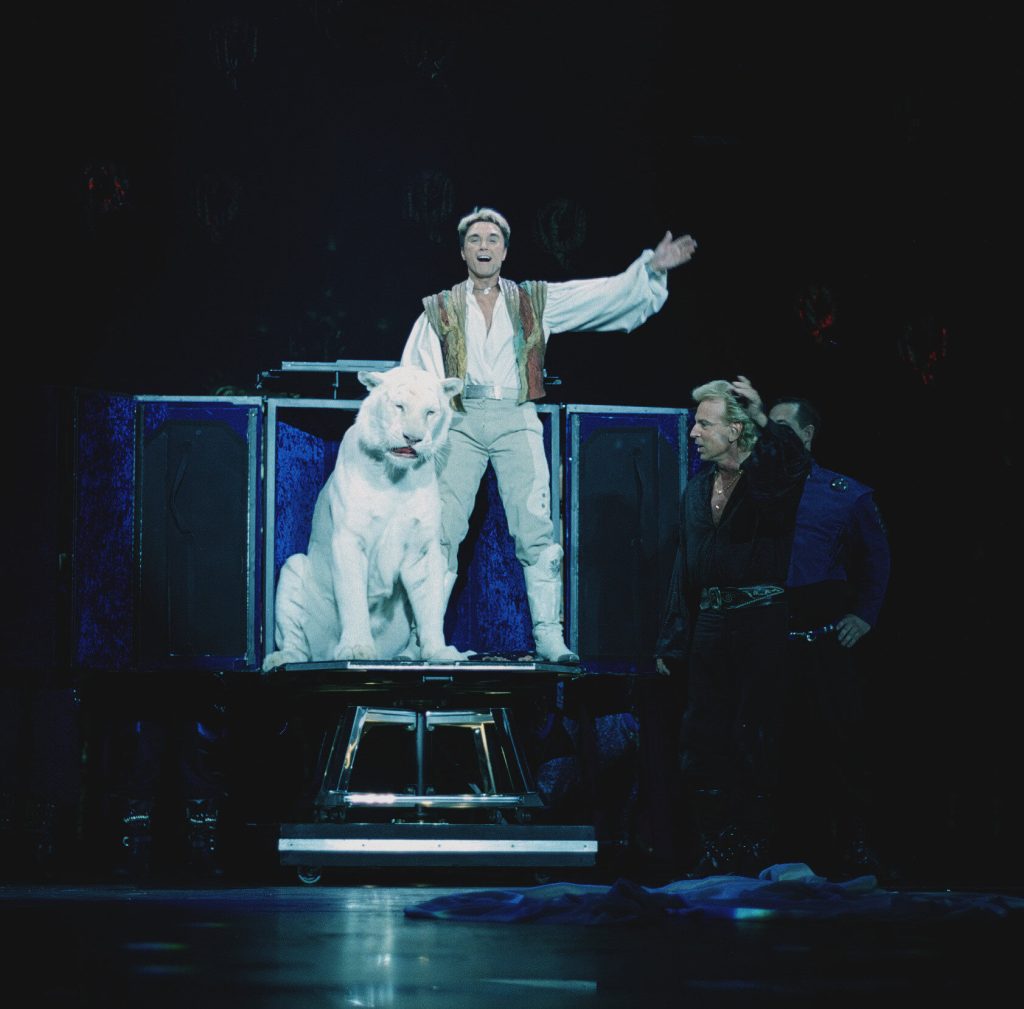
Siegfried & Roy began performing in the 1960s.
©Carol M. Highsmith / Public domain / Wikimedia Commons – Original / License
The nature of the attack remains a debated mystery. Both Siegfried and Roy maintained that Mantacore was acting as a protector that night, not a predator. They theorized that Roy actually suffered a medical emergency first, and Mantacore sensed the distress and attempted to drag him to safety. Even while critically injured, Roy remained completely devoted to his beloved tigers. His first words to emergency crews the night of the accident were, “Don’t shoot the cat.” Because of his devotion, Mantacore was spared and lived another 11 years at Siegfried & Roy’s “Secret Garden” sanctuary until his natural death in 2014.
Justin Bieber’s Customs Catastrophe
In 2013, the high-speed lifestyle of pop star Justin Bieber collided with international law when his pet capuchin monkey, OG Mally, was seized by German customs officials. The incident became a global media circus and a cautionary tale regarding “status symbol” pets.
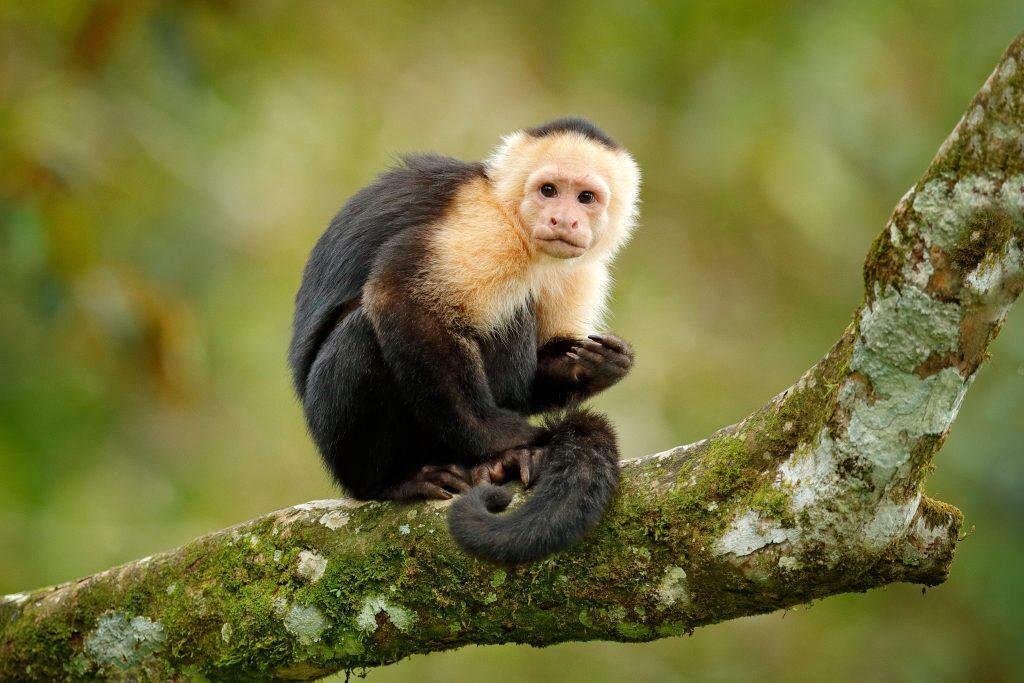
Justin Bieber’s capuchin monkey, Mally, was taken from his mother when he was only nine weeks old.
©Ondrej Prosicky/Shutterstock.com
The trouble began when Bieber landed in Munich for his Believe world tour. Arriving via private jet with his tiny monkey in tow, he failed to provide the required vaccination records and endangered species permits. Officers immediately quarantined Mally, giving Bieber several weeks to produce the paperwork. As deadlines passed and fees mounted, Bieber left the monkey behind, sparking intense public criticism for abandoning the animal.
Mally was moved to Serengeti Park in Germany, where keepers worked to rehabilitate and integrate him with other capuchins.