
Quick Take
- Joggers pass within feet of hidden mountain lions every day, and a wildlife biologist who has watched it happen says the cats' true intention is nothing like what you would expect. See how cougars avoid people →
- That viral video of a cougar 'chasing' a runner? A predator expert watched the same footage and saw something completely different happening. Watch the viral video reanalyzed →
- Utah's efforts to remove mountain lions from the landscape may actually be making human-wildlife conflicts more likely, not less. Explore Utah's removal policy →
For three hours, wildlife biologist and filmmaker Denise Peterson sat beside a busy Utah trail watching a young female mountain lion. During that entire time, joggers passed by repeatedly, completely unaware that one of North America’s most powerful predators was hiding just feet away. It wasn’t until someone stopped to ask Peterson what she was looking at that the trail users realized a mountain lion was watching them from the brush.
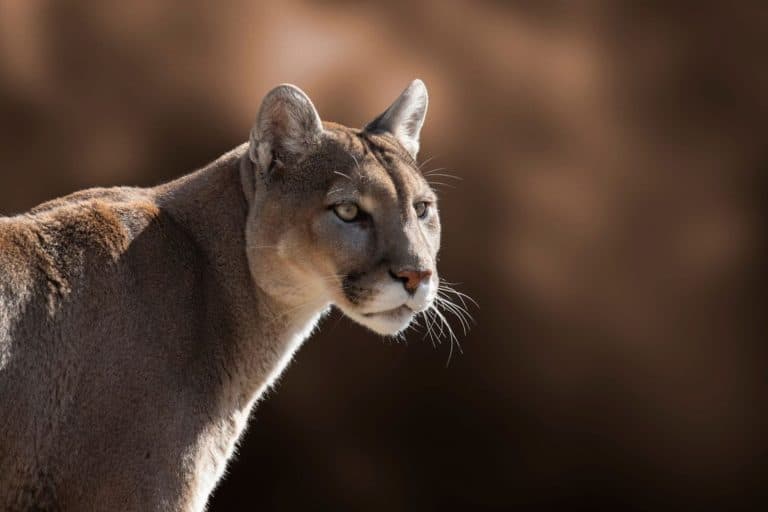
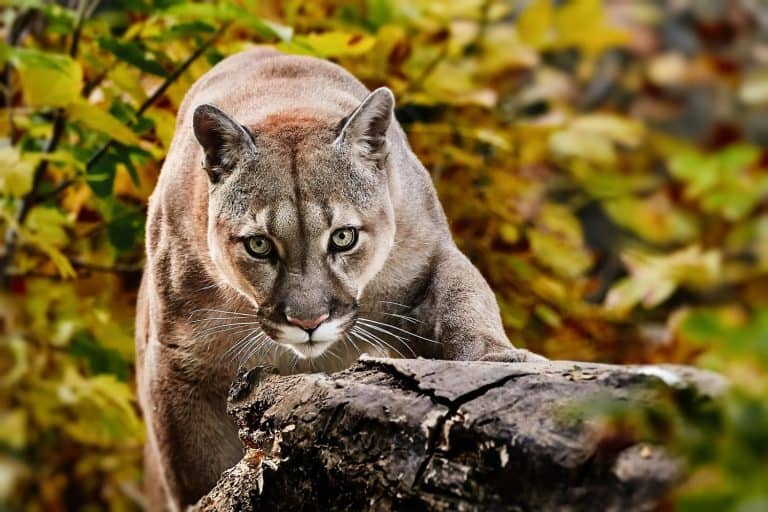
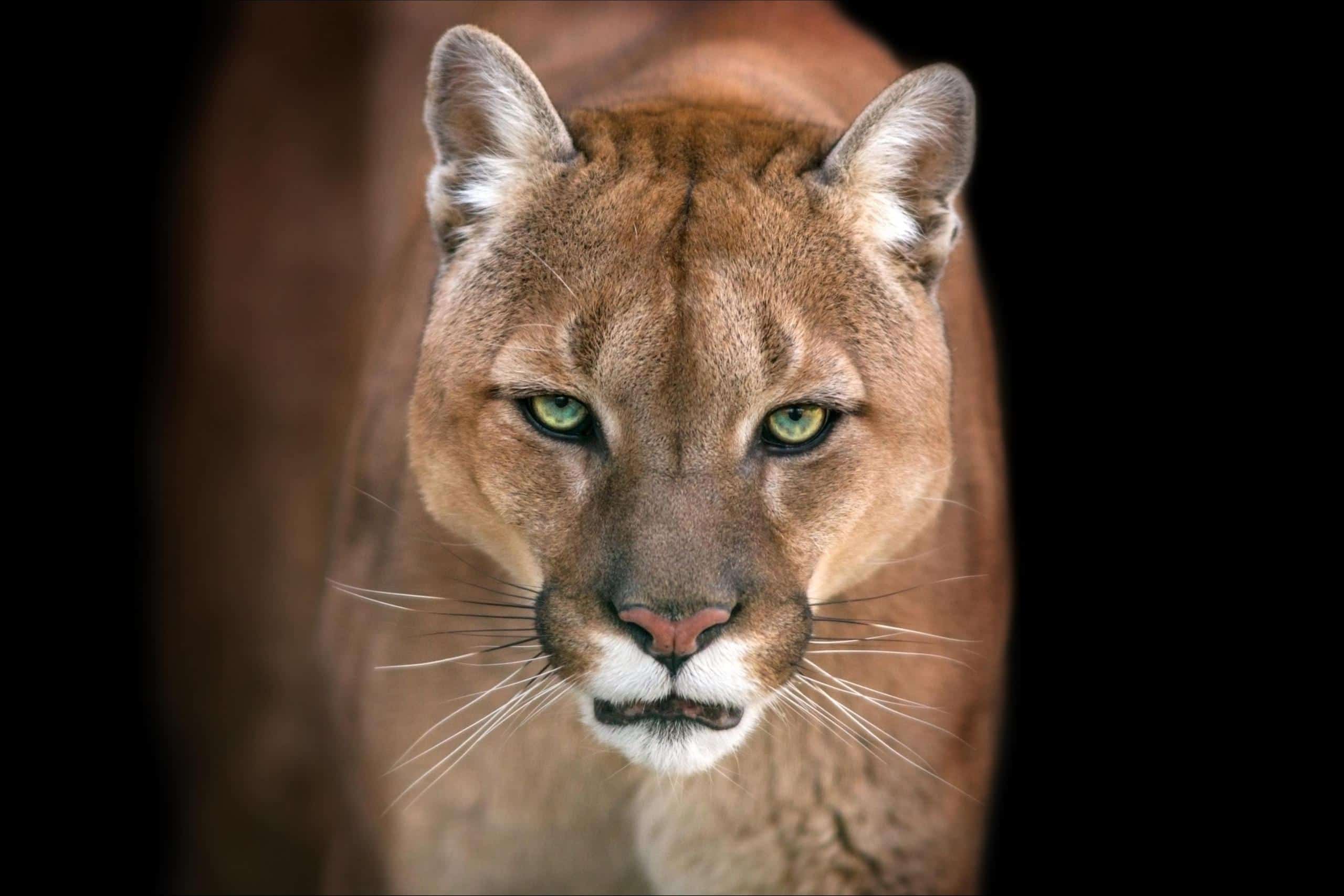
According to Peterson, scenes like this happen far more often than people realize. The cougar isn’t stalking anyone or preparing to attack; it is simply waiting for the crowd to clear so it can go about its day. This moment perfectly captures why cougars (Puma concolor) are known as “ghost cats,” and it challenges one of the most persistent myths about them. While often portrayed as aggressive predators, they are experts at avoiding humans.
Despite being the most wide-ranging wild cats in the Americas, cougars are rarely seen. In many areas, they live close to human neighborhoods, but spend most of their lives out of sight. “Their apparent absence doesn’t mean they aren’t there,” Peterson explains. “It means they’re very good at staying out of sight.”
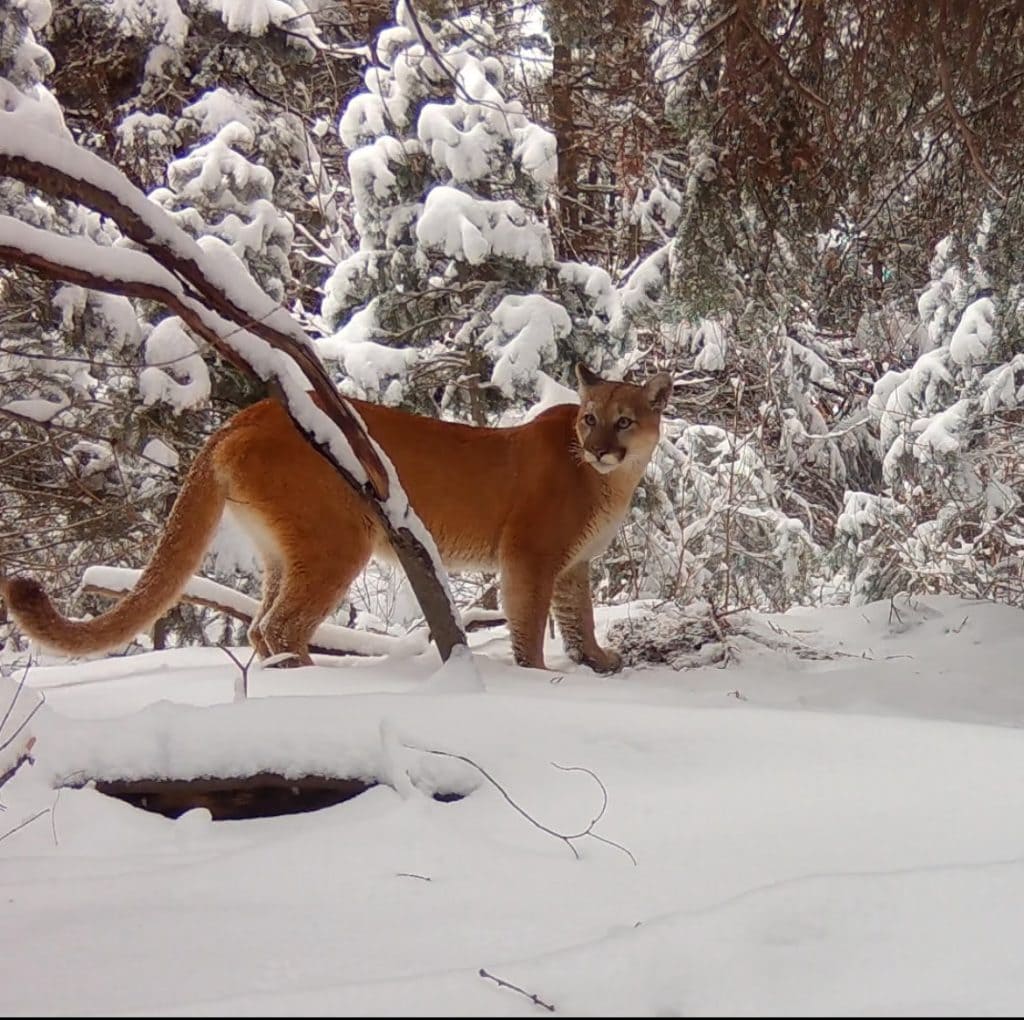
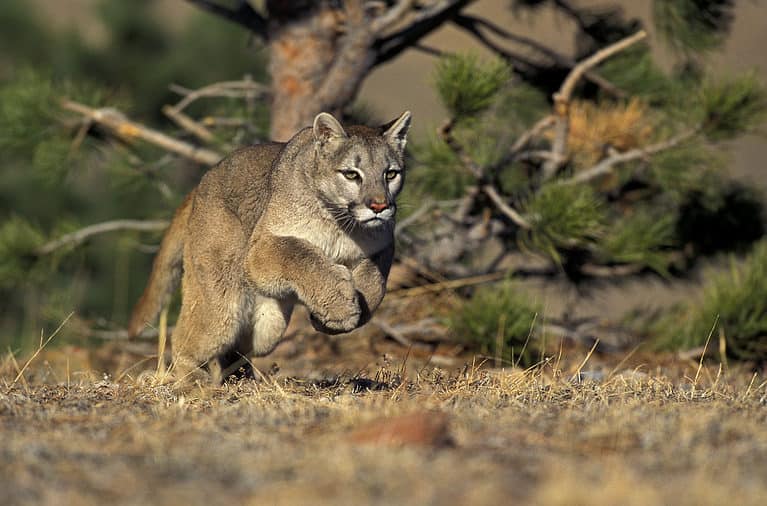
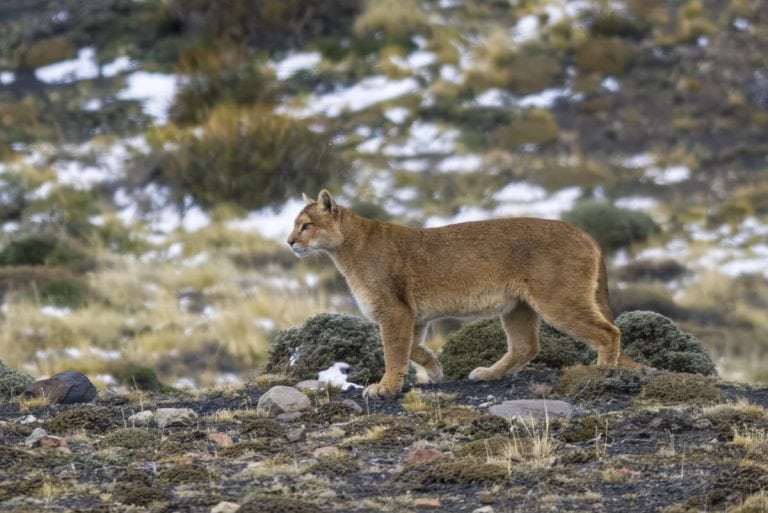
Cougars are highly adaptable predators found across a wide range of habitats, from Canadian forests to South American mountains.
©Denise Peterson / utahmountainlion.org
Peterson has personally encountered more than 40 mountain lions in the wild and has never had a negative experience. As she puts it, “My fear level with a mountain lion is pretty much nonexistent.”
National Cougar Day on June 12 serves as a reminder to look beyond the myths surrounding these elusive predators and confront the reality that we already share our landscapes with them. The question isn’t whether coexistence is possible — the cats are already doing their part. The real challenge is whether humans will do theirs as well.
To better understand these animals and what true coexistence actually looks like, A-Z Animals spoke with Denise Peterson, founder and director of Utah Mountain Lion Conservation.
The photos and videos featured throughout this article were captured by Peterson’s team, providing an intimate look into the lives of the cougars she studies.
From Filmmaker to Mountain Lion Advocate
Denise Peterson’s path to cougar conservation began in Michigan, a state where mountain lions had long since disappeared. Her early career focused on film and video production, but reports of wandering cougars in the Midwest sparked a fascination that changed her direction. She returned to school to study wildlife biology and Geographic Information Systems (GIS), later working with jaguars and pumas in Peru before settling in Utah to work more closely with North American mountain lions.
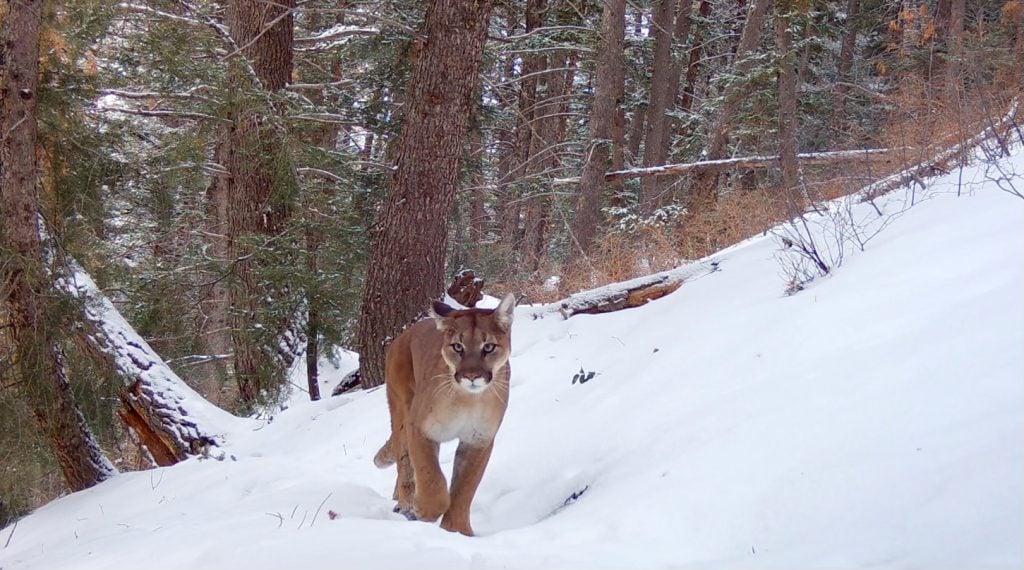
Cougars don’t just survive in radically different biomes around the world; their incredible adaptability allows them to thrive as apex predators.
©Denise Peterson / utahmountainlion.org
Over time, Peterson realized that scientific data alone wasn’t enough to protect these animals. Conservation also required changing how people see them. “Our goal was to use trail cameras to film these cats and tell their stories to people,” she explains.
Today, storytelling remains her primary conservation tool, helping people understand an animal that is too often feared simply because it is misunderstood.
America’s Most Misunderstood Predator
Ask the average American what they think of mountain lions, and you will likely hear the same few words: scary, dangerous, and unpredictable.
Peterson argues this reputation comes from perception rather than reality. News coverage tends to highlight rare negative encounters while overlooking the many quiet, uneventful interactions that occur daily. As a result, public opinion is shaped by exceptions rather than typical cougar behavior.
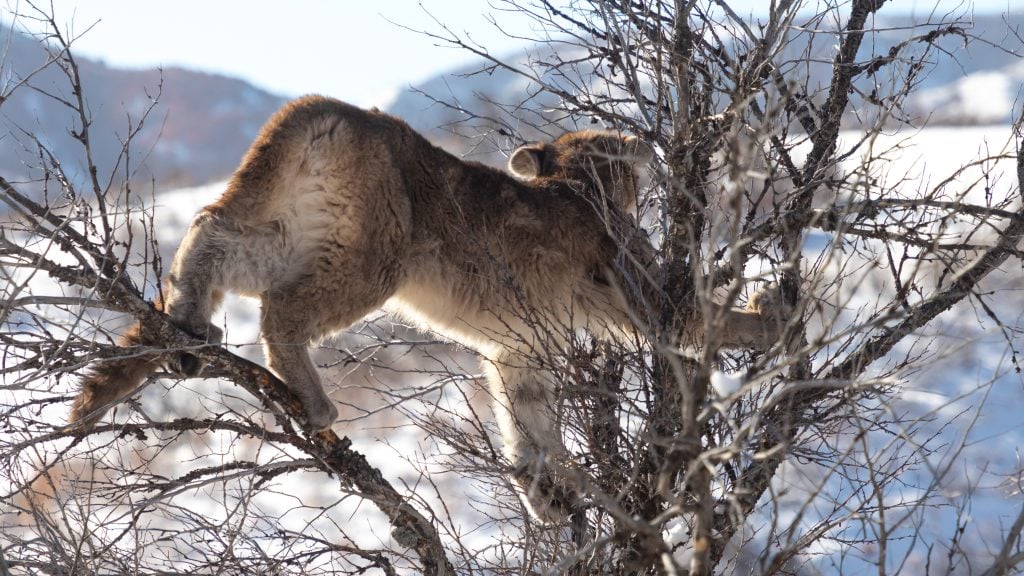
With their dexterous paws and retractable claws, cougars can scale and climb trees with ease.
©Denise Peterson / utahmountainlion.org
The reality is far less dramatic. Peterson has personally observed more than 40 wild mountain lions and never had a single negative encounter. Trail-camera footage consistently shows that mountain lions avoid people whenever possible. When hikers or runners pass nearby, the cats usually stay hidden and quietly wait for the humans to move on. “They are literally around us all the time,” Peterson says. “They do such a good job coexisting with us.”
When Behavior Gets Misread
Peterson points to a widely shared viral video of a runner being followed by a cougar as an example of how easily cougar behavior is misunderstood. To many viewers, the footage appears to show a stalking attempt — another unsettling encounter between a human and a predator.
But Peterson sees something different: a mother protecting nearby kittens. The cougar was behaving defensively rather than aggressively; the runner was not being targeted as prey, but treated as a potential risk entering sensitive territory.
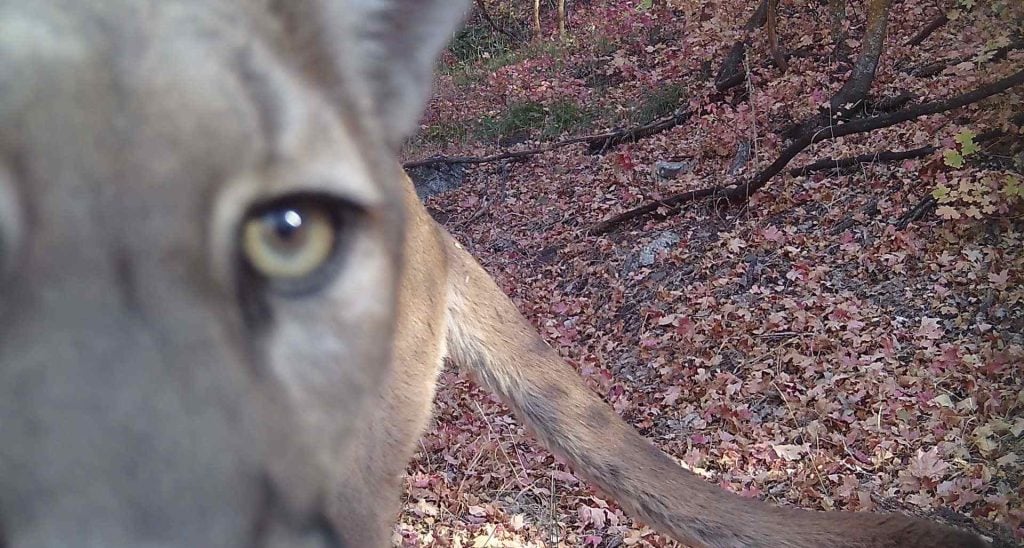
Trail camera footage is an important component of mountain lion conservation, as cougars are incredibly elusive and rarely seen by humans in the wild.
©Denise Peterson / utahmountainlion.org
For Peterson, the incident highlights the importance of understanding cougar behavior. Without ecological or behavioral context, people tend to default to fear-based interpretations and assign intent that may not really be there.
Recognizing the differences between a hunting predator and a protective parent can help people remain calm, interpret an animal’s actions more accurately, and respond appropriately if an encounter ever happens. Situations like this become clearer once you understand how mountain lions actually navigate shared landscapes.
Our goal was to use trail cameras to film these cats and tell their stories to people.
Denise Peterson, wildlife biologist and filmmaker
Why Mountain Lions Matter More Than We Think
The mountain lion goes by more names than almost any other North American animal — cougar, puma, panther, painter, or catamount — but all refer to the same species. Kittens are born with dark spots that fade as they mature, and adults are instantly recognizable by their tawny coats, rounded ears, and long tails.
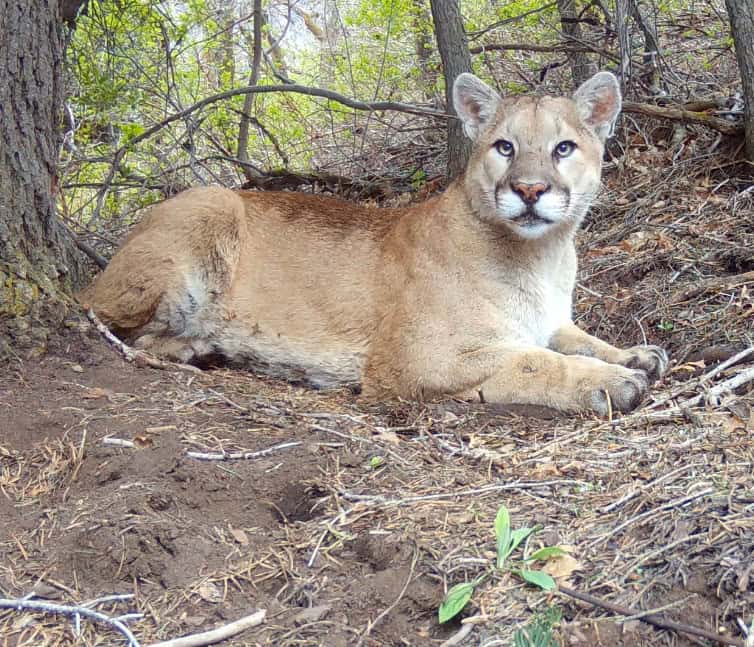
Unlike some big cats, cougars cannot roar; instead, they communicate through whistles, growls, and high-pitched screams.
©Denise Peterson / utahmountainlion.org
As apex predators, mountain lions regulate deer populations and shape how prey animals move across the landscape. This helps prevent overgrazing in sensitive areas and maintain ecological balance.
Their beneficial impacts on ecosystems extend even further. The remains of a mountain lion’s kill feed scavengers and other wildlife. “Cougars are far more than just predators,” Peterson explains. “Their presence influences deer, plants, scavengers, and countless ecological relationships.” Because of this, she considers them a keystone species.
How Cougars Share a Changing Landscape
As cities grow and development expands, mountain lions and people increasingly share space. Fortunately, cougars are remarkably adaptable. Research shows they actively adjust their movements and daily schedules to avoid human activity whenever possible.
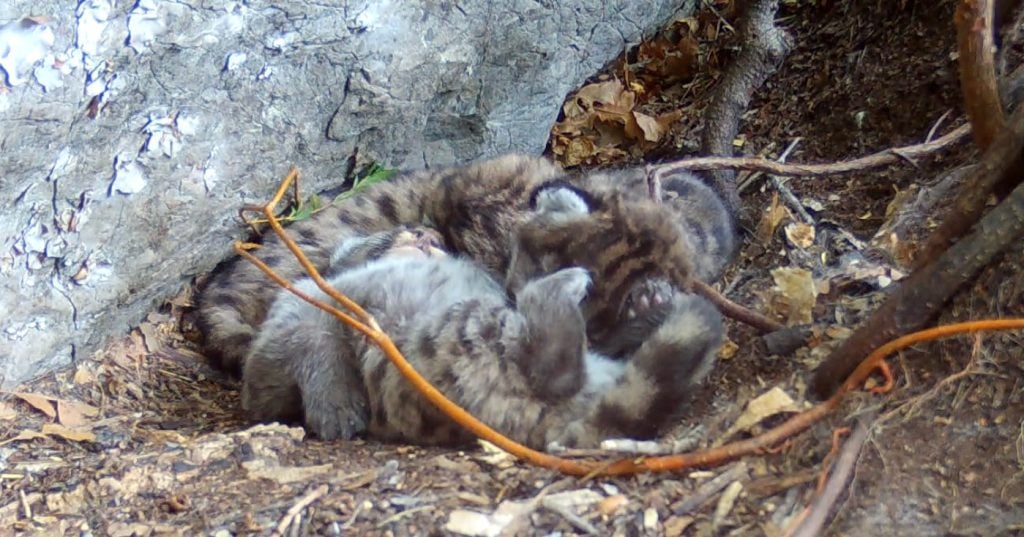
Cougar kittens are spotted when they are born, which helps them blend into their surroundings.
©Denise Peterson / utahmountainlion.org
Near Los Angeles, for example, mountain lions shift their activity to avoid daytime recreation. In Colorado, researchers have documented “temporal avoidance,” where cougars use the same spaces as humans but at different times of day.
These adaptations allow mountain lions to coexist with humans across much of their range. However, conflicts can still occur where development overlaps with cougar habitats.
What Trail Cameras Reveal About Cougar Families
While scientific data provides valuable information, Peterson’s trail cameras offer a more intimate view of mountain lions. She has documented entire cougar family groups, following individuals from kittenhood until they grow up and eventually disperse.
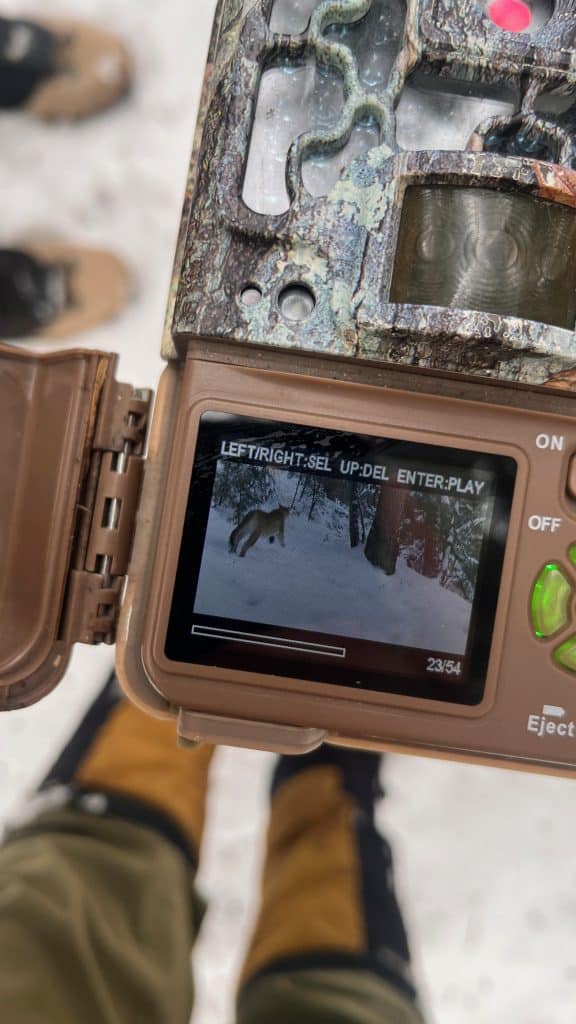
Cougars are known by many names — including more than 40 names just in the English language.
©Denise Peterson / utahmountainlion.org
The footage shows snuggling, grooming, playing, and even resting in piles on top of each other — behaviors that challenge the belief that cougars are solitary or detached. Peterson emphasizes that their family connections are much stronger than many people realize. “Trail cameras give us the chance to actually see what an individual mountain lion is really like,” she says.
The Language of Fear
A major challenge in mountain lion conservation is how mountain lions are portrayed in the media. Peterson argues that fear is often amplified by inaccurate language, particularly the misuse of the word “stalking.”
News reports often describe mountain lions as “stalking” people, implying deliberate, aggressive intent that doesn’t match observed behavior. In many cases, the animal is simply observing or avoiding humans. “Inaccuracy in reporting is a huge concern for us,” Peterson says. “It perpetuates the fear cycle around these cats.”
She believes that changing the narrative and using accurate language is essential to changing perception. Fear-driven reporting can mislead the public and influence wildlife management decisions, making coexistence more difficult.
When Conflict Happens, and How to Prevent It
Most conflicts with mountain lions are preventable. They typically occur when cougars gain access to easy food sources near homes.
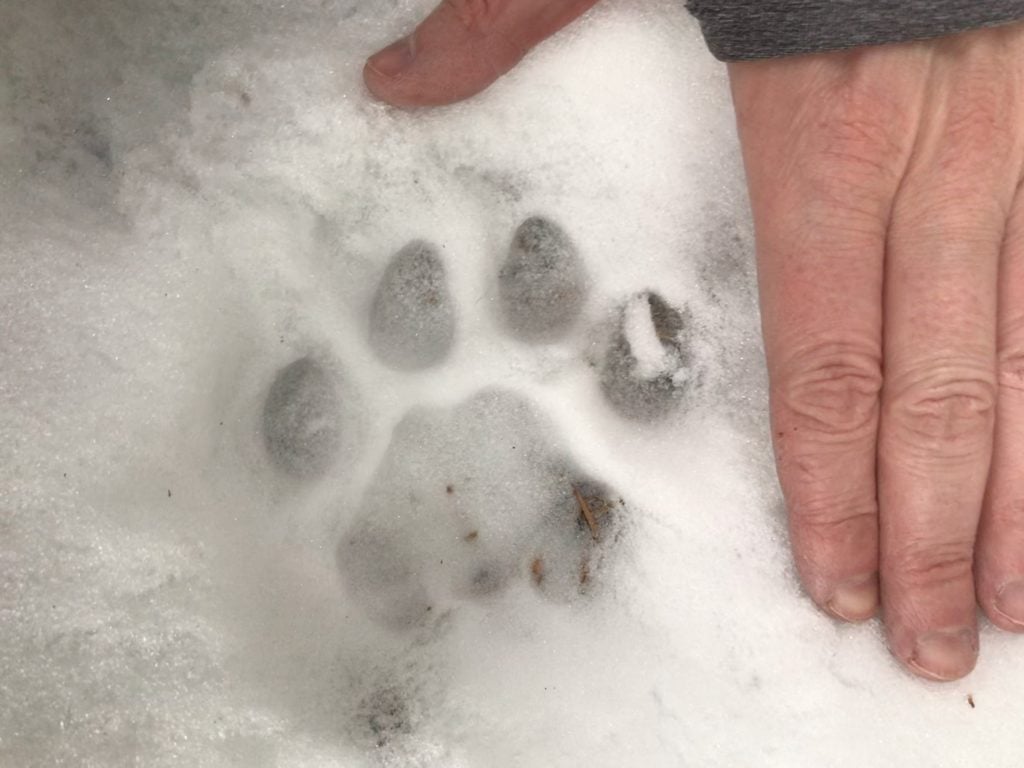
Cougars play a key ecological role as apex predators, helping regulate prey populations and maintain ecosystem balance.
©Denise Peterson / utahmountainlion.org
Peterson recommends several practical steps:
- Supervise pets outdoors, especially cats.
- Use lighting at night.
- Do not feed wildlife. Attracting deer and other prey species to your yard can also attract predators.
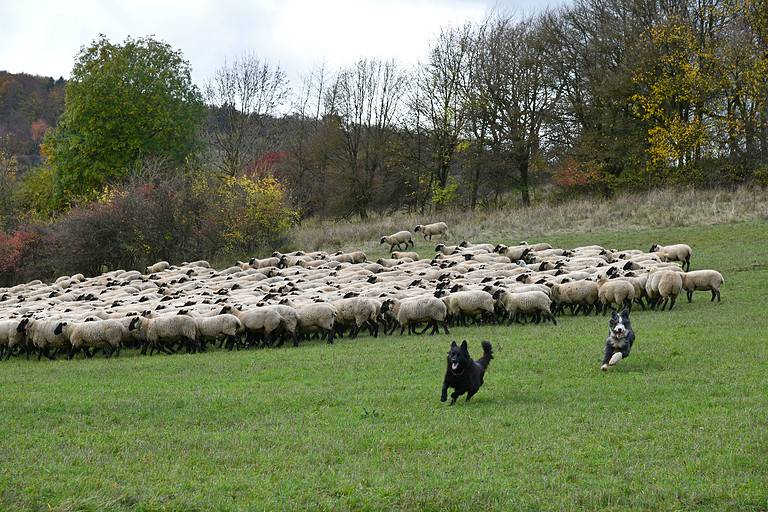
- Secure livestock in protected enclosures at night.
- Reduce dense vegetation that provides cover for cougars.
- Coordinate safety practices with neighbors.
No single household can eliminate risk alone. A single unsecured property can attract predators and affect an entire area, making community coordination essential. “It requires community-level action,” Peterson says.
Inside Utah’s Cougar Debate
Utah offers a clear example of the tension surrounding cougar management. Peterson offers a sharp assessment of the state’s approach, arguing that current policies offer no meaningful protection. In addition, these policies — which rely heavily on hunting, trapping, snaring, and an ongoing predator-removal study — threaten the long-term health of cougar populations. Furthermore, the current policies of aggressive predator removal are neither scientifically nor ethically defensible.
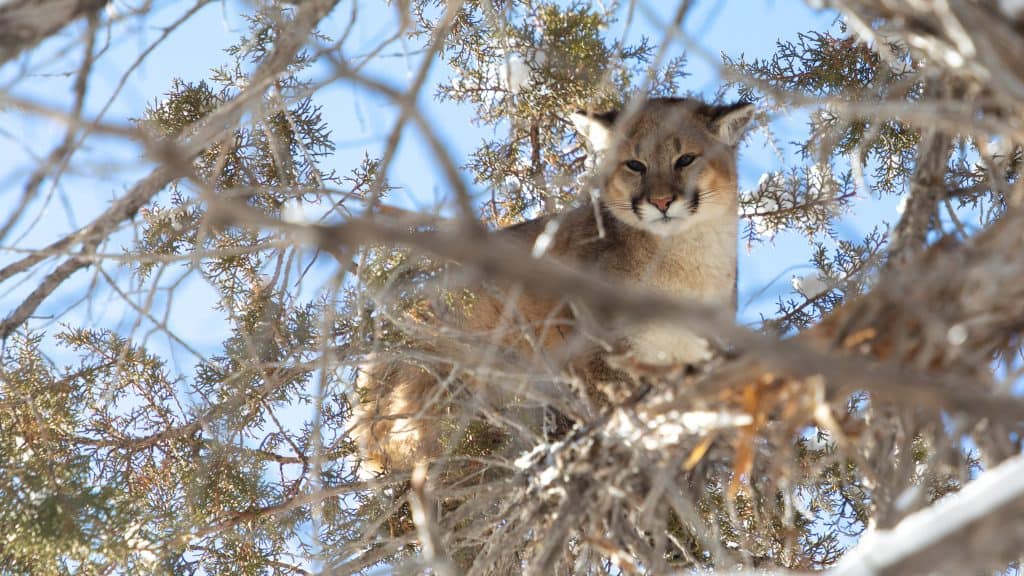
Cougars seem to be resistant to chronic wasting disease.
©Denise Peterson / utahmountainlion.org
She notes that Utah’s mountain lion population, which ranged from roughly 2,000 to 2,700 cats between 2015 and 2019, has declined to about 1,000 by December 2025.
Beyond population concerns, Peterson points to ecological consequences.
One example is chronic wasting disease (CWD). “Mountain lions’ digestive systems can be important here,” she explains. “Whether they hunt a deer affected by chronic wasting disease or scavenge one that died from it, their digestive tract can break down and destroy the prions.” By consuming infected deer, cougars may potentially reduce environmental contamination.
She also argues that removing adult mountain lions destabilizes populations and unintentionally creates the very conflicts that management programs are trying to prevent. Orphaned kittens, young juveniles, and animals injured by traps and snares often struggle to hunt and are more likely to approach human areas. Essentially, disrupting the cougar’s social structure can increase — not reduce — conflict with humans.
There is far more value in having lions on the landscape than in removing them.
Denise Peterson, wildlife biologist and filmmaker
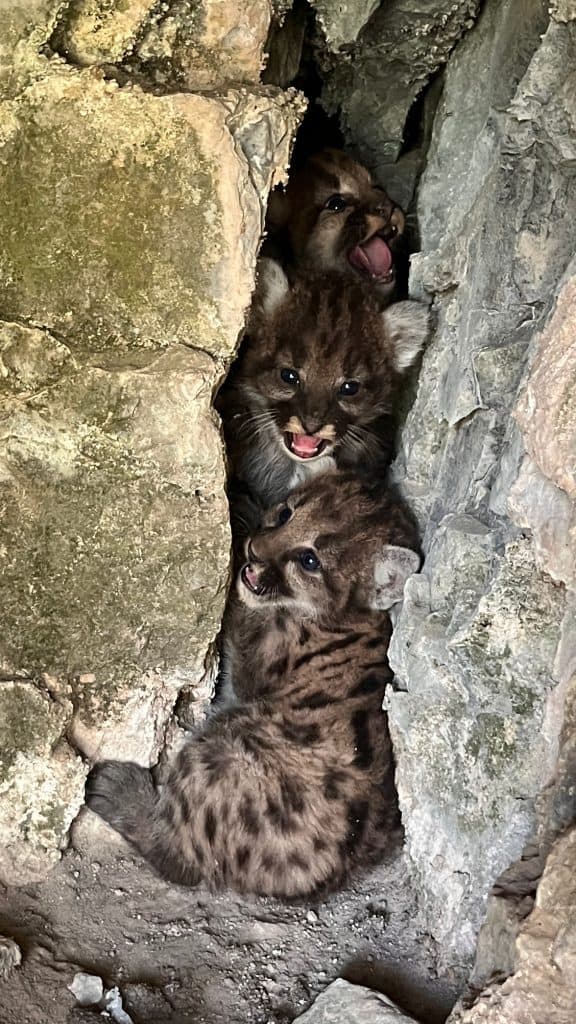
Young cougars typically stay with their mother for up to two years before setting out to establish their own territory.
©Denise Peterson, utahmountainlion.org
Despite these serious concerns, Peterson emphasizes that the goal is not opposition to hunting, but better management practices grounded in scientific evidence and collaboration across a wide range of stakeholders, including hunters and wildlife advocates.
Education as Conservation
For Peterson, the future of mountain lion conservation ultimately depends on changing how people think about the species. That is why education sits at the center of her work. Through films, trail-camera projects, and public outreach, she works to replace fear with understanding.
“There is far more value in having lions on the landscape than in removing them,” she explains. “It’s worth reevaluating where we want to end up with lions, sooner rather than later.”
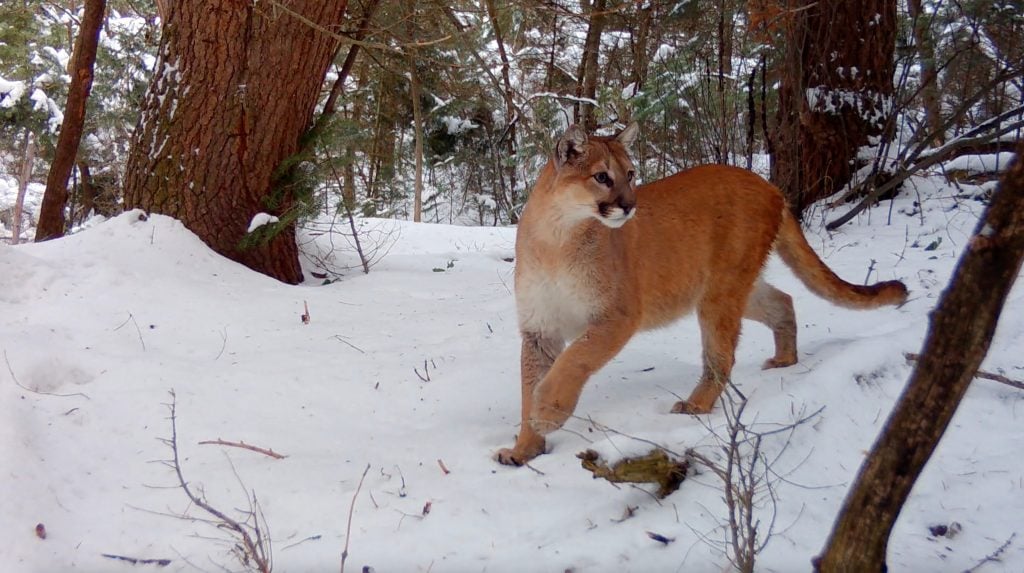
A cougar’s diet primarily consists of deer, but they are opportunistic hunters and will take smaller mammals when necessary.
©Denise Peterson / utahmountainlion.org
Young people are especially important to this effort. By introducing children to the real lives of mountain lions, she hopes to foster curiosity rather than fear.
Turning Awareness Into Action
For Peterson, this work is deeply personal. “When you spend this much time with an animal, you feel responsible,” she says.
She also emphasizes that individuals play an important role in fostering a constructive, forward-looking approach to coexistence. She outlines several practical steps people can take in their own communities:
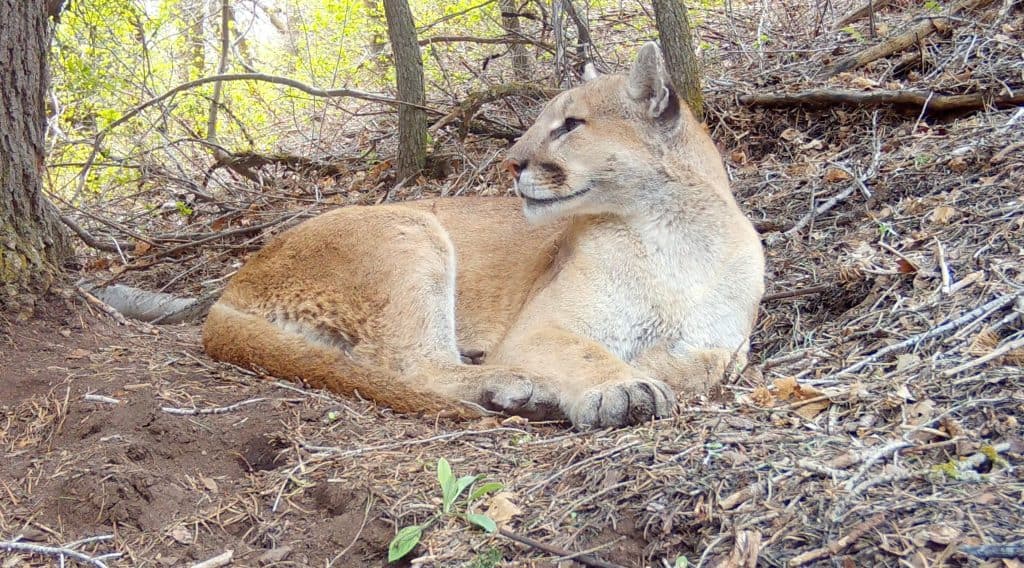
Cougars have powerful hind legs and can leap over 20 feet.
©Denise Peterson / utahmountainlion.org
- Engage respectfully with local representatives and Department of Wildlife Resources (DWR) officials about wildlife management policies.
- Coordinate prevention strategies and property safety with neighbors.
- Offer calm, accurate information to friends and neighbors.
- Support education efforts through school programs and community presentations.
- Reduce stigma by challenging fear-based narratives.
Protecting mountain lions requires more than simply conserving land. It depends on communities securing resources, policymakers maintaining habitat connectivity, and residents replacing fear with understanding and appreciation.
A Vision of Hope for the Ghost Cats
Despite intense political and environmental pressures, Peterson remains committed and says she will never give up hope. She sees conservation as a steady, ongoing effort — what she describes as keeping the ball moving forward. “As long as the ball is moving forward, progress happens,” she says.
National Cougar Day serves as both a reminder and an invitation to see these animals clearly, act responsibly, and protect the landscapes humans and wildlife share.
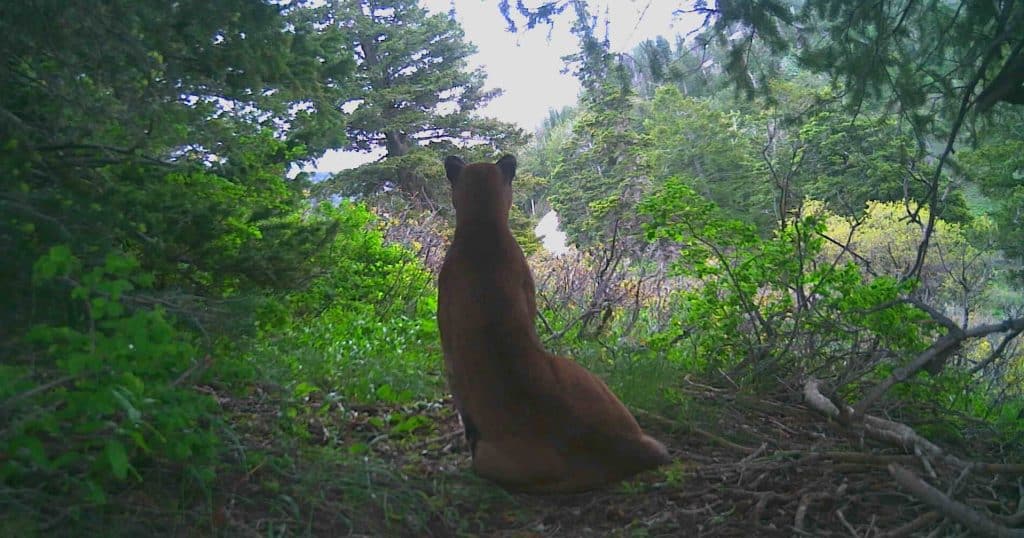
Cougars play a key ecological role as apex predators, helping regulate prey populations and maintain ecosystem balance.
©Denise Peterson / utahmountainlion.org
“If we can show people our lions and what they are actually like on a daily basis, maybe attitudes will change,” Peterson says.
For the ‘ghost cats’ moving through the shrinking wild corners of North America, that shift in perception may be what ultimately determines their future.