
Quick Take
- Female pandas have a fertility window so narrow it seems almost impossible the species survives in the wild, yet captive breeding programs exploit a biological loophole that changes the odds entirely. See why breeding programs matter →
- Zoo Atlanta's four pandas didn't leave because anything went wrong. The real reason exposes how the entire global panda loan system actually operates. Find out why the pandas left →
- Pandas just got quietly reclassified, and the shift signals something bigger about what conservation programs have actually achieved over the past 30 years. See the reclassification explained →
- Zoo Atlanta started rebuilding the panda exhibit before any new agreement was signed, a decision that reveals exactly how much pressure zoos face to stay in China's panda program. See the exhibit upgrades →
Panda bears have been a staple at Zoo Atlanta for over two decades. Today, the enclosure sits empty after the zoo’s agreement with China expired in 2024. This is going to change in the future, as Atlanta prepares for a pawsitive panda arrival. Two pandas are slated to be part of the Zoo Atlanta family again, in what is hoped to be another successful partnership under the International Cooperative Research Agreement on Giant Panda Conservation with China.
Zoo Atlanta to Welcome Pandas
In October 2024, Zoo Atlanta bid farewell to its four pandas, marking the end of the zoo’s captive breeding program. For 25 years, the zoo participated in the International Cooperative Research Agreement on Giant Panda Conservation with China. The goal was to help the panda population grow via the help of captive breeding programs. With a total of seven healthy pandas born at the facility, Zoo Atlanta not only met their goal but exceeded expectations.
It was unclear if Zoo Atlanta would be provided another opportunity to participate in the panda captive breeding program. Officials kept in touch with program coordinators in China, and talks were underway as of 2025, but Zoo Atlanta kept details confidential. This changed recently when an announcement was made that the zoo would again participate in the program, welcoming Ping Ping and Fu Shuang to the Zoo Atlanta family.
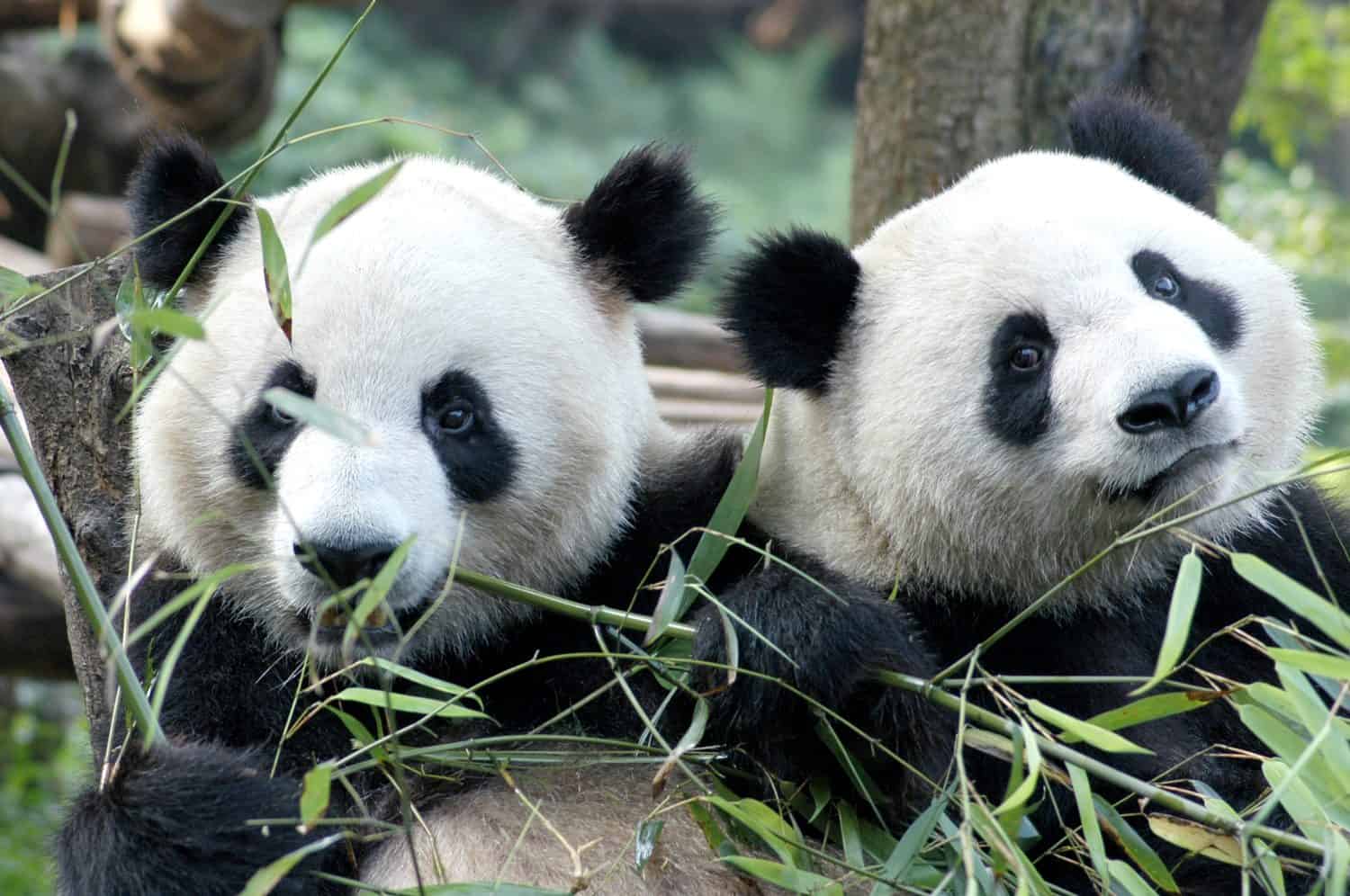
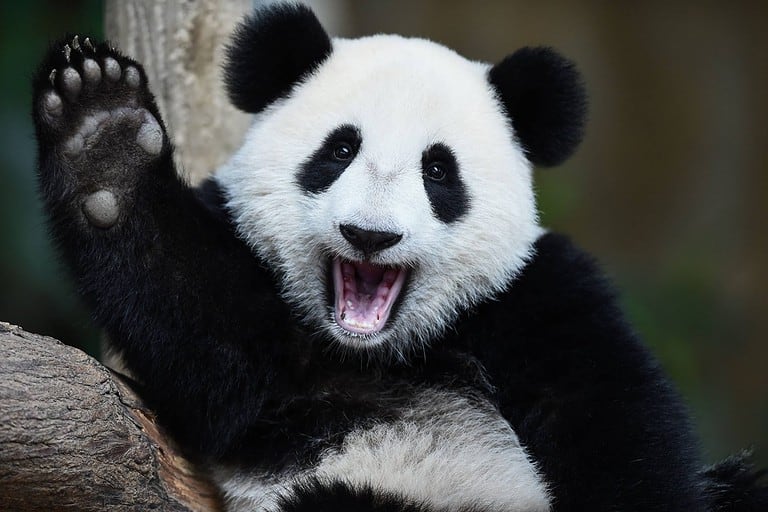
Pandas are set to return to Zoo Atlanta thanks to an agreement with the China Wildlife Conservation Association.
©Martinez de la Varga/Shutterstock.com
“Zoo Atlanta is delighted and honored to yet again be trusted as stewards of this treasured species and to partner with the China Wildlife Conservation Association on the continued conservation and research efforts that are the most important outcomes of this cooperation,” Raymond B. King, President and CEO of Zoo Atlanta, said in a statement. “We can’t wait to meet Ping Ping and Fu Shuang and to welcome our members, guests, city, and community back to the wonder and joy of giant pandas.”
Ping Ping (male) and Fu Shuang (female) were both born in 2020 at the Chengdu Research Base of Giant Panda Breeding in China. This is the same facility to which the Zoo Atlanta pandas were rehomed. Few details have been released about the pair. However, it is anticipated that once the exhibit is up and running, it will again be one of the zoo’s most popular exhibits.
How Zoo Atlanta Is Preparing for Ping Ping and Fu Shuang’s Arrival
Before a new agreement had been reached between Zoo Atlanta and China, Zoo Atlanta began the process of expanding the Arthur M. Blank Family Foundation Giant Panda Conservation Center. This was done in hopes that pandas would return to an exhibit that would better accommodate them and their offspring.
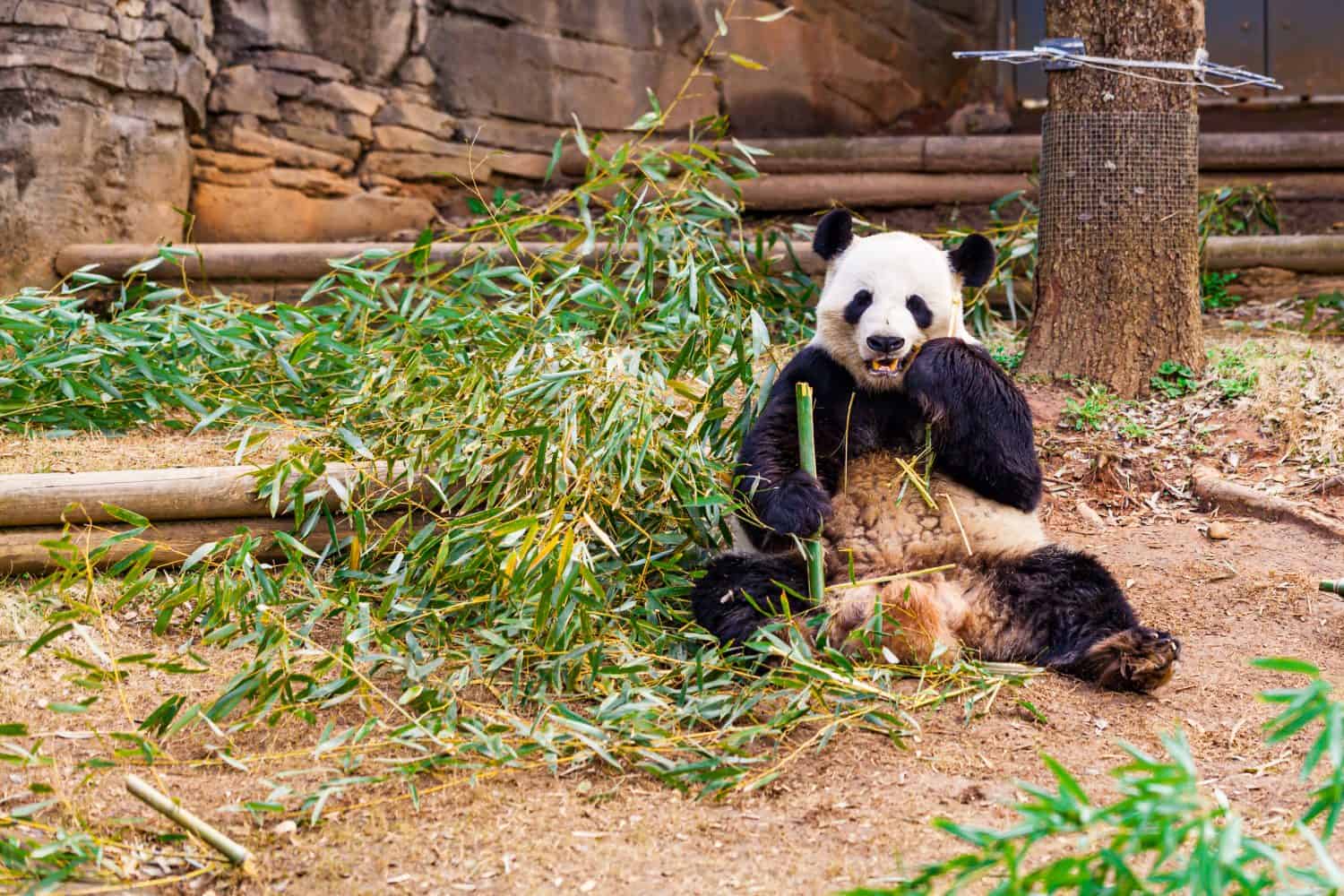
The panda exhibit at Zoo Atlanta is currently being upgraded before Ping Ping and Fu Shuang’s arrival.
©alisafarov/Shutterstock.com
As of February 2025, preliminary plans were drawn for what the future home of captive pandas would look like. While specific plans have yet to be disclosed, construction has begun on the exhibit. Zoo Atlanta states the exhibit will be larger than the previous one.
A deadline for when the exhibit will be finished has not been set. When complete, however, Ping Ping and Fu Shuang will have an upgraded habitat to call home.
What Happened to Zoo Atlanta’s Previous Pandas?
At the end of 2024, Zoo Atlanta announced that their resident pandas, Lun Lun, Yang Yang, Ya Lun, and Xi Lun, would be returning to China. The pandas’ return was not due to poor health or performance. Instead, Zoo Atlanta’s giant panda agreement with China had expired. As a result, the pandas were no longer allowed to reside in the United States.
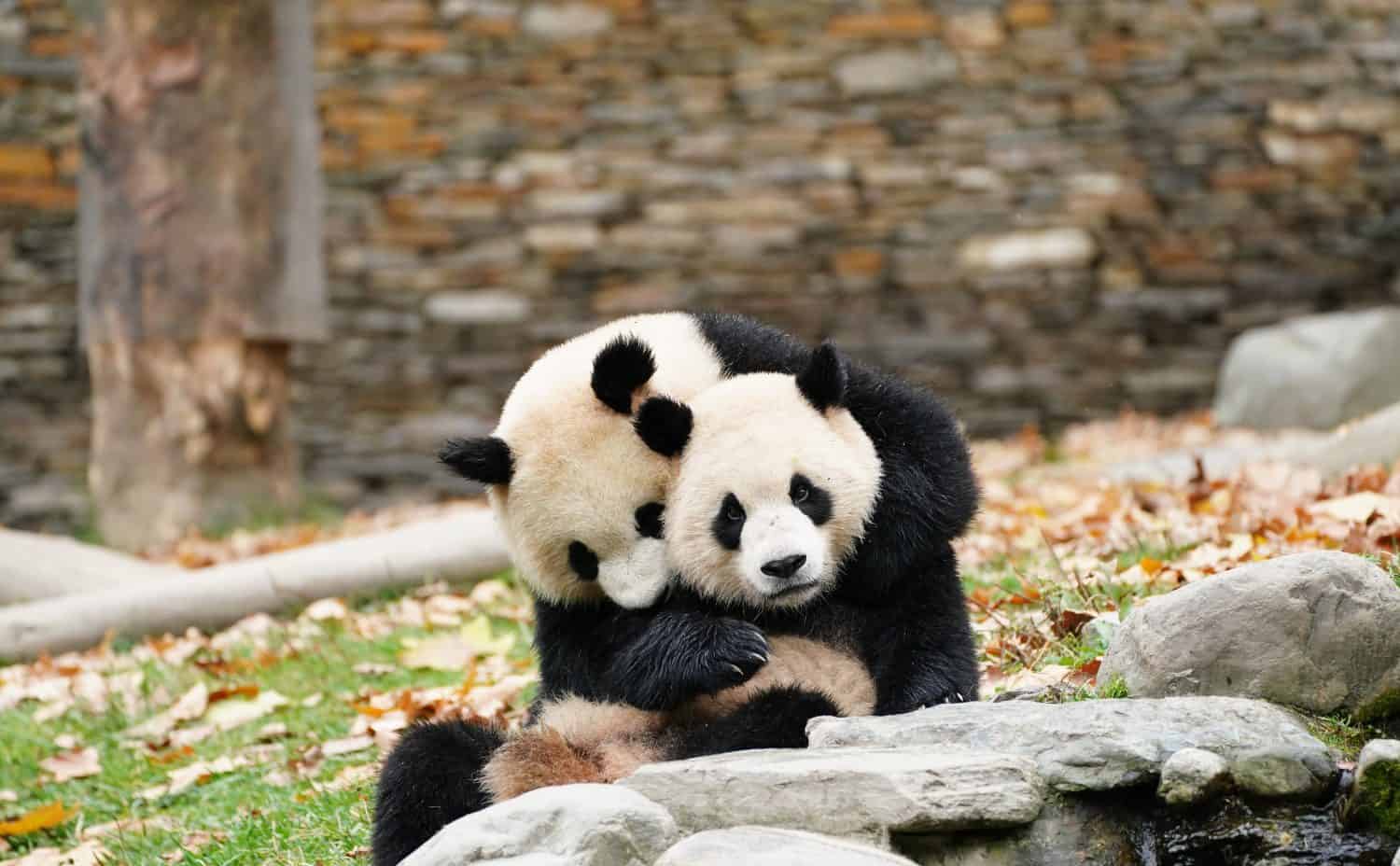
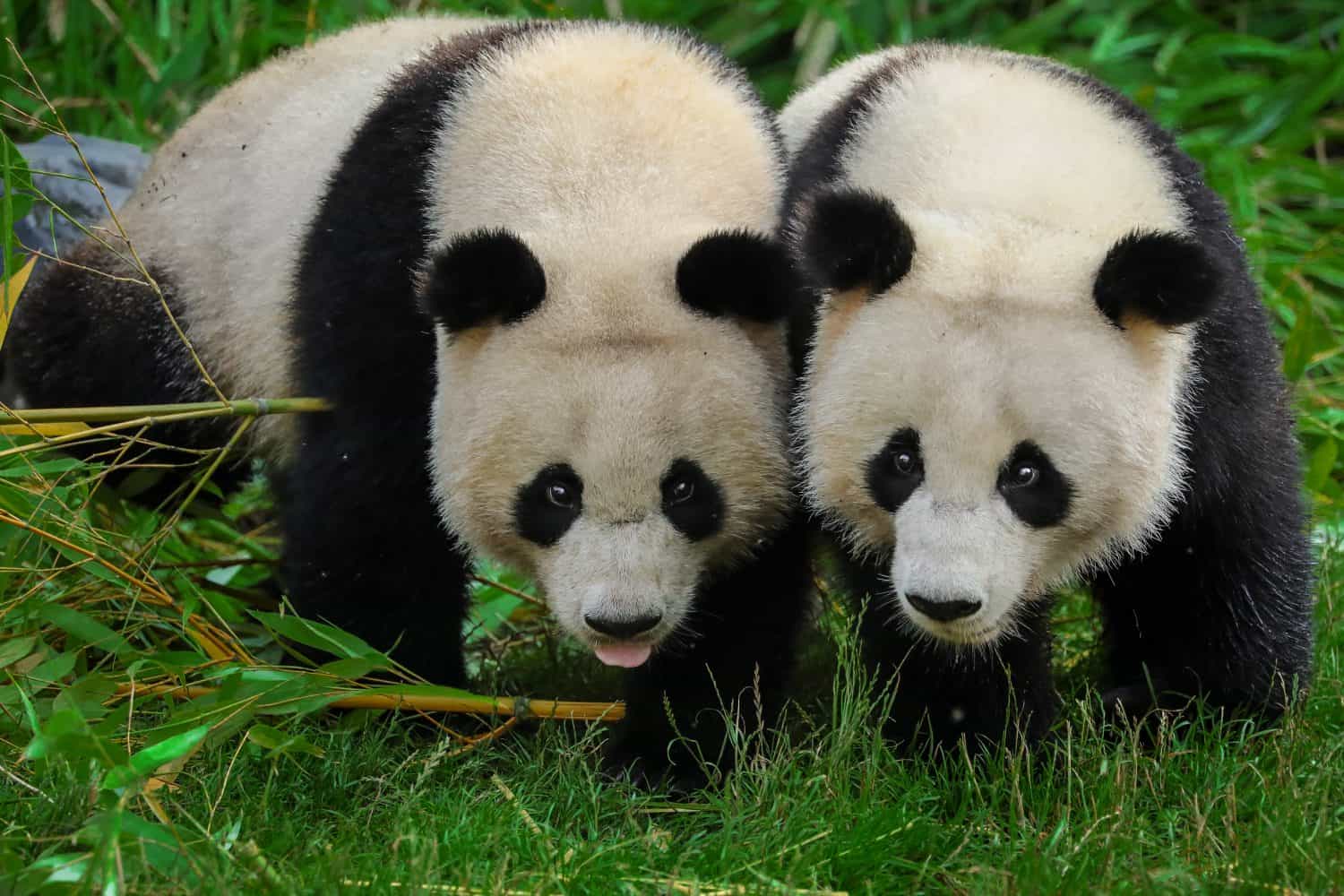
The previous pandas, similar to these, were returned to China.
©Bbu Kurkovva/Shutterstock.com
Lun Lun and Yang Yang had five other pandas born at Zoo Atlanta between 2006 and 2013 as part of the 25-year International Cooperative Research Agreement on Giant Panda Conservation between Zoo Atlanta and China. Those pandas were sent to reside at the Chengdu Research Base of Giant Panda Breeding. All five pandas have become parents.
Why Captive Breeding Programs Are Necessary for Panda Bears
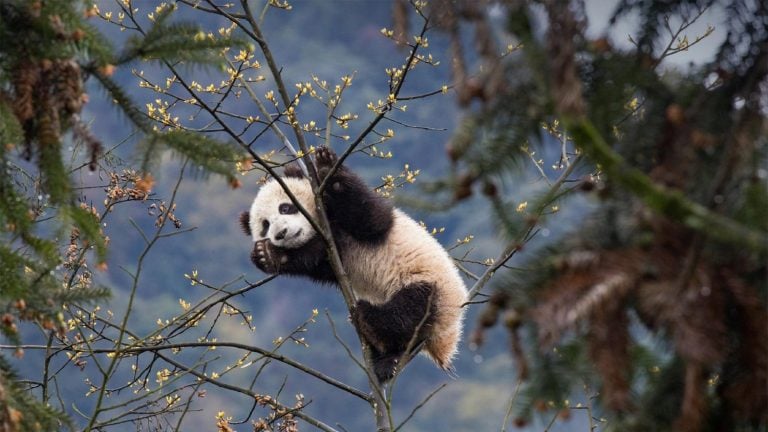
At the beginning of 2026, panda bears were no longer categorized as an endangered species. In a time when flora and fauna are going extinct at a rate of 200 species per day, panda bears are bucking this trend. With a growing population, the IUCN has classified panda bears as threatened. While this does not mean pandas are out of the woods, they are in a much better position today than they were several decades ago.
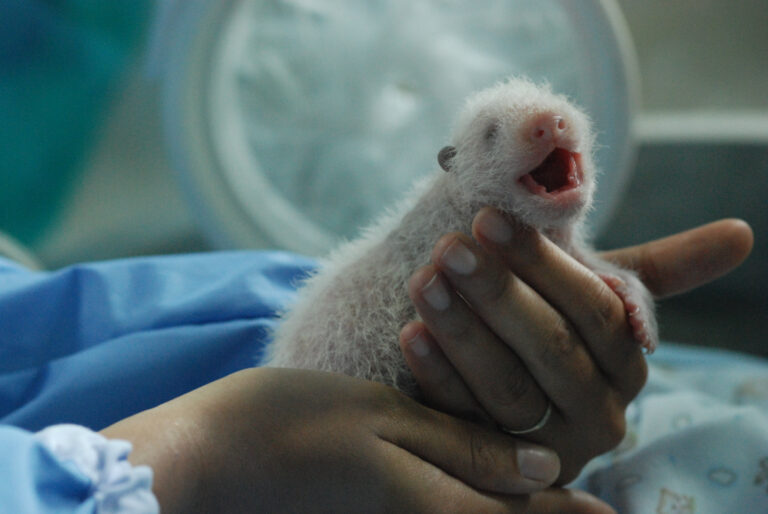
One of the biggest reasons the panda bear population is thriving today is due to captive breeding programs. Female panda bears have a very small window in which they are capable of becoming pregnant. For two to seven days in the spring, female panda bears are receptive to males. Within that window, there is a smaller 26-to-36-hour period during which the pandas are fertile. Consequently, in the wild, pregnancy is rare. By anticipating when this window occurs in captivity, there is a greater chance of pandas becoming pregnant.

Captive breeding programs are necessary to help boost the population of panda bears.
©KaveeshaVisions/Shutterstock.com
With over 20 programs worldwide, the captive panda population has grown from just over 420 in 2014 to nearly 760 in 2024. Although China is the leader in captive breeding programs, organizations outside China have also contributed more than 70 cubs to the effort to save pandas from extinction.
To date, 12 pandas born in the breeding program have been released by China into the wild. Of those, 10 continue to thrive today.
Captive breeding programs alone have not been responsible for the success of doubling the wild panda population in 30 years. In conjunction with conservation efforts in the pandas’ natural habitat, such as creating the Giant Panda National Park, strengthening anti-poaching laws, and restoring ecosystems, panda populations have rebounded. Today, the number of pandas in captivity and the wild is nearing 2,000. While this is not enough pandas to claim they no longer face the threat of extinction, there is now some breathing room where previously there was none.
Thanks to programs like the one at Zoo Atlanta, panda bears are getting a second chance. In a world so divided, it is encouraging to see countries come together for the greater good of the planet and the animals that live on it.