
Quick Take
- Reticulated pythons are the longest snakes in the world, capable of reaching 20 feet or more and weighing well over 200 pounds.
- Brief outdoor exposure can offer limited benefits for captive snakes, but public parks introduce stress and safety risks that are hard to control.
- Due to their size, strength, and long lifespan, reticulated pythons are unsuitable pets for most people and require professional-level care.
I’m not sure there’s a person in the world who could scroll past a short video of a man calmly letting a 20-foot python slither across a grassy park without stopping. The snake is enormous, thicker than a fire hose, and seemingly unbothered by the fact that it’s out in public. The handler calls it a “walk at the park,” which sounds cute, but raises multiple questions.
Is this good for the snake? Is it safe for people? And maybe most importantly, should a snake that big even be someone’s pet?
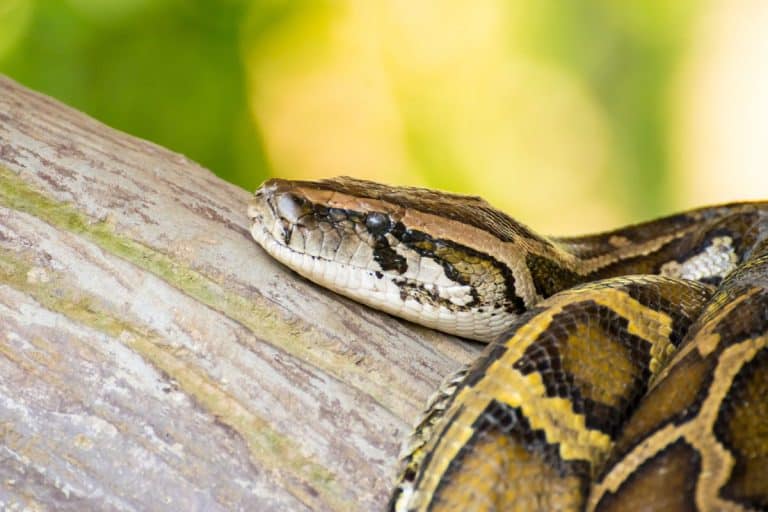
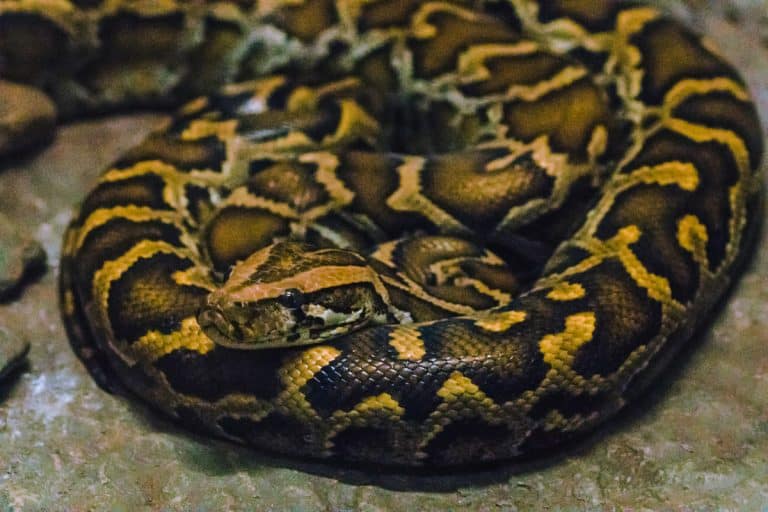
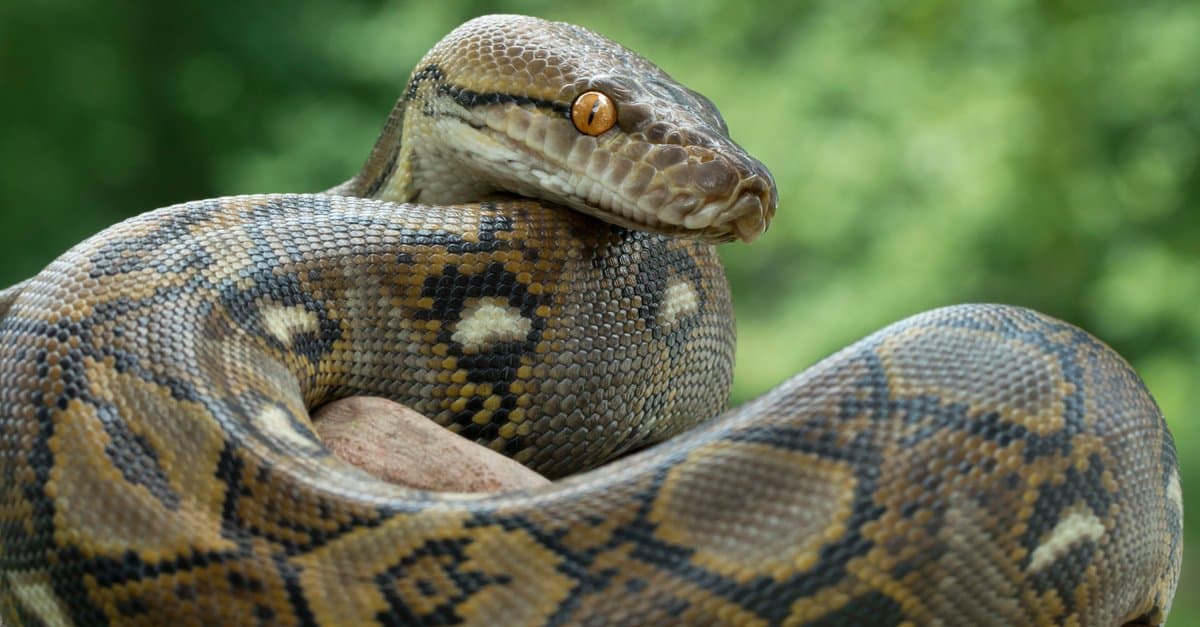
Reticulated pythons are the longest snakes in the world, with some verified individuals stretching up to 20 feet long.
©I Wayan Sumatika/Shutterstock.com
Meet the Reticulated Python
The specific snake in question is a reticulated python, native to Southeast Asia, including countries like Indonesia, Malaysia, Thailand, and the Philippines. In the wild, they inhabit forests, grasslands, and wetlands. They’re strong swimmers, often traveling along rivers and streams. These snakes are ambush predators, relying on stealth, patience, and raw strength rather than venom.
What sets reticulated pythons apart is their sheer size. They’re widely recognized as the longest snake species on Earth. Verified wild individuals regularly reach 15 to 20 feet—about the length of a pick-up truck—and some exceptional specimens have measured slightly longer. Length records beyond that tend to drift into legend, but even conservative numbers are impressive enough.
Weight is where things get especially striking. A fully grown reticulated python can weigh anywhere from 200 to over 300 pounds, depending on length, girth, sex, and overall health. Females are typically larger and heavier than males, sometimes dramatically so. These snakes aren’t just long. They’re dense, muscular animals built to take down big prey like pigs and deer. And while they’re not naturally inclined to do so, they can easily overpower a large human.
The man in the video describes his snake as being around 20 feet long, and from the looks of it, there’s no reason not to take his word for it. That’s entirely plausible for a mature reticulated python, especially one kept in captivity where food is consistent and predators aren’t a concern. A snake of that length would likely weigh at least 200 pounds, and possibly closer to 250 or more if it’s well-fed and thick-bodied.
That’s heavier than the average adult human, which is one of the reasons experienced handlers emphasize snakes of this size should never be managed alone. Once a reticulated python reaches adulthood, it’s no longer a one-person animal, no matter how calm it appears.
Is “Taking a Walk” Good for the Snake?
The phrase “walk at the park” makes sense for dogs, but snakes don’t walk, nor do they experience enrichment the same way mammals do. Still, being outdoors can offer benefits for captive snakes when done correctly.
Snakes are ectothermic, meaning they rely on external heat sources to regulate their body temperature. Natural sunlight provides full-spectrum light, including ultraviolet rays that aren’t always replicated perfectly by indoor bulbs. Exposure to natural light can support normal behaviors and help regulate circadian rhythms.
Fresh air, varied textures, and new scents can also provide mild stimulation. For a snake that spends most of its life in an enclosure, a controlled outdoor experience can be enriching in a limited sense. However, enrichment for snakes is subtle. They don’t crave novelty the way a dog might. Too much stimulation can actually be stressful.
How Long Should a Pet Snake Be Outside?
For most pet snakes, outdoor time should be brief and closely supervised. Ten to thirty minutes is often considered plenty, depending on temperature, humidity, and the individual snake’s tolerance. The ground should be clean and free of pesticides, fertilizers, or sharp objects. The snake should never be allowed near people, pets, or traffic.
Temperature matters a lot. Reticulated pythons thrive in warm conditions, generally between the mid-80s and low 90s when active. If it’s too cool, the snake can become sluggish. If it’s too hot, overheating becomes a serious risk. Unlike mammals, snakes can’t sweat or pant to cool themselves.
Then there’s the issue of stress. A quiet backyard is very different from a public park. Unfamiliar noises, vibrations, and people can trigger defensive behavior, even in a snake that’s normally calm. A startled reticulated python doesn’t have to be aggressive to cause harm. Its size alone makes sudden movements dangerous.
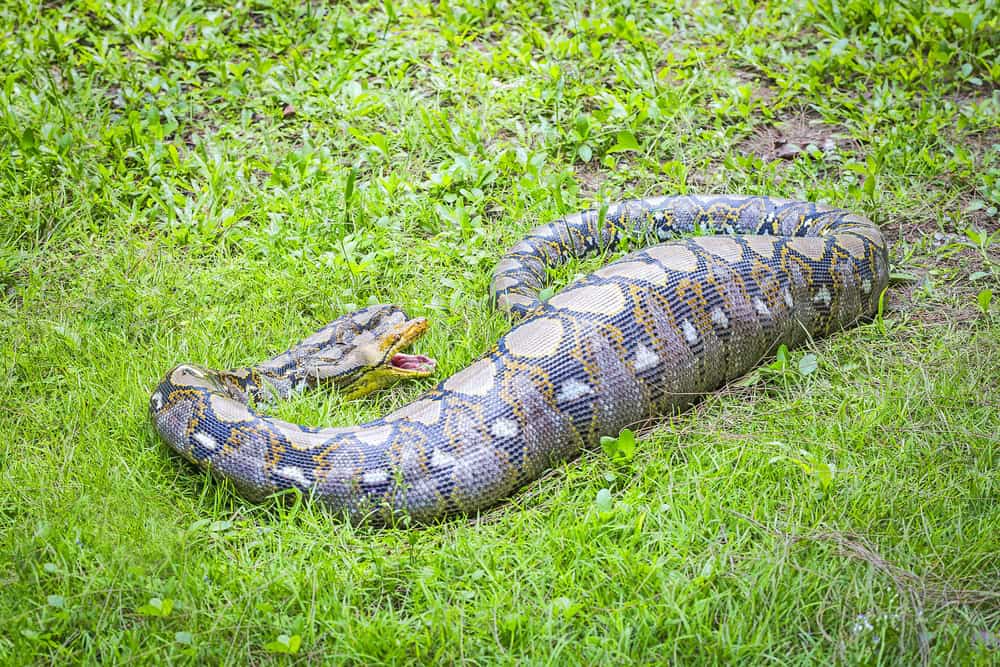
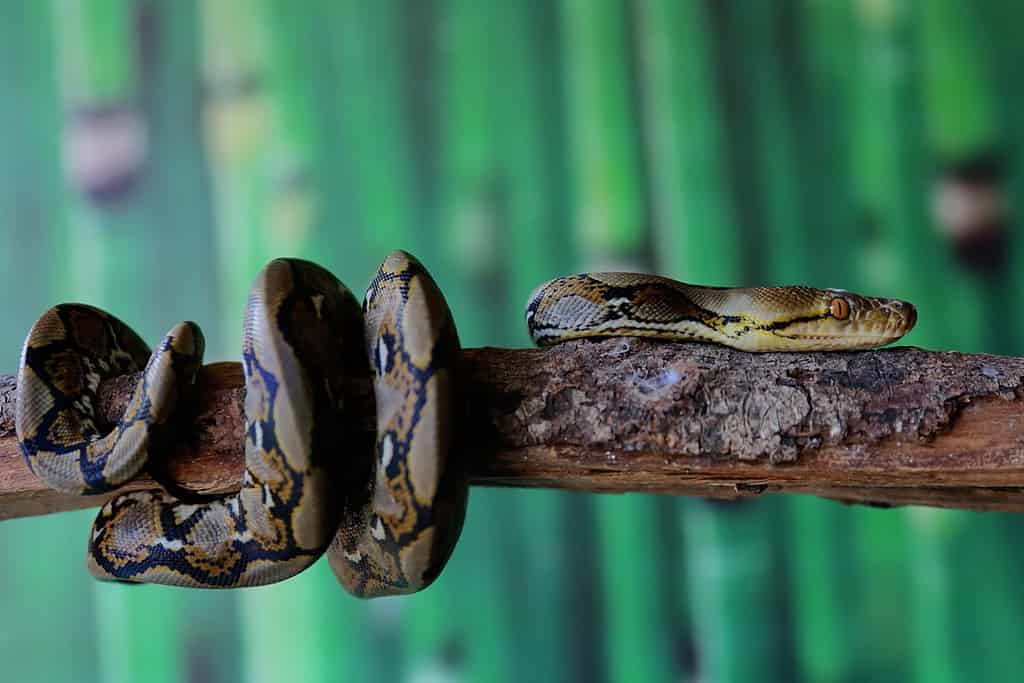
Natural sunlight provides full-spectrum light that indoor bulbs don’t always replicate for captive snakes.
©tanoochai/Shutterstock.com
Is It Safe to Take a Giant Snake to a Public Park?
From an animal welfare standpoint, public outings are rarely ideal for snakes of any size, especially one as large as a reticulated python. From a public safety standpoint, the risks are obvious.
Even well-socialized snakes are still wild animals. They don’t understand leashes, boundaries, or social norms. A moment of stress, a loud noise, or a curious onlooker getting too close can escalate a situation quickly. If a 200-pound snake decides to move somewhere it shouldn’t, stopping it isn’t easy.
There are also legal considerations. Many states and municipalities have laws restricting where exotic animals can be taken in public, even if ownership itself is legal. These laws exist to protect both people and animals, and ignoring them can result in fines, confiscation, or worse for the animal involved.
Are Reticulated Pythons Good Pets?
This is the big question, and the honest answer that snake enthusiasts aren’t going to want to hear is that reticulated pythons are not good pets for the vast majority of people.
As hatchlings, they’re small, manageable, and often sold cheaply. That’s part of the problem. A baby reticulated python might be only two feet long. Adorable, right? But it grows. Fast. In captivity, reticulated pythons often grow larger and heavier than their wild counterparts because they have consistent access to food and no natural predators. Lengths of 15 to 20 feet are common for adult females, and weights exceeding 250 pounds are not unheard of. Within a few years, it can outgrow standard enclosures and require specialized housing—like its own small room or shed.
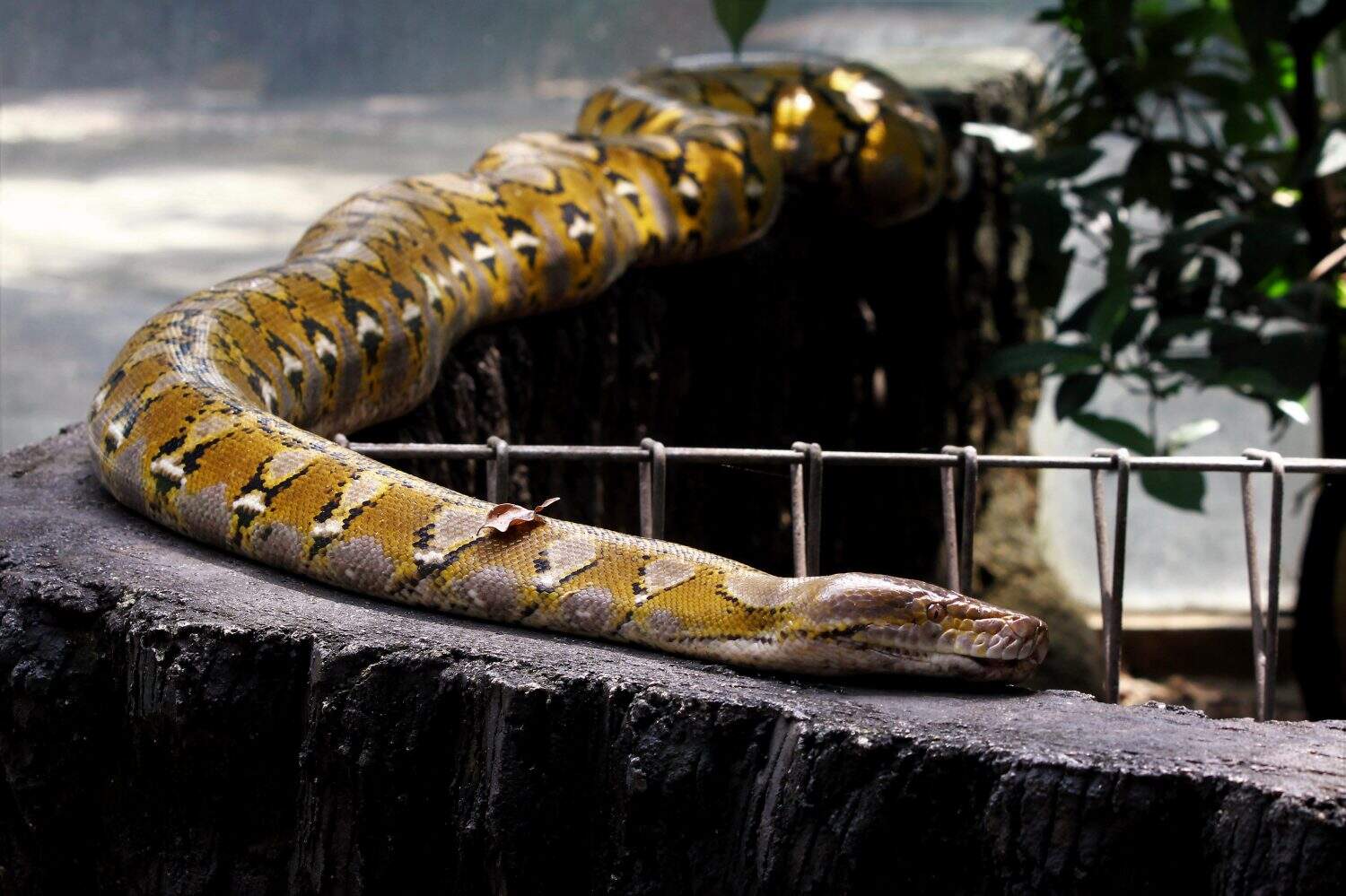
Adult reticulated pythons often require enclosures as large as a small room to safely accommodate their size and strength.
©Padodo/Shutterstock.com
Beyond their sheer size, general care requirements are demanding. They need large, secure enclosures with proper heating, humidity control, and structural reinforcement. Feeding an adult reticulated python is expensive and logistically challenging. Veterinary care for a snake that size is limited and costly.
Temperament varies widely. Some individuals remain relatively calm, while others become defensive or unpredictable as they mature. Even a docile reticulated python can injure someone unintentionally simply by moving or constricting in response to perceived restraint.
It’s a responsibility that lasts decades. Reticulated pythons can live 20 to 30 years in captivity. That’s a long-term commitment to housing, feeding, and managing an animal that can outweigh you. Many snakes end up surrendered or euthanized once they outgrow their owners’ ability to care for them. That’s one of the reasons large constrictors are controversial in the pet trade.
For these reasons, experienced herpetologists often recommend that only professionals with extensive resources and backup support consider keeping reticulated pythons.
Just an Innocent Walk in the Park?
From the snake’s perspective, the “walk” itself probably isn’t the highlight or the horror the internet makes it out to be. Juliet isn’t bonding with her owner or enjoying a stroll in the human sense. She’s experiencing warmth, unfamiliar textures, and new stimuli.
The bigger concern is context. A quiet, controlled outdoor session on private property is one thing, but a public park introduces variables that no handler can fully control. For an animal of Juliet’s size, those variables matter. A lot.
We can’t know for sure the context of the Juliet video. Maybe there were a team of handlers behind the scenes. Maybe they had that section of the park blocked off. Perhaps this video was carefully staged and perfectly safe. But just in general, it’s not a good idea to take your snake for a “walk in the park.”
Watching a 20-foot python glide across grass is undeniably fascinating, but fascination shouldn’t override responsibility. Snakes like Juliet aren’t props, conversation starters, or social media content. They’re living animals with specific needs that don’t always align with public displays.
Reticulated pythons inspire awe for a reason, and that awe should guide us toward caution, respect, and realism.
CORRECTION: This article was updated on February 11, 2026, to correct two photos that misidentified reticulated pythons as Burmese pythons.