Quick Take
- Pigs demonstrate advanced intelligence, including problem-solving, memory, and symbolic understanding that rivals dogs and, in some tasks, primates.
- Scientific research shows pigs have rich social lives and emotional complexity, including cooperation, play, optimism, and stress-related behaviors.
- Despite this evidence, most pigs live in industrial farming conditions that severely restrict their physical and psychological well-being.
March 1, 2026 is National Pig Day, celebrating an animal that more often than not brings to mind filth, cartoons, and maybe a few bacon jokes. But the reality of our relationship to pigs is far more uncomfortable. Pigs are widely recognized by scientists as one of the most intelligent and emotionally complex domestic animals on Earth, yet tens of millions of them spend their lives in industrial agriculture systems that leave little room for curiosity, play, or even basic comfort. The disconnect between what science tells us about pigs and how society treats them is glaring, and once you see it, it’s hard to unsee.
Decades of behavioral research show that pigs can solve problems, form long-term social bonds, remember places and individuals, and experience emotional states that go far beyond simple pleasure and pain. In many measurable ways, their cognitive abilities rival those of dogs and, in certain tasks, even primates. National Pig Day gives us a good reason to step back, look at what the science actually says, and ask why an animal this mentally and emotionally rich is so often reduced to a production unit.
Intelligence
Saying pigs are “smart” is vague, so researchers tend to focus on specific abilities: learning speed, memory, problem-solving, and flexibility. On these measures, pigs consistently impress.
Studies from institutions like Purdue University and the University of Cambridge have shown that pigs can learn tasks as quickly as dogs and faster than many other domestic animals. In controlled experiments, pigs have been trained to use joysticks to move cursors on computer screens, successfully completing simple video game-like tasks to earn food rewards. That kind of abstract interaction requires understanding cause and effect, not just rote conditioning.
Pigs also have strong long-term memories. They can remember the locations of food sources weeks later and navigate complex environments using spatial cues. In maze tests, pigs don’t just memorize routes, they adapt when paths are blocked, choosing alternate solutions instead of panicking or giving up.
One of the more striking findings is pigs’ ability to understand symbols. Research shows that pigs can learn that specific visual cues represent different outcomes, a foundational skill for more advanced reasoning. This kind of symbolic thinking is often highlighted in primate research, yet pigs demonstrate it—they just get far less public attention for it.
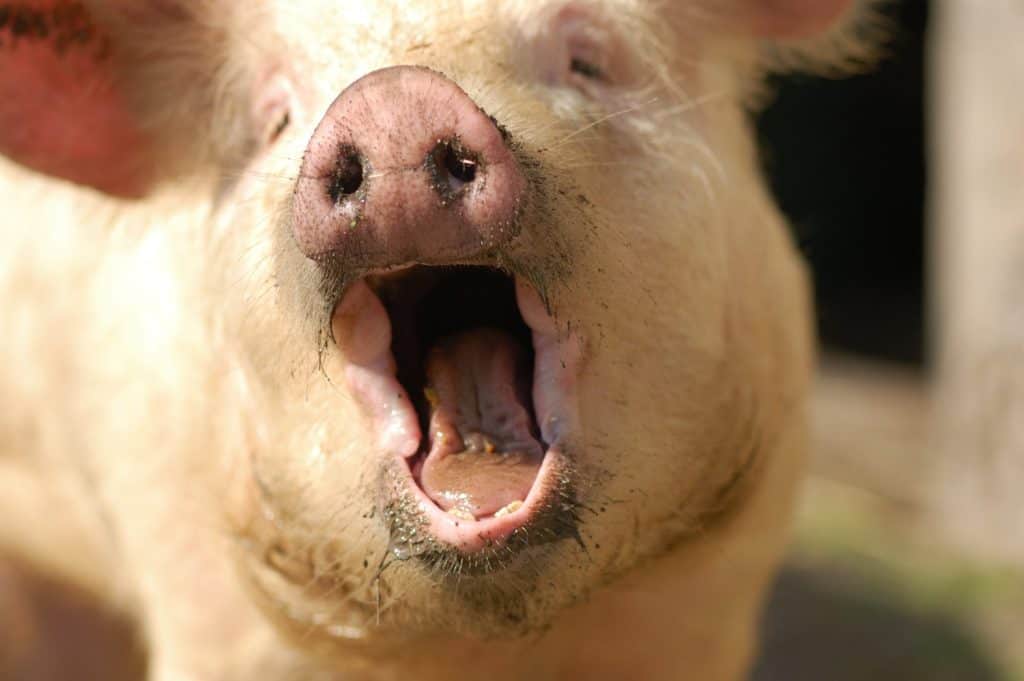
Pigs have demonstrated problem-solving skills and long-term memory in studies, including learning to manipulate joysticks to complete computer-based tasks.
©Art_man/Shutterstock.com
Sociability
In natural or free-range settings, pigs form stable social groups with clear hierarchies. They recognize individual pigs by sight, sound, and smell, and they remember past interactions. Friendships are real in pig societies. Some pigs preferentially rest or forage with specific companions, even when other options are available.
Mother pigs show especially complex behavior. After birth, they communicate with their piglets through a range of vocalizations, and piglets quickly learn to recognize their mother’s voice. These bonds aren’t fleeting. Piglets raised in enriched environments show signs of distress when separated from their mothers, similar to what’s seen in other socially complex mammals.
Pigs also display cooperation. In problem-solving studies, pairs of pigs have learned to work together to access food, adjusting their behavior based on what their partner does. That kind of coordination suggests an understanding of another individual’s role in a shared task, a trait once thought to be limited to a handful of species.
Communication
Pigs are surprisingly talkative. They produce a wide range of vocalizations, including grunts, squeals, barks, and screams, each associated with different contexts. Researchers have identified distinct calls used during feeding, social interaction, and distress.
Facial expressions also matter. Subtle changes in ear position, eye shape, and body posture communicate mood and intent to other pigs. These signals help maintain social harmony and avoid unnecessary conflict.
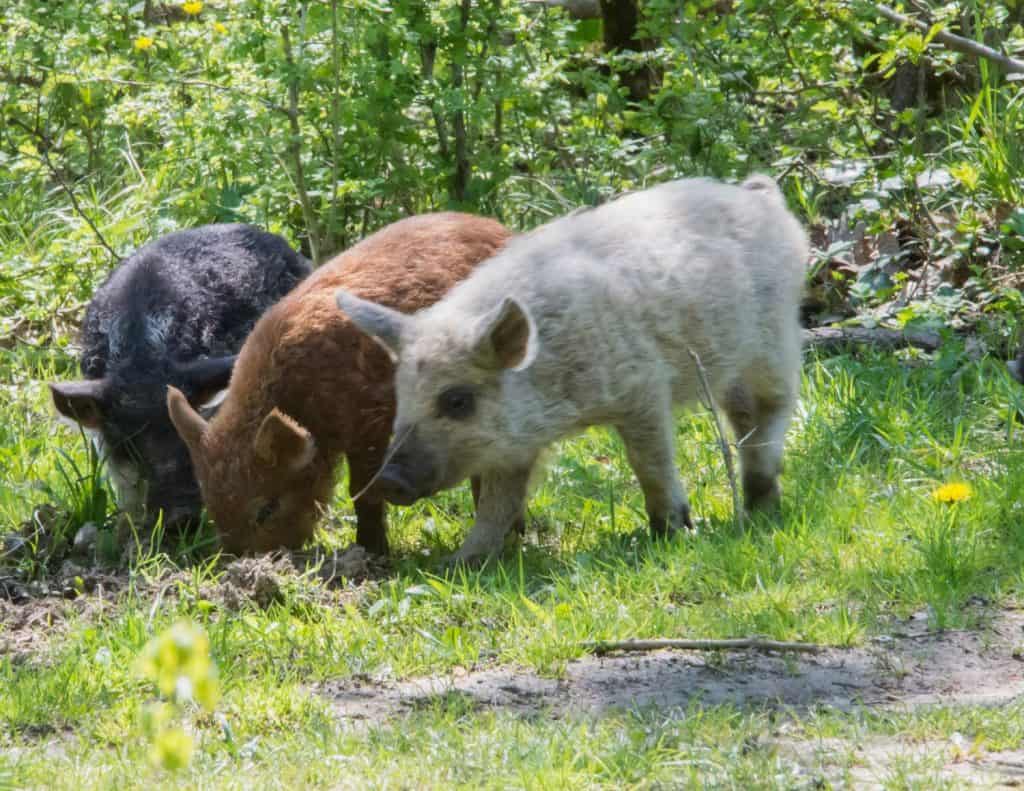
In natural settings, pigs form stable social groups, recognize individuals, and even choose preferred companions to rest and forage with.
©WindVector/Shutterstock.com
Emotional Complexity
Researchers studying pig behavior have documented signs of optimism and pessimism based on past experiences. In what are called judgment bias tests, pigs exposed to positive environments approach ambiguous situations more confidently, while pigs from stressful environments act cautiously or withdraw. This mirrors findings in dogs and even humans, where emotional state influences decision-making.
Pigs also experience boredom. When kept in barren environments with nothing to explore, pigs are more likely to engage in repetitive behaviors, such as bar biting or chewing on non-food objects. When given enrichment like straw, toys, or room to explore, those behaviors decrease, and pigs spend more time playing and interacting.
Play itself is an important indicator of emotional health. Young pigs chase one another, toss objects, and engage in mock fighting, behaviors associated with learning social rules and relieving stress. Adults play too, especially when they’re given space and stimulation. Animals that play are generally animals that feel safe.
Given everything science has uncovered about pig intelligence and emotion, the conditions of industrial pig farming are hard to reconcile.
The Industrial Reality
In the United States, the majority of pigs are raised in large-scale operations designed for efficiency. Breeding sows are often confined in stalls so narrow they can’t turn around. Growing pigs may be housed by the thousands in enclosed barns with little environmental enrichment. For animals that are meant to roam, forage, and socialize, these environments are profoundly restrictive.
The problem isn’t just physical discomfort. It’s psychological deprivation. An animal capable of curiosity, memory, and social bonding is left with few outlets for those traits. The result is stress, frustration, and abnormal behavior, outcomes well-documented in veterinary and animal welfare literature.
This doesn’t mean all farmers are immoral or even indifferent. Many are constrained by economic pressures, industry standards, and consumer demand for low-cost meat. But acknowledging those pressures doesn’t erase the ethical question. If pigs are as cognitively and emotionally complex as the evidence suggests, what level of care do we owe them?
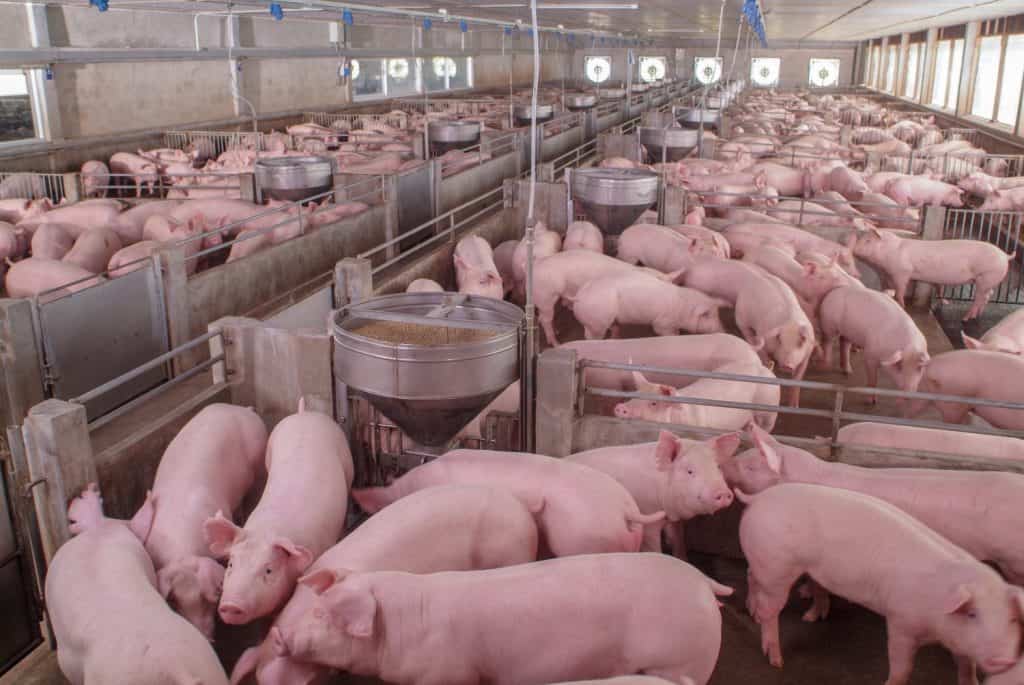
Most pigs in the U.S. are raised in large-scale facilities where limited space and enrichment restrict natural behaviors like exploration and play.
©Mai.Chayakorn/Shutterstock.com
A Persistent Disconnect
Let’s face it, pigs occupy a pretty low rung in broad society’s moral hierarchy. Why? Despite all the science, why does humankind at large still hold such a low opinion of this amazing animal?
Part of the answer is cultural. In many Western societies, pigs are primarily viewed as food animals, not companions. Dogs get credit for their intelligence because we live with them. Pigs, usually kept out of sight, don’t get the same chance to show who they are.
Language plays a role too. Pigs are often used as symbols of filth, gluttony, or ugliness—stereotypes that say far more about the humans using making this comparison than the animals themselves. Still, those associations make it easier to dismiss their inner lives.
There’s also a psychological convenience. Recognizing pig intelligence creates discomfort for anyone who eats pork or benefits from pig farming. Ignoring the science allows people to avoid that tension.
Not a Lecture, Just Facts
The research on pig cognition doesn’t demand a single moral conclusion. Scientists aren’t telling people what to eat or how to live. But what the science does do is remove plausible deniability.
It’s no longer accurate to say pigs are simple, unaware creatures. They’re learners, communicators, and social beings with emotional depth. This is a reality that’s hard to ignore when discussing farming practices, animal welfare standards, or personal food choices.
Some changes are already underway. Certain producers are moving toward group housing for sows and providing more enrichment. Animal welfare guidelines increasingly emphasize mental well-being alongside physical health. These steps don’t solve every issue—far from it—but at the very least they reflect a growing acknowledgment of what pigs need to thrive.

Pigs are playful, curious animals whose intelligence becomes obvious when they’re given opportunities to explore and learn.
©aBSicht/Shutterstock.com
Celebrating National Pig Day
If you found all that depressing, you’re certainly not alone. But National Pig Day doesn’t have to be somber. Pigs are funny, playful, and endlessly curious animals. Watching a pig figure out a puzzle or flop down for a nap after a good meal is genuinely joyful, and it’s okay to derive pleasure from that while keeping in mind the misunderstanding and mistreatment of this incredible animal.
What science has taught us about pigs is that they’re paying attention to the world around them. On National Pig Day, let’s start working toward a world that pays attention to them in return.