
Quick Take
- The father was the one who spotted the tooth first, so why couldn't he be the one to pull it out? How Bo made the find →
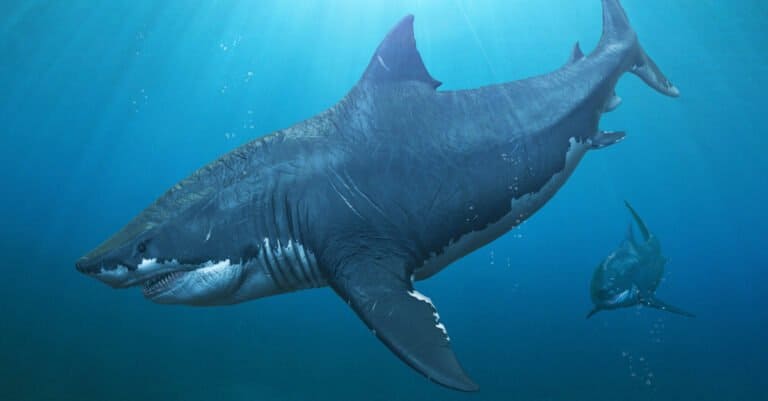
- A 2025 study just overturned decades of assumptions about what megalodon actually looked like. See the 2025 study findings →
- Megalodon fossils are extraordinarily rare in New Jersey, which is why experts have a theory for how this one got there. Experts explain the rare find →
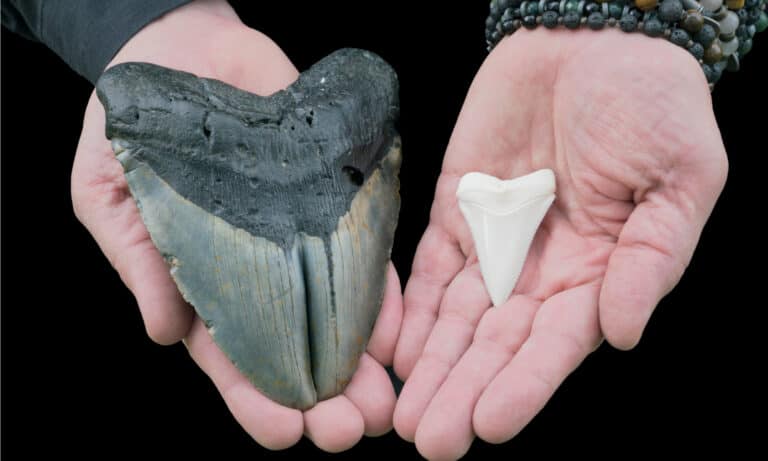
- Megalodon teeth dwarf a great white's, and the record-holder is in a league of its own. Compare the record-breaking teeth →
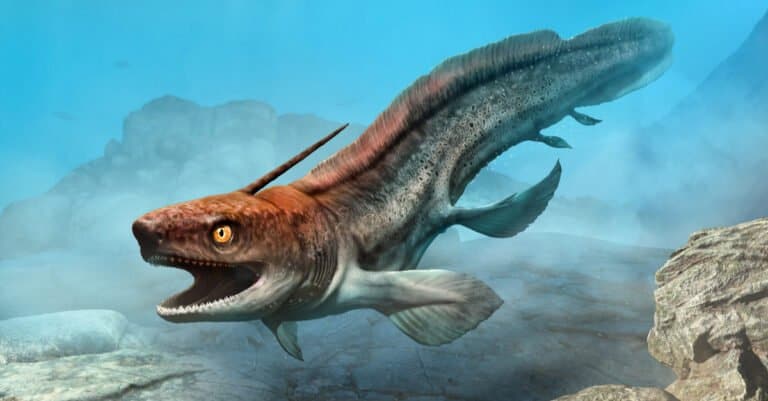
A family visiting the Jersey Shore found more than they expected while combing the beach for seashells. Bo Bowers and his father, Mike, who were vacationing in Sea Isle City, found a fossilized tooth from a megalodon (Otodus megalodon), the largest shark known to have ever lived. The earliest known megalodon fossils date to about 23 million years ago. It’s believed to have gone extinct about 3.6 million years ago.

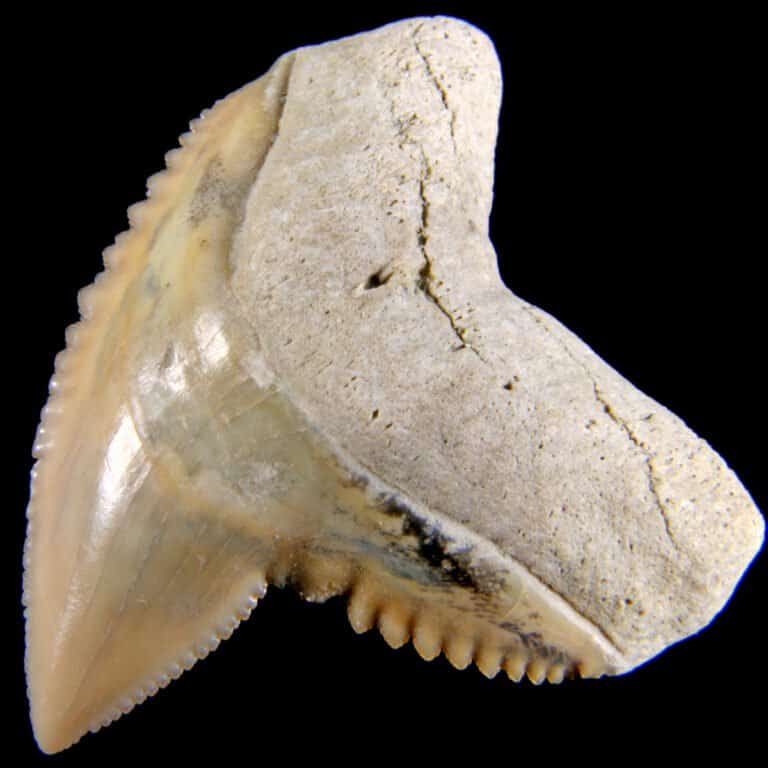
A Pennsylvania family found a megalodon shark fossil that was about 4 inches long on the New Jersey shore.
©Lydia Sokor/Shutterstock.com
A Boy’s Small Hand Uncovered a Massive Shark Tooth
Bo’s dad told CBS News that he spotted something unusual wedged in a rock jetty along the beach, but he couldn’t fit his hand inside the opening. He called his son over, whose smaller hand fit perfectly. Bo then pulled out the massive shark tooth.
The family took the tooth to the Cape May Whale Watch and Research Center to identify their discovery. Experts from the center confirmed that the Bowers family had indeed discovered a megalodon tooth.
How Do Experts Recognize a Megalodon Tooth?
Experts look for unique anatomical features when identifying a megalodon tooth. The teeth were large and triangular, with serrations, much like a steak knife. These teeth helped the shark slice through the flesh and bones of its prey, which included large marine animals.
Just How Big Was the Tooth?
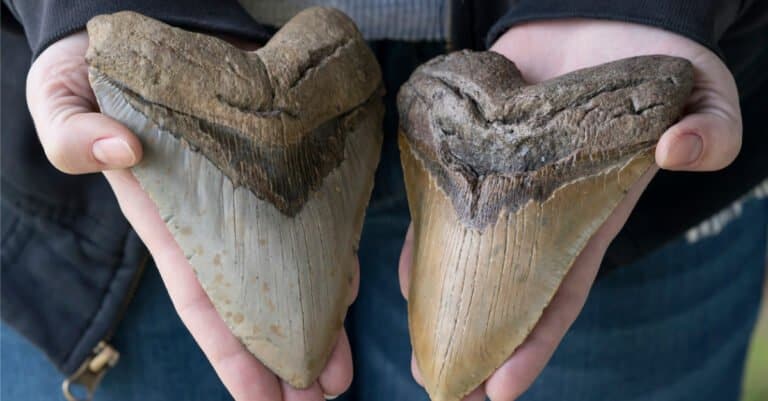
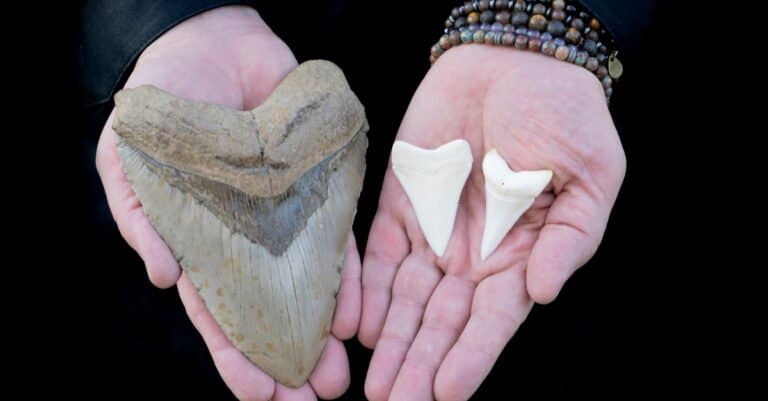
Megalodon was one of the largest predators to have ever lived. The tooth that Bo pulled from the rock jetty was about 4 inches long. According to the Maryland Natural History Society, the largest ever found was 6.9 inches long. For comparison, great white shark teeth can reach up to 2 inches.
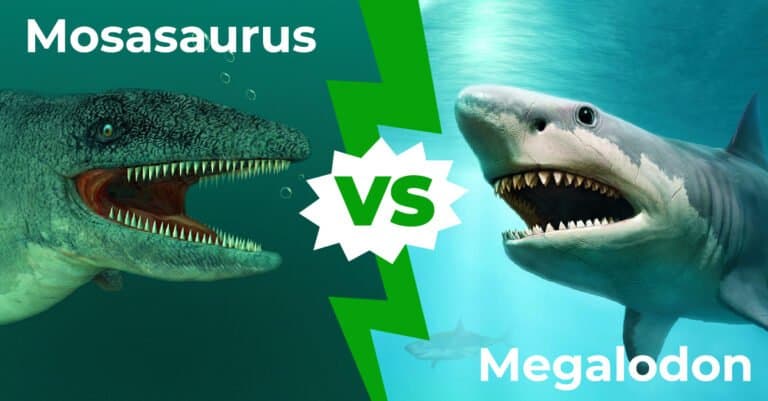
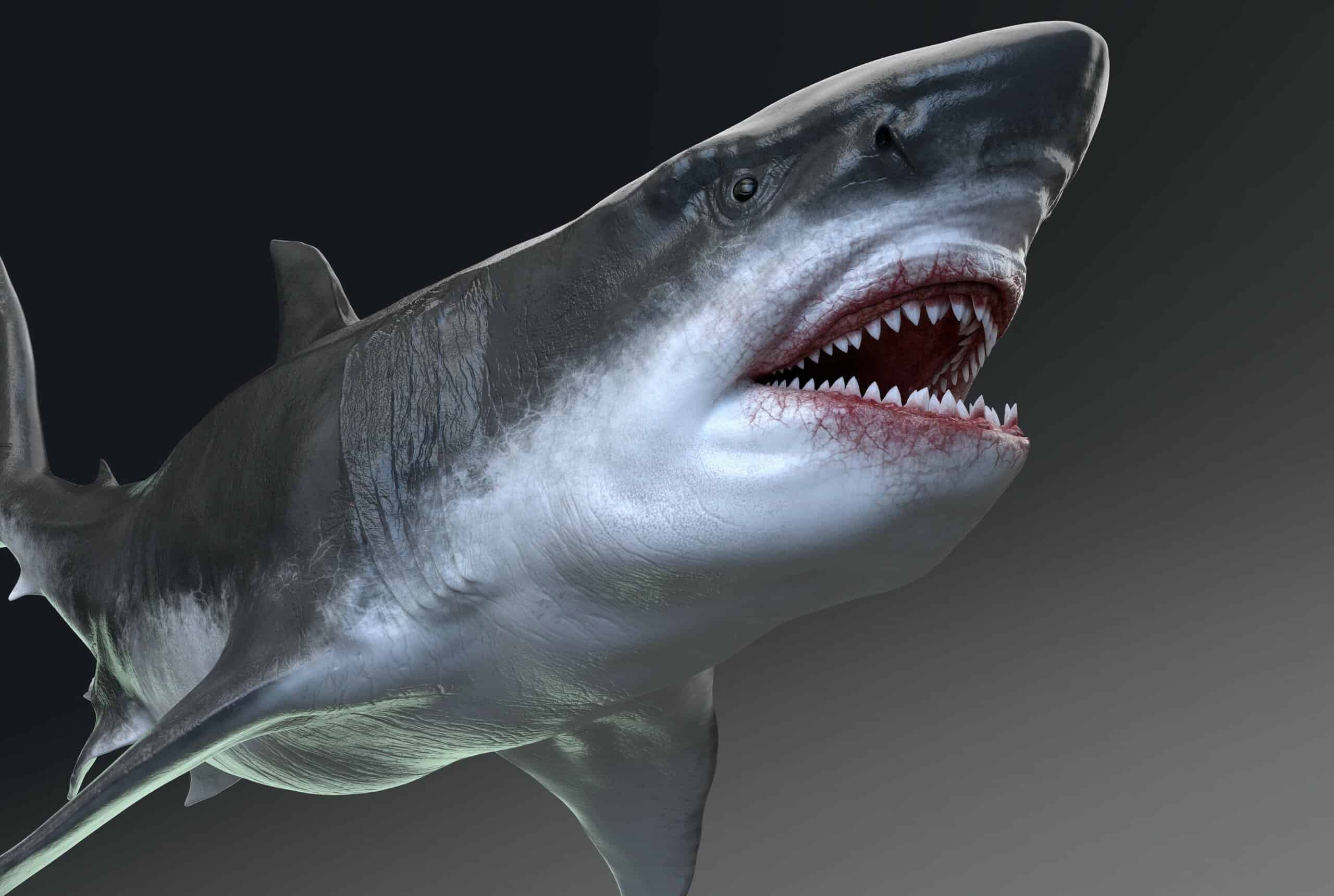
A 2025 study found evidence that the giant shark may have reached up to 80 feet in length. Older reconstructions often depicted megalodons as stocky and similar in shape to great white sharks. However, new research suggests that the megalodon may have been more streamlined and hydrodynamic.
How Did a Megalodon Tooth End Up on the Jersey Shore?
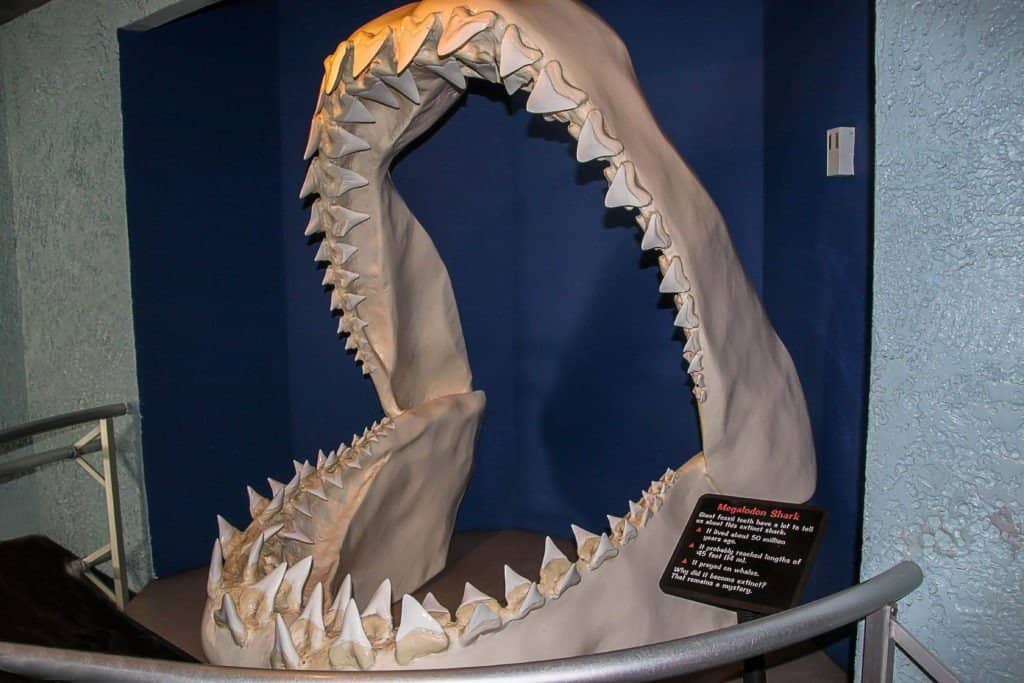
Megalodon jaw fossils seen in museums are replicas, as complete jaw fossils have never been found.
©Mulevich/Shutterstock.com
According to a New Jersey State Museum Facebook post, fewer than five specimens of megalodon have ever been found in New Jersey. Beachcombers in New Jersey are much more likely to find a fossilized tooth from one of megalodon’s earlier relatives than from a megalodon itself. Experts from the research center told NJ.com that the fossil may have been brought ashore during a beach replenishment project.
Shark teeth may end up as fossils when they fall onto the ocean floor and get covered by sediment. After thousands or millions of years, and just the right chemical reaction, a tooth can become a fossil.
The Bowers family told CBS News that they plan to keep their exciting find.