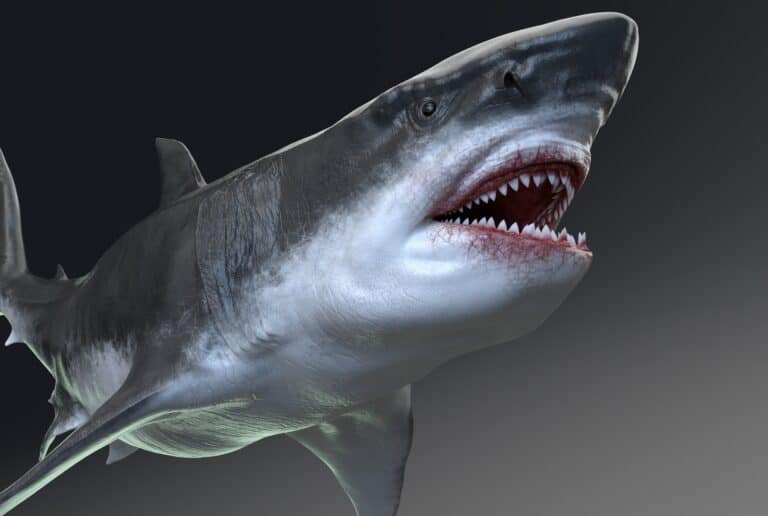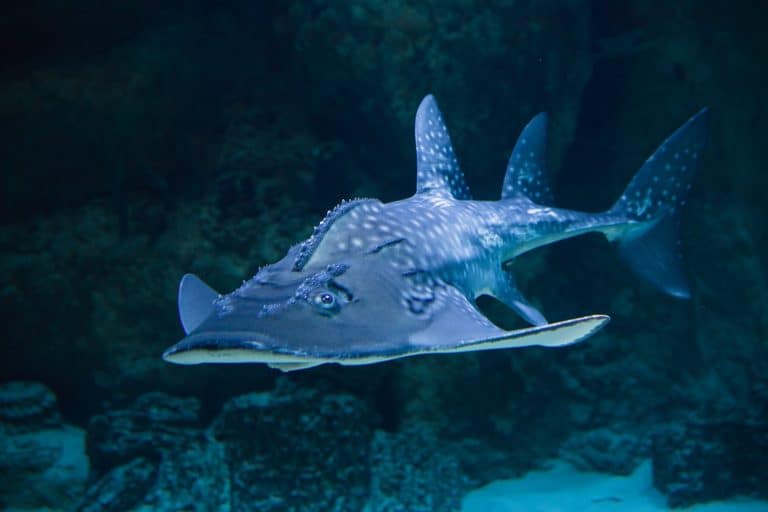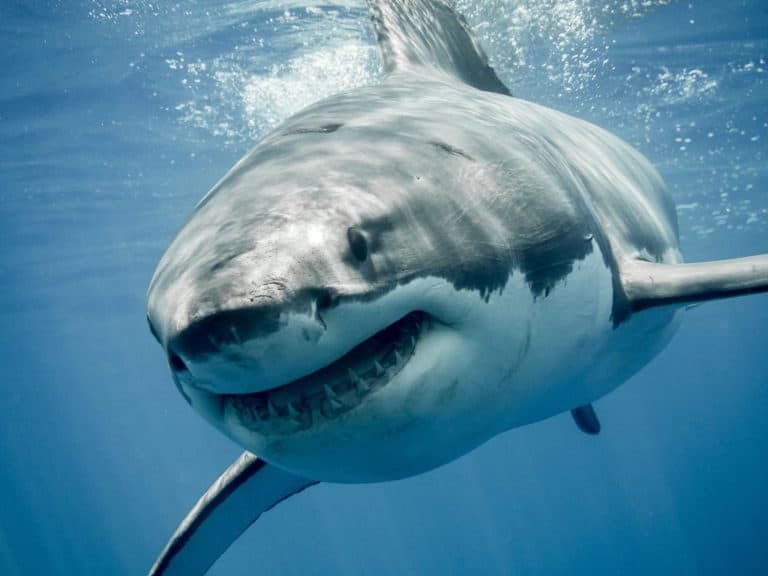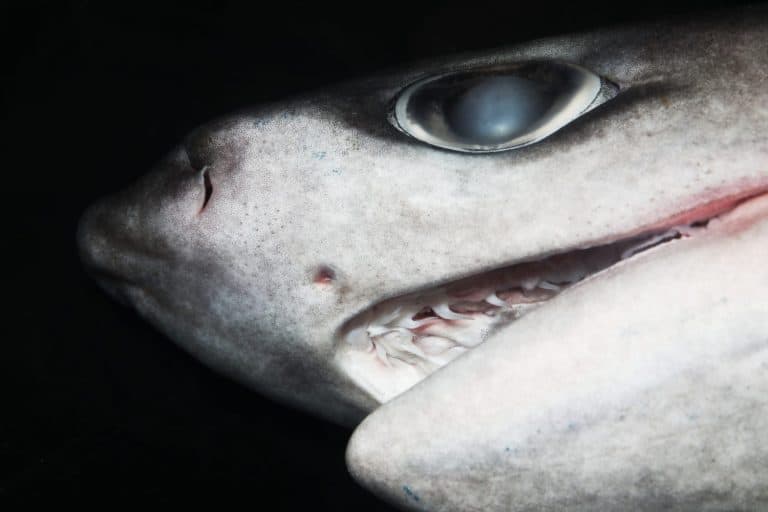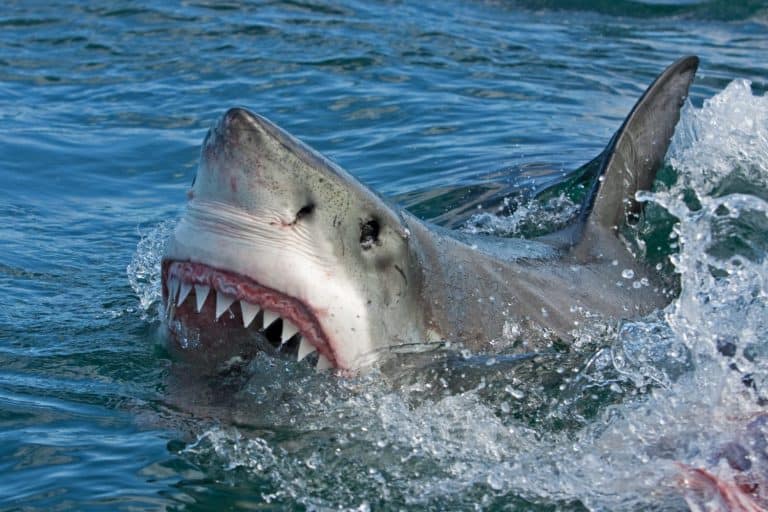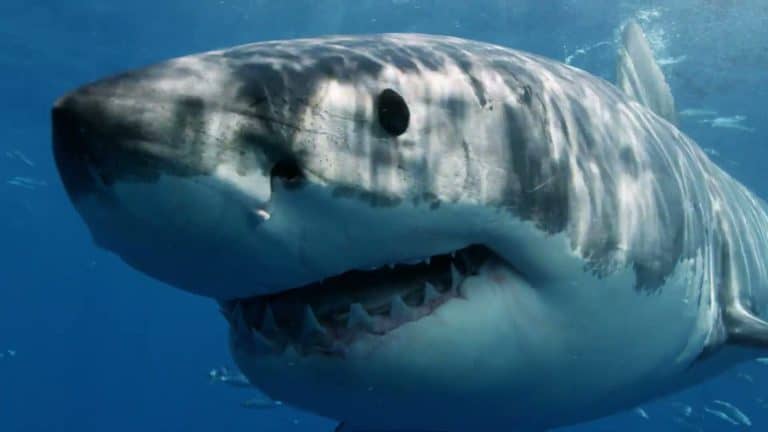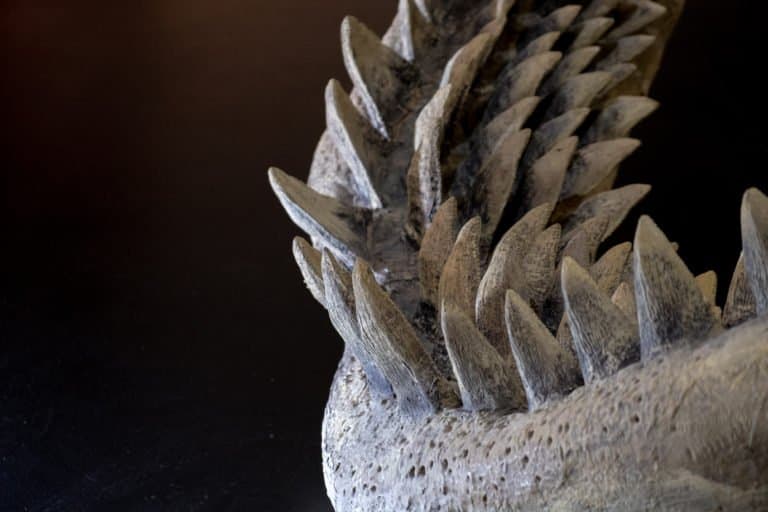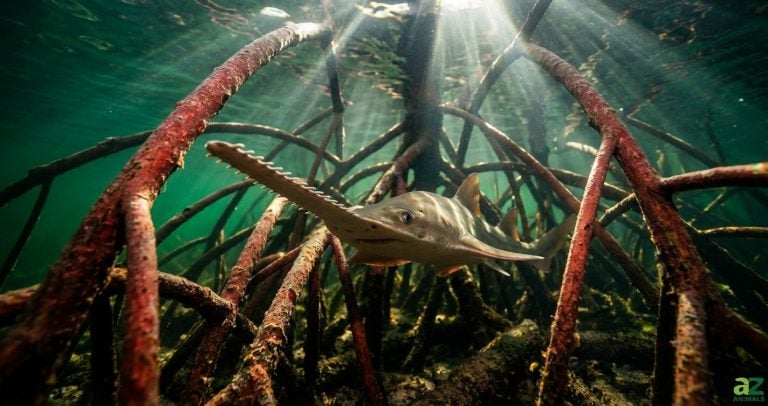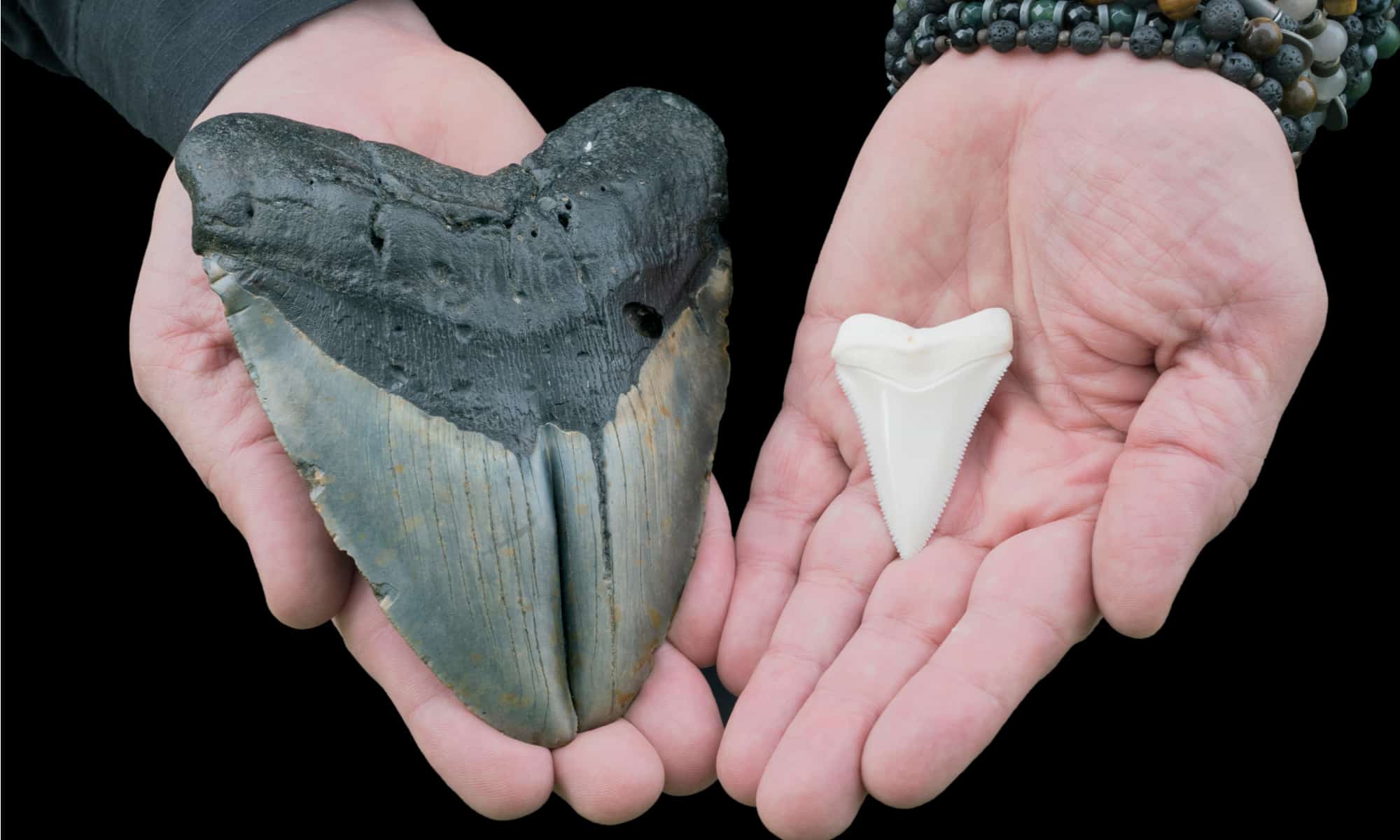

Sharks are some of the oldest creatures on our planet, predating even dinosaurs. For the last 450 million years, sharks have navigated waters across Earth, surviving five mass extinctions. These vertebrates are incredibly diverse and absolutely fascinating. While you may never want to come in contact with a shark while swimming, there’s another way to learn about and feel connected to these creatures: shark tooth hunting. Sharks may have between 50-300 teeth at any given time, and certain species of sharks will lose tens of thousands of teeth throughout their lifetime.
Modern shark teeth, usually white in color, are always fun to find. But, especially on North Carolina beaches, you’re more likely to find fossilized shark teeth. Over the last year of living in North Carolina, I have visited several beaches and collected upwards of 200 teeth. If you think you couldn’t do the same, think again! When you’re searching for teeth, look for small, dark, and shiny triangles with a T or Y shape at the top. They might have a different pattern or texture than the surrounding sand or shells. Using a sifter can also enhance your chance of finding teeth. But the best way to find shark teeth? Make sure you’re at the right beaches. Here are the top eight spots in North Carolina where you can find shark teeth.
How Do Shark Teeth Become Fossilized?
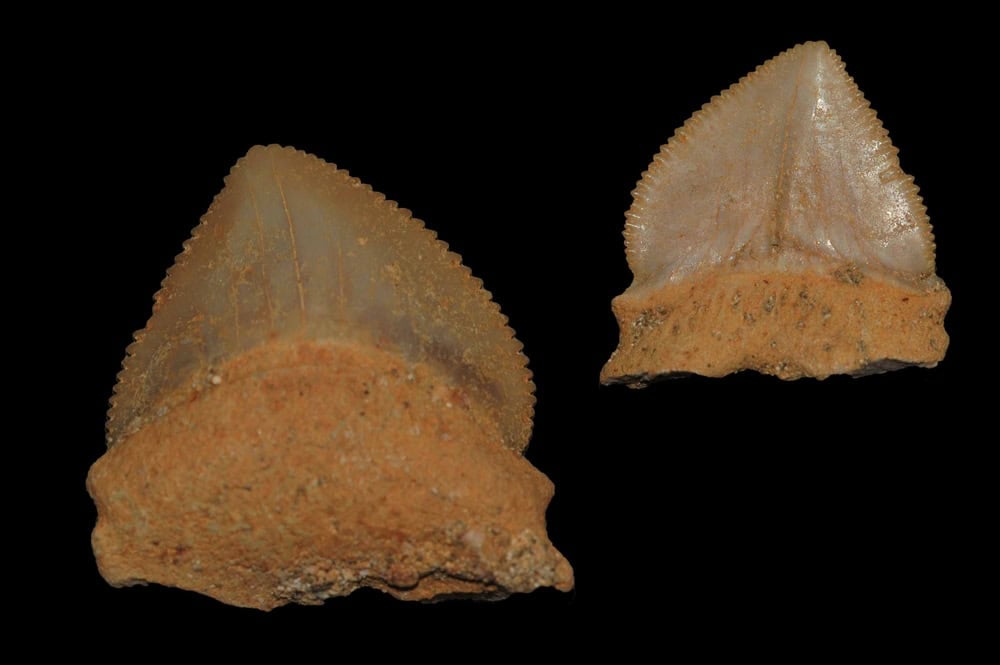
Shark teeth become fossilized through a process known as permineralization.
©Ibe van Oort/Shutterstock.com
Considering how many teeth sharks lose, why do we often find more fossilized teeth than teeth from extant (living) sharks? This has to do with the sediment on the sea floor where the sharks are losing or have lost teeth. According to the Florida Museum of Natural History, fossilization happens when shark teeth are quickly covered by sediment. This sediment is protective against weathering, bacteria, and oxygen, or other factors that could contribute to the teeth’s decay or destruction.
Over the next several thousand years or longer, in the case of many of the teeth you’ll find on the beaches in North Carolina, permineralization occurs. This sounds complex, but it’s not. Essentially, water sinks through the sediments, and different minerals from the sediment are deposited into the teeth. This also affects the teeth’s colors. Phosphate and calcite, for example, might make your fossilized shark teeth darker black in color. Limestone, on the other hand, can lead to yellow or gray teeth, and iron to orange or yellow teeth. Interestingly, there’s also a color known as Carolina Cream (found, as you’d guess, in the Carolinas) when groundwater removes the sediment coloring, leaving the tooth bright and somewhat white. However, the root will likely still be darker in color in those cases.
Now, let’s dive in so I can show you the eight North Carolina areas where you can find the most shark teeth…
1. Shark Tooth Island (Wilmington, NC)
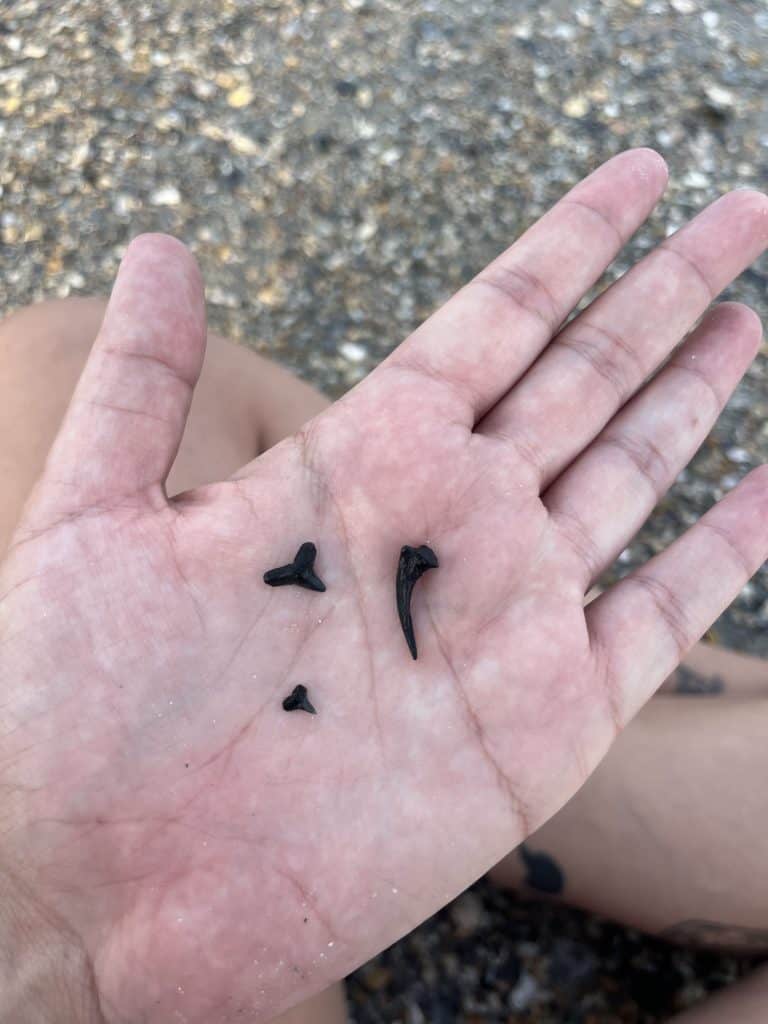
Because it is a dredge island, you are likely to often find teeth (even small ones!) at Shark Tooth Island.
©Jessica Lynn
If you’re passing through Wilmington, NC, you’ll find a multitude of experiences and opportunities that will capture your attention: the Museum of the Bizarre, the stunning river walk, and the beauty of Airlie Gardens. But head to River Road Park’s boat launch to gain access to Shark Tooth Island, known for its multitude of shark teeth and other fossils. You can bring your own kayak (expect about a 10-minute ride) or a larger boat. If necessary, you can also rent a kayak or do a tour with a local kayak company.
Shark Tooth Island was formed in the 1800s when the Cape Fear River was dredged. Life in Brunswick County reporting quotes Don Harty, the owner of Manahaim Adventures, as explaining the dredging was done by the U.S. Army Corps of Engineers to make room for large boats to pass through. The island is made up of sand, limestone, and other sediment. As you might expect, the dredging also brought up fossils from the time period.
Shark tooth hunters can find a variety of teeth around the island’s banks, both in the outcroppings of rocks and on the sandy shores. There are over two acres to search. While I’ve found the most teeth while sifting sand on the east side of the island, others are especially drawn to the large rocky areas, which may hide larger fragments of teeth from the Megalodon.
Want an Extra Spot to Explore?
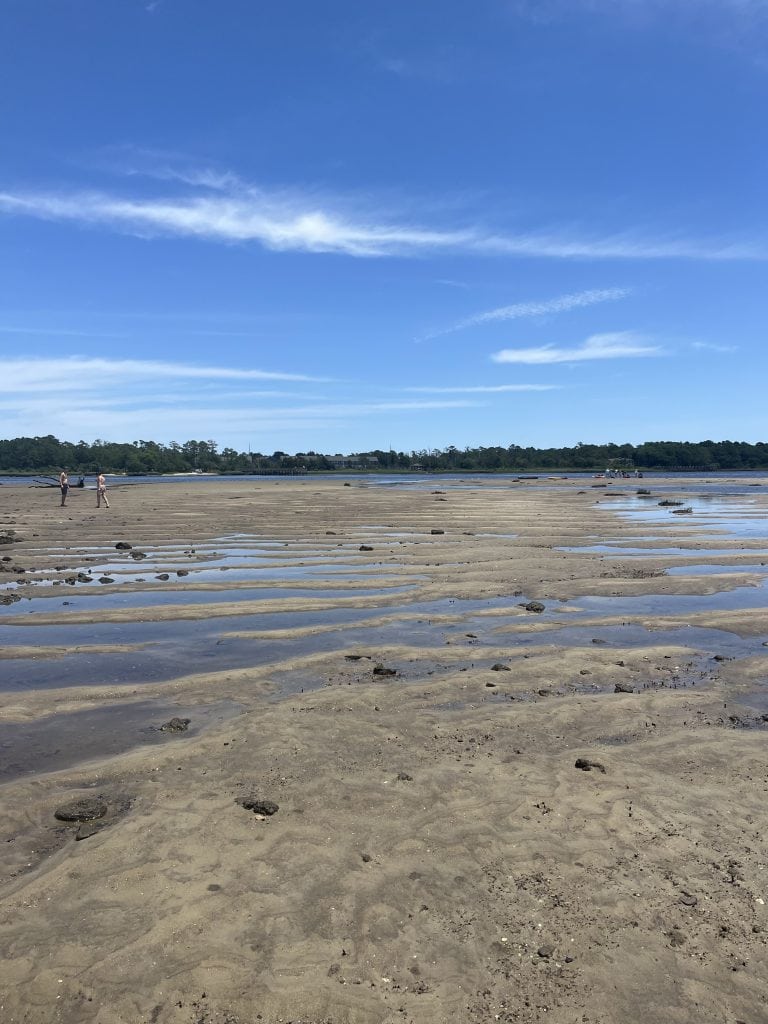
You can also find numerous teeth, including mako or Great White teeth, at Keg Island.
©Jessica Lynn
Once you’ve spent some time on Shark Tooth Island, consider a quick paddle over to its neighboring Keg Island. Keg Island, another dredge island, holds just as many teeth and offers even more area to explore. I actually found my first fossilized shortfin mako tooth on Keg Island!
Regardless, make sure to check out both islands during low tide, since they will be significantly less accessible otherwise.
2. Aurora Fossil Museum (Aurora, NC)
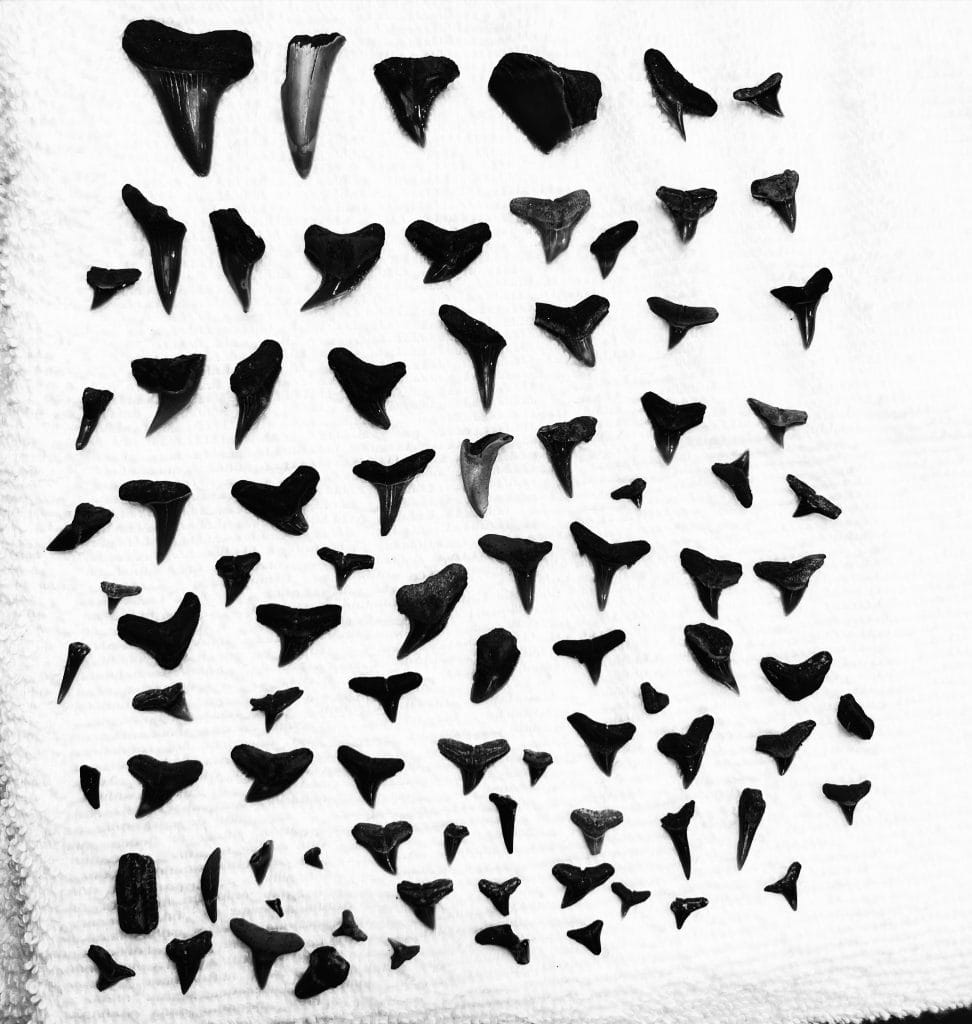
My Aurora Fossil Museum finds included a Hastalis, several lemon and bull shark teeth, and even a dolphin tooth!
©Jessica Lynn
If you’re a fan of fossils or shark teeth, visiting the Aurora Fossil Museum in Aurora, NC, is a must. I passed through the town the other day to stop in and do some digging in the pits near the museum. Head inside the museum for a collection of fossils collected from North Carolina, including invertebrates, as well as indigenous artifacts. Another collection includes minerals and fossils from across the world. Each collection is clearly labeled and provides more insight into the fossil history from the Pleistocene, Pliocene, and Miocene eras. This is a great starting point for anybody who wants to learn more about historical marine life.
There are two large pits at the Aurora Fossil Museum, and they are completely free to visit. The pits contain material sourced from the Nutrien Phosphate mine and contain material from the Miocene epoch. That means whatever you find, which can range from shark teeth and whale bones to fossilized coral, is anywhere from 5.3-23.3 million years old.
During my dig, I found a variety of treasures, including a fossilized stingray mouth plate and a dolphin tooth. But the best part was 50+ teeth I took home, like a large one from the extinct Carcharodon hastalis, and some of my favorites: tiger shark teeth.
Even if you don’t want to go digging in the pits (though I suggest you do!), you can purchase souvenirs from inside the museum, including fossilized trilobites and insect fossils.
3. Topsail Island
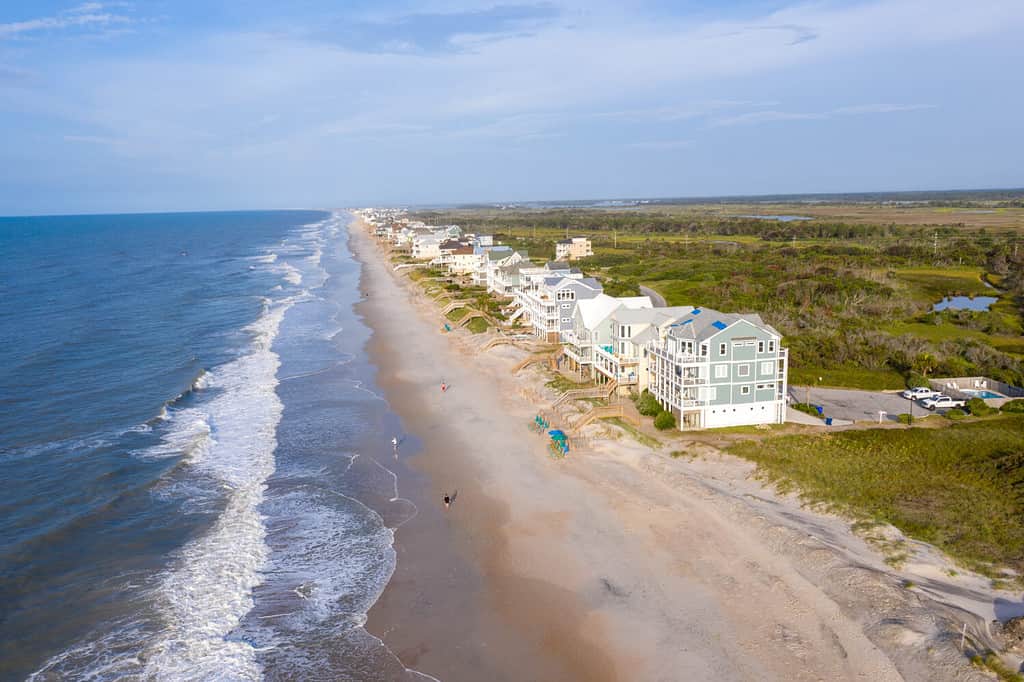
In addition to shark teeth, many visitors to North Topsail Beach find other fossils or unique items like sea glass.
©MICHAEL HUBEL/Shutterstock.com
When I first moved to North Carolina, people told me that Topsail Island was their favorite location to go shark tooth hunting. In fact, one especially excited man told me he had never before seen so many shark teeth washed up on the shore.
Topsail Island is a 26-mile-long barrier island located near Jacksonville, NC. Its natural beauty, as well as the opportunity to enjoy places like the Karen Beasley Sea Turtle Rescue and Rehabilitation Center, draws numerous visitors every year. You’ll have the best chance of finding teeth on Topsail Island, especially in North Topsail Beach, either during low tide or in the interim period between high and low tide. Lemon shark teeth, bull shark teeth, and great white shark teeth are some of the many treasures you might find.
Topsail Island is also a fantastic spot to go shelling. Oyster and scallop shells are numerous and great to use for fun crafts (once you clean them). The shell-covered shorelines will also yield sand dollars, conchs, and Scotch Bonnets. Fun fact: the latter is actually the North Carolina state shell!
4. Holden Beach
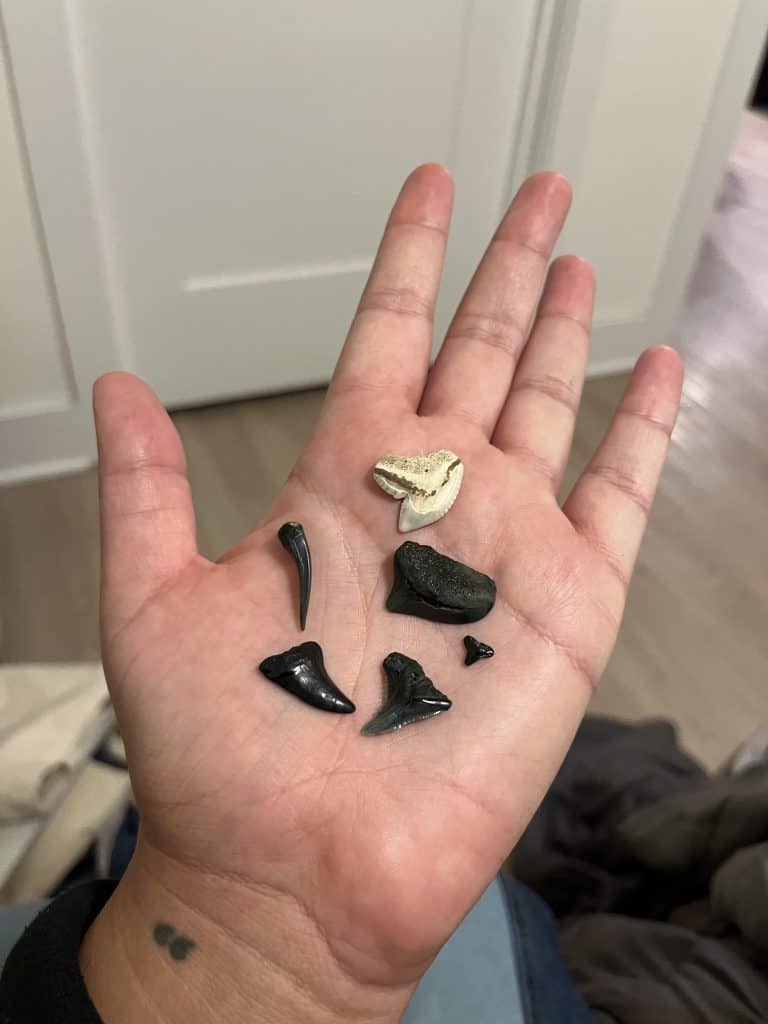
Crow shark teeth from the Cretaceous period are often found at Holden Beach.
©Jessica Lynn
When I first visited Holden Beach, I wasn’t sure what I would find. The quieter beach is about an hour’s drive from where I live in Wilmington. But after a few hours on the beach, finding both my first tiger shark tooth and my first fossilized Crow shark (Squalicorax) tooth, I was sold.
Holden Beach is located in a small but charming community. If you’re looking to relax on the sand, this is definitely the place to go. In between tanning, take a walk by the water to find Holden Beach’s hidden secrets. The seabed was dredged a few years ago, bringing up goodies like sea biscuits and shark teeth. Sea biscuit fossils are especially interesting. These fossils come from the Eocene epoch, making them around 34-55 million years old. Check around the pier, which is where I managed to fill up a small bag with these fossils.
For shark teeth, you’ll definitely want to search in the shell beds. While a quick visual scan of the shell beds is a start, I recommend sitting down and sifting through with your fingers. Squalicorax teeth, like the one in my photo with the thick and bulky root, come from either Squalicorax pristodontis or Squalicorax kaupi, both of which existed during the Cretaceous era. The teeth from the Peedee formation, which wash up on the beach, are thought to be over 64 million years old.
Unlike other beaches in coastal North Carolina, Holden Beach charges for parking year-round. If you park by the pier or anywhere along the streets, be sure to pay your parking fee to avoid a ticket.
5. Wrightsville Beach
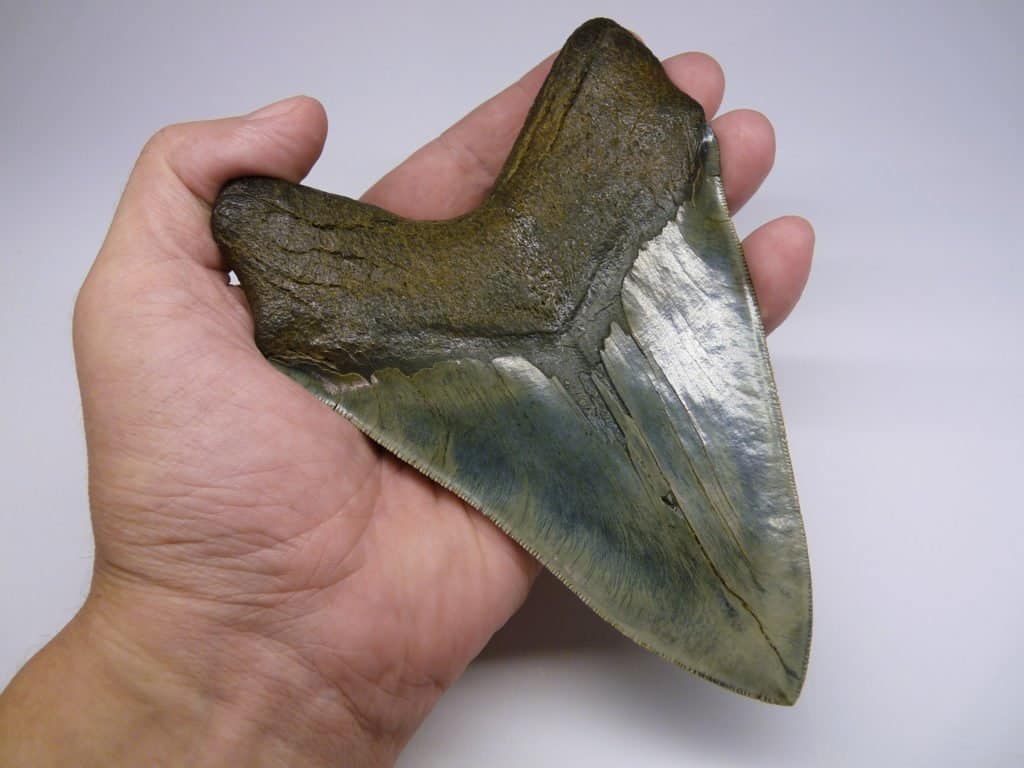
While you can find incredible shark teeth in Wrightsville, you can also take a trip out to the Meg Ledge and go diving for Megalodon teeth.
©Nico Ott/Shutterstock.com
When it comes to shark tooth hunting, I have a soft spot for Wrightsville Beach. Not only do I live ten minutes away, but Wrightsville Beach is where I found my first-ever shark tooth. I had moved to town a few months before and was captivated by the idea of finding a tooth, but had no idea what I was searching for. One blustery morning, bundled up in my sweats, I had gone out on the beach when I ran into a man with his two young sons. Upon hearing I had never found a tooth, he told me we’d have to fix that, and the three of them walked with me until they pointed out a tiny tooth the size of a pencil eraser in the sand. Since then, I’ve made it my mission to help others find their first teeth on Wrightsville Beach, too.
I’ve had the most luck to the left of Johnnie Mercers Fishing Pier, though I know plenty of people who have found teeth all over the 4.5-mile stretch of Wrightsville Beach. Searching during low tide, particularly in shell beds, is a great option. But when I spent an afternoon searching with Jesse Anderson (“The Tooth Detective“), he told me walking in the waves between high and low tide is a great way to spot some teeth others might not find.
Finding Additional Fossils
Wrightsville Beach is also a fantastic place to search after a storm, especially if you’d like to add additional bone or fossil fragments to your collection. Look for dark, black, shiny fragments. They might have a porous texture or have striations on the side.
After one particularly nasty storm, I found the fragment of a fossilized predatory fish jaw on the beach. I reached out to Charleston Fossil Adventures, who stated the closest potential relative was a Conosauropus bowmani, typically found in the Lowcountry of South Carolina. Still, an exciting find to add to my collection!
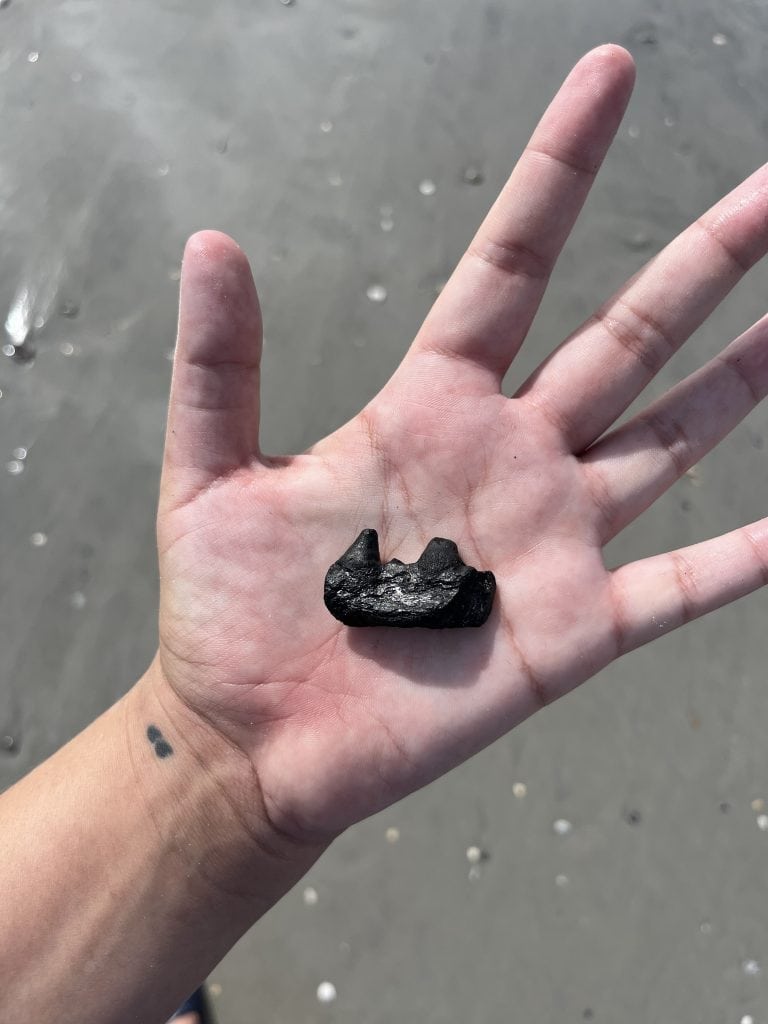
The Conosaurus bowmani was first named in 1851.
©Jessica Lynn
Want a Megalodon Tooth?
The Megalodon was the largest shark that has ever lived. Stretching over 50-80 feet in length and weighing upwards of 100,000 pounds, the Megalodon was undoubtedly a fearsome ocean predator. These sharks went extinct around 3.6 million years ago, but left behind remnants of their existence in their enormous fossilized teeth, ranging from 3.5-7 inches long.
While I’ve bought (but never found!) a Megalodon tooth, there are opportunities to go diving at the Meg Ledge, a series of underwater ledges around 26-40 miles off the Wrightsville Beach coastline. You should be an experienced scuba diver to visit, as the ledges are around 100 feet or more underwater. But there are plenty of scuba tours willing to get you there.
6. Kure Beach

A number of shark teeth can be found along the Carolina coast, including lemon shark, bull shark, and great white shark teeth.
©Jessica Lynn
Kure Beach is a small town in coastal North Carolina that is steeped in history. Check out Fort Fisher while you’re there, then head over to the Coquina Rocks. Some people will tell you that this is a bit of a town secret, but it’s well worth checking out: both for the incredible views and for the shark teeth.
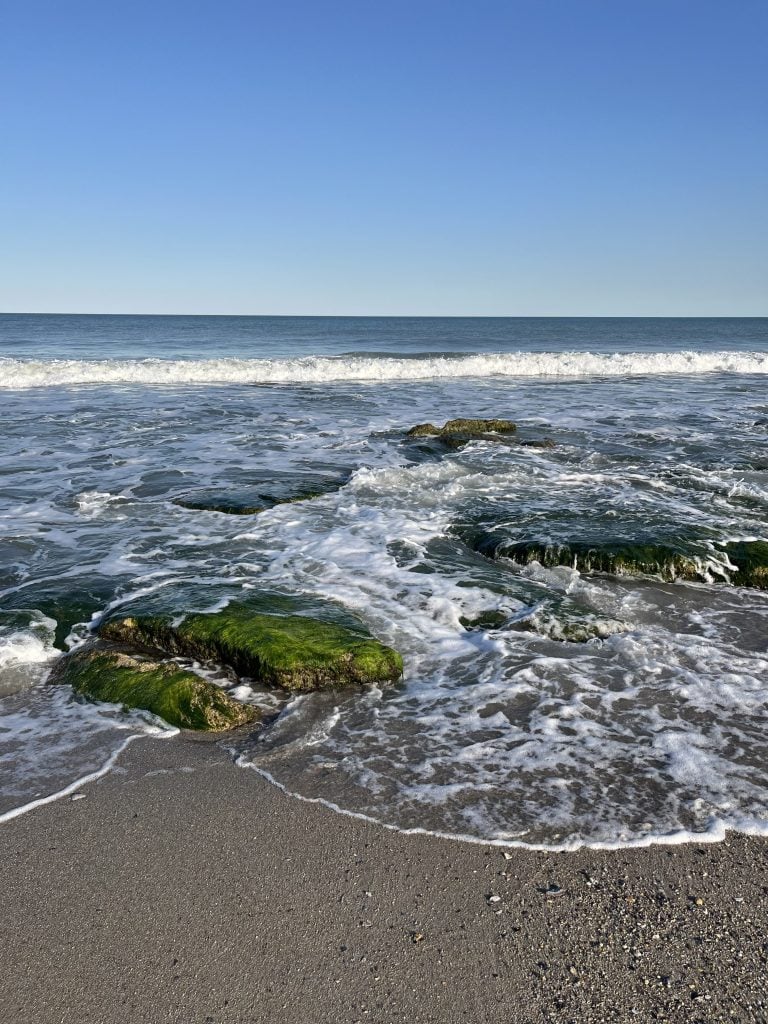
The Kure Beach Coquina Outcrop is the only natural formation of its kind in North Carolina.
©Jessica Lynn
The Coquina Outcrop is made of coquina rocks (formed from clumped together coquina shells), cemented with coral and seashells over the years. Formed anywhere from 12,000 to 80,000 years ago, this stunning natural formation is rare to find and only visible during low tide. Although you may get lucky finding teeth at other points of Kure Beach and Fort Fisher, spending some time walking between the rocks at low tide has proven to be especially fruitful.
Note: the Coquina Outcrop is located near a private community. If you do go shark tooth hunting here, make sure to park in one of the public beach lots, rather than a community lot, and walk over.
7. Caswell Beach
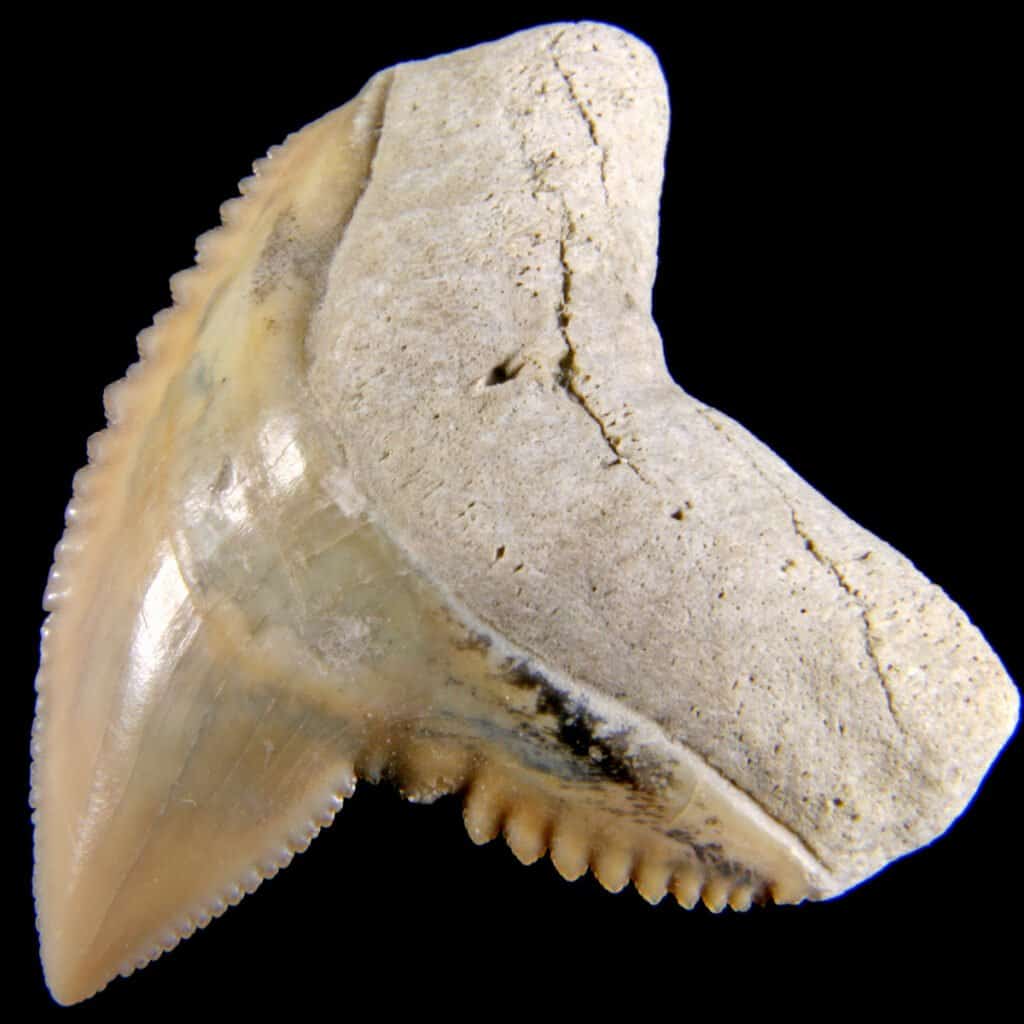
The best time to go looking for teeth, like this tiger shark tooth, at Caswell Beach is after a storm.
©Ryan M. Bolton/Shutterstock.com
Although you may not find as many teeth at Caswell Beach as opposed to Holden Beach, a short drive away, this beach is still worth checking out. Caswell Beach is the least populated beach in the area, making it a perfect match if you’re looking for some quiet and solitude. The beach is four miles long and has naturally gentle waves, making it easy to search along the water’s edge.
Sand tiger shark, Squalicorax, and goblin shark teeth, as well as teeth from the ancient genus of sharks Cretelamna, are some of what you might find at Caswell Beach. If you’re an eager beachcomber, you can also find full sand dollars, calico scallop shells, and whelks.
8. Onslow Beach
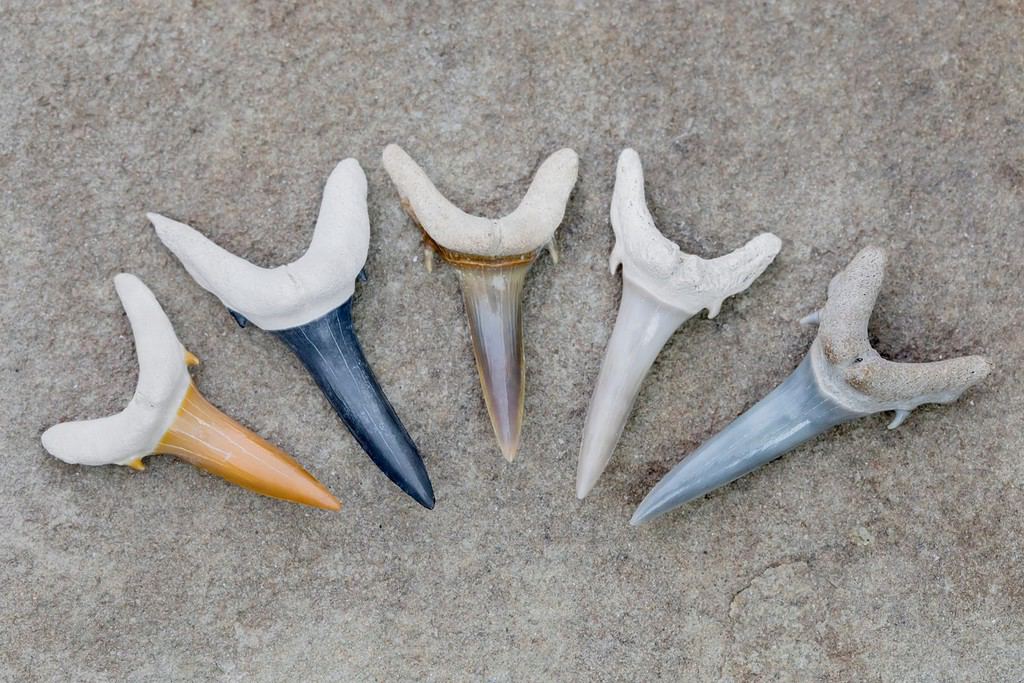
Accessing Onslow Beach can be a little difficult, but if you have the in, it’s worth a trip!
©Mark_Kostich/Shutterstock.com
Admittedly, I haven’t gotten to explore Onslow Beach. Its location on Camp Lejeune means that only individuals with a valid military or Department of Defense ID card can access the 7.5-mile stretch of beach. If you’re lucky enough to have a loved one stationed at Camp Lejeune, you could potentially gain access by having them sponsor you for a temporary pass.
Onslow Beach is specifically said to be a hotspot for large fossilized shark teeth, including Megalodon teeth and teeth from its ancestors: the Otodus chubutensis and Otodus agustidens. Teeth on this beach normally hail from the Oligocene epoch, which is roughly 23-33.9 million years ago. However, smaller teeth, such as sand tiger teeth, can also be found.