
Quick Take
- Scientists spent centuries getting the mechanics of the purr completely wrong, and the real answer, found only recently, is unlike anything else in the animal kingdom. See how purring really works →
- A cat purring on a broken leg isn't a sign of contentment. It's doing something to its own body that human medicine has tried to replicate since the 1970s. Explore the healing frequencies →
- One specific type of cat purr is engineered to hijack your brain, and it works even on people who don't own cats. Discover the manipulative purr →
- Owning a cat changes a measurable health outcome in humans, even though researchers still can't fully explain why purring is likely responsible. See the human health effects →
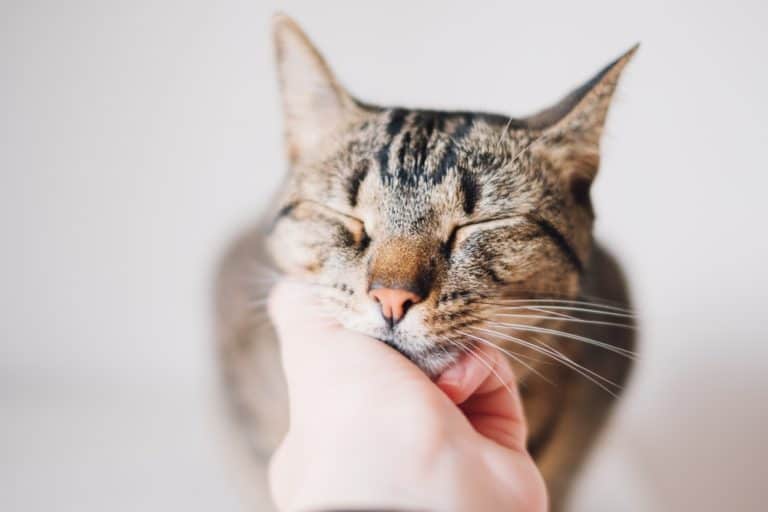
When a cat purrs in your lap, it seems the ultimate sign of contentment. Yet veterinarians often hear the same low rumble from cats with broken limbs or those nearing the end of life. The familiar sound hides a far more intricate and surprising story than most pet owners realize.
The Mystery Behind the Sound
For centuries, the source of a cat’s purr eluded science. The dominant theory until recently claimed blood vibrations in the inferior vena cava, a large vein near the heart, created the noise. Elegant as it sounded, this hypothesis fell apart under scrutiny.
It was only in 2024 that researchers at the University of Vienna published a study in Current Biology that changed the conversation. By examining the larynges of deceased domestic cats, the team discovered that feline vocal cords have unique connective tissue pads, unmatched anywhere else in the animal kingdom. These embedded pads enable the vocal folds to vibrate at low frequencies, between 25 and 150 Hz, without the need for ongoing muscle contractions.
This means that once a cat begins to purr, the mechanism sustains itself, much like a clarinet reed vibrating as long as air passes through. As a result, cats can purr on both inhalation and exhalation, a feat no other common housepet achieves.
Purring in Times of Pain
If purring only signaled happiness, veterinarians would rarely hear it in exam rooms. The truth is that practitioners regularly encounter severely injured or terminally ill cats who continue to purr. Scientists found this deeply puzzling, until they looked at the specific frequencies involved.
Elizabeth von Muggenthaler, a bioacoustics researcher from the Fauna Communications Research Institute in North Carolina, measured the purrs of 44 wild and domestic felines in 2001. The majority of purrs landed between 25 and 50 Hz, with harmonics around 100 Hz, the exact ranges used in human medicine to aid bone healing and tissue repair.
Orthopedic surgeons have applied low-frequency vibration devices (typically between 20 and 50 Hz) since the 1970s for stubborn bone fractures. Even NASA studied such frequencies to counter bone loss in astronauts. Yet cats, it appears, come equipped with this technology by nature. When a cat purrs while injured, it may not be expressing pure bliss, it could be engaging a built-in healing mechanism.
This idea helps explain a clinical reality known to veterinarians: cat fractures often heal twice as quickly as dog fractures, and post-operative complications are notably rarer in felines. While size and metabolism were once credited, the evidence for internal “purring therapy” is mounting. As some in veterinary medicine joke, “If you put a cat and a bunch of broken bones in the same room, the bones will heal.” It’s a wry comment rooted in years of observation.
The cat’s ability to self-heal may even reveal why this agile predator sleeps 12 to 16 hours a day, much more than other mammals of its size. Some researchers propose that purring during these rest periods continually maintains bone density and muscular flexibility, a kind of invisible workout.
The Power of Purrs Reaches Beyond Cats
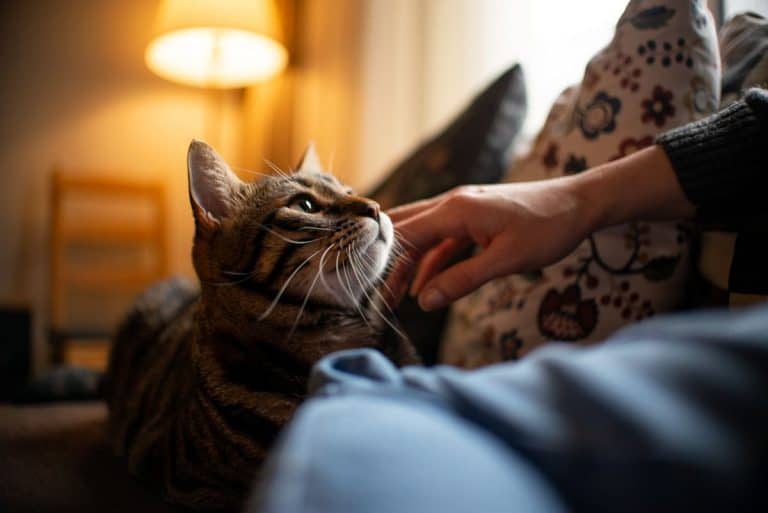
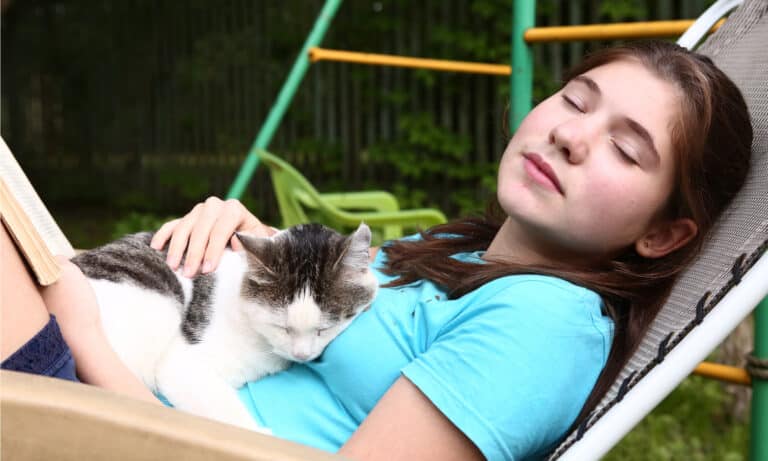
If you’ve ever felt deeply soothed by a purring cat nestled close, there’s more at play than mere emotion. In 2008, a University of Minnesota study of over 4,400 people followed for a decade found that cat owners were 40% less likely to die from heart attacks compared to non-owners. While the research couldn’t pinpoint purring as the sole factor, other studies show vibrations in the 25–50 Hz range lower blood pressure, slow heart rate, and decrease cortisol, the primary stress hormone, in humans.
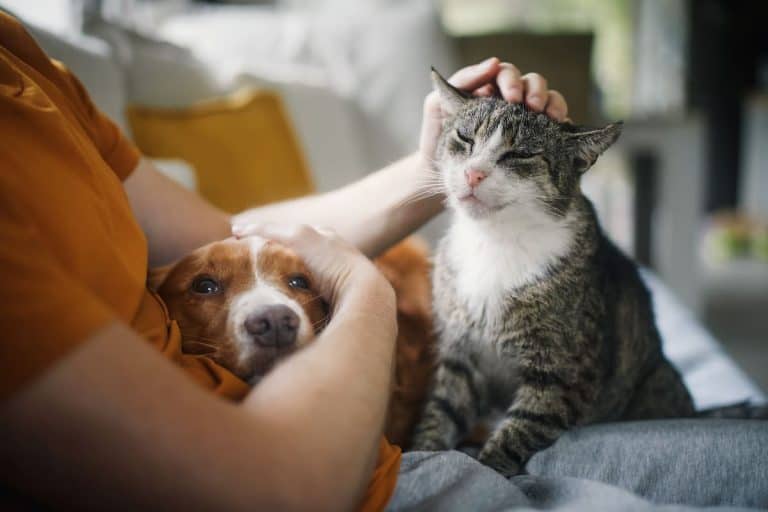
This discovery isn’t lost on caregivers: nursing homes and palliative care centers have started including cats in therapeutic programs. For them, purring is more than a heartwarming presence; it’s a measurable tool of relaxation. Pilot studies in geriatric care demonstrate that seniors regularly interacting with cats show marked reductions in the use of anti-anxiety medications.
Three Types of Purr, Each With a Message
Recent research dispels the idea that all purrs are alike. Science has teased apart at least three different kinds, each with its unique frequency and behavioral context.
The “solicitation purr” was identified in 2009 by Karen McComb at the University of Sussex. This purr overlays a higher-frequency sound (300–600 Hz) atop the typical low rumble. The pitch closely resembles that of a human infant’s cry. The result? When your cat uses this purr to demand food, it taps into the deep neural pathways of parental care in your brain. Even people without cats perceive this purr as more urgent than ordinary purring.
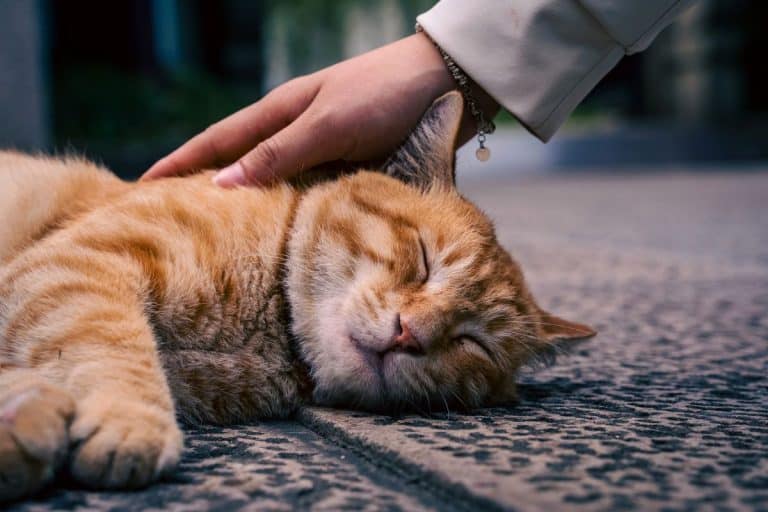
The second kind, the comfort purr, sits in the classic 25–50 Hz zone and is commonly heard when your cat dozes contentedly on your lap. The third, though less pleasant, is the distress purr, softer, more irregular, and often heard in situations of pain or crisis.
Remarkably, cats reserve their meows for human ears, but their purrs transcend species boundaries. They communicate this way with both fellow cats and people. In some ways, purring forms a universal feline language, one humans only barely understand. The subtle difference in meaning often lies in hidden frequencies imperceptible without specialized equipment.
So when a cat purrs, it could be saying, “I’m happy,” “Feed me,” or “I’m healing myself,” all at once. The steady vibration communicates on multiple levels, some of which your own brain may recognize before you notice anything amiss.
A More Complex Conversation Than We Realized
The story of the purring cat is one of nature’s quiet marvels, an evolutionary adaptation concealing comfort, communication, and even internal medicine. What sounds to our ears like contentment can be a form of therapy, a signal of both joy and the struggle to heal. In the end, the feline purr invites us to listen more closely, not only to our companion animals, but to the subtleties of the natural world that still slip past human understanding.