
Quick Take
- European bison are megaherbivores.
- They are being introduced to the village of El Recuenco in the province of Guadalajara.
- Their behavior will be closely monitored.
- It is hoped that by eating woodland vegetation, they can help prevent the spread of wildfires.
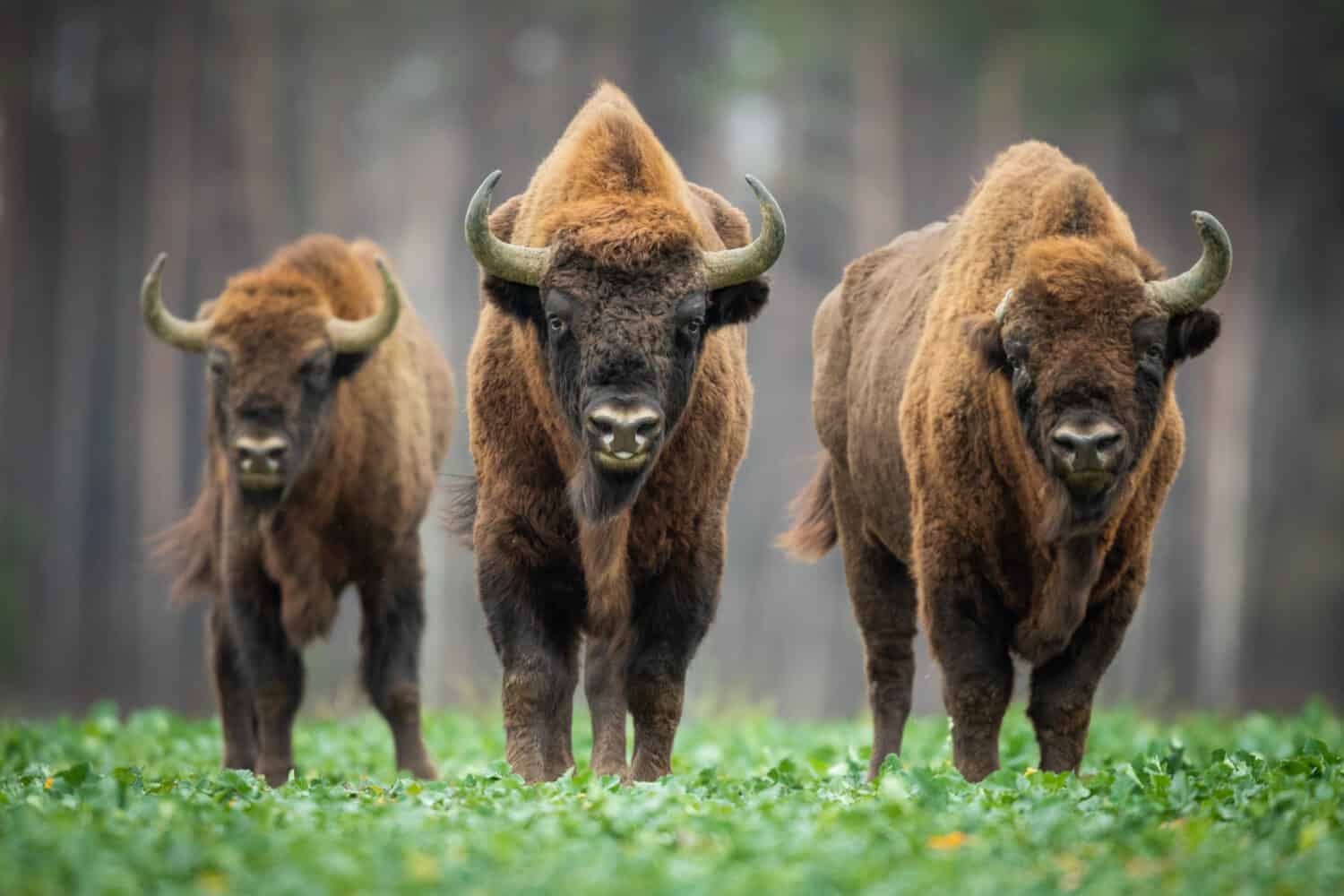
European bison are classified as one of the world’s megaherbivores, and soon these giants will be roaming the Iberian highlands. What’s more, they will have an important job to do. A rewilding project is being combined with an important study to record how they adapt to these new landscapes. Read on to discover how this will work in practice, the debate about whether this is a good idea, and the role that the bison could play in wildfire management.
Are European Bison the Same as American Bison?
No, European bison are a different species. American bison (Bison bison) are taller and generally hairier. European bison (Bison bonasus) have a hairier tail. European bison are the largest native herbivore in Europe and are found in Poland, Belarus, Lithuania, Russia, Ukraine, and Slovakia. Populations in other parts of Europe were hunted to extinction and suffered habitat loss. There are currently around 9,000 European bison in Europe, with about 4,000 living free in the wild. This is very good news, considering there were only 60 individuals alive in zoos and private parks in 1927.
Rewilding Bison
The project to introduce bison to Spain is being carried out by Rewilding Spain in collaboration with the University of the Basque Country, the University of Manchester (UK), and ECONOVO, which is a research center affiliated with Aarhus University in Denmark.
A herd of nine bison (comprising five females and four males of various ages) has been relocated from a private estate in El Espinar, located around 65 kilometers from Madrid. They have lived there since being relocated from Poland and the Netherlands three years ago. The animals have bonded socially and have already adapted to the environmental conditions in Spain.

European bison may help to restore ecosystems.
©Michal Ninger/Shutterstock.com
The bison are being moved to the village of El Recuenco in the province of Guadalajara. Their first few weeks will be spent in an adaptation enclosure. There, their health and behavior will be monitored. The plan is to release them into a fenced, 400-hectare area of publicly owned woodland.
Fighting Fires with Bison
The researchers expect that the bison will reduce the risk of wildfires by grazing on vegetation that could otherwise fuel fires. It is also hoped that they will attract visitors to the area, stimulating the local economy and creating jobs.
The bison will be closely monitored using GPS collars. Scientists will assess their stress levels and the composition of their diet. This introduction is not without controversy, and there is scientific debate about whether it should be done at all. However, at least this study will provide scientific data to inform the debate.