
Quick Take
- Two retirees hid in the dark for two years and overturned what scientists believed about these otters.
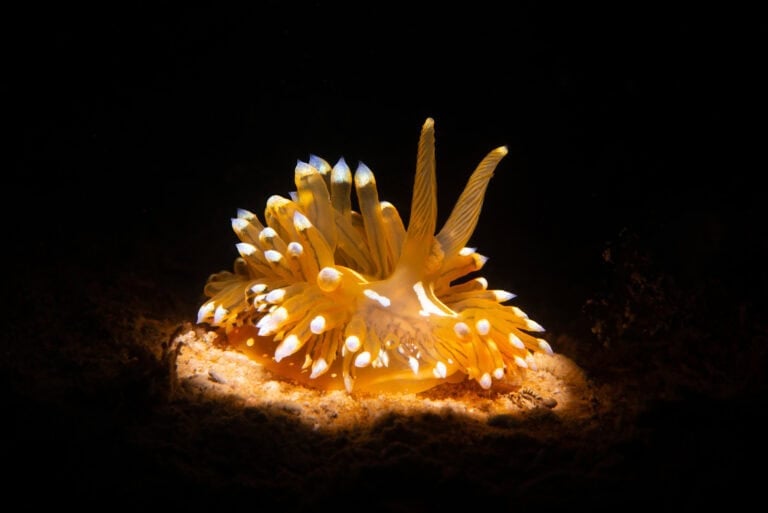
- A tiny sea creature on eelgrass is the unlikely hero in this otter story.
- Otters stabilize the marsh for free, but one stubborn part of the slough still keeps crumbling.
- The crabs are changing again, and the newcomers may complicate the otters' good work.
Ron Eby spent 20 years in the Navy and retired as a commander. Then he got bored, so he took on a different kind of night watch at Elkhorn Slough, an estuary on California’s Monterey Bay.
“To go out there in the middle of the night, park, turn the lights off, kind of hide,” Eby told KAZU, the Monterey Bay public radio station, in a story published May 7, 2026.
He and Robert Scoles, a retired sheriff’s deputy, had just started volunteering at the Elkhorn Slough National Estuarine Research Reserve. About 20 years ago, scientists thought these southern sea otters typically lived in the ocean and mostly just visited. The two men kept finding otter footprints and scat on the slough’s shore.
“We would see things that didn’t fit what they were saying,” Eby said.
Two years of nights turned visitors into residents
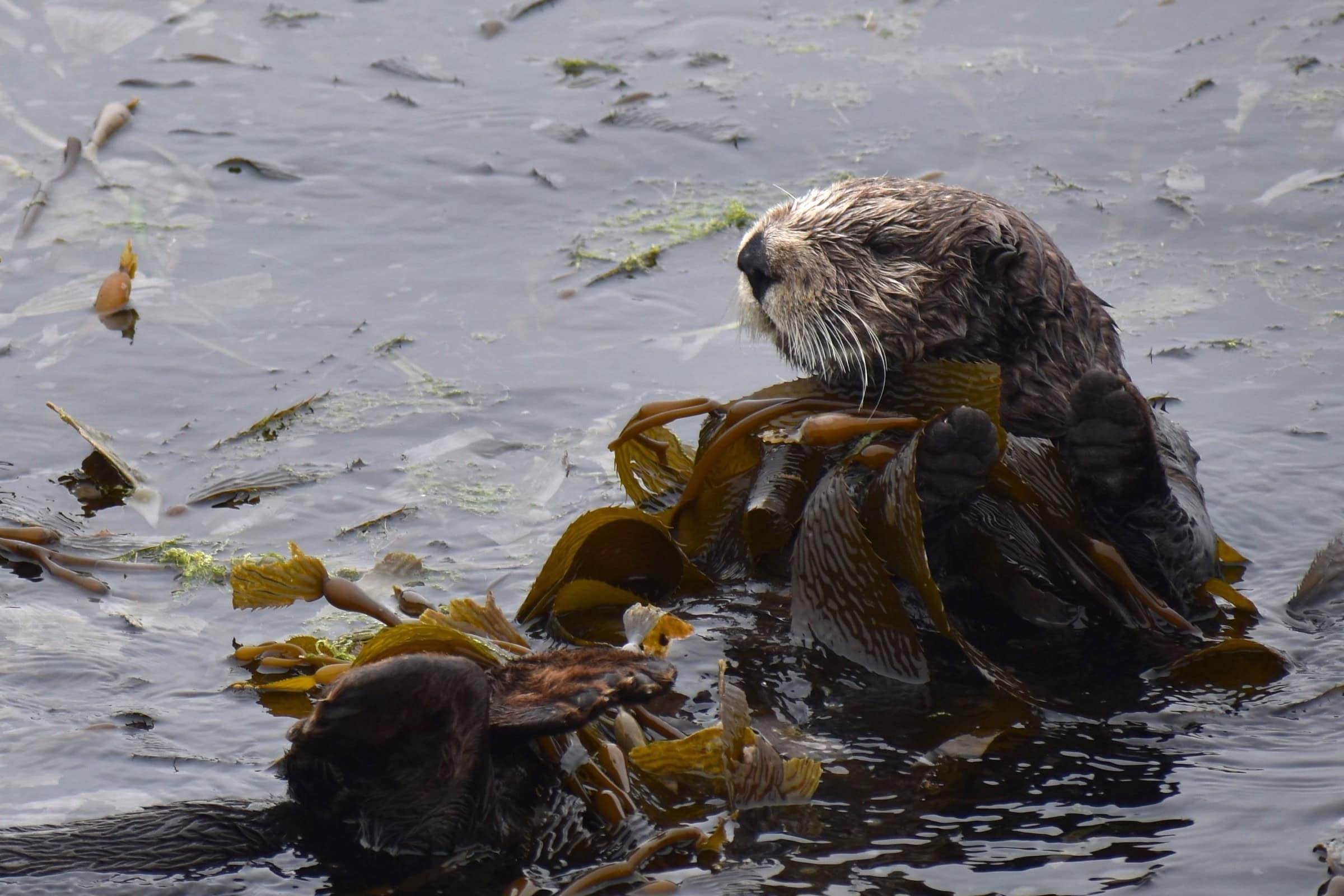
For two years, twice a month, the pair staked out the otters overnight. No one had monitored the animals that way before. They found that many of the otters thought to be visiting were residents, and that the otters did something called “hauling out,” scooting onto land to rest and warm up.
“And we found that otters here in Elkhorn Slough were healthier by far than all the otters along the coast,” Eby said, because they don’t have to worry about predators and food is abundant.
That work led to other research showing otters are part of a food chain that helps the estuary thrive. They eat crabs, which spares the snails and sea slugs that keep eelgrass clean.
About 15 otters came back in 1984
Fur traders hunted the local otters nearly to extinction, and the slough’s crab population exploded, according to a January 2024 Duke University release.
Otters started moving back in 1984, UC Santa Cruz News reported in 2013. The first group of about 15 declined in the late 1980s, grew to nearly 100 in the 1990s, dropped again, then recovered. The reserve wrote in its 2025 State of the Estuary report that otter numbers have been high for the past 15 years.
An otter eats 20 to 25 pounds a day
Otters lack the thick insulation of most other marine mammals and rely on their metabolism to stay warm in the cold Pacific, a 2024 UC Santa Barbara release explained. An adult needs about a quarter of its body weight in food daily, around 20 to 25 pounds, and crabs are a favorite.
“They’re really good at eating crab, and it’s just easy pickings for them,” Brent Hughes, then a marine ecologist at Sonoma State University, told NPR in February 2024.
The first payoff was eelgrass. Nutrients in farm and urban runoff spur algae that coat the leaves and block sunlight. In a study published in the Proceedings of the National Academy of Sciences in August 2013, when Hughes was a Ph.D. candidate at UC Santa Cruz, he and his coauthors found that fewer crabs meant more and larger sea slugs, plus more of the small crustaceans called Idotea, and both graze the algae off. Eelgrass beds rose and fell with otter numbers.
Banks eroded up to 90% slower where otters were dense
Crabs also eat salt marsh roots and dig into the soil, which over time can cause a marsh to erode and collapse, Hughes said in 2024. For a study published in Nature on January 31, 2024, his team surveyed 13 tidal creeks and ran experiments at five locations for nearly a decade, keeping otters out of some sites.
At sites with large otter populations, erosion slowed by as much as 80% to 90%. UC Santa Barbara put the average at 69% after the otter population fully recovered.
“The sea otters are stabilizing them for free in exchange for an all-you-can-eat crab feast,” Brian Silliman, then a Duke marine conservation biologist and the paper’s senior author, said in a 2024 Duke release.
The slough’s channel banks are still eroding
Hughes said in the 2024 Duke release that the otters’ return “didn’t reverse the losses, but it did slow them to a point that these systems could restabilize” despite the other pressures on them.
The Nature team measured tidal creeks and marsh edges. Along the slough’s channels, the reserve’s 2025 report found, “bank edges continue to erode, with no clear increase or decrease over time,” worn by algal wrack, wind waves and tidal currents.
The marsh surface is gaining about 0.07 inches a year, which matches sea level rise since 1973. Since 2005 the sea has risen about 0.17 inches a year, more than twice as fast. The crabs are shifting too: in 2024, native mud crab numbers were very low and non-native green crabs reached their highest level in a decade.
Thirty volunteers now keep the count
Eby, who was 78 when KAZU profiled him in May, founded the Reserve Otter Monitoring Project, which then had 30 volunteers. On a monitoring boat ride on April 1, 2026, he pointed to a furry brown shape on shore: “That’s an otter hauled out on the marsh.”
Sea otters once flourished in San Francisco Bay as well, UC Santa Barbara noted in its 2024 release. As of January 2024, Kathryn Beheshti, a coauthor of the Nature study who was then a researcher at UC Santa Barbara, had begun a project to restore eelgrass in natural and restored tidal creeks in the slough, to test whether it could further curb bank erosion. She said in 2024 that she expected the otters to use the habitat.