
Quick Take
- Nobody knew where these geese spent winter until one grad student went looking, and his discovery changed their fate.
- Releasing captive-raised birds seemed like the obvious rescue plan. It didn't hold up.
- A remote island with no foxes became the species' last stronghold, and the reason it escaped is stranger than luck.
- Success came with a catch: ranchers and hunters now face a problem no one predicted.
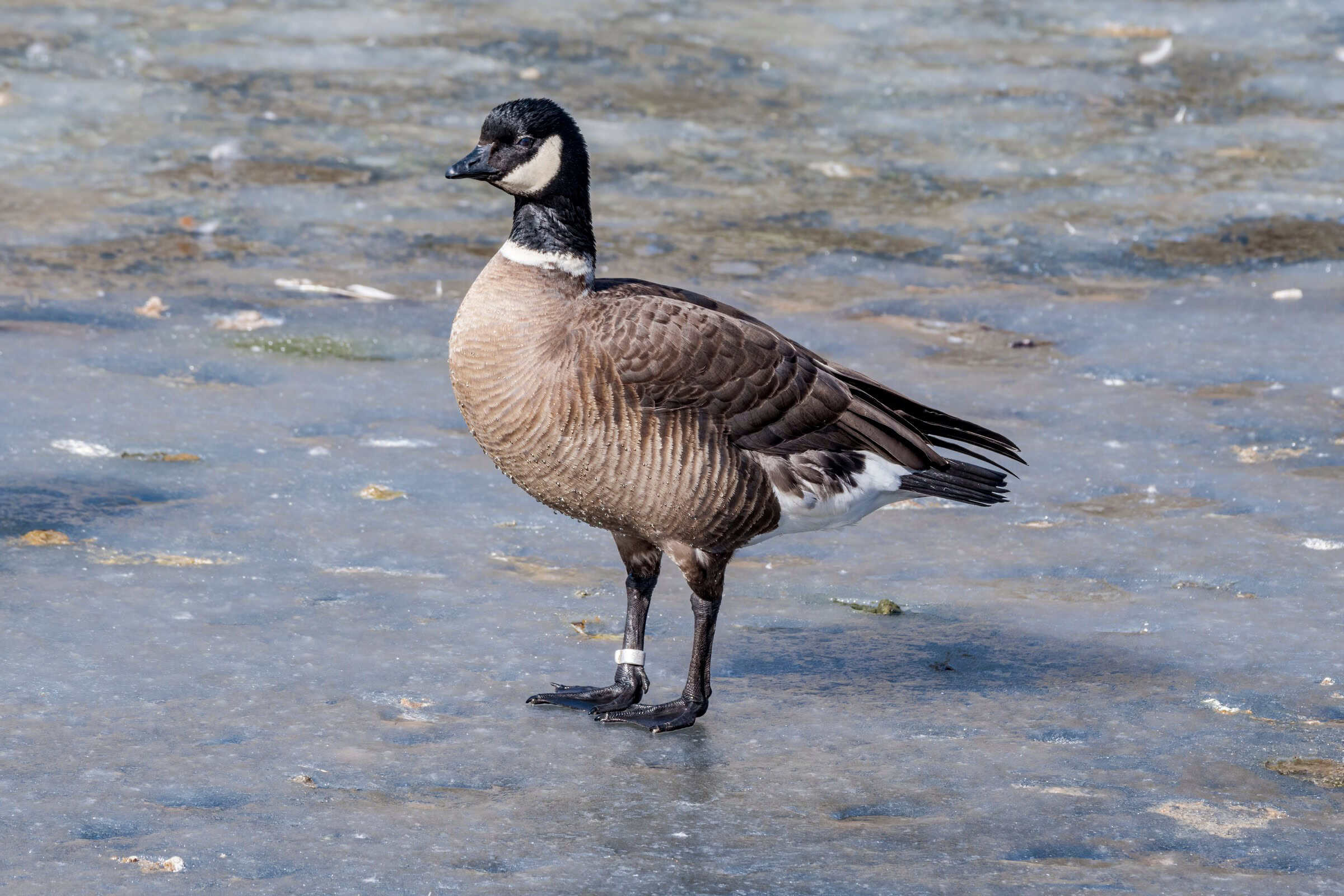
In the mid-1970s, no one knew where the endangered Aleutian cackling goose, then called the Aleutian Canada goose, spent its winters. Dennis Woolington tracked the birds up and down the West Coast of the U.S. and Canada for his master’s degree, Ned Rozell wrote in a July 2004 Alaska Science Forum column. When Woolington found groups of them in California’s San Joaquin and Sacramento valleys, he told authorities, who closed the hunting season for all Canada geese in those areas.
Woolington counted 790 Aleutian geese in his 1975 survey. The U.S. Fish and Wildlife Service’s 2026 Pacific Flyway Data Book lists a winter estimate of 233,376 for 2022, about 295 times that first count.
“Dennis’s work was fundamental for the recovery of the Aleutian Canada goose,” Vernon Byrd, then the senior biologist of the Alaska Maritime National Wildlife Refuge, told Rozell in 2004. “(Hunting closures) had to happen.”
Agattu’s most abundant bird fell to a few pairs
Fur traders released arctic and red foxes on more than 190 islands in the goose’s Alaska breeding range between 1750 and 1936, according to the Service’s delisting rule, published in the Federal Register on March 20, 2001. On Agattu Island, the goose was termed the most abundant bird in 1906. By 1937, observers saw only a few pairs.
Eggs, goslings and molting adults, which can’t fly, were all vulnerable to the foxes. Bruce Batt of Ducks Unlimited wrote that a large Aleutian gander weighs only about 4.5 pounds, and that a fox’s main target is the nesting hen, a far bigger meal than her eggs. Killing her removes that season’s goslings and every season she had left.
Sixty adults and seven goslings on Buldir
Bob “Sea Otter” Jones, then manager of the Aleutian Islands National Wildlife Refuge, reached Buldir Island with an assistant in 1962 and recorded 60 adults and at least seven goslings, according to a 2016 paper in the journal Wildfowl. Fourteen years of observations led him to report “little likelihood of finding a breeding population” on any Aleutian island where blue foxes had been released and were still living.
Buldir is the only landfall in a stretch of about 137 miles separating the Pacific Ocean from the Bering Sea. Its remoteness and rocky shoreline discouraged fur trappers from stocking it with foxes. The goose was listed as endangered on March 11, 1967.
Wild families outlasted captive-raised birds
Jones began removing foxes from Amchitka Island in 1949, and by 2017 refuge biologists and hired trappers had cleared 48 islands, Rozell wrote in a November 2017 column. Biologists released captive-raised geese and moved molting family groups of wild geese from Buldir to fox-free islands.
The captive releases stopped after a few years because those birds survived poorly and the wild families did much better, Batt wrote.
On Nizki Island, cleared of foxes in 1976, biologists counted zero goose nests in 1984. Refuge managers stocked it with young geese, which return to the place where they begin their first migration. A 2004 survey team found 432 nests there in three days. “These were silent skies before,” Mike Boylan, then the supervisor for national wildlife refuges in southern Alaska, told Rozell.
Estimates rose from 790 to 233,376
Direct counts reached 6,300 in 1990, the year the goose was reclassified as threatened. It came off the list in March 2001 at about 37,000 birds. Winter estimates reached 72,857 in 2003, 209,592 in 2015 and 233,376 in 2022.
Since 1996 the estimates have come from mark-resight surveys of marked geese instead of direct counts. Each year the model is refit to the full run of data, so older figures can change. The Wildfowl paper cited a preliminary 2015 estimate of 189,100, and the 2026 table lists 2015 at 209,592. Ducks Unlimited put 2022 at about 215,000, and the table now has 233,376.
So many geese that ranchers pushed back
By the time Batt updated his Ducks Unlimited article with 2022 figures, the geese were damaging spring cattle pasture in northern California and Oregon. Both states had relatively liberal hunting seasons for them, he wrote, including a late season aimed at keeping the birds off private land.
On Buldir, researchers returned in 2009 to plots first studied from 1974 to 1977. They found denser nests, nesting in formerly unoccupied habitat, smaller average clutches and lighter females after breeding.
The 2026 one-year estimate in the Pacific Flyway Data Book is 104,410, with a 95% range of 69,648 to 139,172 and a three-year average of 155,537. The one-year figure is 74% above the Pacific Flyway Council’s 60,000-bird objective, and hunting regulations are “fixed until changed.” The next annual update will add the coming winter’s estimate and may revise the 2026 figure along with it.