
Quick Take
- Three-toed sloths descend from the canopy about once a week to defecate, risking predation during one of the most dangerous moments of their lives.
- A single sloth bowel movement can account for up to 30 percent of its body weight, a result of slow digestion and infrequent defecation.
- Sloth bathroom behavior may help support a unique ecosystem of moths and algae living in their fur, though scientists are still debating the benefits.
It’s not considered polite to talk about it, but we all do it. Some of us are in and out so quickly that nobody would even know we were gone. Others quietly get up from the sofa, tuck a newspaper under their arm, and disappear into the bathroom for a good twenty minutes to do their business (and lord help you if you’re the person who needs to go in there after them). That’s right, everybody poops. And we’ve all got our routines and rituals around it. But nobody—and I’m talking nobody—poops quite like the three-toed sloth.
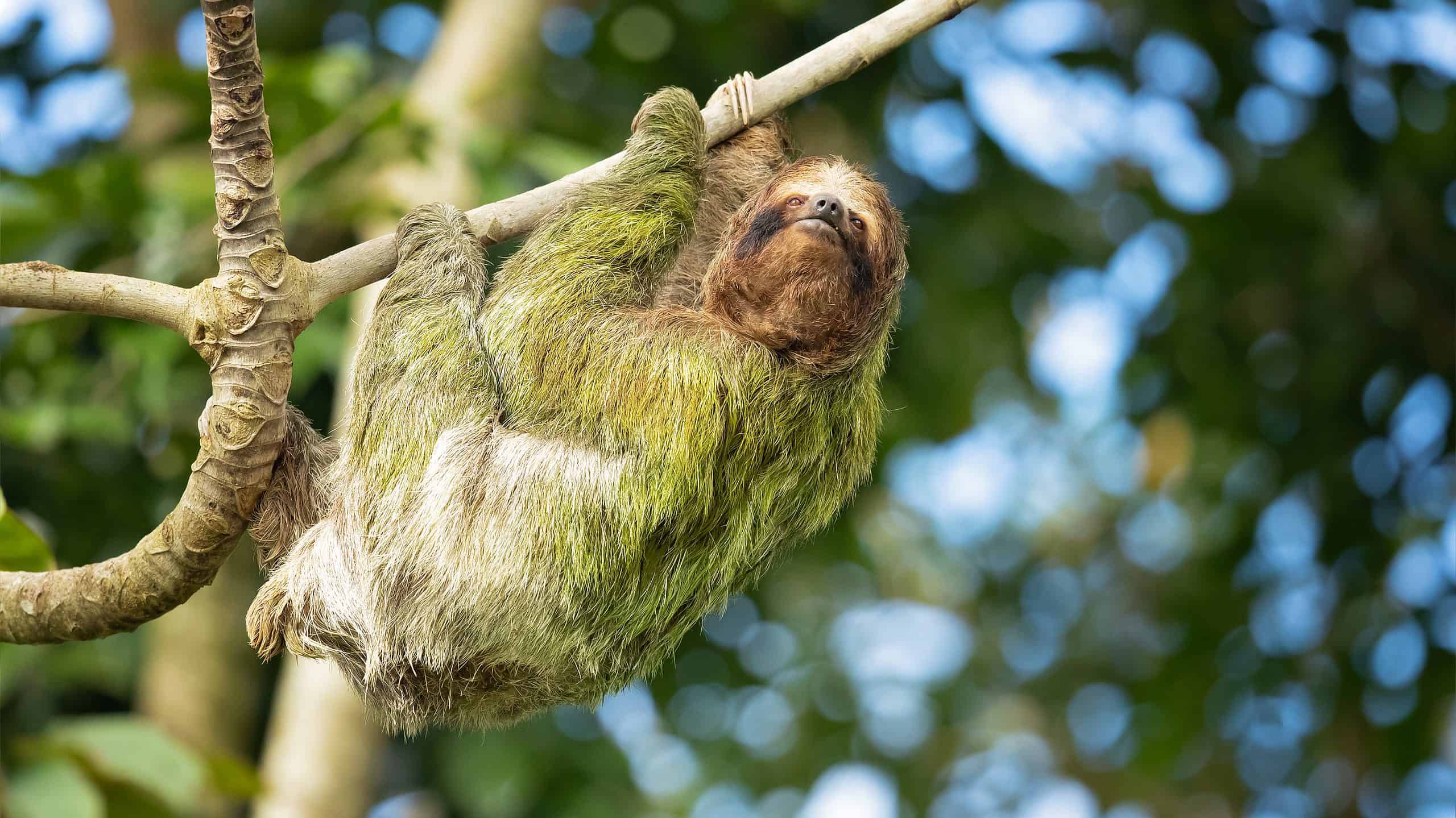
Sloths have a reputation for doing everything slowly, but one thing they do with startling intensity is poop. About once a week, a three-toed sloth abandons the safety of the treetops, climbs all the way down to the forest floor, digs a small hole at the base of a tree, and unloads a week’s worth of waste in one go. Then it carefully covers the hole and climbs back up. For an animal that spends nearly its entire life hanging upside down in the canopy, this bathroom trip is one of the most dangerous things it ever done. And the amount involved is truly astonishing.
This strange ritual has fascinated scientists for decades. Why would an animal so perfectly adapted to life in the trees voluntarily descend to the ground, where it’s slow, awkward, and exposed to predators? Why not just let gravity do the work? The answers involve anatomy, digestion, behavior, and one of the weirdest ecological partnerships in the animal kingdom.
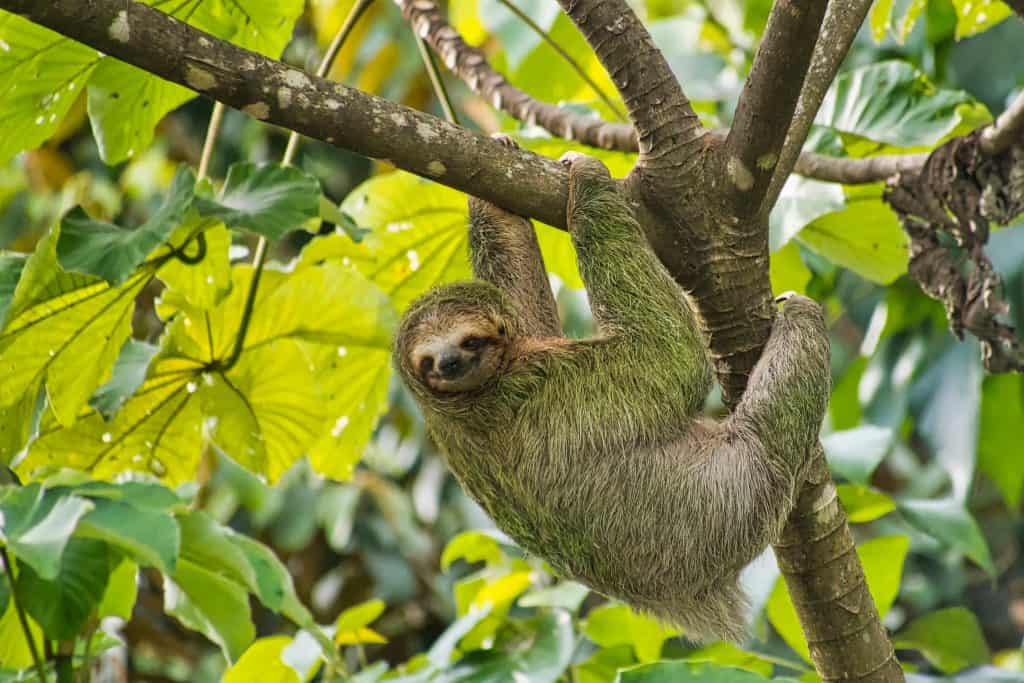
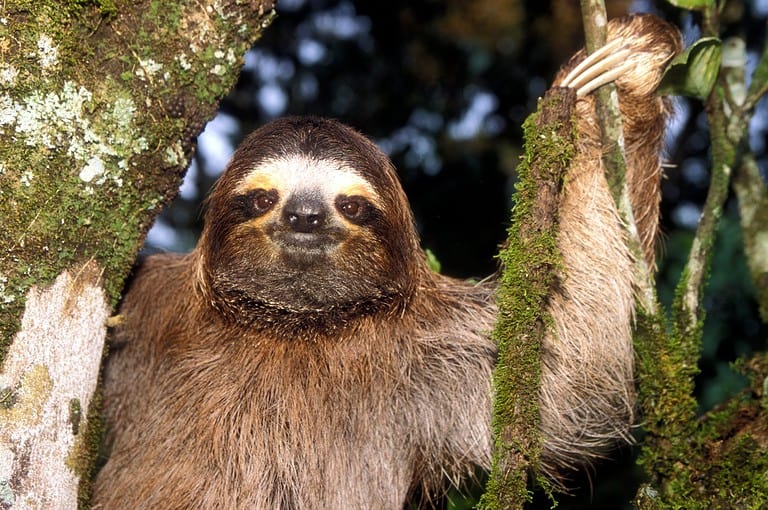
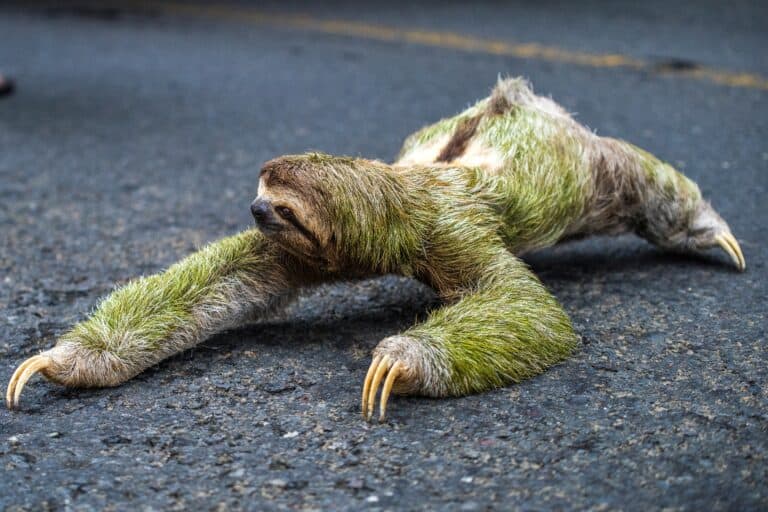
Three-toed sloths may defecate only once every five to seven days, thanks to an extremely slow, leaf-based digestive system.
©Al Carrera/Shutterstock.com
Sloths Don’t Poop Often, but When They Do, They REALLY Do
Most mammals defecate daily, and many do it several times a day. Sloths are outliers. Three-toed sloths typically defecate about once every five to seven days. Two-toed sloths may do so slightly more often, but they’re still far from frequent poopers.
This infrequency is tied directly to the sloth’s famously slow metabolism. Sloths survive on a low-energy diet made mostly of leaves, which are tough to digest and low in nutrients. To squeeze as much energy as possible out of that food, sloths digest it extremely slowly. Food can remain in a sloth’s digestive tract for days or even weeks. Because digestion is so drawn out, waste accumulates gradually. When the sloth finally does its business, it’s releasing everything that’s built up since the last trip.

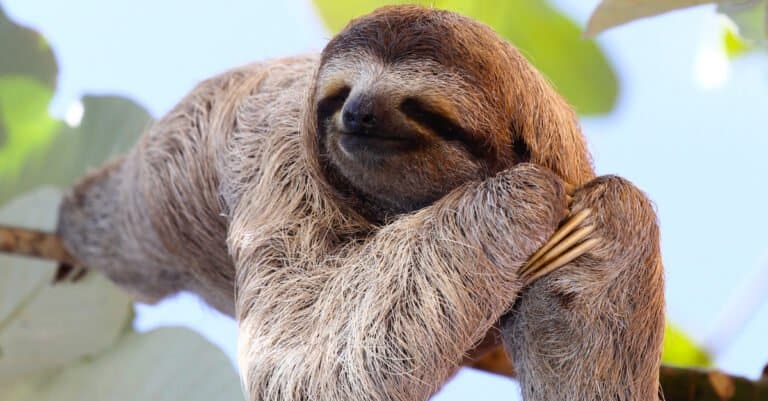
A single sloth bowel movement can weigh several pounds, accounting for up to 30 percent of the animal’s total body weight.
©Rob Jansen/Shutterstock.com
There’s a claim out there stating that a sloth can lose up to 30 percent of its body weight in a single bowel movement. That claim comes from observations of wild three-toed sloths weighed before and after defecation—several of these field studies documenting dramatic short-term weight loss, often in the range of 20 to 30 percent.
To put that in perspective, an adult three-toed sloth typically weighs between 8 and 10 pounds. A bowel movement weighing 2 to 3 pounds is well within the documented range. To put it into even sharper perspective, that’s the equivalent of a typical adult male expelling around 50 pounds of waste, which is about the average weight of a kindergartener.
That said, 30 percent represents the upper end of observed values, not a guaranteed weekly average for every sloth. Individual variation, hydration levels, and diet all affect how much weight is lost in one bathroom trip.
The Long, Dangerous Trip to the John
Three-toed sloths spend the vast majority of their lives in trees. They eat, sleep, mate, and raise young without ever needing to touch the ground. Their long limbs and curved claws are perfectly designed for hanging and climbing, but they’re terrible for walking. When a sloth descends to defecate, it does so carefully and slowly, often taking several minutes to climb down a tree. On the ground, its movement is awkward and limited. This is where the risk comes in.
Large cats like jaguars and ocelots are capable of killing sloths, and harpy eagles have been known to take them from trees. While not every descent ends in disaster, studies have shown that a disproportionate number of recorded sloth deaths are associated with time spent on or near the ground. Defecation trips are among the few times sloths put themselves in that position.
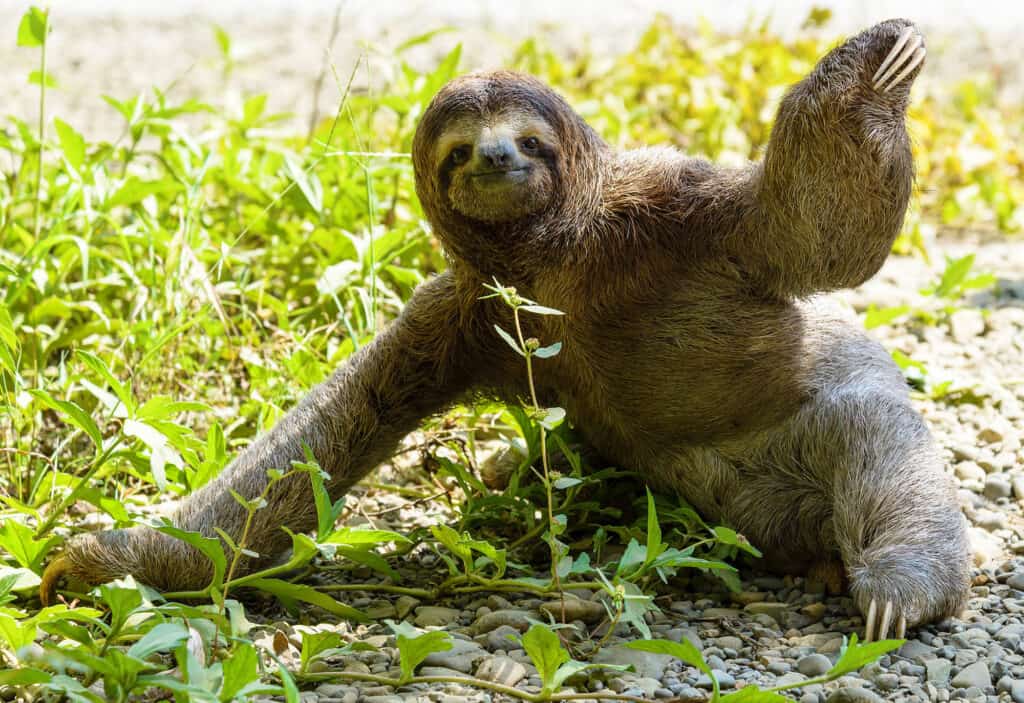
Descending to the forest floor exposes sloths to predators, making bathroom trips one of the riskiest parts of their lives.
©Sharp/Shutterstock.com
To be clear, descending to defecate isn’t necessarily the single leading cause of sloth mortality, and some recent research suggests the risk may not be as extreme as once thought. Still, from an evolutionary perspective, it’s undeniably a high-risk behavior compared to staying in the canopy.
Sloths don’t just poop anywhere when they reach the ground. Observations of wild three-toed sloths show that they often dig a small hole at the base of a tree before defecating. They use their hind limbs and tail area to create a shallow depression, deposit their feces, and then cover it afterward. Why bother? That’s where things get interesting.
The Moth, the Algae, and the Sloth
One of the leading hypotheses for why sloths go to the ground to defecate involves an unexpected cast of characters: moths and algae. Sloth fur is its own miniature ecosystem. Many sloths host specialized moth species that live exclusively in their fur. When the sloth defecates, adult moths leave the fur, lay their eggs in the fresh dung, and die. The larvae develop in the feces, eventually emerging as adults that fly back into the canopy and find a new sloth host.
As the moths live and die in the sloth’s fur, their bodies break down and release nitrogen. That nitrogen appears to fertilize algae that grow in the sloth’s fur. Sloths then ingest this algae while grooming, gaining extra nutrients that supplement their leaf-based diet.
In this model, the sloth’s dangerous bathroom trip helps sustain a nutrient cycle that ultimately benefits the sloth itself. This idea is supported by multiple field studies, but it’s still considered a hypothesis rather than a settled fact. Some researchers argue that the nutritional benefit of the algae may be modest, and others have proposed alternative explanations for the behavior.
Other Possible Reasons Sloths Poop This Way
The moth-algae hypothesis gets a lot of attention because it’s so elegant and strange, but it’s not the only idea on the table. Another possibility is that defecating at the base of a tree helps sloths avoid fouling their fur and the branches they rely on for movement. Accumulated waste in the canopy could increase parasite loads or make the sloth more detectable to predators.
There’s also the idea that the behavior is simply an evolutionary holdover. Sloths evolved from much larger, ground-dwelling ancestors. It’s possible that ground defecation was the norm for those animals, and modern tree-dwelling sloths retained the behavior even after moving into the canopy. None of these explanations is mutually exclusive. Evolution often works through a combination of pressures rather than a single driving factor.
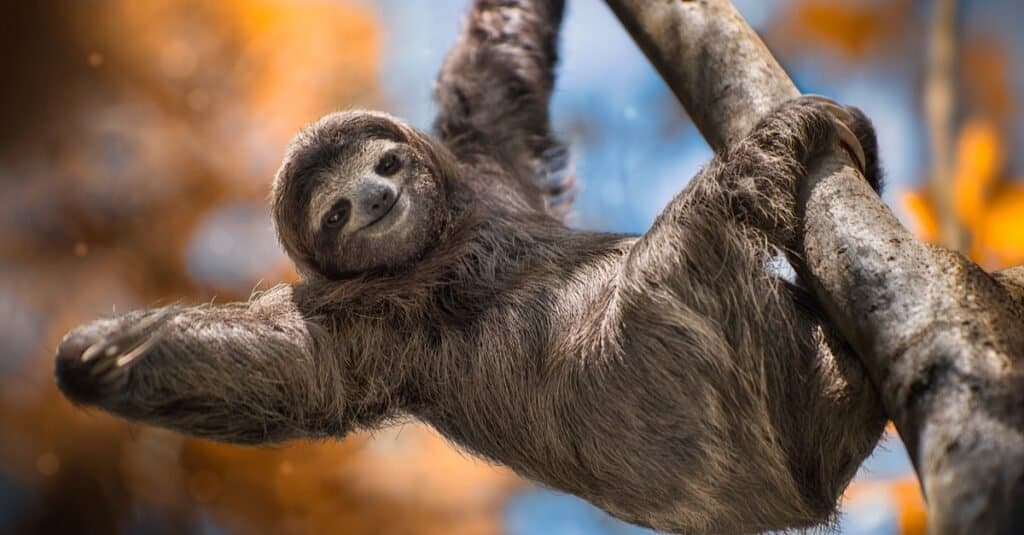
Scientists suspect sloth bathroom habits may also reduce parasites, protect fur quality, or reflect ancient evolutionary behaviors.
©jdross75/Shutterstock.com
Not All Sloths Do This Exactly the Same Way
Most of what we know about this behavior comes from studies of three-toed sloths. Two-toed sloths have different diets, higher metabolisms, and somewhat different digestive systems. Some two-toed sloths defecate from branches, and others descend less consistently.
That distinction matters because social media posts often talk about “sloths” as if they’re a single, uniform group. In reality, sloth species differ in important ways—for example, their bathroom rituals—and behaviors observed in one genus don’t always apply perfectly to another.
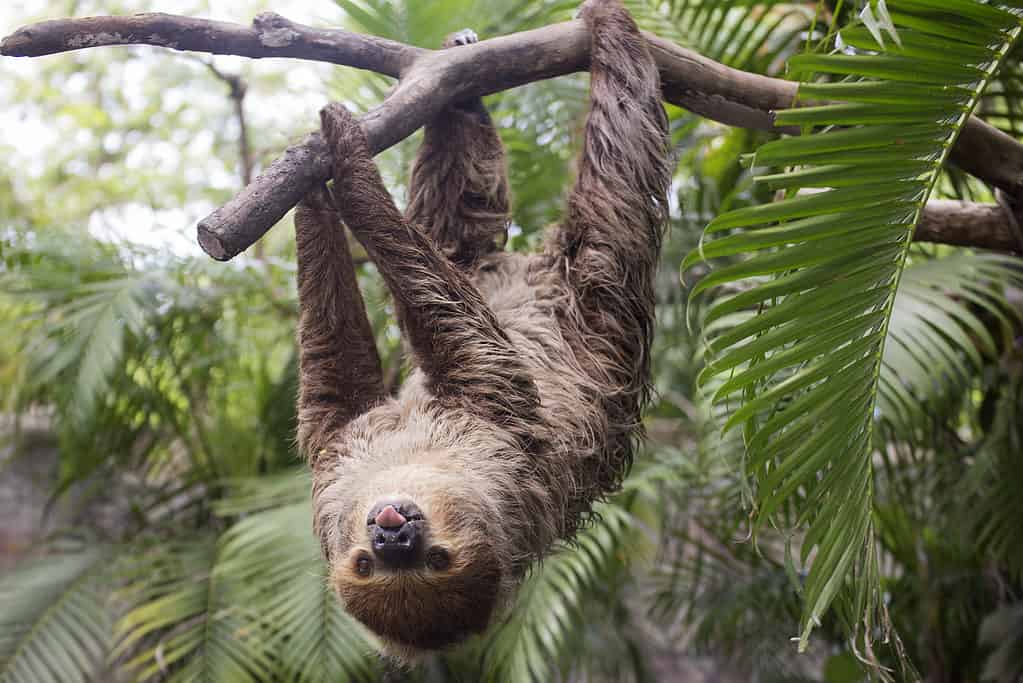
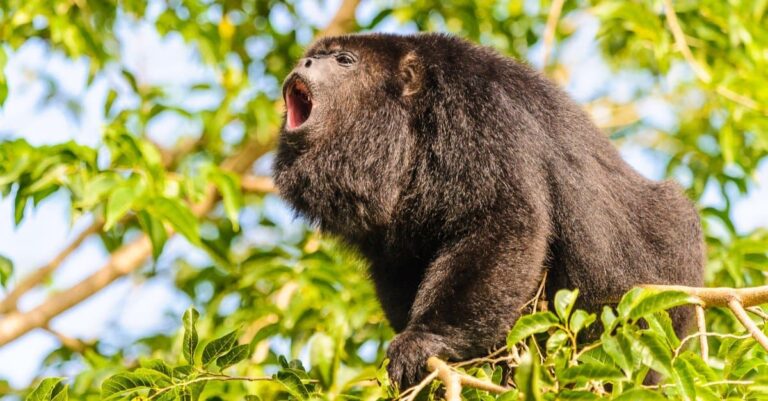
Two-toed sloths differ from three-toed sloths in diet, metabolism, and bathroom habits, highlighting important species differences.
©iStock.com/Kung_Mangkorn
A Bathroom Event
For most animals, pooping just kind of… well… happens. For the three-toed sloth, it’s an event. A slow, risky, deeply inconvenient event that involves climbing down a tree, digging a hole, losing a shocking amount of body weight, and then hauling themselves back into the canopy. All so they can do something the rest of us manage half-asleep before work. The sloth’s pooping ritual is pretty funny—depending on your sense of humor—but for them, this once-a-week bathroom pilgrimage is perfectly sensical.
So yes, everybody poops. And if you’re a three-toed sloth—boy, do you! So, if you ever feel like your own bathroom habits are excessive or dramatic, take comfort in the fact you’ve got nothing on the sloth. Right now, somewhere in a tropical forest, a sloth is very slowly climbing down a tree, risking its life to make a trip to the toilet, and leaving nearly a third of its body weight behind!