
Quick Take
- Maintaining high levels of hydration is essential for terrestrial gill function in pill bugs.
- The pleopodal lungs create a biological bottleneck that dictates precise microhabitat selection.
- Modern pill bugs have adapted their aquatic respiratory structures to function on land, allowing them to survive in terrestrial environments.
- The marsupium phase is the critical window where larval survival depends on internal water management.
Flip a damp log in your backyard, and a crowd of tiny gray roly-polies usually rushes for cover. These pill bugs may look like insects, but they are actually crustaceans, distant relatives of crabs and shrimp that made a rare move from water onto land. Their breathing system still carries clear traces of that watery past. Instead of sealed air tubes or pumping lungs, pill bugs rely on moisture-dependent respiratory surfaces that work only when kept damp. Understanding how pill bugs breathe explains why they cling to humid hiding spots, why they move mostly at night, and what happens when their surroundings dry out.
What Are Pill Bugs?
The backyard pill bug most people recognize is Armadillidium vulgare, often called a roly-poly or woodlouse. This small crustacean has a rounded, segmented exoskeleton that functions like overlapping armor plates. When threatened, it can roll into a tight ball to defend itself, a behavior few other land isopods can perform. This can be enough to deter some predators, as they have trouble biting pill bugs when confronted with armored surfaces.
Unlike insects, pill bugs are crustaceans with seven pairs of legs, two pairs of antennae, and mouthparts shaped for scraping and chewing dead plant material. They live in soil, leaf litter, compost, and gardens, feeding on decaying leaves, wood fragments, and other organic debris. While they play a helpful role in breaking down waste, their daily lives are shaped by a single constraint: they must remain close to moisture to keep breathing.
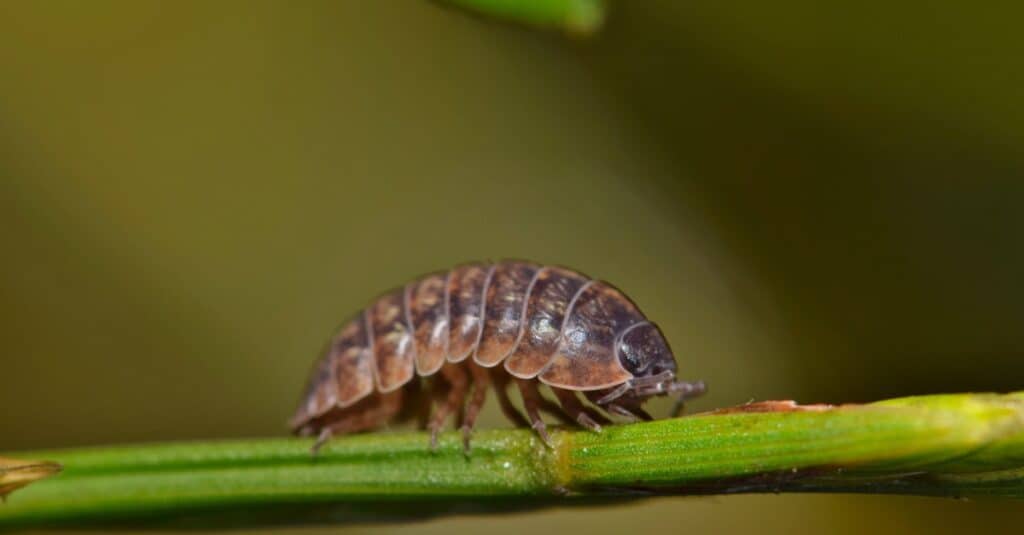
Pillbugs are not insects. One aspect that makes this clear is that they have seven pairs of legs, unlike insects that have three.
©iStock.com/Brett_Hondow
From Ocean Gills to Pleopodal Lungs
Pill bugs belong to a group known as terrestrial isopods. Their ancestors lived in marine environments and breathed through simple gills. As some isopods moved onto land, they did not replace gills with fully dry-adapted lungs. Instead, they modified existing structures into what biologists call pleopodal lungs.
These organs sit on flattened appendages, called pleopods, located on the underside of the abdomen. Each pleopod carries thin, folded tissue with a spongy internal structure. This tissue provides a large surface area for gas exchange, but it still depends on water to function. The result is a breathing system that works in air only as long as those surfaces stay moist.
How Pleopodal Lungs Exchange Gases
Pleopodal lungs operate through diffusion rather than active pumping. A thin film of water coats the respiratory surfaces. Oxygen from the surrounding air dissolves into this moisture layer, then diffuses across the tissue and into the pill bug’s body fluids. Carbon dioxide follows the same route in reverse, leaving the body through the damp surface.
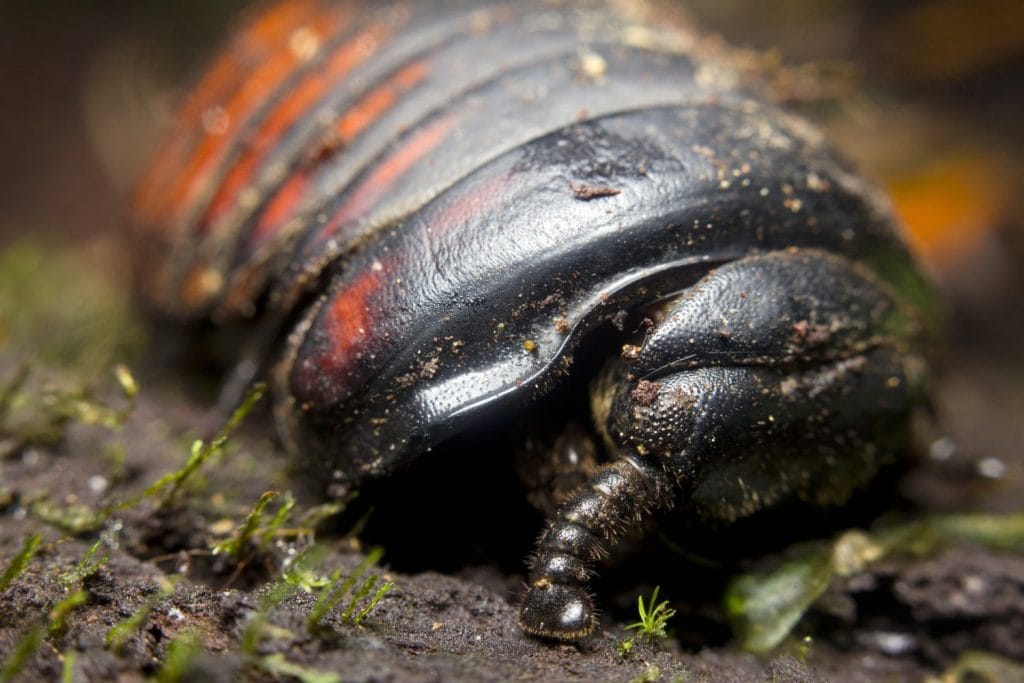
Pill bugs can survive only with a thin film of water coating their respiratory surfaces for oxygen and carbon dioxide exchange.
©corlaffra/Shutterstock.com
Because this process depends on water, dry air creates an immediate problem. As the water layer thins, gas exchange slows. Oxygen enters the body less efficiently, and carbon dioxide accumulates. Pill bugs cannot increase their breathing rate to compensate, so maintaining moisture becomes critical for survival.
Why Drying Out Can Be Fatal
Terrestrial isopods lack the waxy outer coating that many insects use to limit water loss. Their exoskeleton allows moisture to evaporate more easily, especially through the thin tissues associated with respiration. Research shows that when humidity drops too low, pill bugs lose water rapidly. As the pleopodal lungs dry, oxygen uptake declines, leading to sluggish movement and reduced feeding. If drying continues, respiration fails entirely. In extreme cases, pill bugs can die within days when exposed to persistently dry conditions. Although surrounded by air, they effectively suffocate because their respiratory surfaces no longer function.
Choosing the Wettest Corners of the Landscape
Because moisture determines survival, pill bugs specialize in finding humid microhabitats. They gather under rocks, logs, mulch, boards, and flowerpots, places where shade and trapped air slow evaporation. These shelters reduce temperature swings and hold moisture close to the ground. In natural settings, forest floors with thick leaf litter provide ideal conditions. In yards and gardens, irrigated soil and mulch create similar environments. Where moisture is reliable, pill bugs often occur in high numbers, quietly recycling dead plant matter and returning nutrients to the soil.
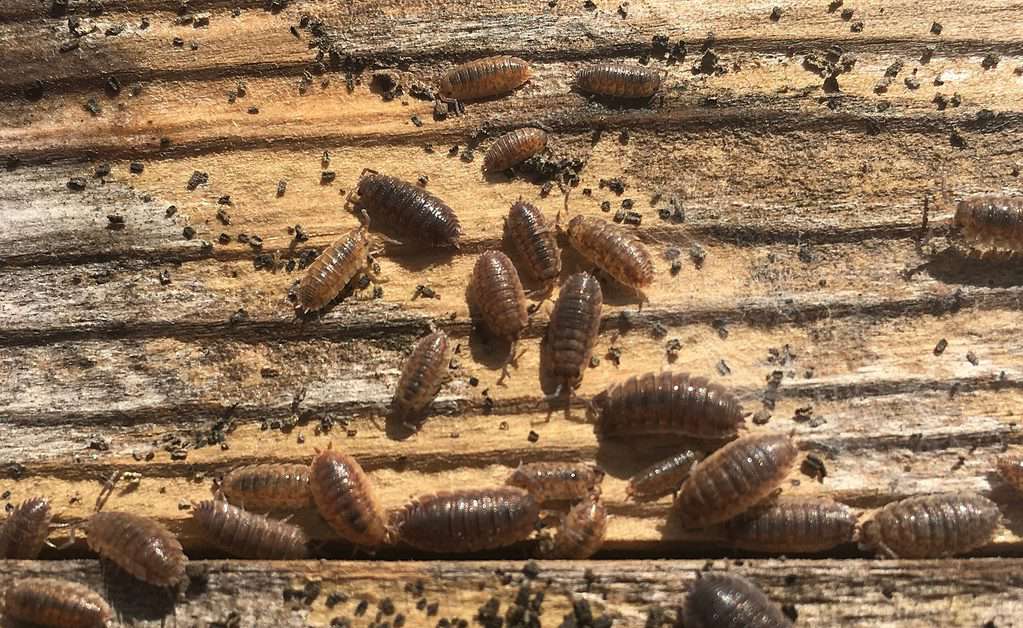
Adult and baby woodlice scatter after being disturbed. They’re easy to find when you flip over rocks and stones outdoors.
©Ellianne/Shutterstock.com
Night Activity and Humidity Cycles
Timing matters as much as location for animals that depend on damp respiratory surfaces. Pill bugs are most active at night, when temperatures fall, and humidity rises. Cooler air slows evaporation, allowing their pleopodal lungs to remain moist for longer periods. During daylight hours, they usually stay hidden, conserving water and avoiding heat. As evening approaches and dew begins to form, pill bugs emerge to forage on fallen leaves, fungi, and decaying wood. Before sunrise, they retreat again to protected spaces. This daily rhythm reduces water loss while allowing them to feed and move across the landscape.
Rolling Into a Ball and Water Conservation
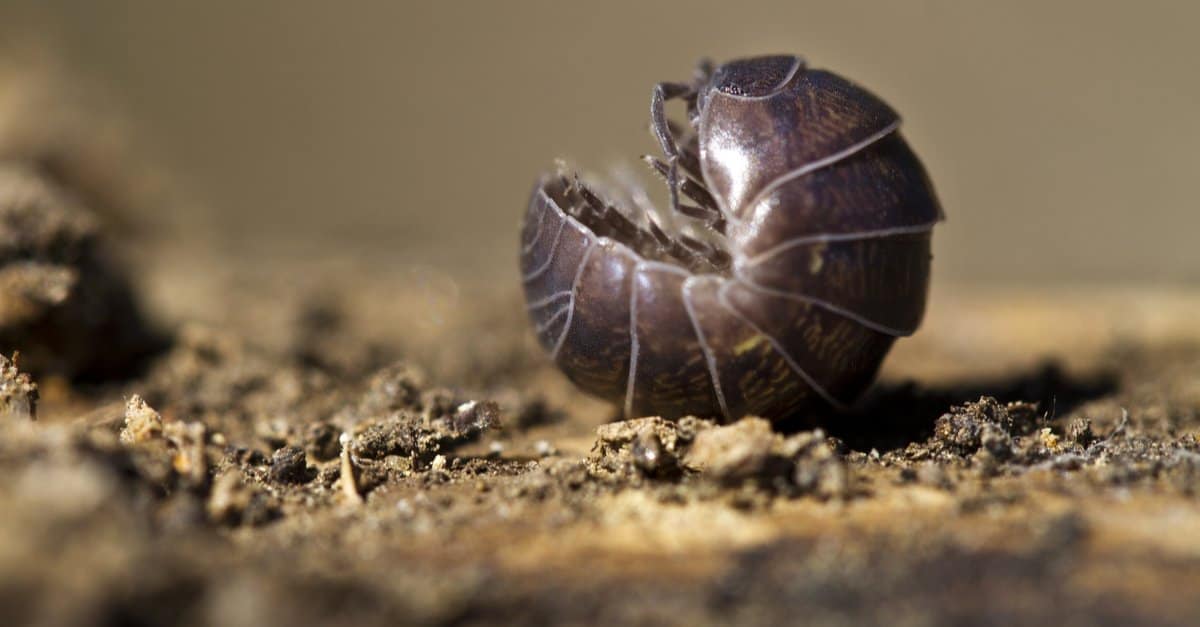
The ability to roll into a ball, known as conglobation, serves more than a defensive purpose. When curled tightly, a pill bug reduces the surface area exposed to dry air, especially on the underside where the pleopodal lungs are located. This posture slows evaporation from respiratory tissues and other soft body parts. Studies measuring water loss show that rolled pill bugs retain moisture longer than individuals that remain extended, particularly under low humidity. Conglobation does not stop gas exchange entirely, but it buys time during brief periods of stress until the animal can reach a damp refuge.
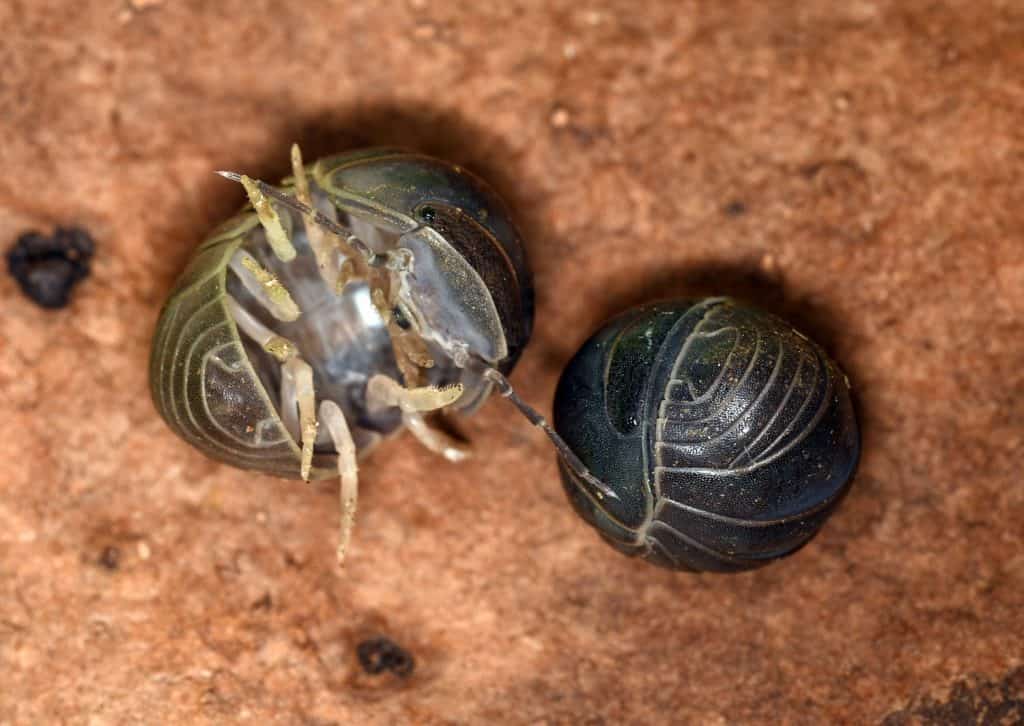
Pill bugs roll up not only to defend themselves, but to conserve moisture.
©Guillermo Guerao Serra/Shutterstock.com
Limits of Recovery After Dehydration
Pill bugs can tolerate short periods of dryness if humidity rises again quickly. In very humid air, they can reabsorb lost water through their body surfaces, restoring the thin moisture layer needed for respiration. However, this ability has limits. If pleopodal tissues dry too much, structural damage occurs. Once damaged, these respiratory surfaces cannot fully recover, even if moisture returns. At that point, breathing remains impaired, and survival becomes unlikely. This narrow margin explains why pill bugs rarely venture far from protective cover and why prolonged droughts can sharply reduce local populations.
Pill Bugs as Indicators of Soil Moisture
Because pill bugs respond so strongly to humidity, ecologists often view them as living indicators of soil moisture and microclimate conditions. Surveys show that isopod activity changes with temperature, rainfall, and ground cover. In shaded, moist environments such as forests, gardens, and mulched beds, pill bugs thrive and contribute significantly to decomposition. In contrast, exposed, paved, or compacted areas support far fewer individuals. Urban environments with warmer nights and lower ground-level humidity can further limit their survival. These patterns make pill bugs useful for studying how small changes in climate and land use affect ground-dwelling animals.
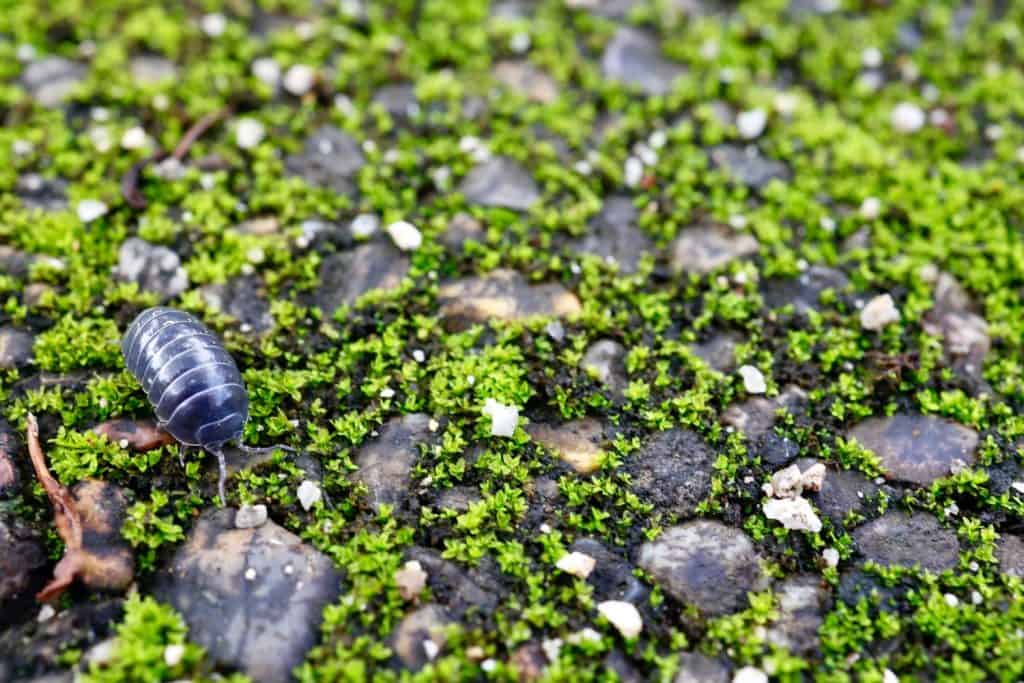
This spot is moist enough to sustain both healthy moss and pill bugs.
©umaruchan4678/Shutterstock.com
Can You Get Rid of Pill Bugs (and Should You)?
You can reduce pill bug numbers if they become a nuisance, but eliminating them entirely is rarely necessary or helpful. Pill bugs feed on decaying plant material and help break it down, which improves soil structure and nutrient cycling. Problems usually show up only when moisture is excessive, such as in heavily mulched beds or constantly watered gardens. Cutting back on excess mulch, improving drainage, and reducing damp hiding spots often lowers their numbers naturally without chemicals. In most cases, pill bugs are a sign of healthy, moist soil rather than a pest that needs aggressive control.
A Life Balanced Between Land and Water
Pill bugs never fully solved the challenge of breathing air with organs derived from gills. Instead, they live a careful balance between terrestrial and aquatic constraints. Pleopodal lungs allow them to occupy soil and leaf litter, but only if they remain near moisture, limit daytime exposure, and use behaviors like curling into a ball to slow water loss. Their success shows that life on land does not always require completely new systems, only workable compromises.