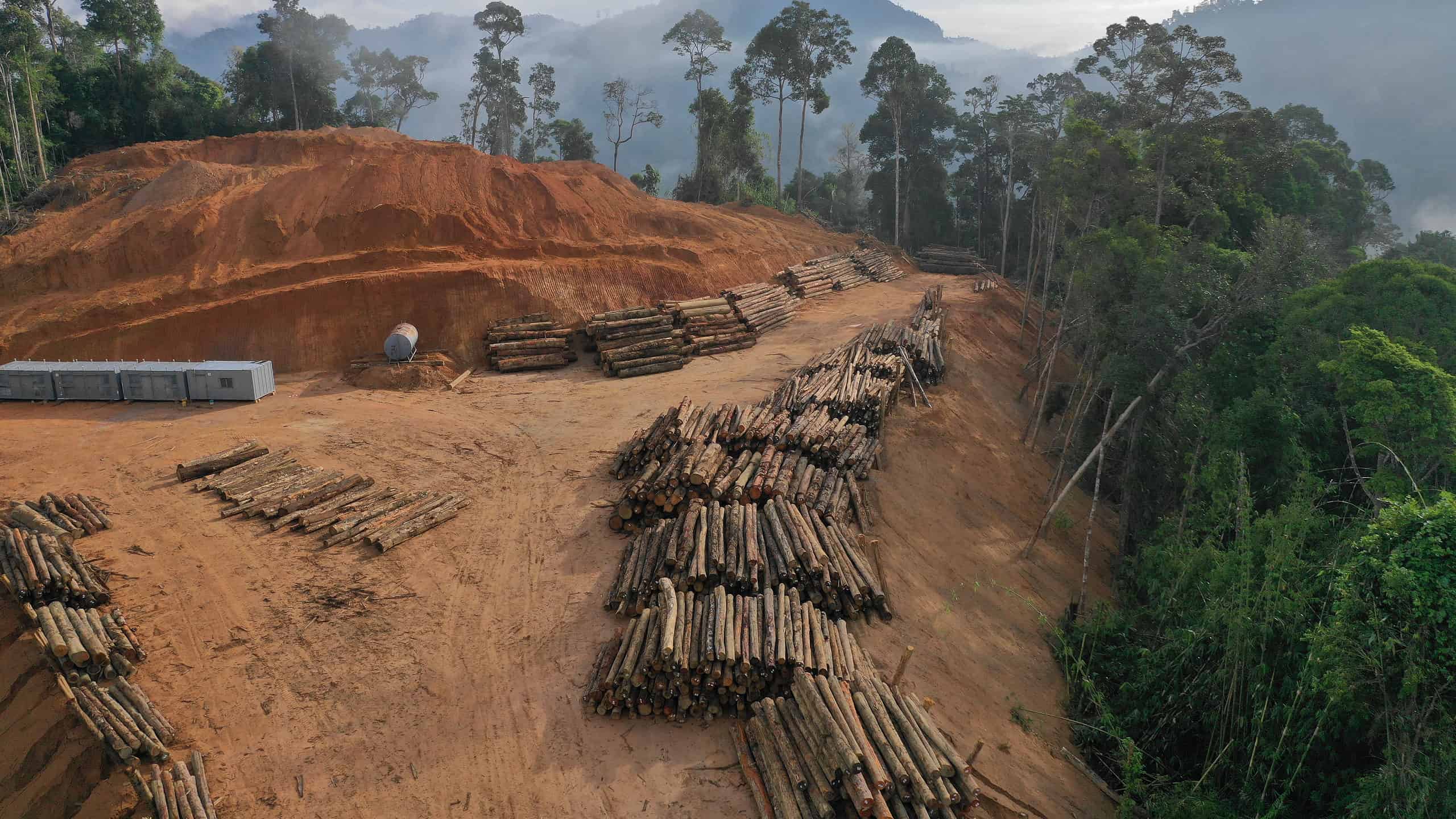

Deforestation causes a ripple effect that’s felt beyond the rainforests it destroys. Cutting down rainforests accounts for 12% of our total greenhouse emissions. Without these protective woodlands, we reduce our planet’s ability to absorb carbon dioxide. This triggers a domino effect, leading to worse and unpredictable weather, flooding, and soil erosion. One of the most devastating effects of all this is the loss of biodiversity. Many of the rainforest’s most beloved wildlife are slowly losing their homes, and their lives, to deforestation and climate change. Tragically, these are some of the animals that could disappear in our lifetime.
Pygmy Sloth
Pygmy sloths are native only to Isla Escudo de Veraguas, an uninhabited island off the coast of Panama. This island is uninhabited, but its mangrove forests are threatened by small-scale wood harvesting and habitat disturbance from visiting fishermen and occasional tourism. The diet of a pygmy sloth consists primarily of these same trees, and their food source is rapidly dwindling. Isla Escudo de Veraguas is less than two miles in size, leaving its native sloth population with few options for relocation or a new source of sustenance.
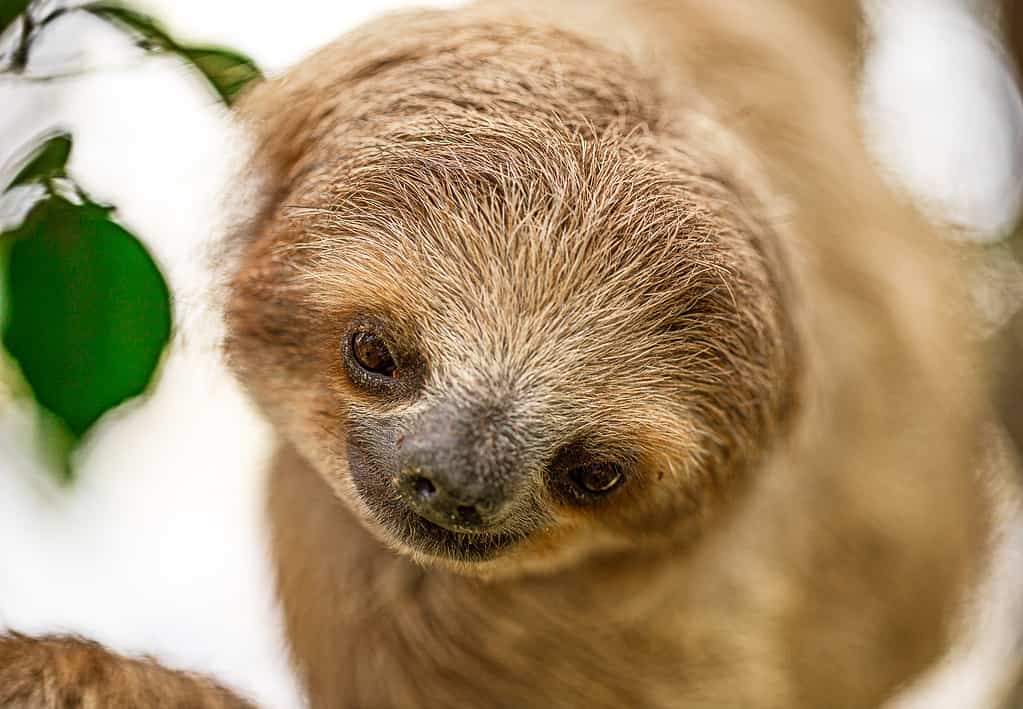
The pygmy three-toed sloth moves slowly.
©Wirestock/iStock via Getty Images
The sloths have not been declared Threatened or Endangered by the U.S. Endangered Species Act. However, they are listed as “Critically Endangered” on the International Union for Conservation of Nature Red List. As of March 2024, the U.S. Fish and Wildlife Service proposed listing the pygmy sloth as a threatened species under the Endangered Species Act, but the listing has not yet been finalized. Pygmy sloths face other dangers on their small island, contributing to this international recognition, including predation by animals like feral cats.
Giant River Otter
Eventually, the only place we might be able to see the giant river otter is in a zoo. It’s listed as Endangered by the International Union for Conservation of Nature. It’s estimated that only 2,000 to 5,000 otters still exist in the wild. Before this, giant river otters were found extensively throughout South America in the Amazon Basin. They inhabited rainforests, rivers, and even wetlands, able to transition between the three due to their swimming skills.
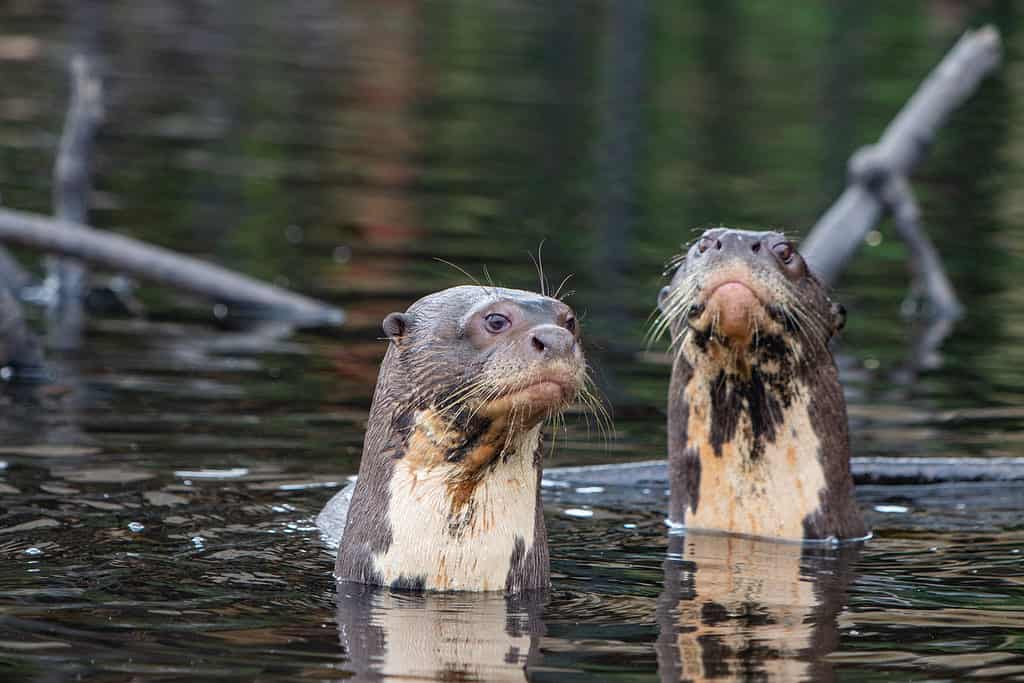
Giant otters can grow to six feet in length.
©Johnny Giese/Shutterstock.com
Now, giant river otters face several threats. Deforestation has drastically cut down on their natural habitat, cutting them off from rivers. The waterways that have been left are also highly contaminated with mercury, which poisons native wildlife. They’ve also been hunted for their pelts, a practice that has since been outlawed. Currently, contamination from gold mining and deforestation for logging and development are the biggest threats to their survival.
Sumatran Orangutan
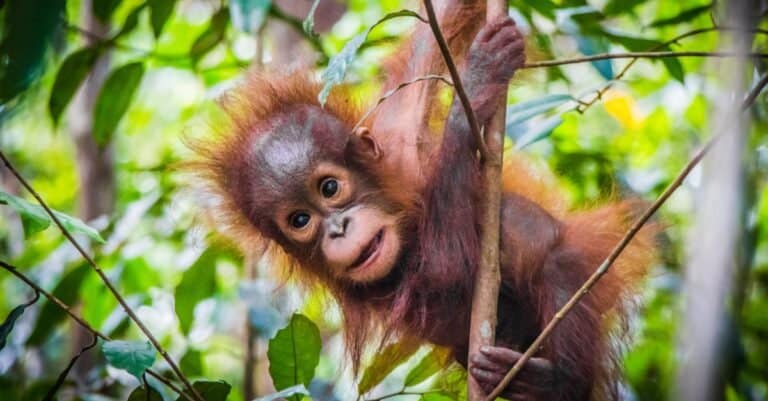
Rainforest canopies are home to the Sumatran orangutan. They live almost exclusively in trees, rarely making it to the ground for anything other than travel. Trees hold their food sources, as well as their nests. Therefore, deforestation has been a significant threat to the entire population. They are currently listed as Critically Endangered, on the brink of extinction if their homes continue to be harvested for logging.
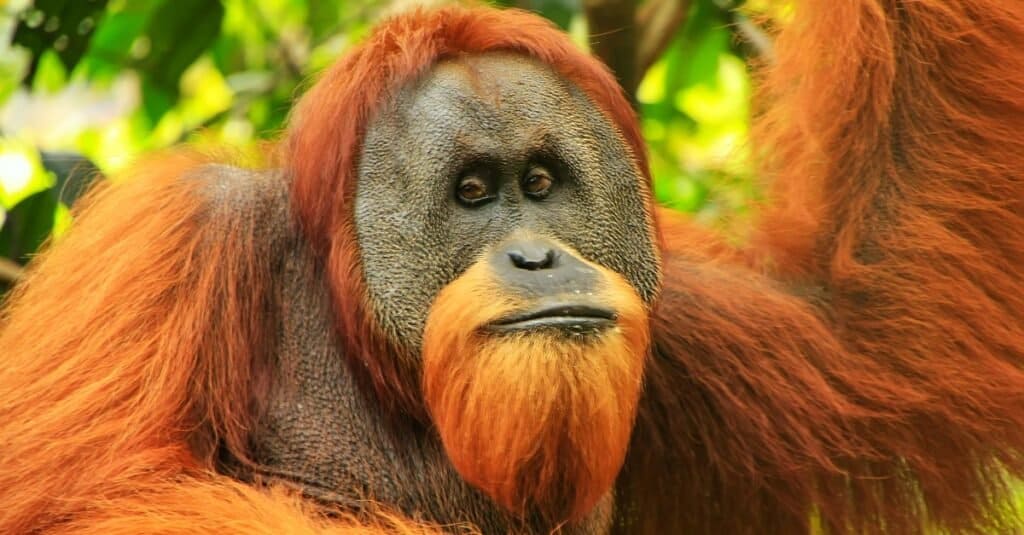
The Sumatran orangutan is endemic to the north of Sumatra and is critically endangered.
©Don Mammoser/Shutterstock.com
The rainforests of North Sumatra are being cut down at a rapid pace for the sake of plantations and new agricultural land. In an effort to clear large portions of rainforests quickly, fires are set, which also burn the homes of the Sumatran orangutan. According to the World Wildlife Federation, some orangutans get caught in the fires, unable to move quickly enough to escape the burning trees around them.
African Forest Elephant
The International Union for Conservation of Nature has declared the African forest elephant Critically Endangered. According to the African Wildlife Foundation, more than 60% of the species have been lost due to poaching in the last decade. They’ve been Critically Endangered since 2021, yet now inhabit less than 25% of their historic habitat.
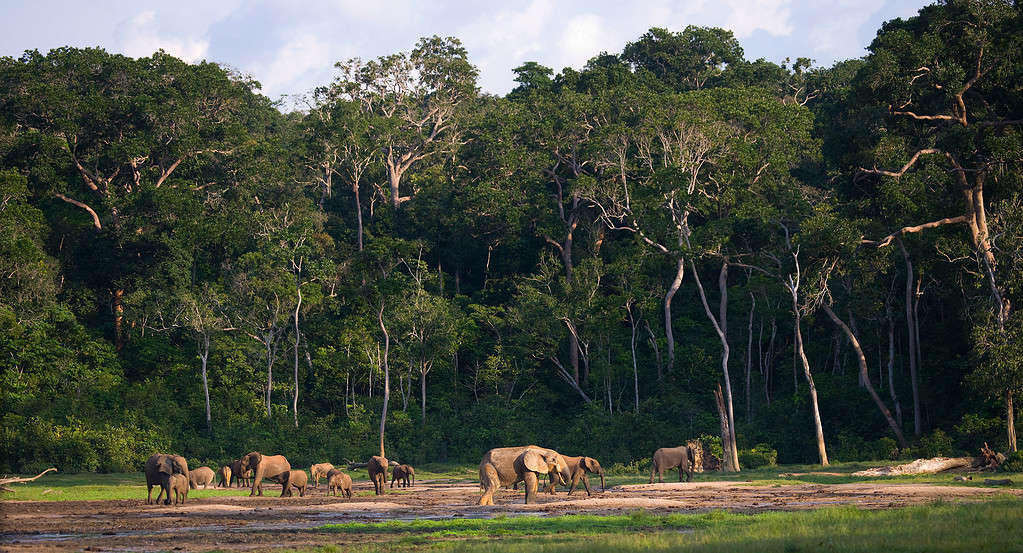
Elephants gather in the Republic of Congo.
©ANDREYGUDKOV/iStock via Getty Images
Protecting these elephants is difficult due to their elusive nature. They are rarely seen and have the slowest reproductive rates of any other elephant species. This means that counting native populations is challenging, and new generations are not often born. The AWF says that it would take 81 years to reverse all the damage done to this species by poaching and habitat loss.
Sumatran Tiger
The world has already seen the loss of two tigers: the Balinese and Javan. Now, the Sumatran tiger is also on the brink of extinction. It’s listed as Critically Endangered and is only found on the island of Sumatra. Sumatran tigers face threats from deforestation, as their native land is cut down for development. However, they also face threats from poaching and locals killing tigers that attack livestock.
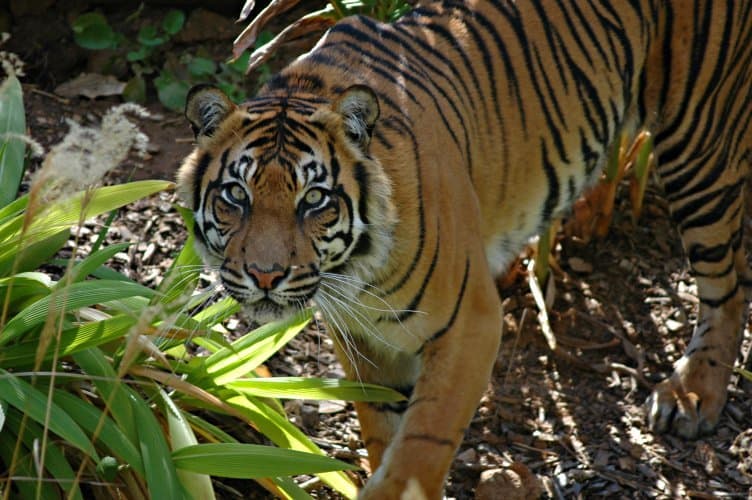
The Sumatran tiger is threatened by poaching.
©I, Kevin1243, CC BY-SA 3.0, via Wikimedia Commons – Original / License
Right now, poaching is a jailable offense for anyone caught killing or poaching a tiger. They’re often killed for their fur and sold for high profits on the black market. However, the loss of swamplands and freshwater swamp forests is still a threat to the survival of these tigers. It’s estimated that fewer than 300 Sumatran tigers are still left in the rainforests of Sumatra.
Javan Rhinoceros
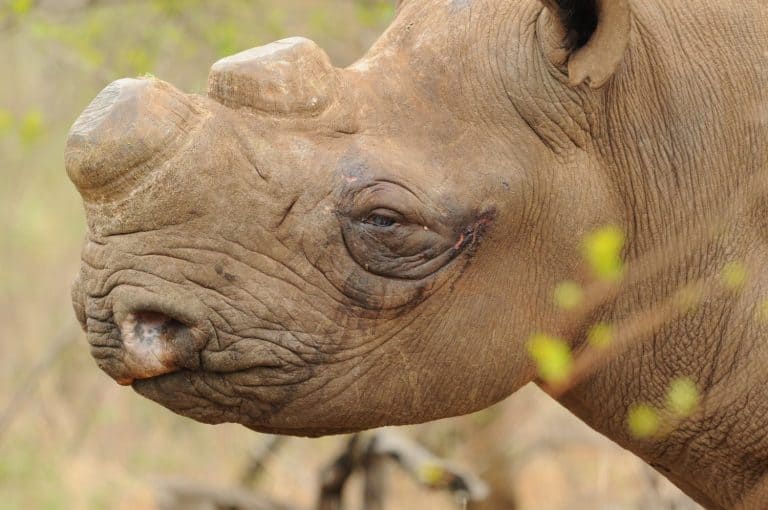
The Javan rhinoceros is listed as Critically Endangered and faces many threats. The last known herd was spotted in Ujung Kulon National Park in Indonesia, and the remaining population is closely monitored. They prefer to stay in marshlands and thick bamboo forests, but deforestation has taken away much of their native land.
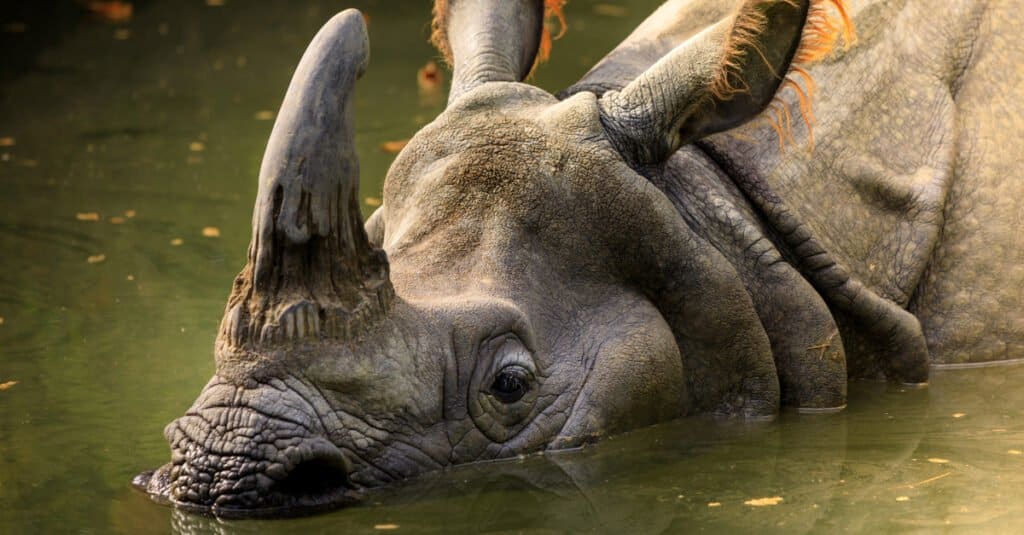
The Javan rhinoceros is now a very rare member of the family Rhinocerotidae.
©Maximilian Pawlikowsky/Shutterstock.com
Javan rhinos are hunted for their horns, and stopping this has been a significant conservation effort. However, they also face a decline due to a parasitic disease spread by horse and deer flies. On top of this, the remote nature of their natural habitat makes breeding difficult. Without genetic diversity, the Javan rhino population also risks inbreeding due to its isolation.
Gorilla
Significant efforts have been made by the World Wildlife Fund and the African Wildlife Foundation to slow the extinction of gorillas, specifically the mountain gorilla. It’s one of the world’s largest living primates, but its population numbers are down to roughly 1,000 apes. They are listed as Endangered, while eastern lowland and western gorillas are now listed as Critically Endangered.
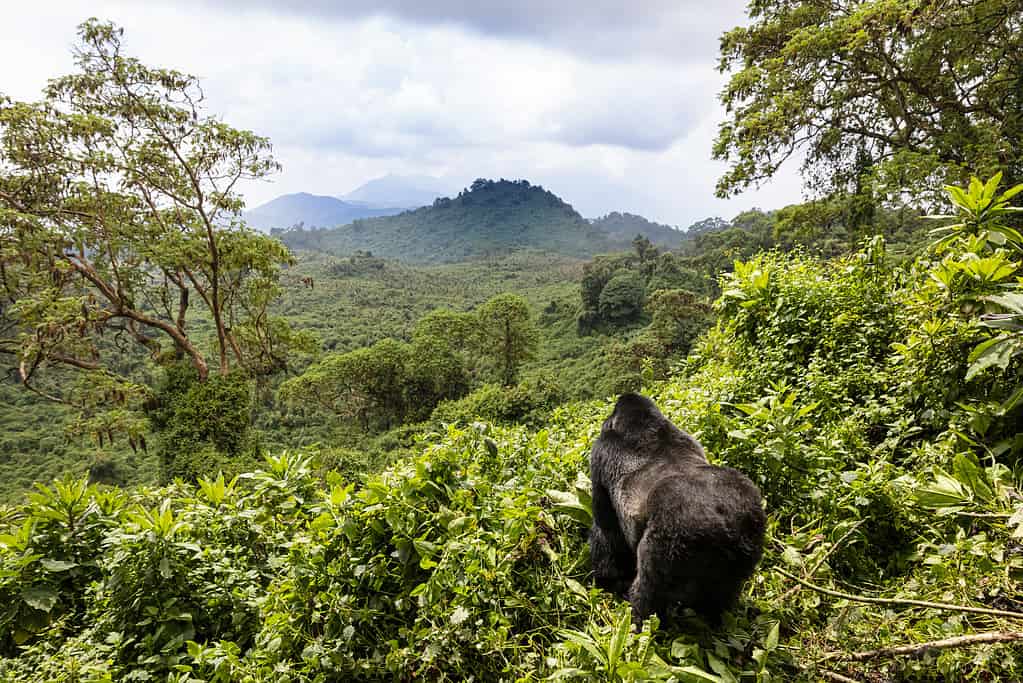
A mountain gorilla roams Rwanda Volcanoes National Park.
©Dennis Stogsdill/iStock via Getty Images
They all face threats from deforestation, which takes away the woodlands necessary for their survival. Mountain gorillas, in particular, also face threats from local conflict and disease. The loss of their habitat for development and agricultural purposes also pushes them outside rainforests, leaving them vulnerable. While the population has increased in the Congo, more work is needed to keep these animals off the Endangered list.
Jaguar
The IUCN Red List has declared the jaguar Near Threatened. This means its population has decreased enough that if any other jaguars are lost, it will become an Endangered species. While they were once found even in the Southwestern United States, they are now relegated to South America and parts of French Guiana, with rare U.S. sightings. In the last century, their population has shrunk by nearly half.
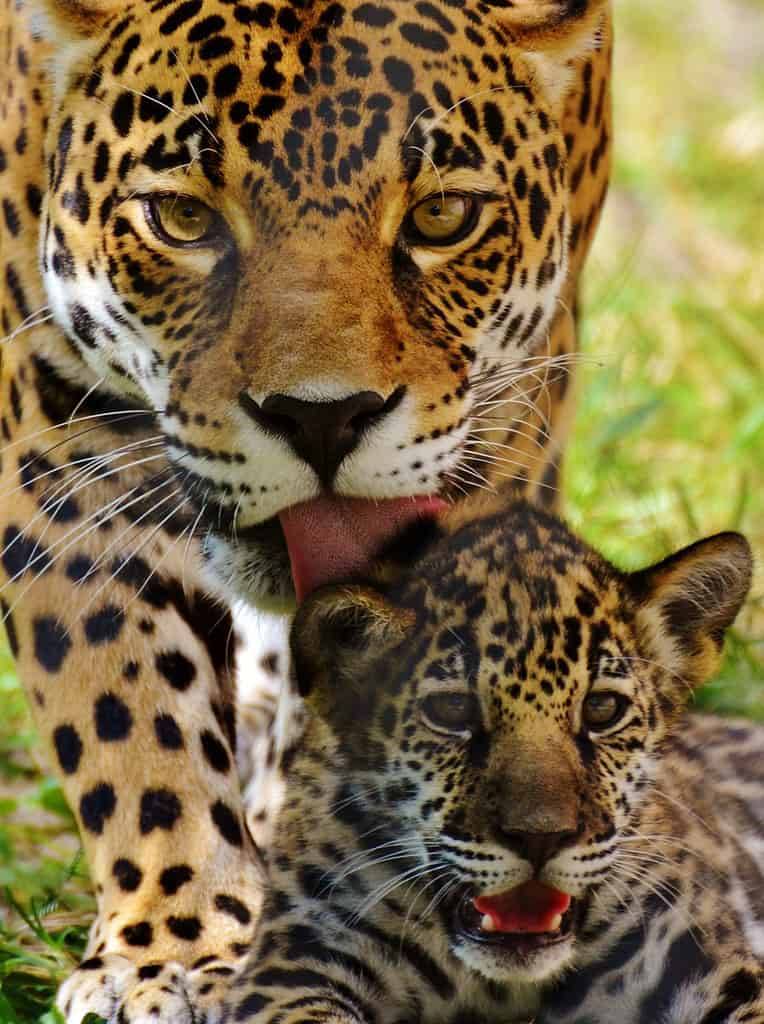
A jaguar mother and her cub.
©mjf795/ via Getty Images
It’s believed the name “jaguar” came from the word “yaguara,” meaning “wild beast that overcomes its prey at a bound.” Sadly, though this wild beast overcomes many things, it’s threatened by habitat loss and fragmentation. As rainforests are cut down into pieces, jaguars lose more of their native land and are forced into smaller square footage. As this happens, survival becomes increasingly complex without enough food, shelter, and mating options.
Hyacinth Macaw
The hyacinth macaw is currently listed as Vulnerable, with its population on the decline. Sadly, the world’s largest parrot made its way onto Brazil’s endangered list between 2000 and 2013. The bright blue bird, known for its spunky personality, faces several threats today. One is habitat loss as deforestation takes away its home in the rainforest canopies.
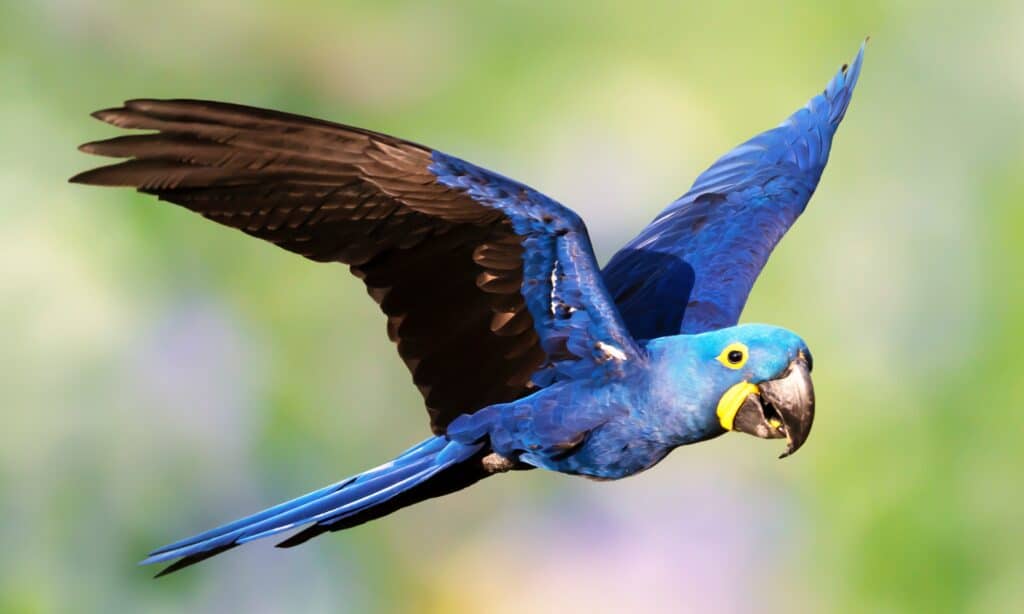
A hyacinth macaw flies over South Pantanal, Brazil.
©Dgwildlife/Shutterstock.com
Two other surprising threats are climate change and being poached for their use in traditional headdresses. However, one of the biggest dangers they face is the pet trade. This was a significant problem during the 1980s, when hyacinth macaws were caught and sold as household pets. Today, a Brazilian-funded organization, the Hyacinth Macaw Project, monitors its population and works on conserving the species.
Uakari Monkey
The bald uakari (Cacajao calvus) is listed as Vulnerable by the International Union for Conservation of Nature, while other uakari species have varying conservation statuses. These monkeys are known iconically for their bright red faces and inhabit the Amazon Basin throughout Peru and western Brazil. Sadly, they no longer inhabit southern Colombia due to deforestation.
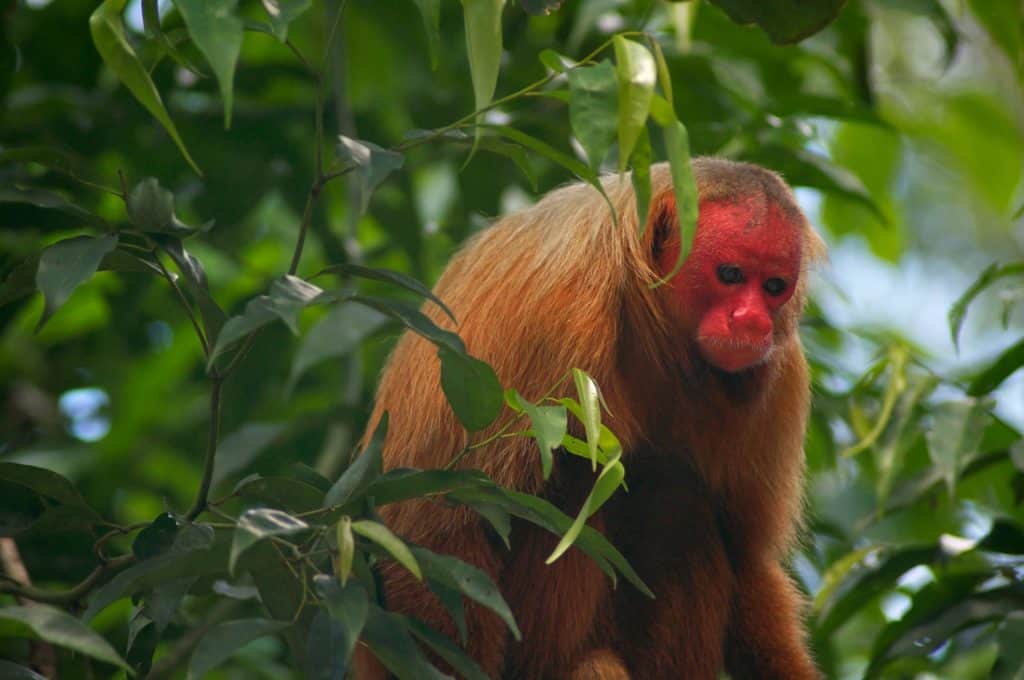
The uakari has a striking red face.
©Aaron Martin / Creative Commons – Original
It’s believed the bald uakari faced a decline in 1997 when deforestation caused many of their food sources and shelters to dwindle. This resulted in the loss of habitat in Colombia, and now, uakari monkeys face similar threats in other parts of the Amazon. As the most heavily deforested region, habitat loss remains the main threat to these primates.