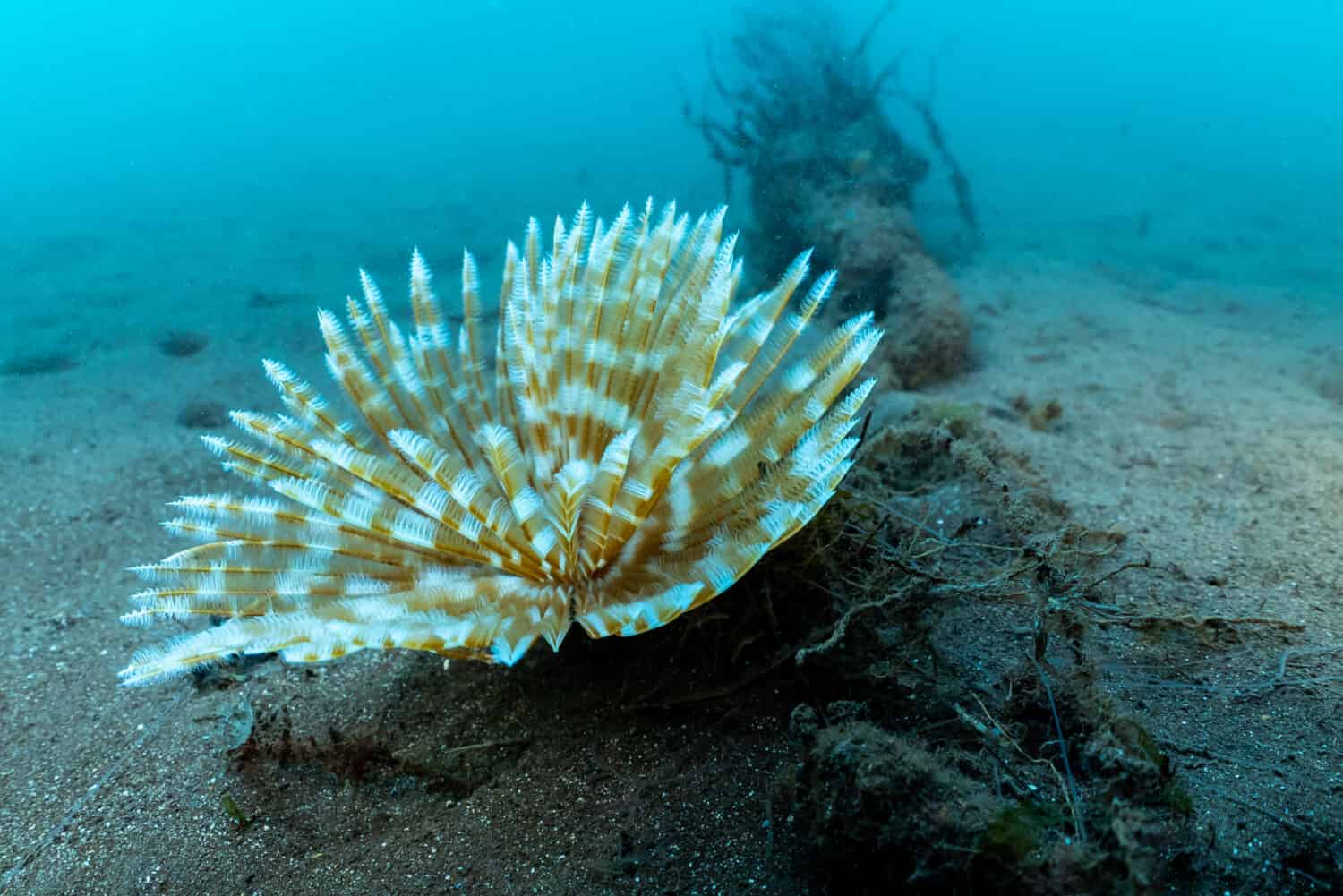

The ocean seems to host alien-like creatures that humans can’t begin to imagine. One of these strange creatures is the feather duster worm. Appearing like a duster, as their name suggests, these worms have a strange appearance that makes one wonder why they’re built that way. This video from Earth Touch shows a feather duster worm emerging from a hole, spreading its feather-like appendages out beautifully. Read here to learn more about the feather duster worm!
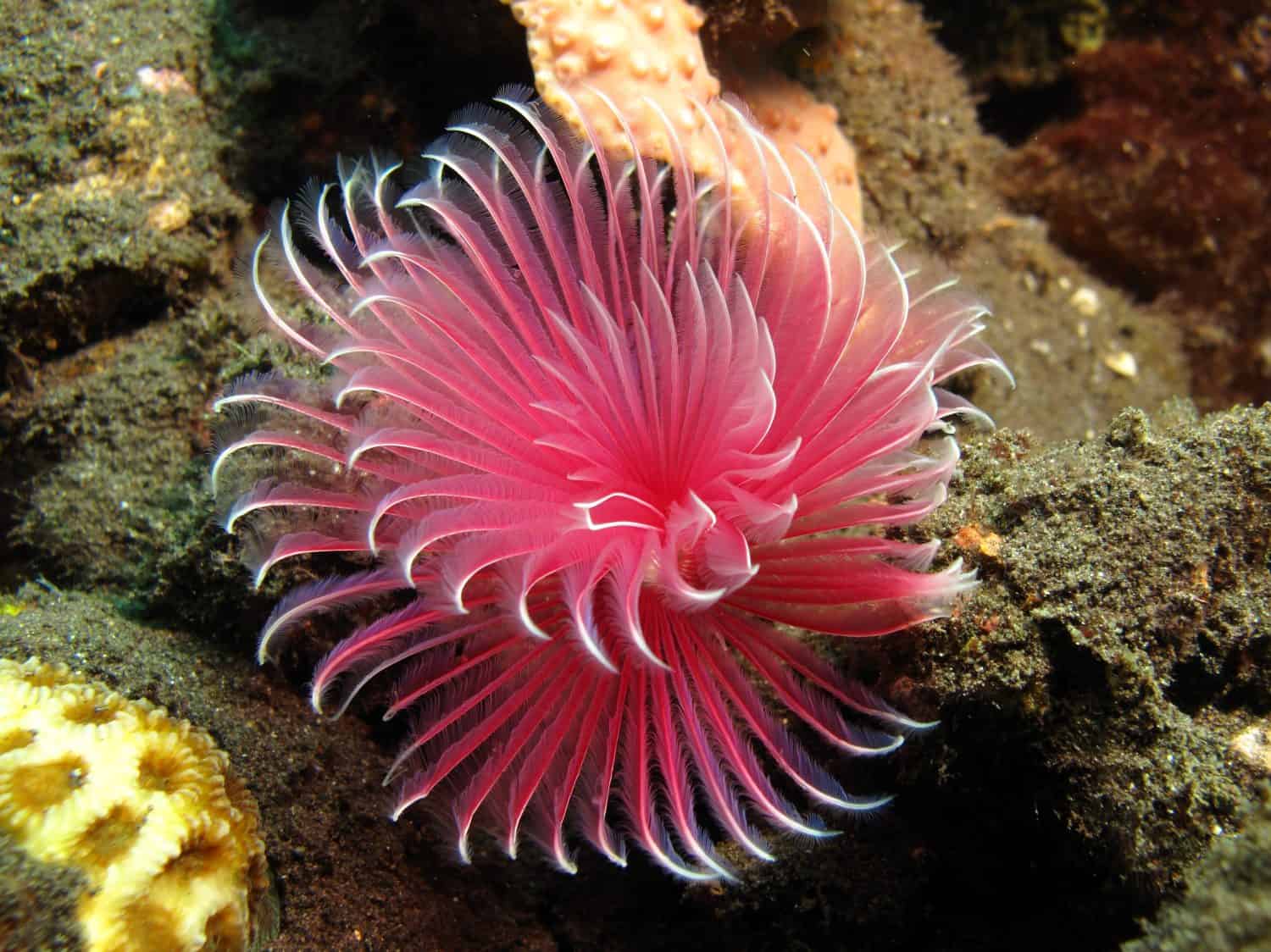
Feather duster worms come in a variety of colors.
©Ye Choh Wah/Shutterstock.com
All About the Feather Duster Worm
Feather duster worms are a type of marine polychaete annelid, more commonly known as bristle worms. This group of worms is diverse in appearance, with the feather duster worm being one of many unique shapes and colors. These worms mostly inhabit shallow waters and are found worldwide in tropical and temperate regions. They attach to reefs, rocks, or man-made structures, where they will continue to live. Given their sedentary lifestyle, the worms are known as ciliary-suspension filter feeders. Simply put, they use cilia (tiny hair-like structures) to trap small particles, such as various types of plankton. Using a filtration system, they pick out small plankton for nourishment and medium-sized plankton to reinforce their tubes.
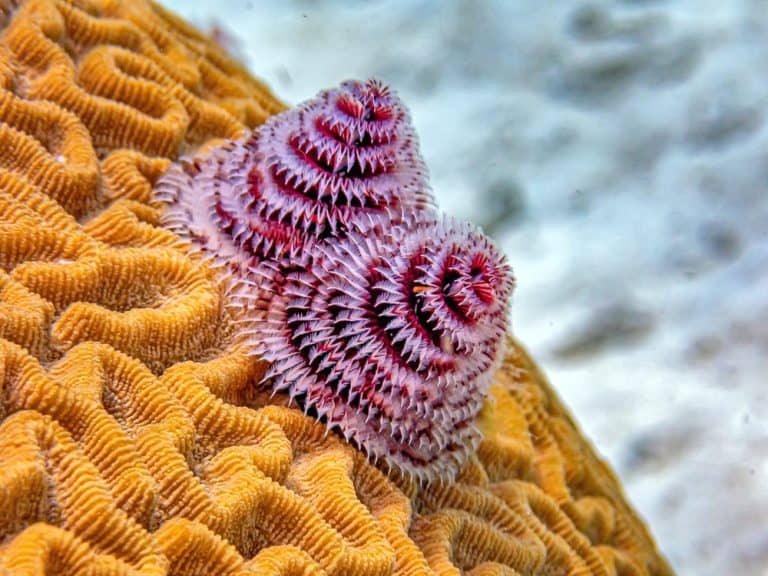
Feather duster worms inhabit self-constructed tubes, similar to parchment, that are reinforced with sand. This is the worm’s main defense, protecting it from predators and other marine threats. When there is a threat, the worm will retract quickly into the tube. When the worm retracts, it is retracting its radioles, or the feathers. Radioles are the feather-like tentacles that extend from the tube. The radioles are where the cilia are for feeding, and the worms will move the radioles around to create water currents. This helps bring food to the worm. They also function as gills for breathing, meaning that the worm’s main body can continue breathing safely in the tube. Another important function of the radioles is to help the worm detect changes in its environment. The worms can sense their surroundings and even detect light and movement, thanks to eyespots on their radioles. While they mostly detect shadows or quick movements, this ability helps the worm stay safe.
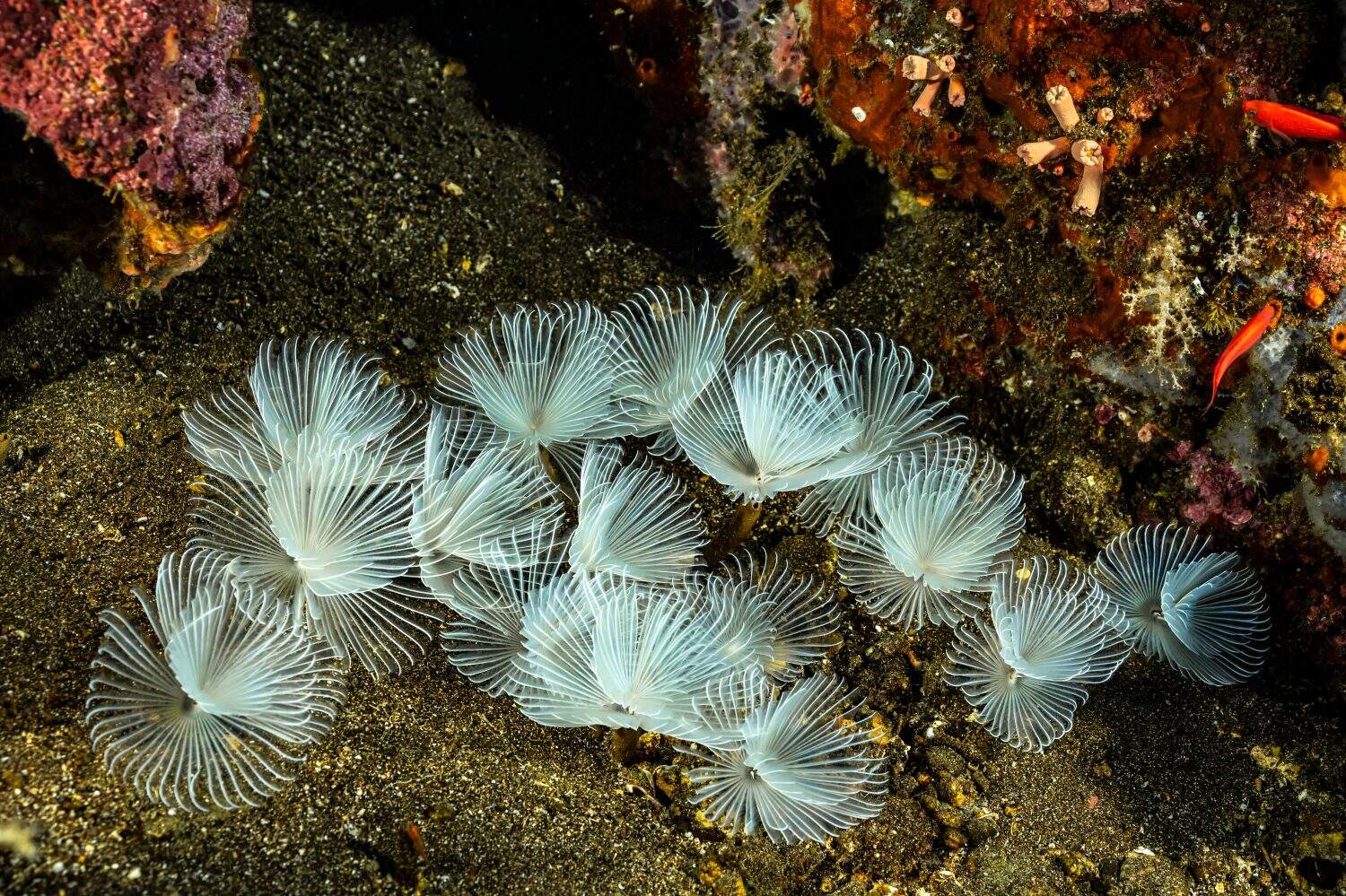
Feather duster worms clump together on different rocky surfaces.
©Subphoto.com/Shutterstock.com
Threats to the Feather Duster Worm
Feather duster worms have a variety of predators, including reef fish, crabs, butterflyfish, hawkfish, and more. The wavy radioles are extremely noticeable, meaning that they are often nibbled at by other fish. While the worms can stay safe in their tubes, frequent attention from predators is still stressful. Because of this, the stress may cause some worms to vacate their tubes and move to another location. Although escaping from predators can be beneficial, it leaves the worms extremely vulnerable and often leads to their demise.
Even if they are nibbled on by other fish, this is not the end of the world for the worms. Similar to lizards, the feather duster worm can regenerate its radioles. When they lose their feather-like tentacles, even all of them at once, they can fully regenerate. Regeneration of their feather-like tentacles can take over a month, with studies showing that regrowth of a single radiole often takes more than 35 days under stable conditions. With this amazing power, the worms can live for several years in good conditions. While they may be delicate, these worms possess an admirable resilience.