
Quick Take
- Surviving for millions of years required the hydra to bypass standard biological constraints.
- The nine-banded Armadillo possesses a specific plate count that creates a significant structural constraint.
- The platypus presents a counter-intuitive morphology that appears to be constructed from spare parts.
- A rigorous exploration of odd survival strategies was necessary to validate the Hispaniolan Solenodon lineage.
The natural world is full of animals that seem to defy logic, blurring the line between reality and imagination. Some look like they were made from spare parts, while others behave in ways so unusual they sound fictional. These creatures challenge everything we think we know about how life is supposed to work, featuring strange body types or odd survival strategies.
What makes these animals fascinating isn’t just their bizarre appearance, but how perfectly adapted they are to their environments. Every weird feature serves a purpose, shaped by millions of years of evolution. This article explores creatures so strange they almost seem made up!
Hydra
©Rattiya Thongdumhyu/Shutterstock.com
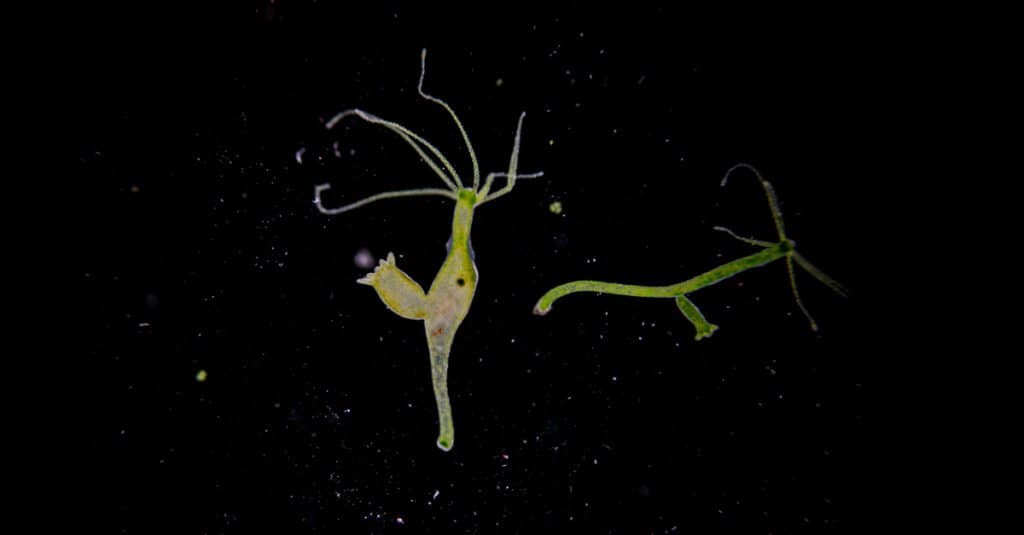
Hydras are tiny animals that live in freshwater. They not only have a weird reproductive cycle, but they can also regenerate their tissues and do not seem to age. In fact, scientists speculate that, under proper conditions, a hydra could live for 1,400 years, though this is not proven.
Hydras can reproduce sexually or asexually. When reproducing asexually, they simply grow buds that eventually snap off and grow into other hydras that are essentially clones of their parents.
However, when food is scarce or the climate is inhospitable, they reproduce sexually, forming ovaries and testes (sometimes both on a single individual). The testes release sperm into the water that eventually fertilize the eggs in the ovaries of another hydra. These fertilized eggs develop a tough coat. When the adult dies, these fortified eggs sink to the ocean floor and wait. After environmental conditions improve, the egg hatches into a hydra nymph.
Kakapo
©Imogen Warren/Shutterstock.com
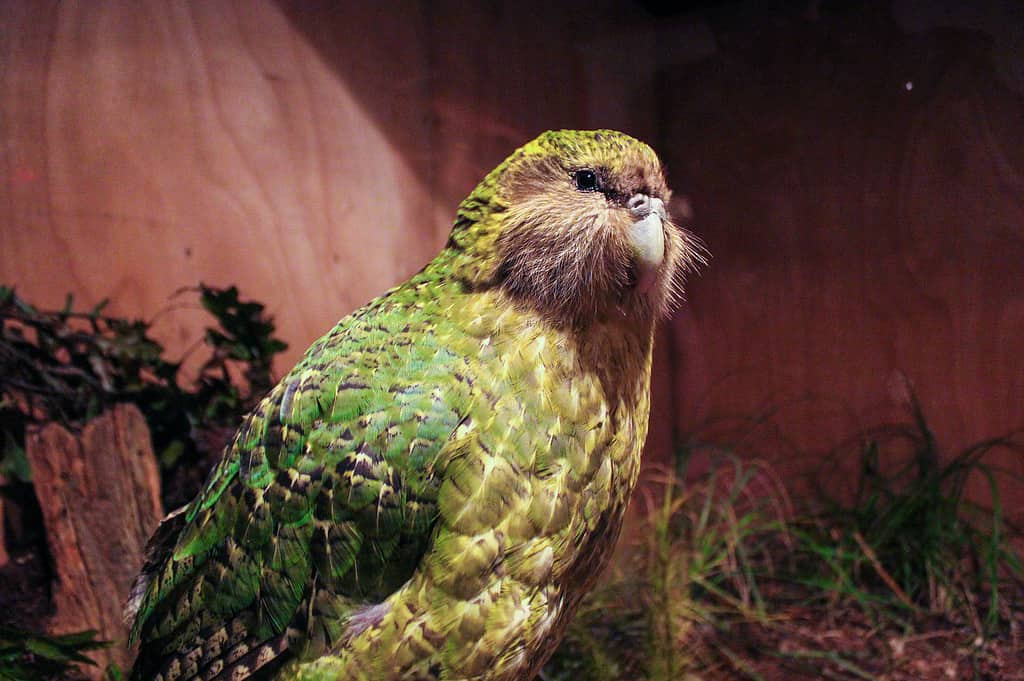
The kakapo, which is only found in New Zealand, is the only flightless parrot in the world. This large, nocturnal bird grows to between 23 and 25 inches tall and weighs between 2 and 9 pounds. Due to a facial disc that makes it look somewhat owl-like, it has earned the nickname owl parrot.
The kakapo features short wings and a stubby tail, and it lacks a keel on its breastbone. Its fluffy feathers are olive green and mottled with brownish-gray or black, which allows it to blend into its forest home, where it lives on the ground instead of the treetops. During mating season, male kakapos clear out an area, dig a shallow hole in the dirt to sit in, go into a trance-like state, and make booming sounds similar to a foghorn. They emit this booming, which travels several kilometers, all night long for 3-5 months in hopes of attracting a female mate.
Platypus
©John Carnemolla/Shutterstock.com
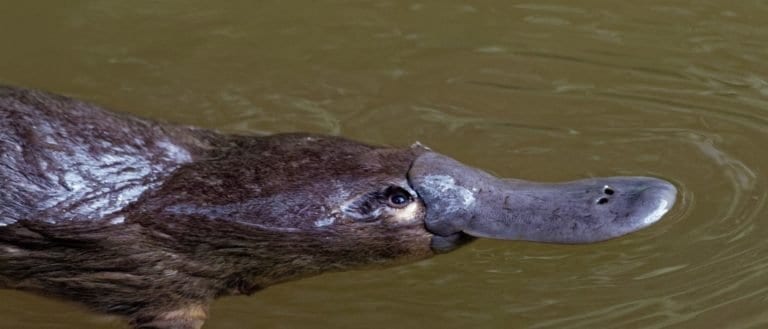
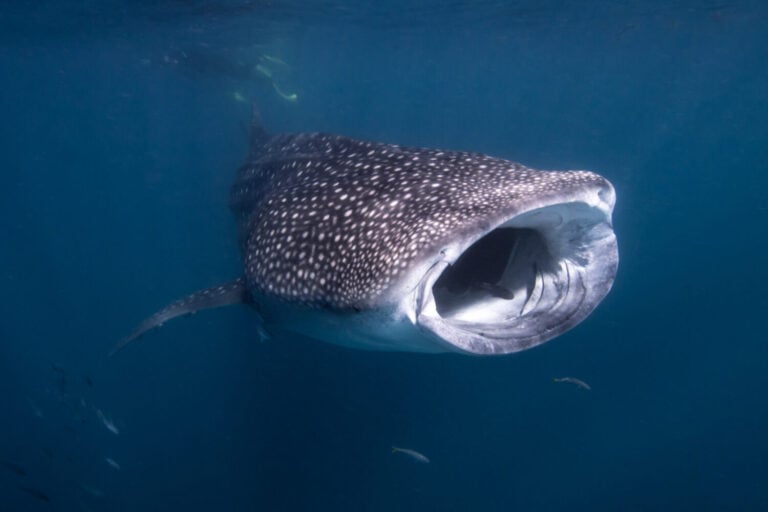
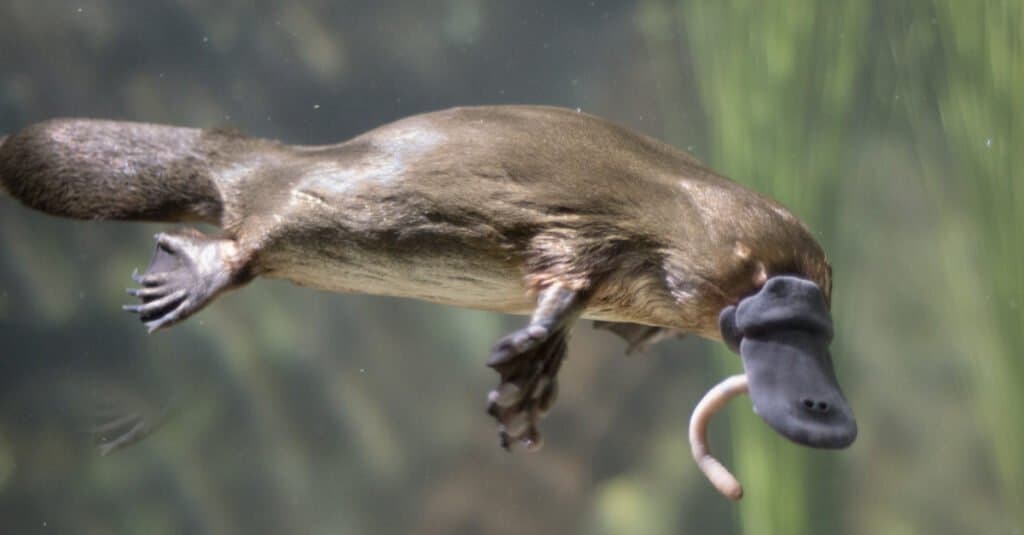
Who isn’t fascinated by the platypus? This egg-laying mammal with a duck’s bill is quite extraordinary. Males even have venomous spurs on their back legs. This incredible animal is known as a monotreme and can find prey by sensing electrical fields through receptors in their bill. Alongside the Guiana dolphin, they are one of only a few animals that can do this. Its tiny eyes are more like those of a hagfish than a mammal and they have double cones. And, as if the platypus didn’t have enough unique features, they also glow blue-green under black light.
While the female has two ovaries, only the left one works. When her babies hatch out of their eggs, they aren’t fed milk from the mother’s teats (females lack teats) but from dermal pores. The babies are born with teeth, but soon lose them. Grown platypuses use tough plates in their bills to grind up their food. The average platypus lives about 12 years in the wild and about 17-20 years in captivity.
Hispaniolan Solenodon
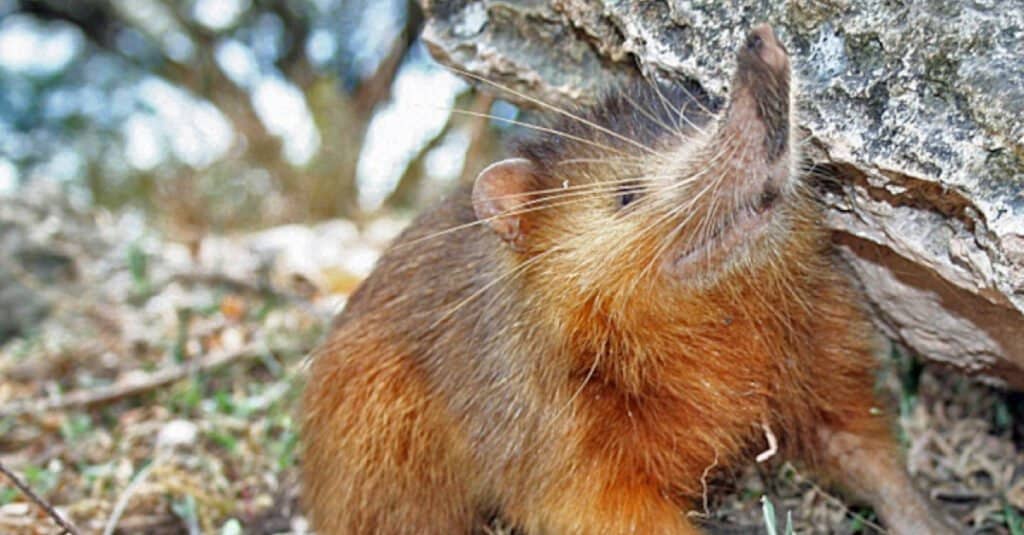
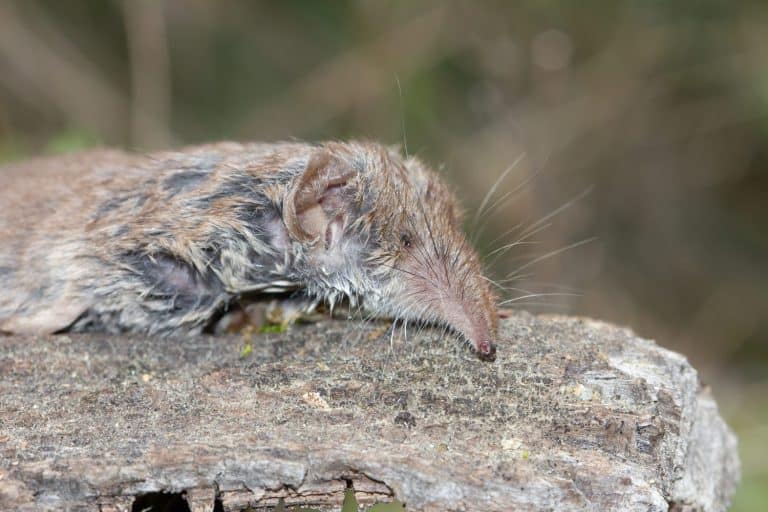
This small creature, which looks like a cross between a large rat and a shrew, weighs less than two pounds and is found in the forests and shrublands of Haiti and the Dominican Republic. The solenodon has a body that ranges between 19 and 28 inches in length and a nearly naked tail that can be close to 10 inches long. Its lifespan is about 11-12 years.
The Hispaniolan solenodon comes out at night to eat small animals, including insects, worms, and mice. The female has two teats, one on her back and another near her rump. But the really fascinating thing about the solenodon is that it is truly venomous, capable of killing a mouse in a matter of minutes. Though it can’t kill a human, the bite of a solenodon is very painful indeed.
Komodo Dragon
©GUDKOV ANDREY/Shutterstock.com
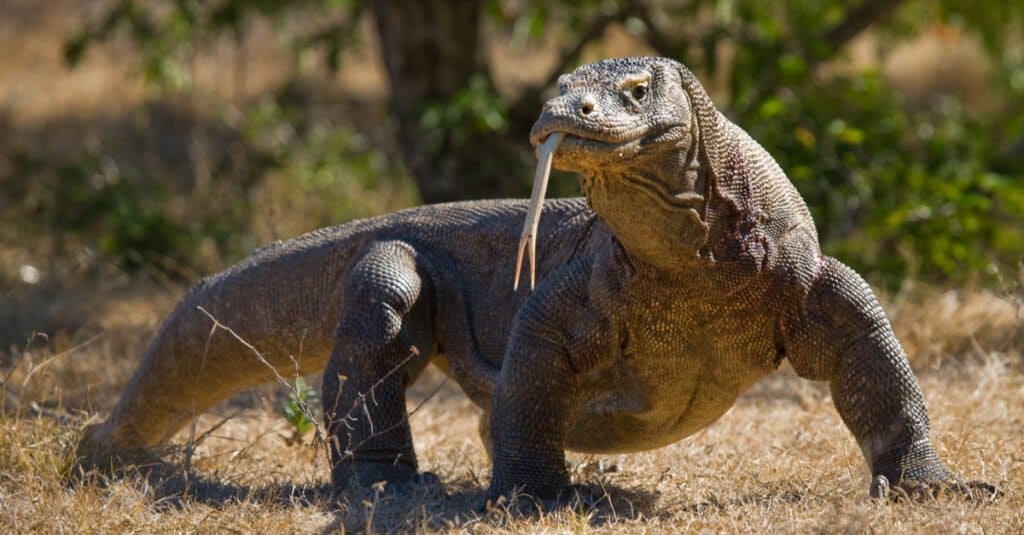
This Indonesian animal, the world’s largest monitor lizard, is an ambush predator that viciously tears through its prey. Despite its prowess as a hunter, the Komodo dragon seems to prefer carrion. If a group of dragons comes upon a corpse, the biggest male eats first. Like a snake, the Komodo dragon has a tube under its tongue so it can breathe while it eats. Following a meal, it regurgitates a gastric pellet made up of indigestible material such as horn or hair. The lifespan of a Komodo Dragon is between 25 and 30 years.
Nine-banded Armadillo
©Heiko Kiera/Shutterstock.com
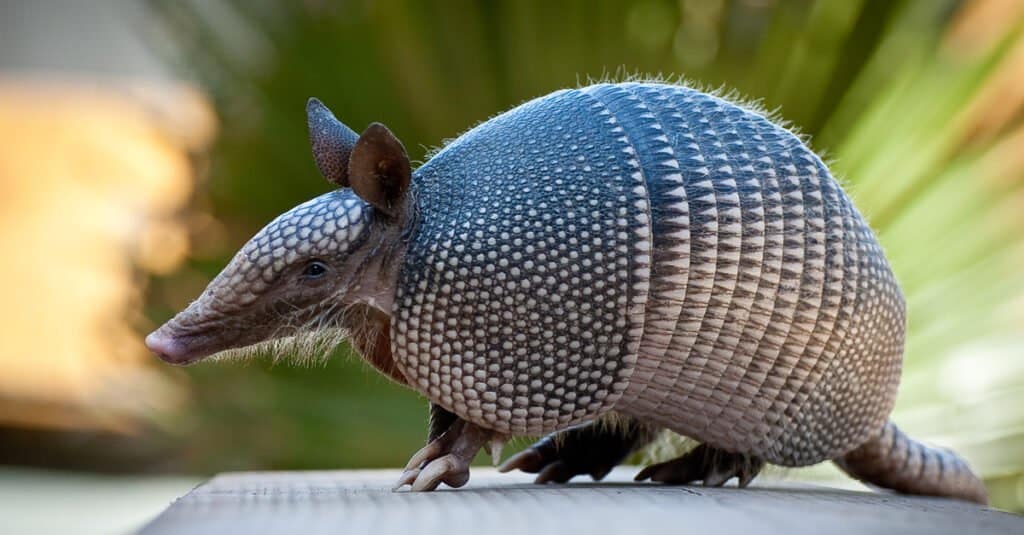
Once found only in South America, the armadillo has slowly moved north to Central America, the American southwest, north to Nebraska, and east to North Carolina. It is famous for its armor, which is made of bony plates covered with scutes. Some species of armadillo are flexible enough to roll up into a ball when they’re threatened, while the nine-banded armadillo jumps four feet into the air when it’s scared.
The armadillo’s reproductive strategy is also fascinating. Though only one egg is fertilized, it doesn’t implant in the uterus right away. When it does implant, it splits into quadruplets. The offspring go on to live an average of 7-8 years in the wild or 15-20 years in captivity. The armadillo is also one of the few animals that are reservoirs for leprosy.
Sloth
©Janossy Gergely/Shutterstock.com
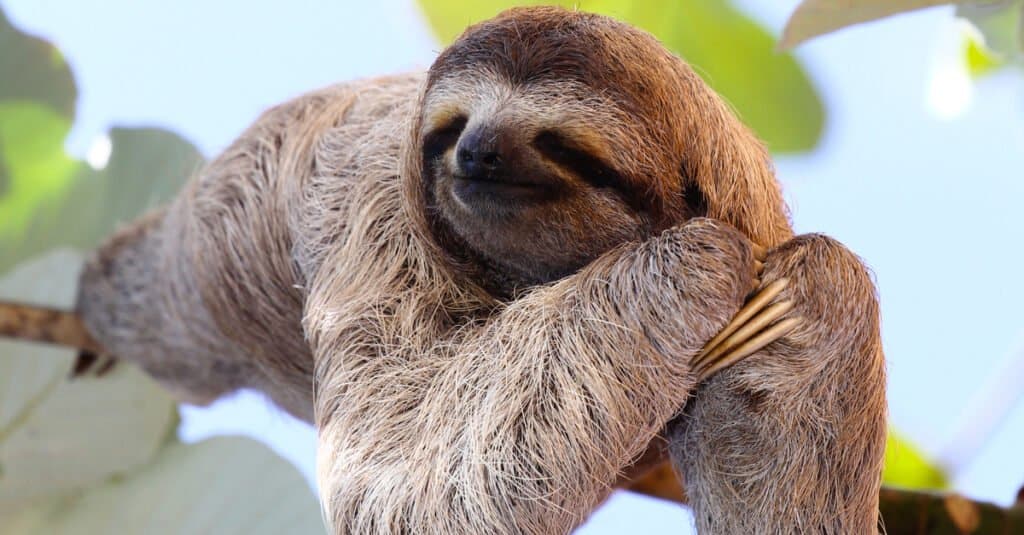
This South and Central American mammal enjoys nothing better than hanging upside down in its favorite tree. It eats, sleeps, mates, gives birth, and even dies hanging upside down! The only thing it doesn’t do in a tree is go to the bathroom. In that case, it will climb ever-so-slowly down the tree, drag itself to the spot where it does its business, then very slowly climb back up.
The sloth has a symbiotic relationship with algae, which grows in its fur, turning it green in some instances. A microcosm of arthropods, including moths, mites, and beetles, also lives in the animal’s fur. Sloths are also endothermic with variable metabolism, meaning their body temperature is dependent on their environment. The average sloth lives 20-30 years in the wild but has been known to live over 40 years in captivity.
Sperm Whale
©Martin Prochazkacz/Shutterstock.com
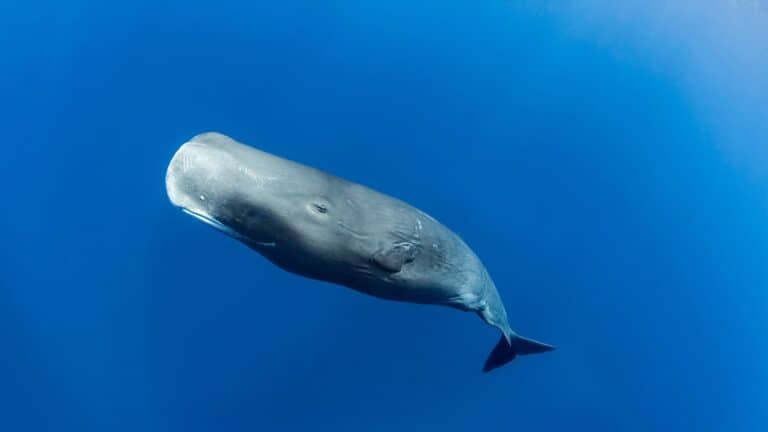
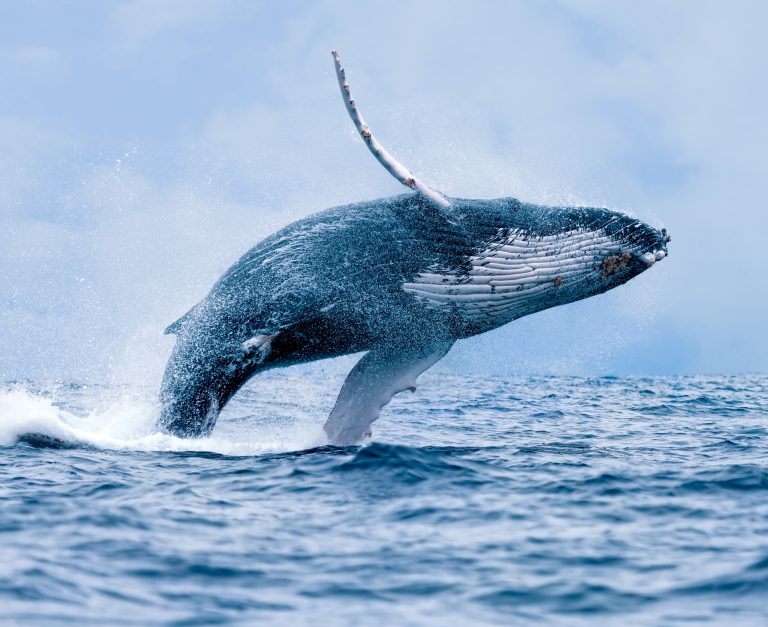
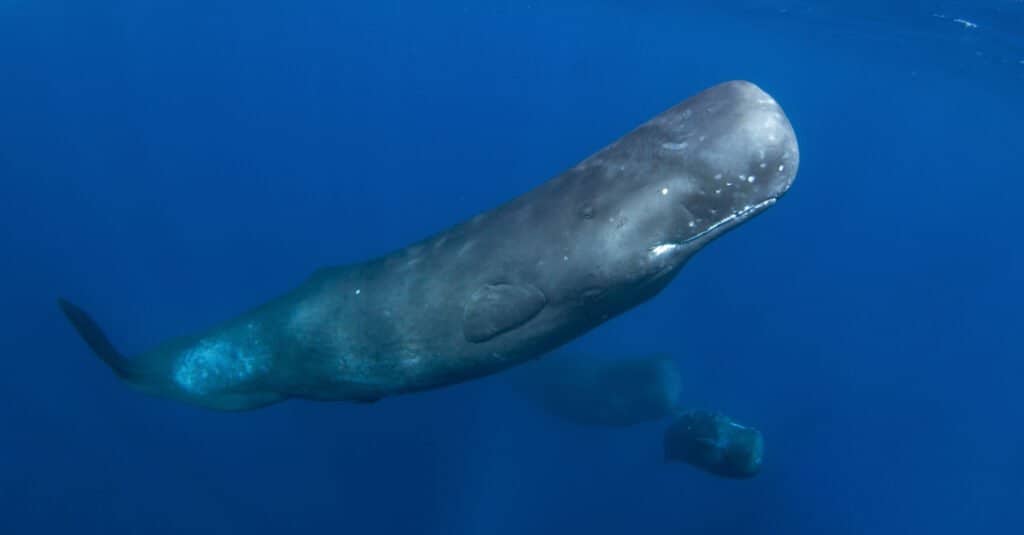
The sperm whale is one of the most fascinating marine mammals. Hunted nearly to extinction for the sperm oil in its head, this huge and intelligent animal is still vulnerable to extinction even as it’s found in most of the oceans of the world. It’s the largest toothed carnivore, has the largest brain, and makes the loudest sound of any animal on earth.
It has a complex repertoire of vocalizations that help it communicate with other sperm whales and find prey. These vocalizations are learned, not innate. Since this whale dives deeper than any other marine mammal, it uses echolocation to hunt in the lightless depths. This unique whale, also called the cachalot, can dive as deep as 6,600 feet in search of one of its favorite meals, the giant squid.
Not only does the whale produce sperm oil, but it also makes ambergris in its gut. Ambergris is still used in perfume and is sometimes found washed up on beaches. This substance is vomited up after the indigestible beaks of squid irritate the whale’s digestive system, and a lubricant is excreted to ease the irritation. Sperm whales also sleep vertically with their heads just beneath the surface of the water, and scientists have yet to learn why. These massive whales typically live 70 years.
Hyrax
©Bartosz Budrewicz/Shutterstock.com
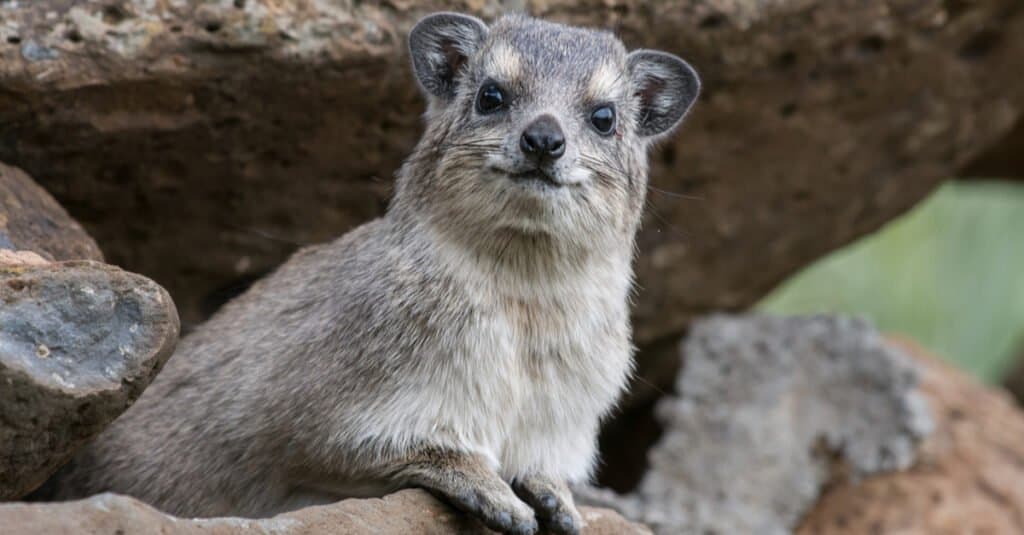
The hyrax or “dassie” is perhaps the most interesting animal in the world. Found in East and Southern Africa and the Middle East, this cute animal looks like a cross between a rabbit and a guinea pig, though it is neither. Its closest relatives are the elephant and, amazingly, the manatee. It even grows tusks that keep developing throughout its life (average 9-14 years).
The hyrax’s toenails are more like hooves, and these little guys feature a gland on their back that secretes pheromones. When babies are born, they climb on their mother’s back and lie on this gland, which helps them imprint.
As omnivorous animals, hyraxes mainly consume herbs, grasses, fruit, and leaves, supplementing their diet with small lizards, insects, and bird eggs. Like a horse, the hyrax can’t vomit, and like a cow, it has a multi-chambered stomach. However, it cannot break down cellulose as well as a cow.
Though these animals are endothermic, they are thermally inefficient. To warm up, the hyrax needs to bask in the sun like a reptile.
Pink Fairy Armadillo
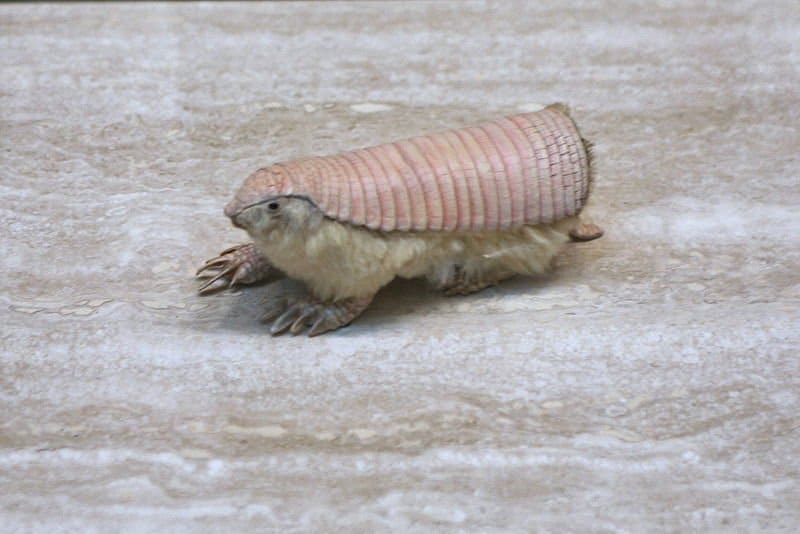
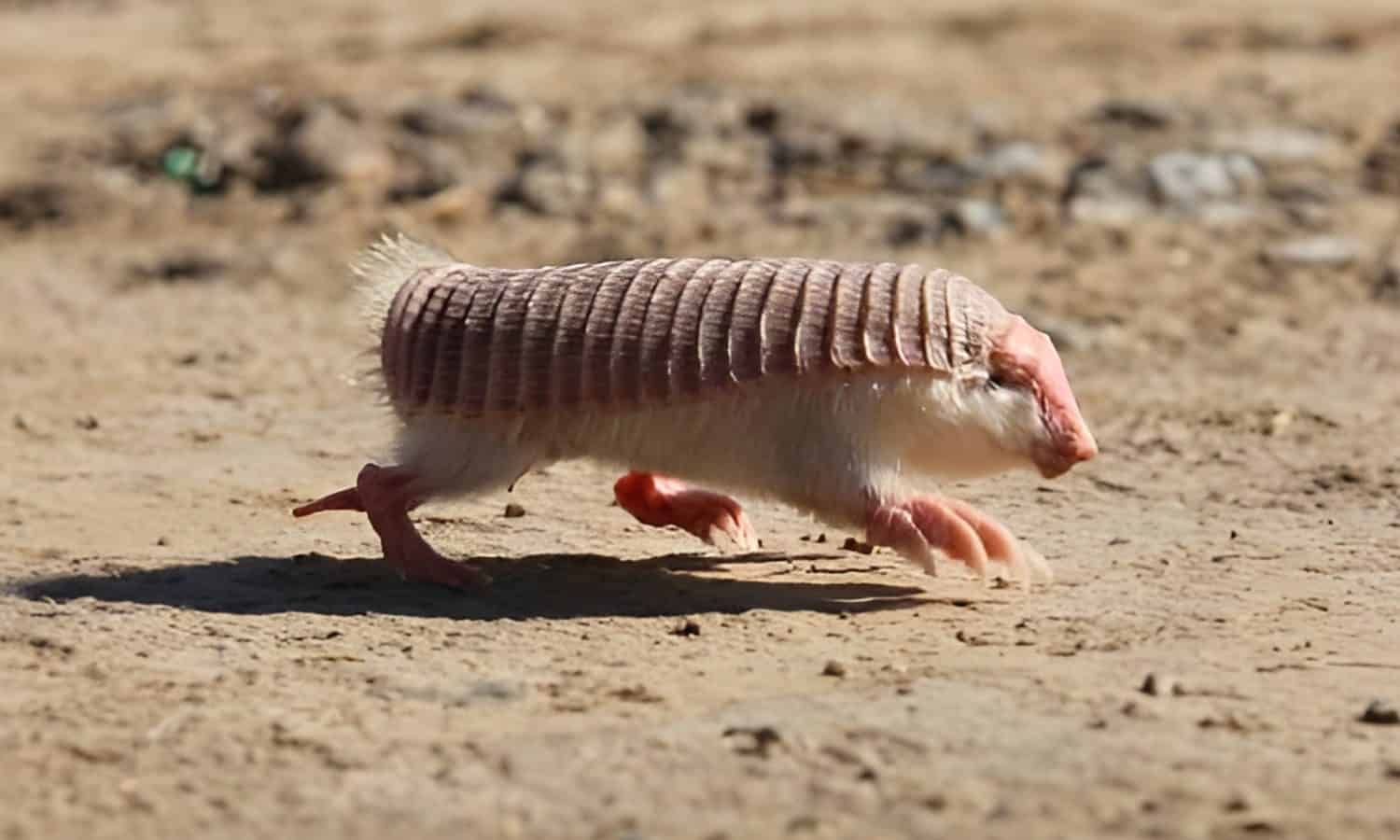
Have you ever seen a tiny pink armadillo that is small enough to fit in your hand? Unless you live in South America, you likely haven’t.
This little creature spends most of its life underground in the sandy plains and grasslands of Argentina. In fact, it is known as the “sand swimmer” because of how quickly and easily it navigates underground.
Unlike other armadillos, the pink fairy armadillo’s dorsal shell is not completely attached to its body and is not used for protection. Instead, it helps the animal to regulate its body temperature. This strange animal is truly the stuff of fairytales, sporting soft, white fur and large, reptilian claws for digging. Plus, it’s pink!
Honey Badger
©Braam Collins/Shutterstock.com
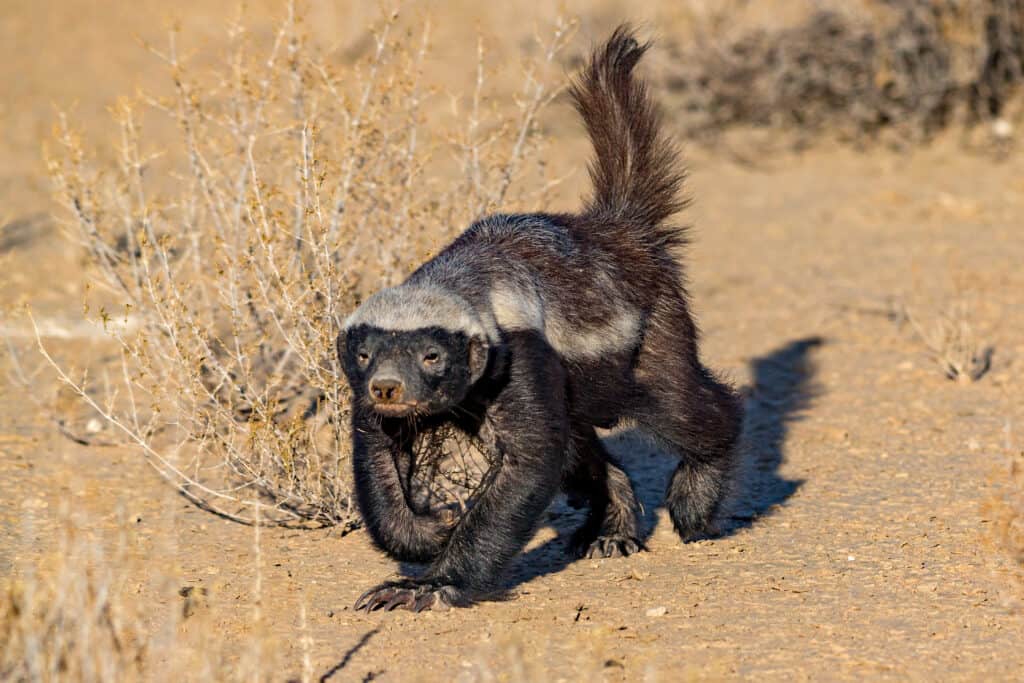
Honey badgers are voracious omnivores that eat anything from honeybee larvae to snakes to roots and berries. They are related to skunks, otters, ferrets, and other badgers, though they are a member of the weasel family. Not the most elegant of hunters, honey badgers kill their prey with their sharp teeth and claws, and muscular build.
These animals are seriously tough. They have been bitten so many times by venomous snakes that they’ve developed partial resistance to toxins. Dozens of bee stings are merely an inconvenience, and their hide is loose and thick to prevent other animals from biting them. Honey badgers can be found bullying their way throughout most of Sub-Saharan Africa, Saudi Arabia, Iran, and western Asia, where they adapt to any condition from hot rainforests to cold mountaintops.
Killer Whales
©Vladimir Turkenich/Shutterstock.com
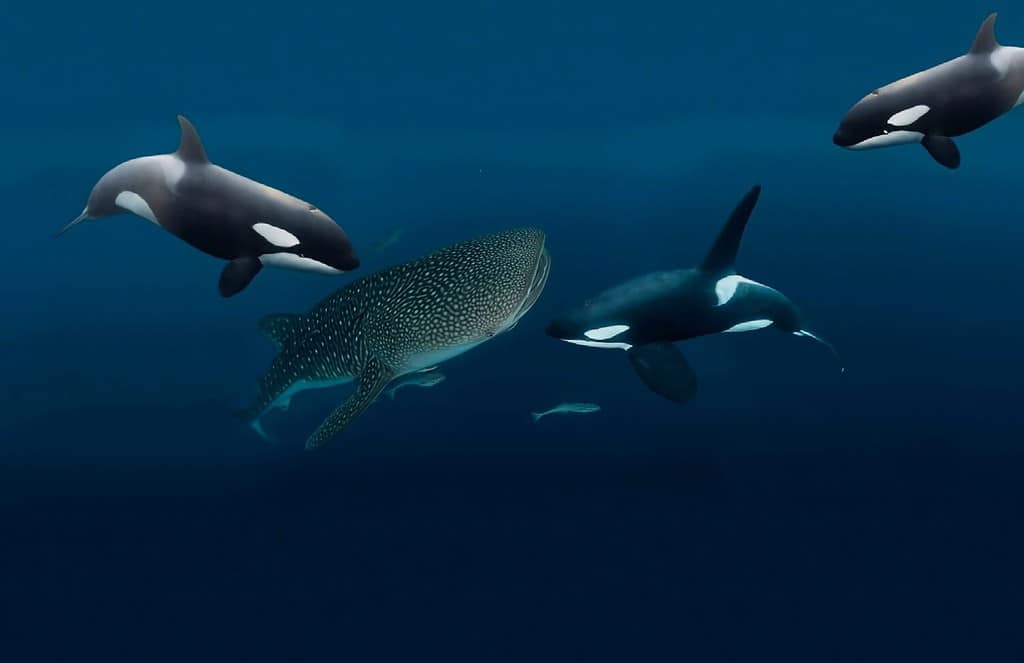
There is nothing run-of-the-mill about killer whales. From their striking appearance to their amazing intelligence, the orca is a beloved staple of marine life. Orcas are actually the largest member of the Dolphin family. Killer whales roam most of the world’s oceans, consuming up to 500 pounds of food per day.
Pods of orcas hunt like wolf packs, working together to harass and kill animals as large as whale sharks. Their most interesting behavior of late is killing great white sharks and eating only their livers, leaving the carcasses to wash onto beaches in South Africa. They have learned that livers are a superfood packed with extra energy, and they seem to have passed this knowledge on to their friends!
In recent years, these marine mammals have engaged in another disturbing trend, destroying and turning over boats seemingly just for the heck of it. However, this behavior is localized and does not indicate aggression toward humans.