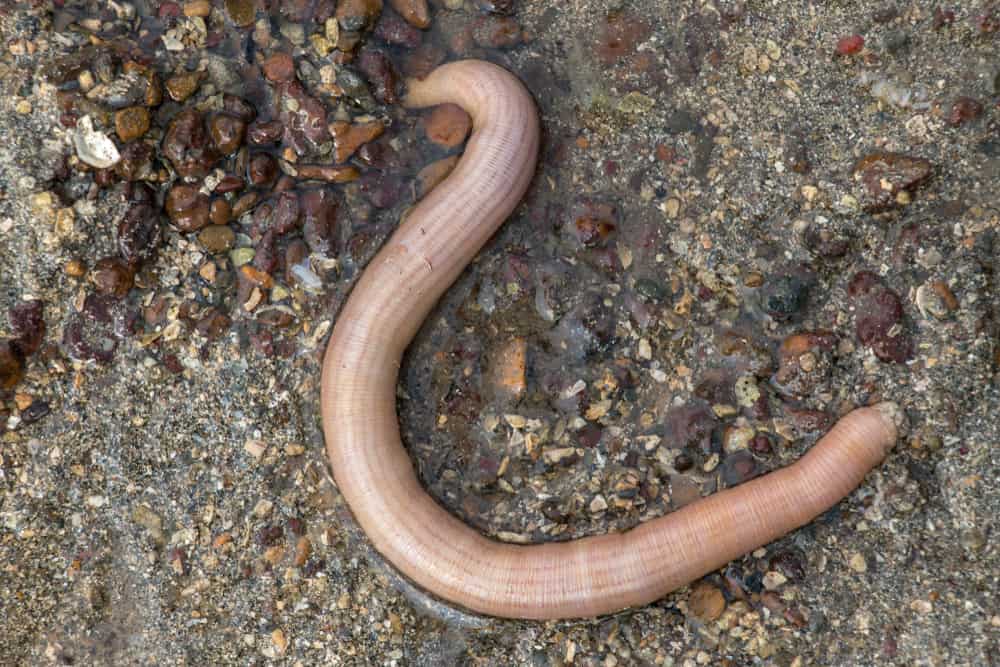

It wouldn’t be a stretch to call the ribbon worm one of the world’s most fascinating sea creatures. Also known as nemertea, these worms inhabit oceans worldwide. They can be found anywhere from shallow tidepools to the deep sea, making them masters at adaptation. At first glance, they might look spongy and vulnerable, but they have a powerful weapon within them. When a ribbon worm feels threatened, predators quickly learn not to judge a book–or a worm–by its cover, as seen in this Instagram video posted by @insidehistory.
The Unassuming Nature of a Ribbon Worm
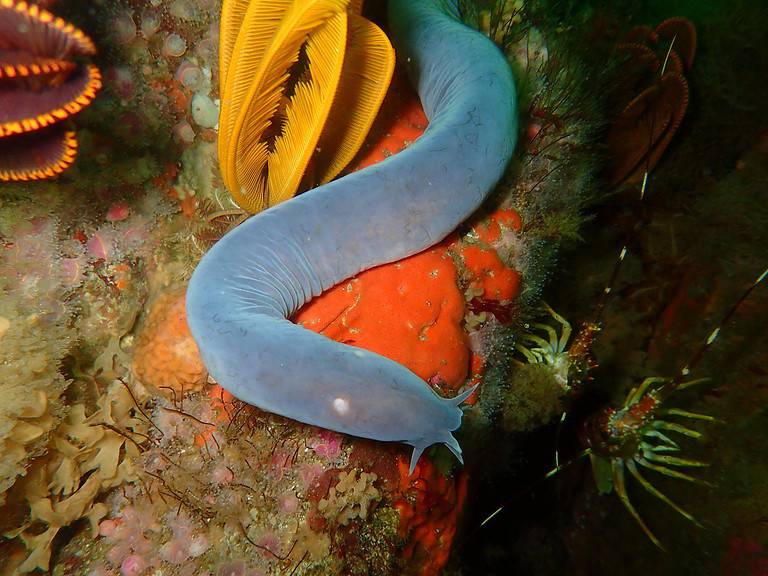
Ribbon worms can grow up to 100 feet long, making them one of the longest animals in the world. They also inhabit both freshwater and saltwater environments, underscoring their adaptability. Some can even survive on land in damp environments, making them some of the most widely distributed marine animals in the world. Their bodies resemble limp linguine noodles and are typically less than one inch wide. Their movements are also very pasta-like, and they undulate to move through water. A slimy underside, combined with rows of cilia (small hairs), helps them grasp hard surfaces.
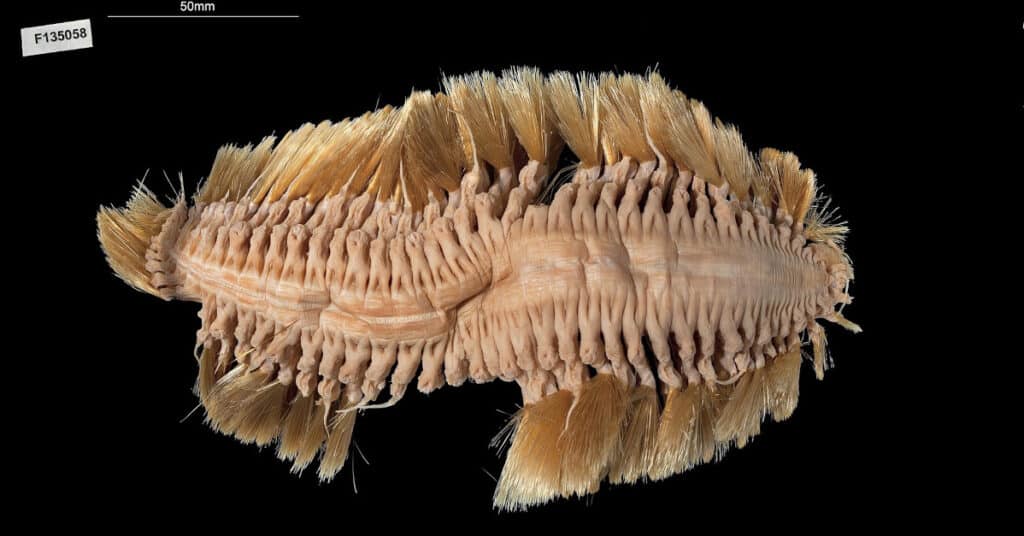
Proboscis worms even live in tundra environments, such as the Antarctic scale worm.
They’re also one of the few species that can regenerate lost body parts. If a part of their body is eaten or bitten by a predator, they can still survive while regrowing the injured section. This gives them remarkable survival skills in the marine world. However, this is not the only survival tactic the ribbon worm has. While it has a fantastic defense in its regenerative body, it also has a hidden offense that most predators don’t expect. When threatened or seeking a meal, ribbon worms use their proboscis to take down prey in an unusual yet effective way.
Why Is a Ribbon Worm’s Proboscis Its “Secret Weapon?”
In the video above, you can see a ribbon worm gliding on what appears to be a table. In the first few seconds, it doesn’t look like anything other than a sea worm. The person in the video even taps on the worm a few times, and it doesn’t seem to respond or care. As the video progresses, the person in it grabs a pair of pliers and gently taps the worm’s head. As he does, a network of white tubes shoots out from the worm, immediately latching onto the hard surface of the table.
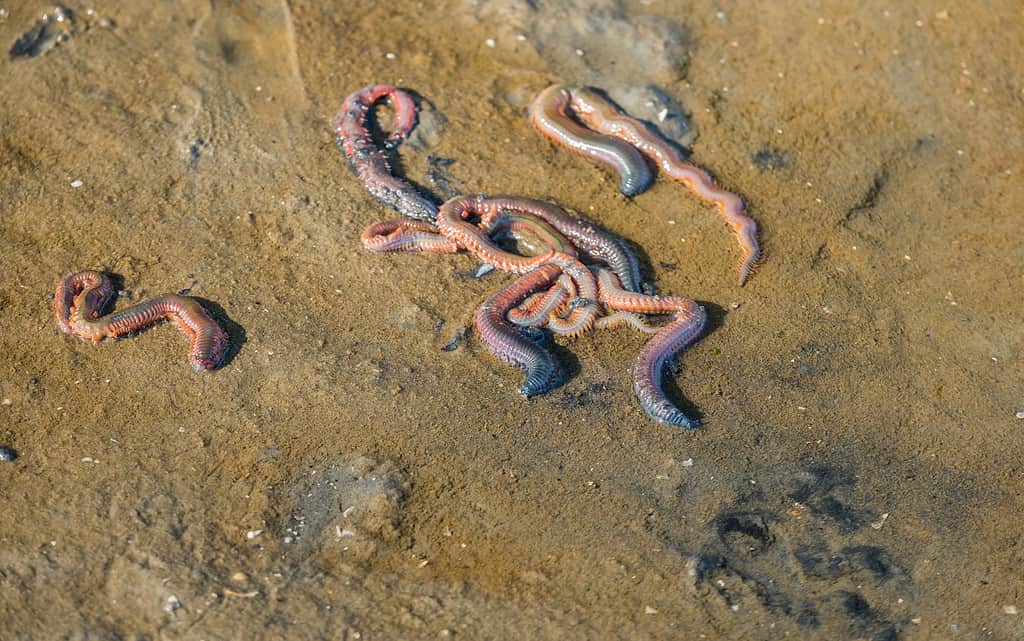
King ragworms are a type of proboscis worm, with a retractable, toothed tube that helps it catch prey.
©iStock.com/RuudMorijn
It happens in an instant and is a testament to the ribbon worm’s “secret weapon” of an attack. This tube-like structure is called a proboscis. These small tubes shoot out in a lightning-like pattern, aiming to wrap around prey. The proboscis has tiny hooks or harpoons, allowing the ribbon worm to grasp its prey and hold on long enough to either consume it or inject venom. Typically, a ribbon worm will inject a mixture of paralytic toxins and digestive enzymes. It uses this technique to catch other worms, clams, crabs, and sometimes, fish.
Are Ribbon Worms Harmful to Humans?
While the ribbon worm in this video looks like something out of a Sci-Fi movie, they are not considered harmful to humans. Some ribbon worm species produce toxins, such as tetrodotoxin, which can cause skin irritation in humans upon contact. The bootlace worm, for example, is covered in this toxic mucus. This slimy substance is a neurotoxin and can irritate the skin if a human comes into contact with it. While it’s not recommended to touch or handle ribbon worms, their harpoon-like barbs can’t penetrate human skin. Therefore, the greatest threat to humans is the toxin present in their outer mucous layer.
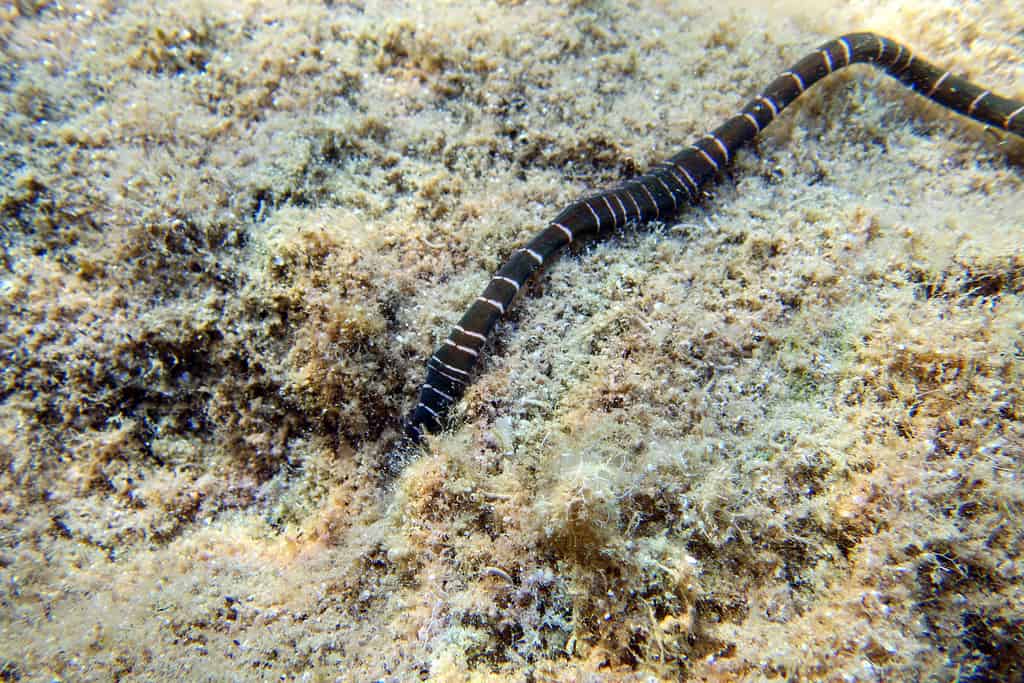
Bootlace worms are covered in a toxic mucous that can irritate human skin and is poisonous if ingested.
©vojce/ via Getty Images
This is not the same story for the prey of a ribbon worm. Once prey is caught and injected with the toxin, the ribbon worm consumes it whole or partially digested. The digestive enzymes in its toxic venom help facilitate this process. The enzymes start breaking down the flesh of the prey almost instantly, but the ribbon worm’s proboscis helps it digest the rest. Some nemertea are capable of expanding and stretching their bodies to compensate for large prey, an impressive feat for such an unassuming animal. In some species, ribbon worms may consume only the insides of their prey. In this case, digestive enzymes liquefy the insides of a clam or crab, allowing the worm to insert its head into the shell and consume the digested flesh.