
Earth holds stranger and more fascinating life forms than any science fiction writer could dream up. This article explores eight of the most bizarre-looking animals and insects on the planet: where they live, how they survive, and what makes them look so otherworldly. For anyone who suspects nature has a wicked sense of humor, these species are living proof.
Red-Lipped Batfish (Ogcocephalus darwini)
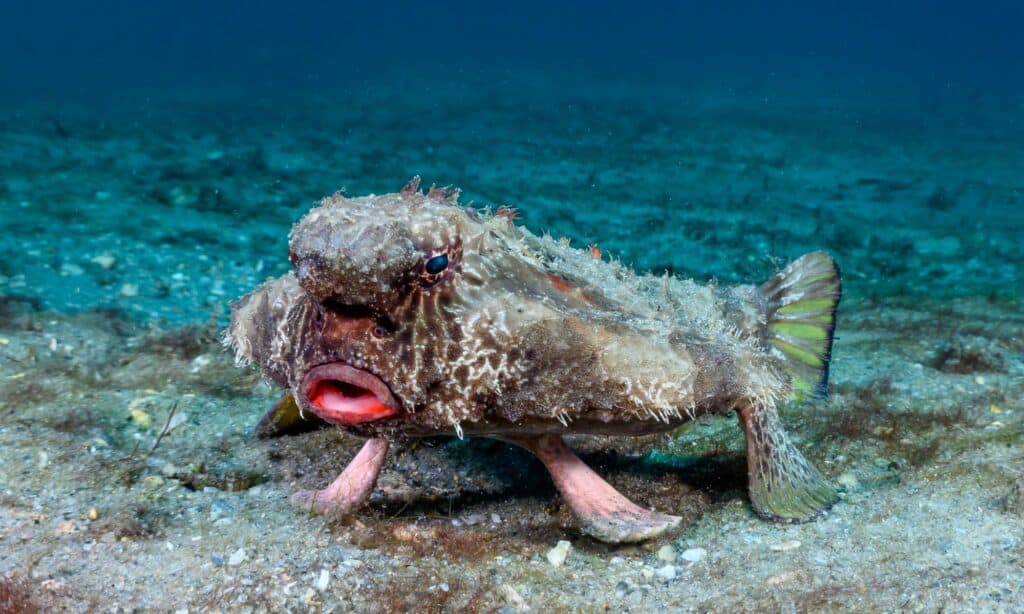
Red-Lipped Batfish (Ogcocephalus darwini)
©iStock.com/tswinner
The red-lipped batfish, found near the Galapagos Islands, looks like it’s wearing lipstick and walking on stilts. This bottom-dwelling fish uses its modified fins as “legs” to stroll along the seafloor rather than swim. Its bright crimson lips may help attract mates or startle predators. The batfish’s unusual shape and stiff posture help it blend in with rocky terrain as it hunts worms, small fish, and crustaceans. It even has a lure-like appendage on its snout that releases chemicals to draw in prey.
Divers exploring the Galapagos sometimes spot these awkward walkers on the ocean floor, though they’re uncommon in shallow water. Their odd anatomy demonstrates just how far adaptation can go when survival demands creativity.
Axolotl (Ambystoma mexicanum)
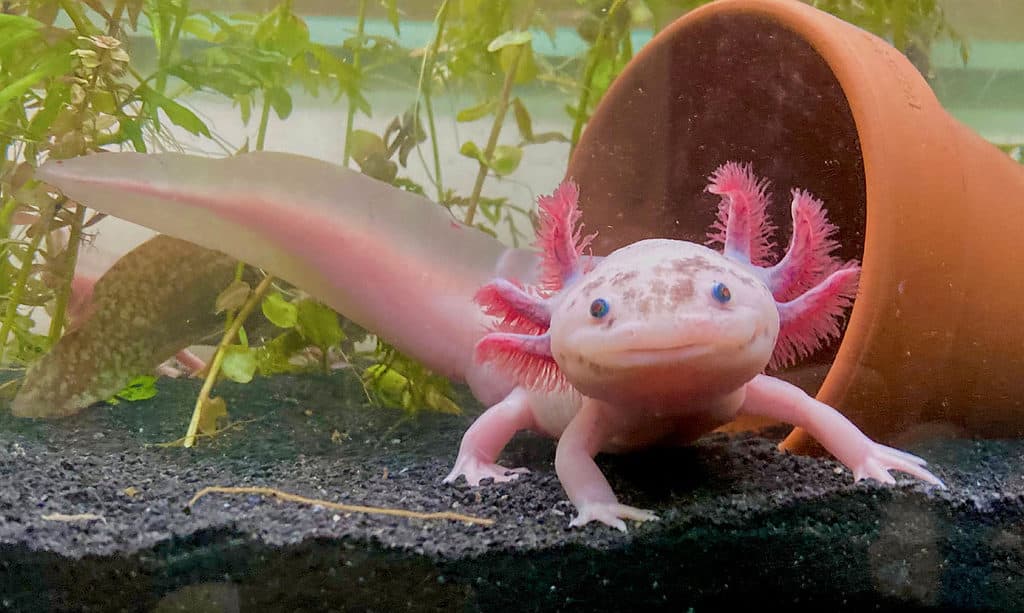
Axolotl (Ambystoma mexicanum)
©axolotlowner/Shutterstock.com
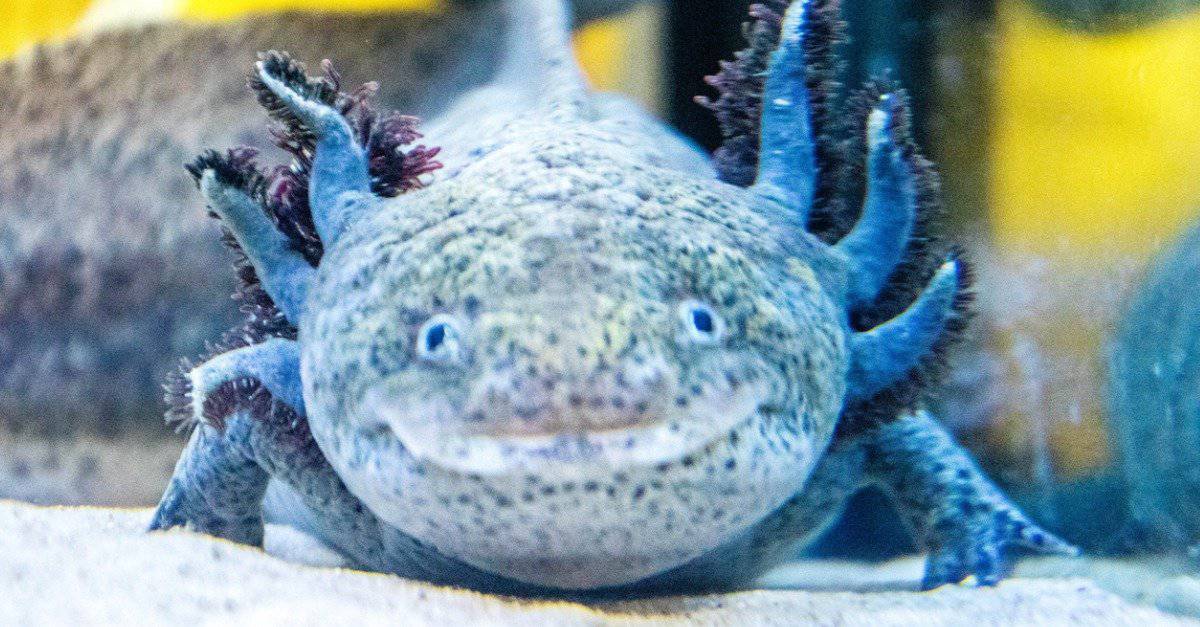
The axolotl—sometimes called the Mexican walking fish—isn’t a fish at all but a critically endangered amphibian found only in the remnants of Lake Xochimilco near Mexico City. Unlike most amphibians, axolotls never complete metamorphosis into land-dwellers. Instead, they stay in a larval form all their lives, keeping their webbed feet, gills, and dorsal fin and living permanently underwater. They resemble adorable cartoon characters, with smooth skin, a wide ‘smiling’ face, and feathered gills fanning out from each side of the head. In the wild, they are brown, but in captivity, they can come in pastel shades like pink, white, or light blue. They grow to about 9 to 12 inches long and weigh less than a pound.
As if all this weren’t enough, axolotls possess remarkable regenerative abilities: they can regrow lost limbs, tails, and even parts of their brain or spinal cord. Scientists worldwide study them to unlock the secrets of tissue repair. They are critically endangered, but intense conservation efforts are underway to reestablish them in their natural habitat.
Giraffe Weevil (Trachelophorus giraffa)
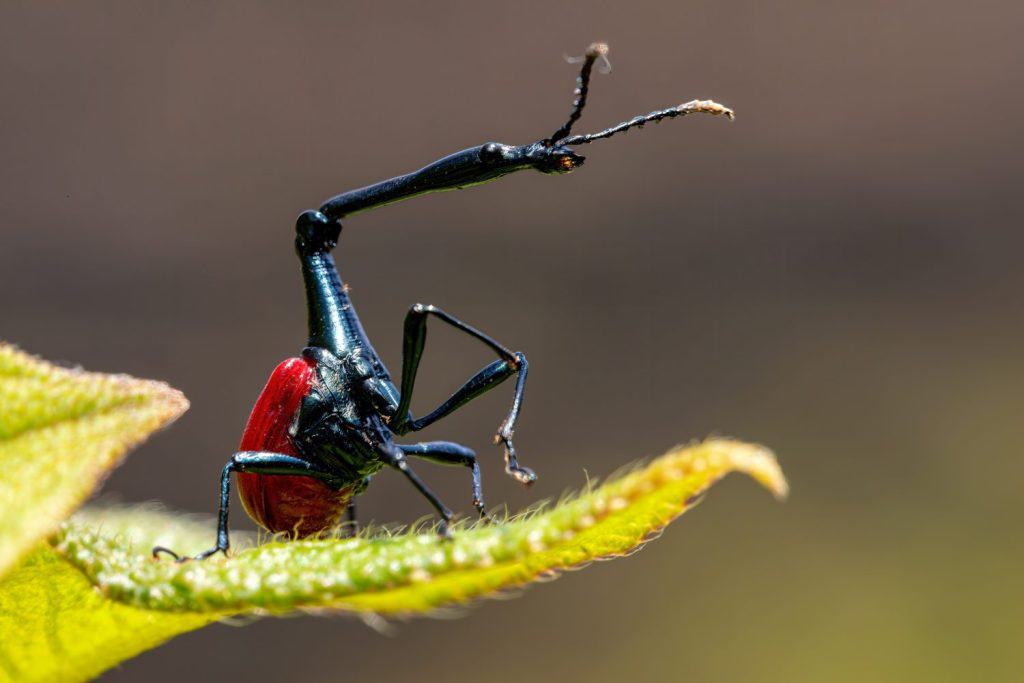
Giraffe Weevil (Trachelophorus giraffa)
©Artush/Shutterstock.com
Native to Madagascar’s forests, the giraffe weevil looks like a tiny insect stretched out of proportion. Males have necks up to three times longer than those of females, which they use to battle rivals and to help roll leaves into nests where females lay eggs. The insect’s glossy black body and bright red wing covers make it stand out among the foliage, even though it is only about an inch long. Giraffe weevils live high in the forest canopy, but when disturbed, they fold their legs tightly and drop to the forest floor, hiding in leaf litter. Deforestation in Madagascar threatens its limited habitat. However, they remain a remarkable example of evolution’s playful engineering.
Star-Nosed Mole (Condylura cristata)
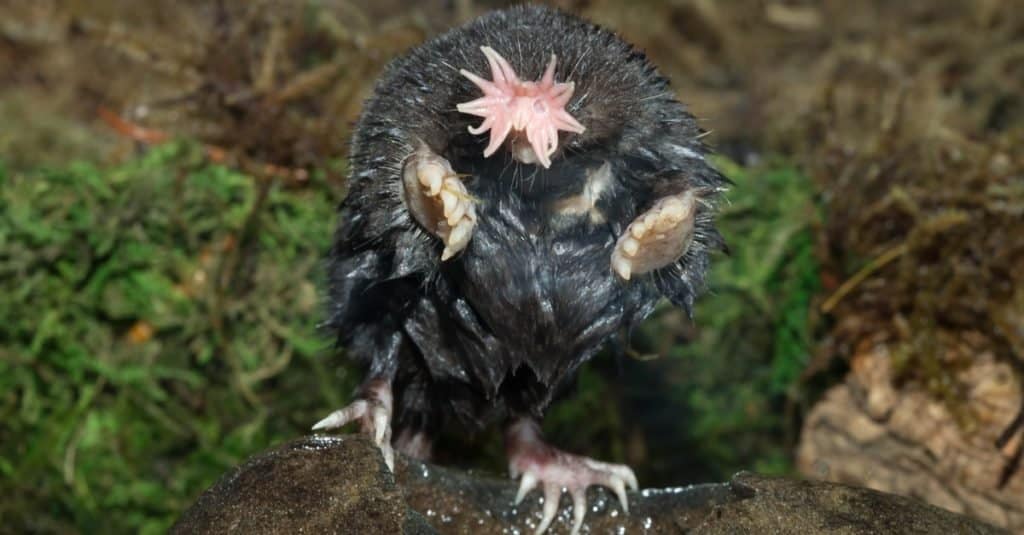
Star-Nosed Mole (Condylura cristata)
©Agnieszka Bacal/Shutterstock.com
There’s no disputing that the star-nosed mole is one of the most bizarre mammals in the world. Found in wetlands across eastern North America, this small burrowing mammal has a fleshy pink “star” of 22 tentacles sprouting from its snout. Each tentacle is loaded with sensory cells—over 25,000 in total—allowing the mole to detect and identify prey faster than the blink of an eye.
Star-nosed moles live mostly underground, creating complex tunnel systems in damp soil. Their diet includes insects, worms, and small aquatic animals. Owls and foxes occasionally dig them out, but the mole’s elusive habits make it a rare sight above ground. Their odd nose functions like a built-in radar, allowing them to hunt efficiently even in total darkness. They can even use it underwater to exhale bubbles to smell prey below the surface.
Bloody-Belly Comb Jelly (Lampocteis cruentiventer)
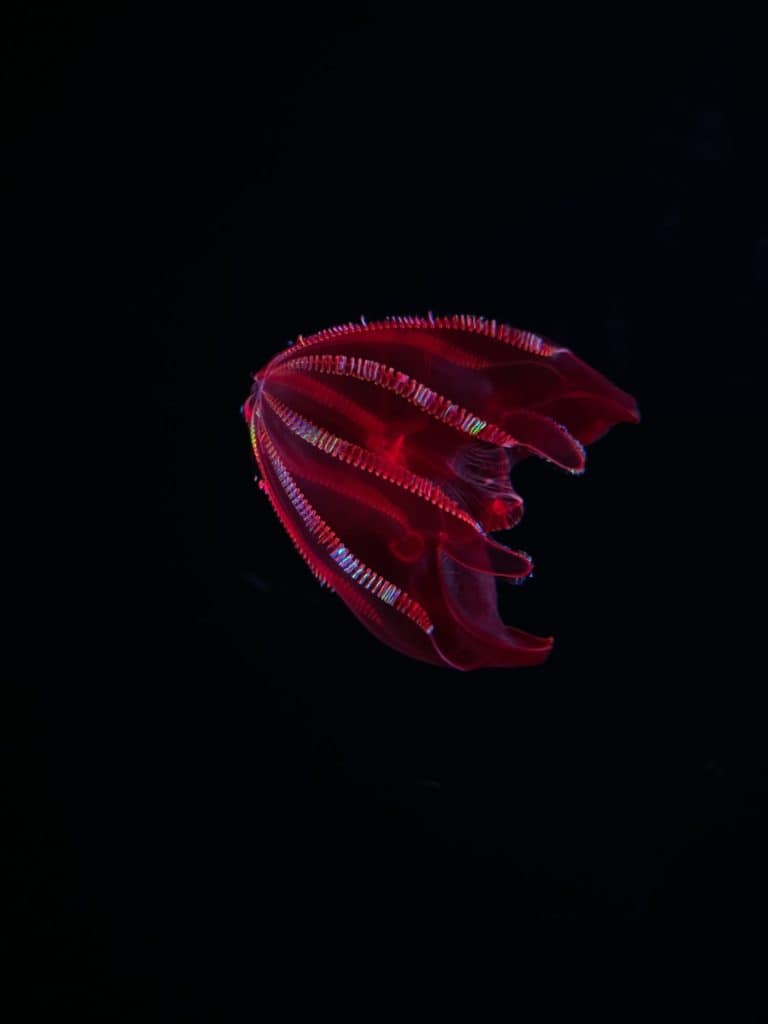
Bloody-belly Comb Jelly (Lampocteis cruentiventer)
©Takokat/Shutterstock.com
The bloody-belly comb jelly (Lampocteis cruentiventer) looks like something from another planet—an alien orb drifting through the crushing pressure and pitch blackness of the deep Pacific. It’s not actually a jellyfish, but a ctenophore, a type of soft-bodied marine animal that moves using rows of waving cilia. As it swims, its comb rows refract faint light that hits them in rainbow ripples that shimmer along its body. The animal’s body is a deep blood red, which helps hide it because most deep-sea creatures can’t see red. Some of its prey glow and would be visible through the skin of its stomach as they are digested if it didn’t have this camouflage. Watching this creature is so fascinating and relaxing; the Monterey Bay Aquarium made an entire 12-hour video of it to help you relax.
Proboscis Monkey (Nasalis larvatus)
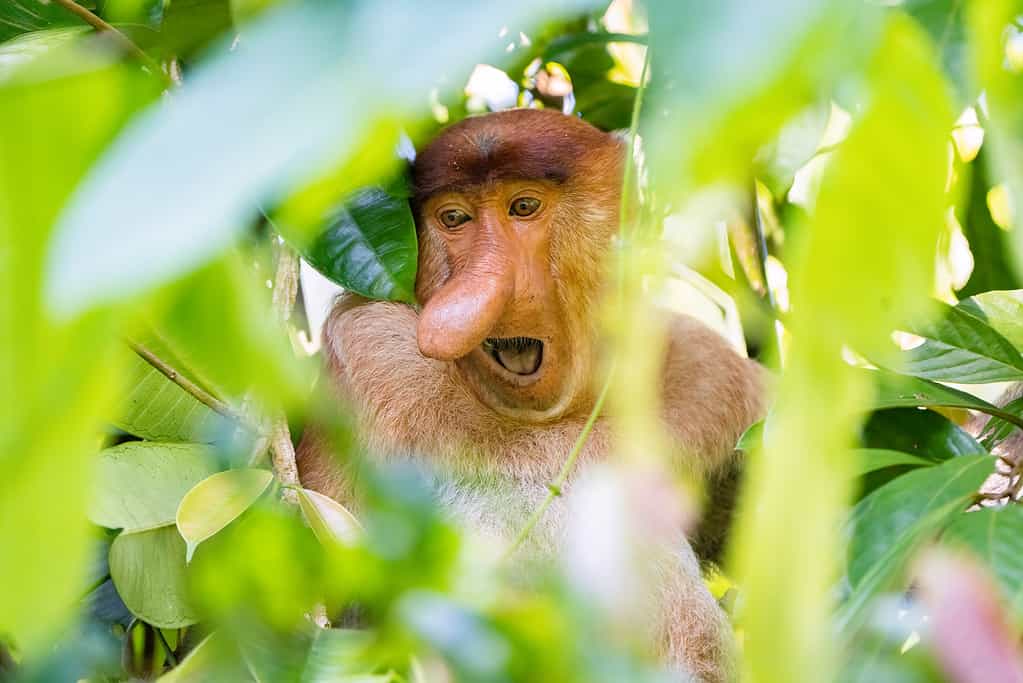
Proboscis Monkey (Nasalis larvatus)
©Scott Canning/ via Getty Images
The proboscis monkey of Borneo looks like a comic exaggeration of a human face. Males have long, bulging noses that can be more than four inches long, hanging over their mouths like trunks. They look odd, but their noses help amplify the monkey’s calls through the rainforest, attracting mates and warning rivals. Females and juveniles have shorter, upturned noses but the same potbellied bodies and reddish coats. These monkeys live in mangrove forests and river swamps, spending much of their time leaping from tree to tree or swimming expertly with webbed fingers and toes. Adults grow to about two feet long, with tails adding another 8 to 10 inches. Deforestation and hunting have caused severe population declines, and they are now classified as endangered.
Pacific Barreleye Fish (Macropinna microstoma)
In the deep sea, one of the most bizarre animals is the Pacific barreleye. This small, six-inch fish drifts in near-dark waters thousands of feet below the ocean surface. It has a transparent forehead revealing a pair of glowing green, tubular eyes aimed upward, able to rotate, allowing the fish to track prey above while keeping its body motionless. Its diet mainly consists of jellyfish and other soft-bodied creatures floating in the deep. The clear dome on its head protects its eyes while allowing the faintest traces of light to enter. In such pitch-black conditions, this adaptation gives the barreleye a huge survival advantage. Hardly anyone ever sees one alive—remote submersibles captured the first clear footage only in the 2000s—yet it is now a favorite example of how bizarre deep-ocean evolution can be.
Satanic Leaf-Tailed Gecko (Uroplatus phantasticus)
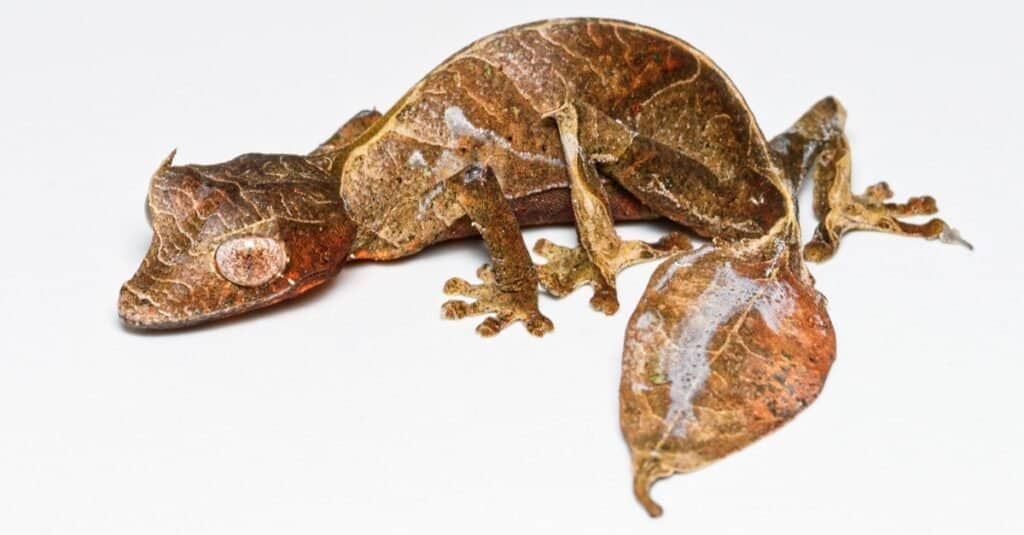
Satanic Leaf-Tailed Gecko (Uroplatus phantasticus)
©Valt Ahyppo/Shutterstock.com
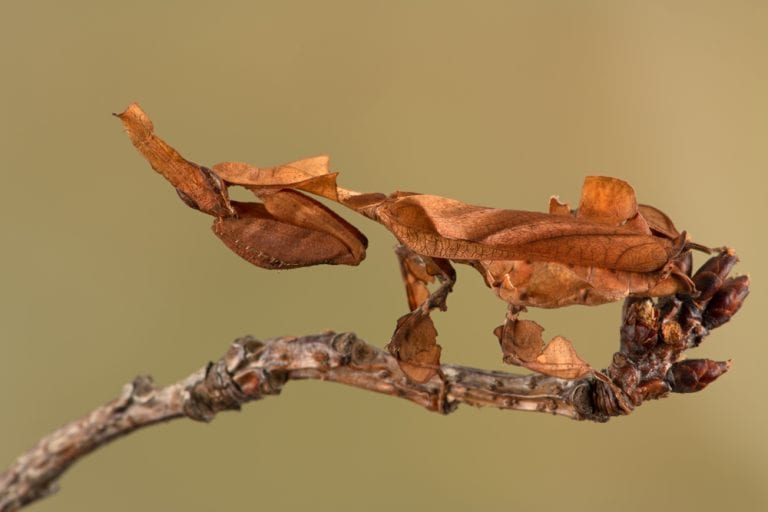
Native to Madagascar’s humid forests, the Satanic leaf-tailed gecko (also known as the phantastic leaf-tailed gecko) may be the best camouflage artist in the reptile world. Its flattened body, fringed edges, and tail shaped like a decaying leaf make it nearly invisible among fallen foliage. Adults grow around 3 to 4 inches long, and their colors range from bark brown to rusty orange. When threatened, the gecko can open its mouth wide to reveal a bright red interior, startling predators long enough to escape.
These nocturnal reptiles spend their nights hunting small insects and remain motionless during the day while they sleep. They rely heavily on their disguise, which is so convincingly leaflike that even seasoned researchers sometimes overlook them. Deforestation threatens their populations, but conservation efforts continue in Madagascar’s protected reserves to safeguard their habitat and extraordinary adaptations.
Goblin Shark (Mitsukurina owstoni)
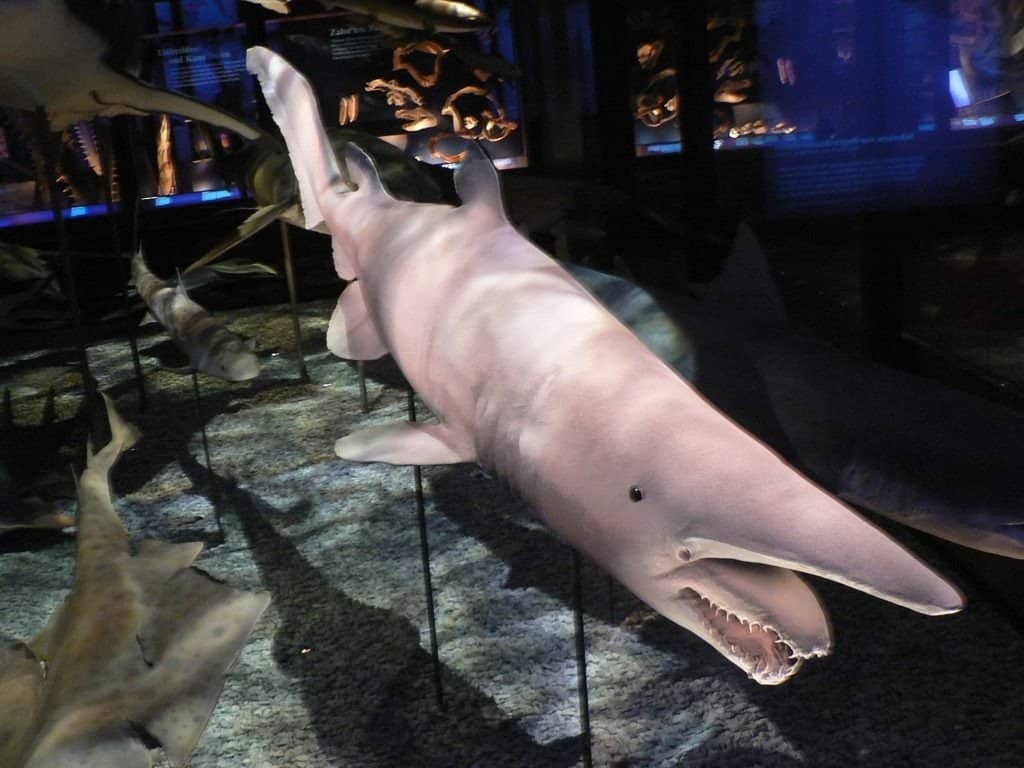
Goblin Shark (Mitsukurina owstoni)
©Peter Halasz (User:Pengo) / CC BY-SA 3.0, Wikimedia Commons – Original / License
The goblin shark lurks in the deep waters off Japan and the Atlantic. Growing up to 12 feet long, it sports a flat snout and jaws that snap forward like a slingshot to catch prey. Its long, narrow teeth and rubbery skin add to its eerie appearance, giving divers the sense they’ve met a xenomorph from the movie Alien. Despite their truly disturbing looks, they pose no threat to humans. Rarely seen alive, they remain one of the ocean’s great curiosities—a reminder that not all monsters are imaginary.
The Odd Beauty of Survival
These startlingly bizarre animals prove that survival doesn’t always favor the ordinary. Each has adapted to meet the demands of its environment, whether that means having a transparent head to let in the dimmest light, pretending to be a leaf, or having extendable jaws to grab dinner. These strange creatures show that the planet’s most bizarre designs often turn out to be the most ingenious.