
Quick Take
- One of America's largest spiders was discovered less than a decade ago, and its name is the last thing you'd expect. Meet the Johnny Cash tarantula →
- A spider named after a common household setting might be lurking in your home right now, and it is bigger than you think. Discover the giant house spider →
- Not all of America's biggest spiders are tarantulas. One surprising contender hunts its prey on the surface of water. See the fishing spider →
- Some of the most massive spiders in America are venomous, yet experts say their bite is barely worth worrying about. Find out why. Learn about its venom →
Love them or hate them, spiders are all around us. There are around 50,000 species of spiders in the world, and about 3,000 of them are found in North America. Spiders can be various sizes, from tiny sheet weavers to huge tarantulas, but have you ever wondered what the biggest spider you might encounter could be? Let’s take a look at the largest spiders in America, ranked by leg span.
10. Six-Spotted Fishing Spider
The first spider on our list is the six-spotted fishing spider (Dolomedes triton), which has a leg span of 2.5 inches. Six-spotted fishing spiders have a body length of approximately 1/2 to 3/4 of an inch (females) and are greyish-brown with light-colored spots on their abdomen. They are named for the six dark spots on their cephalothorax, not the spots on their abdomen.
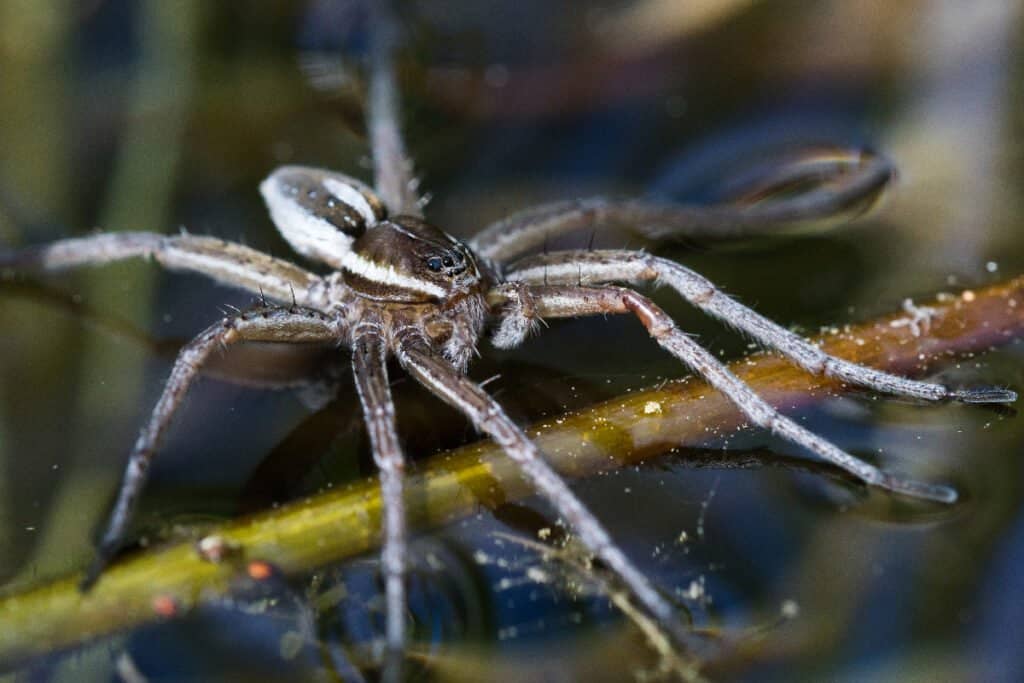
The six-spotted fishing spider eats fish and insects.
©Jukka Jantunen/Shutterstock.com
Six-spotted fishing spiders are widely distributed across North America, where they live near slow-moving wetland areas, such as streams, ponds, and the shores of lakes. Six-spotted fishing spiders eat a variety of small fish and aquatic insects. They use venom to incapacitate their prey but are not considered dangerous to humans.
9. Giant House Spider
Given their name, it is unsurprising that giant house spider (Eratigena atrica) makes the list. Adult female giant house spiders typically have a leg span of 1.8 to 2.8 inches, while male giant house spiders have a leg span that can reach up to 2.95 inches.

Giant house spiders have a leg span of almost three inches.
©iStock.com/JK21
Giant house spiders are dark brown and have hairy bodies and legs. Although they are native to Europe, they were introduced to North America in the early 1900s and are now one of the most common spiders found in homes. Giant house spiders do not usually bite unless threatened.
8. Carolina Wolf Spider
The Carolina wolf spider (Hogna carolinensis) is the largest species of wolf spider in the United States. Females are larger than males and have a body length of up to 1.4 inches and a leg span of three inches.
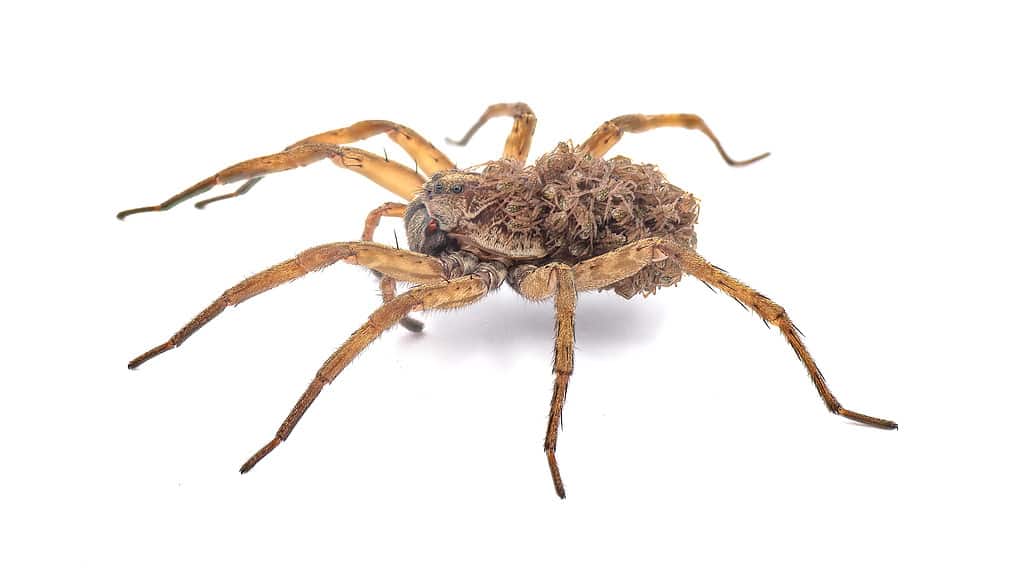
Carolina wolf spiders live in burrows.
©Chase D'animulls/iStock via Getty Images
Carolina wolf spiders are light brown with dark brown markings. Despite their name, Carolina wolf spiders are widely distributed across North America, from the continental United States into southern Canada. They live in a variety of habitats, including forests and grasslands. They live in burrows, often digging their own, though they may also take over burrows abandoned by other animals. Carolina wolf spiders are ambush predators that eat small insects.
7. Dark Fishing Spider
Like the six-spotted fishing spider, the dark fishing spider (Dolomedes tenebrosus) is often found near water. These spiders can also be found in woodland areas, however.
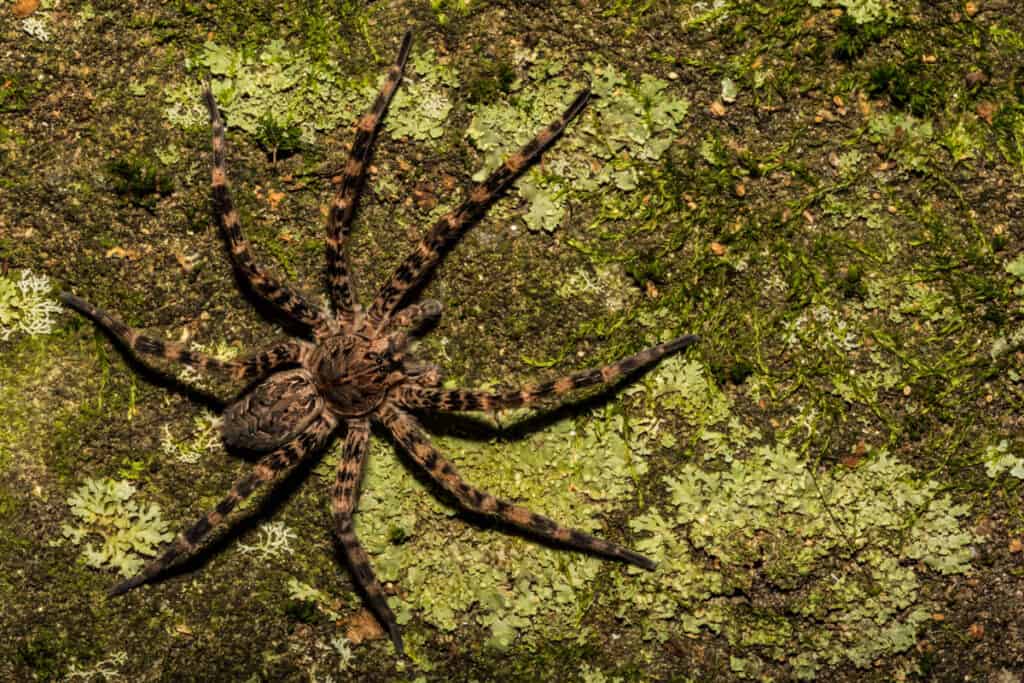
The dark fishing spider can run across the surface of water or dive into the water to catch prey.
©iStock.com/JasonOndreicka
Dark fishing spiders have a leg span of up to 4 inches and a body length of up to one inch, with females being significantly larger than males. They are brown with stripes and chevron markings on their abdomen and legs. Dark fishing spiders hunt prey both on land and on the water. They typically scurry away when disturbed, but they can bite if threatened.
6. Texas Brown Tarantula
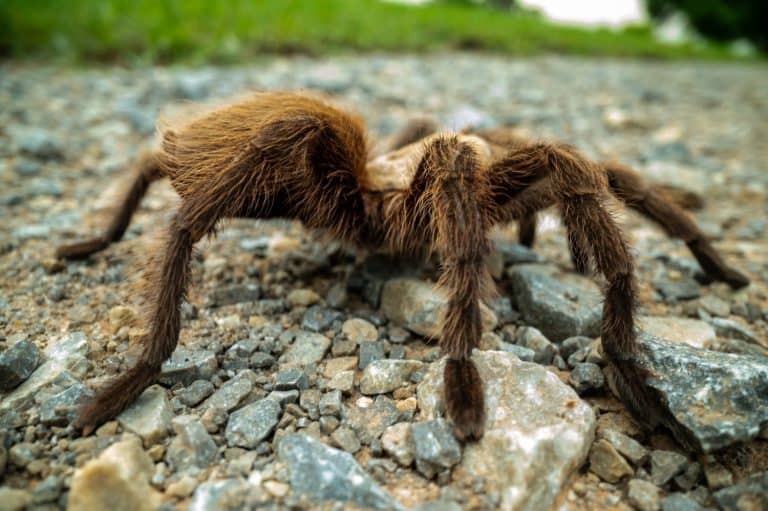
The Texas brown tarantula (Aphonopelma hentzi) has a leg span of between four and five inches.
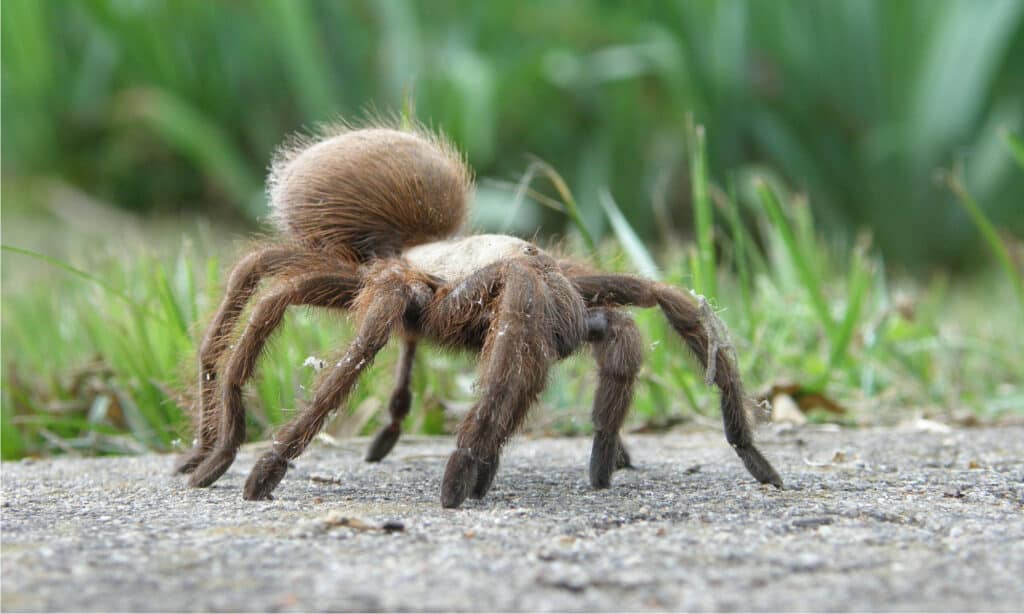
The Texas brown tarantula is venomous but is rarely dangerous to humans.
©texas brown tarantula/Shutterstock.com
Texas brown tarantulas have dark brown bodies covered in fine hairs called setae. These spiders can weigh as much as three ounces as adults. They live in several southern states, where they inhabit grasslands and scrublands. Texas brown tarantulas are venomous but tend to rear up on their hind legs in a defensive posture when threatened rather than bite. When bites do occur, they can be painful, though rarely serious.
5. Golden Orb Weaver
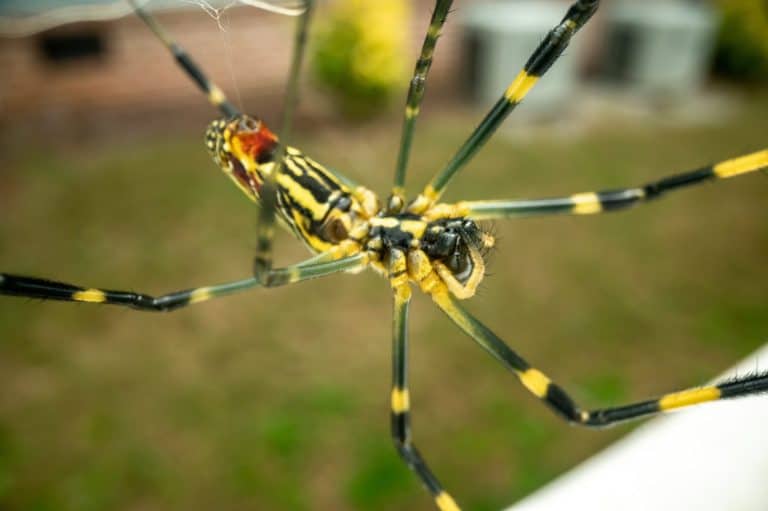
Next is the golden orb weaver (Trichonephila clavipes), which has a leg span of five to six inches. Males are typically dark brown, while females have an orange-colored abdomen with yellowish-white spots. Golden orb weavers live in the southern region of the United States, where they inhabit forests and woodlands.

The golden orb weaver produces an orb-shaped web.
©TracyN/Shutterstock.com
As their name suggests, golden orb weavers spin orb-shaped webs. These webs are particularly large, spanning three to five feet, and are used to catch flying insects.
4. Rio Grande Gold Tarantula
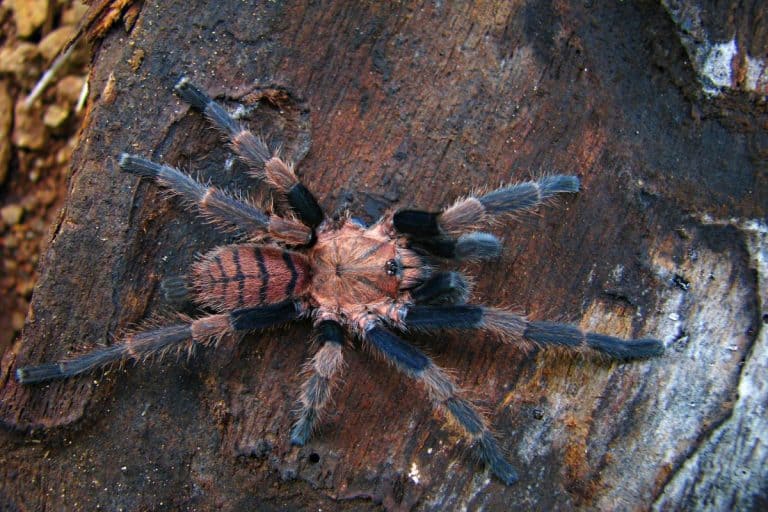
The Rio Grande gold tarantula (Aphonopelma moderatum) is another large spider in America. Rio Grande gold tarantulas have a leg span of 4.5 to 5.5 inches. They have a striking appearance, with a tan-brown to orange body and darker legs. They are endemic to the Rio Grande Valley in southwestern Texas, where they thrive in dry environments.
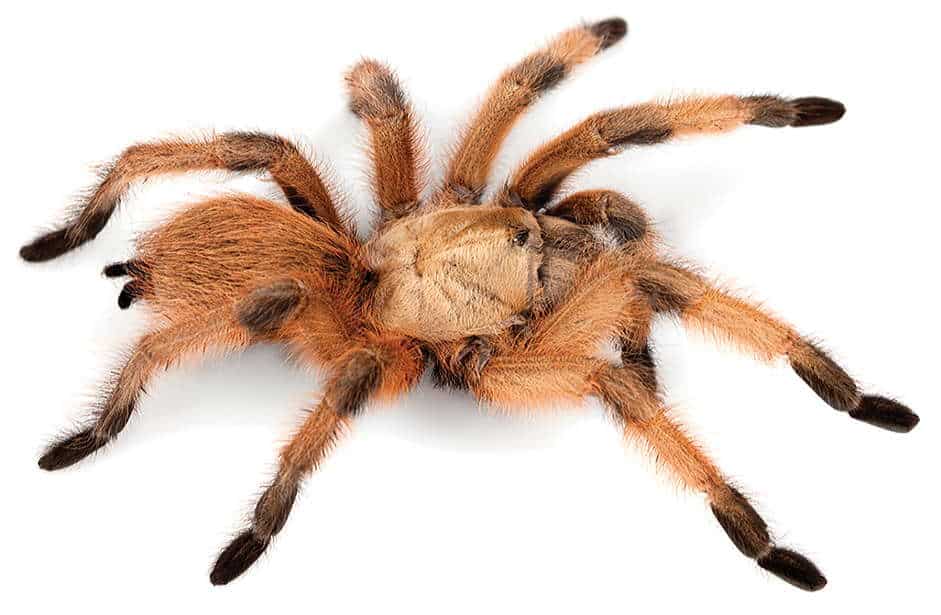
Rio Grande gold tarantulas are endemic to Texas.
©Chris A. Hamilton, Brent E. Hendrixson, Jason E. Bond/ CC BY 4.0 – Original / License
Despite their size, Rio Grande gold tarantulas are not particularly aggressive and rarely bite. They are venomous, though, and use their venom to catch and kill a variety of insects. Their venom is adapted to paralyze small prey and is not considered medically significant to humans.
3. Texas Tan Tarantula
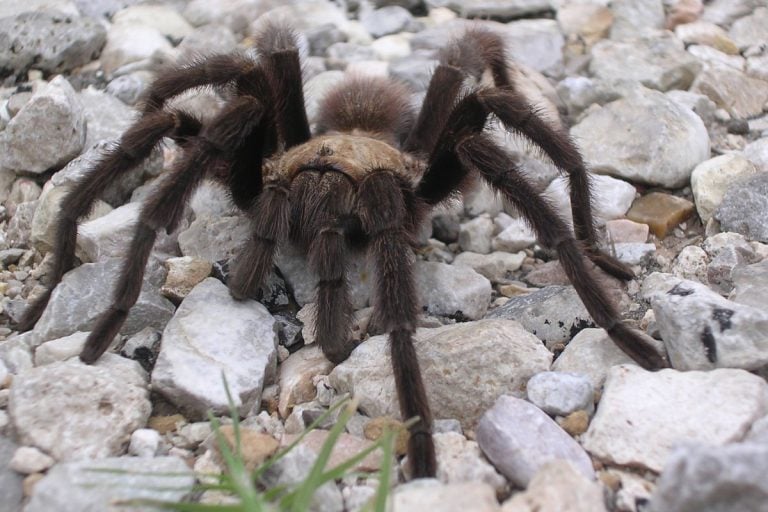
The third-largest spider in America is the Texas tan tarantula (Aphonopelma anax), which has a leg span of five to six inches. Texas tan tarantulas are tan and brown, with a similar appearance to the Texas brown tarantula. They mainly inhabit southeastern Texas but have also been observed in Mexico.
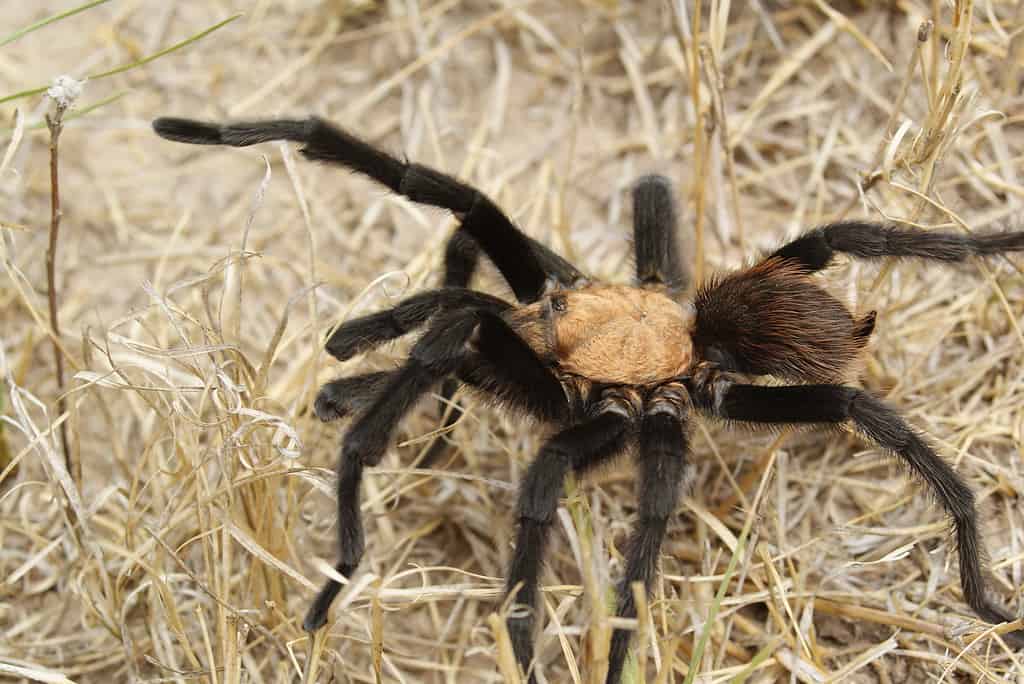
Texas tan tarantulas lay their eggs in burrows.
Texas tan tarantulas prefer shrub forests and grasslands and live in burrows. Females lay their eggs in their burrows and guard the entrance from predators, though they are not usually aggressive toward humans.
2. Desert Blonde Tarantula
Desert blonde tarantulas (Aphonopelma chalcodes) have many other names, including the Arizona blonde tarantula and the western desert tarantula. They have a leg span of up to six inches and a body length of approximately 2.2 inches.

Desert blonde tarantulas have a six-inch leg span.
©KobchaiMa/Shutterstock.com
Desert blonde tarantulas are usually a light tan color, although males have black legs. They live in the southwestern region of the US, where they favor desert habitats. They live in burrows, which they use to escape the heat during the daytime. Desert blonde tarantulas are venomous but not typically dangerous to humans; their bites are often compared to a bee sting in terms of pain.
1. Johnny Cash Tarantula
The largest spider in America is the Johnny Cash tarantula (Aphonopelma johnnycashi), which has a leg span of six inches. This spider was only discovered in 2015 near Folsom Prison in California, which is why it is named after Johnny Cash and his famous song Folsom Prison Blues. Johnny Cash tarantulas vary in color depending on sex: males are black, while females are dark brown. They are venomous but generally have a docile nature and are rarely dangerous to humans.
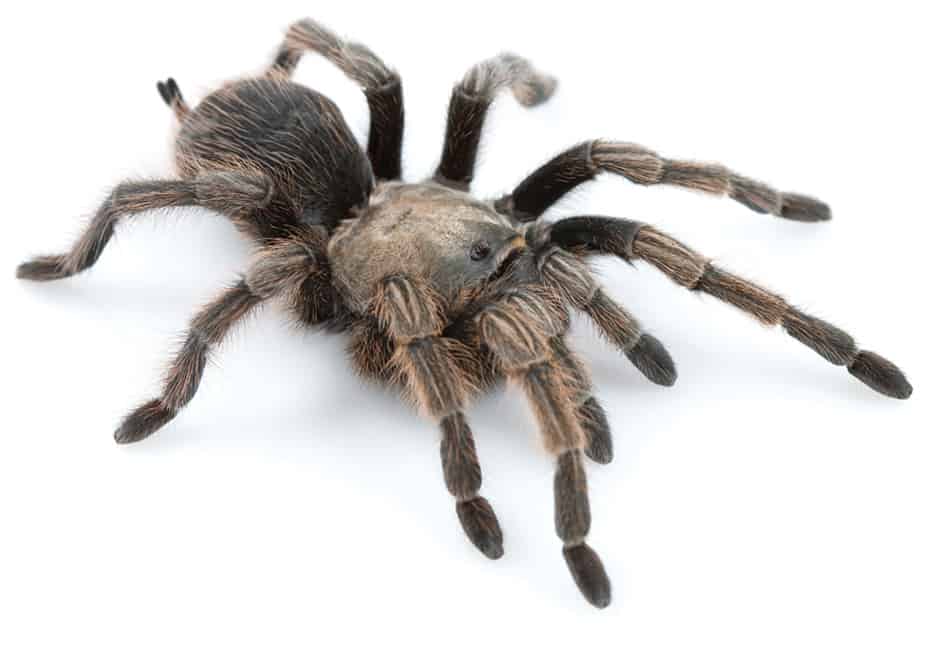
The Johnny Cash tarantula wasn’t discovered until 2015.
©Chris A. Hamilton, Brent E. Hendrixson, Jason E. Bond / CC BY 4.0 – Original