
Quick Take
- Red-shouldered hawks are carnivorous birds that usually do not stray from their meat-heavy diet.
- A hawk was recently observed eating an avocado, which marks the first documented occurrence of these raptors enjoying this fruit.
- Recently, birds of prey have been spotted eating fruits and vegetables more frequently.
- Avocados are calorie-dense treats, yet they may be harmful to birds even in small quantities.
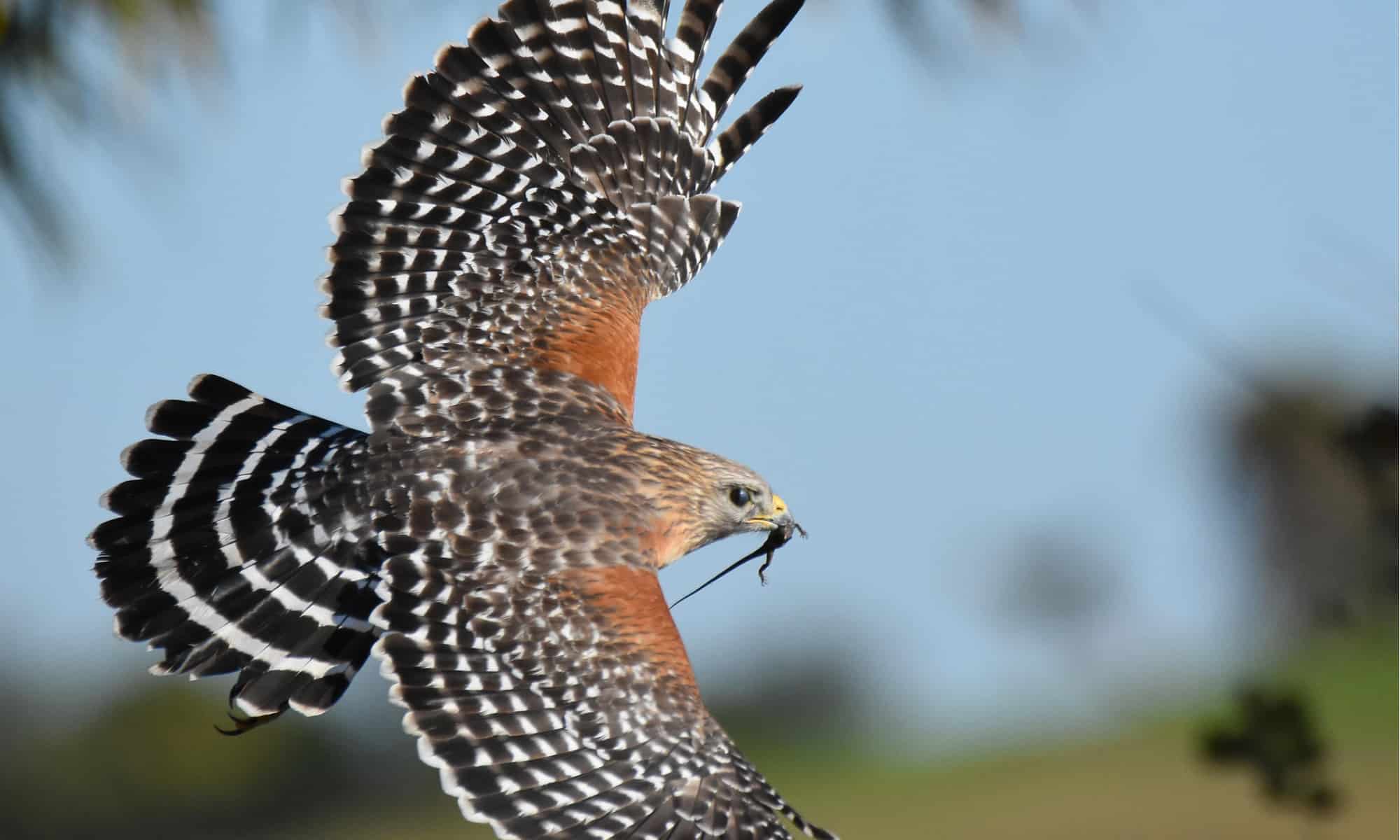
Apparently, humans aren’t the only animals that love avocados. In a rare sighting, a red-shouldered hawk was observed eating an avocado in California. The raptor’s snack raised questions about whether fruits are a new addition to their diet, which is typically carnivorous. This Instagram post by @audubonsociety discusses the observation. Keep reading here to learn more about this interesting discovery.
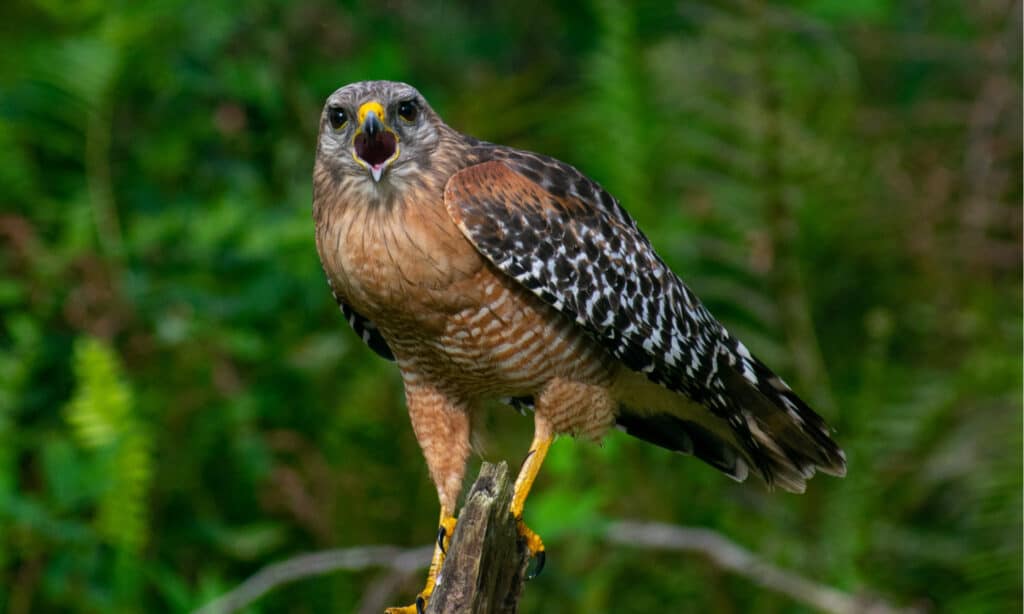
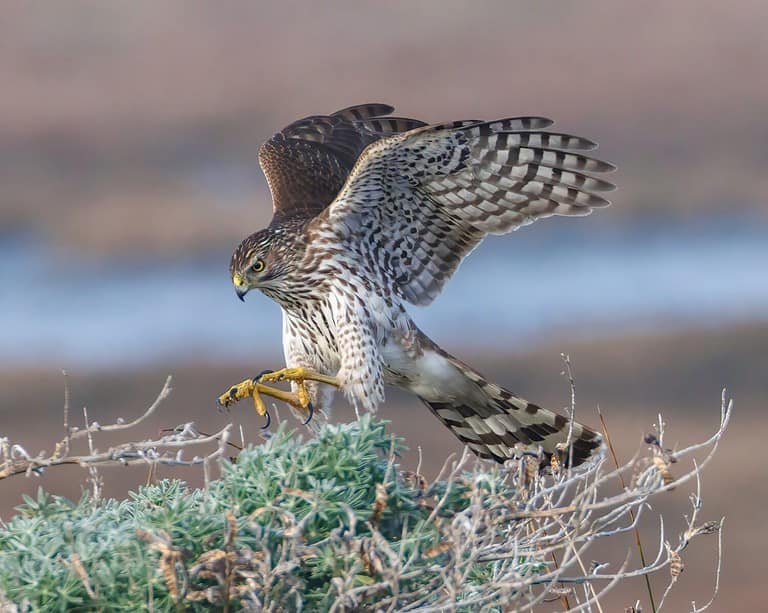
The red-shouldered hawk is a carnivore, and eating avocados is a strange behavior.
©Nick Bossenbroek/Shutterstock.com
Red-Shouldered Hawk Diet
The red-shouldered hawk is primarily a carnivorous bird. Their normal diet includes mice, squirrels, reptiles, smaller birds, and insects. Because of this, it’s surprising to see them eat fruits or vegetables, as shown in the post above. Birds of prey are not known to stray from their meat-heavy diet, with the post stating that this was the first documented case of the red-shouldered hawk eating an avocado. There has been a recent increase in research and observations of birds of prey consuming foods outside their traditional diet. Hawks, owls, and ospreys have been seen feeding on plant matter, which may be indicative of evolving traits. For one, raptors may be becoming more adaptable to their environment, especially in urban areas.
So why might a hawk eat avocado? Avocados are calorie-dense and don’t require hunting, meaning they are a quick and easy meal for hawks. Since they can be found lying under avocado trees, there’s no risk or difficulty in quickly grabbing one. Avocados in large amounts are toxic to some animals due to a compound called persin, which is found in the pit and skin of the creamy fruit and can be fatal to birds. However, consuming even small amounts of avocado may be harmful to hawks, as persin’s effects on raptors are not fully understood.