Quick Take
- Tiger rattlesnakes reach about 35.9 inches and live in Arizona and northwestern Mexico.
- They are small but highly venomous desert snakes.
- They prefer rocky terrain and rely on camouflage. Most people never see them in the wild.
- They hunt by ambush and eat rodents, lizards, and birds. Their predators include hawks, owls, and mammals.
In the world of rattlesnakes, size records are usually dominated by heavyweights such as eastern and western diamondbacks, but one compact desert species has its own quietly impressive claim to fame. The largest tiger rattlesnake ever recorded stretched about 35.9 inches from its blunt nose to the tip of its rattle, making it one of the longest individuals of this already uncommon species. What the tiger rattlesnake lacks in bulk, it more than makes up for with powerful venom and a rugged lifestyle among cactus‑studded slopes and rocky canyons in the American Southwest and northern Mexico. Understanding how this record‑setting snake fits into its harsh environment reveals why even a “small” rattlesnake deserves a big reputation.
The Record-Breaking Tiger Rattlesnake
Unlike some sensational snake stories passed around as campfire tales, the record for the largest tiger rattlesnake comes from careful measurements by herpetologists who specialize in rattlesnakes. Early in the twentieth century, famed rattlesnake expert Laurence Klauber reported a maximum tiger rattlesnake length of 34.8 inches based on specimens he examined, already impressive for a species that is usually much smaller. Later, in 1982, researchers H.M. Smith and Edmund Brodie documented a slightly longer snake at about 35.9 inches (roughly 3 feet), a new high mark that remains the standard maximum length cited in scientific references today.
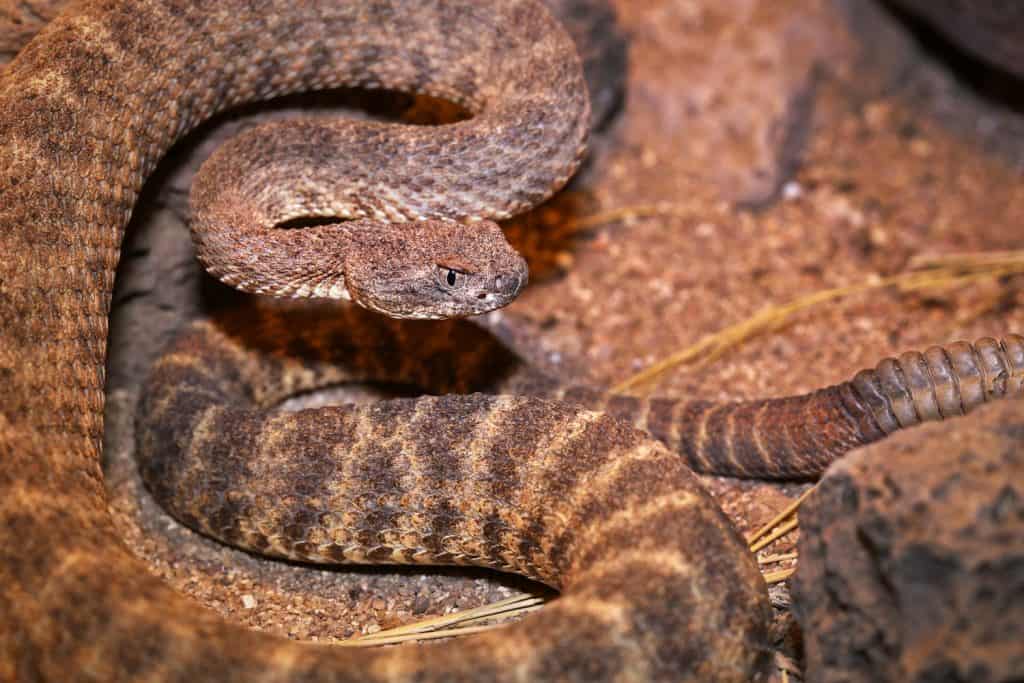
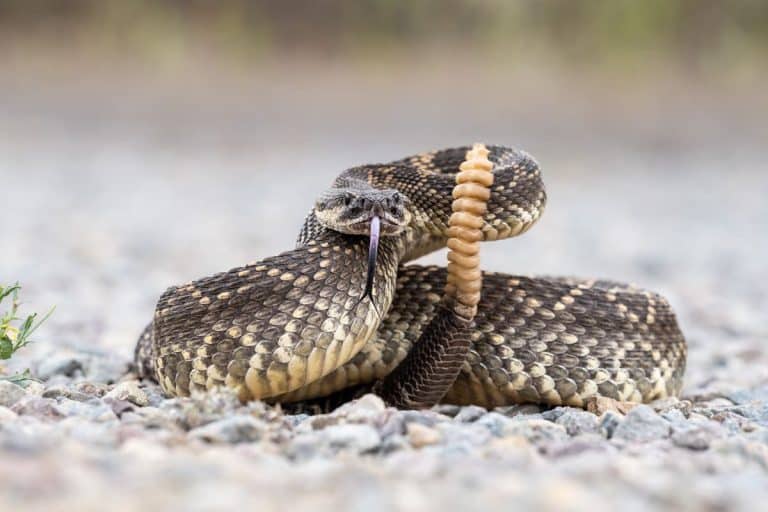
Tiger rattlesnakes can grow to about 3 feet long.
©Ryan M. Bolton/Shutterstock.com
These measurements come from preserved museum specimens collected in the Sonoran Desert region rather than from exaggerated field photos, which is why scientists accept them as the true upper limit for this species. While the exact collector’s name and precise hillside where the record individual was found are not always detailed in public summaries, sources agree that it was a wild snake from the arid U.S.–Mexico borderlands where tiger rattlesnakes are naturally found.
Where Tiger Rattlesnakes Live
Tiger rattlesnakes have one of the most restricted ranges of any rattlesnake in the United States, and that limited range helps explain why so few people ever see them—record‑breaker or not. They occur mainly from central and southern Arizona south into northwestern Mexico, especially the state of Sonora.
Within this region, they favor steep, rocky slopes, bajadas (broad, stony fans at the base of hills), canyons, and rugged foothills dotted with saguaros, mesquite, and creosote bushes. In places like Saguaro National Park near Tucson, these snakes share the landscape with several other rattlesnake species but tend to keep to discrete home ranges only a fraction of a square mile in size. Their habitat choices provide shade, crevices for escape, and abundant small prey, while keeping them mostly away from heavily developed urban areas.
Typical Size and Growth in Tiger Rattlesnakes
For most tiger rattlesnakes, reaching the size of the record individual is the exception rather than the rule. Scientific accounts describe this species as a relatively small rattlesnake. Reported total length ranges from about 18 to 36 inches, but the average length is about 24 inches. Weights are modest as well: individuals typically weigh less than one pound, with large adults approaching about one pound in mass.
Males tend to grow slightly longer than females, and biologists have documented reproductive females that are only a bit over 21 inches in body length, showing that these snakes do not need to be huge to successfully raise young. Reaching maximum size likely takes several years of steady growth, depending on prey availability, climate, and how often the snake must heal from injuries or shed worn skin.
What Tiger Rattlesnakes Look Like
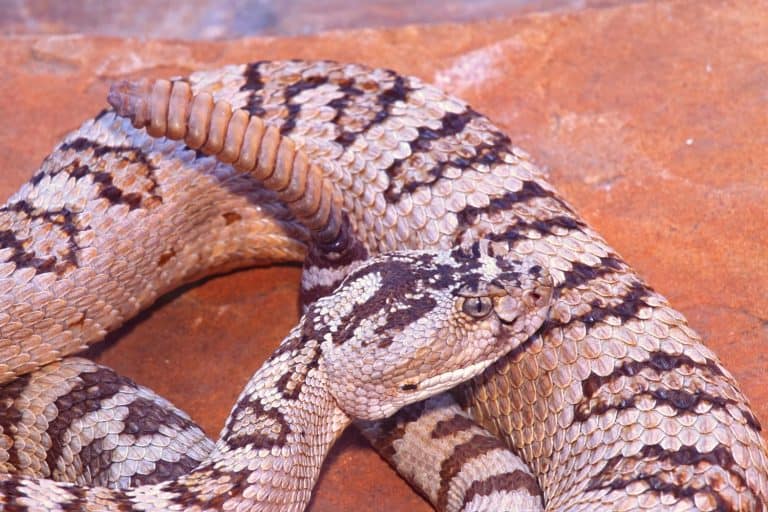
Tiger rattlesnakes are named for the series of narrow, dark crossbands that wrap around their bodies, creating a striped appearance reminiscent of a tiger’s patterning, especially when seen from above. Their base color can shift from gray and blue‑gray to pinkish or buff shades, often blending seamlessly with desert rocks and soil, which makes them extremely well camouflaged.

This species gets its name from its distinctive stripes, reminiscent of a tiger.
©Dan_Koleska/Shutterstock.com
One of their most distinctive features is an unusually small, spade‑shaped head—the smallest head in proportion to body size of any rattlesnake—attached to a relatively thick body and a large, prominent rattle. The head usually bears a dark cheek stripe running from the eye to the back of the jaw, while the eyes themselves are small with vertical, cat‑like pupils that help regulate light in bright desert sun. Up close, you would also notice the heat‑sensing pits between the eyes and nostrils, which allow the snake to detect warm‑blooded prey even in near darkness. All of these features combined give this species its stocky, compact look that differs from the bulkier, broad‑headed rattlesnakes many people imagine.
How Tiger Rattlesnakes Live in Harsh Deserts
Life for a tiger rattlesnake revolves around surviving extreme temperatures and scarce water rather than constantly searching for food. In the Sonoran Desert, summers can be brutally hot during the day, so these snakes are mostly nocturnal or crepuscular, becoming active at night or during the cooler hours around dawn and dusk.
Telemetry studies from Saguaro National Park show that tiger rattlesnakes often move only short distances and maintain relatively small home ranges, though movement varies by season and sex, with males moving farther during the summer mating season. During the hottest and coldest parts of the year, they retreat into rock crevices, rodent burrows, and other sheltered spots where temperatures are more stable. This lifestyle likely helped the record‑size individual conserve energy and avoid predators for many years, gradually adding length with each shed.

Saguaro National Park, located in Southern Arizona, is one of the main habitats of the tiger rattlesnake.
©Nate Hovee/Shutterstock.com
Diet: What Tiger Rattlesnakes Eat
Despite their modest size, tiger rattlesnakes are capable predators that play an important role in controlling small animal populations. Studies and field observations show that they feed mostly on small mammals such as mice, rats, and other rodents, many of which are considered agricultural or household pests. They also consume lizards and occasionally small birds or nestlings, especially in areas with rocky ledges and thorny shrubs where such prey is common.
These snakes hunt by ambush. They coil near rodent runways or lizard basking spots and strike when prey passes within range. Their small head and slender neck let them reach into tight rock crevices to pull out prey that tries to escape. This ability helps both average-sized adults and record-length individuals.
Predators and Threats to Tiger Rattlesnakes
Although adult tiger rattlesnakes possess potent venom and a warning rattle, they are not at the top of the food chain. Natural predators include large birds of prey such as hawks and owls. These predators of the sky can swoop down before the snake has time to rattle. They’re also prey for carnivorous mammals like coyotes, foxes, and badgers. Such animals may dig them out of burrows or seize them when they are moving between shelter sites. Young snakes are especially vulnerable to predation. They are smaller and have shorter rattles, making them harder to notice but easier to swallow.
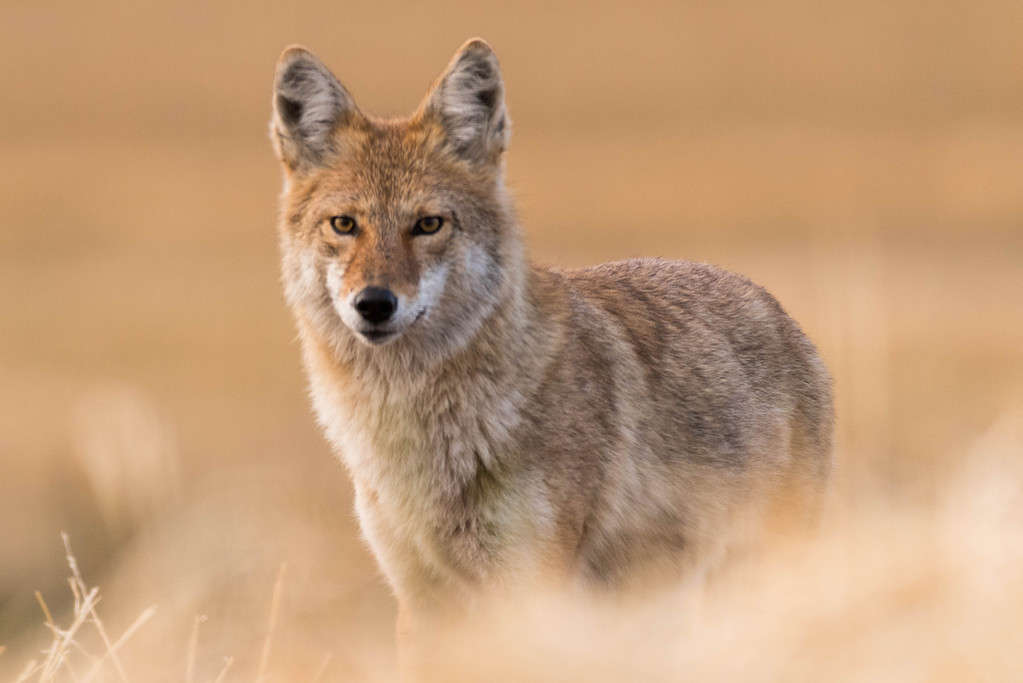
Coyotes are among the predators of the tiger rattlesnake.
©hartmanc10/iStock via Getty Images
Human activity, however, represents one of the most significant threats. Habitat loss from development and road construction fragments their home ranges, and some individuals are killed out of fear when encountered on trails or near rural homes. Despite these challenges, conservation assessments currently list the tiger rattlesnake as a species of “Least Concern.” This means its overall population appears stable, though local declines can occur where urban growth is rapid.
Why This Small Rattlesnake Is So Dangerous
While the record tiger rattlesnake may not rival giant diamondbacks in length, this species is widely regarded as having one of the most potent rattlesnake venoms in North America. Toxicity tests suggest that the venom is many times more powerful, dose for dose, than that of some larger rattlesnake relatives. Components of it affect both the nervous system and muscle tissue.
Fortunately, tiger rattlesnakes seldom encounter people because of their remote habitat. Bites are very rare compared with those from more widespread species. When bites do occur, however, they can be extremely serious and require immediate medical treatment with appropriate antivenom, just like other rattlesnake bites. Respectful distance and careful attention to where you place your hands and feet in rocky desert terrain are the best ways to avoid any dangerous encounter.
Reproduction and Life Cycle
Like other rattlesnakes, tiger rattlesnakes give birth to live young instead of laying eggs, which lets the mother control embryo temperature in a harsh climate. Females breed during the summer monsoon season, roughly from late May to mid-August, and typically give birth the following summer. They usually reproduce every other year, and litters average about four to six young. During pregnancy, they choose secluded, stable sites like deep rock crevices or sheltered ledges, where they bask safely and maintain the temperatures needed for healthy development.
Newborn snakes are much smaller than record-holding adults, but they already have venom and a tiny “button” on the tail that becomes a full rattle after the first shed. Mothers may stay nearby for a short time, but the young soon disperse and fend for themselves, following the same slow, high-risk path to adulthood.
Tiger Rattlesnakes and People
Tiger rattlesnakes prefer rocky, undeveloped terrain, so most desert visitors never knowingly encounter one, even an average adult. Hikers in places like Saguaro National Park and other Arizona preserves are more likely to see common species such as western diamondback rattlesnakes basking near trails.

The right footwear is essential to protect oneself from snake bites.
©DavideAngelini/Shutterstock.com
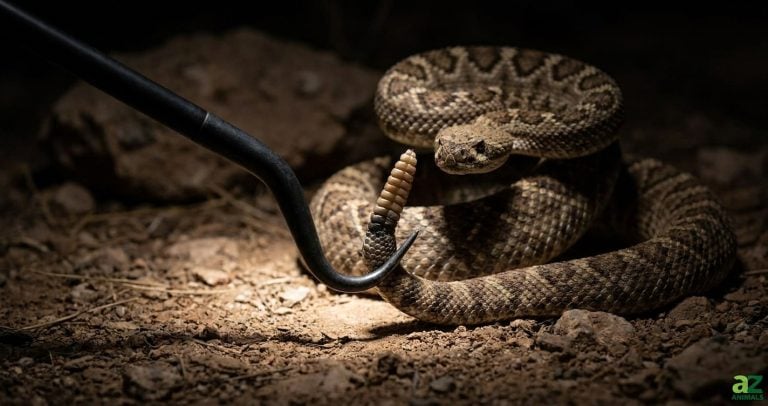
When people encounter tiger rattlesnakes, the snakes often rely on camouflage instead of rattling right away. They remain still and blend into the rocks until a threat comes too close. If approached, they may coil and rattle. They usually prefer to escape into the nearest crevice rather than remain grounded. Naturalists and park rangers advise leaving rattlesnakes alone. They recommend watching from a safe distance. They also stress giving the snake time to move away, a practice that protects both people and these specialized desert predators.
Why Accurate Records Matter
Carefully documented size records might seem like simple trivia, but they play an important role in understanding how species like the tiger rattlesnake grow and survive. Reliable measurements from museum specimens and field studies help biologists estimate age, health, and habitat quality for populations across Arizona and Sonora. Knowing that the true maximum length is about 35.9 inches also helps debunk exaggerated claims and social media posts that show obviously misidentified snakes labeled as tiger rattlesnakes several feet longer than is biologically realistic.
For wildlife managers, accurate data supports conservation planning, such as protecting critical rocky slopes and bajadas where these snakes hunt and den. Even for casual nature enthusiasts, understanding the real dimensions of a record‑holding tiger rattlesnake encourages respect based on facts rather than fear fueled by myths.
A Small Rattlesnake with a Big Story (Crotalus tigris)
The largest tiger rattlesnake ever recorded may be only about three feet long, but its story highlights how even modest‑sized animals can be perfectly adapted to their environment. By combining powerful venom, efficient hunting tactics, and a cautious lifestyle on rugged desert slopes, this species quietly shapes rodent and lizard populations across a narrow slice of the Southwest. Learning about this record‑setting snake—and about tiger rattlesnakes in general—invites us to look more closely at the hidden corners of deserts, where some of the most specialized and surprising reptiles on Earth make their home.