
Quick Take
- Gibraltar's macaques are dealing with a junk food health crisis, and their coping strategy is something no researcher expected to find in an urban primate population. See the clay-eating behavior →
- Tourist season and macaque illness are linked by a pattern so precise it functions almost like a clock, with the data revealing exactly who is responsible. See the seasonal pattern →
- Different troops developed completely different coping strategies, and one group's choice sent up a serious red flag for researchers. Explore the troop differences →
- The macaques' survival strategy is surprisingly clever, though researchers warn it may be making a second, hidden problem worse. See the hidden risks →
Gibraltar receives over 10 million visitors each year, and many come specifically hoping for an up-close encounter with one of Europe’s strangest wildlife success stories: a free-roaming population of Barbary macaques (Macaca sylvanus). Perched along the cliffs of the Rock of Gibraltar, these monkeys have learned exactly how to take advantage of all this human attention.
Gibraltar authorities already provide the macaques with a healthy diet — including fresh water, vegetables, seeds, and fruit — to supplement their natural diet of leaves, roots, flowers, insects, and small lizards. However, tourist snacks are simply too hard for the animals to ignore. Today, processed foods like ice cream, chips, cookies, and bread make up nearly 20 percent (one-fifth) of the macaques’ diet.
This dietary shift has created a serious health crisis. Like other adult primates, Barbary macaques cannot properly digest lactose. Highly processed foods packed with sugars, fats, salt, and dairy disrupt their gut microbiomes and trigger chronic gastric distress, nausea, and diarrhea. Researchers say the animals are essentially suffering the consequences of a modern human junk food diet that was never designed for wild primates.
However, a groundbreaking study from the University of Cambridge published in 2026 revealed a surprising twist. To cope with the internal damage caused by this processed food, Gibraltar’s macaques may have developed an unusual survival strategy: they eat dirt.
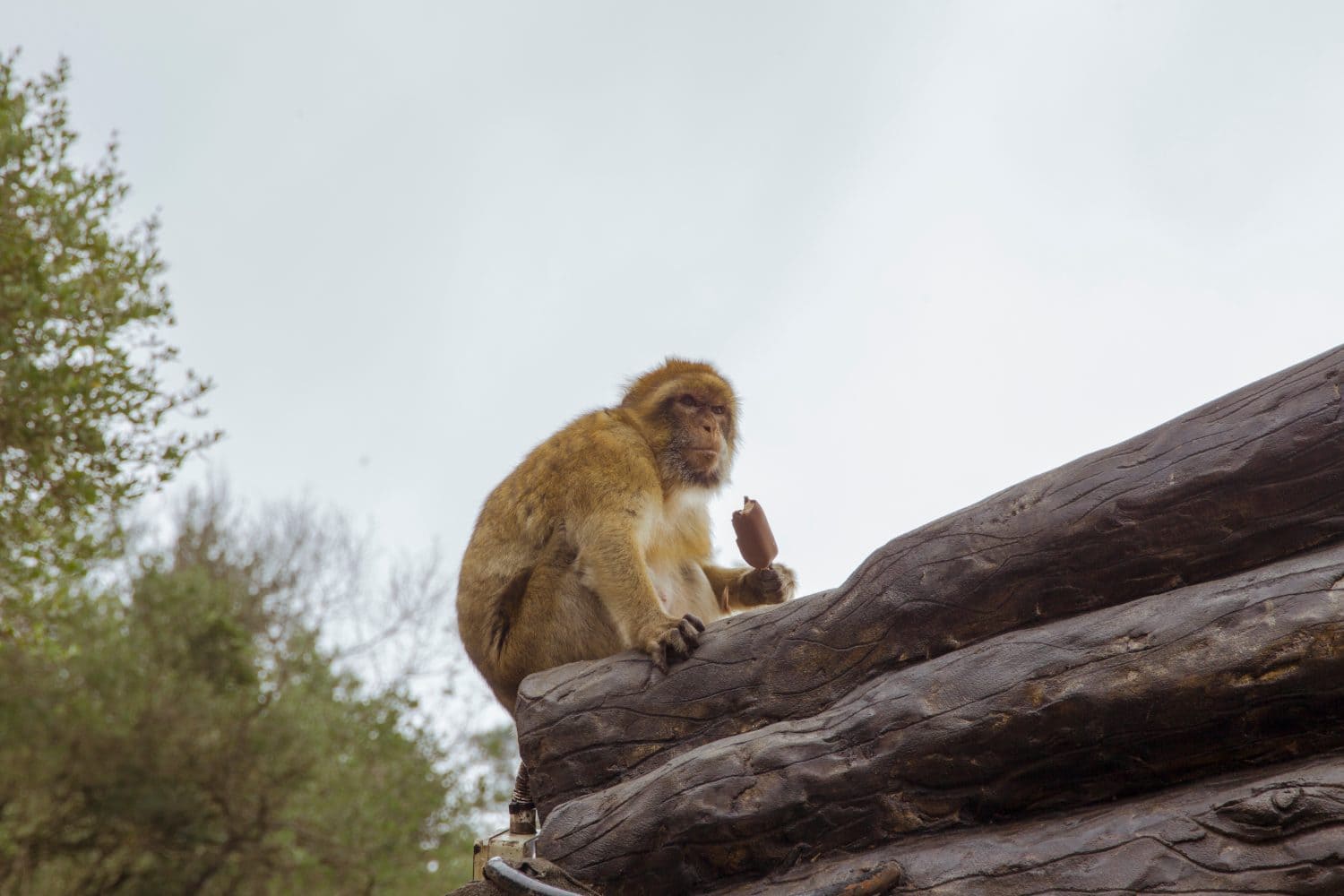
Barbary macaques are an endangered species.
©Werner Rebel/Shutterstock.com
The Monkeys Are Self-Medicating with Clay
The study, published in Scientific Reports, documented the first formal scientific evidence of regular geophagy — the intentional consumption of soil — among Gibraltar’s free-ranging Barbary macaques. Over nearly 100 days of observation, researchers witnessed dozens individual macaques deliberately eating soil on separate occasions. The monkeys repeatedly sought out a mineral-rich red clay known as terra rossa, and often used a precise finger grip to pick out specific fragments from the ground.
Researchers believe this behavior functions as a form of self-medication. Instead of eating soil for extra nutrients, the macaques appear to use the clay as a biological buffer against the harmful effects of processed food. The clay can bind to toxins and metabolic waste, coat the digestive tract for protection, and help regulate stomach pH levels after the monkeys eat fatty, sugary, or dairy-heavy snacks. Essentially, the macaques may be using dirt like their own natural antacid.
To understand this behavior, researchers tested two competing explanations: the Nutrient Supplementation Hypothesis, and the Protection Hypothesis. The Nutrient Supplementation Hypothesis suggests that the monkeys ate soil to fix mineral deficiencies. If this was true, then pregnant or lactating females should have eaten more dirt than others. However, the study found no connection between reproductive status and soil consumption.
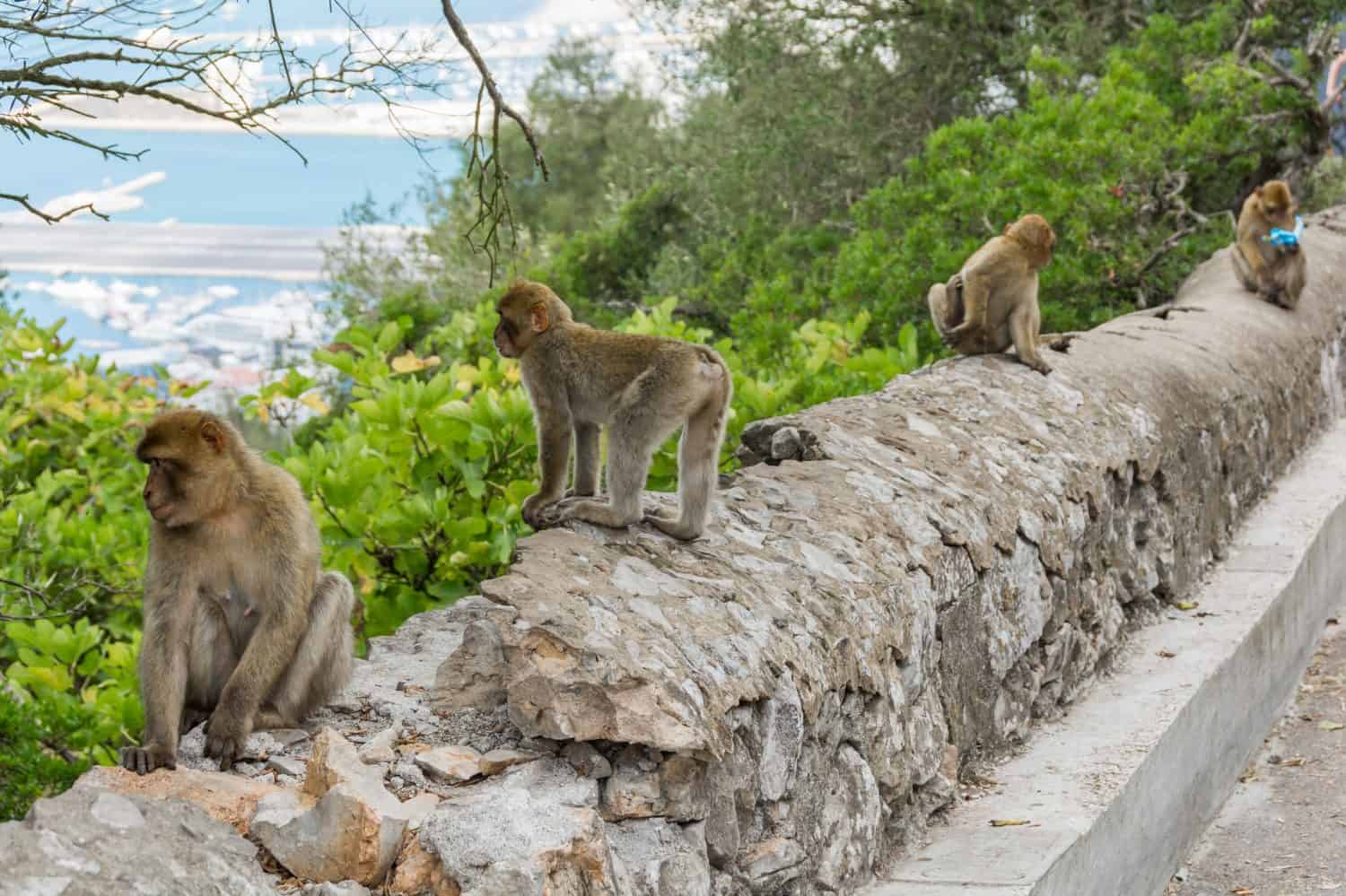
Barbary macaques are the only macaque species found outside of Asia.
©radoszki/Shutterstock.com
In contrast, the evidence strongly supported the Protection Hypothesis, suggesting that the monkeys ate soil for physical defense, specifically to reduce the digestive distress caused by human junk food.
The Junk-Food Tourist Trap
As part of their study, researchers looked at where the monkeys lived and how their habits changed with the seasons, and found a strong link between tourism, junk food consumption, and soil-eating. Macaque groups living near Gibraltar’s busiest tourist areas consumed the most processed food and showed the highest rates of geophagy (dirt-eating).
The study showed that location matters. Researchers frequently observed monkeys eating dirt immediately after consuming tourist snacks. Meanwhile, a control troop living with very little human exposure was never observed eating soil at all during the study period.
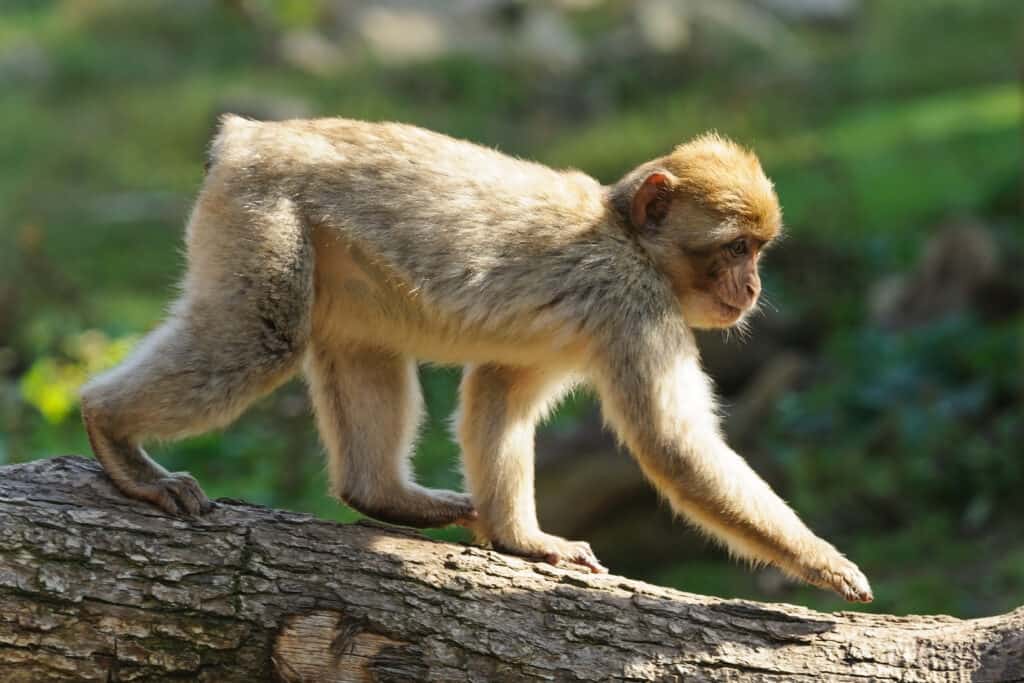
Barbary macaques lack tails.
©Natalia Paklina/Shutterstock.com
Seasonal patterns also showed this. The macaques ate the most soil during the busy summer tourism season, which is when human snacks were most available. According to the study, tourist food consumption dropped by about 40 percent during the quieter winter months, and geophagy decreased by about 31 percent. This shows that the dirt-eating behavior closely rose and fell alongside tourist activity.
A Socially Learned “Monkey Culture”
The macaques’ unique dirt-eating behavior does not appear to be an isolated instinct. Instead, researchers argue it is a socially learned behavior — a localized form of “animal culture.” The monkeys are not simply reacting individually to stomach pain; they are teaching one another how to cope with a human-created problem through several social behaviors. The study showed that roughly 90 percent of observed soil-eating incidents occurred in the presence of other macaques, who often watched the behavior closely. In over 30 percent of cases, multiple monkeys gathered together to eat dirt from the same spot. Different troops even developed distinct preferences for specific materials. While most groups favored red clay, one isolated troop repeatedly ate tiny fragments of asphalt and tar from a pothole.
To test whether these choices were cultural rather than accidental, researchers conducted controlled “tray tests” by offering the monkeys different soil types. The monkeys consistently selected the exact materials preferred by their own specific troop. This strongly suggests that the behavior is socially transmitted within groups through observation and imitation.
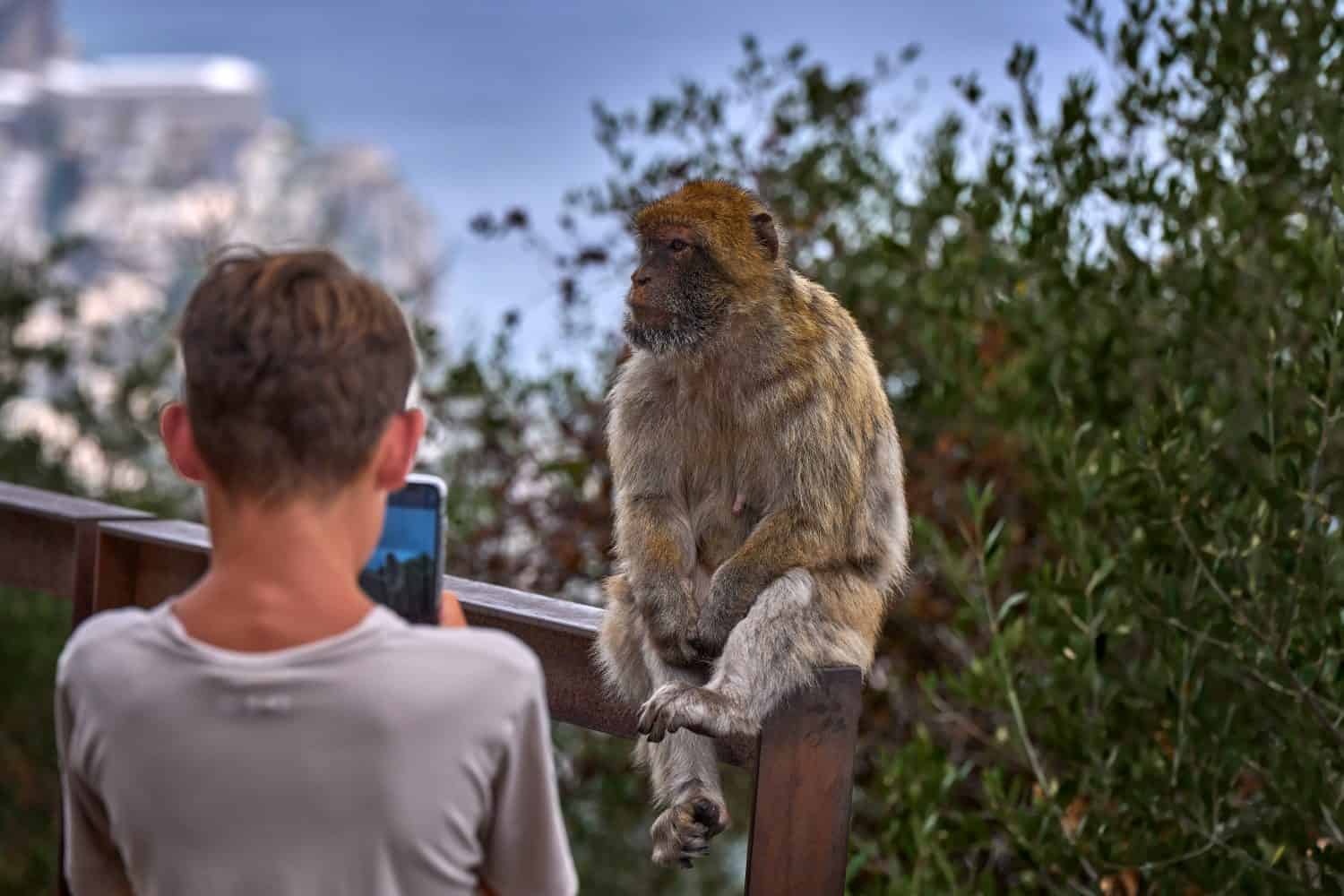
Researchers found that eating dirt is a cultural behavior rather than an instinctual one.
©Ondrej Prosicky/Shutterstock.com
A Desperate Remedy with Dangerous Side Effects
While eating dirt may help the macaques survive a processed-food diet, researchers warn that it is not a healthy long-term solution. Eating soil exposes the monkeys to serious new dangers, particularly in urban areas where dirt and asphalt may contain pollutants or heavy metals. The troop consuming tar fragments highlights how wildlife living alongside humans can develop risky habits in response to artificial food sources.
At its root, the problem stems from human behavior rather than animal biology. Although laws strictly prohibit visitors from feeding the macaques, and enforcement efforts have increased in recent years, illegal feeding by tourists and guides still occurs. Tourists, tour guides, and drivers still regularly hand the monkeys snacks or encourage close interactions to get photos. This constant stream of high-calorie food has altered the macaques’ natural behavior, increasing their aggression around humans and contributing to ongoing, painful digestive illnesses.
Researchers say the monkeys’ dirt-eating strategy demonstrates remarkable intelligence and behavioral flexibility, but it also serves as a warning. Wildlife can adapt to human disruption in surprising ways — but adaptation does not mean the animals are thriving.
The Real Solution Starts with Humans
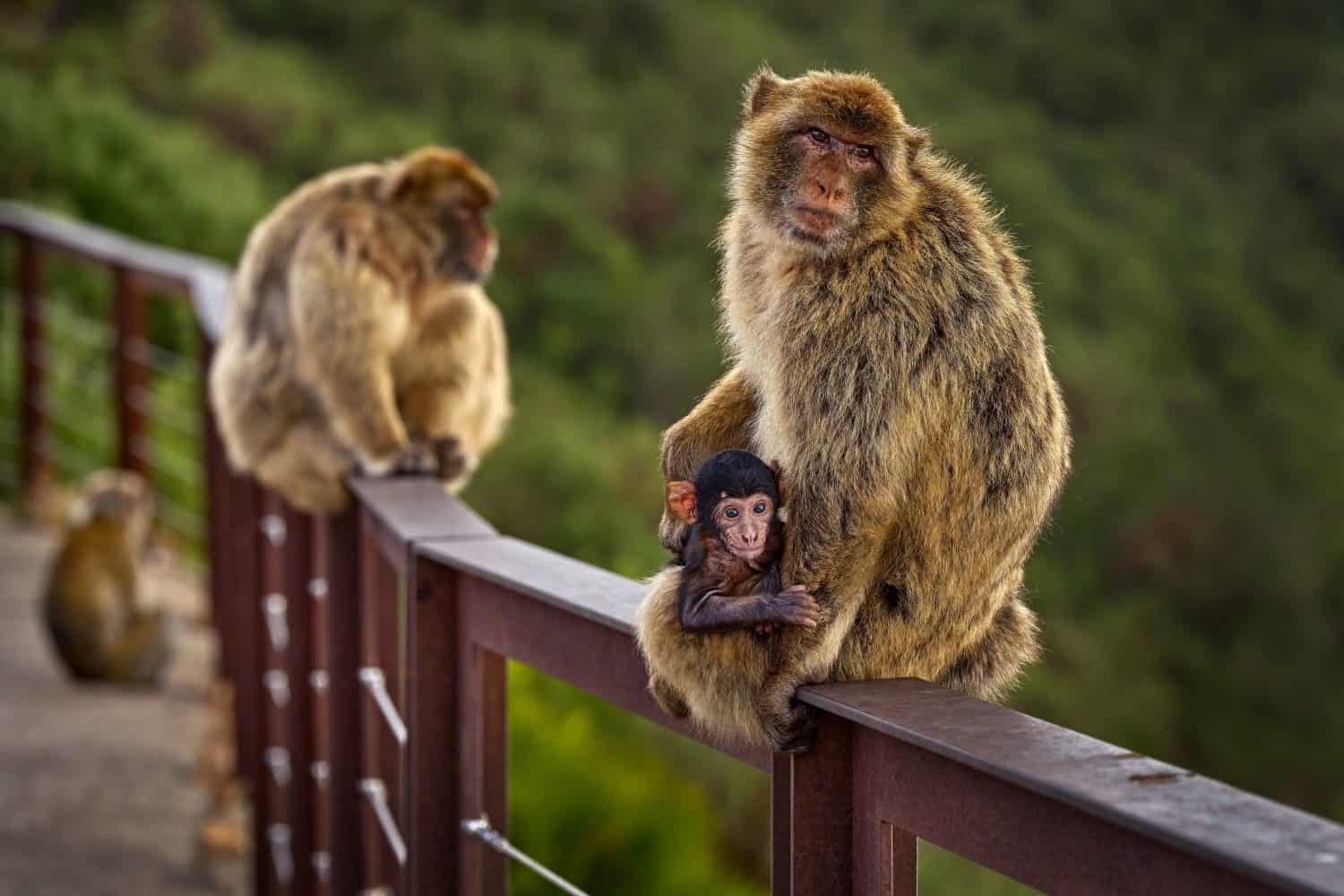
Gibraltar’s macaques are very accustomed to humans and many will try to climb on tourists or steal their snacks.
©Ondrej Prosicky/Shutterstock.com
The Barbary macaques of Gibraltar have developed an extraordinary workaround for a problem that humans created. By eating clay-rich soil, they have found a way to temporarily protect themselves from the physical consequences of ice cream, chips, cookies, and other processed snacks. However, dirt is a temporary fix, not a cure.
The only permanent solution is to reduce the human behaviors driving the problem in the first place. Researchers emphasize that stronger enforcement of anti-feeding laws and better tourist education are critical to protecting the health and wild nature of Europe’s only free-ranging monkeys.
The macaques have already adapted as best they can. The question now is whether humans will do the same.