
Quick Take
- A hawk chick just hours old can't even lift its head, yet its parents still drop a live snake in front of it. See how chicks are fed →
- Red-tailed hawks don't always nest where you'd expect. Some nest in places that would genuinely surprise you. Discover their nesting habits →
- These birds form bonds stronger than most animals, a fact that directly shapes how their chicks survive. Learn about pair bonding →
- The feeding dynamic between red-tailed hawk parents and their chick shifts dramatically as the days pass, and the timeline for this shift is surprisingly tight. See the feeding timeline →
Since you’re unlikely to see this bird in your backyard, take advantage of this incredible Instagram post. You don’t just get to see a breeding pair of red-tailed hawks, you get a front-seat view of their fluffy nestling. This little chick, who has been named P1, took around 72 hours to hatch from its egg and emerged on May 3rd. In this clip, the chick is just hours old. Take a look for yourself, then read on to learn about red-tailed hawks breeding.
How Do Red-Tailed Hawks Rear Their Chicks?
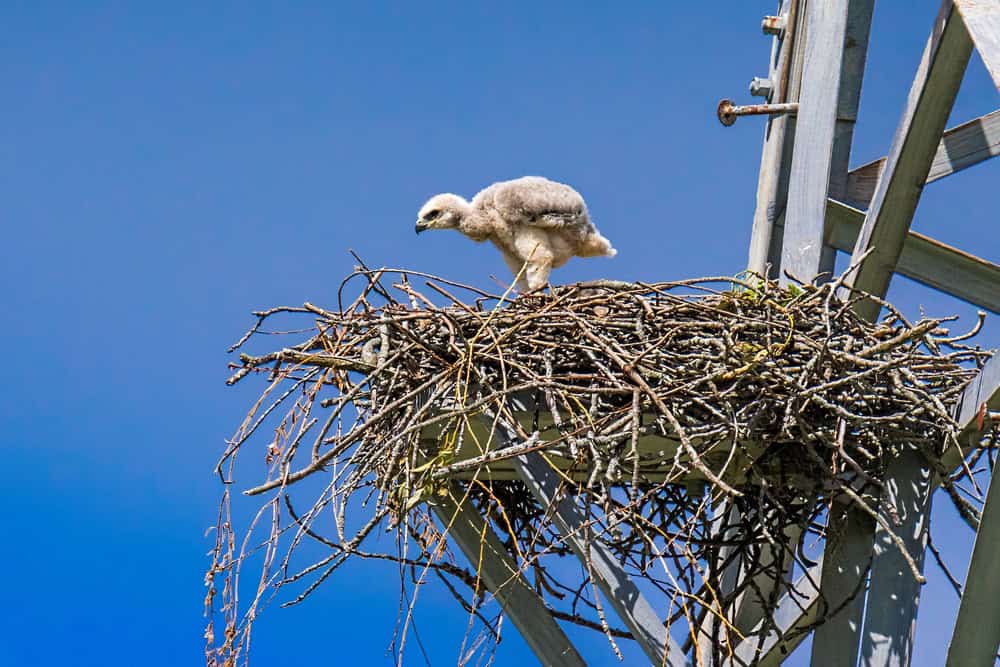
Red-tailed hawks (Buteo jamaicensis) typically build their nests in the crowns of tall trees. These are basically tall piles of sticks that can be up to 6 feet tall. The inside is lined with fresh foliage and dry leaves. This location gives them a good view of the surrounding landscape. Some have been spotted on billboard platforms!
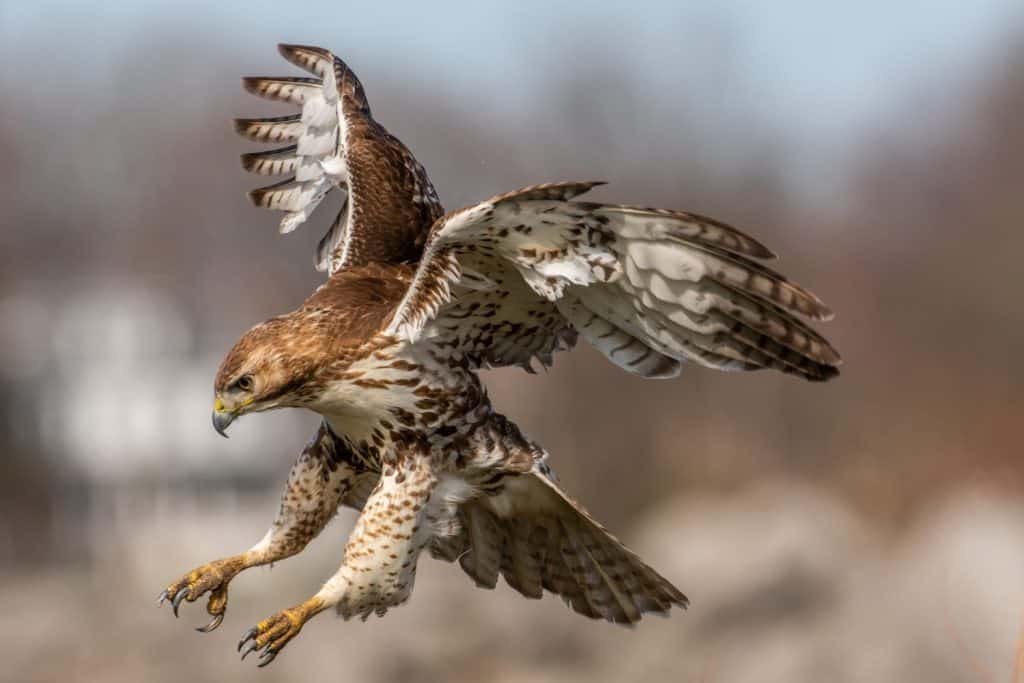
Red-tailed hawks build nests high up.
©David Brace/Shutterstock.com
The female lays between one and five eggs, which are incubated for between 28 and 35 days. When the hatchlings emerge, they are tiny, helpless, and cannot even raise their heads.
A mating pair typically stays together until one of them dies, and they both care for the chicks. This includes chasing off potential predators such as hawks, eagles, and great horned owls. It also involves feeding hungry chicks!
Red-Tailed Hawk Parents Feeding Chicks
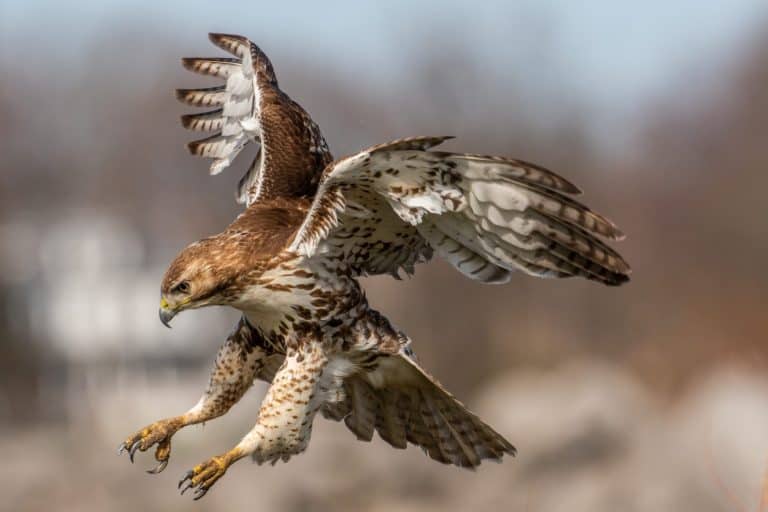
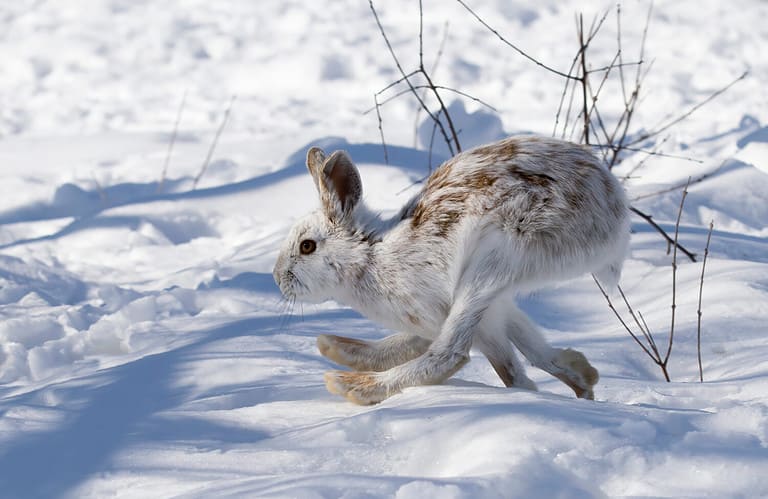
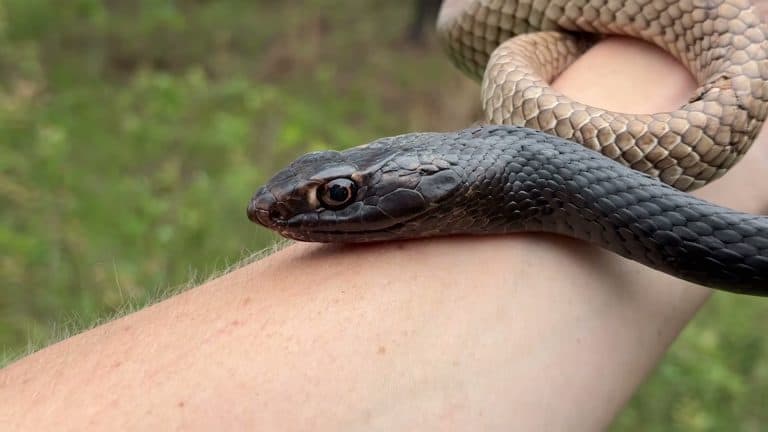
These birds mainly eat voles, mice, wood rats, rabbits, snowshoe hares, jackrabbits, and ground squirrels. However, their diet also includes pheasants, bobwhite, starlings, and blackbirds. As you can see from this clip, snakes are also on the menu.
The snake in this footage is still alive as it is plonked in front of the tiny chick. It’s also too big for the chick to tackle with its tiny beak. So, its parents help by tearing pieces off the snake and feeding them to the chick. As it grows stronger, it will feed itself and begin to eat larger prey. This care continues until the chicks can leave the nest at around 42-46 days old.