
Quick Take
- There are only around 380 North Atlantic right whales left on the planet.
- They are threatened by entanglement, vessel strikes, and climate change.
- The 2026 breeding season has seen the arrival of 22 calves.
- One whale called Ghost has had her 9th calf at fifty years of age.
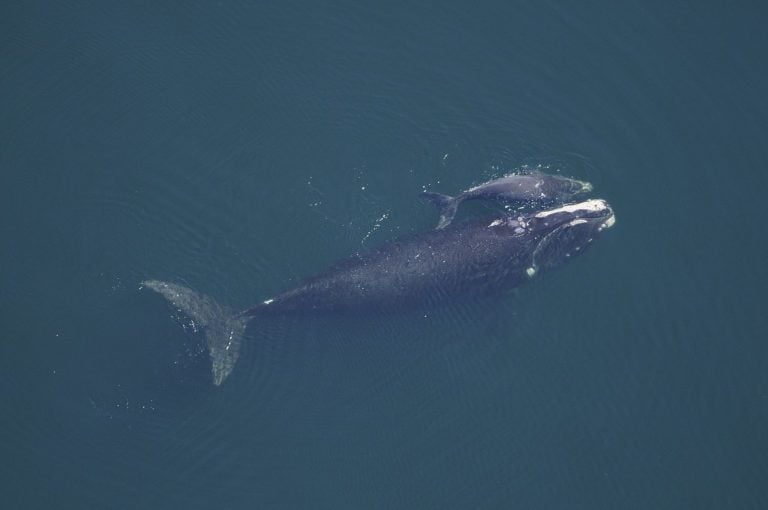
The North Atlantic right whale is one of our most endangered large whale species. They have been listed as endangered since 1970, and there are only around 380 of them left, according to the latest estimates from 2026. Every calf born to this beleaguered population with just 70 reproductively active females is precious. The annual right whale calving season is underway, and we are delighted to share some good news!
About North Atlantic Right Whales
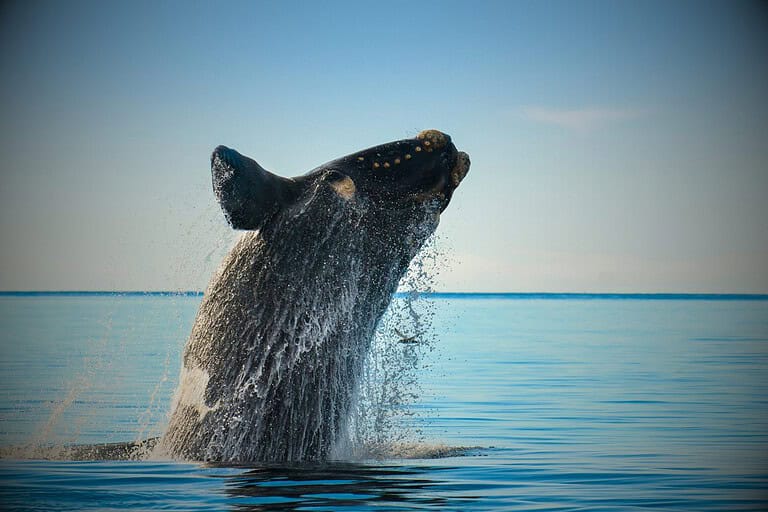
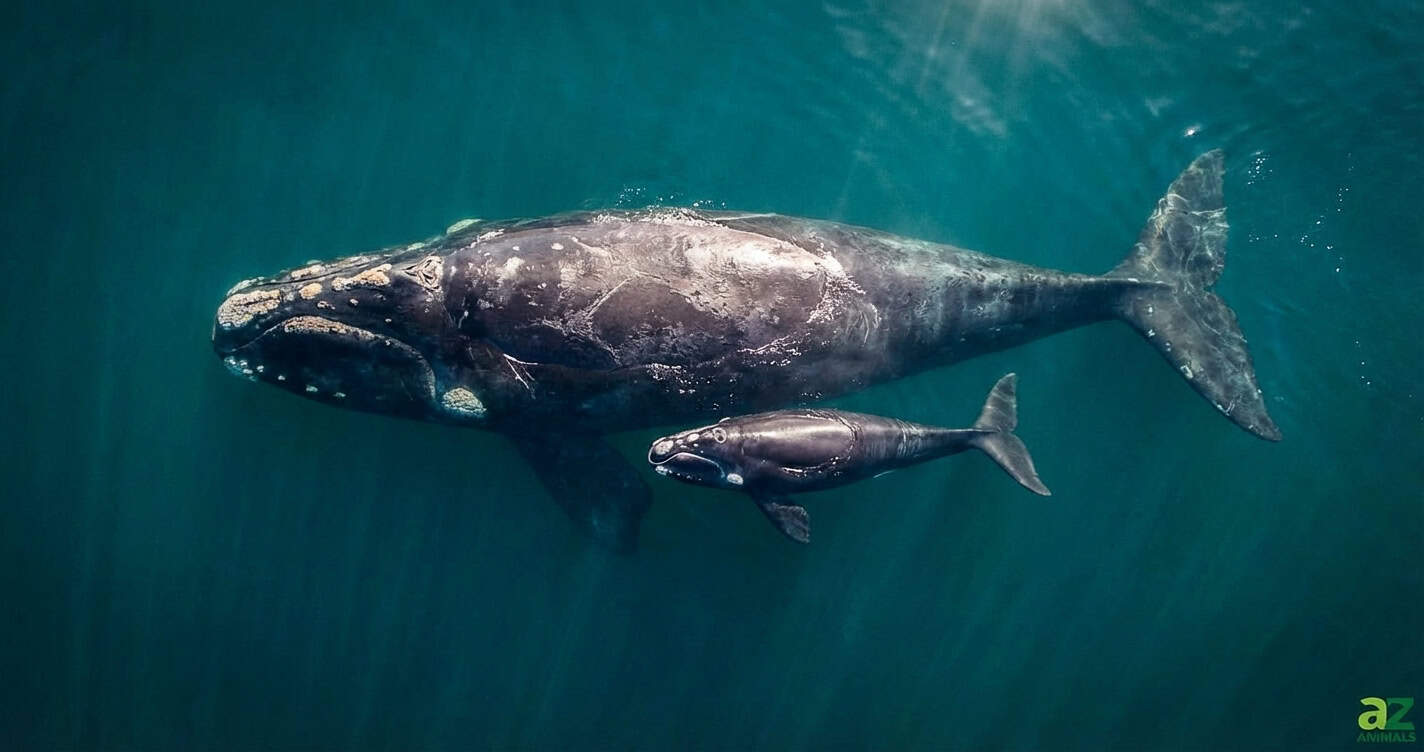
North Atlantic right whales (Eubalaena glacialis) are stocky baleen whales with no dorsal fins, a V-shaped blowhole, and broad, deeply notched tails. Adults can grow to lengths of 52 feet. On their heads, they have knobby white patches of rough skin, called callosities, which help identify individual whales.
When feeding, they open their mouths to take in large quantities of seawater and then use their baleen to filter out copepods and other zooplankton. They often gather in groups and can be seen breaching the surface before crashing back down into the water. However, they spend most of their time swimming just below the surface, with little of their bodies visible. These whales communicate using low-frequency moans, groans, and pulses.

North Atlantic right whales have unique callosities that aid identification.
©6381380/iStock via Getty Images
North Atlantic right whales are primarily found in Atlantic coastal waters on the continental shelf and migrate seasonally. They have been listed as endangered under the Endangered Species Act since 1970.
Monitoring North Atlantic Right Whales
The remaining North Atlantic right whale population is monitored by the North Atlantic Right Whale Consortium. Every identified North Atlantic right whale has an assigned four-digit number. If the whales also have distinguishing physical features or a strong story connecting them to a particular location, they also get a name. For example, Slalom (#1245) has a long, bumpy callosity that resembles a slalom ski course, and Giza (#3020) has a callosity that resembles the three pyramids of Giza. However, the whale that has caught our interest is Ghost (#1515), who has a callosity pattern that looks like a cartoon ghost with two dark areas for eyes. What’s more, this female whale disappears and reappears mysteriously, much like a ghostly apparition!
Ghost Has Her Ninth Calf at Fifty
North Atlantic right whales can likely live until they are at least 70 years old, but we still have a lot more to learn about their lifespan. The worrying news is that their lifespans now appear to be shorter – 45 years for females and 65 for males. Yet, despite the odds, Ghost has not only survived but has also become a mother once again at fifty years old.
She was spotted by volunteers from the Marineland Right Whale Project a half mile off Flagler Beach, Florida. More importantly, she had a new calf with her! The sighting was also recorded by the research vessel team from the Florida Fish and Wildlife Conservation Commission.
This is Ghost’s ninth calf. The very first time she was spotted, in 1985, she had a calf with her. Little is known about her first five calves, as they were not cataloged and may not have survived. Her three most recent calves, however, were all sighted in 2025. One of them, whale #4715, is also quite elusive. It was spotted with Ghost in 2017 in the waters of the Great South Channel, east of Nantucket, Massachusetts. The following year, it was in the Gulf of Mexico but was not seen again until 2021.
What Challenges Face the North Atlantic Right Whales?
Since 2017, more than 20 percent of the North Atlantic right whale population has become sick, injured, or killed. Their main causes of death are entanglement in fishing gear and collisions with boats and ships. Sadly, over the last 10 years, there have been more deaths than births.
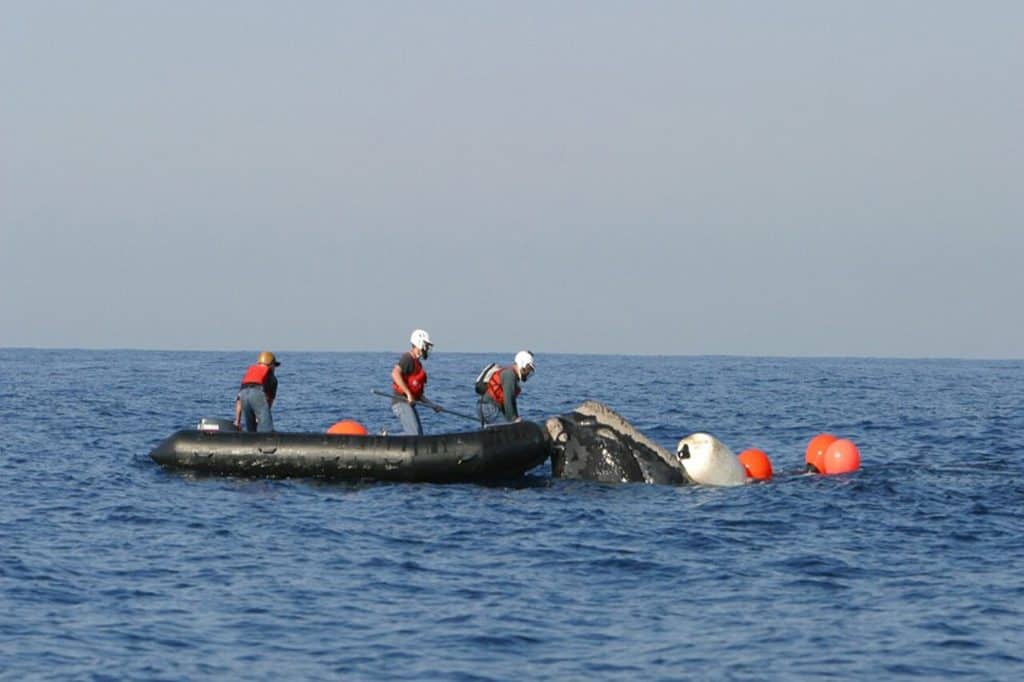
Entanglement in fishing gear is a danger for North Atlantic right whales.
© – Original
What’s more, the females are producing fewer calves each year. This makes it very hard for their population to recover. Normally, each female has a single calf every three to four years. Now, however, the females are only producing a calf every seven to ten years. This may be due to a combination of stress from vessel strikes (and noise), entanglements, and reduced prey availability as a result of climate change.
Around 50 new calves are needed each year to halt the species’ decline, but this goal is not currently being met. In 2023, there were just 12 births during the entire breeding season, which runs from November to April. The 2024 season was a little better with 20 calves recorded. In 2025, just 11 calves were recorded, but the 2026 season is looking more hopeful. So far, there have been 22 calves identified, making it one of the more successful seasons. That said, the only way to secure the success of this species is to reduce the mortality rates from vessel strikes and entanglements.