
Quick Take
- A giant lizard named after Godzilla turned up in a Missouri storm drain, and his reason for being there is stranger than you'd expect. See how Gojira was found →
- Missouri's exotic pet laws have a loophole that could make owning a monitor lizard perfectly legal, at least until it grows up. Check Missouri's ownership rules →
- A single country's role in the illegal monitor lizard trade reveals just how widespread the exotic pet pipeline really is. Explore the trafficking data →
“Monitor lizard” and “Missouri” aren’t two phrases you often hear in the same sentence. When the St. Louis County Animal Care and Control rescued a monitor lizard from a storm drain, they realized they had a Missouri mystery on their hands.
Monitor lizards are native to Africa, parts of Asia, Australia, and several islands in the Indian Ocean. How Gojira found his way into a U.S. city is now the big question. And, more so, how he found himself in a landlocked state. And while it’s not illegal to own a monitor lizard as a pet in Missouri, its presence could tell authorities more about the exotic pet trade.
Gojira Was Discovered in a Storm Drain in Affton
Affton, which is only 12.5 miles from the city center of St. Louis, is no stranger to reptiles. Overall, Missouri is home to approximately 74 reptile species. These include turtles, lizards, and snakes, with skinks among the most frequently sighted. However, none of these species includes monitor lizards. This is why it was so strange to see one in an Affton storm drain.
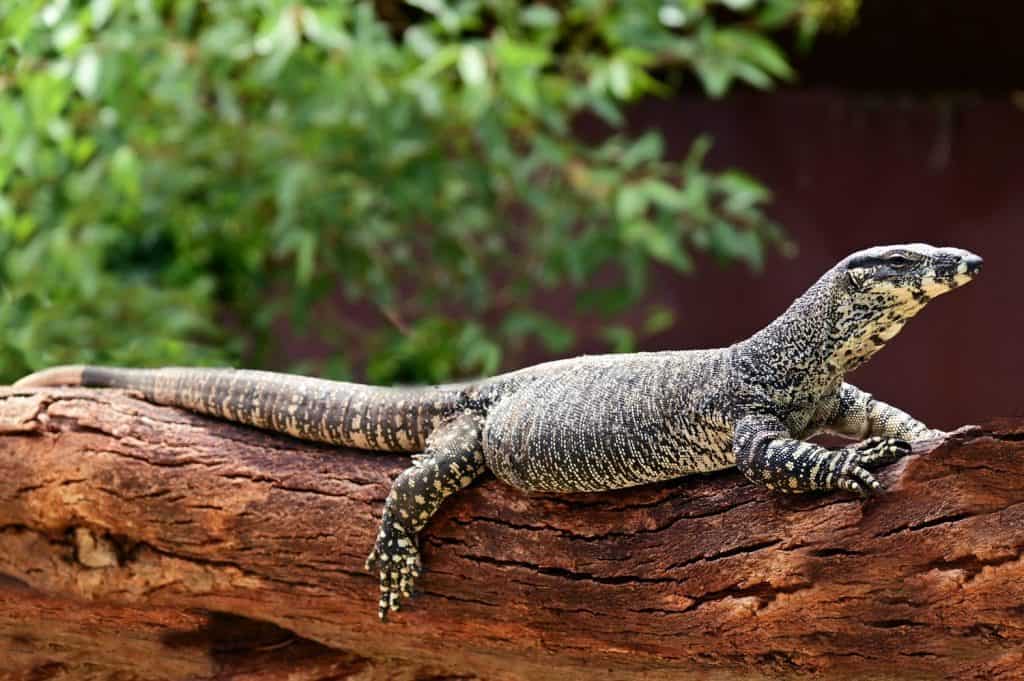
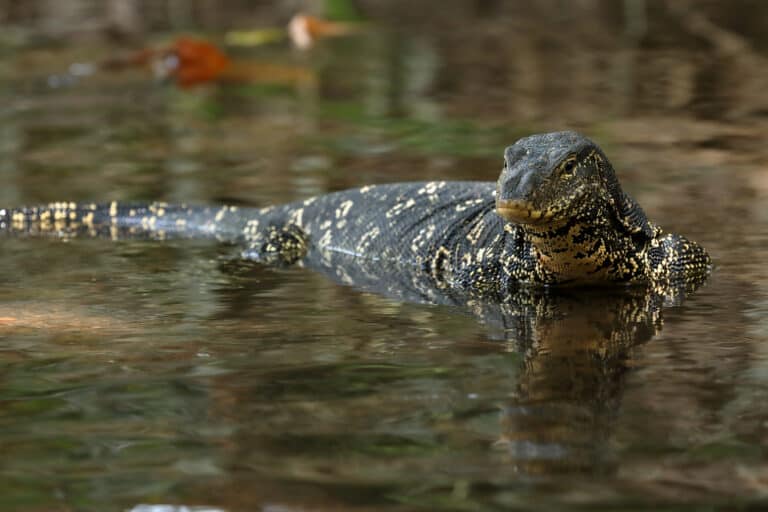
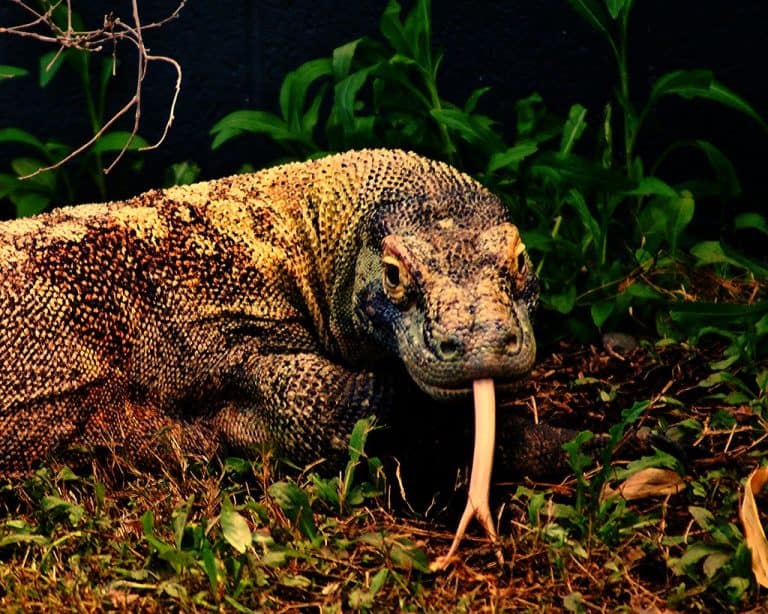
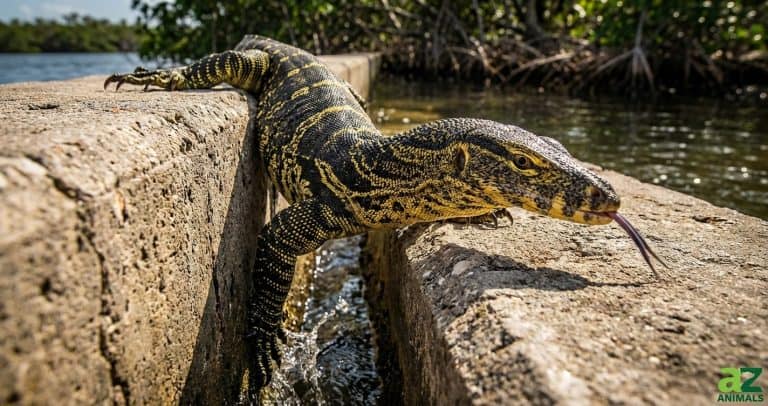
Asian monitor lizards can grow up to eight feet and weigh up to 50 pounds.
©ChameleonsEye/Shutterstock.com
Animal control immediately responded to the report on September 8, which claimed an unusual reptile was spotted along Niles Place in Affton. This residential area is a large suburban neighborhood near several small parks and just off a major roadway. It seems to be the last place anyone would find an exotic reptile, let alone a monitor lizard that can grow up to eight feet at full maturity.
Rescuers confirmed that Gojira, named for the Japanese spelling of “Godzilla,” is an Asian monitor lizard (Varanus salvator). He also has an exceptionally friendly demeanor, which is relatively characteristic of Asian monitor lizards. The fact that he was found in a storm drain is less mysterious. This species typically prefers low-elevation environments near water. In the wild, they’re often found near swamps, rivers, and lakes. Given the few dry days Affton experienced, it’s likely that Gojira was seeking a damp, shady spot.
Can Residents Own Monitor Lizards in Missouri?
Rules regarding monitor lizard ownership vary by U.S. location. Missouri does not prohibit ownership, but it does require that pet monitor lizards be under 8 feet. According to the Missouri State Statute 578.023 RSMo, “any dangerous or deadly reptile that exceeds eight feet in length must be registered with the local county law enforcement agency.” Therefore, whoever owned Gojira was well within the legal limit of ownership.
However, there is a catch. While Gojira is not eight feet long yet, he will average this size once fully grown. For this reason, Asian monitor lizards are not usually on Missouri’s approved reptiles list.

Generally docile, monitor lizards make good pets for experienced reptile handlers.
©Chris Page, CC BY-SA 3.0, via Wikimedia Commons – Original / License
Asian monitor lizards are required to be registered with the local sheriff’s department. Since Gojira’s owner is unknown, there’s a chance he may never have been registered, or even legal in the first place. For now, Gojira is on a five-day stray hold. If no one comes forward, officials will release him for adoption since he’s under the legal limit for exotic pet ownership. As a backup plan, Gojira may also be transferred to a reptile rehabilitation center or sanctuary.
Sadly, Asian Monitor Lizards Are Common in the Exotic Pet Trade
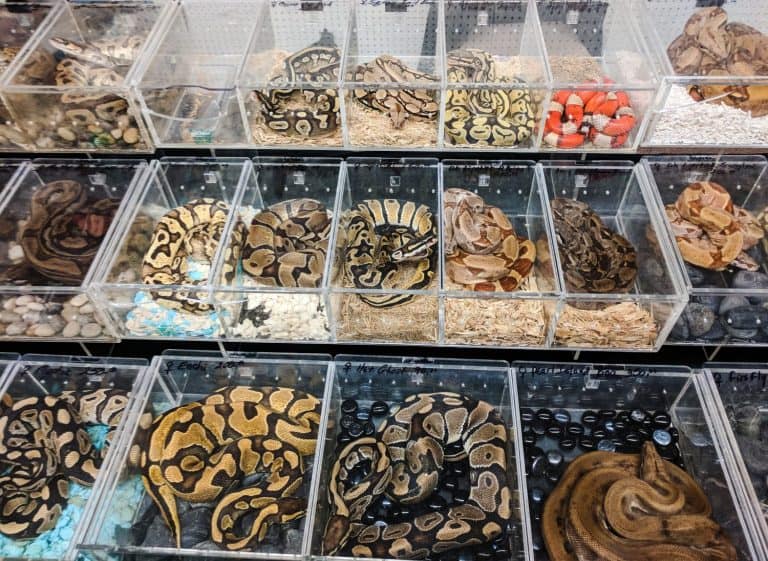
The exotic reptile trade does not care about legality. And when it comes to Asian monitor lizards like Gojira, the more exotic-looking the lizard, the higher the price. Rescuers may never know how Gojira came to be in Affton, but there’s heavy evidence to support many more lizards just like him making their way into the U.S. illegally.
Many Asian monitor lizards are poached from their native homes. They’re trafficked across country borders, where they become invasive species at their final stop. In 2025, a study pointed out that British Columbia has a significant role in the illegal trafficking of exotic pets. Between 2011 and 2021, experts discovered that 14,000 live monitor lizards across 31 species had been trafficked into the country.
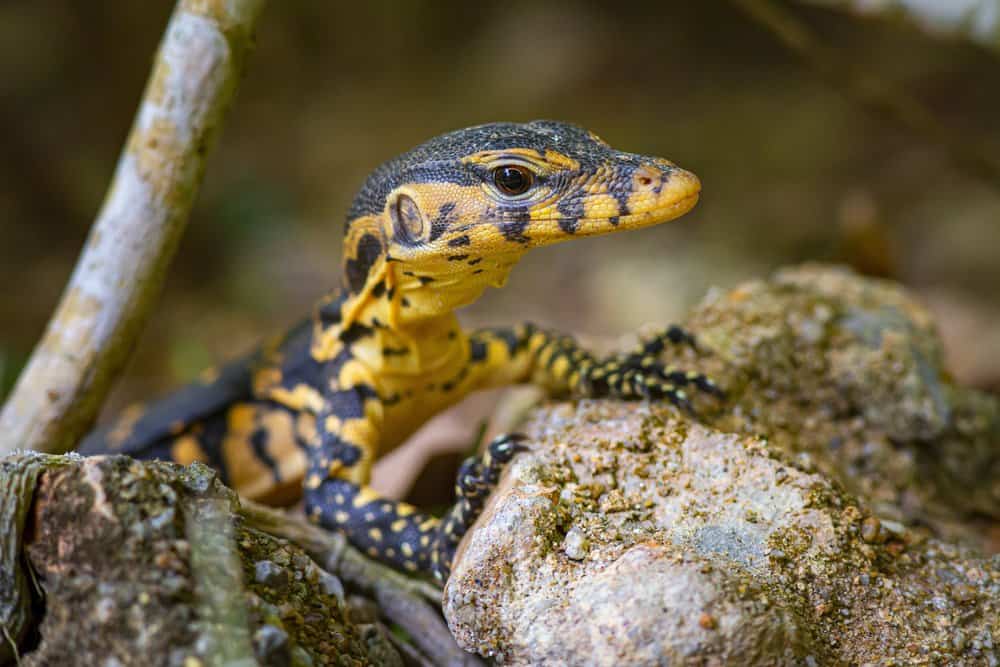
The more unique-looking the monitor lizard, the higher the payout on the illegal pet trade market.
This puts Canada on par with the U.S. and the European Union in terms of the severity of the illegal pet trade. Monitor lizards are also extremely high on this list, as species such as the blue tree monitor and Banggai Island monitor often command high prices. However, the most surprising statistic is that up to 69% of these monitor lizards were caught in the wild. While Gojira’s future looks bright, many of his kind are not so lucky.