
Quick Take
- Setting your snake's enclosure to one steady temperature feels like the safe choice, but it may actually be the most harmful thing you can do. See why uniform heat harms →
- Without the right setup, food can literally begin spoiling inside your snake. The signs are easy to miss until it's too late. See the digestive dangers →
- Snakes have a hidden way of fighting illness that only works if you've set up their enclosure correctly, and most owners never even know it exists. Explore immunity and setup →
- One extremely common heating tool is banned by experienced keepers for a reason most beginners discover the hard way. Find safer heating tools →
A snake enclosure isn’t just a place to sleep, hide, and eat — it is the environment that controls nearly every aspect of your pet’s health. Unlike mammals, snakes can’t generate their own body heat, so they depend entirely on the temperature of their environment to digest food, fight off illness, stay active, and carry out their normal daily behaviors. That’s why one of the most important parts of any enclosure isn’t the decorations or the substrate — it’s creating a proper temperature gradient that gives your snake the freedom to warm up or cool down whenever it needs to.
Understanding Snake Thermoregulation
Thermoregulation is simply the process of keeping the body at the right temperature for everything to work properly. It’s almost like an animal’s internal thermostat, but reptiles and mammals manage body temperature in very different ways.

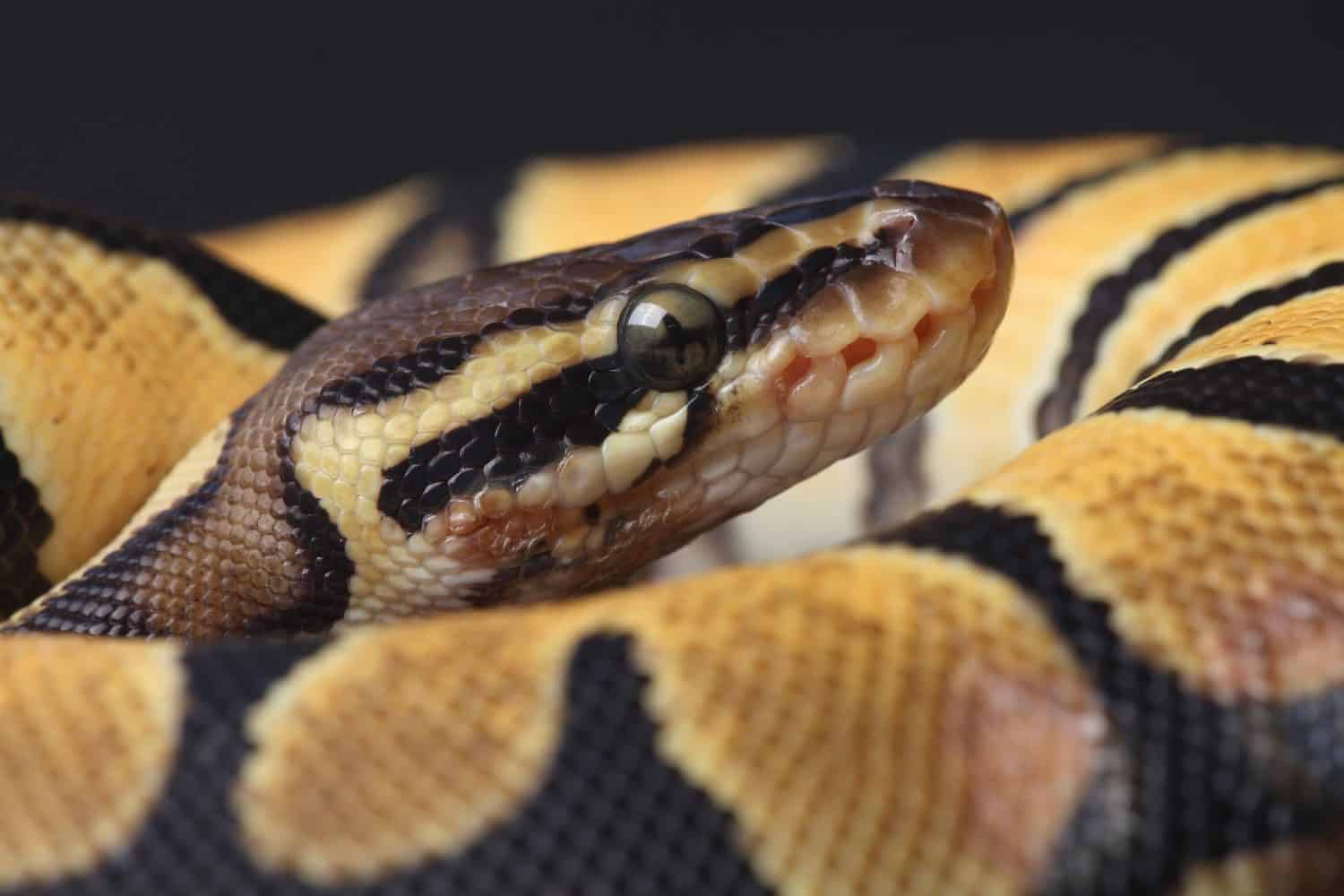
Snakes will often flatten their bodies out so they can absorb as much sun as possible when basking.
©Matt Jeppson/Shutterstock.com
Humans, dogs, cats, and other mammals are endotherms and generate their own body heat. When we get cold, we shiver; when we get hot, we sweat or pant. This requires a lot of energy, so mammals have to eat frequently.
Snakes and other reptiles, on the other hand, are ectotherms. They can’t warm themselves internally or cool themselves down the way mammals can. Instead, their body temperature depends almost entirely on the environment around them. In the wild, a snake moves between sunny rocks, shade, and underground burrows to regulate its temperature. If it gets too cold, its body slows down and it becomes sluggish. If it gets too hot, it has to find shade to avoid overheating.
In captivity, it’s up to you to recreate a similar range of hot and cold spots so your snake can choose what it needs.
Why Every Snake Enclosure Needs a Temperature Gradient
A healthy snake enclosure should never be a single temperature. Instead, it needs a temperature gradient with distinct warm and cool areas so your snake can regulate its own body temperature throughout the day. Although heating an entire enclosure to one steady temperature may seem simpler, it actually takes away a snake’s only way to control its body temperature.
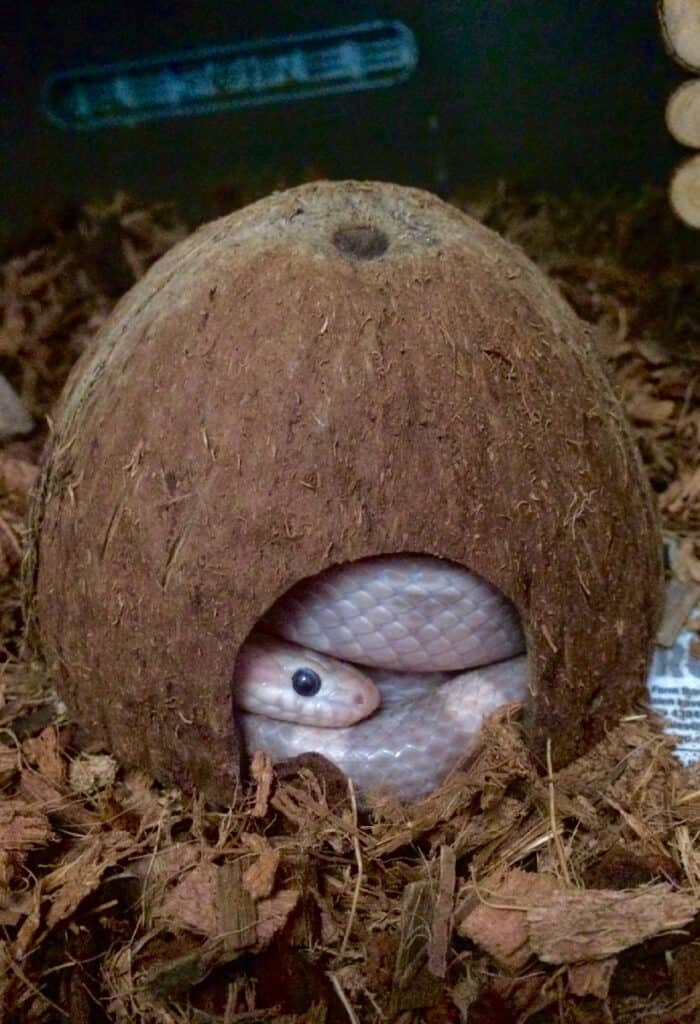
Excessive hiding may be a sign that a snake is not feeling well.
©Andy Harvie/Shutterstock.com
A proper snake setup requires a temperature gradient tailored to the specific species. This includes a warm basking side to help the snake digest its food, and a cool side where the snake can go to lower its body temperature when needed.
Place essential items, such as hides and water bowls, on both sides of the enclosure. This allows your snake to comfortably move between warm and cool areas as its needs change.
What Happens Without a Temperature Gradient?
Without separate warm and cool zones, a snake cannot regulate its body temperature, which severely impacts nearly every aspect of its health.
For example, snakes need heat to digest food. If the enclosure is too cool, their digestion slows down, and food can spoil inside the snake’s stomach. This often causes regurgitation, which leaves the snake weak and dehydrated. On the other hand, if the enclosure is too hot, the snake will constantly pace and search for relief, resulting in anxiety and exhaustion.
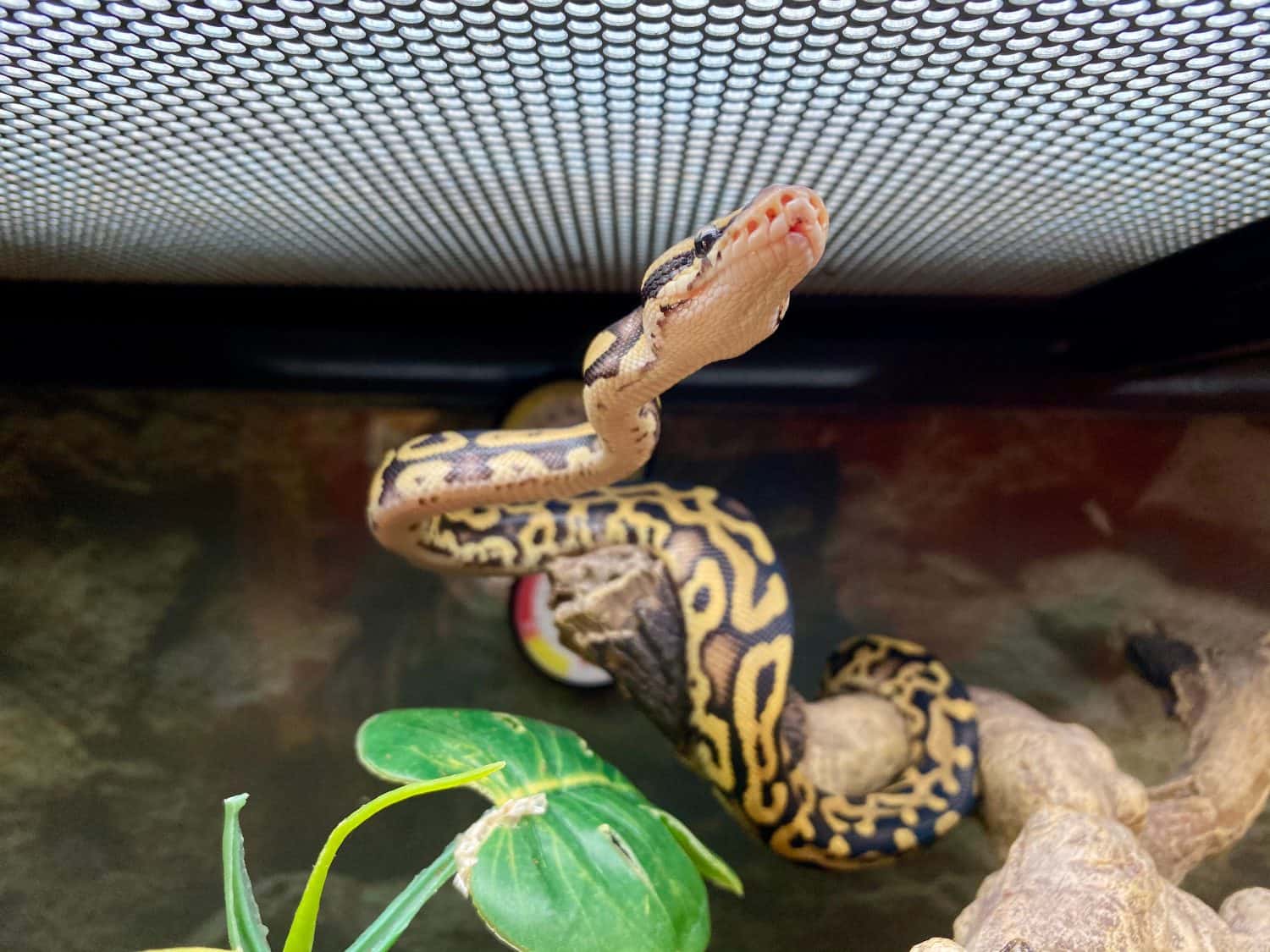
It’s important to make sure your snake cannot reach the bulb of a heat lamp.
©Photohobbiest/Shutterstock.com
Without a proper temperature gradient, a snake’s immunity will also be weakened. While mammals fight illness with an internal fever, snakes must move to a warmer area to create a “behavioral fever.” Without extra warmth, they cannot boost their immune system to recover from illness or injury.
Moreover, a snake that cannot escape extreme temperatures experiences constant stress. Over time, this stress leads to poor appetite, a weak immune system, and declining overall health.
The Right Tools Make All the Difference
Creating a safe temperature gradient requires more than just a heat source — it also requires the right monitoring and control.
Use digital thermometers to measure and track temperatures on both the warm and cool sides of the enclosure. Avoid analog dial thermometers, as these can be off by as much as 5 to 20 degrees Fahrenheit. Digital thermometers, meanwhile, are typically accurate to within a few degrees, making them a much more reliable choice.
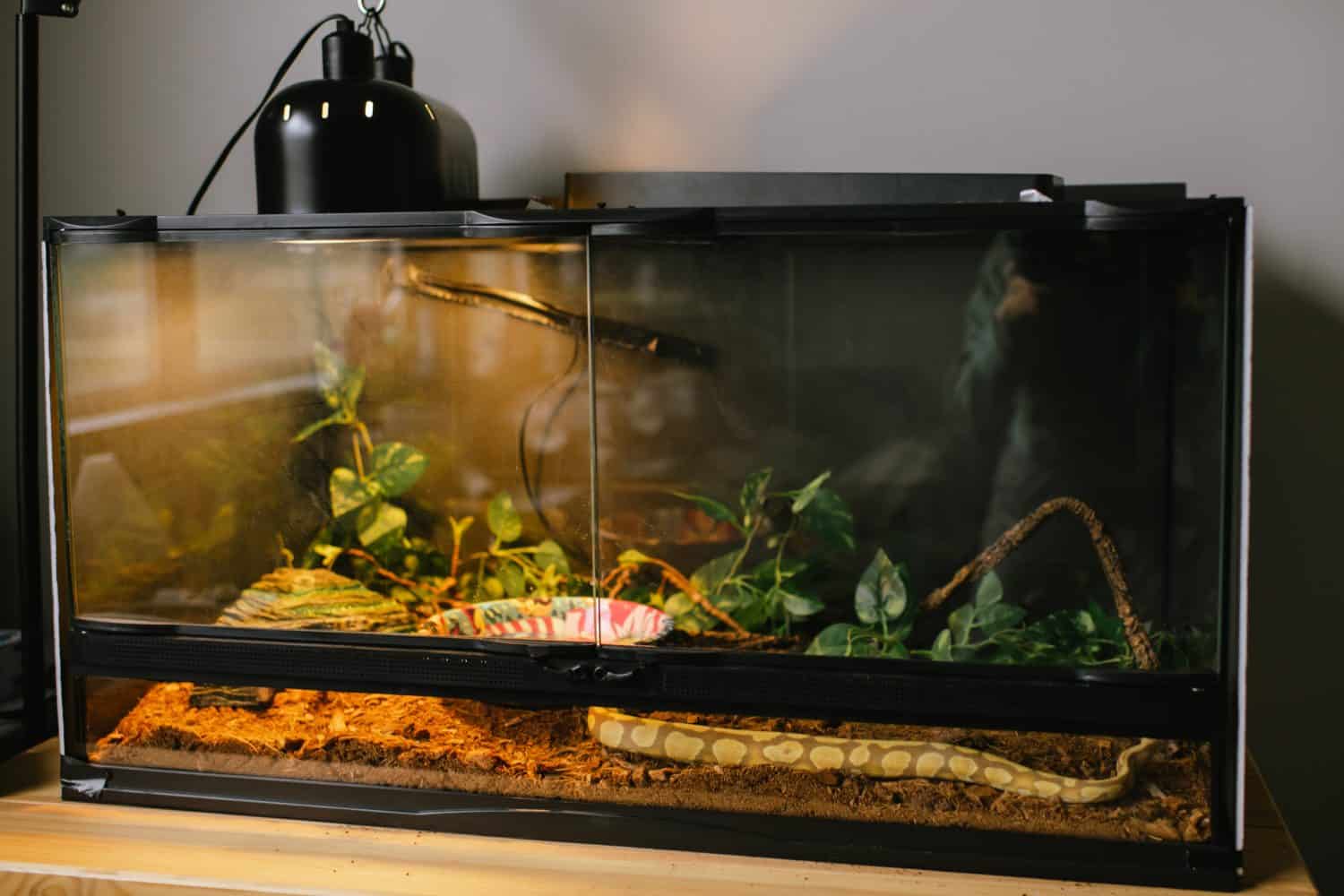
Snakes need a gradient of different temperatures to stay healthy.
©Cavan-Images/Shutterstock.com
Any heating device placed in the enclosure should also be connected to a thermostat. While a thermometer only measures temperature, a thermostat actively controls it to prevent dangerous overheating.
Finally, never use plug-in heat rocks; they are widely considered unsafe because they frequently malfunction and can cause severe burns, as reptiles lack proper heat sensors on their bellies. Instead, use overhead heating or thermostat-controlled under-tank heat mats. If you use a heat lamp, always install a safety guard or screen to prevent your snake from touching the bulb.