
Quick Take
- Goannas are Australian monitor lizards that wander into schools and urban spaces, drawn by food smells and warmth.
- There are over two dozen goanna species in mainland Australia, occupying diverse habitats from woodlands to deserts.
- Human activity and urban growth bring goannas into contact with people; they can be both dangerous and helpful, and are best left alone.
If you haven’t heard of a goanna before, think VERY LARGE LIZARD. It’s a general name for several varieties of monitor lizard that live in Australia. And like so many, shall we say, “startling” species in the country, it somehow manages to find its way into people-spaces from time to time… including schools. So, does it pose a danger to Australian children? In this article, we’ll examine two Instagram reels featuring goannas: one that raises concerns and another that offers reassurance.
What Exactly Is a Goanna?
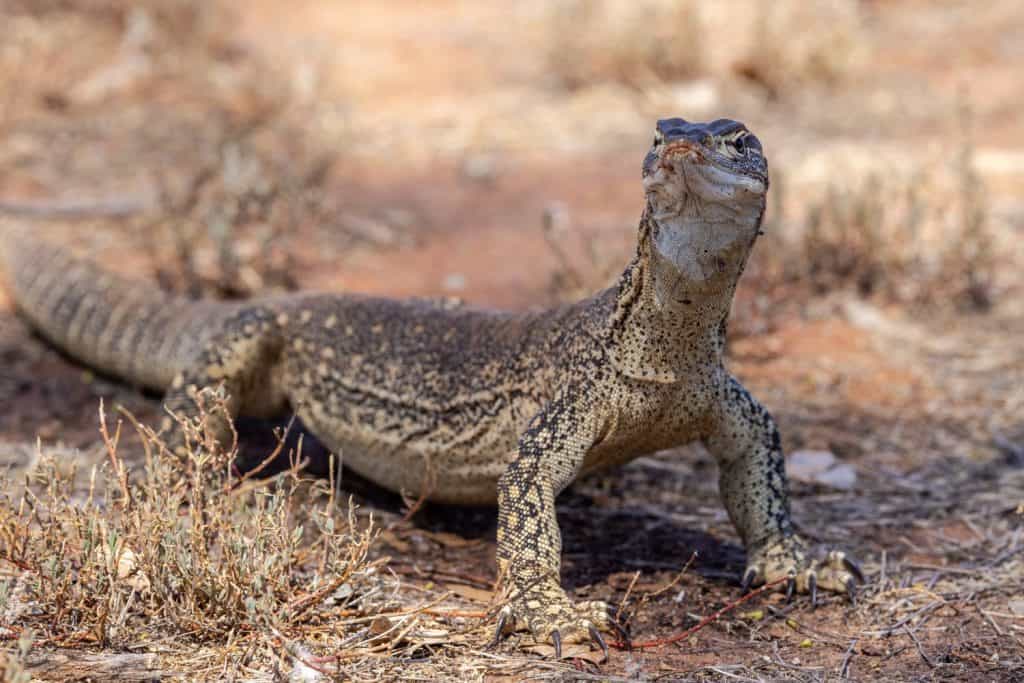
Australian Sand or Goulds Monitor
©Ken Griffiths/Shutterstock.com
Goannas are lizards of the genus Varanus, known elsewhere as monitor lizards. Australia has more than two dozen species, from small burrowers to long, powerful hunters that roam trees and open ground. The name “goanna” developed when early European settlers reapplied or misheard the word “iguana” for these unfamiliar reptiles. Their long history on the continent has made them a familiar presence in both the landscape and the stories of the people who live alongside them.
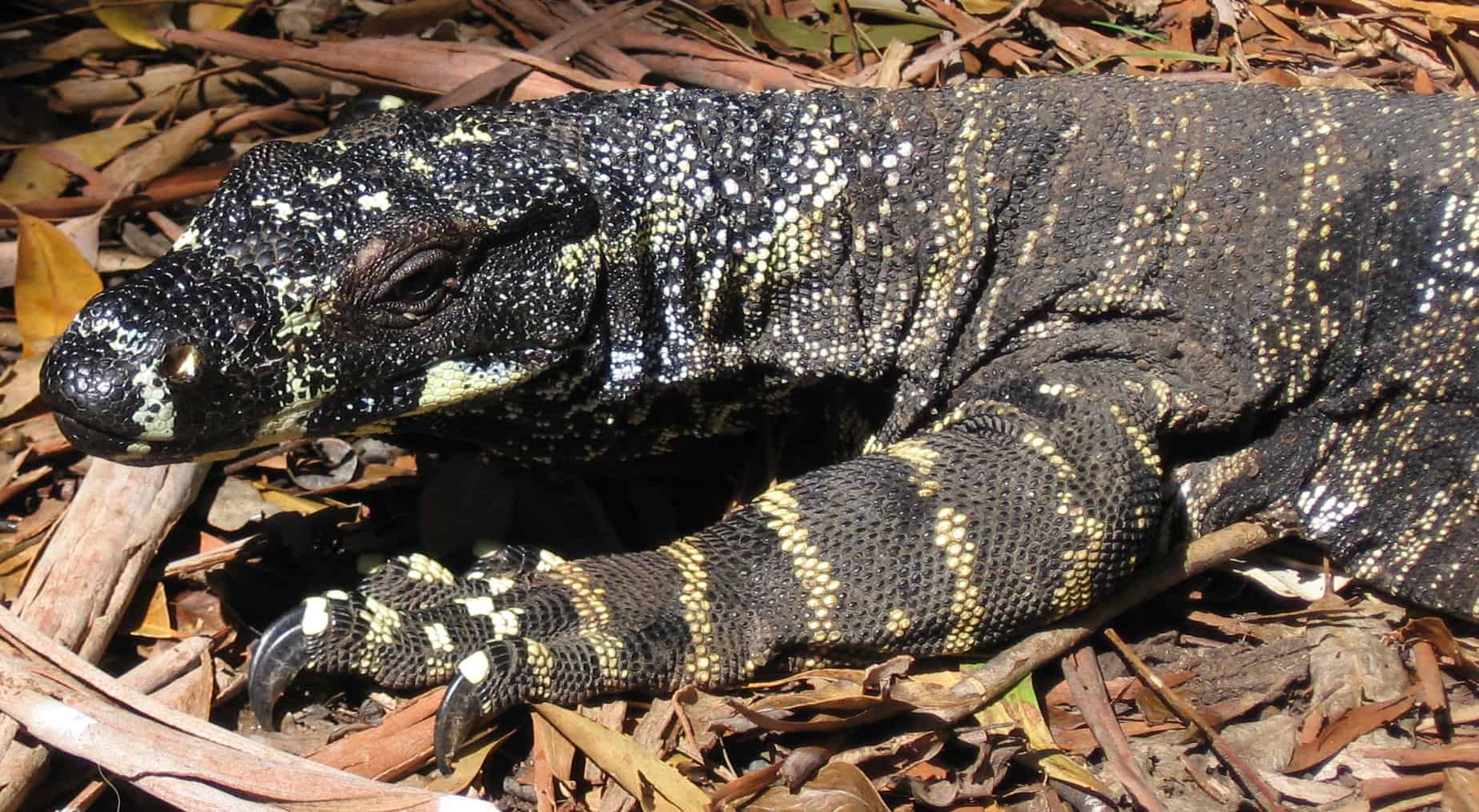
Goannas vary greatly in size: the short-tailed monitor grows to only about 8 inches, while the perentie, Australia’s largest lizard, can exceed 8 feet in length and weigh up to 40 pounds. The lace monitor, a common tree-dwelling species in the eastern states, can reach 6.5 feet long. Young goannas tend to have slimmer bodies and brighter patterns that help them hide among branches and shrubs. As they mature, their colors fade, and their bodies, claws, and tails grow thicker and stronger, giving adult goannas the power and presence they’re known for.
Where Are Goannas Found?
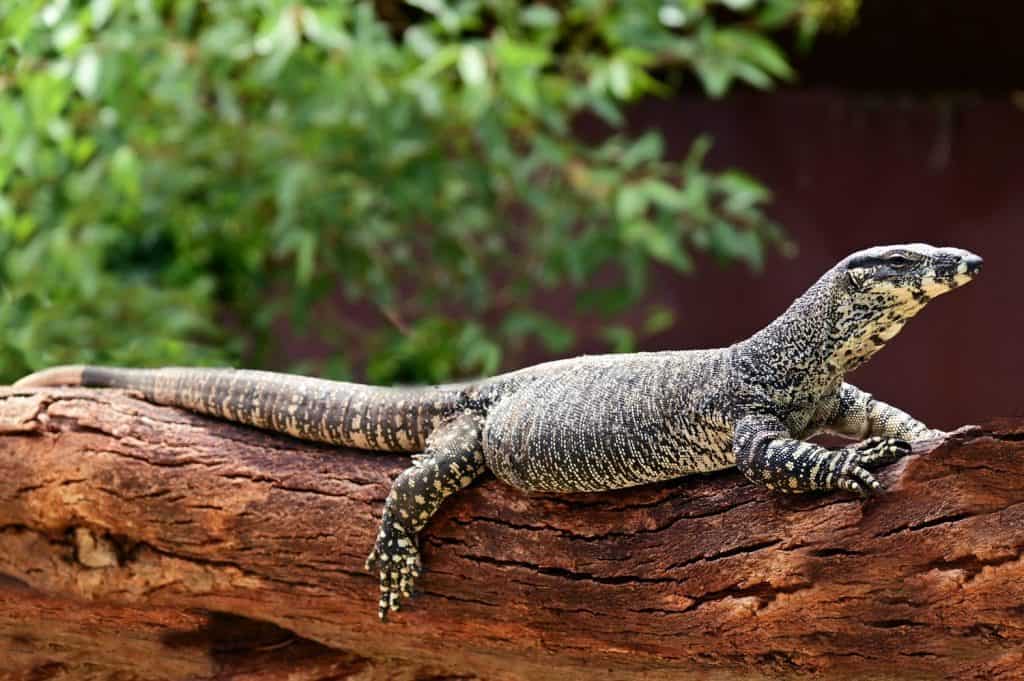
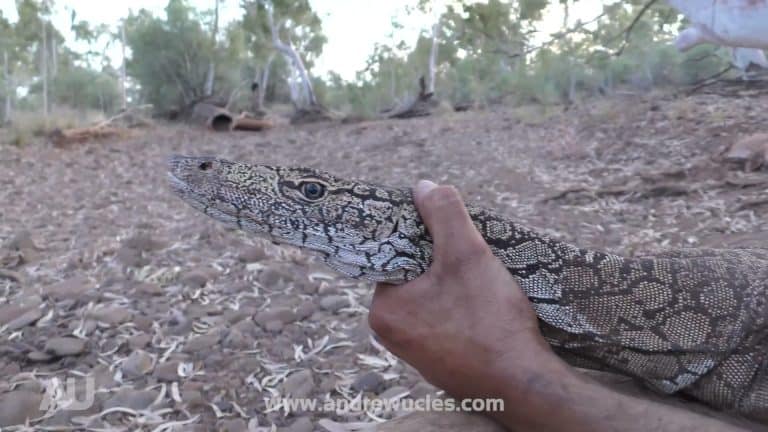
One type of goanna is the perentie. It is one of the largest lizards on earth, after the Komodo dragon, Asian water monitor, and crocodile monitor.
©ChameleonsEye/Shutterstock.com
Goannas are found across almost all of mainland Australia, from thick eastern rainforests to the dry red deserts of the interior. They do not live naturally in Tasmania but are common on the mainland and nearby islands. A few related monitor lizards live in Southeast Asia as well. This wide range is possible because different species use different habitats.
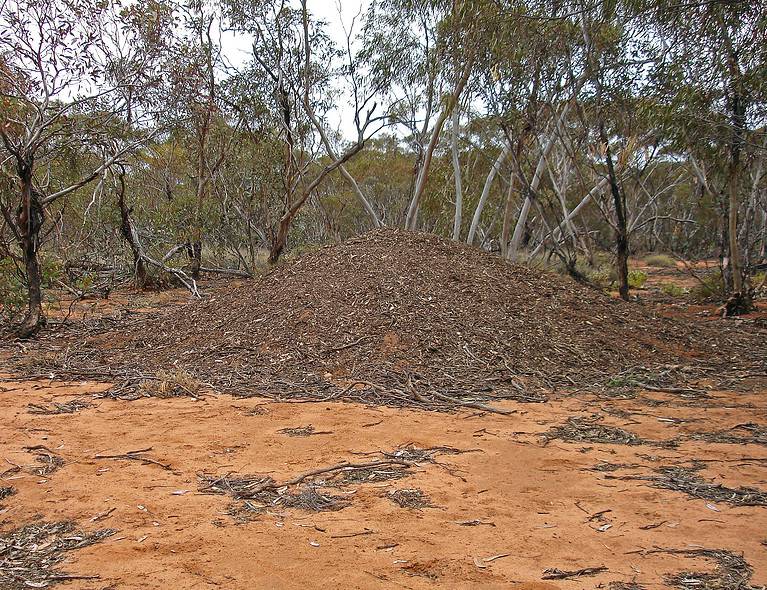
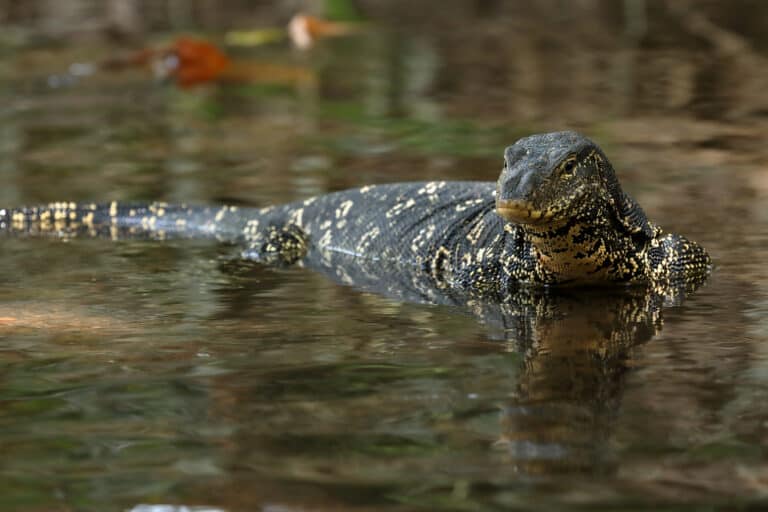
Some species, such as the lace monitor, spend much of their time in woodlands and tall gum trees. Others, such as the perentie, live in rocky outcrops and sandy plains in the arid interior. Water-loving species patrol riverbanks and wetlands, while smaller monitors hide in shrubs and termite mounds. Wherever they live, goannas use their sharp claws and strong limbs to dig, climb, or swim as needed.
The Schoolyard Visit Explained
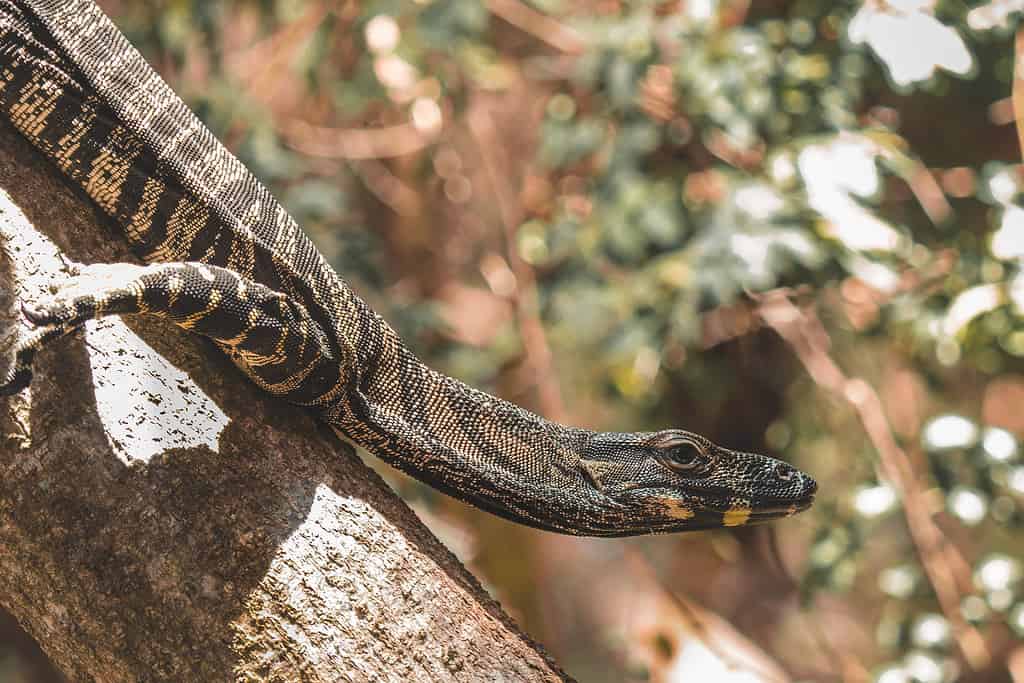
Australian native goanna or monitor lizard.
In this video, reptile specialists remove an unusually large goanna from a pile of construction supplies along a schoolyard fence. Goannas are opportunistic carnivores that normally eat insects, spiders, small reptiles, birds, eggs, and small mammals, and the biggest species can even take larger prey when the chance arises. They also scavenge carrion, using their long, forked tongues to sample scent in the air and track down food.
This particular goanna, however, had discovered an easier source of meals. It had begun approaching children for handouts and scavenging lunch scraps, and the steady supply of human food explained why the catchers were amazed by how overweight it had become. The team relocated the lizard to the bush, where it can return to a natural diet and hopefully slim down.
Are Goannas Dangerous?
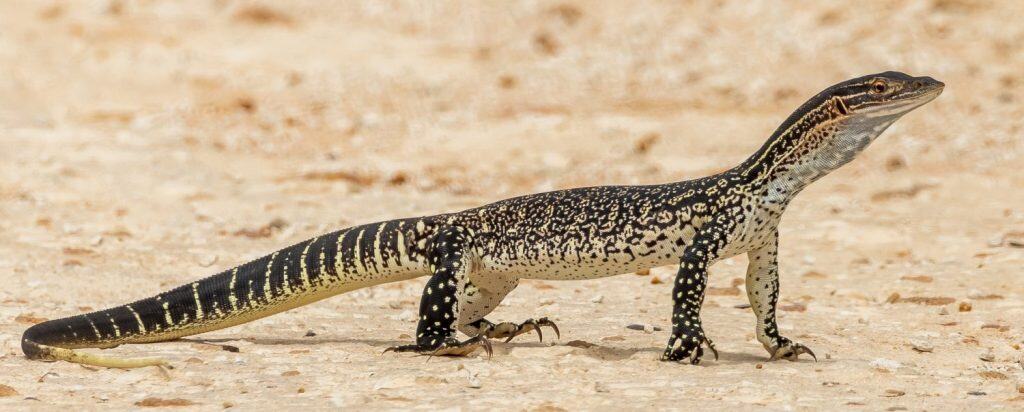
Sand Goanna in Victoria, Australia
©Imogen Warren/Shutterstock.com
For many years, people believed infections from goanna bites came only from bacteria in the lizard’s mouth. More recent research suggests that many monitor lizards, including Australian goannas, have venom glands linked to their teeth. The venom is not considered life-threatening to humans, but it can increase pain, swelling, and bleeding after a bite. Most of the real risk comes not from venom but from the animal’s defensive behavior.
A startled goanna often climbs the nearest tall object, which can be a person who happens to be standing too close. Its claws can leave long scratches, and its heavy tail can deliver strong blows. If cornered, a goanna may puff up, hiss, lash its tail, or bite, and the teeth can tear skin deeply enough to require medical attention. Although they are powerful predators, the danger to healthy adults is generally low as long as no one tries to catch, crowd, or tease them. Most goannas prefer to flee to a tree, log, or burrow when given the chance.
Sometimes a Goanna Saves the Day
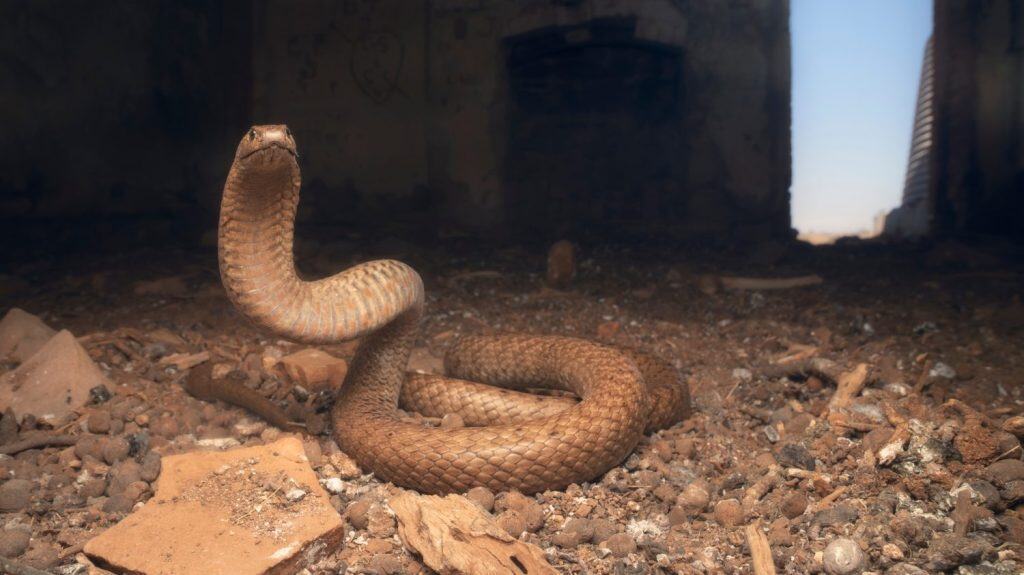
The western brown snake is one of the deadliest in Australia.
©Kristian Bell/Shutterstock.com
In this video, a heroic goanna battles a larger and highly venomous western brown snake, one of the most deadly snakes in the country. Moments like this show just how bold and capable these reptiles can be when faced with danger. Winning the battle, the goanna eats his prize and, in the process, protects the humans and kangaroos at a sanctuary. So, perhaps having a goanna or two patrolling the perimeter isn’t such a bad idea!
What to Do if You Encounter a Goanna
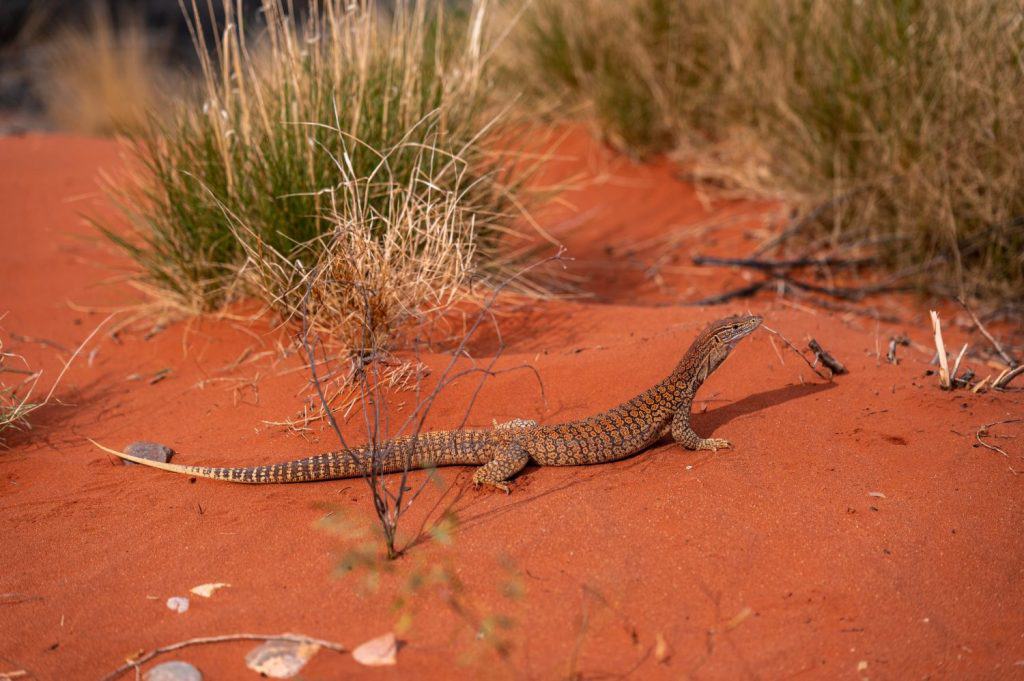
A sand goanna in the Northern Territory, Australia.
©Juergen_Wallstabe/Shutterstock.com
When a goanna wanders across a yard or playground, the safest response is to give the lizard room to leave. People should keep children and pets at a distance, close doors where possible, and simply wait for it to move on. These encounters are usually brief, and the animal will leave quickly once it feels unthreatened. Problems usually arise when someone blocks its retreat, tries to feed it, or follows it for photos. If the animal seems stuck or unable to find an exit, local wildlife rescue groups can offer guidance on how to encourage it toward a safe escape path without stressing or injuring it. Giving a goanna space is always the easiest and safest option for everyone involved.
Conservation and Human Interactions
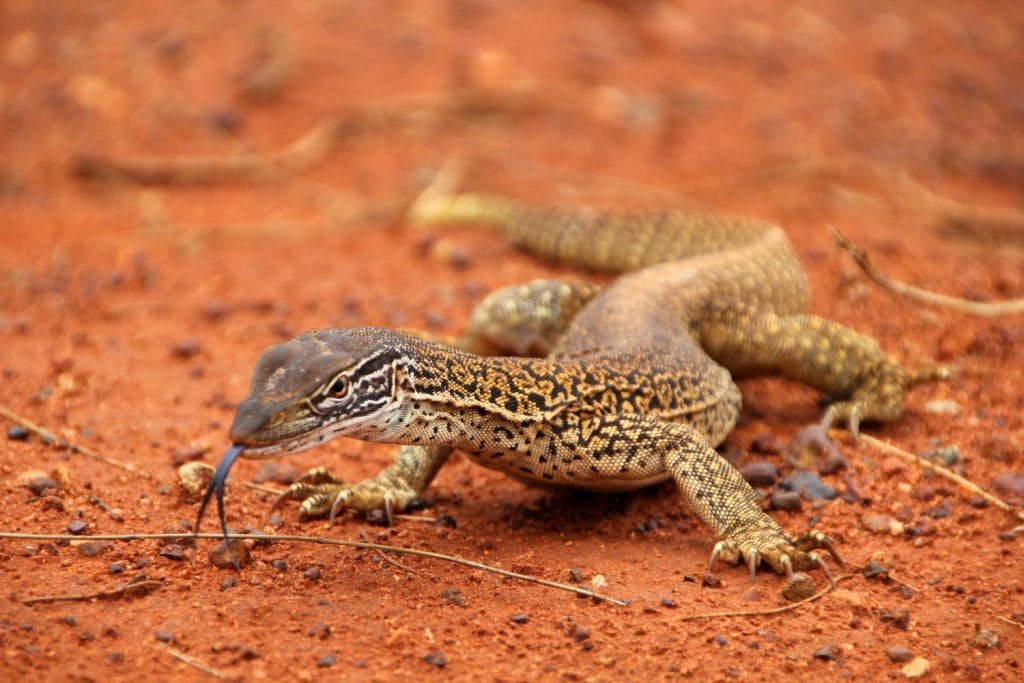
A big sand goanna in the Australian desert.
©Little Adventures/Shutterstock.com
As a group, goannas are not considered globally endangered, but some species face serious local pressure. Clearing of forests, expansion of roads, and spreading of suburbs remove nesting sites and increase the risk of roadkill. Poisoned baits left out for invasive pests can also harm scavenging monitors. In some regions, introduced predators such as foxes compete with goannas for food or attack young lizards. Large species such as the lace monitor and perentie still have healthy populations in many areas, helped by national parks and wildlife laws that protect native fauna.
People can reduce conflict by securing rubbish bins, removing outdoor pet food, and keeping dogs under control so they do not chase reptiles. Simple changes like these make it less likely for goannas to associate homes or playgrounds with easy meals. When goannas are left to go about their business, they help control rodents, other prey animals, and, as we’ve seen, snakes. Their presence supports the health of local habitats, as they play a significant role in keeping ecosystems in balance.
A Part of Australian Culture
Beyond their ecological role, goannas hold a deep place in Australian culture. In many Aboriginal traditions, they appear in creation stories as persistent, resourceful animals that help shape the land. Their strength, sharp senses, and ability to survive in harsh environments have made them enduring symbols across the continent. Today, goannas continue to appear in artwork, community emblems, and even sports mascots, reflecting the respect that many Australians have for these powerful reptiles. Whether encountered in the wild or woven into cultural stories, goannas remain a meaningful part of Australia’s identity. So, when a goanna visits a school, it serves as a reminder that people share this land with some of its most ancient inhabitants.