
Courting is as unique to a species as dietary habits or dwelling. Some mating rituals seem almost aggressive, while others are dance-like and graceful. They can even be beautifully intimate, mimicking a real-life romance rather than just a reproductive instinct. The mating ritual of one species is a combination of all three, and it’s an animal you’d never expect: a slug.
In this Instagram video by @theupbeetgardener, two leopard slugs are engaged in an act that remains somewhat mysterious to experts. However, there’s something oddly romantic and mesmerizing about it, albeit a little unnerving. Here’s what slug mating entails, and why it’s so fascinating to witness.
Two Leopard Slugs in Love
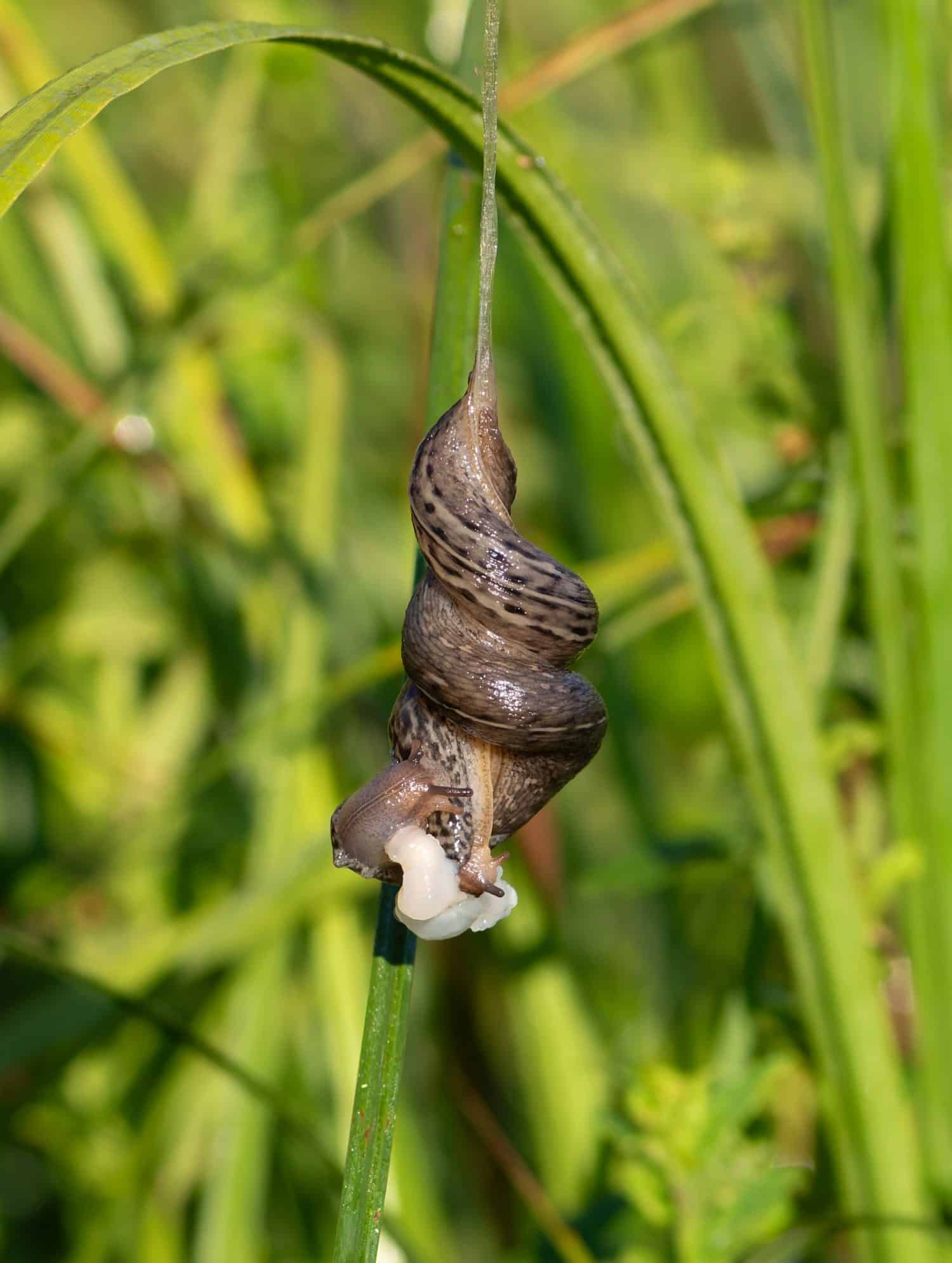
Leopard slugs, or Limax maximus, have one of the most unique reproduction rituals of all the slug species. As unappealing as it sounds, their courting begins with a slime trail. One leopard slug follows the other to a high point —typically a wall, a tree branch, or, in this video, a planter. Then, the two perform a gravity-defying stunt. The slugs hang by one shared mucous strand, intertwining their bodies around one another as they dangle mere inches from the ground.
In rare cases, some leopard slugs may only mate once in their lifetime.
©MMCez/Shutterstock.com
This close intimacy has stumped experts for some time. Other species, such as garden slugs, stab one another, injecting hormones when they’re side-by-side. These hormones boost both slugs’ chances of fertilization, preventing the other from backing out mid-mating ritual. However, leopard slugs remain intertwined while dangling in the air without threat aggression, a phenomenon that remains unexplained. Some believe the art of seduction (slug-style) could be at play, with this closeness also preventing the other slug from leaving. Instinct drives the desire to mate in the animal kingdom, and slugs will do whatever it takes to ensure their survival.
Slugs Are Both Male and Female
Slugs are hermaphrodites, which means they carry both male and female sex organs. This fact becomes even clearer toward the end of their mating ritual, which is also captured in the Instagram video. As the slugs twist and turn around one another, a small organ emerges from both of their heads. This prompts the penile exchange, during which a flower-like organ is responsible for producing sperm. The two connect, and the sperm transfer begins. This intricate dance, known as “flowering,” fertilizes both slugs. They remain locked and loaded, sometimes for hours, before finally separating. This mating ritual typically happens at night, which is why so few have seen it.
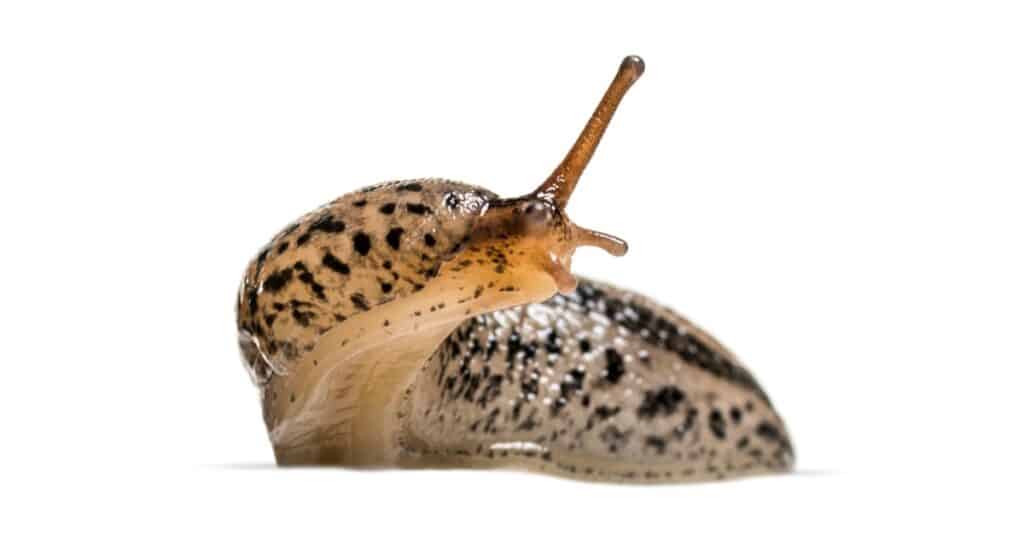
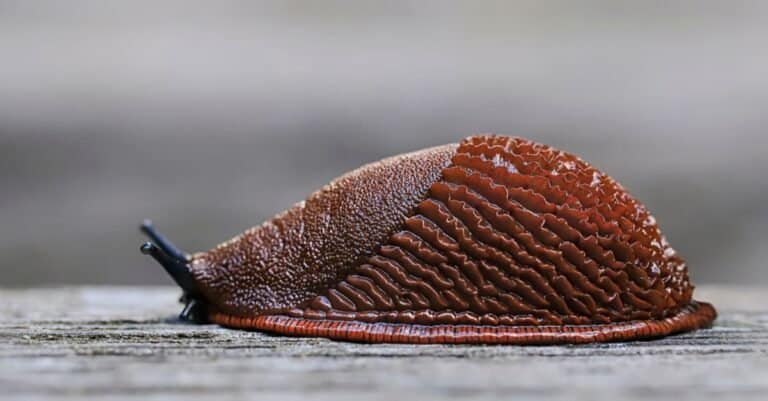
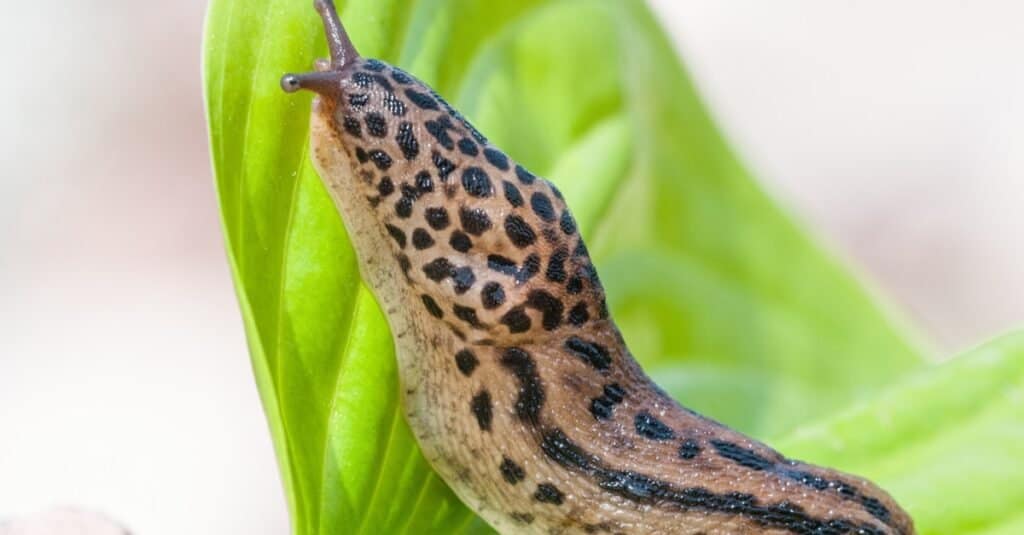
Limax maximus means “biggest slug” and is known by the common names great grey slug and leopard slug.
©Eric Isselee/Shutterstock.com
When the slugs are done mating, both penises retract. The slugs separate, typically with one consuming the mucous rope they previously dangled from. Afterwards, you’d never guess anything happened, except for a trail of slime where the two slugs departed. Leopard slugs can mate several times in their lives, but in rare cases, they may do so only once or twice, making this act even more sacred. They store sperm and eggs for long periods, waiting for a mate to come along and serve as a mutual fertilizer. Their non-binary nature makes this slightly easier, as neither one needs to worry about the sex of their partner. In some instances, slugs may switch roles and make multiple sperm transfers to ensure fertilization.