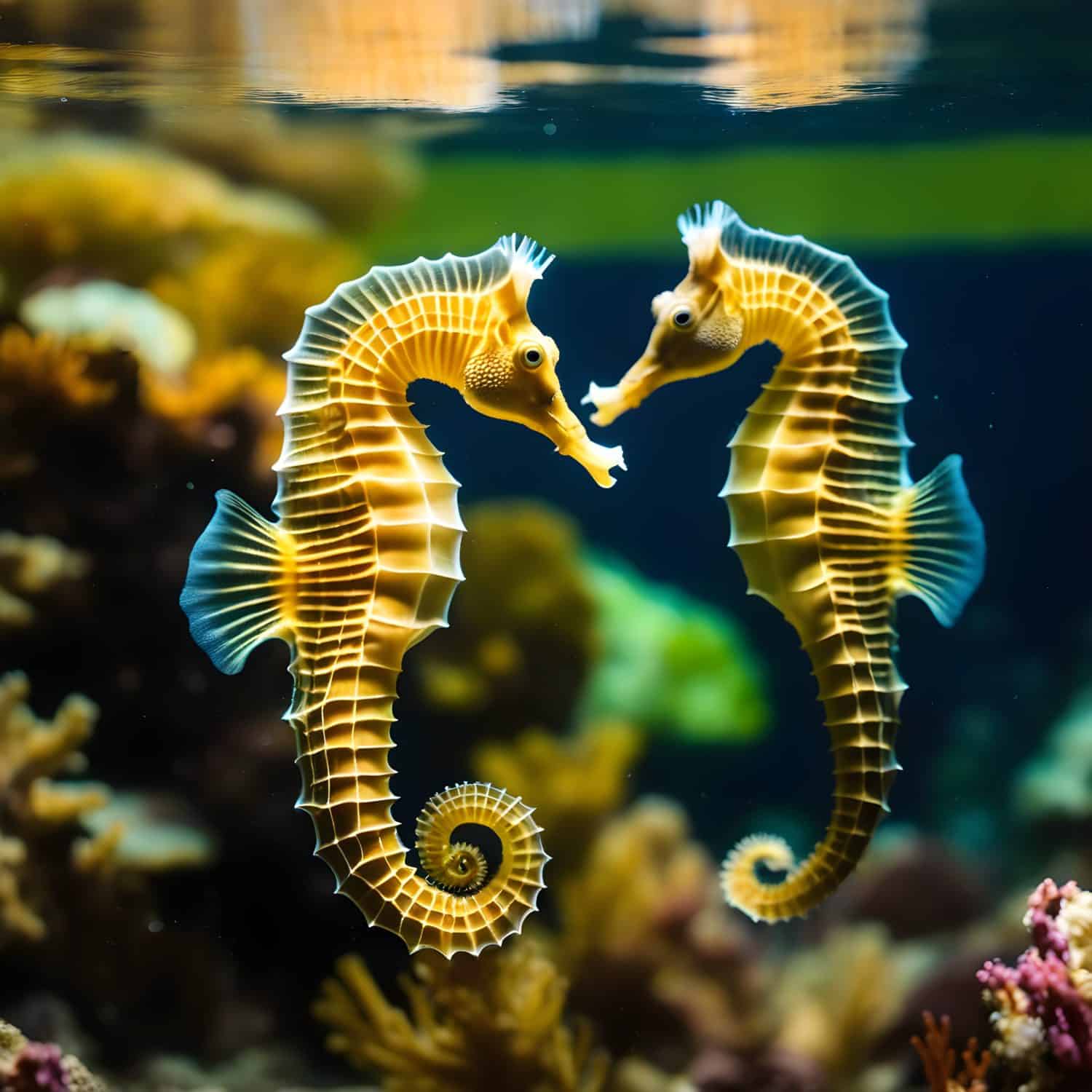

Beneath the surface of the world’s oceans, romance takes on forms far stranger—and often more intense—than anything seen on land. In the murky depths, nature has produced love stories so unusual that they sound more like myths than reality. From artistic fish to flatworm “swordfights,” the ocean’s mating rituals offer a jaw-dropping look at how life adapts when survival is on the line.
1. Sea Hares (Aplysia californica)
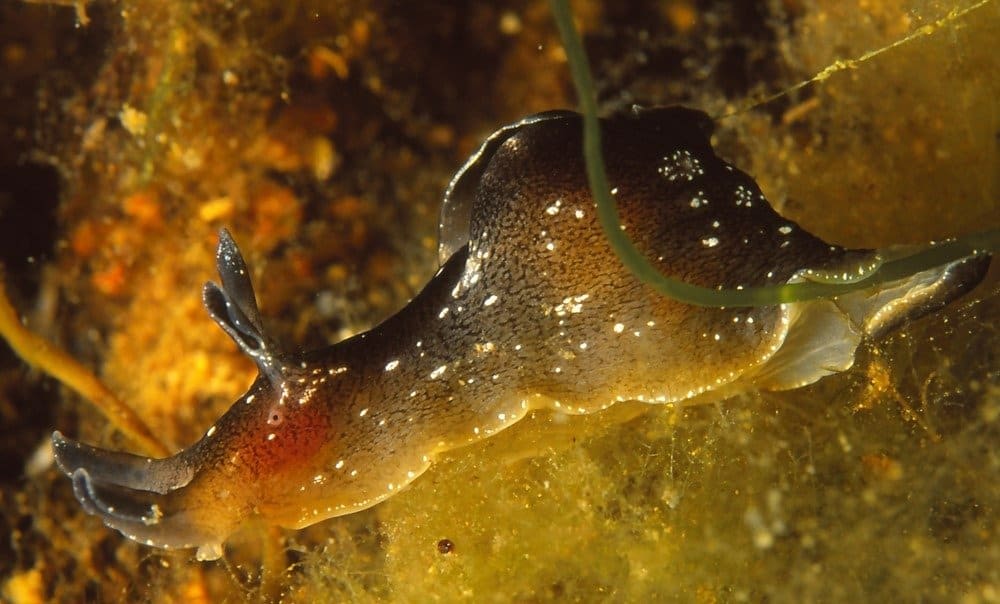
Sea hares form long mating chains in which every slug acts as both male and female at the same time.
©valda butterworth/Shutterstock.com
Imagine a conga line on a cruise ship—that’s what sea hares look like when they mate. These soft-bodied sea slugs are hermaphrodites, carrying both male and female reproductive organs. When it’s time to mate, they line up in chains that can stretch across the seafloor, with each slug acting as a male to the one in front and a female to the one behind. Sometimes dozens join the chain, so every participant gets a turn to pass on its genes. That’s probably for the best—because sea hares aren’t exactly pleasant-smelling. They produce mucus and ink that carry a strong marine funk, and when stranded or handled, they can stink even more. Luckily for them, nobody in this conga line is picky.
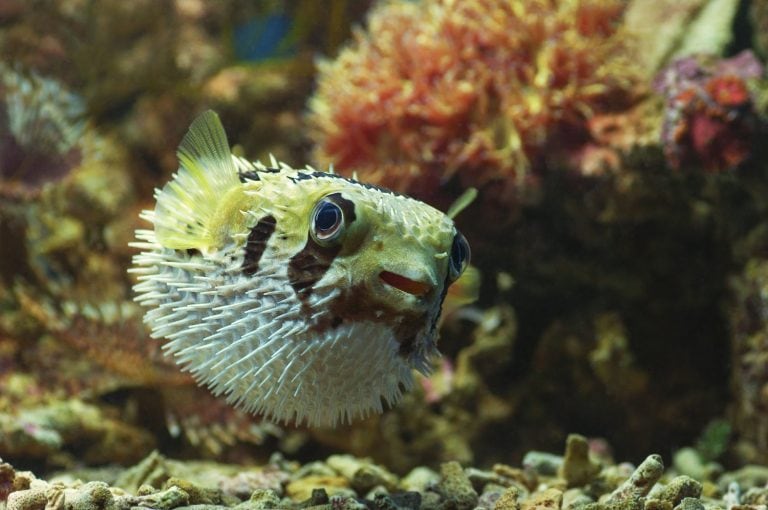
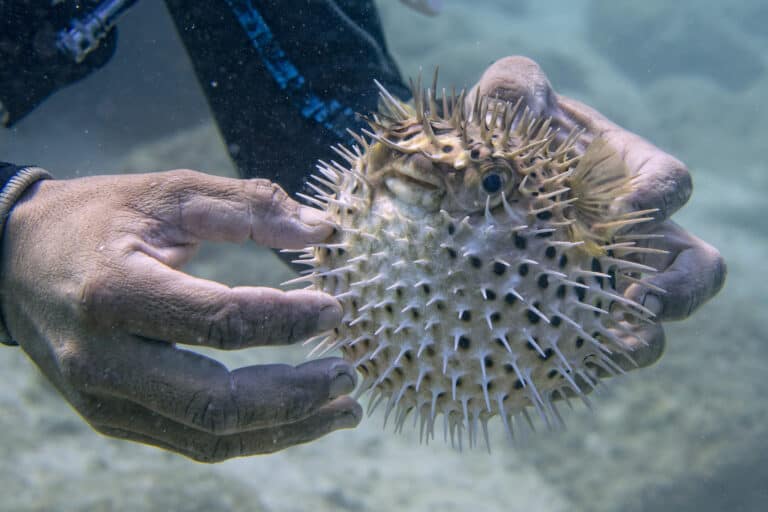
2. Pufferfish (Torquigener albomaculosus)

A male pufferfish carves elaborate sand circles to win over a mate, and the female lays her eggs in the center of his design.
©Sakis Lazarides/Shutterstock.com
People have known about pufferfish for centuries—their strange ability to puff up, their toxin-laced bodies, and even their place on sushi menus have long been part of human awareness. But it wasn’t until 2011, when divers in Japan stumbled across mysterious patterns in the sand, that a secret side of their lives came to light. Male pufferfish, it turns out, spend days tirelessly fanning sand with their fins to carve perfect, mandala-like circles on the seafloor.
These intricate designs aren’t just decoration. Females judge potential mates by the symmetry, complexity, and tidiness of the circle, rewarding the most skilled builders with their attention. If a female approves, she lays her eggs in the very center of the masterpiece, crowning the artist’s work with the next generation. It’s part construction project, part performance art, and part love letter etched in sand—a reminder that even in species we think we know, there are still astonishing secrets waiting to be discovered.
3. Anglerfish (Melanocetus johnsonii)
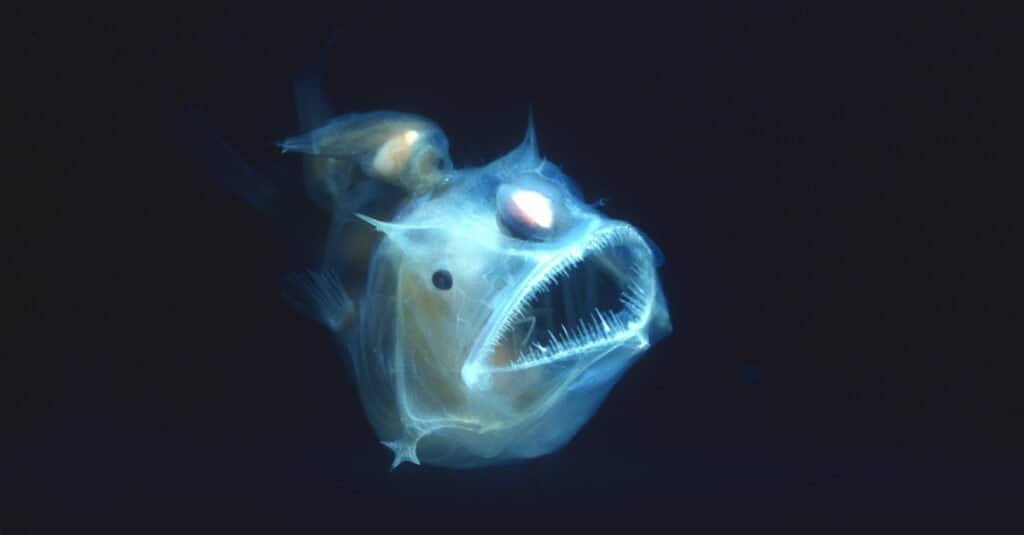
Male and female anglerfish really take literally the religious idea “the two will become one flesh.”
©Neil Bromhall/Shutterstock.com
Living horrors lurk in the pitch blackness of the deep sea. At depths below 1,000 feet, where sunlight can no longer penetrate, there are nightmarish creatures like the anglerfish. Its gaping jaws bristle with needlelike teeth, and a glowing lure dangles from its forehead, swaying in the black water to draw prey close. One snap, and the victim vanishes into the maw.
But even that horror is nothing compared to the way anglerfish reproduce. The males are tiny—barely a fraction of the females’ size—and cannot survive alone, since they lack working digestive systems. Their only hope is to bite into a female and never let go. Over time, his body fuses with hers, and he dissolves into a parasitic appendage that exists solely to provide sperm. It’s literally an all-consuming love, grotesque, but a practical solution to the extreme habitat of this species.
4. Cuttlefish (Sepia officinalis)
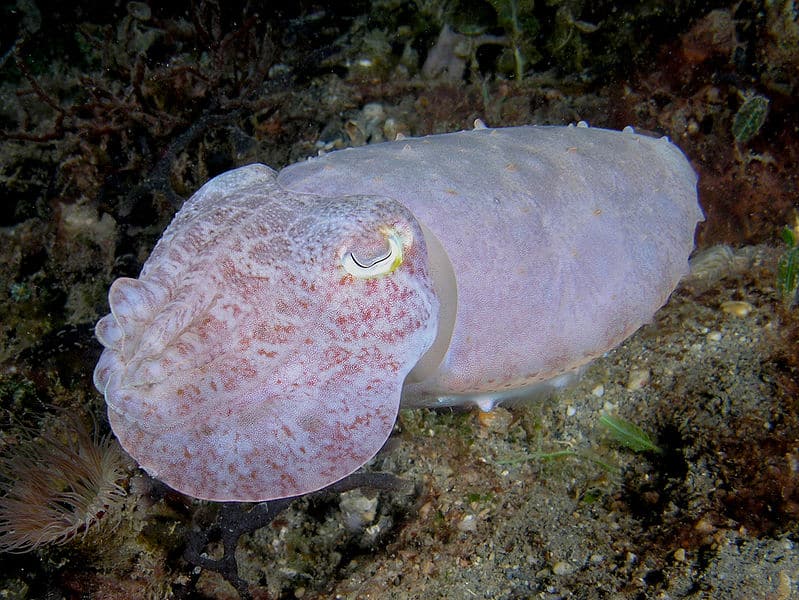
Some male cuttlefish pretend to be females to sneak past their male rivals and get close to the ladies.
©Nick Hobgood / Creative Commons – Original
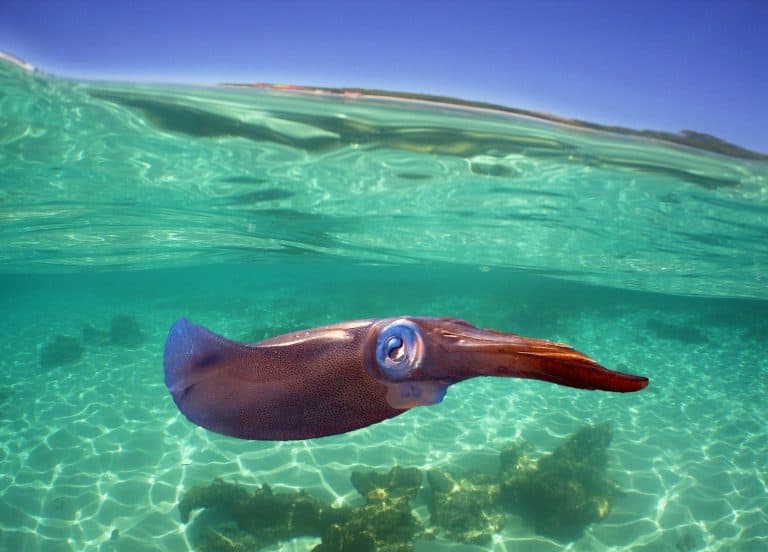
Cephalopods such as squid, octopuses, and cuttlefish are the chameleons of the sea, able to change the color and patterns of their skin for camouflage. Cuttlefish take this skill into the world of dating. Courtship usually begins with males flashing vivid displays to catch a female’s eye—but rivals often swoop in. Some males have developed a clever workaround: they disguise themselves as females.
By shifting their skin patterns, these males display female-like colors on the side facing their competitors, while showing bold, flashy male markings on the side facing the female. Rivals are fooled into thinking there’s no threat, while the real male gets his chance to cozy up to the object of his affection. In this drama of deception, the sly strategy often works. For cuttlefish, survival of the fittest sometimes means survival of the sneakiest.
5. Seahorses (Hippocampus kuda)
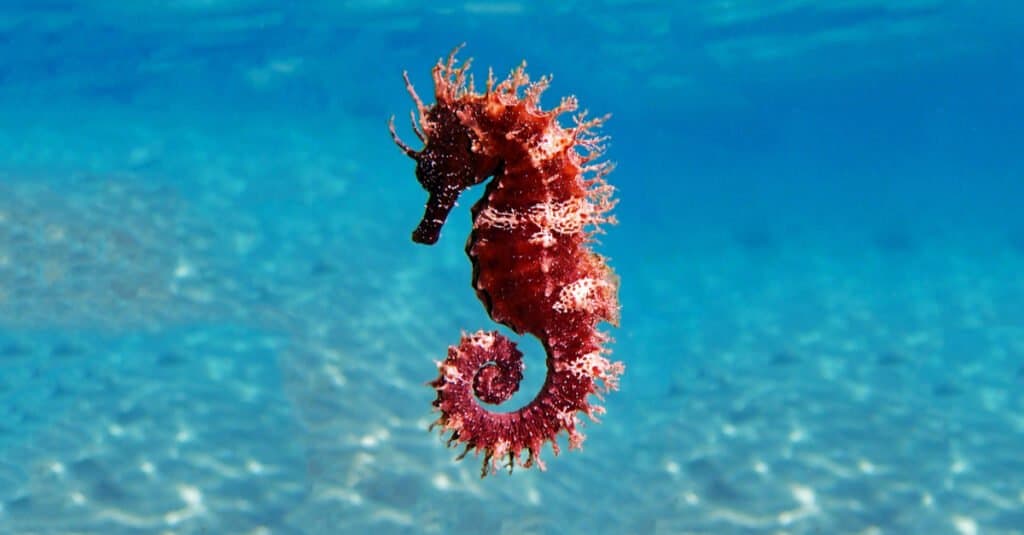
Male seahorses brood the young in a pouch while the mom goes out and lives her life.
©Vojce/Shutterstock.com
If there’s one ocean romance that captures human hearts, it’s the seahorse. Their courtship involves synchronized dances, color shifts, and tail-twirling duets that can last for hours. But the real twist comes afterward: it’s the male who carries the pregnancy.
After a long ritual, the female transfers her eggs into the male’s brood pouch. There, he fertilizes and nurtures them until they hatch. The pouch functions almost like a mammalian womb, providing oxygen and nutrients. When the babies are ready, the male “gives birth,” releasing dozens or even hundreds of tiny seahorses into the water. In the ocean’s parenting playbook, seahorses take the prize for most devoted dads.
6. Flatworms (Pseudobiceros hancockanus)
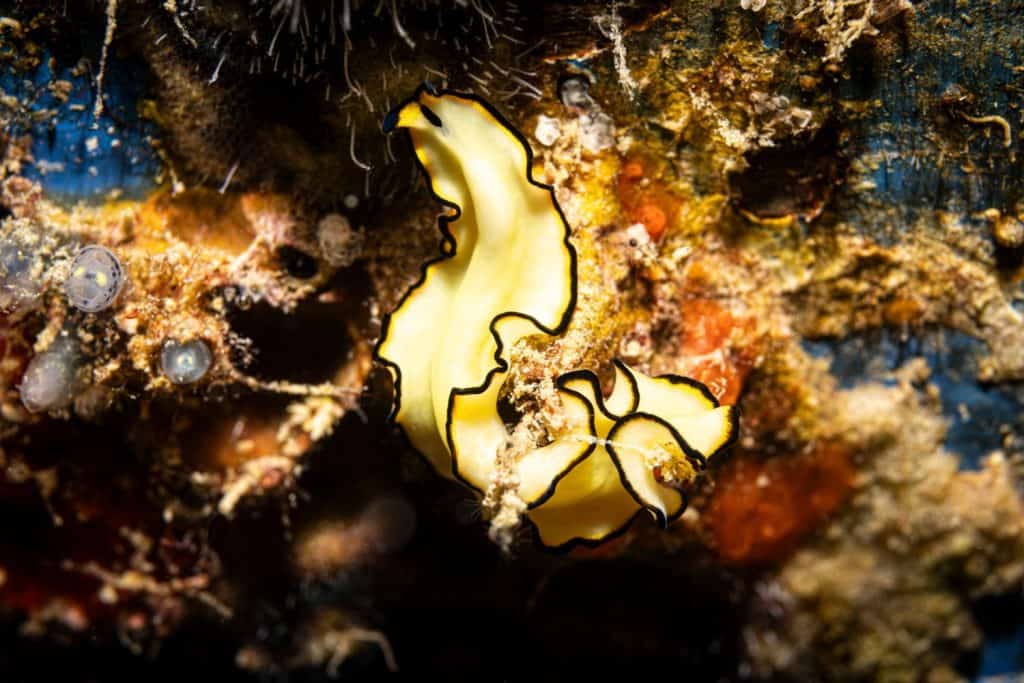
Flatworms fight over which one will be the mom.
©Travel Tips and Stories/Shutterstock.com
Not all mating battles are subtle or tender. Some flatworms engage in what biologists call “penis fencing.” Both partners are hermaphroditic, and each tries to stab the other with its sex organ. The goal? To inseminate without being inseminated.
The stakes are high because the “winner” gets to pass on its genes without paying the cost of making eggs. The “loser,” once inseminated, must spend precious energy producing fertilized egg capsules and attaching them to rocks or coral. There’s no pregnancy or parental care afterward, but the metabolic expense of manufacturing eggs drains resources that could have gone into feeding, growth, or future duels. By avoiding that burden, the victors keep their strength — and sometimes become even stronger for the next round.
7. Mandarin Fish (Synchiropus splendidus)
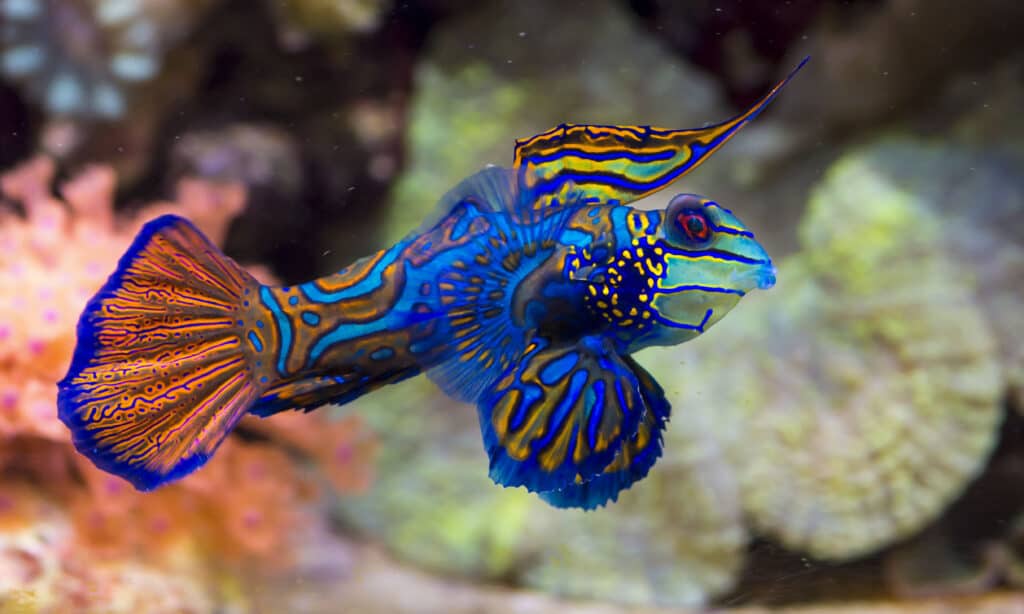
Mandarin fish get romantic at sunset.
©Dobermaraner/Shutterstock.com
The mandarin fish brings a little romance back to reproduction. These small, brilliantly colored reef dwellers are shy during the day, hiding among coral branches, but as the sun sets, they emerge in flashes of orange, blue, and green. Sunset is the cue for their courtship: females gather at the reef while males show off their brightest patterns and raise their tall dorsal fins in displays that shimmer like underwater fireworks.
When a female makes her choice, the pair rises slowly from the reef into the open water. They rise away from the reef to higher levels of water, where their eggs are less likely to be eaten by the dense concentration of marine life below. They release thousands of eggs and sperm simultaneously, which fertilize in the water and drift off on the currents. The whole ritual lasts less than a minute, but the timing and choreography create an elegant picture in an otherwise brutal environment.
8. Blue Whales (Balaenoptera musculus)
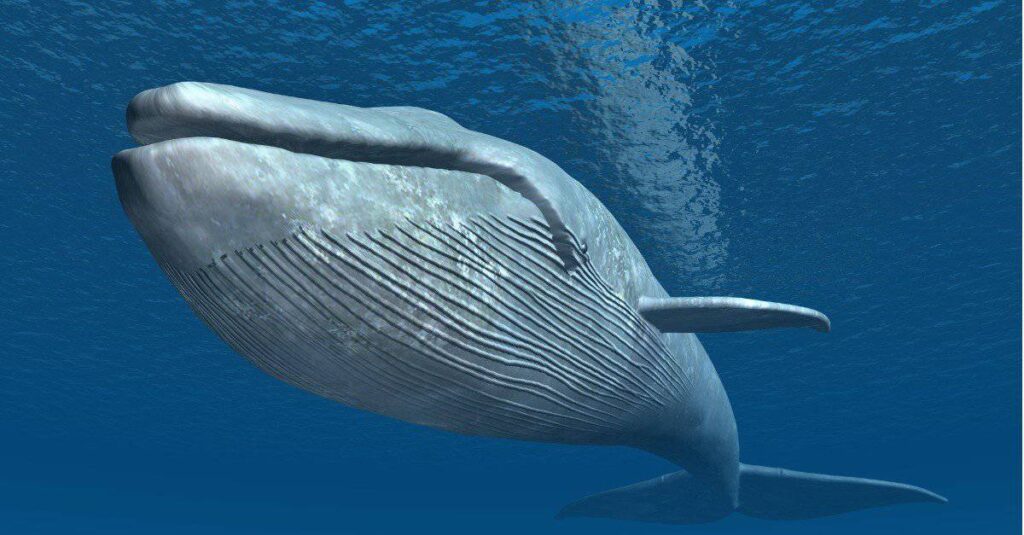
You like to sing about love in the shower? So do male blue whales.
©iStock.com/MR1805
Romance in the largest animal on Earth happens at a scale as vast as the ocean itself. Male blue whales produce low, booming songs that can travel hundreds of miles through the water. These calls function both as long-distance serenades and as warnings to rivals. When a female responds, the song may shift into a duet—an acoustic pairing that sets the stage for closer interaction.
But sound is only part of the story. In breeding grounds, males sometimes chase a receptive female in what researchers call “mating trains,” where several males pursue one female at speeds of up to 20 miles per hour. These contests can escalate into physical clashes, with males lunging at one another or blocking rivals from getting close. More often, it’s sheer endurance that decides the winner: the male able to keep pace the longest and stay nearest to the female is the one who mates.
9. Fiddler Crabs (Uca pugilator)
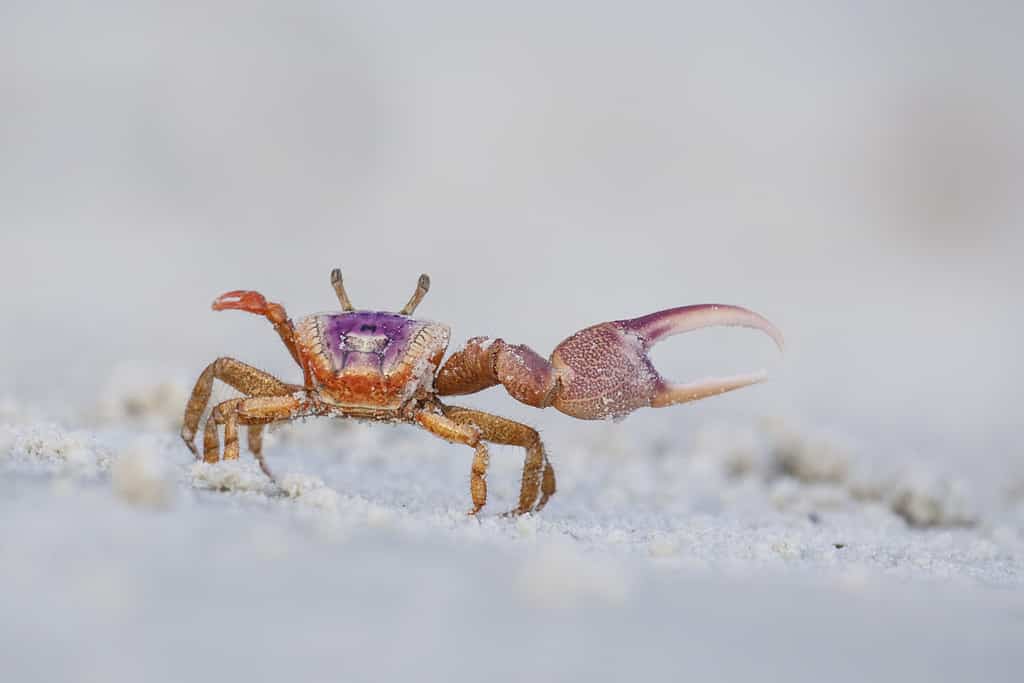
Female fiddler crabs choose mates based on how well the males wave their larger claw around.
©Tory Kallman/Shutterstock.com
On tropical shores, fiddler crabs turn romance into a dance-off. Males brandish their oversized claw—sometimes nearly half their body weight—and wave it in precise, rhythmic arcs meant to catch a female’s eye while warning other males to back off. The performance is surprisingly nuanced: too slow and it looks lazy, too frantic and it seems desperate. Females watch closely, judging both the rhythm and the vigor of the wave, since the claw is also a signal of the male’s health and strength. If impressed, a female follows him back to his burrow, where mating takes place. In the end, a fiddler crab’s future depends less on brute force than on all the right dance moves.
Conclusion
Ocean life is never boring, especially when reproduction is involved. Underwater creatures have developed rituals that range from tender to terrifying, from artistic to absurd. These rituals remind us how endlessly inventive nature can be when the stakes are survival.