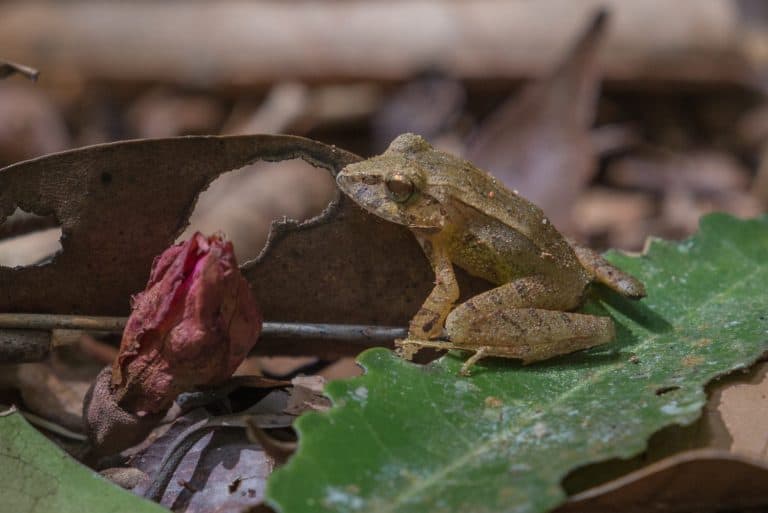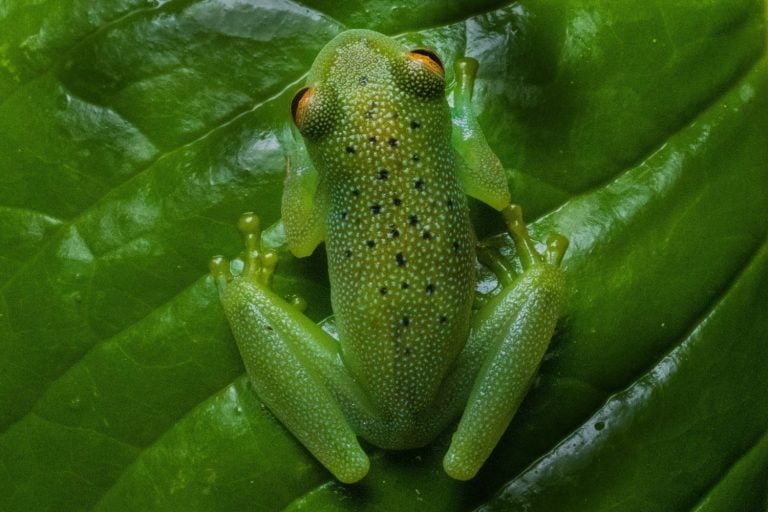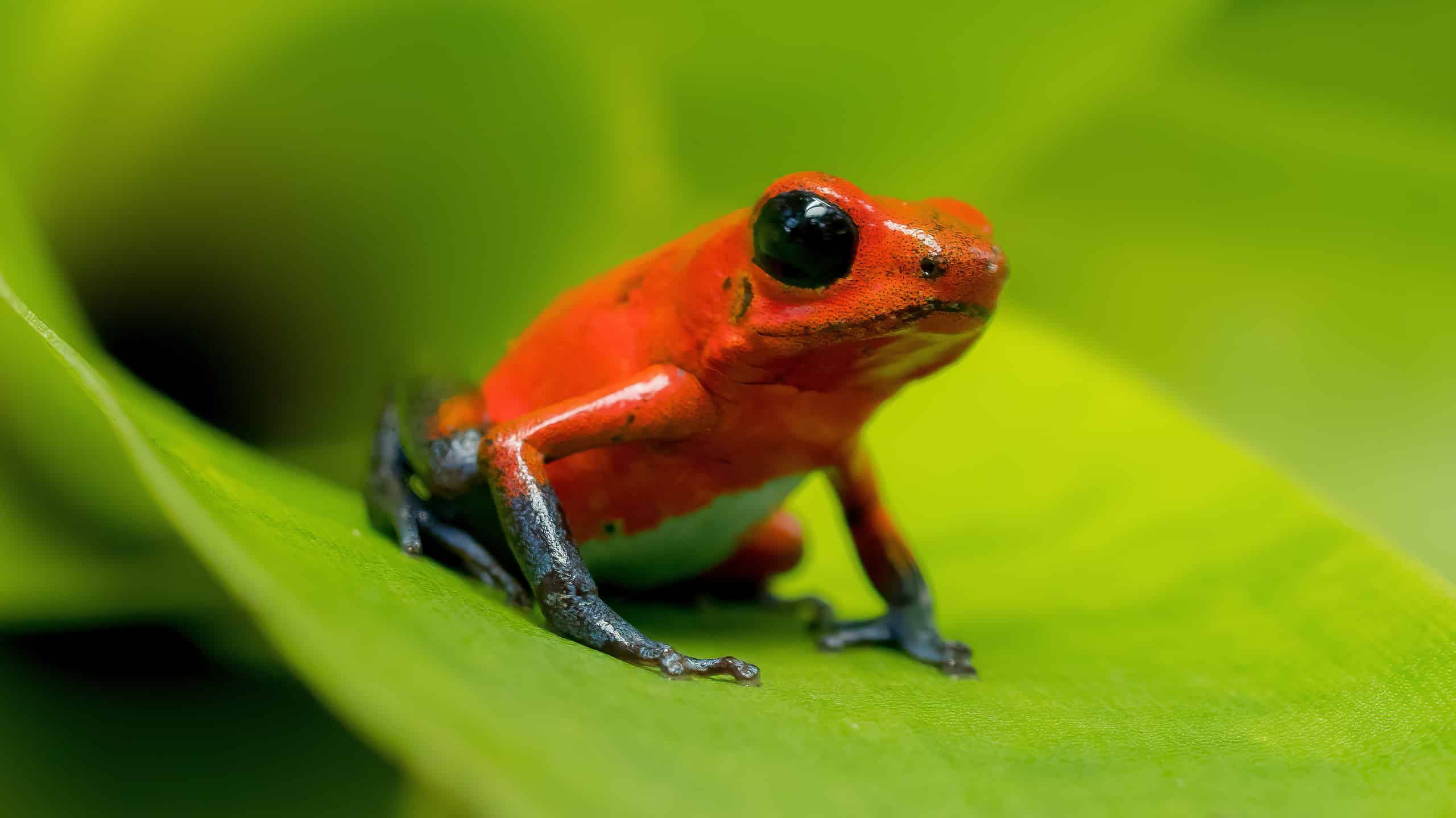

Researchers have identified a new species of poison-dart frog, Ranitomeya hwata, in the remote bamboo-forest of Alto Purus National Park located in eastern Peru. This newly discovered amphibian is the smallest known member of its genus, measuring just 15 mm in length. The frog features bright yellow dorsal stripes, a spotted belly, and a black throat band. The species breeds in the rain-water-filled hollow stems of Guadua bamboo, where males attract multiple females to a single breeding site (an uncommon behavior among its cousins).
Poison arrow frogs, or poison dart frogs, are found in the tropical rainforests of Central and South America. Despite their deadly reputation, this YouTube video shows a gentler side to these toxic amphibians. They take great care in raising their young, with males taking a significant role in protecting tadpoles. This is one species where parental roles are crucial in the frogs’ survival.
This post was updated on October 26, 2025 to include the new discovery of Ranitomeya hwata.
Dad Takes the Lead
For poison dart frogs, mating season is open all year long. Male frogs emit a mating call that attracts nearby females. This chirp signifies that the male actively seeks a partner, as the species is not monogamous. Then, females must court the awaiting male to get his attention. If she’s successful, she climbs onto the male’s back to start mating. Female frogs release unfertilized eggs, while males fertilize them externally. Each clutch can contain up to 10 eggs, making them relatively small compared to other species. Since mating has no time frame, there’s no confirmed limit to how often males and females can reproduce in one year.
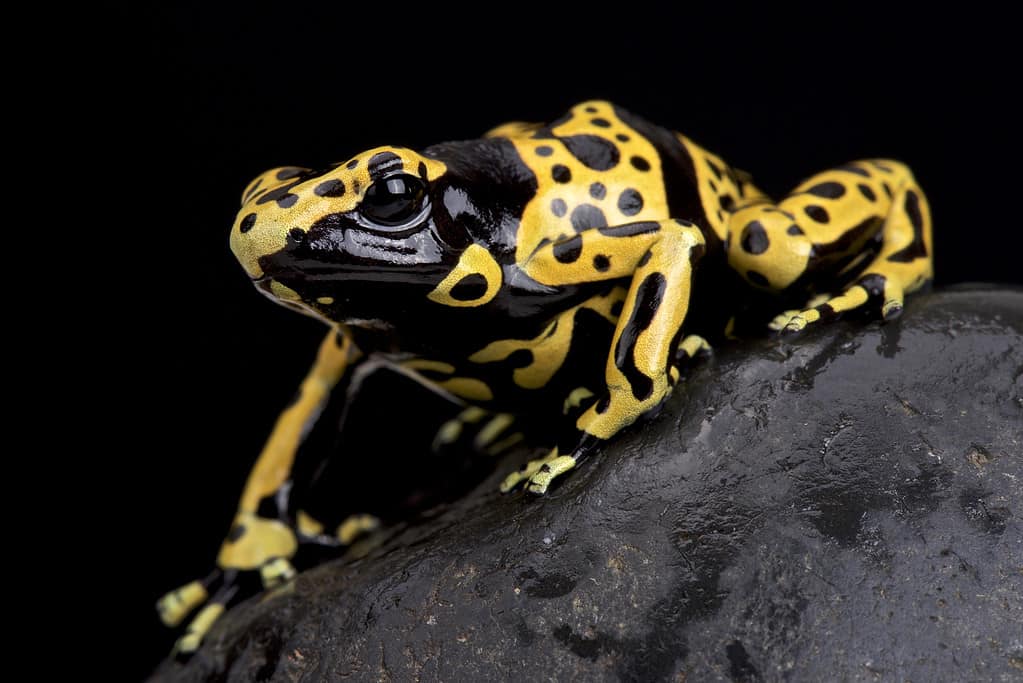
Poison dart frogs stay with their eggs long after they have hatched.
©iStock.com/reptiles4all
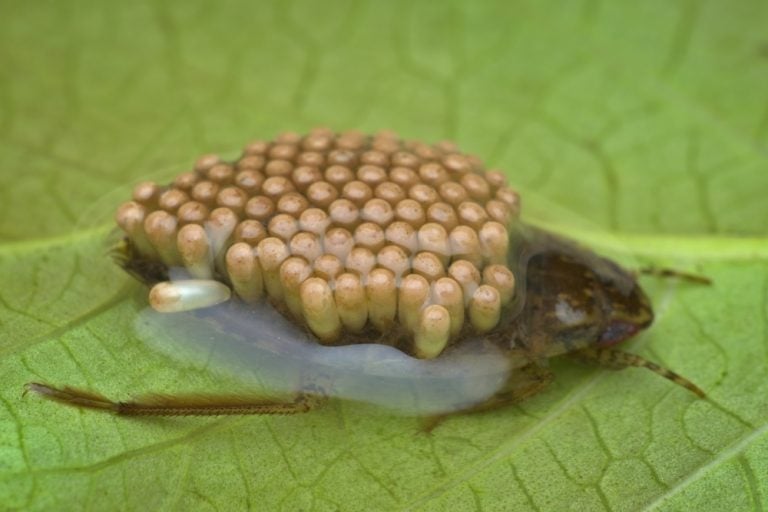
These fertilized eggs are deposited in a safe clearing, where males watch over them for 14-18 days. It’s a tedious process, and the male frog ensures the nesting ground is moist and well-protected. Poison dart frogs are one of the few amphibian species that remain with their eggs long after they have hatched. After roughly a week and a half, the tadpoles emerge. When this happens, male poison dart frogs have another responsibility: carrying their young to safety.
Baby’s First Piggyback Ride
The video shows the newly hatched tadpole hitching a ride on dad’s back. A sticky, mucous-like substance helps tadpoles fuse to their father’s back. Males repeat this process as often as needed until all their young are safely placed in a pool of water. While this tadpole is having the time of its life, this move signifies the next phase of parenting for the male frog. Bromeliads are tropical plants that grow in rainforests throughout the world. They have deep wells in the middle for holding water and double as the perfect temporary tadpole home. These open wells become nurseries for young tadpoles. Male frogs deposit each one into the water and will spend the next eight to 12 weeks protecting them.
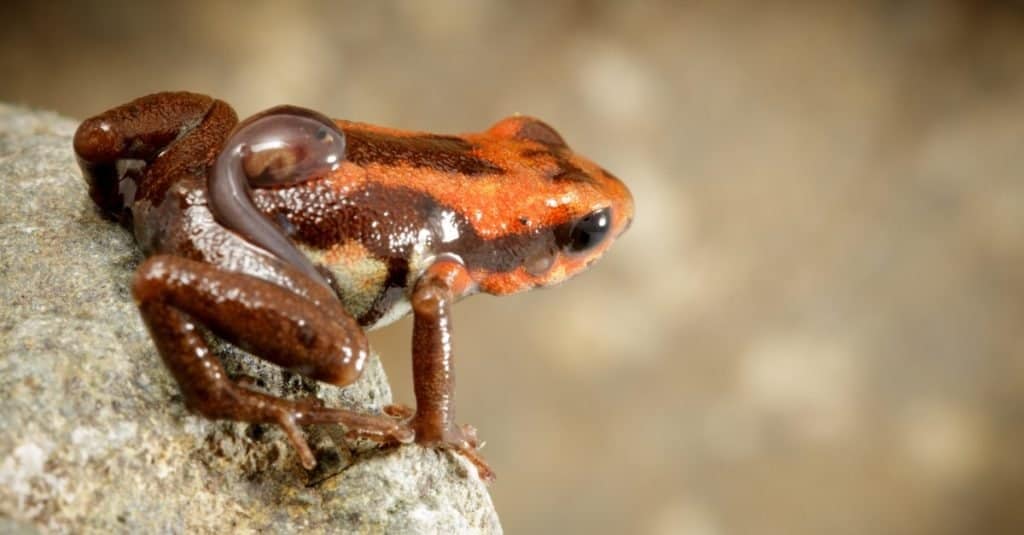
Males have a primary role in taking care of tadpoles.
©Dirk Ercken/Shutterstock.com
Unfortunately, one thing males can’t do is feed their young. According to the BBC, tadpoles communicate hunger with frantic movements and rhythmic vibrations. When the message is conveyed, males must find a female who can feed the young tadpole. He searches for a female by calling out with vocalizations to attract any nearby females. Once a female emerges, he indicates for her to follow. While it’s never guaranteed that a female will help, the species’ survival dictates willingness more often than not.
Baby Has Its Dinner
Tadpoles are unable to hunt for themselves. Their tiny, unevolved bodies make it practically impossible to do little more than swim and eat. Poison dart frogs stand out from other amphibian species because of the extraordinary lengths they go to in order to keep their young fed and healthy. While most leave tadpoles on their own to grow and learn to hunt, poison dart frog females play a significant role in feeding their offspring. Once a female reaches the nursery, she climbs into the bromeliad with the tadpole. She then deposits an unfertilized egg in the water, which provides plenty of nutrition for her young.
Poison dart frog tadpoles ingest their mother’s unfertilized eggs for two reasons. The first is their nutrition, but the second is for toxicity. Poison dart frog tadpoles ingest their mother’s unfertilized eggs for two reasons: nutrition and toxicity. Some toxins, like those from the golden poison dart frog, prove fatal for a human in minute amounts. This toxin buildup begins at the tadpole stage, where a mother’s unfertilized eggs contain alkaloids from her diet. Tadpoles ingest these toxins and store them in their skin, which later serves as a warning to predators through their bright coloration as adults.
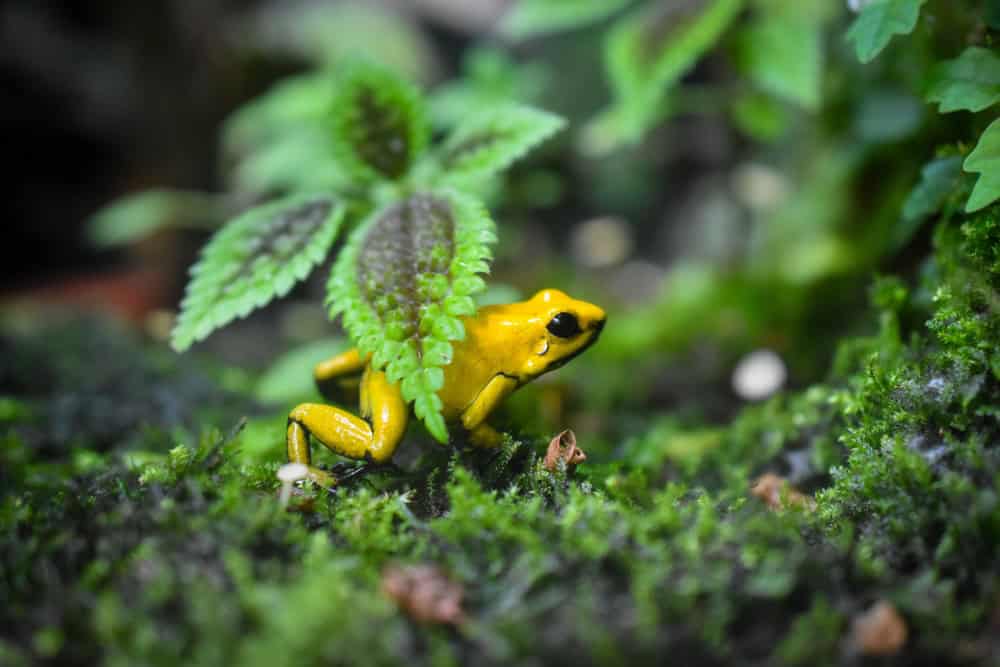
Predators avoid these frogs due to their toxicity.
©lunatic.sadistic/Shutterstock.com
This toxin serves two purposes: as tadpoles are left to metamorphose on their own, their toxicity acts as a defense mechanism. Tadpoles may appear to be easy prey, but their toxicity makes them unappealing to predators. It’s perhaps one of the best defense mechanisms in the amphibian animal kingdom. According to KQED, studies have shown that the survival rate of poison dart frog tadpoles decreases significantly without males. Their participation is crucial to the survival of their offspring, along with the nutrition provided by females. In captivity, poison dart frogs generally live 10 to 20 years. In the wild, their survival ranges anywhere from three to 15 years. However, the fact that frogs have been documented living so long in the wild is a testament to the effectiveness of their early life care.