
There is no doubt that the little tapir in this adorable Instagram post is enjoying dinner, though he was perhaps never taught it’s polite to keep your mouth closed when chewing! This animal also has an impressive set of teeth, which you can glimpse in several parts of the clip. Take a look, then read on to discover more about baby tapirs and what they like to eat.
South American Tapirs
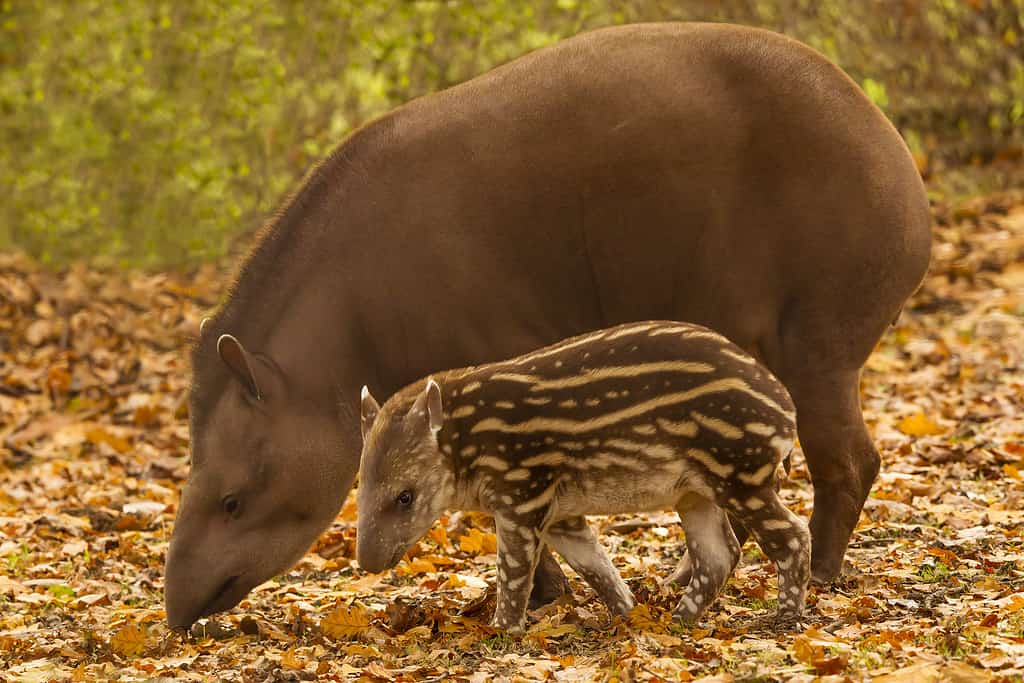
Brazilian tapirs have one calf at a time.
©MarkMalkinsonPhotography/iStock via Getty Images
There are four species of tapir, but the little guy in the clip is a South American or Brazilian tapir (Tapirus terrestris). They are found mainly in Brazil, but their range also includes other tropical forests in South America, including those of Venezuela. Montane forests are their main habitat, but you may also spot them in swamps and lowland forests where they like to be close to rivers. When fully grown, they can reach 550 pounds and 86 inches in length and have a similar body shape to a pig. Adults forage for fruit and leaves at night, preferring mombins, huito, and moriche palm.
Brazilian tapirs can breed all year round and have one calf at a time. The babies weigh between 7 and 12 pounds at birth. At first, they live off their mother’s milk, but between the ages of six to eight months, they grow teeth and wean. By around 18 months, they are independent.
Enthusiastic Chewing
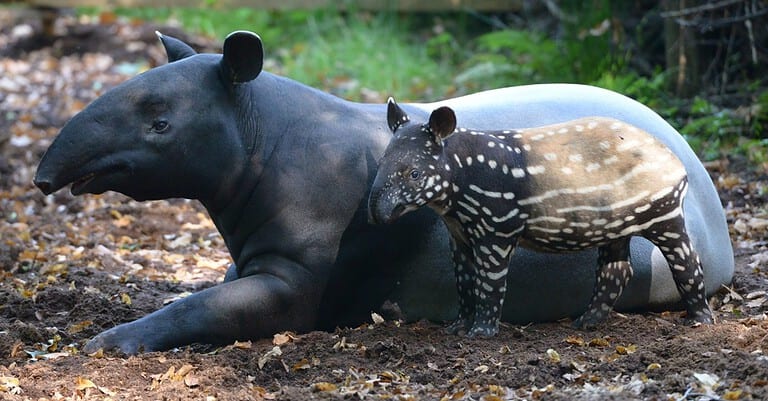
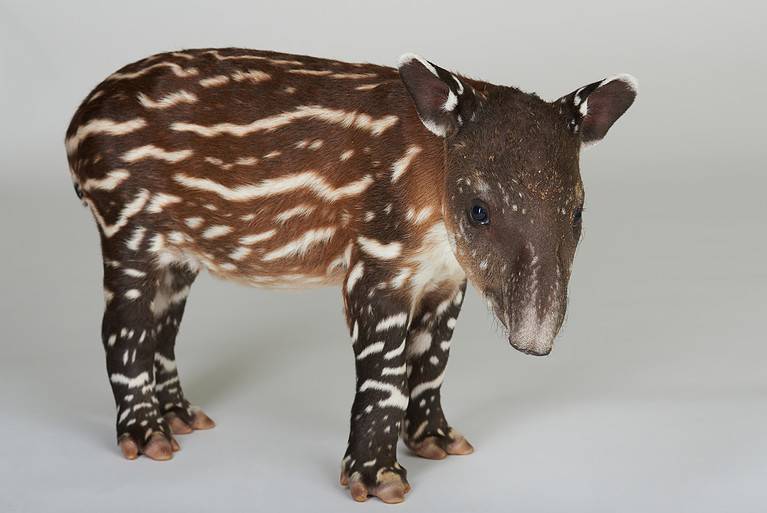
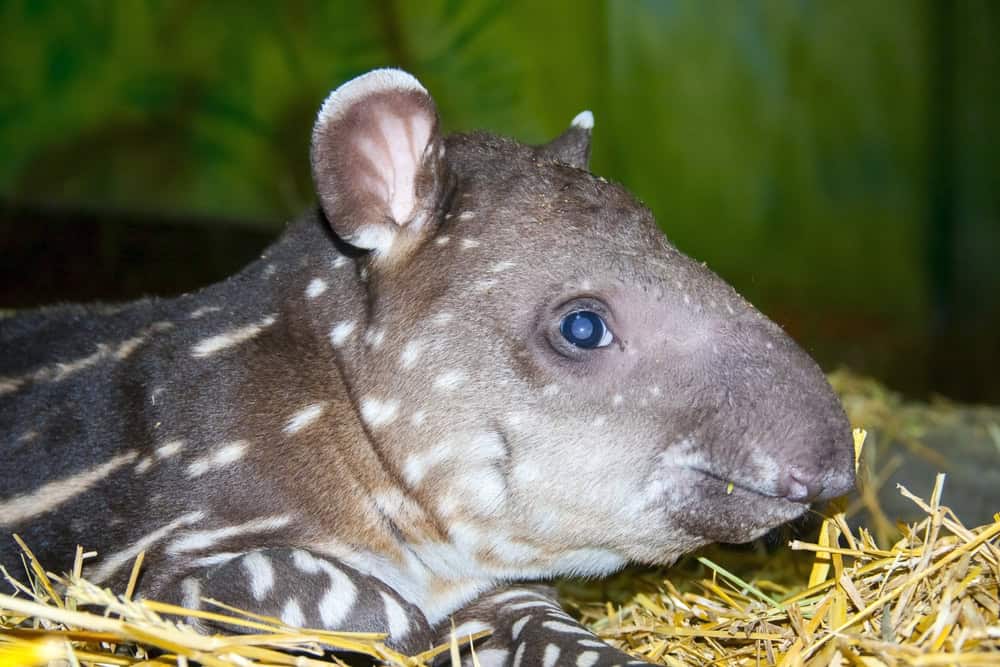
This little tapir is enthusiastically chewing its meal. You will notice the white stripy markings, which are only seen in babies. This helps to camouflage them in the trees and protect them from predators. Its characteristic flexible nose is called a snout or proboscis and can move in all directions, which helps when grasping fruits from trees. Finally, notice the flehmen response; during this behavior, an animal raises their snout and shows their teeth to detect scents.
Tapirs are lophodonts, which means that their molars are large and flat and are very good at grinding up food, which this baby tapir is discovering for himself.