
Quick Take
- Lowland streaked tenrecs are a small mammal native to Madagascar.
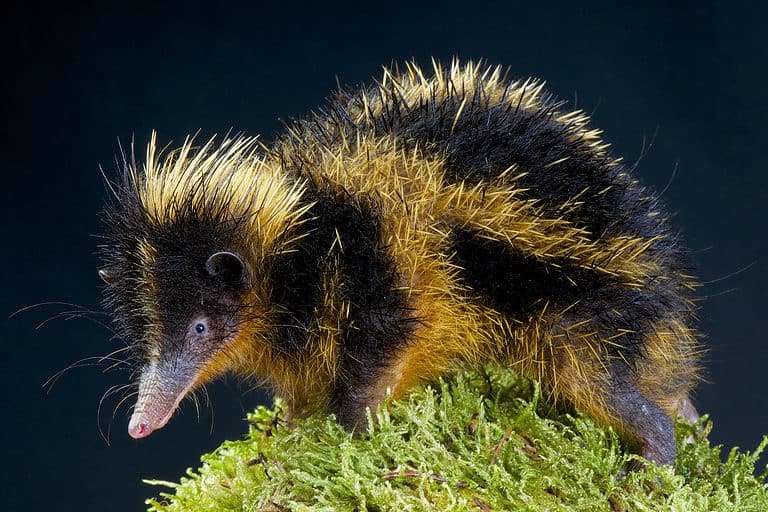
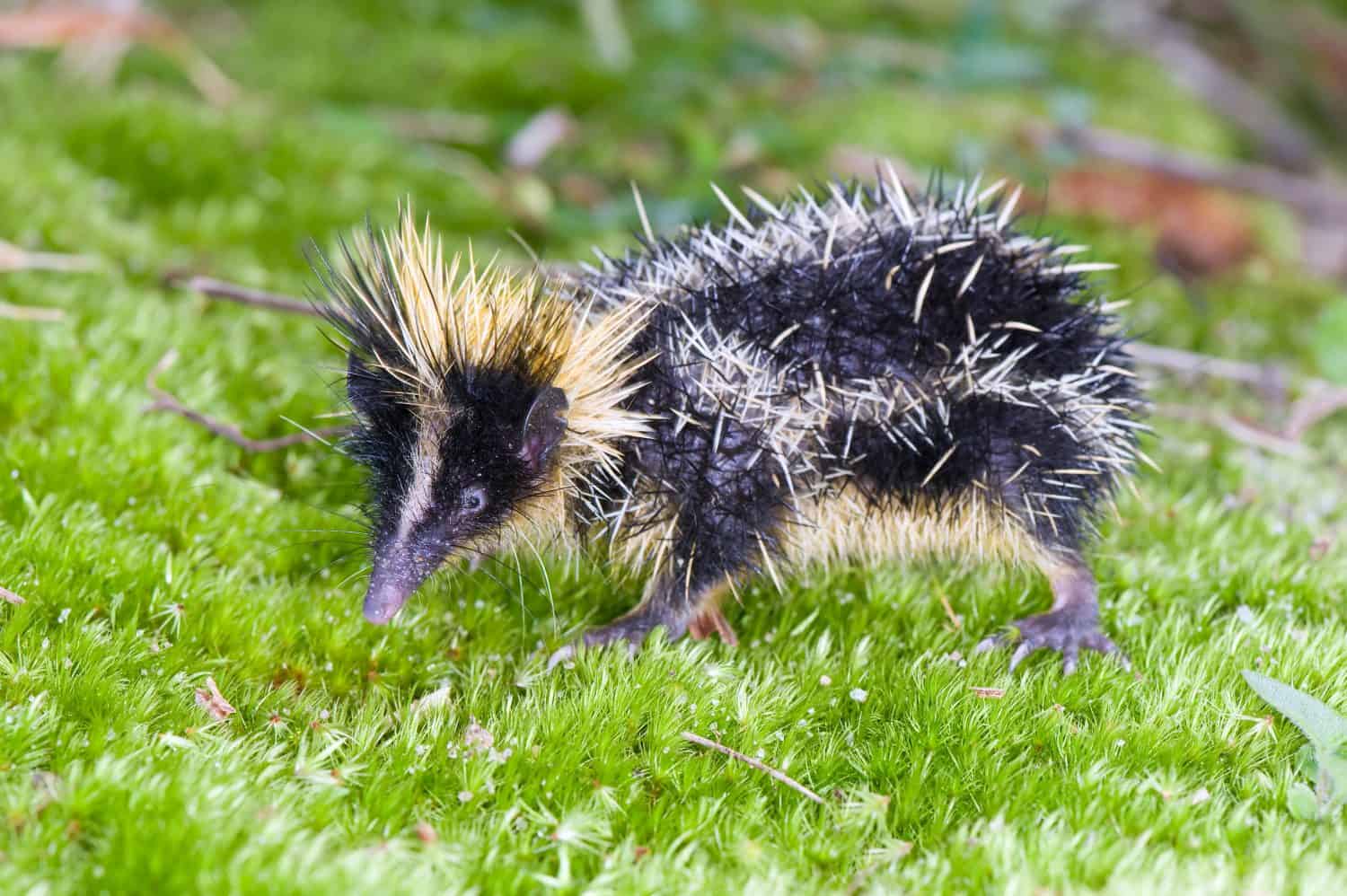
- They have black bodies with bright yellow spikes protruding from them.
- The spikes are for both defense and communication, since tenrecs are the only mammal that communicates through stridulation.
Have you ever heard of the lowland streaked tenrec? These mammals are native to the rainforests of Madagascar. Although tiny, they have a fierce nature and are quick to deter other animals. This Instagram post by @create.conservationist shows one up close, doing its best to intimidate the videographer. Read here to learn more about these small but mighty animals.
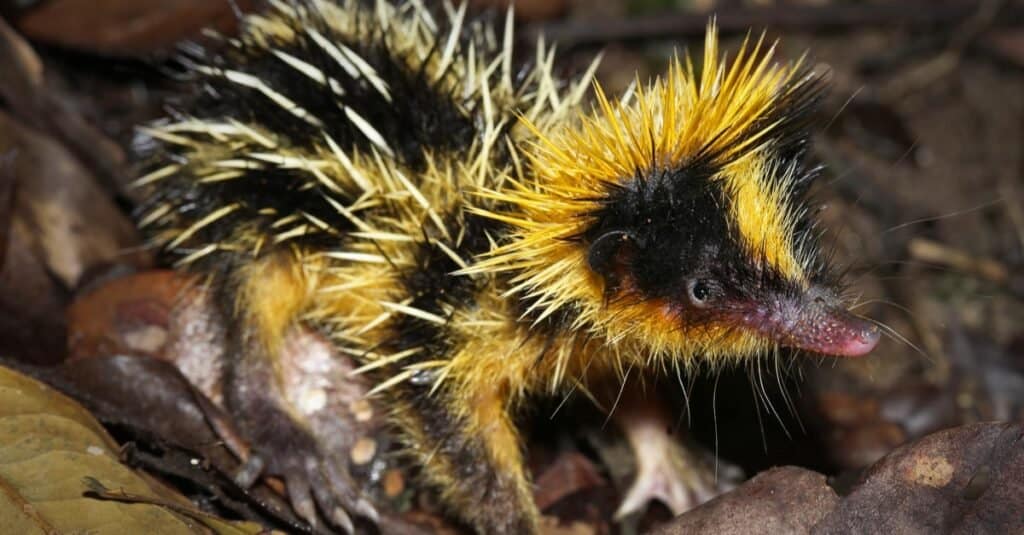
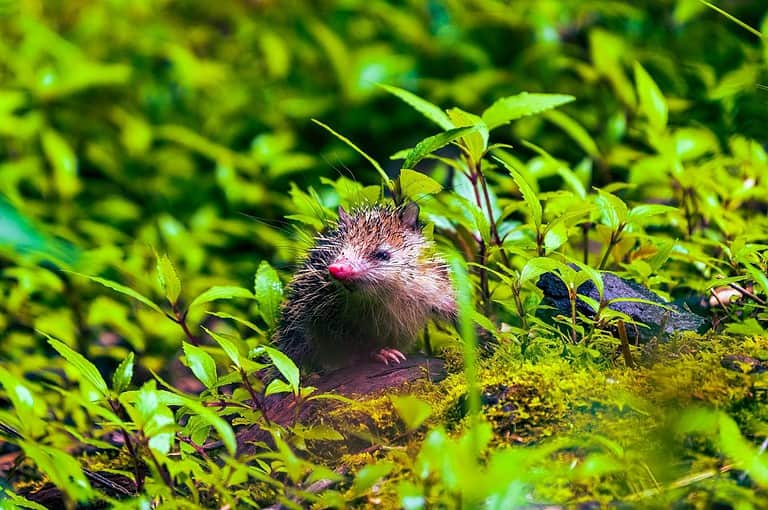
Lowland streaked tenrecs tap and stomp on the ground to better locate the earthworms they eat.
©Ryan M. Bolton/Shutterstock.com
About the Lowland Streaked Tenrec
Lowland streaked tenrecs are a small species of tenrec native to Madagascar. They are also endemic to the country, meaning they cannot be found anywhere else. They inhabit the tropical rainforests of the island, living in shrubs and burrows they dig themselves. The video provides a great look at how small these animals are. Typically, these tenrecs grow to about six inches long and weigh around seven ounces. Many people have compared them to Pokémon because of their striking appearance. They have bright yellow stripes that accent their dark bodies. These yellow stripes are even more noticeable because they protrude as quills. The bright color and quills act as a warning to predators to stay away.
Streaked tenrecs are insectivores, which is ideal for their environment. They mostly feed on earthworms, but also eat common insects and occasionally fruit. They are preyed upon by large birds, fossas, and other carnivorous predators. While most tenrec species are solitary, streaked tenrecs live with their families in burrows they dig themselves. This helps them keep each other warm, find food more easily, and protect their young. Given their small size, it’s important for them to stick together to avoid potential danger.
What Are the Spikes For?
The spikes on their head and back serve both for defense and communication. Similar to porcupines, the quills can be painful if touched. Lowland streaked tenrecs often charge and headbutt predators to defend themselves, as seen in the video. The quills may even detach, making it more painful for the predator. The spikes are also used for communication. Lowland streaked tenrecs are the only known mammals to communicate through stridulation. Stridulation occurs when an animal rubs parts of its body together to create a high-frequency sound, a behavior often seen in insects. Streaked tenrecs use this for social interactions, locating family members, and as a warning signal.