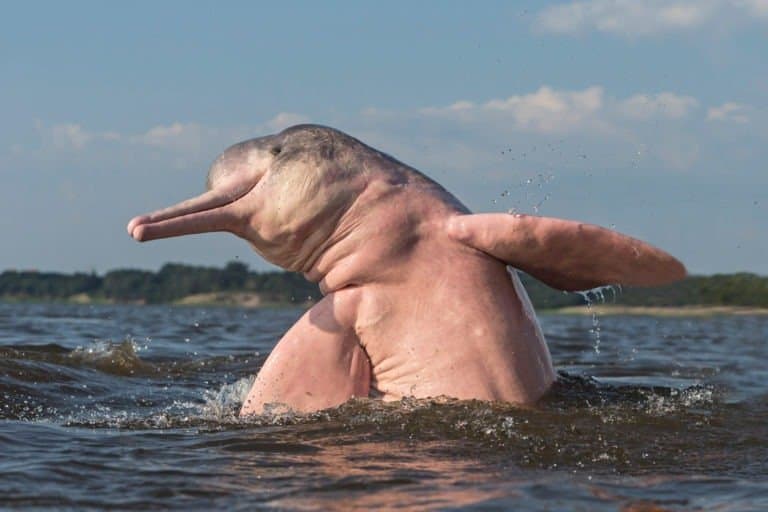
Sonar, originally SONAR, an acronym for SOund Navigation And Ranging, allows animals (or man-made devices like submarines) to use sound waves — specifically, sound propagation — to detect objects, navigate, measure distances, and communicate.
In animals, this ability is described as biosonar or echolocation. When an animal produces a sound, it echoes or bounces off objects. The animal then interprets the echo or returning sound to determine shape, density, and distance.
Various animals use sonar to find their way in the dark, locate food, and avoid predators. For these animals, sonar can replace other senses, such as sight or smell. Without echolocation, they would struggle to find food, avoid predators, or navigate safely, making survival difficult.
Many people are familiar with the sonar used by bats and dolphins, but would you believe that some rodents and birds use it too? Continue reading to discover 10 animals that rely on sonar to survive.
1. Bats
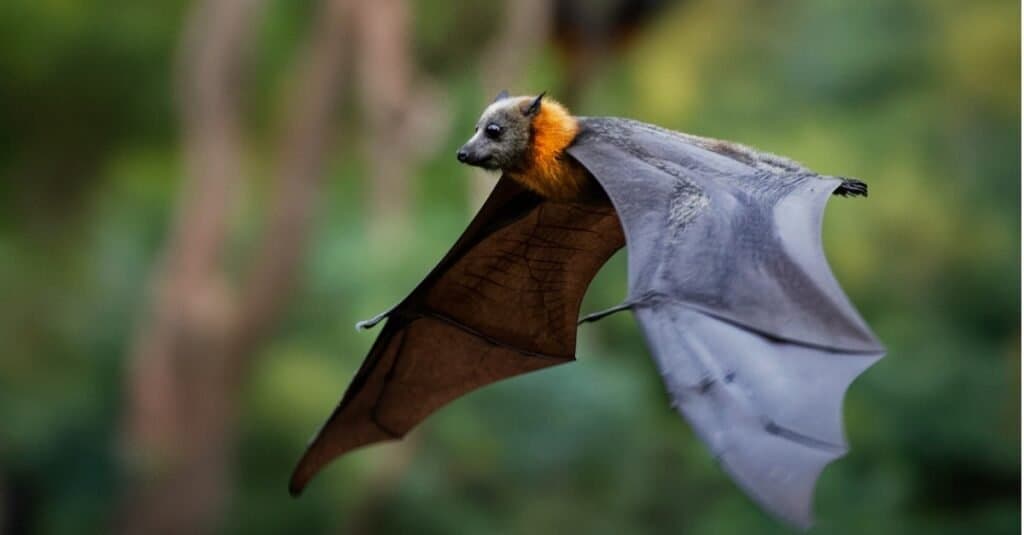
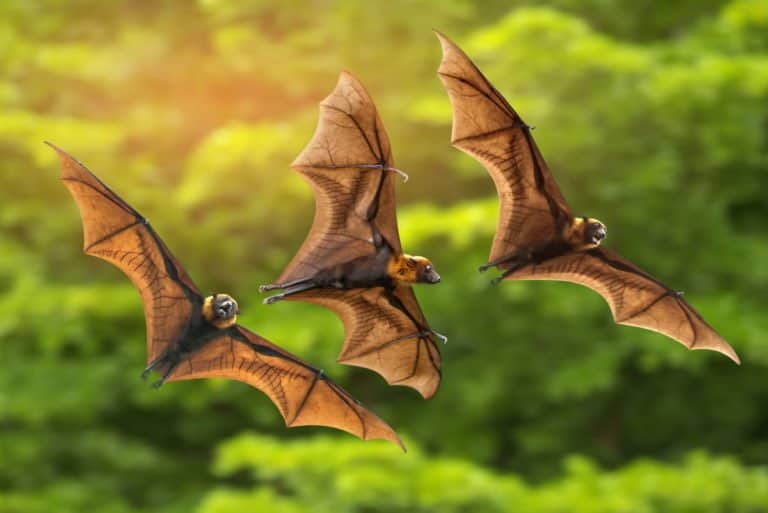
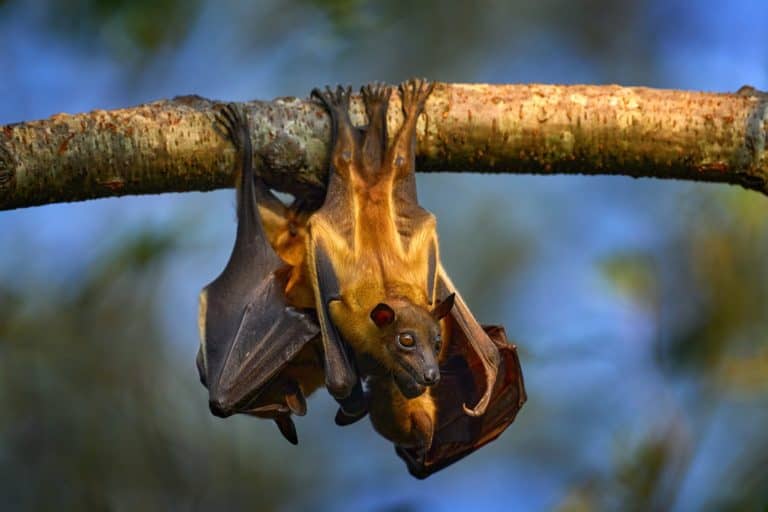
Gray-headed Flying Fox in the evening. Bats use echolocation to find their prey.
©iStock.com/phototrip
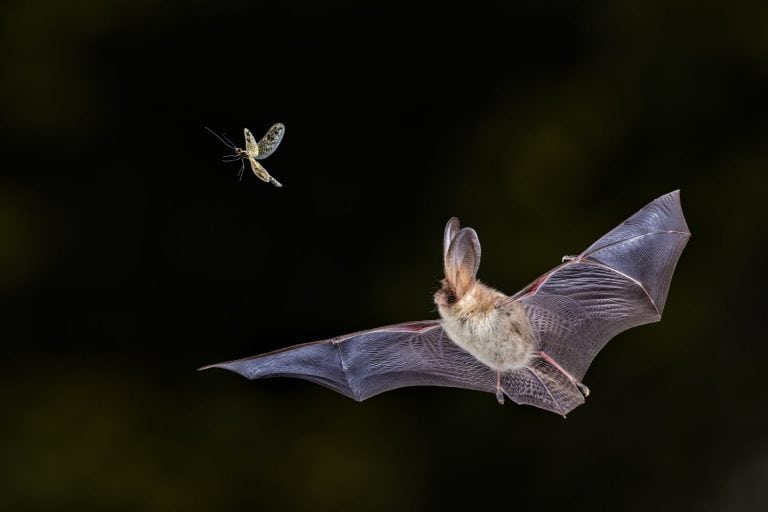
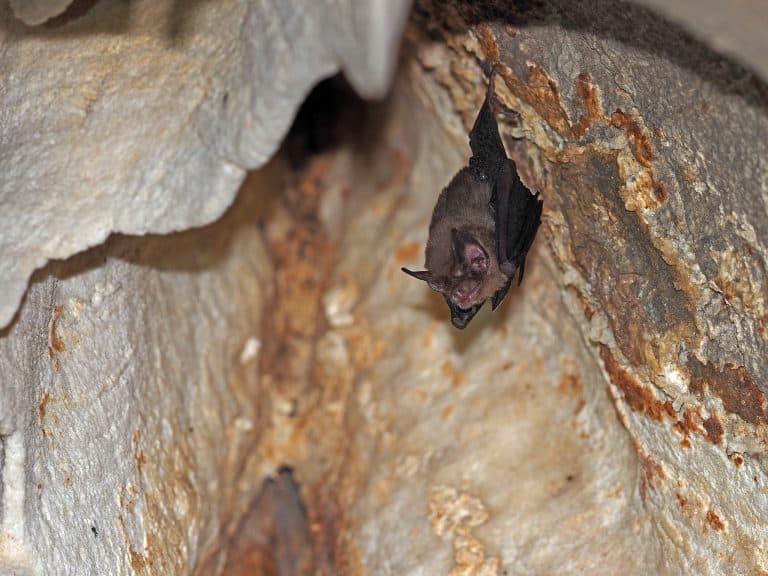
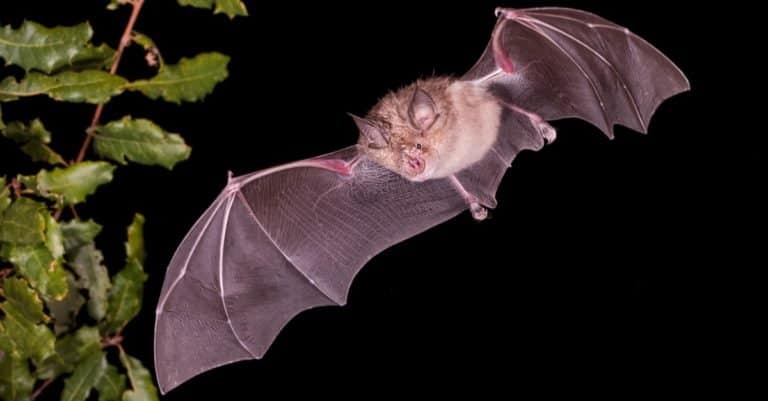
Bats emit loud clicks as they fly. When the sound reaches an insect in flight or a physical obstacle, it bounces back to the bat’s ears. Specialized regions of the brain decode the sounds, and the bat can hunt its prey or fly around obstructions.
Have you ever heard the adage “blind as a bat”? Some bats are indeed nearly blind, and these species certainly rely on echolocation in place of the sense of sight. But several sighted bats utilize echolocation as well.
Most Megachiroptera (fruit bats, such as flying foxes) do not use sonar. However, some fruit bats in the genus Rousettus are known to use a form of echolocation by tongue clicking.
2. Dolphins
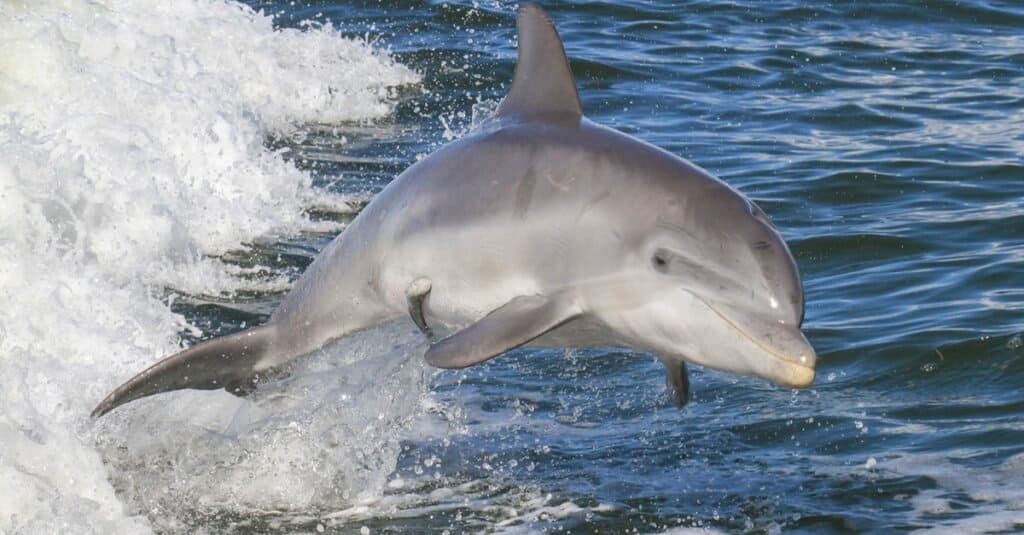
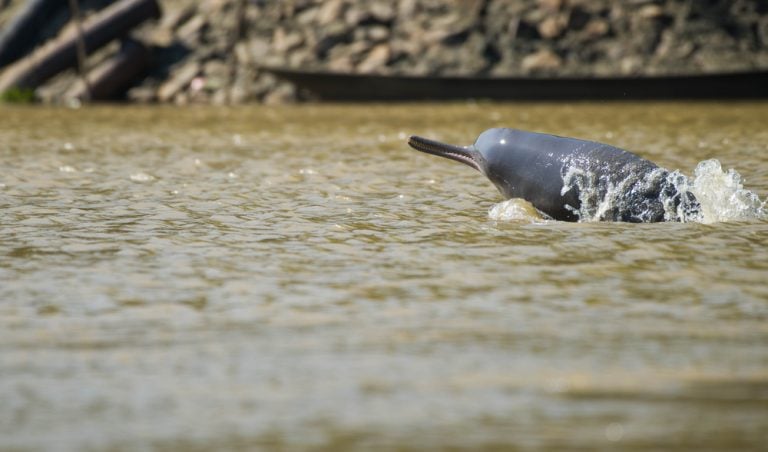
To find fish in murky water or objects buried in the sand, dolphins use echolocation.
©Tory Kallman/Shutterstock.com
Dolphins are well-known for their high-pitched noises and clicks. The dolphins make these noises in the nasal sacs and focus the sound waves through the melon, the bulb of fatty tissue in the dolphin’s head.
Water is an excellent sound conductor; therefore, these noises bounce off objects and return to the dolphin. Dolphins can use echolocation to find fish in murky water or objects buried in the sand. Scientists have determined that a bottlenose dolphin (Tursiops truncatus) can “hear” an item the size of a ping-pong ball from more than 350 feet away!
Dolphins can also use echolocation to determine what an item is made of. For example, they are often interested in medical devices (metal pins and rods, artificial limbs) or scar tissue when interacting with humans. Dolphins have been, and continue to be, trained by the military to locate lost objects and detect underwater mines using their sonar abilities.
3. Toothed Whales
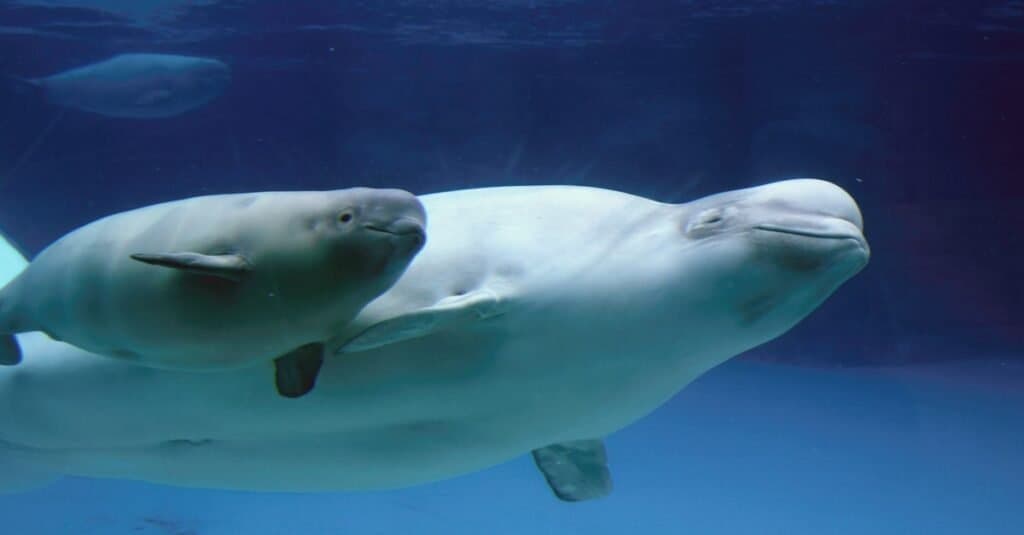
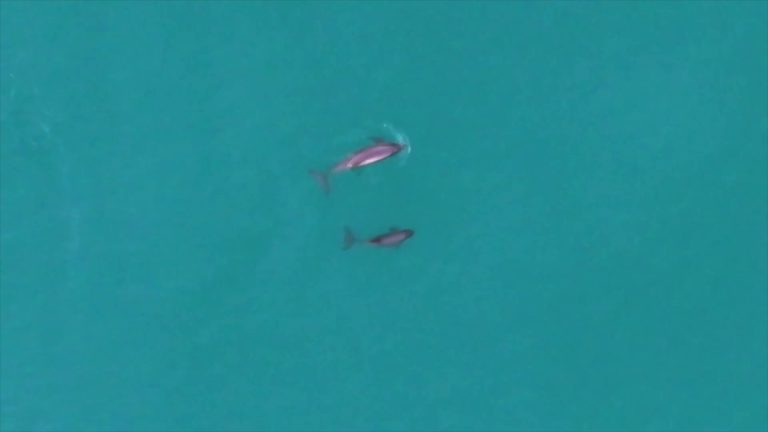
Mother and baby Beluga whale are swimming together.
©CampCrazy Photography/Shutterstock.com
Toothed whales such as orcas (Orcinus orca), sperm whales (Physeter macrocephalus), porpoises, and beluga whales (Delphinapterus leucas) use echolocation like dolphins, which are also toothed whales.
Toothed whales use echolocation to navigate in murky water with low visibility. They also use it to find prey. Belugas were among the first whales theorized to use sonar, based on observations of their swimming and navigation. Interestingly, the sperm whale uses single sonar clicks, while other species use a series of clicks called click trains.
Baleen whales, such as blue whales (Balaenoptera musculus) and humpback (Megaptera novaeangliae) whales, do not use echolocation.
4. Aye-ayes
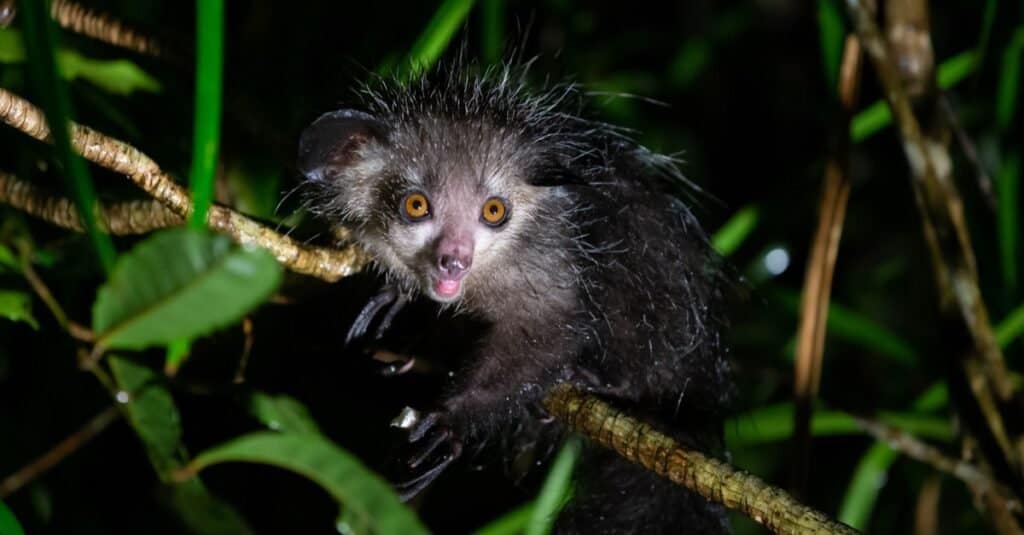
A rare nocturnal Aye-Aye lemur sitting in a tree. Aye-ayes are the only non-human primate known to use echolocation.
©Eugen Haag/Shutterstock.com
The aye-aye (Daubentonia madagascariensis) is a bizarre-looking type of lemur native to Madagascar. It is the only non-human primate known to use a form of echolocation — specifically percussive foraging, tapping, and listening for echoes within the wood. They do not employ clicks or vocalizations. Instead, the aye-aye taps on the tree in which it climbs using a long, thin middle finger. It then listens for the echoes coming from within the tree. What it hears tells it whether insect burrows are present. If they are, it digs in!
5. Chinese Pygmy Dormice
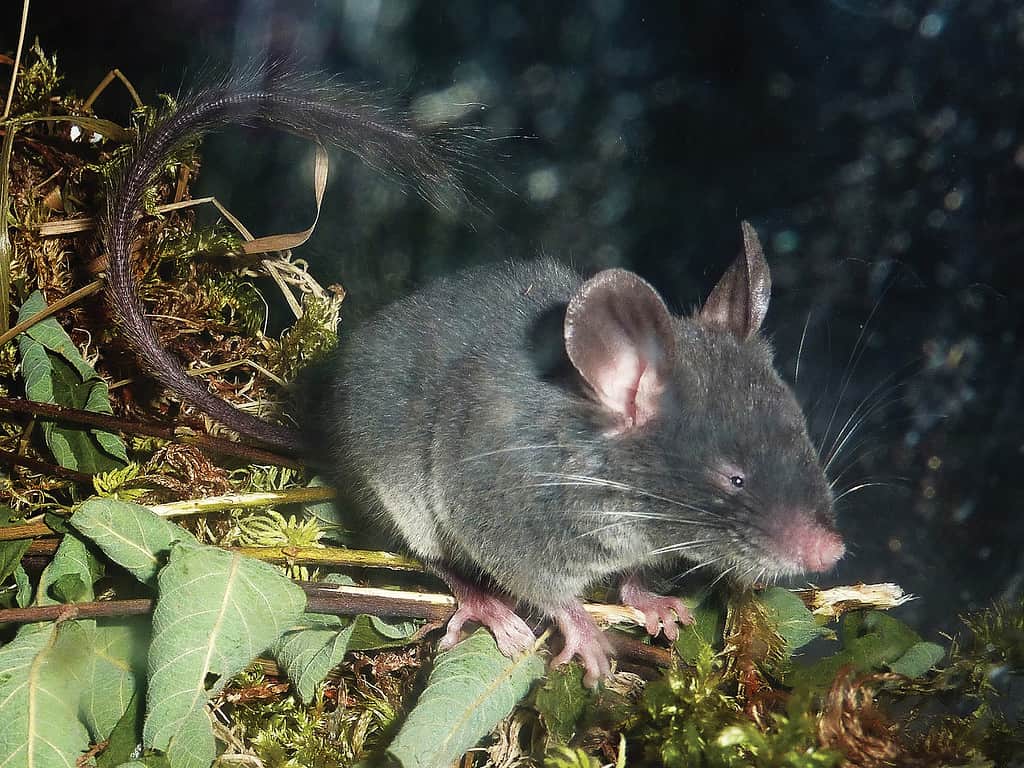
The Chinese pygmy dormouse (Typhlomys cinereus) is an arboreal or tree-dwelling rodent that is nearly blind. It uses soft squeaks too quiet for human ears to hear to navigate tree branches. It is thought that this unique quality, soft rather than loud noises, is because the branches are very close to the animal. Its echoes do not have to span the distances as those of other sonar users.
6. Shrews
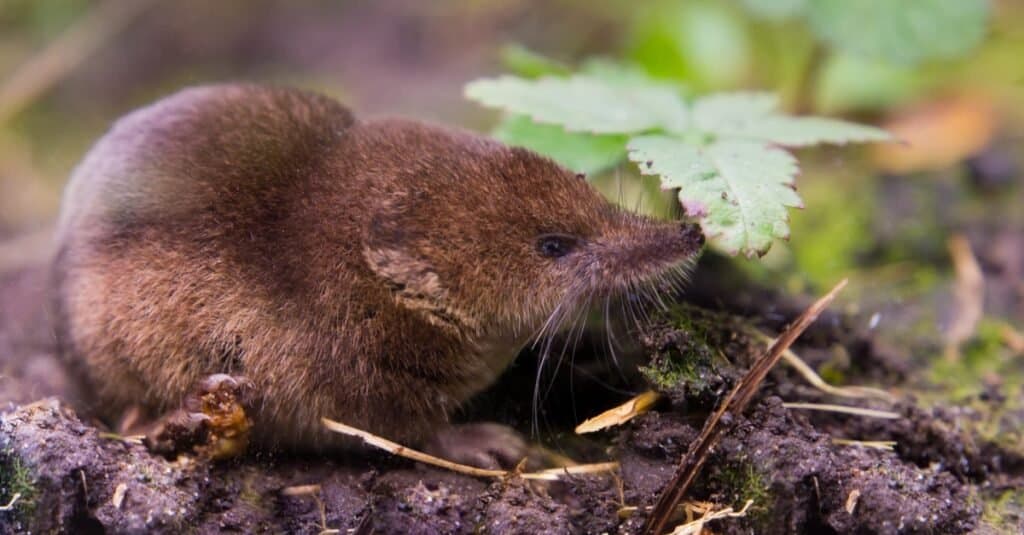
In contrast to bats, shrews use echolocation only to investigate their habitats rather than additionally to pinpoint food.
©iStock.com/CreativeNature_nl
Shrews are small mammals similar to moles. They resemble rodents but are not classified as such. Several species of the shrew, including the common shrew (Sorex araneus), the wandering shrew (Sorex vagrans), and the short-tailed shrew (Blarina brevicauda), have been observed using echolocation. Others may also have this ability.
Instead of clicks, shrews call out with ultrasonic squeaks. Like our other sonar users, they then listen to the echoes to explore dark environments.
7. Tenrecs
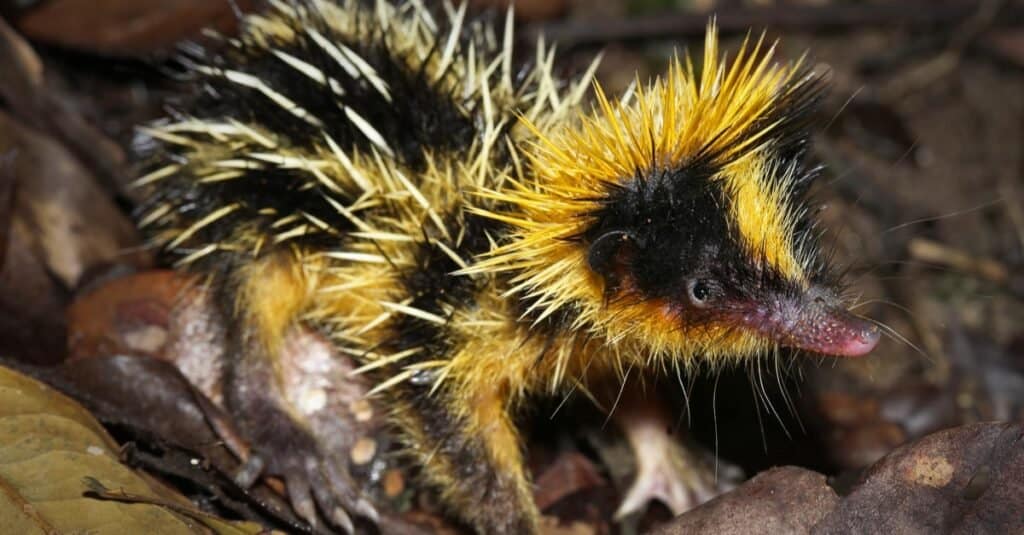
Lowland Streaked Tenrec (Hemicentetes semispinosus) in a defensive posture in the rainforest of Ranomafana, Madagascar. It is endemic to Madagascar.
©Ryan M. Bolton/Shutterstock.com
Have you ever heard of a tenrec? This small mammal from Madagascar resembles the shrew or hedgehog. There are about thirty species of tenrecs, ranging in size from a few ounces to two pounds.
Tenrecs use tongue clicks for echolocation. It is thought that they use this sonar as a means of finding food. Interestingly, tenrec echolocation seems to be instinctive; it is not a learned behavior. Even captive-raised tenrecs kept in isolation use sonar to explore their enclosures.
8. Cave Swiftlets
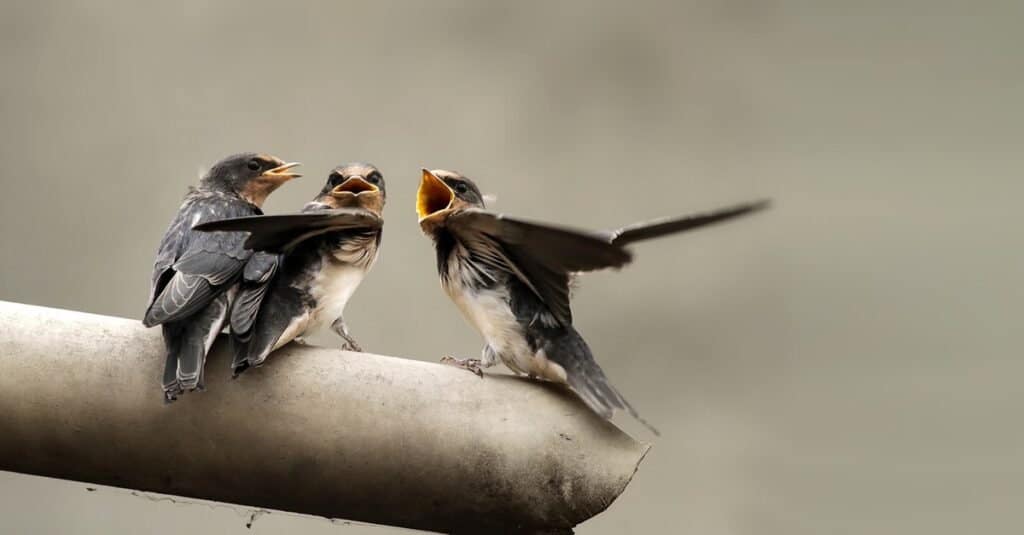
Cave swiftlets are small, flitting birds that navigate through the darkness using sonar.
©Wang LiQiang/Shutterstock.com
Swiftlets are small birds that live in caves throughout Asia and the Pacific region. Life can get pretty crowded for these birds that live in flocks of up to a million individuals. How do they avoid bumping into one another while flying in dark caves? Some species, such as the pygmy swiftlet (Collocalia troglodytes), emit clicks that allow them to navigate via sonar.
Cave swiftlets are one of only two birds known to use echolocation. The other is described below.
9. Oilbirds
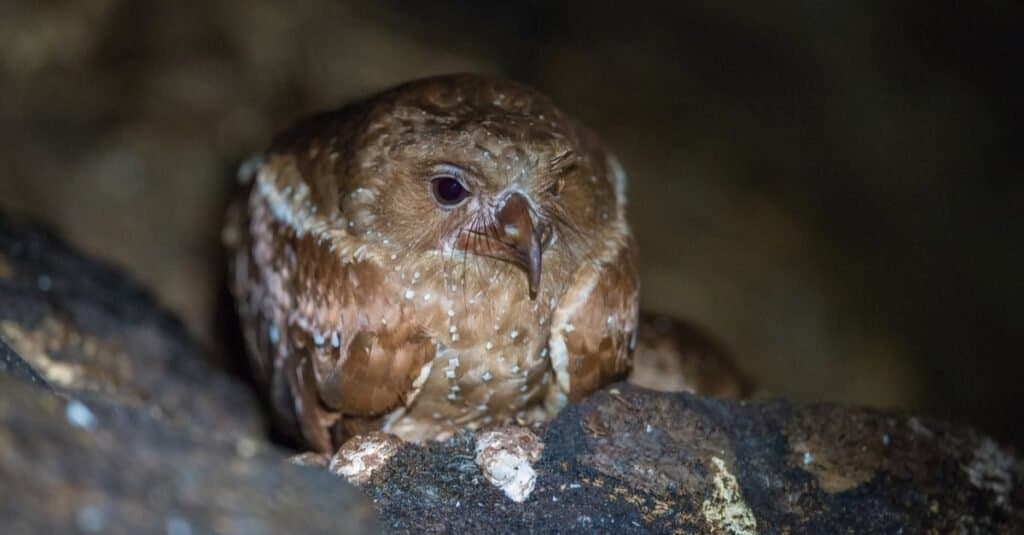
Owl-like birds native to South America, Oilbirds can navigate in the dark using echolocation; they also use smell to locate fruit.
©Petr Simon/Shutterstock.com
Oilbirds (Steatornis caripensis) are native to South America. Their name comes from the plump appearance of their young. Like the swiftlet, oilbirds are nocturnal and use echolocation to navigate their dark caves.
10. Humans

When a person loses their eyesight and becomes blind, other senses may become heightened to compensate.
©iStock.com/Halfpoint
Humans (Homo sapiens) have created machines that use sonar. Submarines and aircraft may use it to navigate. Commercial and recreational fishermen use it to find fish, and researchers use it to map the floor of the ocean.
But some humans have mastered the fascinating ability of biosonar. When a person loses their eyesight, other senses may become heightened to compensate. Some blind people listen carefully to their environment to help navigate their environment. Some even make short, high clicks, and listen for the echoes.