
The natural world is full of wonders that often seem to defy belief. Some creatures are so extraordinary, they look as if they’ve leaped right out of ancient myths and legends. From bizarre deep-sea dwellers to incredible masters of disguise, these animals have appearances so unique they almost seem fake. These 15 strange animals are living proof that truth can be far stranger—and even more enchanting—than fiction.
1. Lowland Streaked Tenrec (Hemicentetes semispinosus)
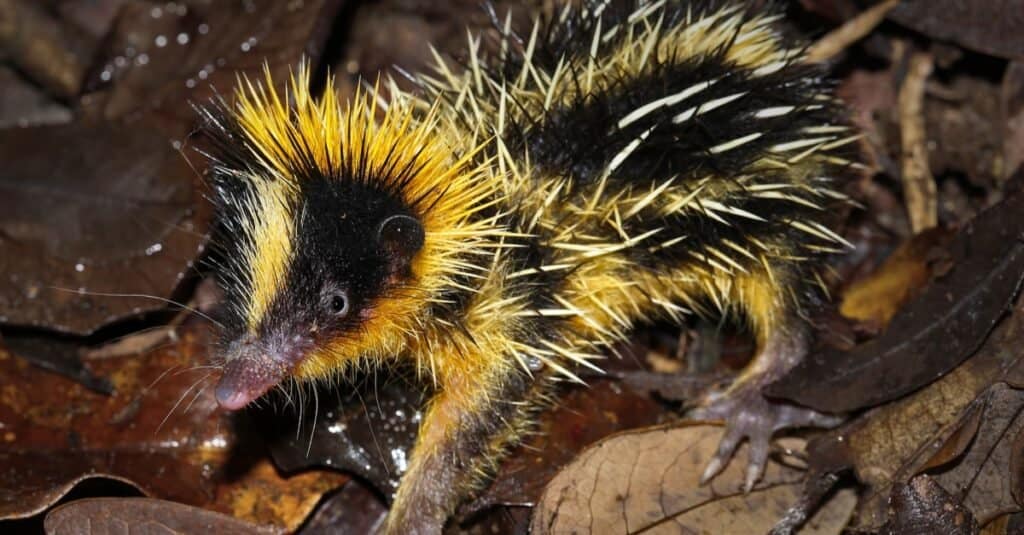
Humans can’t hear the sounds produced by the lowland streaked tenrec’s spines.
©Ryan M. Bolton/Shutterstock.com
The lowland streaked tenrec is a truly unique creature from Madagascar that looks like a real-life Pokémon or a hamster-sized spiky bumblebee. These small animals are only about 4.5 to 7 inches long, with bold black and yellow stripes, a long, pointed snout, and sharp spikes.
While their spikes are a great defense mechanism, they also serve another unexpected purpose: tenrecs can rub or rattle their spikes together to produce a unique ultrasonic sound. They use this sound to communicate, along with hissing, grunting, and clicking. Since they don’t have good eyesight, they also rely on echolocation to navigate their surroundings. Lowland streaked tenrecs mainly eat insects and worms, but they may occasionally snack on young amphibians or snakes.
2. Rosy Maple Moth (Dryocampa rubicunda)
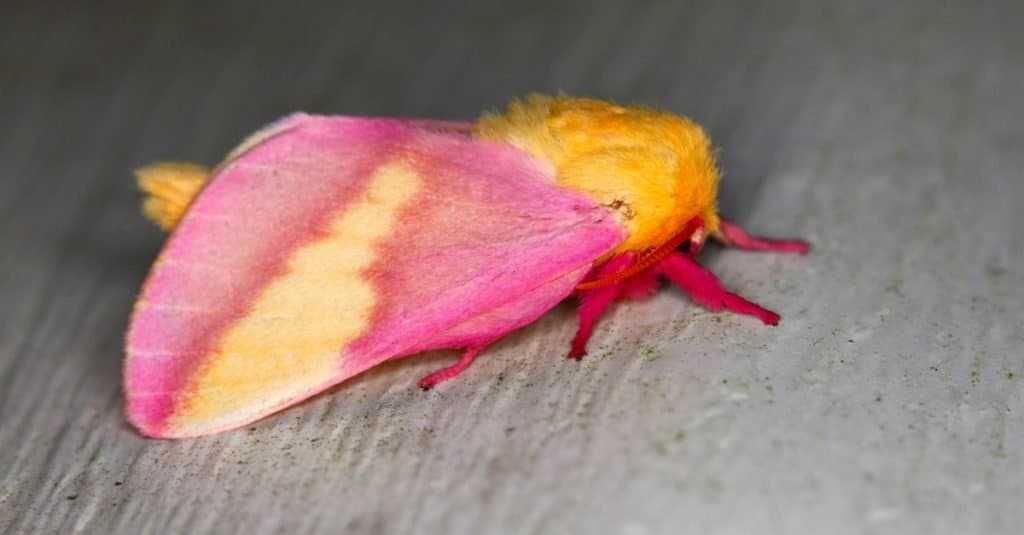
Rosy maple moths have wingspans reaching up to 2 inches wide.
©Jason Patrick Ross/Shutterstock.com
The rosy maple moth looks like something straight out of a fairytale, with its bright, cotton candy-like colors. Despite their bright appearance, the moth’s colors actually help them blend in with the winged seeds of maple trees. You can find these charming pink and yellow moths in woodlands and deciduous forests across North America, from southeastern Canada all the way down to Florida and eastern Texas. Rosy maple moths have a very short adult lifespan — they don’t even have working mouthparts, so they don’t ever eat. Their caterpillars, known as green-striped mapleworms, are light green with dark green stripes and a reddish-orange head.
3. Potoo (Nyctibius)
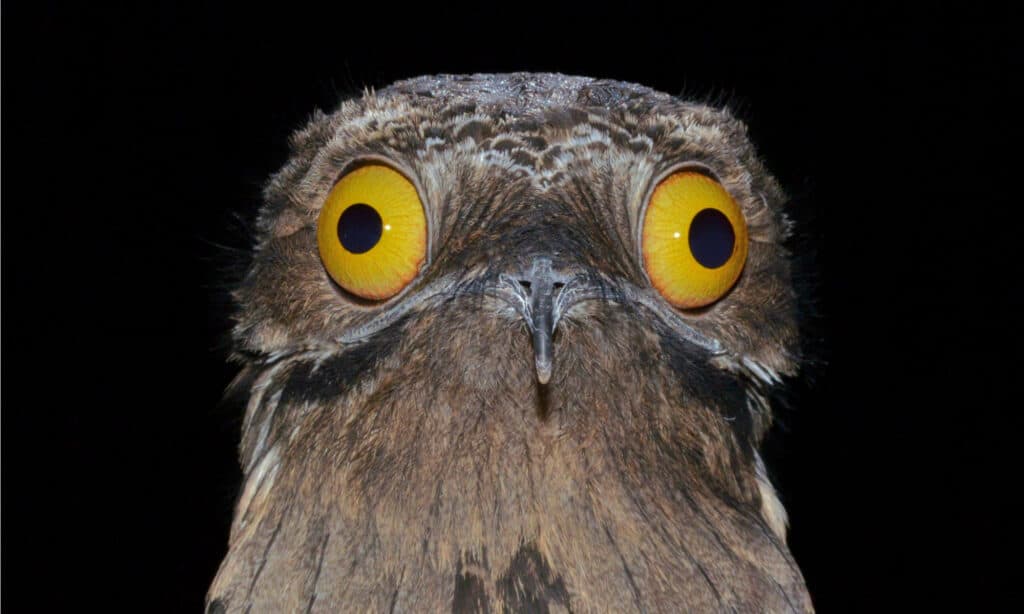
There are seven potoo species.
©Fabio Maffei/Shutterstock.com
The potoo is a very elusive bird from South and Central America. Despite its strange and striking appearance, it is a true master of disguise. Its brown, gray, and black patterned feathers have intricate patterns that allow it to blend in seamlessly with its surroundings. These unusual animals are so good at hiding in plain sight that they don’t even build nests for their chicks!
During the day, potoos close their enormous eyes and tilt their heads straight up, disguising their distinctive features to look like part of a tree trunk. But at night, their massive mouths and enormous eyes are hard to miss! Some people even describe them as “flying mouths with eyes” or “living tree stumps.” Beyond their mystical looks, potoos are also known for their mournful and spine-tingling calls, which are often described as a “poor-me-one” sound.
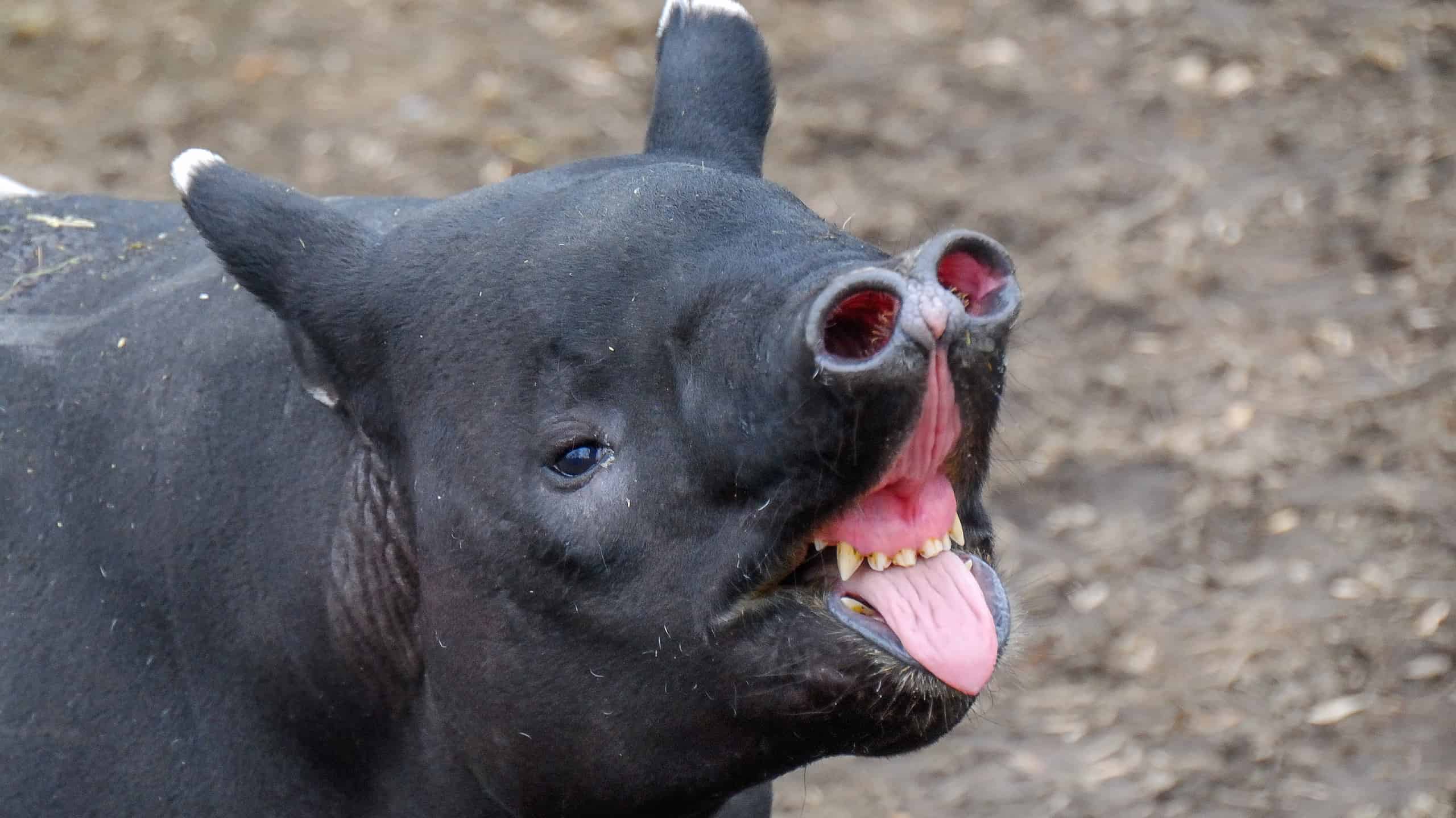
4. Tapir (Tapirus)
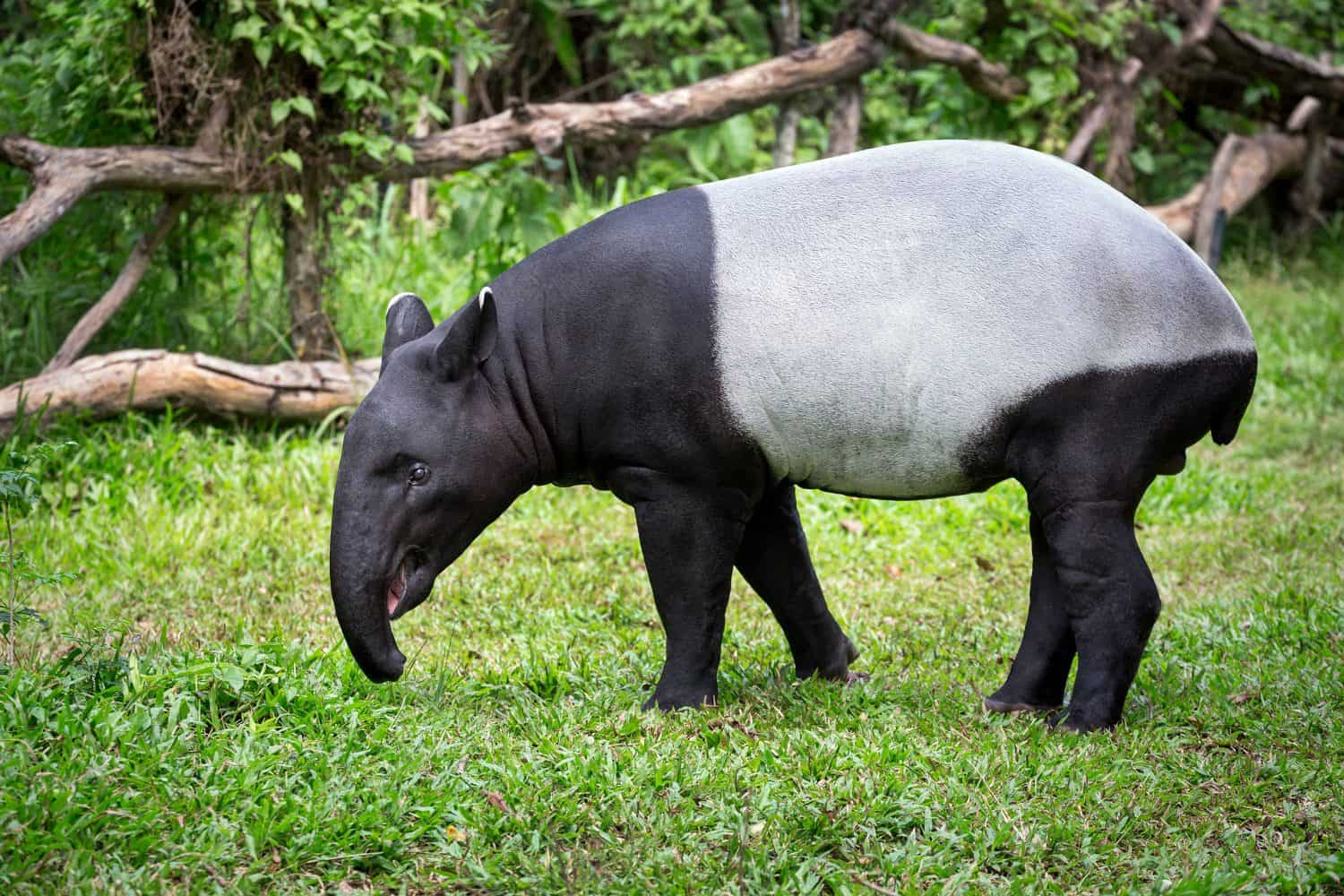
Tapirs are “living fossils,” as they have changed very little since the Eocene epoch.
©jeep2499/Shutterstock.com
The tapir, with its trunk-like snout and stocky body, looks like it could have walked right out of the mystical world of a Dr. Seuss book. The tapir’s long, prehensile nose works much like an elephant’s trunk. Tapirs use their noses to grab leaves and fruits, and even hold them above the water’s surface like a snorkel while swimming.
As the largest native land mammal in South America, these unusual animals can weigh anywhere from 300 to 700 pounds. Despite their dense build, they’re surprisingly fast and agile. Often called “gardeners of the forests,” tapirs have huge appetites for fruit and help disperse seeds for new plants to grow. Sadly, three of the four tapir species are currently classified by the International Union for Conservation of Nature (IUCN) as Endangered and one as Vulnerable.
5. Okapi (Okapi johnstoni)
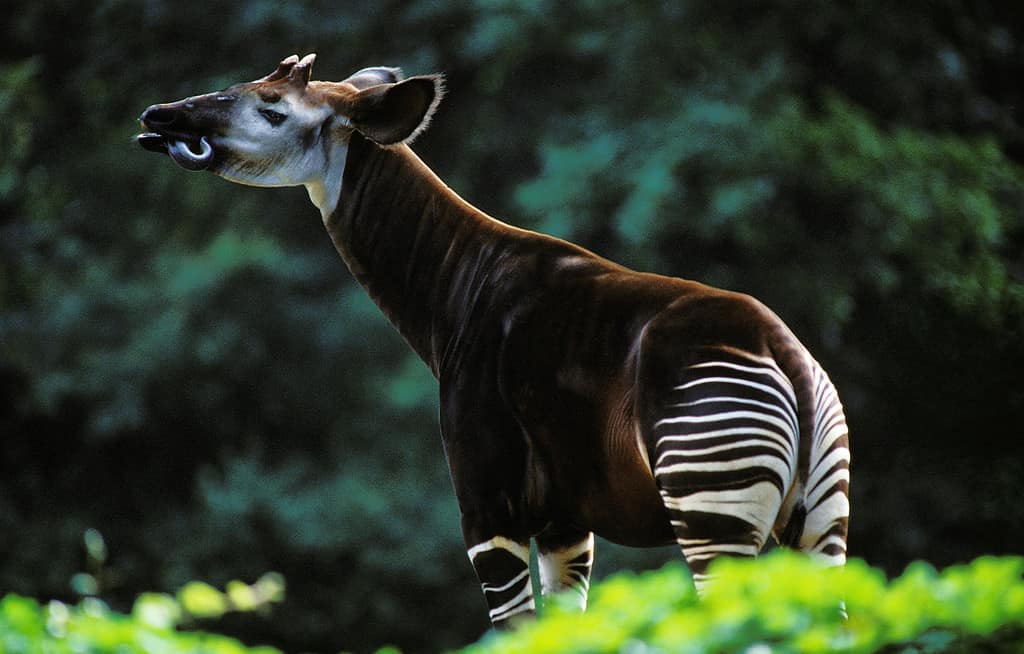
Okapis have super long, dark tongues.
©slowmotiongli/ via Getty Images
The okapi’s unique appearance resembles a mystical creature from ancient mythology. With its long, giraffe-like neck and zebra-striped legs, the okapi looks almost like a real-life chimera. It is the only living relative of the giraffe, and like its cousin, it has a long, prehensile tongue that it uses to strip leaves, fruits, and twigs from rainforest bushes.
Despite their striking appearance, okapis are surprisingly difficult to spot. These shy animals live deep within the dense forests of the Democratic Republic of the Congo in Central Africa and are quite elusive. Sadly, the okapi is currently classified as an Endangered species by the IUCN.
6. Dragon-Headed Caterpillar (Polyura athamas)
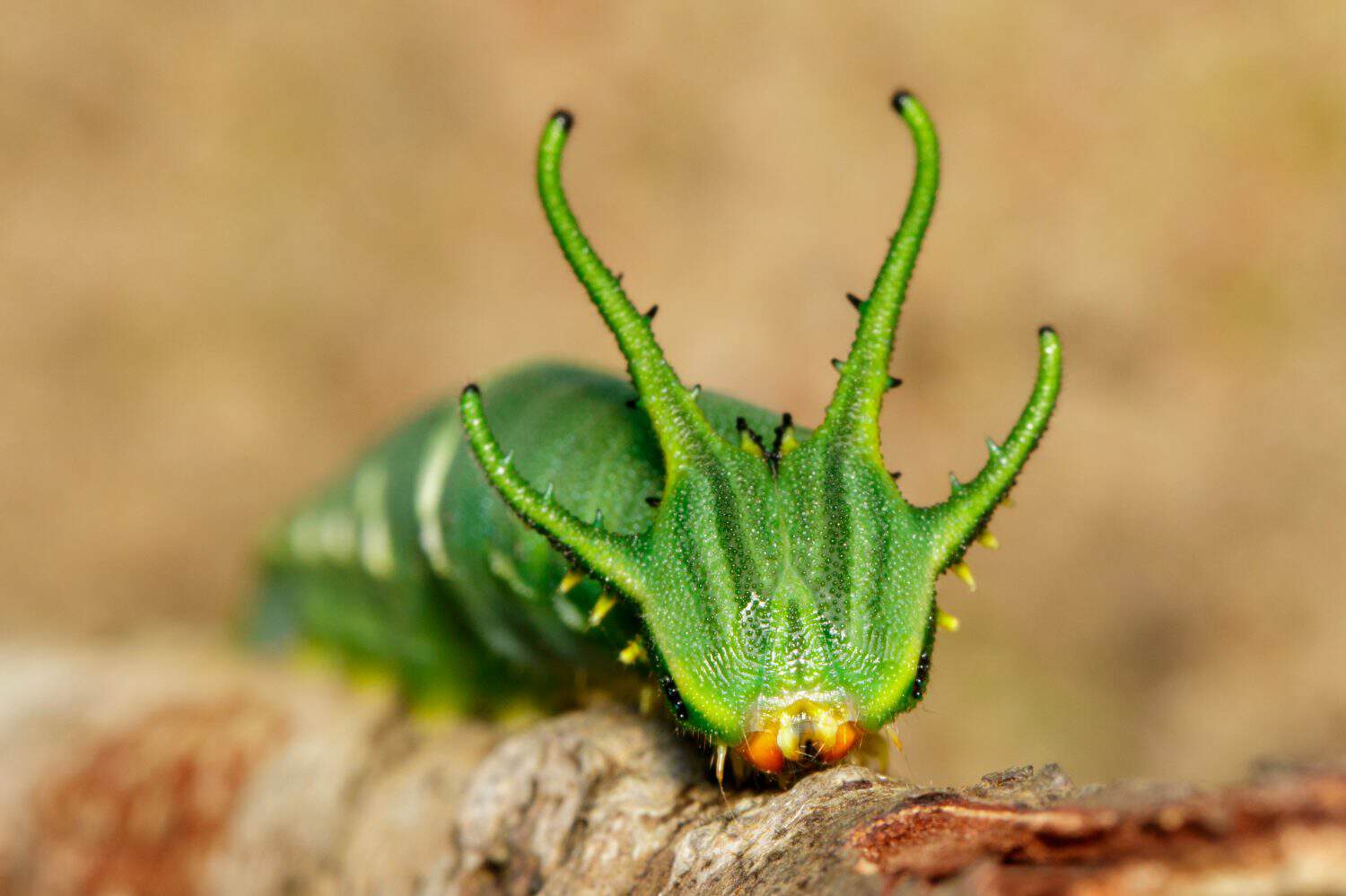
Dragon-headed caterpillars live on bean, legume, and pea plants in the Fabaceae family.
©yod 67/Shutterstock.com
Despite their fantastical appearance, these miniature dragons are quite harmless. Dragon head caterpillars are actually just the larval stage of the common nawab butterfly, which is mostly black with pale yellow or mint-green markings. In contrast, the caterpillars have dark green bodies with bold white stripes and large heads crowned with four enormous horn-like projections, making them look like tiny mystical dragons. You can find dragon head caterpillars in tropical regions of Asia, from the Himalayas in the west, across India and Sri Lanka, and through Southeast Asia to Indonesia and the Philippines.
7. Chinese Water Deer (Hydropotes inermis)
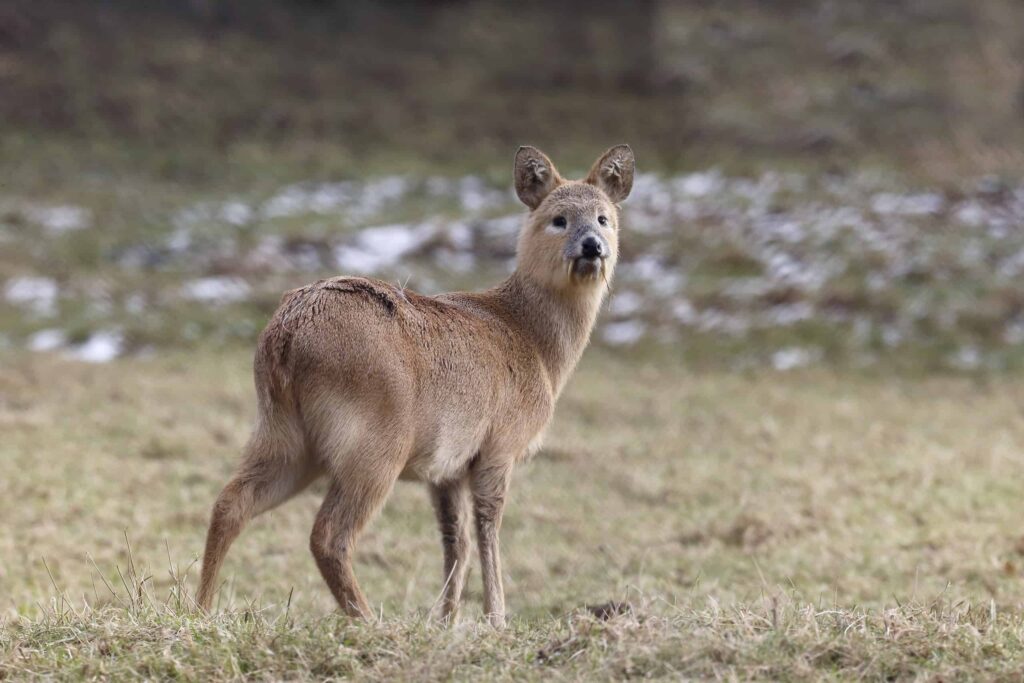
The water deer’s scientific species name means “without armor,” referring to their lack of antlers.
©Erni/Shutterstock.com
The Chinese water deer is sometimes called the “vampire deer,” and it’s easy to see why. Instead of antlers, these tiny deer have prominent, fang-like tusks. These tusks function much like antlers do for other deer species, serving primarily for display and defense.
But their vampire-like teeth aren’t the only feature that makes them look like mystical creatures. Chinese water deer are also small, growing only 20 inches tall at the shoulder and weighing just 24 to 35 pounds as adults. Their tiny hoofprints are only 1.5 inches long! They also have adorably large, rounded ears, making them look like cute, saber-toothed teddy bears. Native to China and Korea, they are excellent swimmers and prefer living near water sources like swamps, streams, rivers, and brooks.
8. Hammer-Headed Bat (Hypsignathus monstrosus)
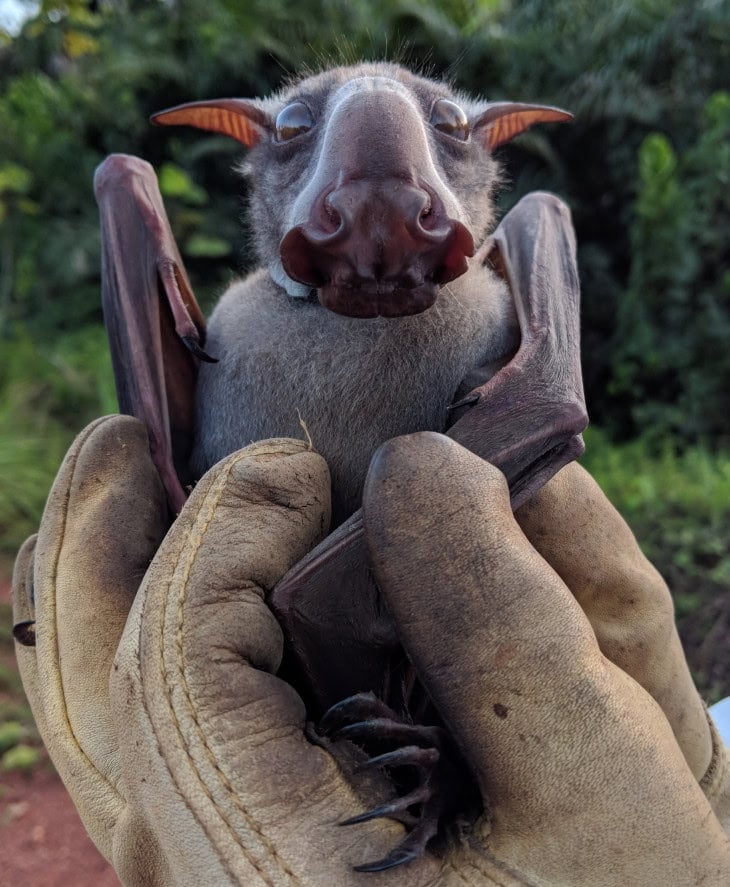
Male hammer-headed bats are nearly twice as heavy as female bats.
©Sarah H. Olson,Gerard Bounga,Alain Ondzie,Trent Bushmaker,Stephanie N. Seifert,Eeva Kuisma,Dylan W. Taylor,Vincent J. Munster, Chris Walzer / CC0 / Wikimedia Commons – Original / License
With a wingspan of 3.3 feet and an enormous, strangely-shaped head, the hammer-headed bat could easily be mistaken for a flying gargoyle. It is the largest bat in mainland Africa, but its size is just one of its unique features. As its name suggests, the male hammer-headed bat’s head is large, boxy, and elongated, like the head of a hammer, complete with enormous lips and a broad snout.
This distinctive shape allows males to produce loud, honking sounds to attract female mates. Males gather in large groups, perched in trees along rivers, while each performs his own unique mating display and honking sounds. The females observe these performances and select the one they like best. Hammer-headed bats live in West and Central Africa and primarily eat fruits — mostly figs, but also bananas, guava, and mangoes.
9. Goblin Shark (Mitsukurina owstoni)
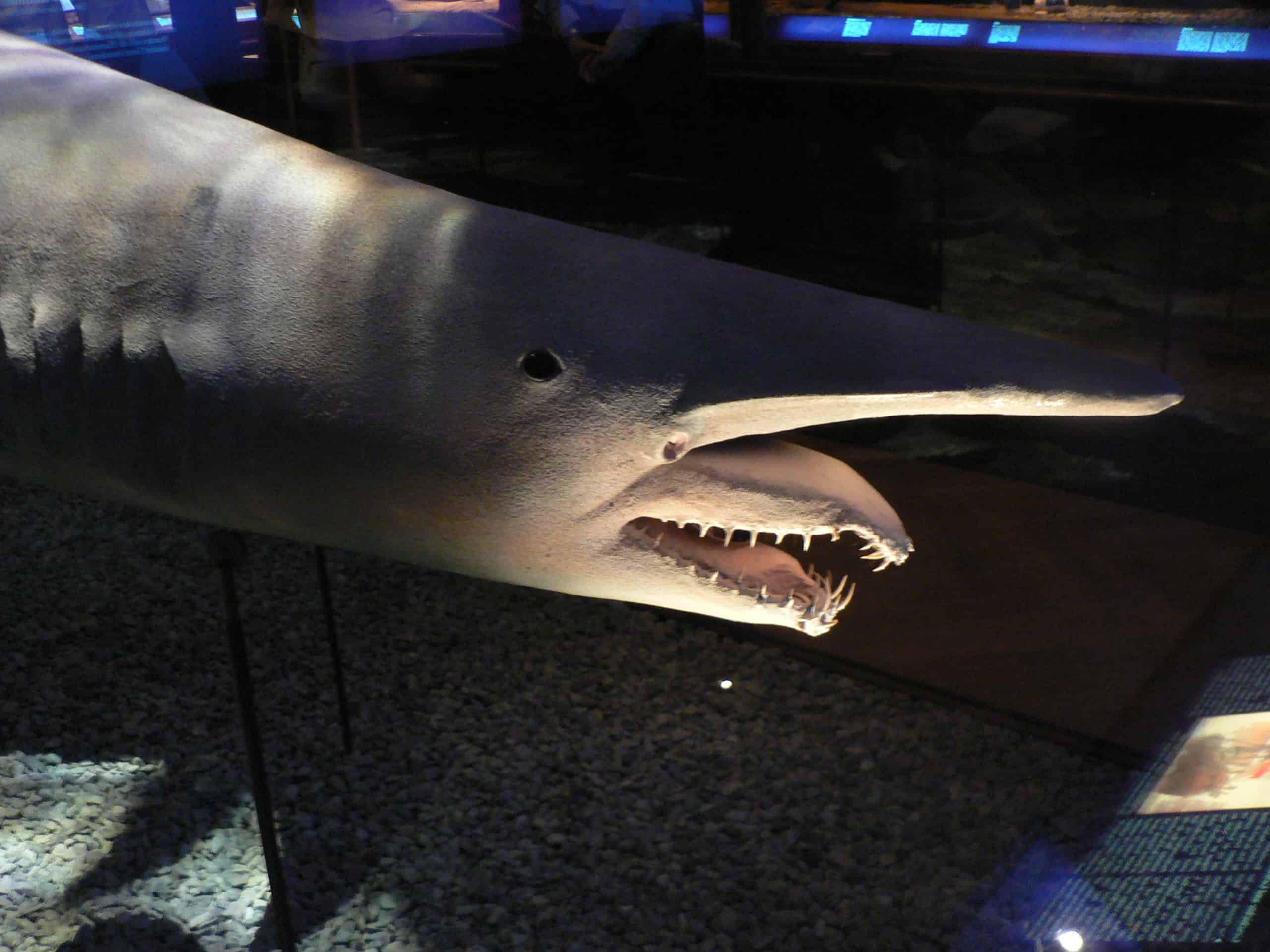
Goblin sharks have countless pores on the underside of their snouts, which house electricity-detecting organs.
©Peter Halasz / CC BY-SA 3.0 / Wikimedia Commons – Original / License
Like its name suggests, the goblin shark looks like something out of a nightmarish fantasy. Its somewhat flabby body is a peculiar purplish-gray or pale pink color, with bluish-gray edges along its small, rounded fins. The shark’s most striking feature is its long, shovel-like snout, which protrudes from its head and hangs over its mouth.
The goblin shark has scores of pointy, goblin-like teeth, which can still be seen even when its mouth is closed. When hunting, the shark can throw its jaws forward rapidly like a slingshot to snatch up unsuspecting prey like squid, deep-sea fish, and crustaceans. These impressive sharks grow to around 13 feet long and live along the sea floor, usually around 2,900 feet below the ocean’s surface. They have been found throughout the Indian, Atlantic, and Pacific Oceans.
10. Saiga Antelope (Saiga tatarica)
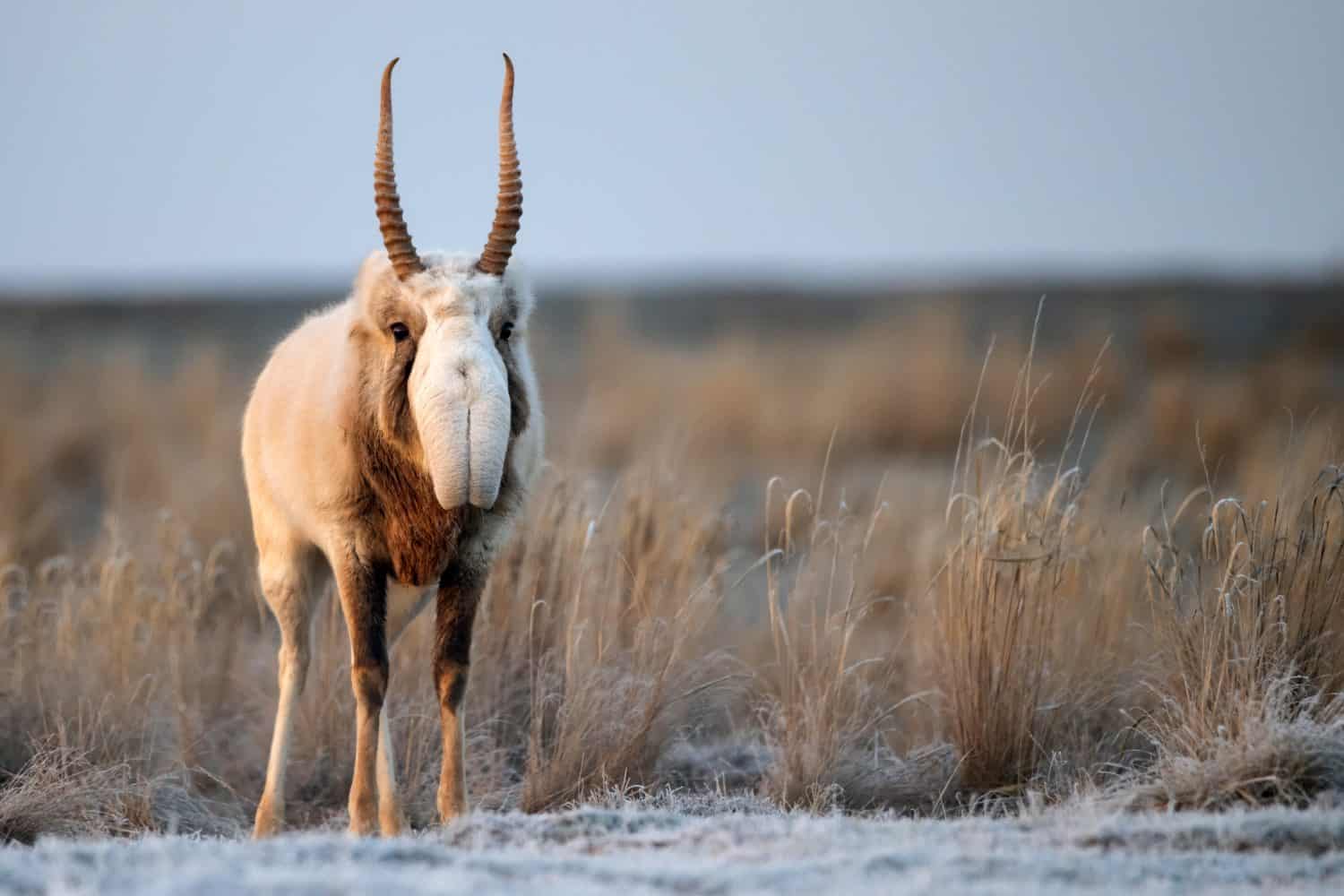
In the winter, the saiga’s coat becomes much thicker and longer to keep the animal warm.
©Yakov Oskanov/Shutterstock.com
The saiga antelope has one of the most unusual and otherworldly noses on Earth. It is massive, flexible, and quite bulbous, pointing downward like a garden spout hanging over the animal’s mouth. As strange as it may appear, however, this strange nose is highly functional. It helps to filter out dust in the summer and warms the cold air the animal breathes in during the winter. As you might expect for an animal with such a large nose, the saiga antelope has an excellent sense of smell, and males can produce loud, nasally roaring sounds. Males also sport impressive 6 to 10-inch-long horns.
Sadly, these horns are one of the reasons the saiga antelope is a Near Threatened species. These unique animals were once severely overhunted for their horns, leading to a dramatic decline in their populations. Thanks to conservation efforts, their numbers are rebounding. Today, the largest number of saiga antelopes is found in Kazakhstan.
11. Shoebill (Balaeniceps rex)
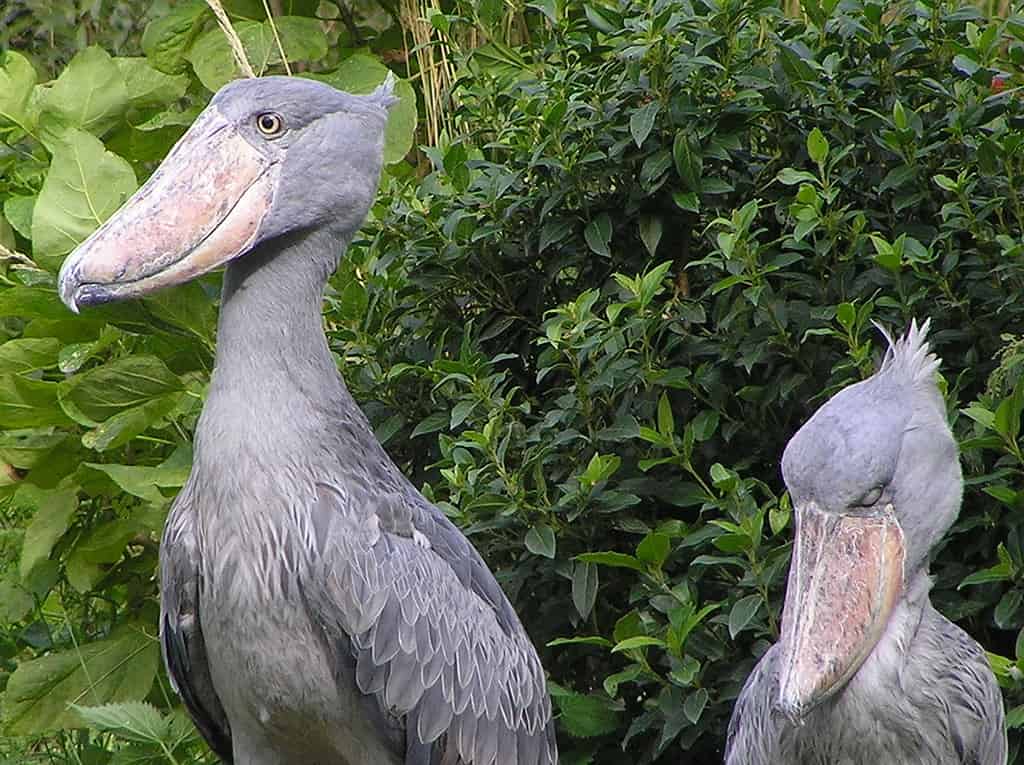
Shoebills are a Vulnerable species.
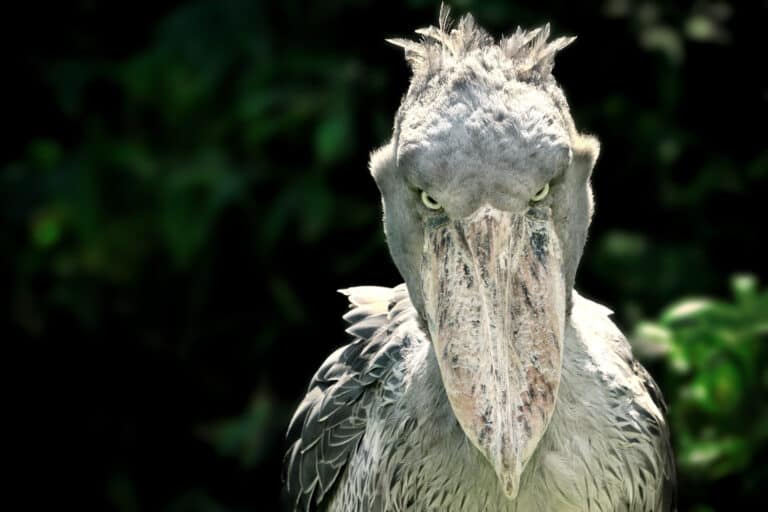
The shoebill is a prehistoric-looking feathered giant, standing 3.5 to 5 feet tall with an impressive 7 to 8-foot wingspan. Its enormous bill is over 7 inches long and nearly 7 inches wide. Though some call it a stork, the shoebill is actually more closely related to pelicans and can store fish and water in its bill. This massive bill also serves as an excellent sound maker, and shoebills clap their bills to scare away other birds from their territory.
Shoebills appear to move slowly and intentionally, with eyes that can fix on you like an all-too-intelligent dinosaur waiting for the kill. However, these birds can move surprisingly fast when needed. They are also great at soaring, but their enormous wings are more commonly used for balancing and moving through the slippery swamps of northern East Africa, where they live.
12. Hairy Frog (Trichobatrachus robustus)
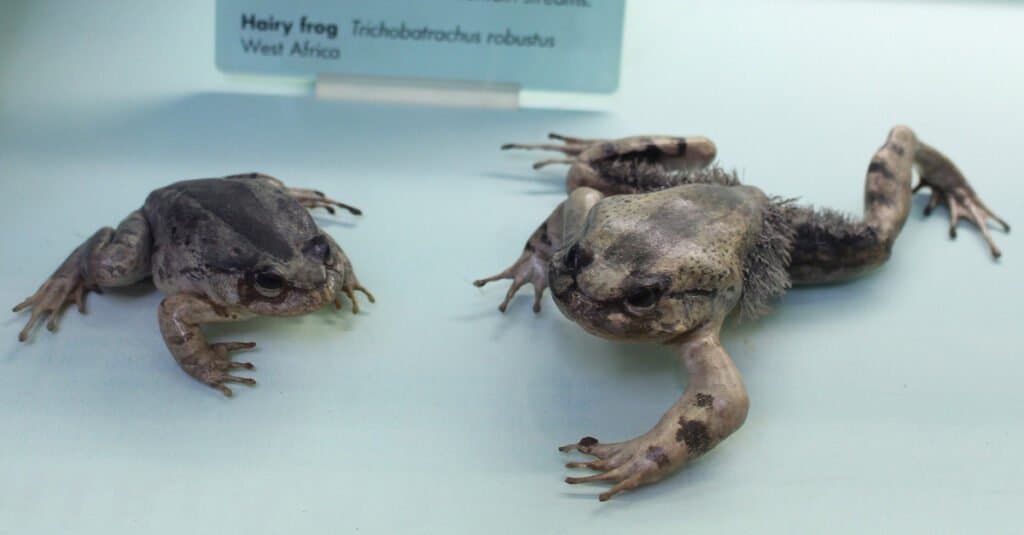
At first glance, the hairy frog might seem like an ordinary amphibian. Indeed, for most of the year, this 5-inch-long frog looks quite plain. However, during mating season, male hairy frogs undergo an almost werewolf-like transformation. They develop thick, bristly hair-like projections on their sides and thighs, which is why they are called hairy frogs, werewolf frogs, and even horror frogs. However, these hair-like projections are actually a mass of thin skin strands packed with blood vessels. Scientists believe this temporary “hair” growth helps the frog breathe better underwater. This is crucial because after the female lays her eggs, the male is solely responsible for their protection and essentially lives submerged until the tadpoles hatch.
If that weren’t strange enough, hairy frogs also have sharp, retractable “claws” that pop out of their toes. In reality, these are not true claws, but rather the broken ends of the frog’s own toe bones! When necessary, the frog forcefully breaks these bones, which can swing down and burst through its skin like tiny switchblades.
13. Maned Wolf (Chrysocyon brachyurus)
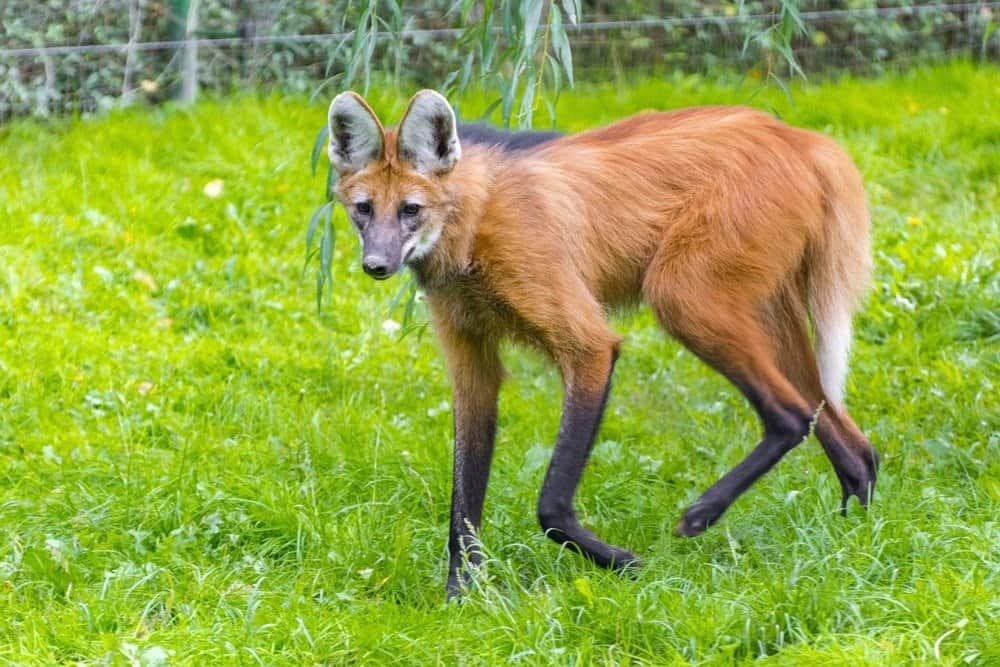
Maned wolves live in monogamous pairs.
©belizar/Shutterstock.com
The maned wolf is not closely related to a wolf or a fox, despite its name and appearance. In fact, it’s its own distinctly separate species and the only member of the Chrysocyon genus. These impressive animals are South America’s largest canid species, standing 3 feet tall at the shoulder and weighing around 50 pounds.
Maned wolves live in the Cerrado region of Brazil, Bolivia, Peru, Paraguay, and Argentina, an area that is a mix of grasslands, marshes, savannas, wetlands, and forests. Maned wolves have evolved to thrive here with their extra-long legs, which are particularly helpful in the tall-grass savanna areas. They mainly hunt alone, with a varied diet of vegetables, fruits, and small animals like insects, rabbits, birds, and rodents. Sadly, maned wolves are currently classified as a Near Threatened species by the IUCN Red List.
14. Barreleye Fish (Macropinna microstoma)
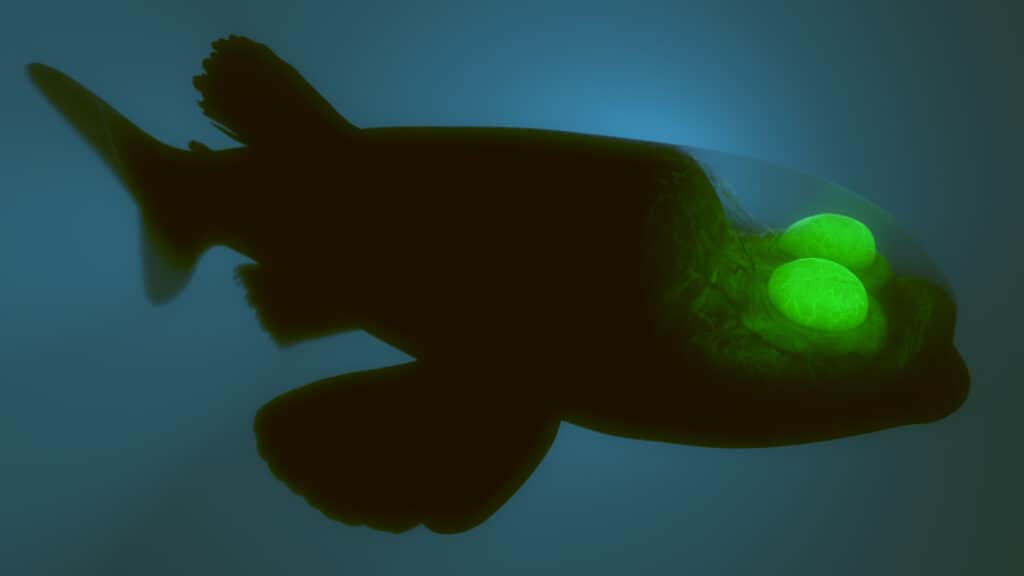
Barreleye fish are very rarely seen by humans.
©3DSam79/Shutterstock.com
The barreleye fish is unlike anything you’ve likely ever seen before — it looks more like a mystical submarine than a fish in many ways. Its extremely sensitive eyes are large, green, and barrel-shaped, pointing upward to locate prey. Its large forehead is transparent, allowing you to see straight inside the fish to these unsettling bright green orbs.
Barreleye fish only grow to around 6 inches long and mainly eat zooplankton, occasionally supplementing their diet with siphonophores or crustaceans. They are found in the dark depths of the northeast Pacific Ocean, typically around 2,000 to 2,600 feet below the surface. Their unique, glowing eyes contain a special yellow pigment, which helps the fish detect and recognize the difference between bioluminescent light produced by other sea creatures and actual sunlight.
15. Philippine Tarsier (Carlito syrichta)
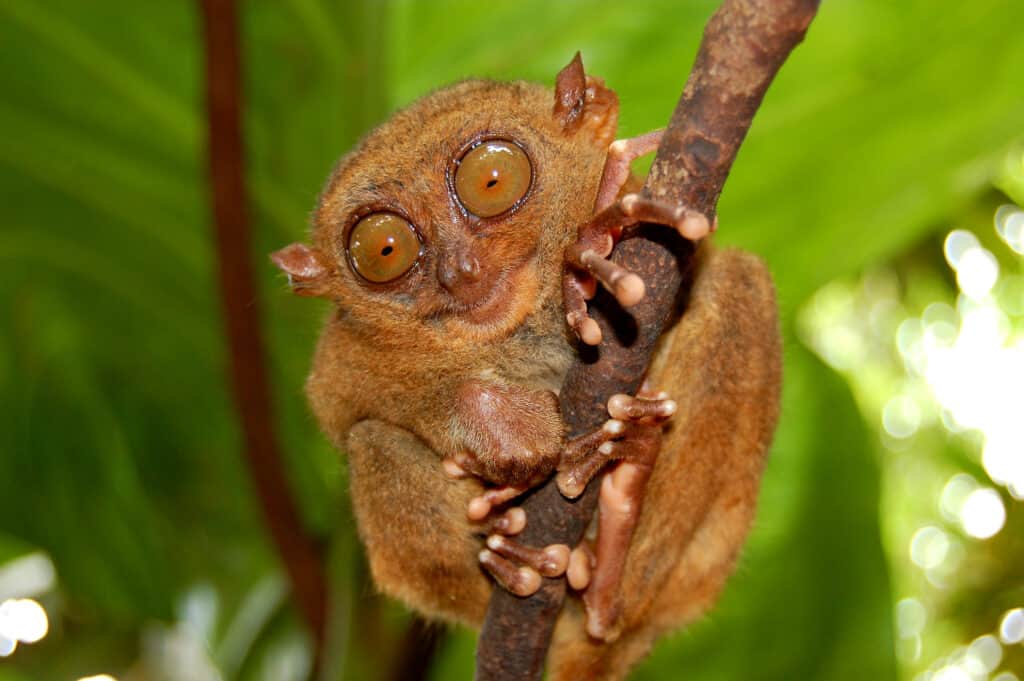
These tiny primates are completely carnivorous, feasting on small animals like birds, lizards, frogs, and insects.
©iStock.com/Rachel Palmer-Goncalves
One of the smallest primates on Earth, the Philippine tarsier looks like an adorable cartoon creation, perhaps a mix between a lemur and a frog. These tiny creatures have enormous, round eyes that can’t move; instead, their heads can rotate 180 degrees like an owl’s. These large and highly sensitive eyes help them hunt at night. In fact, each of the tarsier’s eyes alone weighs more than the animal’s brain!
Philippine tarsiers grow to be only 4.5 to 5 inches long and weigh a mere 4 to 5 ounces, with a 9 to 10-inch-long tail. Their extra-long fingers and toes have sticky, swollen pads on the ends, much like those of a frog or gecko. These provide extra gripping power, allowing them to securely cling to tree branches. Their feet also have two unusually long bones, which give them extra power for leaping among trees. As their name suggests, Philippine tarsiers can only be found in the Philippine archipelago. Sadly, they are classified as a Near Threatened species.