
Quick Take
- Xiphodracon, nicknamed the “Sword Dragon of Dorset,” is a rare, nearly complete ichthyosaur fossil from the Early Jurassic Pliensbachian Stage.
- Its elongated skull, bite marks, and limb abnormalities reveal insights into its diet, predator encounters, and life challenges.
- The fossil fills a critical gap in understanding ichthyosaur evolution and species diversity during a previously mysterious period.
The UK west Dorset coast is well known for its fossils. The so-called ‘Jurassic Coast’ has yielded numerous specimens that are now on display in museums worldwide. However, a newly identified specimen is changing what we thought we knew about the evolution of ichthyosaurs (an order of marine reptiles). Meet the “Sword Dragon of Dorset”—definitely not a creature you would want to encounter in the sea.
What Do We Know About the Ichthyosaur Fossil?
It is not unusual to find ichthyosaur fossils on the Dorset coast, from Lyme Regis east to Charmouth and Seatown. It is much rarer to find ichthyosaur fossils from the Pliensbachian Stage (part of the Early or Lower Jurassic Epoch), which dates to around 192 to 184 million years ago. Usually, only fragments are found, such as incomplete forefins or skulls.

Dorset’s Jurassic Coast in the UK is rich in fossils.
©JeniFoto/Shutterstock.com
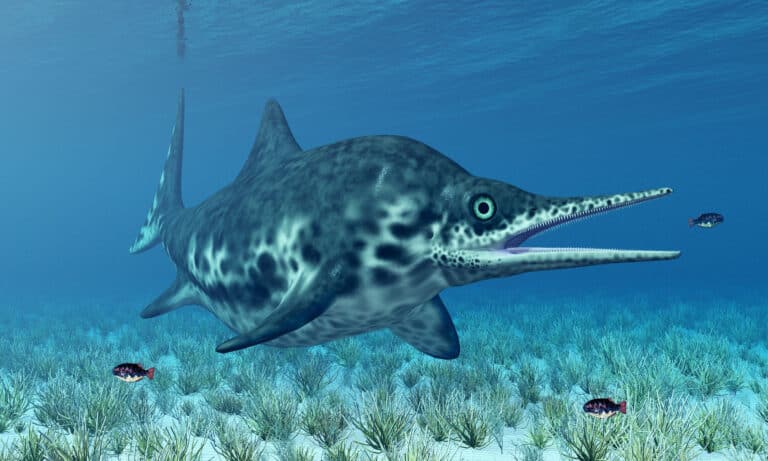
This particular fossil, named Xiphodracon, was found in 2001 near Golden Cap in Dorset by a local collector but has only just been studied in detail and formally described in late 2025. Unlike previous fossils, this one is three-dimensional and includes a striking, elongated skull with a sword-like snout.
Having examined the fossil, experts have concluded that this creature measured around 9 or 10 feet long and probably had a diet of fish and squid. There even appear to be remains of its last meal inside the fossil.
Why Is It So Important?
This is likely the most complete prehistoric reptile ever discovered from the Pliensbachian Stage. It also fills a gap in our knowledge about the animals that lived during this time.
Scientists already knew that ichthyosaur species from before and after the Pliensbachian were very different, but what happened during this interval was a mystery. This fossil helps experts determine when the major change in species diversity occurred.
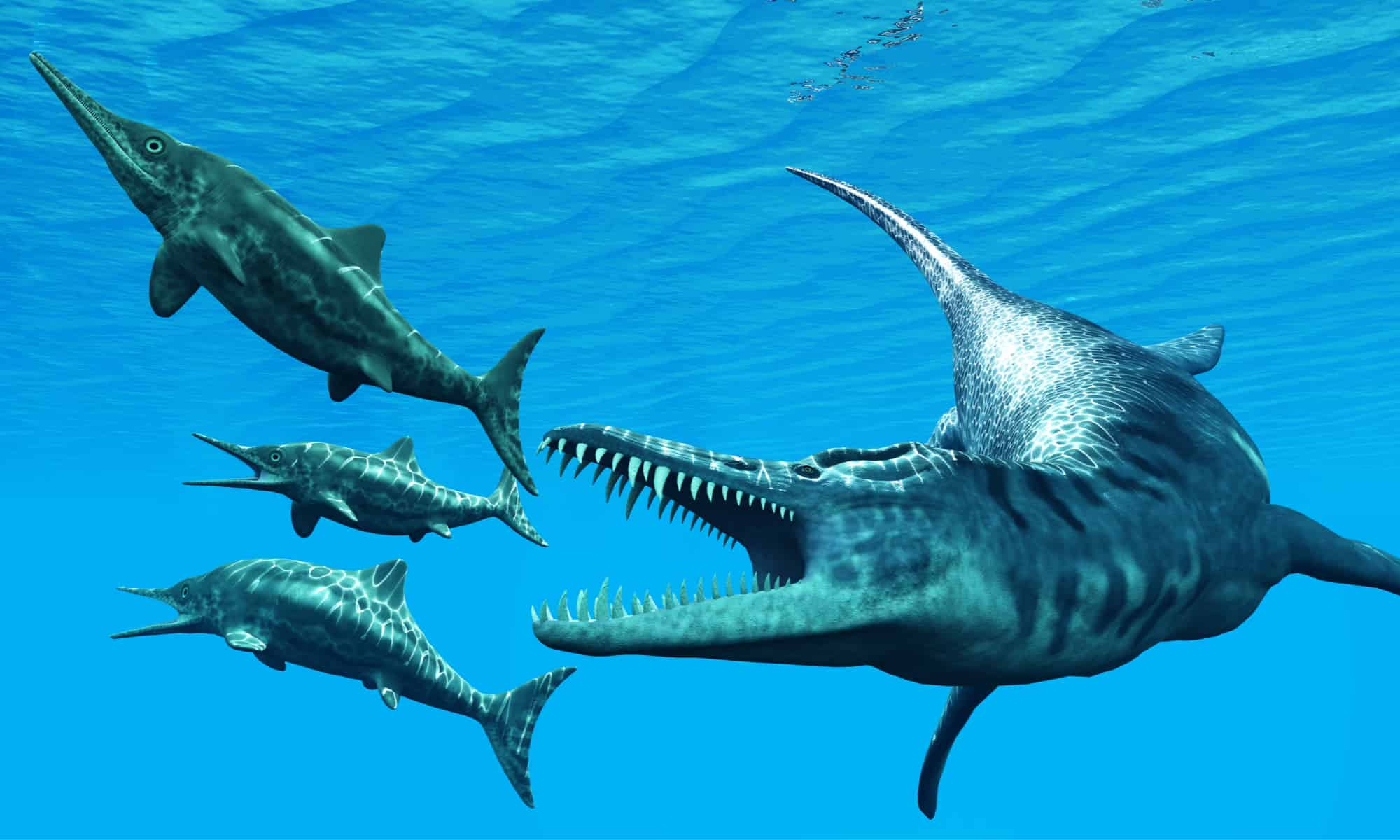
Additionally, features on the fossil provide insight into the creature’s life. It has abnormalities in some of its limb bones and teeth, suggesting it suffered a serious injury or illness. Its skull also bears significant bite marks, likely made by a larger predator. Life in the Pliensbachian was hard!