
Quick Take
- An almost complete skelton of Hoffman’s dragon shark was found in a quarry in New Mexico.
- It was named “dragon shark” due to the shape of its dragon-like jawline.
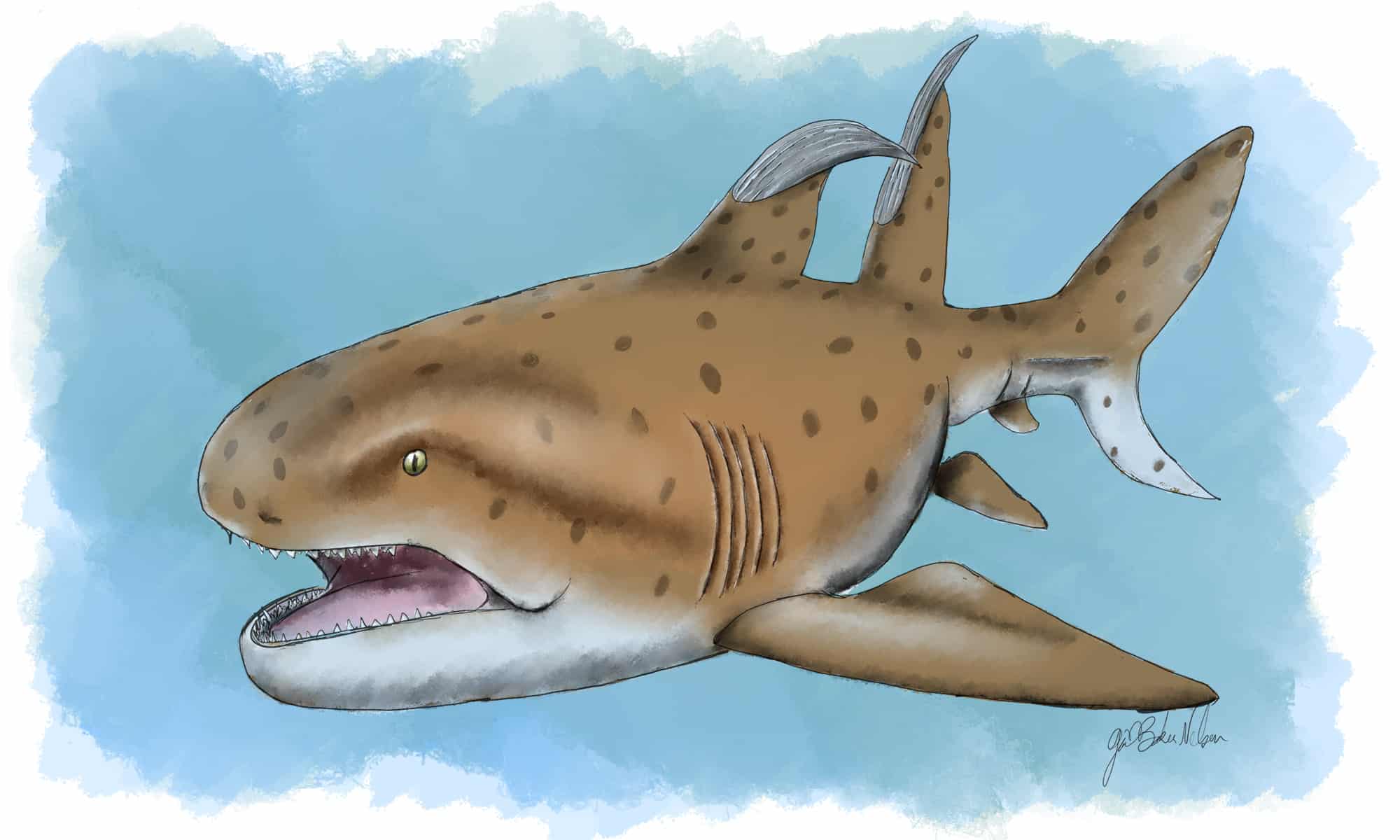
- The shark had 2.5-foot–long fin spines that resembled the spines on Godzilla’s back.
- The dragon shark was not a true shark, it belonged to a separate order of Chondrichthyes known as Ctenacanthiformes.
Hoffman’s dragon shark (Dracopristis hoffmanorum) is an extinct species of shark that lived during the Carboniferous period about 307 million years ago. The fossil of this prehistoric shark was discovered in New Mexico in 2013, and the first full description was published in 2021. When the 6.7-foot-long shark was found in a rock formation, its unique dentition and powerful jaws immediately caught the attention of scientists. We now know that the dragon shark, or the Godzilla shark, as it was commonly called, belonged to a separate group of sharks known as Ctenacanthiformes, which are different from present-day true sharks. Read on to learn more about Hoffman’s dragon shark.
The Godzilla Shark Gets a Name
Ancient shark expert John-Paul Hodnett, a graduate student at the time, discovered the first fossil of the dragon shark in an area east of Albuquerque, New Mexico in 2013. Despite assistance from colleagues at the New Mexico Museum, Northern Arizona University, St. Joseph’s University in Pennsylvania, and Idaho State University, the shark was not fully excavated, studied, named, and formally described until 2021.
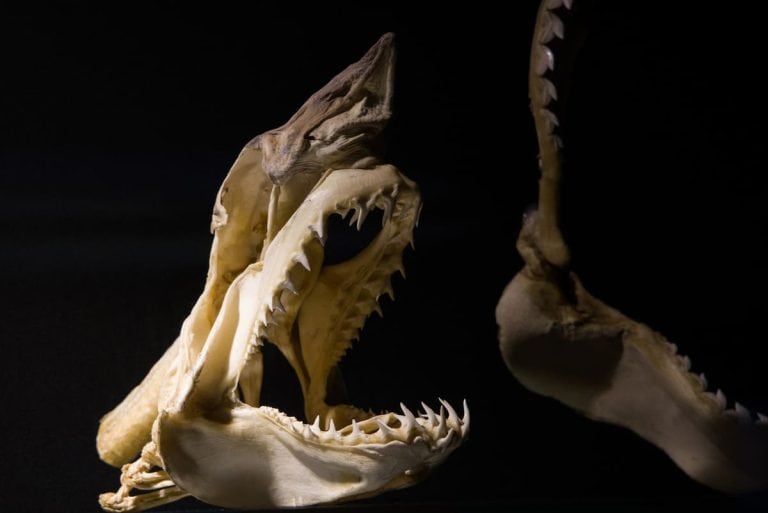
However, the species did get a nickname right away. It was called the “dragon shark” or “Godzilla shark” because it had reptilian features that were similar to both dragons and the Kaiju Godzilla from Japanese monster movies. The shark had a jawline similar to those seen in illustrations of mythical dragons. It also had 2.5-foot-long fin spines that looked like the spines on Godzilla’s back.
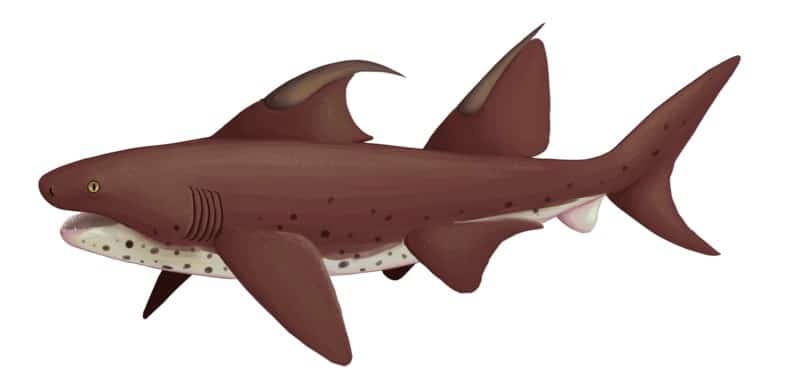
90% of the dragon shark’s bones were preserved.
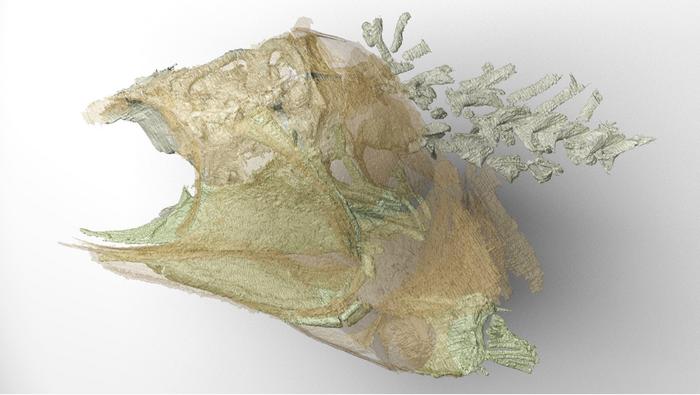
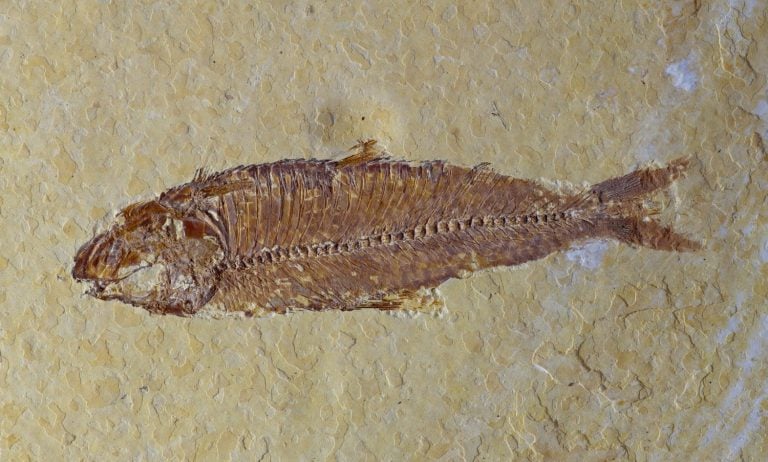
After years of study, scientists identified the fossil specimen as that of an adult female. It was a well-preserved skeleton with up to 90% of the bones preserved. This fossil represents the most complete specimen in the ctenacanthiform family on record. The outline of the body and other soft tissue impressions were also preserved.
The common name “Hoffman’s dragon shark” is a direct translation of the official scientific name Dracopristis hoffmanorum. The specific name “hoffmanorum” pays homage to the New Mexico family that owns the Kinney Brick Quarry where Hodnett first discovered the fossil. The genus name refers to the first moniker given to the fossil when paleontologists discovered it: dragon shark.
Hoffman’s Dragon Shark Is Not a “True Shark”
Like present-day sharks, the dragon shark belonged to the class Chondrichthyes and the subclass Elasmobranchii, which means they are closely related. However, the dragon shark was not a true shark. Instead, it belonged to a separate order of Chondrichthyes known as Ctenacanthiformes.
This shark family evolved separately from true sharks about 390 million years ago. One of the major features that distinguished this shark from modern sharks is the size and nature of its jaws. Ctenacanths generally had larger but less flexible jaws compared to present-day sharks, as their jaws were more firmly attached to their skulls.
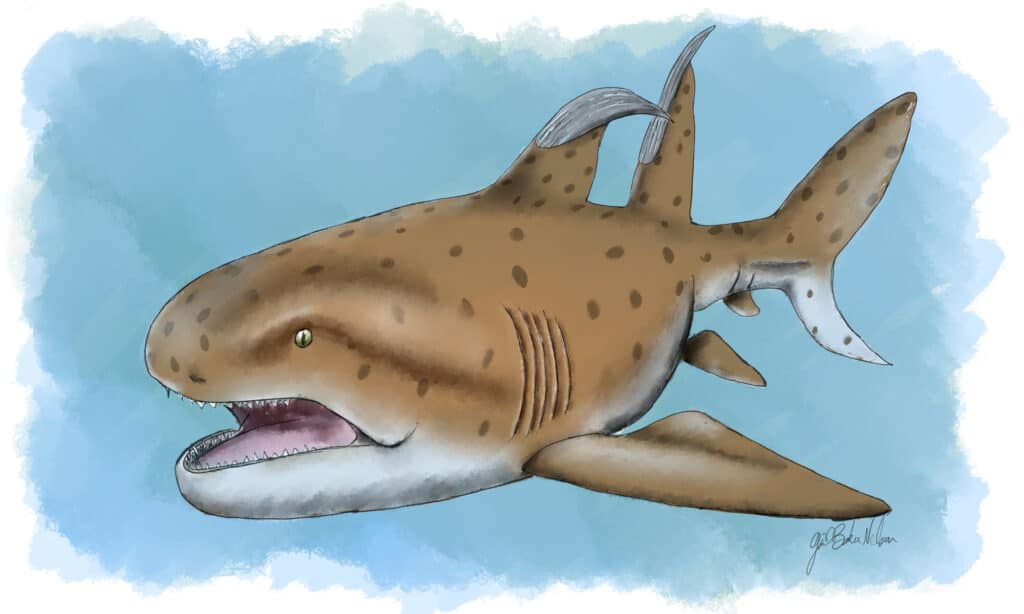
The teeth of this 300-million-year-old shark also looked nothing like those of present-day sharks. Instead of the spear-like rows of razor-sharp teeth seen in today’s sharks, theirs were shorter and broader. Although they were still predators, the nature of their teeth indicates that they hunted prey somewhat differently. Despite having 12 rows of teeth, their teeth were better suited for holding and crushing prey, rather than taking large bites like a great white shark.
These Sharks Were Not Apex Predators
Scientists believe Hoffman’s dragon shark would have been an ambush predator. They came to this conclusion based on the shape of the teeth and fins, which suggests that this fish lurked at the bottom of the ocean, probably waiting for prey. It most likely hunted small fish and crustaceans.
Interestingly, this massive fish was not the apex predator in its habitat. Scientists found fossils of a larger prehistoric fish of the same family in the same location. Glikmanius occidentalis, a much larger ctenacanth, would have preyed on this prehistoric shark. However, scientists theorize that the dragon shark’s large fin spines were likely used for defense against larger sharks.
What Was a Shark Doing in the Desert?
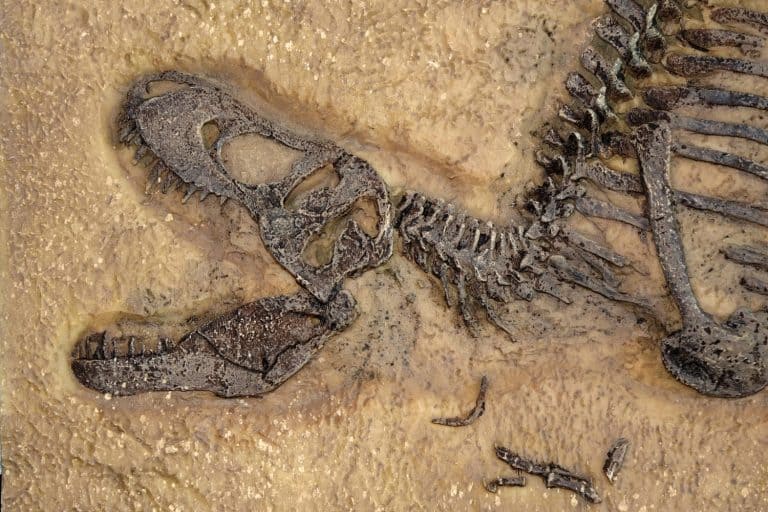
Scientists say the area where the fossil was found preserves a wealth of paleontological information. In fact, many have nicknamed it a “fossil mining ground.” Several other fossils have been discovered in the high desert plateaus of New Mexico. Paleontologists have found the bones of various prehistoric animals and numerous dinosaur remains such as those of Tyrannosaurus rex.
At that time, the area was a tropical rainforest, and a prehistoric inland sea covered most of eastern New Mexico. According to the team that studied the dragon shark, this creature probably lived in shallow depths along the coast. Other ancient fish species that lived alongside the dragon shark include Hybodontiforms, Holocephalans, and Actinopterygians. The Megalichthyoform sarcopterygian and several other fish species may have lived in this area as well.
However, New Mexico is not the only state where ctenacanth sharks occurred. In 2024, Hodnett published a new study detailing the findings of ctenacanth sharks in Kentucky and Alabama.