
Quick Take
- A fossil mislabeled as a generic cat sat forgotten in a museum drawer for years. What it actually was rewrites the saber-tooth family tree. Discover the mislabeled fossil →
- Saber-teeth were terrifyingly effective hunters, yet they had a structural weakness that may explain why the entire lineage vanished. See the structural weakness →
- The real bombshell from this discovery is not the fossil itself. It is how many more like it are probably still sitting unopened in museum drawers worldwide. Uncover the museum trove →
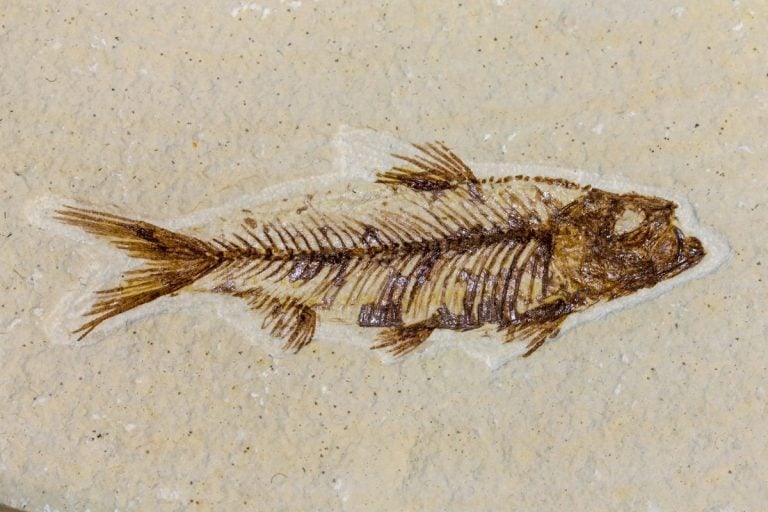
The investigative work inherent to paleontology is unforgiving. Any paleontologist can tell you: discovery requires extrapolating big ideas from fragmentary bones, reconstructing the past with little to guide you. There are likely countless fossils and bones tucked away in museum backrooms. They may hold great discoveries, yet institutions often lack the staff or resources to bring them to light. Take this fossil, one that a determined paleontologist found in a drawer at the American Museum of Natural History in New York.
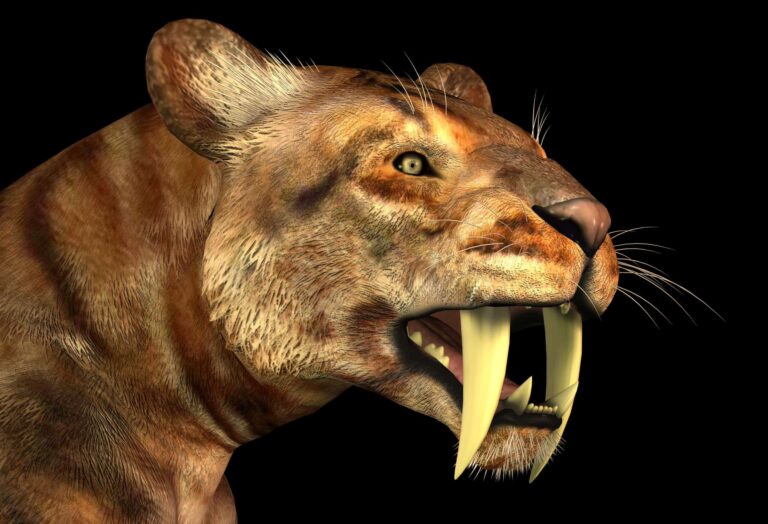
What was once thought to be merely a common feline fossil turned out to be an ancient saber-toothed cat that lived in North America over 5 million years ago. As reported by Eureka Alert, a UC Berkeley paleontologist identified this fossil, which would have likely remained in a drawer collecting dust forever without her keen eye. Now, equipped with a nearly full skull, the paleontologist has been able to tentatively place it in the family tree of saber-tooth cats. Simultaneously, she was able to contrast it with the most well-known saber-tooth cat in history: the Smilodon. Let’s learn more about this new study and how it helps explain the evolutionary timeline of saber-toothed cats before their extinction around 10,000 years ago.
Scan It and Forget It
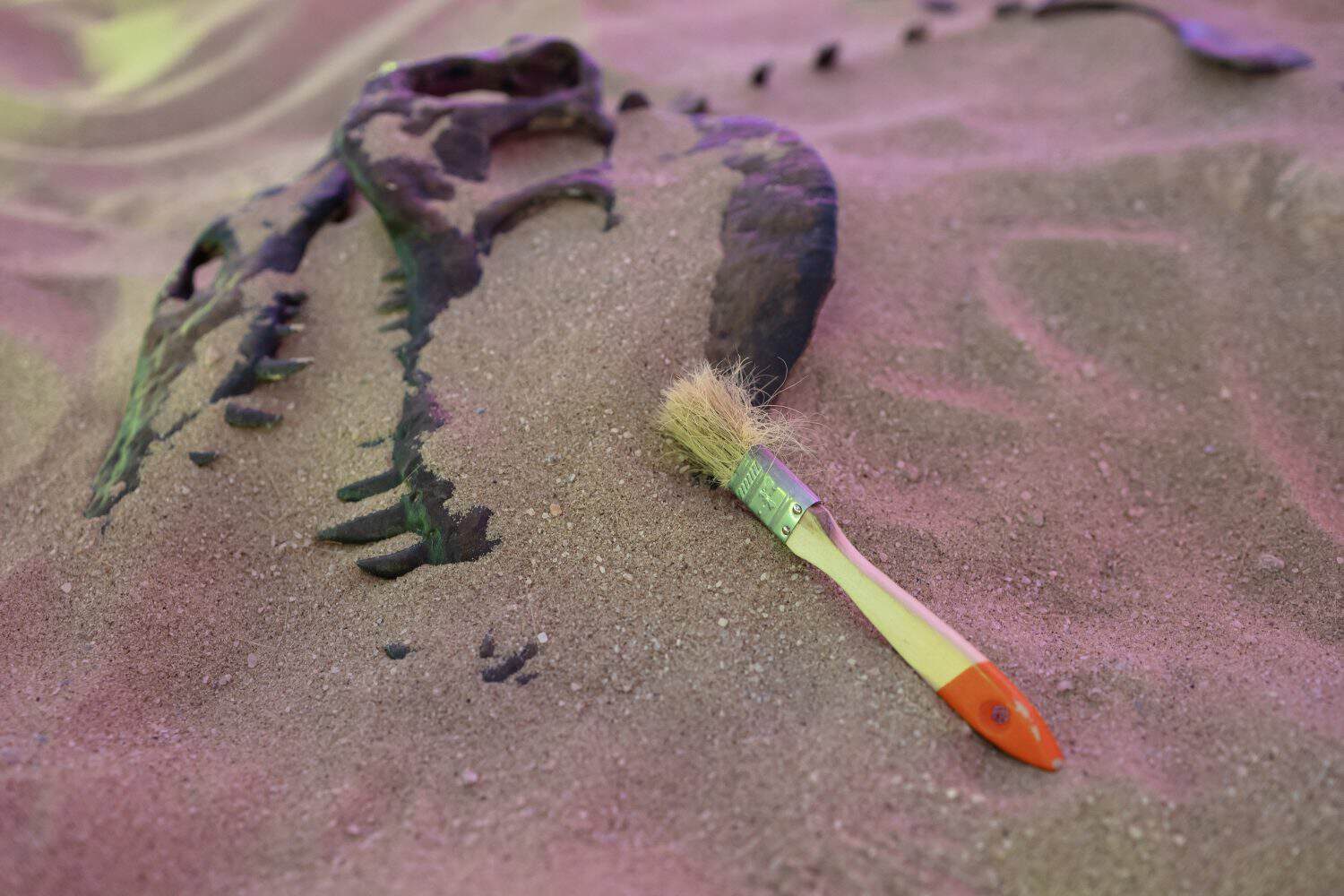
Paleontologist Narimane Chatar scanned the fossils years before she matched them with a previously identified saber-tooth species.
©Sarbinaz/Shutterstock.com
A new study published in the Journal of Vertebrate Paleontology details how one curious researcher identified overlooked fossils as belonging to an ancient lineage of saber-toothed cats.
Paleontologist Narimane Chatar became interested in saber-toothed animals during her post-graduate studies. Her PhD thesis focused on their evolution. Research for this process brought Chatar to various museums around the world. Armed with a portable laser scanner, she took intricate surface scans of the sabertooth fossils. Later, she combined these scans to build fully three-dimensional (3D) images of the fossils.
A visit to the American Museum of Natural History in New York brought her to an inconspicuous drawer labeled “felids.” One specimen looked remarkably similar to more ancient cats. At the time, the specimen had been labeled as Pseudaelurus, an extinct group of early cat-like carnivores that has historically been used as a catch-all classification for some fragmentary fossil cats.
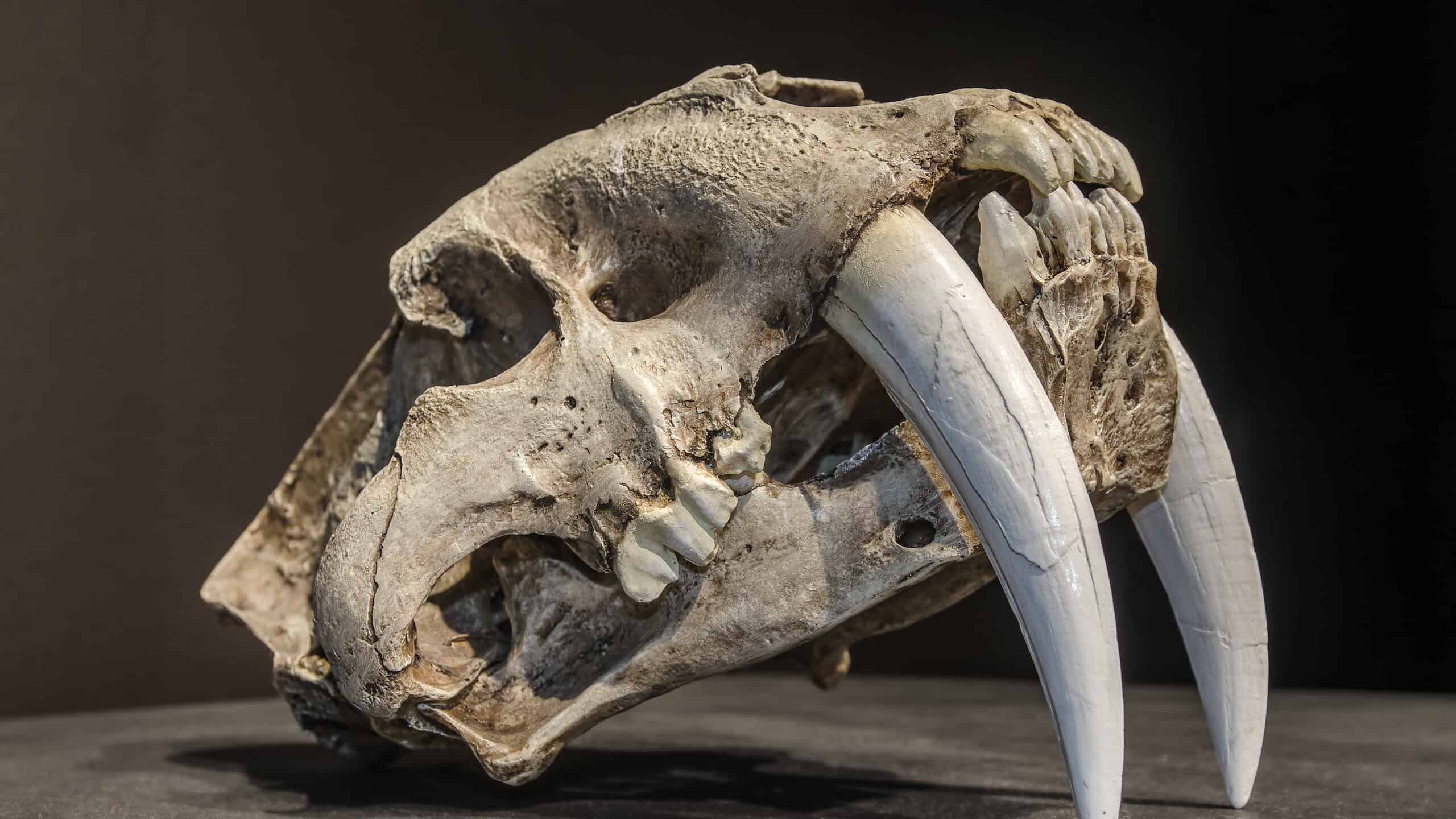
As Chatar explained to Eureka Alert, the fossil caught her eye. “I was a bit intrigued because the cranium was quite complete and had a fragmentary mandible with the whole dentition. And in the drawer I also found upper canines. When I saw that they were laterally compressed, I knew it was not a cat or a tiger.”
However, other work demanded her attention, and Chatar forgot about the curious fossil until she saw a specimen of Adelphailurus kansensis at the Yale Peabody Museum that looked remarkably similar. She made a note of it. Later, in Berkeley, while working on bite force research in carnivores, Chatar analyzed the American Museum of Natural History fossil as a side project.
Matching Mandibles
Berkeley postdoctoral fellow Narimane Chatar and her colleague Jack Tseng, a Berkeley associate professor of integrative biology, have tentatively matched the forgotten fossil with a previously identified species: Adelphailurus kansensis. The first known specimens of this species consisted only of jaw fragments and teeth. Now, with a cranium, teeth, and lower jaw, Chatar and Tseng were able to place it in the saber-tooth family tree. Chatar is quick to note just how varied that family once was.
“Back in the days when we thought about sabertooths, we thought ‘Smilodon’ and that’s it. We thought that all species that exhibited a somewhat saber-like tooth morphology must have hunted like Smilodon and behaved like Smilodon,” Chatar told Eureka Alert. “We are now starting to see a great disparity within those animals, and especially in the early diverging taxa, like Adelphailurus kansensis.”
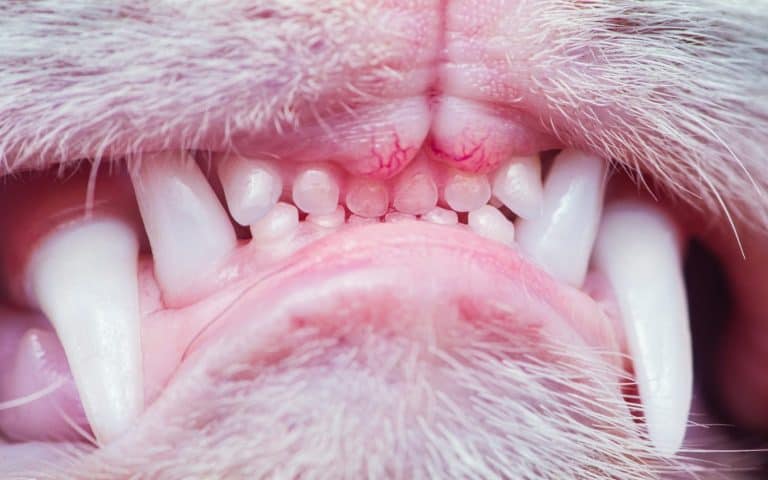
These ancient cats had more fragile teeth than modern felines. They were also more adapted to slicing and severing, resulting in knife-like fangs flattened on their sides. Their premolars also resembled blades adapted for chopping and shredding. Chatar’s complementary research on carnivore bite mechanics confirmed this. In simulations conducted by her and Jack Tseng, 3D-printed saber teeth easily penetrated gel with the consistency of flesh but routinely fractured when encountering simulated bone. This suggests that saber-toothed cats may have died out due to competition from carnivores with rounder, harder teeth.
Hidden Treasure

Who knows just how many misidentified fossils locked in dusty museum drawers await proper discovery.
©Adam bartosik/Shutterstock.com
Scientists aren’t exactly sure how many saber-tooth species once existed. The recent fossil identification accomplished by Chatar and her colleague, however, reveals an impressive variety among saber-toothed species. The identified species—Adelphailurus—featured a longer and narrower snout than other saber-toothed cats from the same era. It also had teeth with slight serrations on their edges, unlike many identified species. The findings also appear to support Chatar’s theory that, once saber-toothed cats evolved their elongated fangs, they were unable to revert to a different tooth structure. As the environment changed over time, their saber-tooth physiology remained the same.
Perhaps the biggest takeaway from the new study, however, is the promise of unrealized discovery. As Chatar told Eureka Alert, “It highlights the need to go back to those old collections and open every single drawer and look at those specimens, because there might be amazing fossils like this one just hidden somewhere, labeled cat or Pseudaelurus or something else, that just need to be described.”