
Quick Take
- Horseshoe crabs aren't actually crabs, and what they really are changes how scientists think about their 450-million-year survival streak.
- Every time a vaccine gets cleared for human use, horseshoe crabs are quietly involved in the process, and that involvement comes with a significant cost most people never hear about. See the biomedical harvest impact →
- A single shorebird species stakes its entire Arctic migration on Delaware Bay horseshoe crab eggs, and when crab numbers dropped, the species nearly vanished with them. Explore the shorebird connection →
- Rescuing a stranded horseshoe crab takes one second, but doing it wrong can permanently cripple the animal. The specific technique used matters for an important reason. Learn the rescue technique →
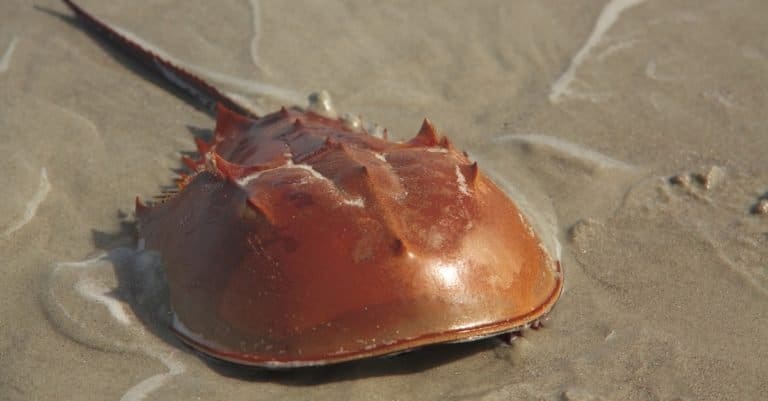
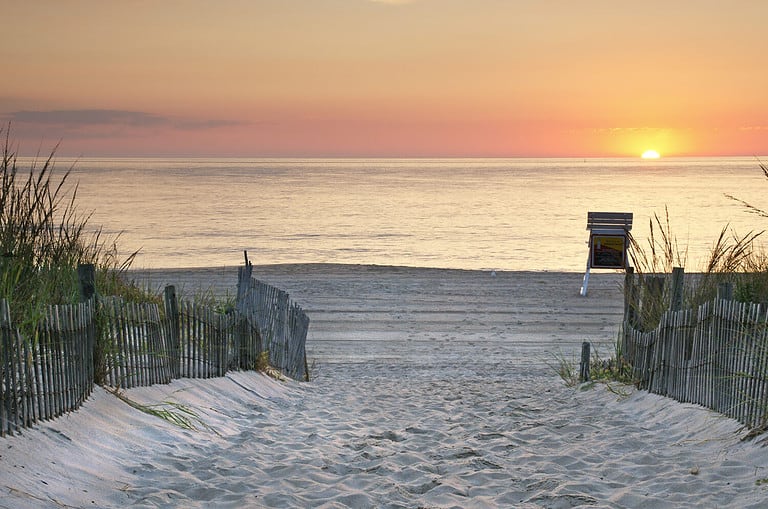
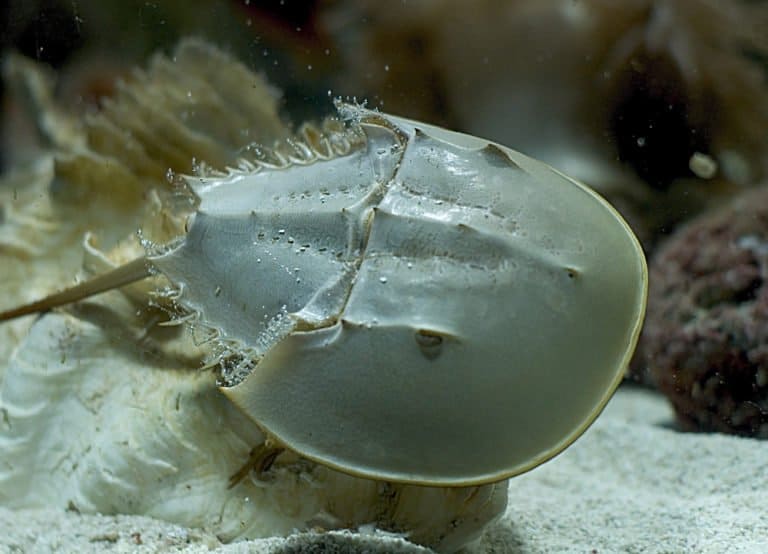
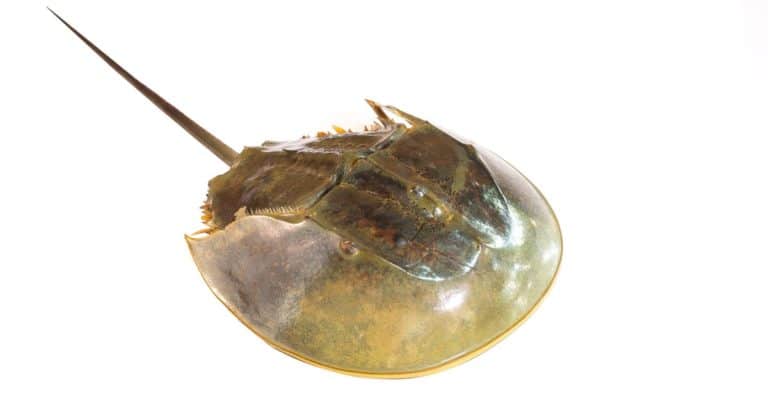
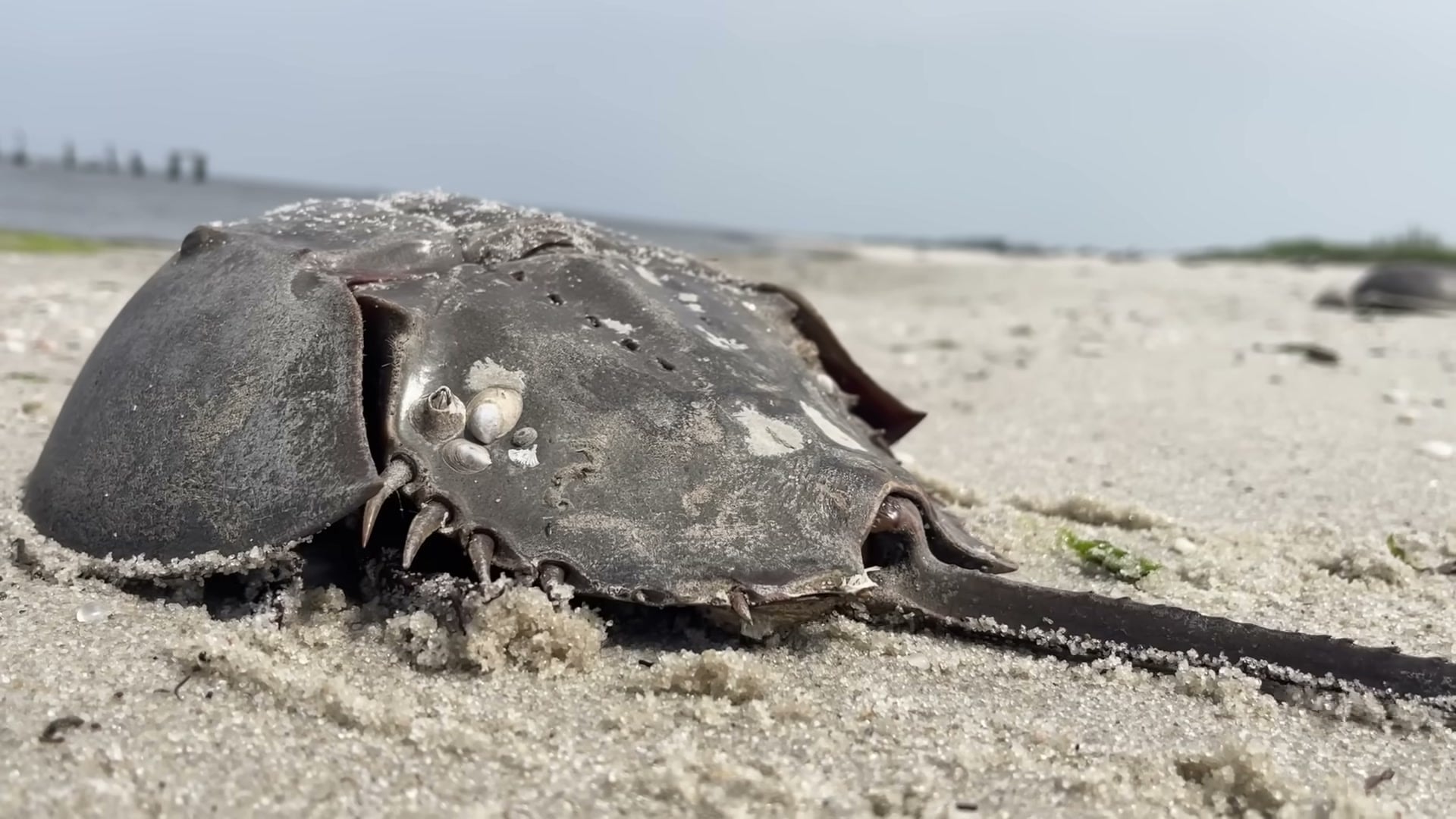
Every spring along the Delaware Bay, the sand at the southern tip of New Jersey fills with horseshoe crabs hauling themselves ashore on the high tides to spawn. Despite the name, they aren’t crabs. They belong to the order Xiphosura, a lineage of marine arthropods more closely related to arachnids than to true crabs. Fossils from over 450 million years ago show body plans nearly identical to today’s animals, which is why horseshoe crabs are often called living fossils.
The spawning ritual is straightforward but enormous in scale. A female digs into the wet sand and deposits roughly 3,650 to 4,000 eggs per cluster, with a single female producing tens of thousands over the season. Males fertilize the eggs externally, often while clasped to the female’s shell using modified front claws called claspers. It is common to see a female towing one attached male and several unattached “satellite” males trailing behind, all competing to fertilize the same nest.
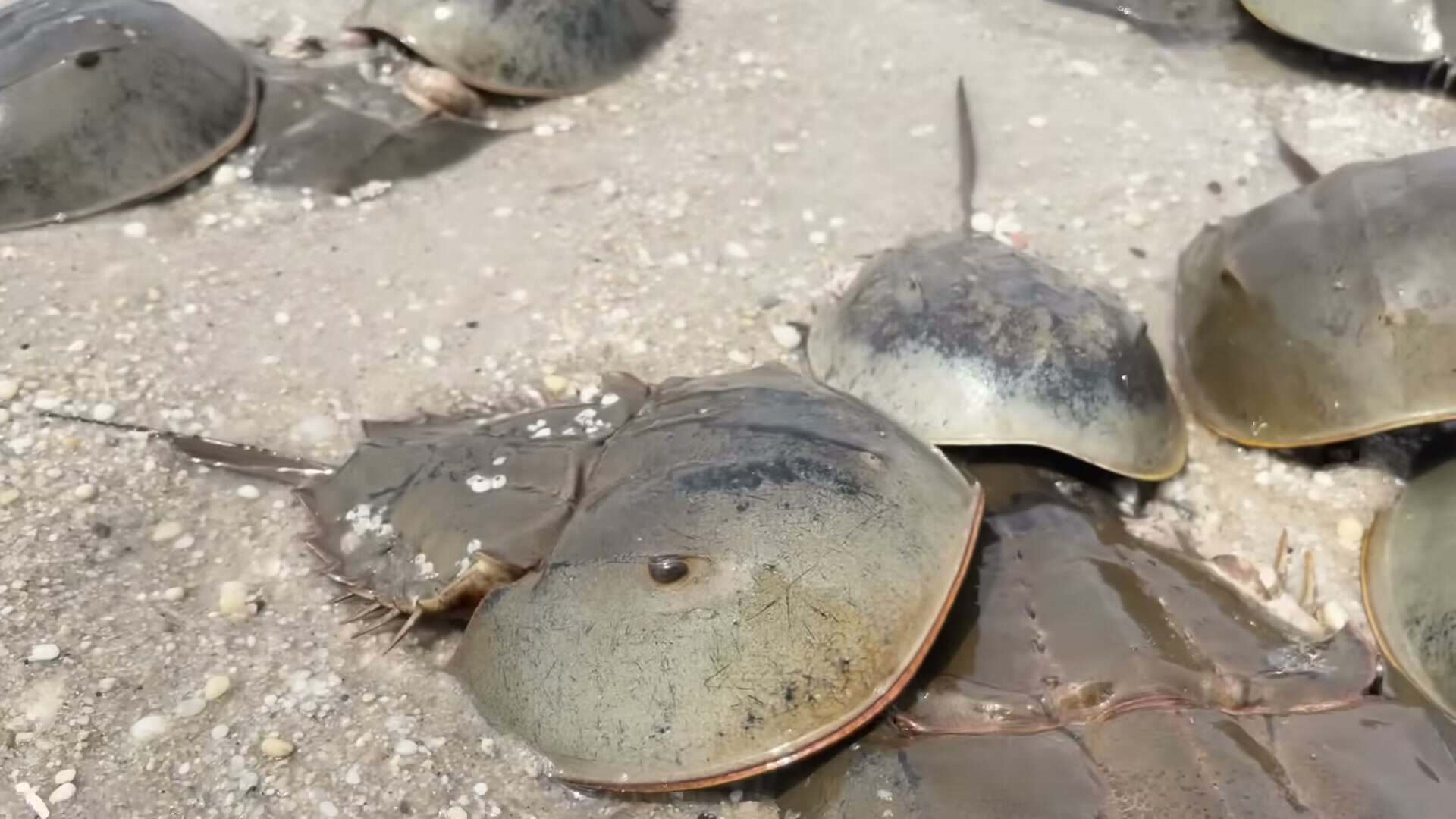
Horseshoe crab spawning season is an annual spring event along Delaware Bay beaches, especially in May and early June.
©Ze Frank via YouTube — used under fair use – Original / License
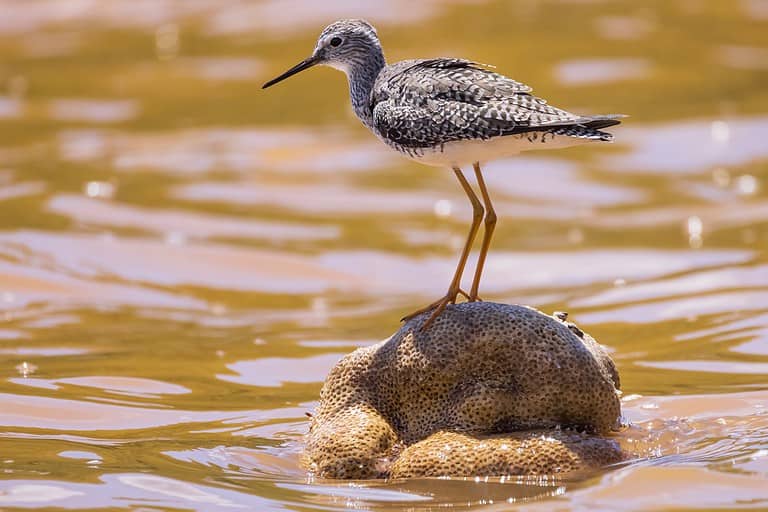
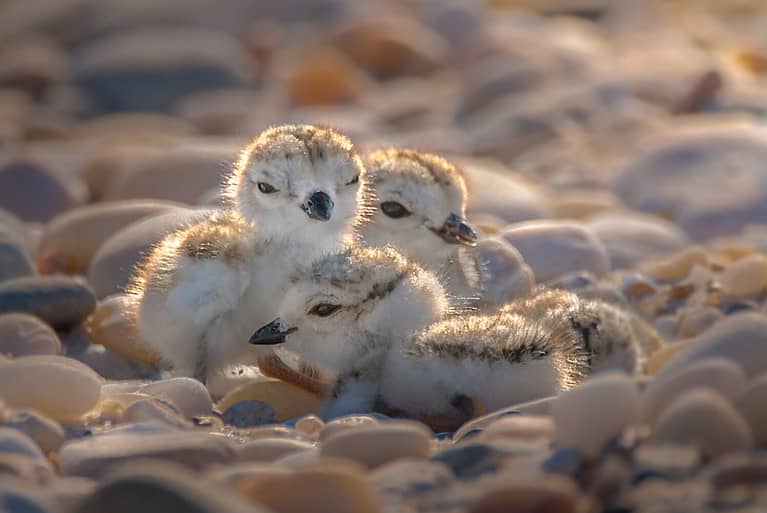
This mass spawning is one of the most important food events on the Atlantic flyway. Migrating shorebirds, especially the red knot (Calidris canutus rufa), time their journeys from South America to the Arctic to coincide with it. Red knots can nearly double their body weight in two weeks by gorging on horseshoe crab eggs, fuel they need to reach their breeding grounds in the Canadian Arctic. When egg densities crashed in the 1990s and early 2000s, red knot populations crashed with them, and the subspecies was listed as threatened under the U.S. Endangered Species Act in 2014.
The Cause of Declining Numbers
Horseshoe crab numbers along the Atlantic coast have declined for several reasons. One is biomedical harvest. Horseshoe crab blood is blue because it uses copper-based hemocyanin instead of iron-based hemoglobin, and it contains amebocytes that clot in the presence of bacterial endotoxins. That reaction forms the basis for the Limulus amebocyte lysate (LAL) test, used worldwide to screen vaccines, injectable drugs, and medical implants for contamination. Crabs are bled and released, but mortality estimates range from about 5 to 30 percent, and surviving animals can be weakened for weeks. A synthetic alternative, recombinant Factor C, is now accepted by the U.S. Pharmacopeia and is being adopted by some pharmaceutical companies.
Horseshoe crabs have also been used heavily as bait in the eel and whelk fisheries. New Jersey imposed a moratorium on harvest in 2008, and other states have restricted it, though pressures remain across the broader Atlantic coast.
The third major problem is habitat. Bulkheads, jetties, riprap, and stairs interrupt the gradual sandy slopes the animals need. During spawning, waves flip crabs onto their backs, and they use their long tail, the telson, to right themselves. On steep shorelines, they can become stranded above the waterline or wedged between rocks, cinder blocks, and pilings. Stranded crabs desiccate in the sun and die within hours.
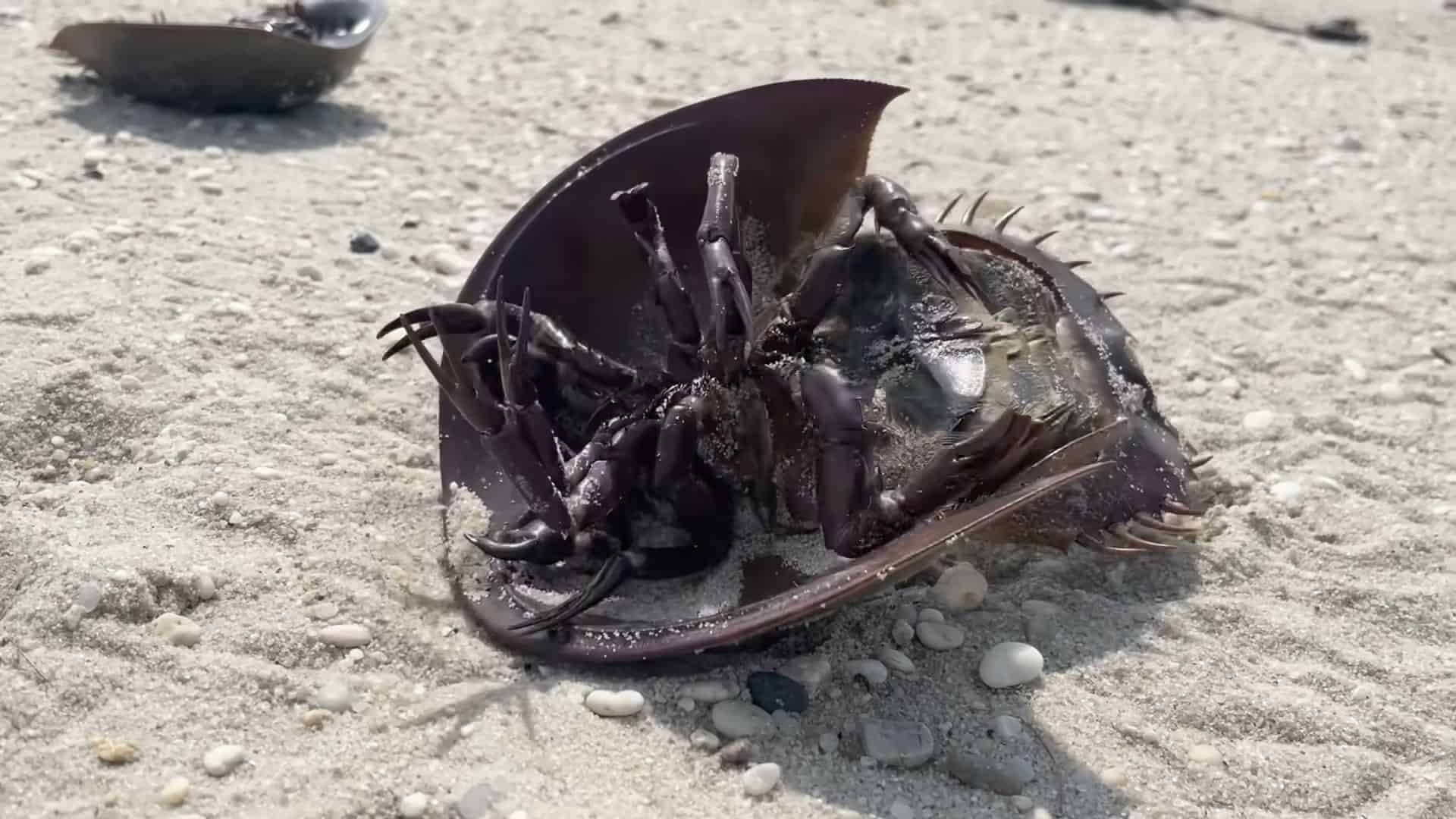
Waves are a common culprit for why horseshoe crabs are flipped on their backs.
©Ze Frank via YouTube — used under fair use – Original / License
That is the gap the Wetlands Institute’s Return the Favor program fills. Trained volunteers walk Delaware Bay beaches during the spawning season, flipping overturned crabs upright and freeing those trapped in debris and structures. The program asks walkers to lift crabs by the sides of the shell rather than by the telson, since pulling on the tail can damage the joint the animal relies on to right itself. According to Return the Favor’s published season reports, volunteers have rescued more than 750,000 horseshoe crabs since the program began in 2013.
The walks double as a hands-on introduction to coastal ecology for families, school groups, and visitors. The fix is unglamorous, a flip of the wrist on a wet beach, but multiplied across thousands of volunteers and a few weeks of tides, it adds up to a measurable boost in survival for an animal whose eggs feed shorebirds across an entire hemisphere.
Donations and volunteer signups for Return the Favor are available through the Wetlands Institute at returnthefavornj.org.