
Quick Take
- Alligators share a cardiac trait with mammals and birds that no other reptile possesses, and this trait is the very thing that made Split Jaw's surgery possible. See the four-chambered heart →
- Split Jaw refused to leave the water, a decision that reveals something surprising about how alligators actually think. Explore Split Jaw's instincts →
- Alligators can survive open wounds in bacteria-filled swamps without antibiotics, and the answer lies in their blood. Discover their antimicrobial blood →
- Fixing a fractured alligator jaw requires more than surgical skill. There is one physiological quirk that changes everything about how anesthesia is administered. See how anesthesia was managed →
In the muddy depths of a Florida enclosure, a massive American alligator (Alligator mississippiensis) named Split Jaw presents a challenge that would be fatal for most vertebrates. With a portion of his lower jaw fractured, compounding damage to a previous surgical site from years prior, the animal remains a formidable apex predator. The process of capturing, transporting, and surgically repairing such a creature offers a rare window into the extraordinary physiological adaptations of crocodilians.
The Anatomy of an Apex Predator
Alligators are often described as “living fossils,” a nod to a body plan that has remained largely successful for millions of years. This success is rooted in extreme durability. As noted in the recent medical intervention for Split Jaw, alligators possess a four-chambered heart, a trait they share with mammals and birds but not other reptiles.
This complex cardiac structure allows for a unique “shunt” system. By diverting blood away from the lungs and toward the body, alligators can remain submerged for extended periods, slowing their heart rate to as few as four beats per minute to conserve oxygen. This metabolic flexibility is a critical survival mechanism during both hunting and recovery from severe trauma.
Behavioral Intelligence and the “Suspicious” Gator
A common misconception is that alligators are driven purely by instinct, with little cognitive capacity. However, behavioral observations during Split Jaw’s capture suggest a high level of environmental awareness. When faced with a transport box and a van, the alligator became “suspicious,” refusing to leave the water.
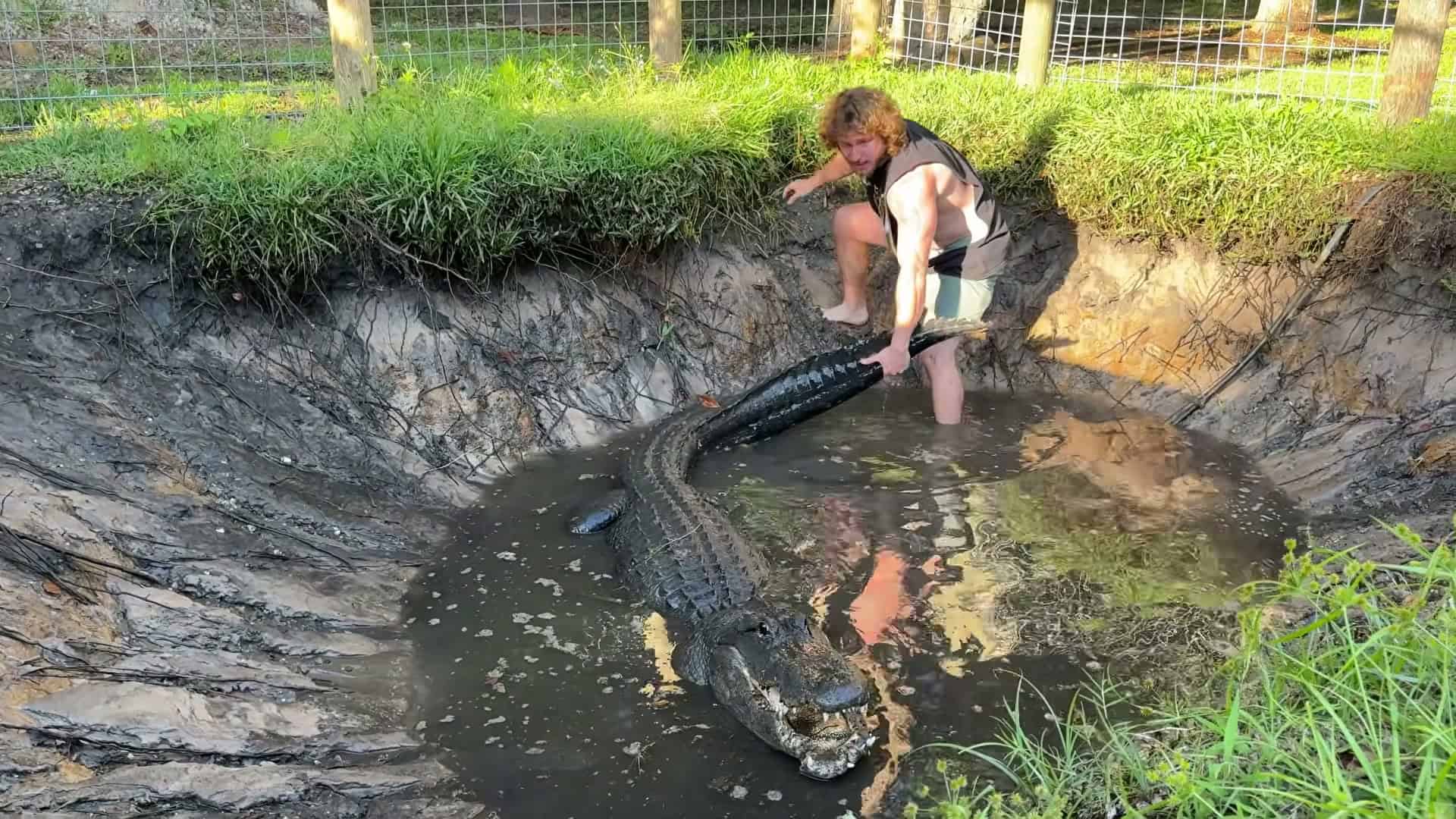
Split Jaw was reluctant to leave the water, suspicious of what was to come.
©Chandler's Wild Life via YouTube — used under fair use – Original / License
This is an example of associative learning. Crocodilians can recognize routines and perceive changes in their environment that signal a potential threat. Their decision to retreat to the bottom of the enclosure is a calculated defense strategy, leveraging their aquatic advantage to avoid terrestrial confrontation.
Surgical Innovation: Wiring the Prehistoric Bone
Repairing a crocodilian jaw is a feat of specialized veterinary medicine. Unlike mammals, alligator skin and bone are exceptionally dense, requiring high-power drills and stainless steel wiring to fuse fractures.
- The Procedure: Surgeons use “nerve blocks” to prevent pain during the operation. Because alligators are ectothermic (cold-blooded), their metabolism processes anesthesia differently than mammals, often requiring that they be sedated rather than fully unconscious to maintain respiratory safety.
- The Recovery: Alligators possess a “systemic robustness” that allows them to survive in bacteria-laden swamps even with open wounds. Their blood contains potent antimicrobial peptides (sometimes referred to as “crocodillin”) that are more effective at fighting certain bacteria than human antibodies are.
- The “Internal Tourniquet”: One of the most fascinating aspects of their biology is the ability to restrict blood flow to injured limbs or areas, effectively acting as an internal tourniquet to prevent hemorrhaging.
Misconception: Alligators vs. Crocodiles
During the procedure, a common anatomical distinction was highlighted: the tongue. During the procedure, a common anatomical distinction was highlighted: the tongue. While both are members of the order Crocodilia, alligators have a fleshy tongue that is held in place by a membrane on the floor of the mouth, whereas crocodiles have a more restricted lingual structure. Furthermore, alligators possess a “palatal valve” at the back of the throat, which allows them to open their mouths underwater without drowning, a crucial adaptation for an animal that frequently grapples with prey in the muck.
Furthermore, alligators possess a “palatal valve” at the back of the throat, which allows them to open their mouths underwater without drowning, a crucial adaptation for an animal that frequently grapples with prey in the muck.
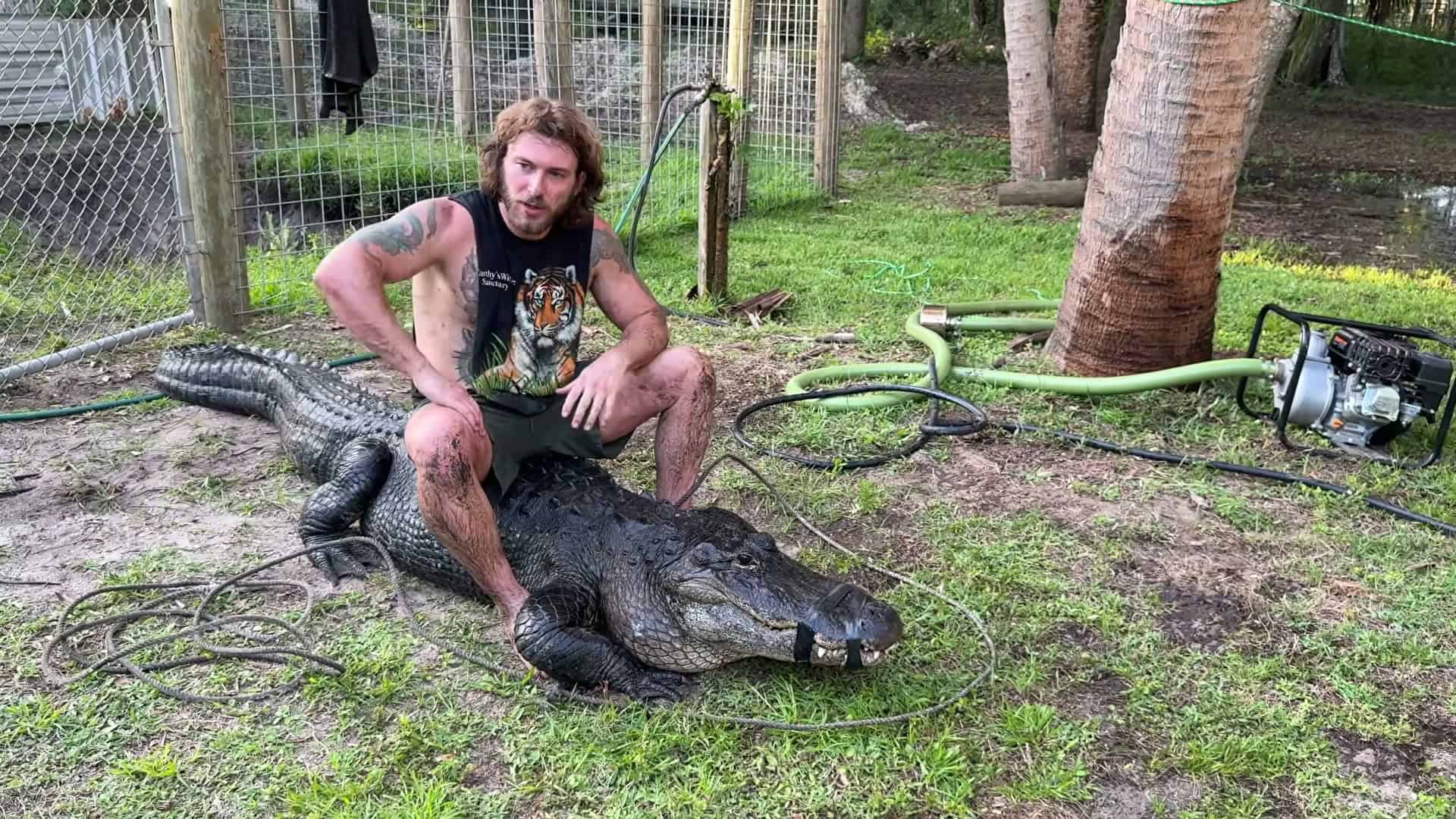
Here, Split Jaw is being prepped for surgery.
©Chandler's Wild Life via YouTube — used under fair use – Original / License
The Road to Recovery
Post-operative care for a reptile involves maintaining a “dry dock” period. For Split Jaw, this means 72 hours out of the water to allow a protective scab to form. In the wild, an alligator with a malformed jaw faces a disadvantage in territorial disputes, particularly for “bull” gators who use their jaws to assert dominance. By surgically realigning the bone, conservationists ensure the animal can continue to feed and defend itself without the mechanical disadvantage of a “dragging” jaw.