
Quick Take
- The term “touron” dates back to the 1970s and reflects a long history of reckless tourist behavior in national parks.
- Social media has amplified dangerous actions by rewarding spectacle, but risky tourism predates smartphones.
- Irresponsible behavior harms wildlife, damages fragile ecosystems, and can lead to serious injuries, fines, or animal euthanasia.
On a warm summer afternoon in Yellowstone National Park, a crowd gathers around a bison. The animal weighs close to a ton. It can run up to 35 miles per hour. A human wouldn’t stand a chance against it. But just in case these factors are not obvious, a nearby sign clearly warns visitors to stay at least 25 yards away.
One individual steps closer anyway. Phone out. Big dopey smile.
Seconds later, the video is online. As the comments start to mount, the word appears again and again: touron.
It’s not a scientific term. It won’t show up in a park brochure. But it has become the unofficial label for a certain kind of visitor. A touron is someone who ignores rules, safety warnings, and basic boundaries in pursuit of a thrill, a photo, or a viral moment.
How did we get here? How did we come to live in a world where tourists behave so carelessly and—quite frankly—stupidly that we need to create a portmanteau using the word “moron’ to describe them? Is this just social media gone wild? Is it an American problem? Or have people always behaved badly on vacation, and we’re only just now noticing?
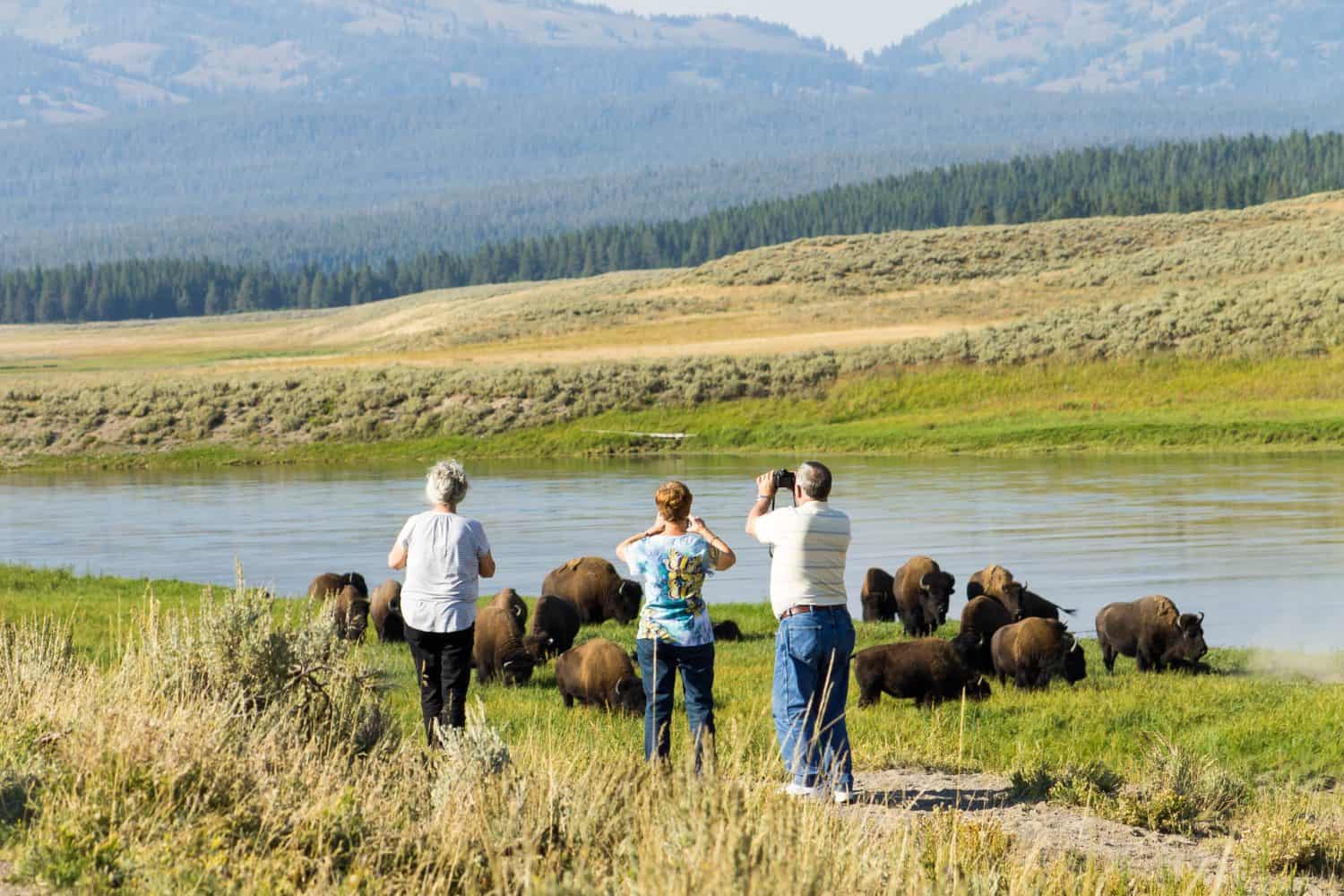
A 2018 study found that 80% of visitors injured by bison between 2000 and 2015 had approached the animals — often standing just 11 feet away instead of the required 25 yards.
©Brian Karczewski/Shutterstock.com
Tourists Behaving Badly Isn’t New
Despite the number of ridiculous tourist-related videos on social media, reckless tourist behavior didn’t begin with smartphones.
The word touron can be traced back all the way to the mid-1970s within the National Park Service. Rangers reportedly used it as shorthand for visitors doing foolish or dangerous things. By 1987, the term appeared in The Washington Post, describing an “annoying” tourist. In 1991, the Orlando Sentinel explicitly defined it as a blend of “tourist” and “moron.”
In other words, long before Instagram, park staff were watching people climb dangerous cliffs, feed animals they shouldn’t, and ignore warning signs.
Even in the early days of American national parks, visitors treated wildlife like roadside attractions. In the first half of the 20th century, it wasn’t uncommon for tourists to feed bears from their cars. Photographs from that era show crowds gathered alarmingly close to large predators.
What’s different now isn’t that people misbehave—it’s how visible the misbehavior has become.
Yellowstone: The Unofficial Touron Capital
If there’s a headquarters for touron lore, it’s probably Yellowstone.
The park’s bison are frequent stars of viral videos. In a study examining bison-related injuries between 2000 and 2015, researchers found that 80 percent of injured visitors had actively approached an animal before the incident. On average, people were just about 11 feet away at the time of injury. That’s far short of the required 25-yard minimum distance.
Standing eleven feet from a 2,000-pound animal that can outrun you isn’t brave. It’s just dumb.
Yellowstone’s geothermal features are another hotspot for bad decisions. Boardwalks exist for a reason. Some hot springs exceed 160 degrees Fahrenheit. That’s closer to the boiling point of water (212 degrees F) than it is to the normal human body temperature (98.6 degrees F). In 2016, a man died after leaving the designated path and falling into a thermal feature. These aren’t decorative ponds. They’re extreme environments capable of causing severe burns in seconds.
This risky behavior certainly isn’t limited to Yellowstone. Visitors at Yosemite National Park have ignored warning signs near cliffs and waterfalls. At the Grand Canyon, people have tossed objects into the canyon or ventured dangerously close to edges for photos. In Arches National Park, fragile rock formations have been defaced with graffiti and carvings.
These incidents aren’t daily occurrences—but when they happen, they spread quickly. You might even say they spread “virally.”
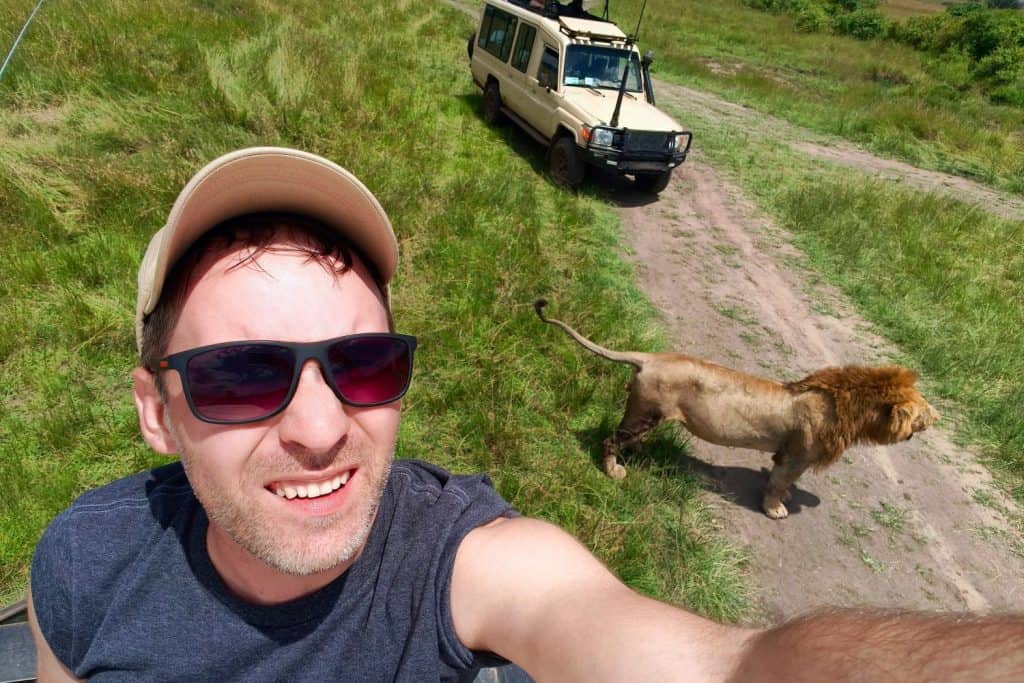
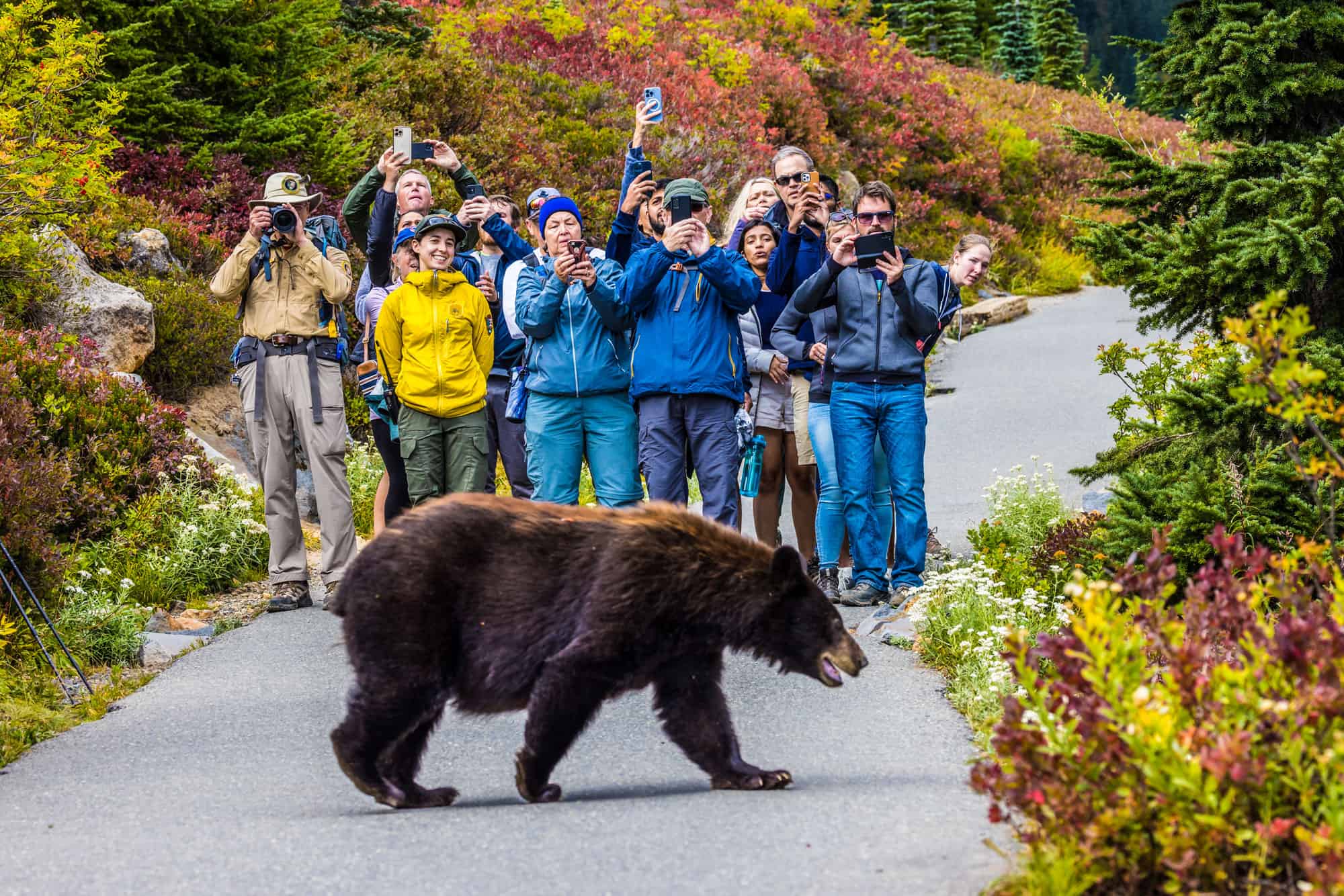
During the post-2020 surge in park visitation, overcrowding and viral videos amplified risky behavior, turning isolated bad decisions into nationwide headlines.
©Melnikov Dmitriy/Shutterstock.com
The Social Media Effect
It’s hard to separate the rise of touron culture from the rise of Instagram and TikTok.
Social media platforms reward spectacle. A normal photo of Old Faithful from a safe distance? No big deal. A dramatic selfie inches from a bison? You’ll be measuring your likes in the thousands.
That feedback loop matters.
Psychologists call it social reinforcement. When risky behavior earns attention, likes, and shares, it encourages imitation. Add FOMO and the pressure to capture a “once-in-a-lifetime” shot, and common sense can get crowded out.
During the post-lockdown surge of visitors in 2020 and 2021, national parks saw record crowds. Overcrowding magnified poor behavior. Incidents that once might have gone unnoticed were filmed from multiple angles and uploaded within minutes.
Accounts like touronsofnationalparks on Instagram began reposting videos of reckless park behavior. The feed serves as both entertainment and cautionary tale. It’s a kind of digital ranger station, reminding viewers what not to do.
But there’s a double edge. Public shaming can discourage bad behavior. It can also normalize it by constantly showcasing it.
Is This Just an American Problem?
The stereotype of the loud, rule-ignoring American tourist has been around for decades. But touron behavior isn’t limited to the United States.
In Pamplona during the Running of the Bulls, visitors knowingly run alongside charging bulls for adrenaline and bragging rights. In Australia, tourists have been fined or injured for approaching wildlife too closely or ignoring coastal cliff warnings. In Iceland, travelers frequently step beyond safety ropes near waterfalls and volcanic features to capture dramatic photos. In Italy and Greece, historic monuments have been vandalized by visitors carving initials into ancient stone.
These acts aren’t uniquely American. They’re human.
The difference lies less in nationality and more in context. When you combine travel, novelty, crowds, and cameras, people behave differently than they do at home.
Vacations loosen boundaries. Social media amplifies that loosening.
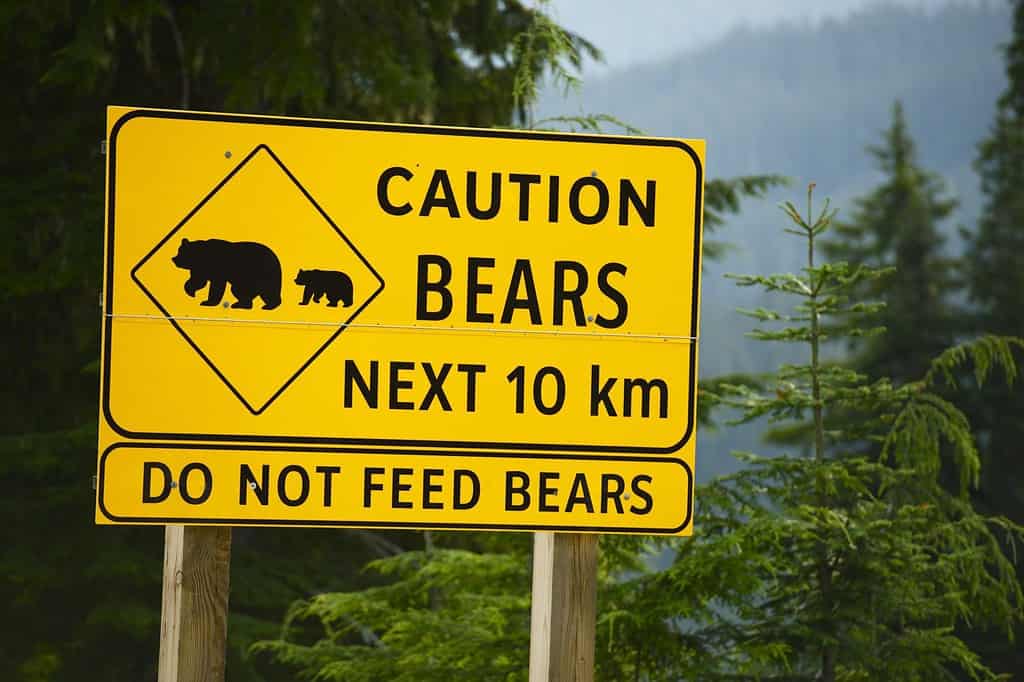
Psychologists point to optimism bias and social reinforcement as key reasons people underestimate real risks in national parks and ignore signs.
©Virrage Images/Shutterstock.com
Why People Ignore the Signs
You might wonder: if the rules are posted everywhere, why do people ignore them?
Several psychological tendencies help explain this phenomenon.
Optimism bias convinces people that bad outcomes happen to others. You’ve seen videos of someone being gored by a bison. Bummer for that person, but that would never happen to you.
Normalization kicks in when you see others doing the same thing. If ten people are standing too close to wildlife and nothing happens, it starts to feel safe.
Diffusion of responsibility spreads accountability across a crowd. In a busy park, you’re just one more face. A cog in the machine; not the machine itself.
Then there’s the attention economy. A unique photo can mean validation, followers, and social capital. For many, that’s worth bending a rule.
There’s also what some psychologists informally call the “main character” effect. When you’re on vacation, especially in a stunning place, it can feel like you’re the star of your own adventure movie. The landscape becomes a backdrop. The wildlife becomes a prop. In that mindset, rules feel like obstacles to the story rather than safeguards meant to protect you and everything around you.
This doesn’t mean most tourists behave badly. In fact, far from it. The overwhelming majority follow guidelines. But the ones that don’t—those are the ones we see on Instagram. And it only takes a handful of high-profile incidents to create a pattern.
The Environmental Cost
Touron behavior isn’t just embarrassing. It can be destructive.
Approaching wildlife causes stress. Stress alters feeding, mating, and migration patterns. Loud noises, litter, and drones disrupt habitats. Drone use is generally prohibited in national parks because the noise and presence can stress birds and mammals, but there have been cases of these devices being flown near nesting birds, increasing the risk of nest abandonment or injury.
Stepping off designated trails crushes fragile vegetation. In arid environments, soil crusts that take decades to form can be destroyed in seconds. Carving into rock or removing stones damages features that have existed for thousands of years.
Even seemingly small acts, like improper waste disposal or bringing invasive seeds on dirty shoes, can ripple through an ecosystem.
When wildlife injures a human, the consequences can fall on the animal. In some cases, animals involved in aggressive encounters are euthanized. A single reckless approach can end a wild life.
That’s a steep price for a selfie and a few validating likes.
How Parks Are Responding
The National Park Service hasn’t stood still.
Visitor management strategies now include timed entry systems in some parks, shuttle programs to reduce congestion, and infrastructure designed to keep people safely separated from hazards and wildlife. Rangers conduct patrols in high-traffic areas and issue fines or citations when necessary.
Education has also moved online. Park accounts on social media regularly post safety reminders, wildlife facts, and examples of appropriate behavior. Influencers who partner with parks often promote “Leave No Trace” principles, encouraging visitors to minimize impact.
Enforcement remains an option. Visitors caught harassing wildlife, flying drones, or vandalizing features can face fines, court appearances, or even jail time.
But ultimately, there just aren’t enough rangers to stand behind every visitor.
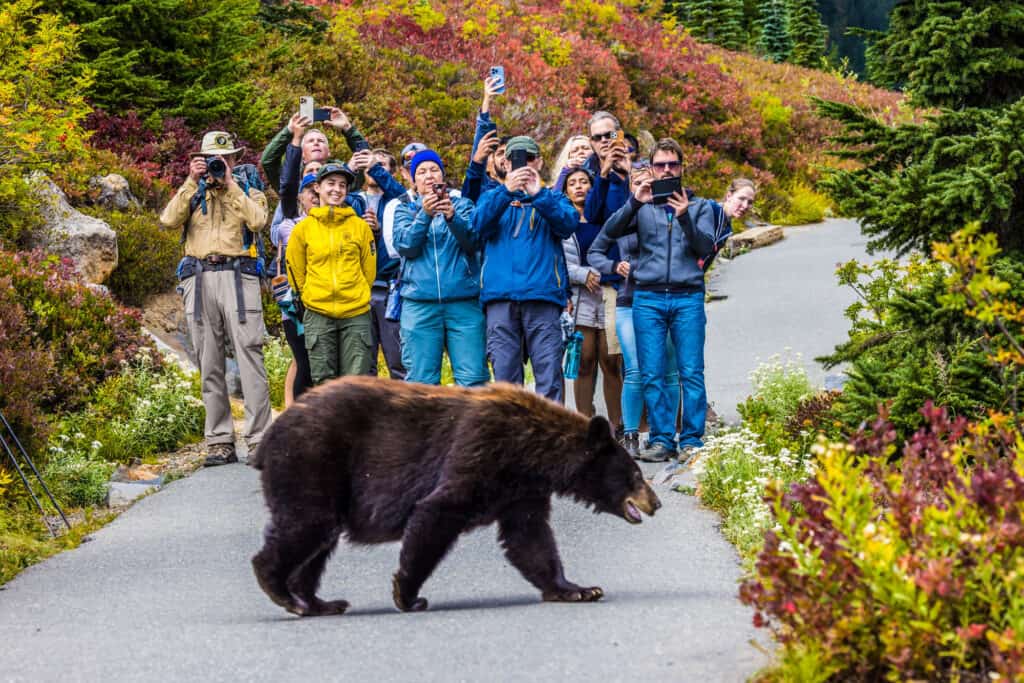
The word “touron” may sting, but it reflects a growing frustration with visitors who put wildlife, ecosystems, and themselves at risk for a photo.
©Leo Kohout/Shutterstock.com
The Mirror in the Selfie
Perhaps the word itself can do some of the lifting. Being called a Touron—moronic tourist—carries a sting. And it’s meant to. It highlights a recognizable pattern of behavior—hopefully shaming people into better conduct.
The term’s popularity suggests widespread frustration with reckless tourism. Most people don’t want to see parks damaged or animals stressed. Most people understand that rules exist for good reasons.
The label may be crude, but it reflects a shared expectation: act responsibly.
The touron didn’t appear overnight and rangers have been using the word for decades. Tourists have been making poor decisions for as long as travel has existed.
What has changed is visibility. Social media shines a spotlight on every misstep. A bad decision in an extremely remote canyon can become global entertainment in minutes.
The next time you’re standing near a 2,000-pound bison, a 500-foot cliff, or a boiling hot spring, stay on the path. Respect the distance. Take the photo from where the sign indicates.
Seriously. Don’t be a touron.