Quick Take
- In 1961, the Morgan horse was designated the official state animal of Vermont.
- Because Morgans thrive on modest feed and rugged terrain, they anchor rural livelihoods, education, and sustainable tourism in Vermont.
- Weybridge and the U.S. Department of Agriculture remount program steered the breed from private preservation to nationwide significance.
When lawmakers in Vermont selected the Morgan horse as its state animal in 1961, they formally recognized that this compact, powerful animal had supported the state since the late eighteenth century. The designation honors a breed that was developed in the Green Mountain State, shaping its steep terrain and agricultural needs. Historically, the horse was associated with farmers, soldiers, and rural communities. That connection still matters today. Morgans remain visible at farms, shows, and historic sites across the state. Their continued presence helps explain why the breed is more than a symbol. It reflects a long partnership between people and animals in a place defined by work, restraint, and endurance.
The Birth of a Vermont Legend
The Morgan story begins with a bay colt named Figure, foaled in 1789 and later owned by Justin Morgan, a schoolteacher and music instructor. Figure stood under fifteen hands but showed uncommon strength, speed, and stamina. He won pulling contests against heavier horses and defeated faster breeds in short-distance races. His balanced build and energetic movement drew attention across New England.
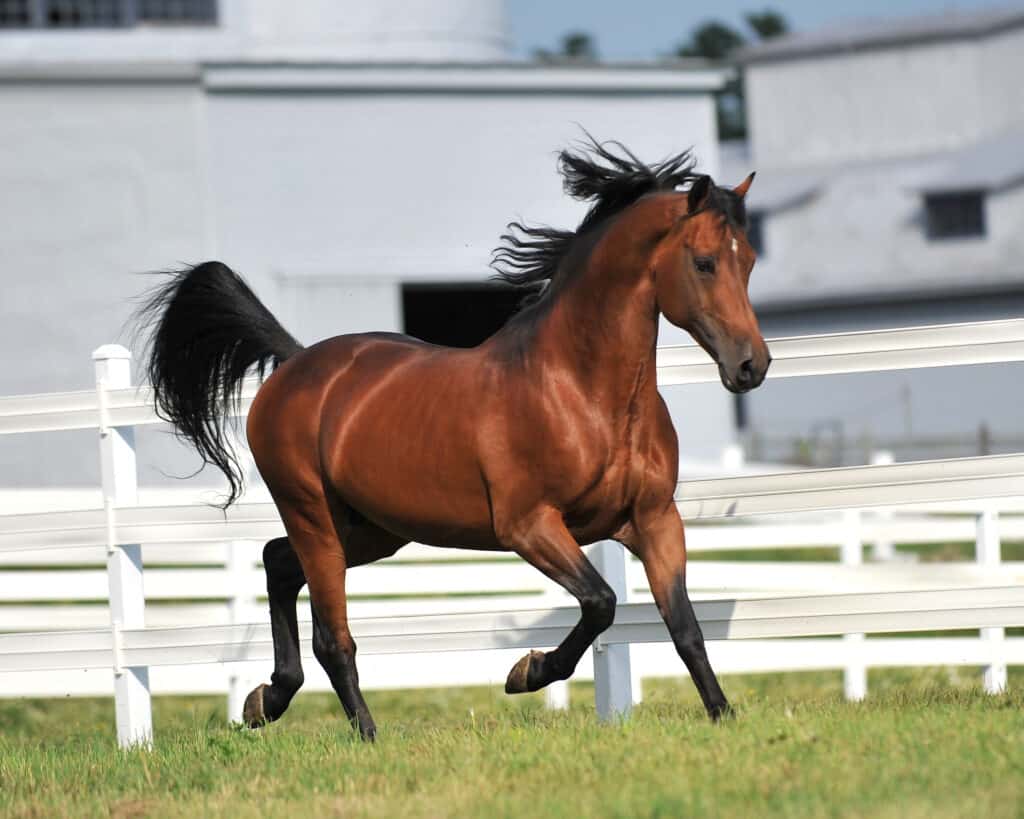
The Morgan horse is one of America’s earliest recognized breeds.
©Christopher Crosby Morris/Shutterstock.com
People soon referred to him as “the Justin Morgan horse.” More important than his own feats was what he passed on. Figure consistently produced offspring with similar traits, including durability, willing attitudes, and an upright carriage. Justin Morgan settled in Randolph, Vermont, and several of Figure’s sons stood at stud in the region. Over time, breeders recognized these horses as a distinct type. Vermonters came to see the Morgan as a product of their land and labor.
The All-Purpose Engine of Early Vermont
During the nineteenth century, Morgans became the backbone of daily work in Vermont. Farmers relied on them to pull plows, sleds, and stone boats through rocky soil and narrow valleys. Their strong legs and steady gaits suited uneven ground and long winters. Many families owned only one horse, and the Morgan’s adaptability made that possible. The same animal that worked fields during the week could pull a carriage or sleigh into town on weekends. Morgans also gained a reputation for speed in harness racing and for stamina on mail routes. Breeders praised their ability to thrive on modest feed, which mattered in a state of small farms. This efficiency tied the Morgan closely to Vermont’s image as a place where people depended on careful use of limited resources.
A Wartime Partner and American Original
The Morgans’ endurance and calm temperament also made them valuable in wartime. During the Civil War, many Morgans were used as cavalry mounts, including a significant number supplied to Vermont regiments. While the First Vermont Cavalry was not mounted exclusively on Morgans, the breed was well represented and widely valued for its toughness and reliability. Soldiers praised these horses for their ability to handle long marches and harsh conditions.
Their service strengthened the Morgans’ reputation as a distinctly American horse shaped by local needs. This perception mattered to Vermonters, who saw parallels between the breed’s history and their own sense of independence. The Morgan came to represent a practical form of patriotism grounded in work rather than display.
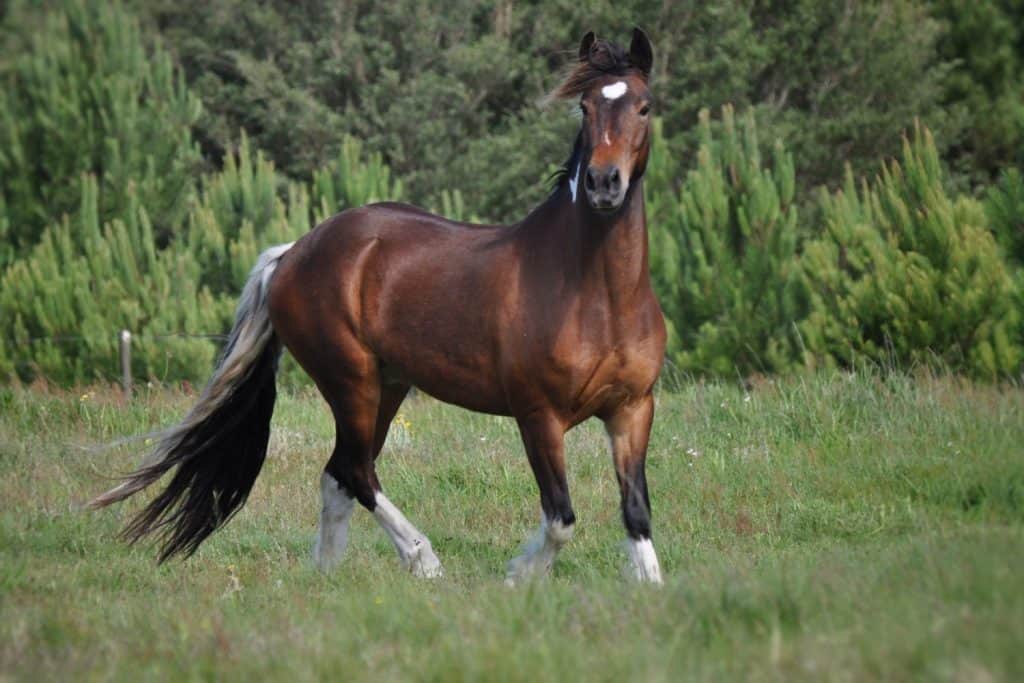
Known for endurance and reliability, Morgan horses earned trust through steady performance.
©Marisha Viljoen/Shutterstock.com
Government Stewardship and the UVM Morgan Horse Farm
By the late nineteenth century, some Vermonters feared that changing fashion favored taller and lighter horses, which could erode traditional Morgan traits. Joseph Battell, a publisher and breeder, took action by establishing a large Morgan breeding farm near Weybridge. Battell later transferred the property to the federal government, leading the U.S. Department of Agriculture to operate the U.S. Morgan Horse Farm from 1907 to 1951. The program produced horses for cavalry remounts and breeding stock nationwide. This effort made Vermont the center of Morgan conservation. After the federal program ended, the University of Vermont assumed control of the farm. Today, it functions as a breeding and teaching facility, is listed on the National Register of Historic Places, and remains open to visitors, hosting public events and continuing to breed foals as of 2026.
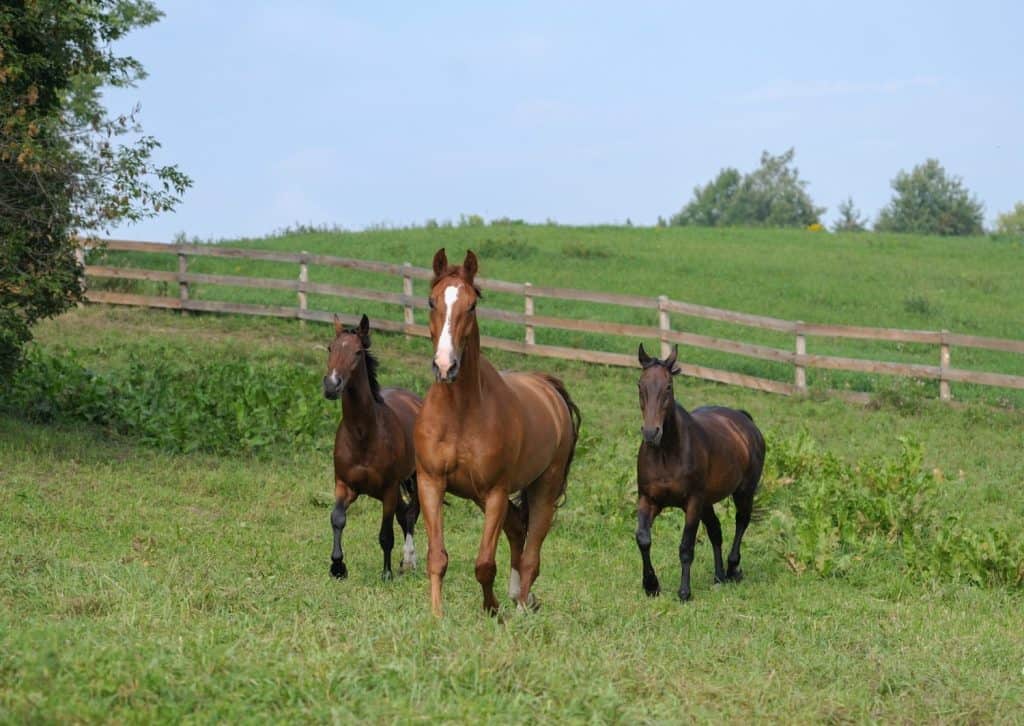
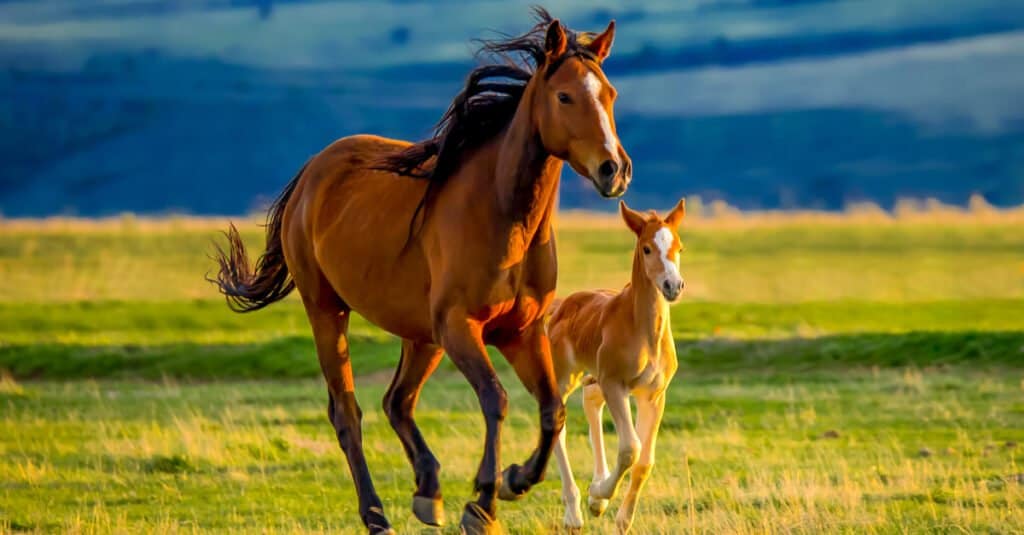
Trotting together in a managed pasture, Morgan horses reflect Vermont’s long tradition of careful breeding and preservation.
©Shawn Hamilton/Shutterstock.com
Making the Morgan the Official State Animal
In 1961, state lawmakers passed Act No. 42, which declared the Morgan horse the official state animal. The law took effect on March 23 and was codified in Title 1 of the Vermont Statutes. Supporters emphasized the breed’s origins in the state, its importance to agriculture, and its national role in military and sport history. The designation aligned with a broader mid-twentieth-century effort to define state identity through official symbols. Vermont also adopted the hermit thrush and sugar maple during this period. Naming the Morgan reflected a desire to honor local history rooted in work and self-reliance.
A Horse That Mirrors Vermont Character
Morgan horses have qualities that make them not only useful but also reflective of Vermont’s character.
©Erica Hollingshead/Shutterstock.com
The Morgan appealed as a symbol partly because of its temperament. Owners often describe the breed as alert, cooperative, and people-focused. Morgans tend to form close working relationships with handlers while remaining capable of sustained effort. Breed standards emphasize versatility. Morgans perform in English and Western disciplines, driving, dressage, and trail riding.
This adaptability reflects Vermont’s culture, where flexibility has long been necessary for survival. The breed’s moderate size and compact strength reinforce an image of capability without excess. Rather than standing out through height or ornament, the Morgan earns respect through consistent performance. Many Vermonters recognize these qualities in their own communities, which prize competence, restraint, and mutual reliance.
The Morgan in Modern Vermont Life
Horses no longer power Vermont’s farms, but Morgans remain part of daily life in quieter ways. The UVM Morgan Horse Farm opens to visitors from late spring through fall, offering guided tours and educational programs. Guests can see mares, foals, and stallions while learning about breeding and care. Across the state, breeders raise Morgans for competition, recreation, and therapeutic riding programs. The Vermont Morgan Horse Association supports clinics, fairs, and trail events that keep the breed visible. These activities contribute to local economies and reinforce links between past and present. For many residents, seeing Morgans in familiar landscapes provides continuity in a changing rural environment.
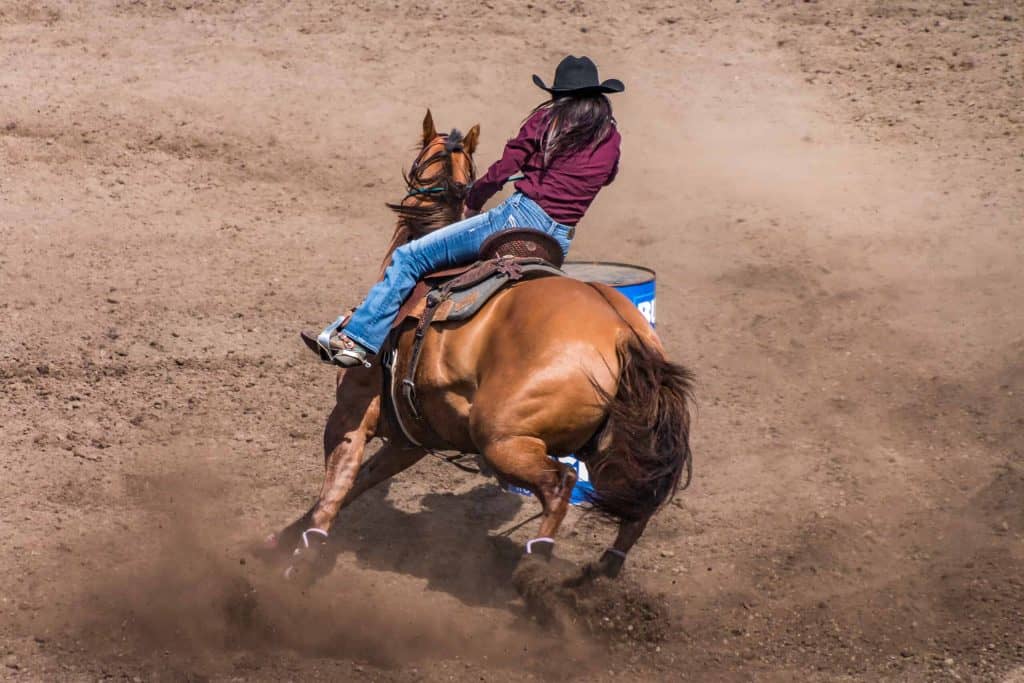
A young rider barrels forward, demonstrating how Morgans are high performers in recreation and competition.
©Timothy S. Allen/Shutterstock.com
Stories, Books, and the Morgan Mythos
Literature and media have also shaped the Morgan’s place in Vermont culture. In 1945, author Marguerite Henry published the children’s novel Justin Morgan Had a Horse. The book presented a fictionalized account of Figure’s life and introduced young readers to early Vermont history. In 1972, Disney released a film adaptation that expanded the story’s reach. These portrayals blended history with legend, reinforcing the Morgan’s role as a foundational figure in state lore. Museums, lectures, and anniversary events continue to revisit the breed’s origins. While historians are sure to distinguish documented facts from storytelling, the shared narrative still plays a role in how Vermonters understand their past.
How Well the Symbol Still Fits
Decades after the Morgan became the official state animal, the symbol remains relevant. Traits that once supported farm work now suit leisure riding, therapy programs, and competitive sport. Morgans are known for steady dispositions, which makes them popular in equine-assisted activities. Vermont promotes outdoor recreation and rural heritage as part of its economy. In this context, the Morgan serves as a bridge between history and current values. At places like the UVM Morgan Horse Farm, visitors encounter horses that represent older ways of life while benefiting from modern veterinary care and research. The breed’s continued usefulness supports its symbolic role.
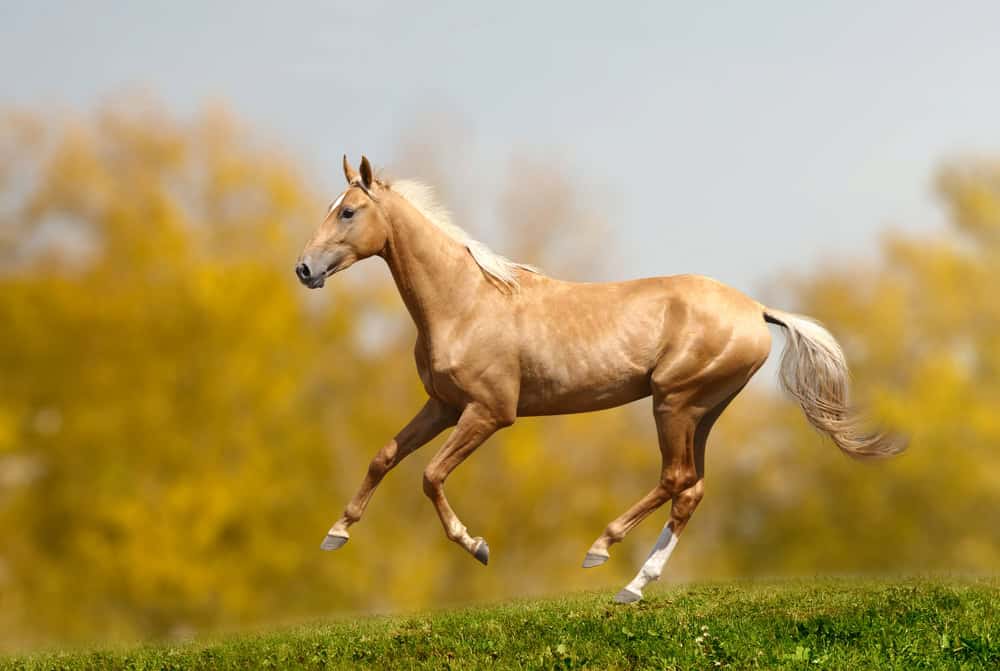
Calm in motion, the Morgan continues to reflect Vermont’s blend of heritage and modern life.
©mariait/Shutterstock.com
A Living Symbol on Four Hooves
The Morgan horse became Vermont’s state animal because it already occupied a central place in the state’s story. It supported farms, served in wartime, and helped define breeding standards nationwide. The Morgan remains active in education, tourism, and sport. Foals are still born in Vermont, and people still gather to watch them grow. That continuity matters in a state that values long memory and steady traditions. As Vermont adapts to economic and environmental change, the Morgan continues to reflect qualities that residents recognize as their own.