
Quick Take
- Shire horses and Clydesdales are both giant draft breeds, but Shires are usually heavier and more massive overall.
- Clydesdales are often easier to recognize by their bold white facial and leg markings, while Shires typically have a plainer look.
- Both breeds are known for their strength and gentle temperament, but they developed in different places: Shires in England and Clydesdales in Scotland.
At a glance, Shire horses and Clydesdales can look a lot alike. Both are towering draft breeds with feathered legs, calm temperaments, and deep roots in farm and hauling work. They also share some history, because Shire blood helped shape the early development of the Clydesdale in Scotland. But once you know what to look for, the differences become easier to spot.

The Biggest Difference Between a Shire Horse and a Clydesdale
One of the easiest ways to separate these breeds is by their coloring and markings.
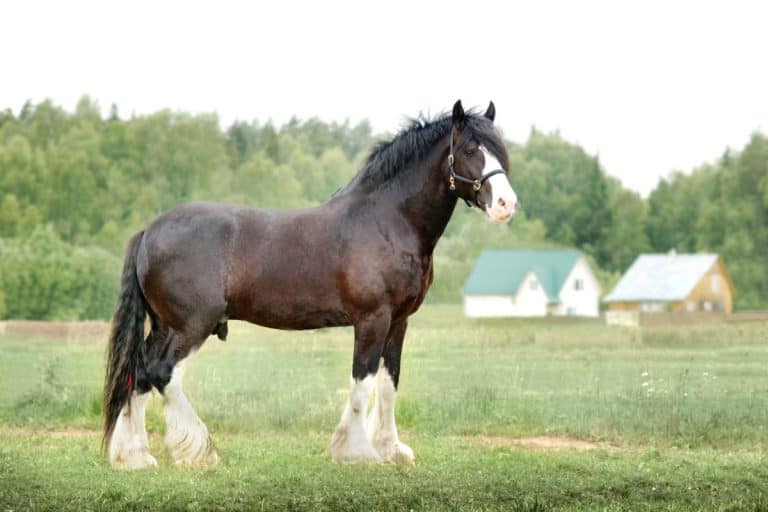
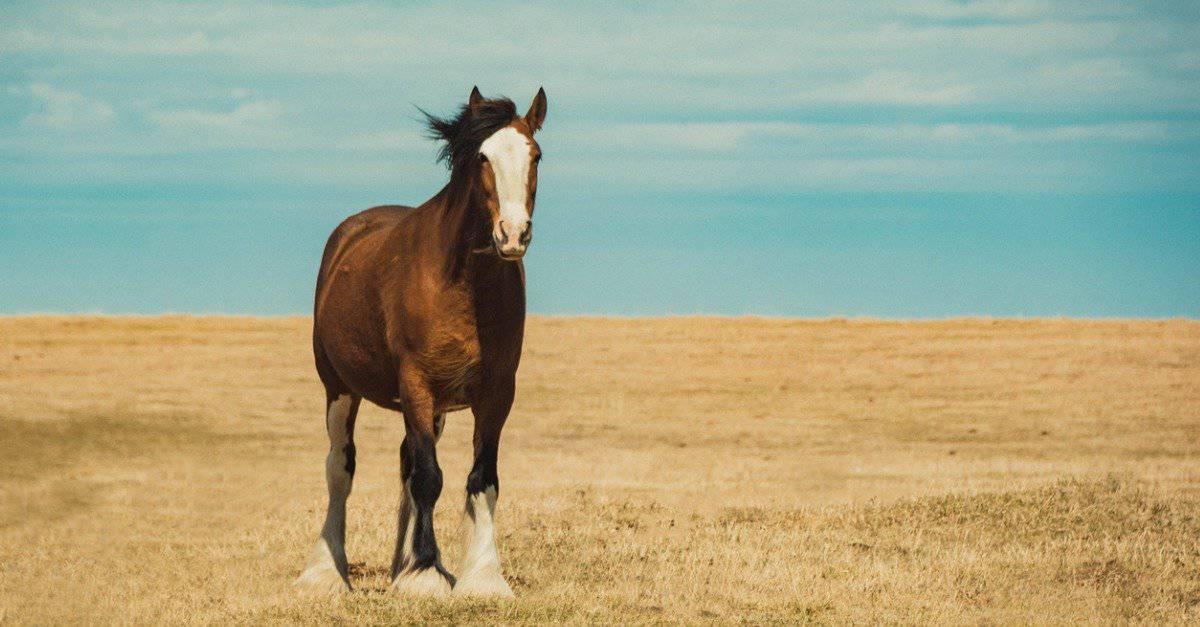
Clydesdales are especially well known for bold white markings on the face and legs. They are often bay, dark brown, or black, and many have the flashy white pattern most people associate with parade horses. Roan coloring also occurs in the breed.
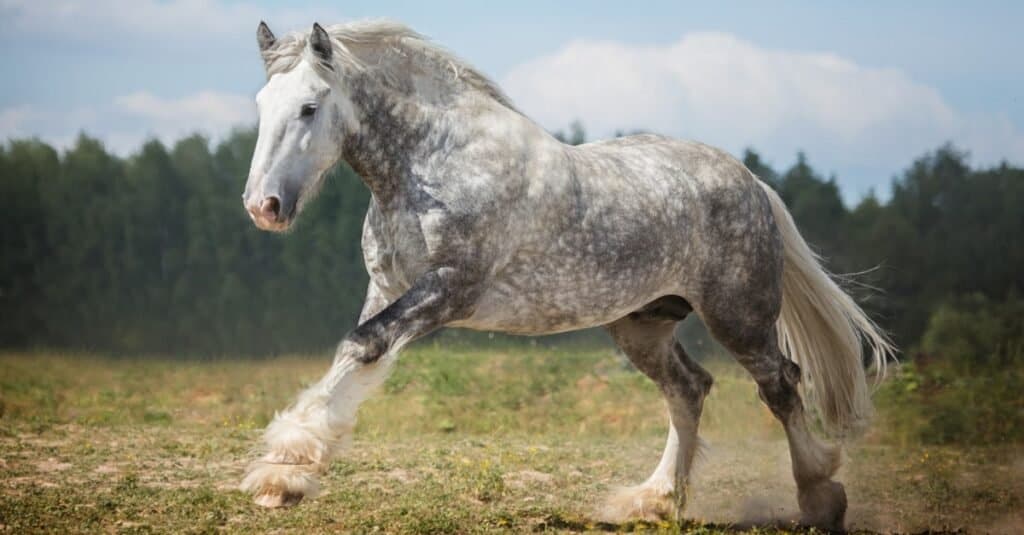
While Clydesdales are more energetic and playful, Shire horses are all business and eager to prove themselves.
©Alla-Berlezova/Shutterstock.com
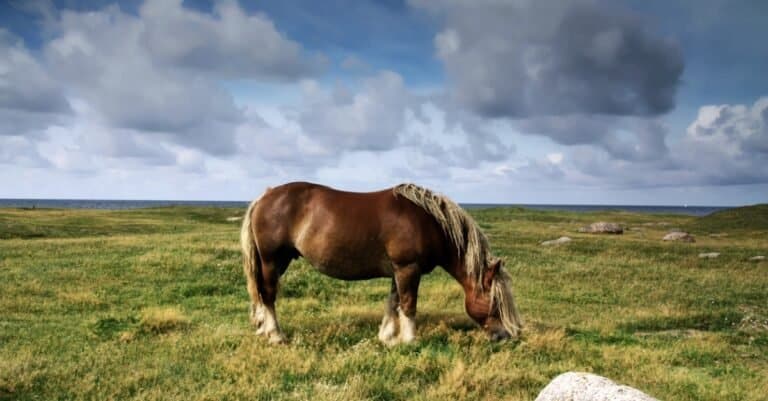
Shires can also be bay, black, brown, or gray, but their coloring is usually less flashy overall. Under Shire breed rules, roan is allowed for mares, though stallions must not be roan or chestnut. That means it is not accurate to say you will “never” see a roan Shire.
In simple terms, Clydesdales are more likely to show the dramatic white markings many people instantly recognize, while Shires often have a plain, heavier look.
Size and Build
Both breeds are very large, but Shires are generally the heavier horse.
Clydesdales usually stand about 17 to 18 hands tall and average around 2,000 pounds. They are known for their high-stepping action, attractive heads, and abundant feathering on the lower legs.
Shires commonly stand from about 16.2 to 19.2 hands, averaging around 17.2 hands, and typically weigh about 1,900 to 2,200 pounds. They are famous for their mass, substance, and strength, and the breed includes the tallest horse ever recorded: a Shire gelding named Sampson, later called Mammoth.
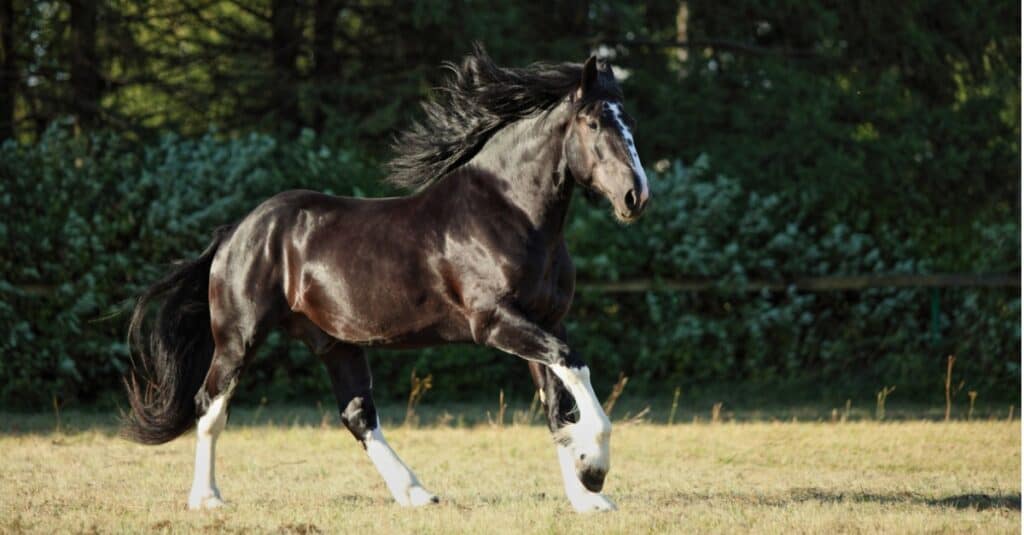
While Shire horses and Clydesdales grow to be about the same height, Shire horses tend to weigh much more.
©iStock.com/kondakov
That does not mean every Shire is taller than every Clydesdale. In real life, there is overlap. But as a rule, Shires tend to look bulkier and more massive, while Clydesdales often appear a bit lighter-bodied and more animated in motion.
Temperament
Both breeds have the kind of temperament that made draft horses so valuable for centuries: steady, willing, and easy to work with.
Shires are widely described as calm, easygoing, and trainable. Their patient nature is a big part of why they are often called “gentle giants.”
Clydesdales are also known for being laid-back and intelligent. Reliable sources describe them as easy to train and good-natured despite their size.
It is fair to say both breeds are generally gentle. It is less fair to claim that one is definitively “stronger” or that one is always more playful than the other, because those broad comparisons are not backed by breed-standard evidence. Temperament can also vary from horse to horse.
A Shared History, but Not the Same Origin
The Shire developed in England and traces its roots to the large horses once used for hauling, agriculture, and earlier “great horse” stock associated with medieval England. The modern breed was standardized in the late 19th century, with the Shire Horse Society founded in 1878.
The Clydesdale developed in Lanarkshire, Scotland, with its history reaching back to the 18th century. The breed was improved using Flemish stallions and later some Shire blood. The Clydesdale Horse Society was founded in 1877.
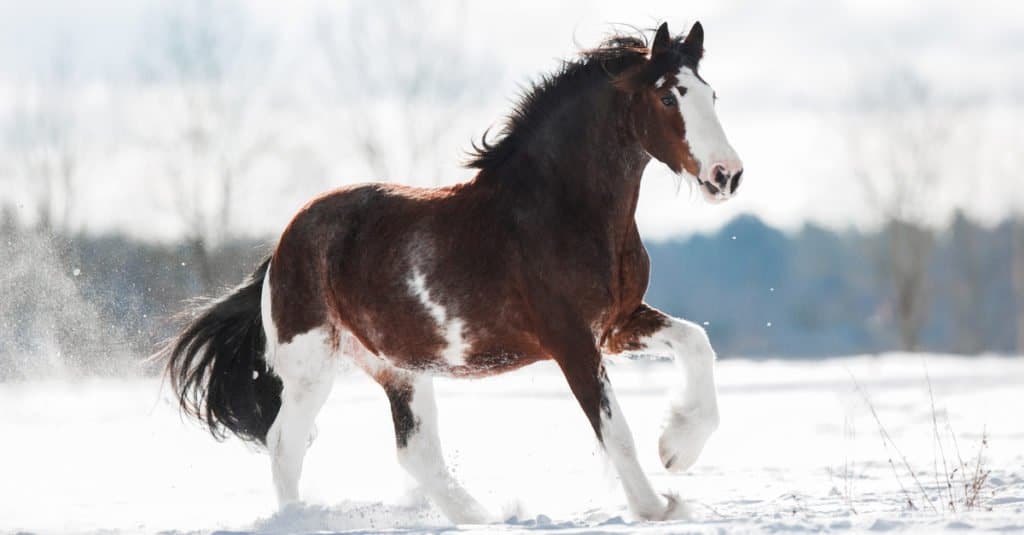
Clydesdales are not as tall and not as heavy as Shire horses, but they are often stronger.
©OlesyaNickolaeva/Shutterstock.com
So while the breeds are related, it is more accurate to say the Clydesdale was influenced by Shire-type horses during its development than to call the two breeds simple “cousins” without explanation.
Shire vs. Clydesdale: A Quick Way to Tell Them Apart
If you are trying to identify one in photos or in person, start here:
A Shire usually looks heavier, broader, and more massive overall, often with less dramatic white marking. A Clydesdale usually has a more eye-catching pattern of white on the face and legs and a more animated, high-stepping way of moving.
Both are beautiful draft horses with long working histories, and both remain favorites with horse lovers who appreciate size, strength, and a remarkably gentle disposition.