
Quick Take
- Surviving in water more than 10 times as salty as ocean water, Diplolaimelloides woaabi represents a remarkable example of multicellular resilience.
- The Diplolaimelloides woaabi discovery challenges assumptions about which environments are truly “empty,” showing that complex life can thrive even in hypersaline waters long thought inhospitable.
- Guidance from Indigenous elders was required to name the endemic species found in Utah.
For many years, scientists believed that life in Utah’s Great Salt Lake was extremely limited. Its caustic, hyper-saline waters, up to ten times saltier than the ocean, were thought to support only two forms of complex life: brine shrimp and brine flies. Everything else, it seemed, was simply locked out by the lake’s chemistry. Recently, that assumption was cracked wide open.
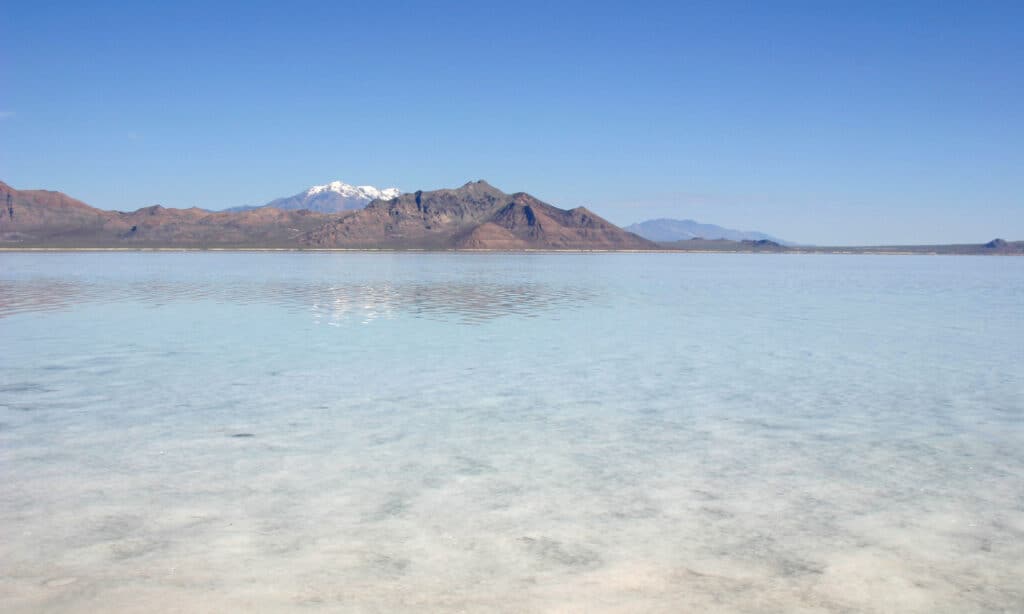
In the salt-crusted waters of the Great Salt Lake, scientists have uncovered a new species of nematode.
©iStock.com/beccarie
Researchers announced the discovery of a previously unknown species of nematode, a microscopic worm, thriving in the lake’s extreme conditions. The finding doesn’t just add a new organism to the Great Salt Lake’s roster. It fundamentally reshapes how scientists think about where complex life can exist, both on Earth and beyond it.
The discovery represents only the third known animal species adapted to the lake’s extreme salinity. The species, Diplolaimelloides woaabi, was named with guidance from Indigenous elders and appears to be endemic to this lake.
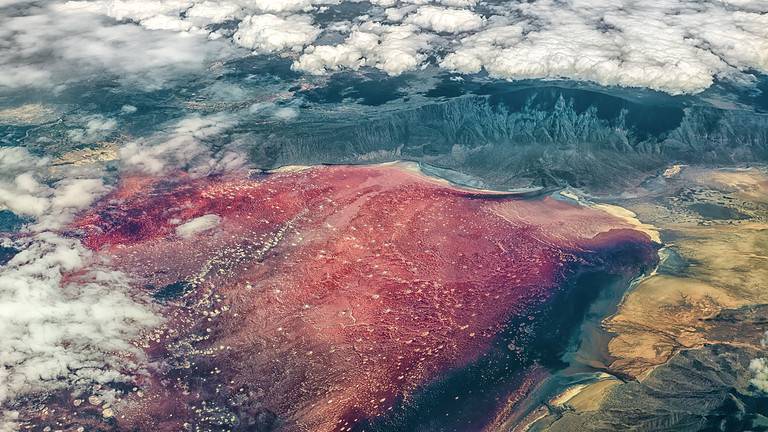
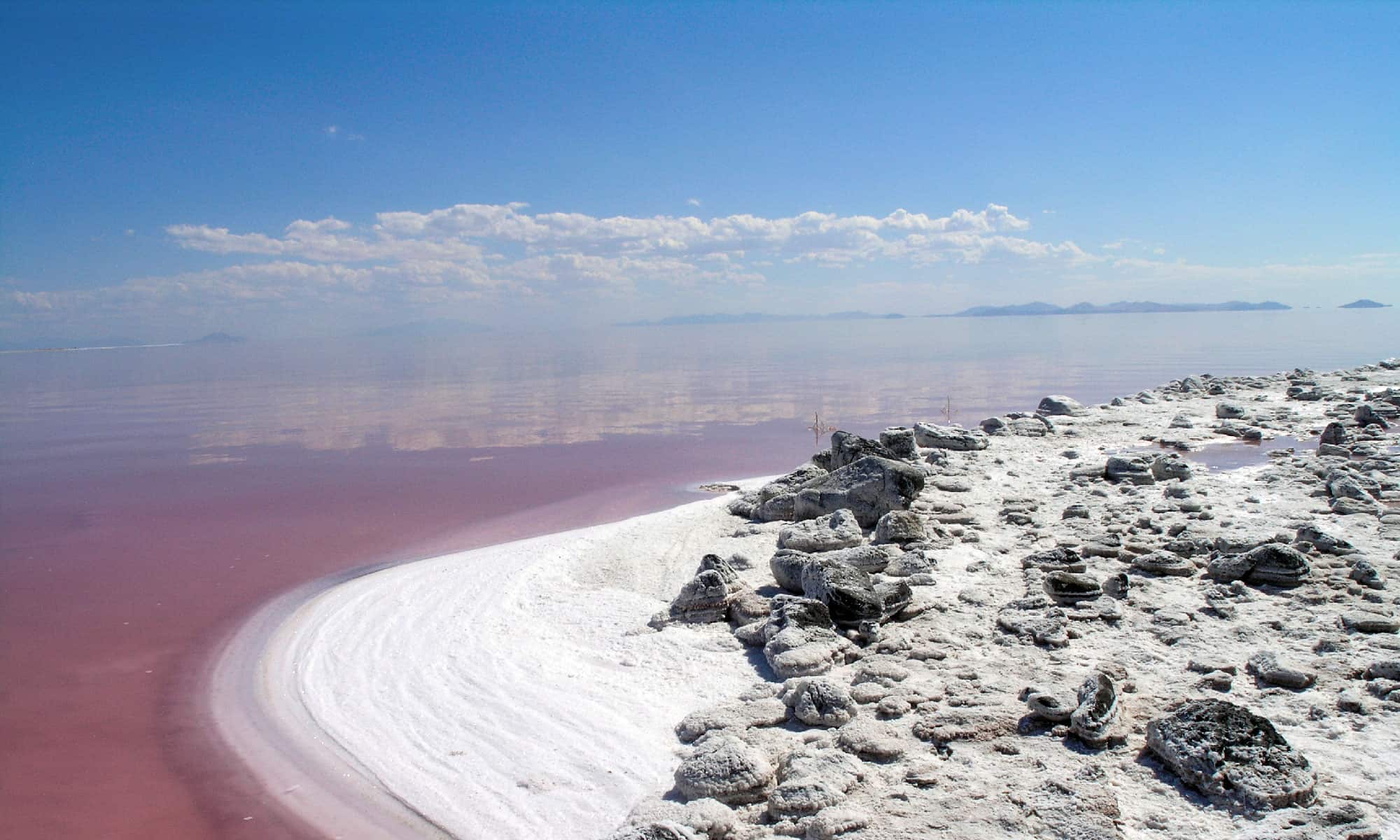
The Great Salt Lake has long been considered one of Earth’s harshest ecosystems. Its extreme salinity, constantly fluctuating water levels, and low-oxygen conditions create an environment that challenges even the most resilient forms of life. While specialized microbes have adapted to survive these stresses, few complex organisms were thought capable of enduring them.
Nematodes, despite being among the most widespread animals on the planet, were not expected to survive in such conditions. As multicellular organisms with specialized tissues and biological systems, they are far more sensitive to chemical extremes than single-celled life, hardly the kind of animals scientists associate with environments as chemically unforgiving as the Great Salt Lake. But the Diplolaimelloides woaabi is surprising the scientific world.
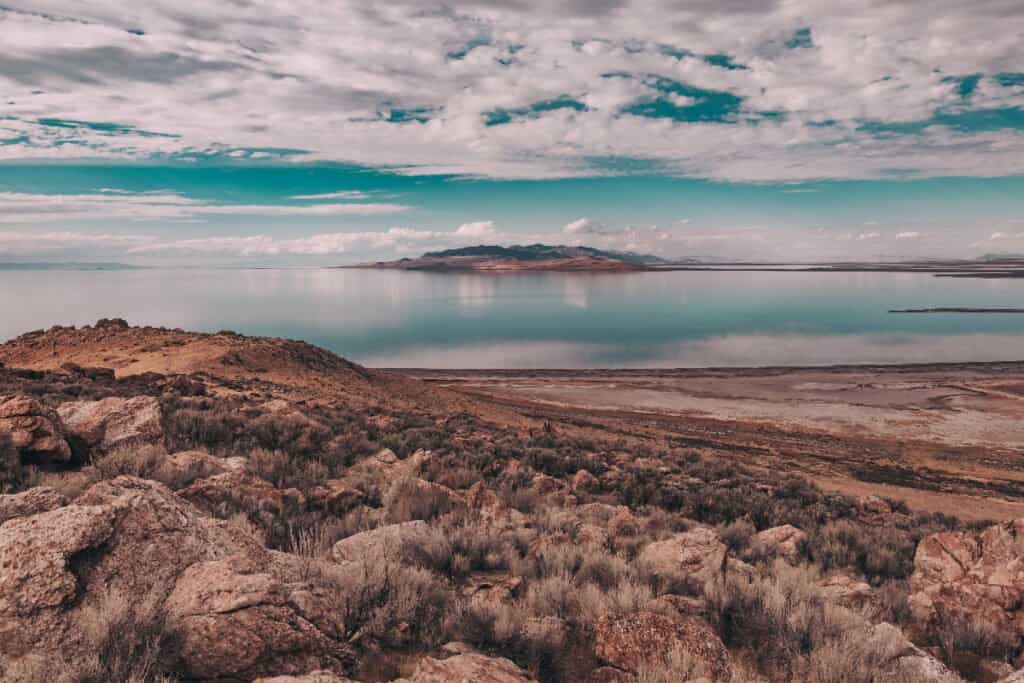
Diplolaimelloides woaabi is a testament that life can persist in conditions once thought nearly sterile.
©Bella Bender/Shutterstock.com
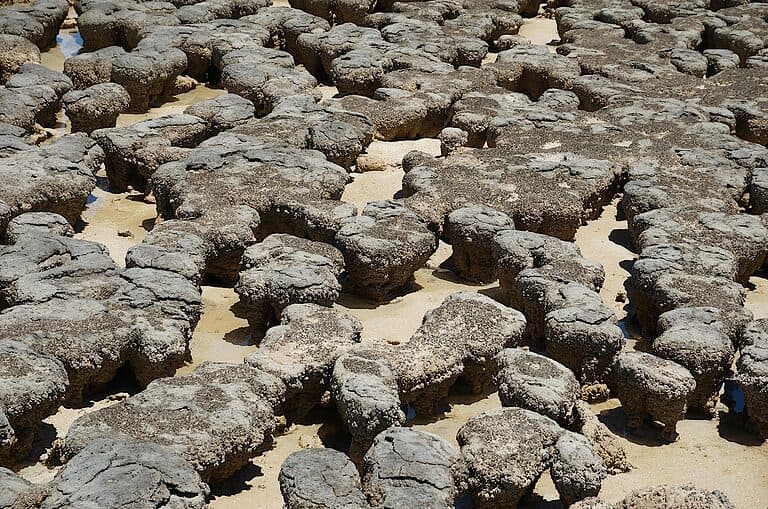
Researchers identified this species of free-living nematode, which inhabits microbialites in the Great Salt Lake, using both molecular and morphological analyses. The species was characterized through 18S rRNA gene sequencing, as well as scanning electron microscopy and differential interference contrast (DIC) microscopy.
Named Diplolaimelloides woaabi sp. nov. (family Monhysteridae, order Monhysterida), the nematode is defined by a distinctive combination of traits, including the presence of ocelli, a relatively small body size (less than 1.5 mm), short anterior sensory setae, and a cryptospiral amphidial fovea. It also features a funnel-shaped anterior buccal cavity with a reduced secondary cavity, fused lips, long paired spicules with sub-apical extensions, and a prominent male bursa. Notably, this species is adapted to hypersaline microbialites, identifying it as an extremophile and a potential bioindicator of ecological change in the Great Salt Lake.
The newly identified nematode species appears to tolerate levels of salinity and alkalinity that would kill most animals outright. Its existence suggests that the lake’s ecosystem is more complex and resilient than previously thought. What was formerly viewed as a biological dead end may instead be a laboratory for adaptation.
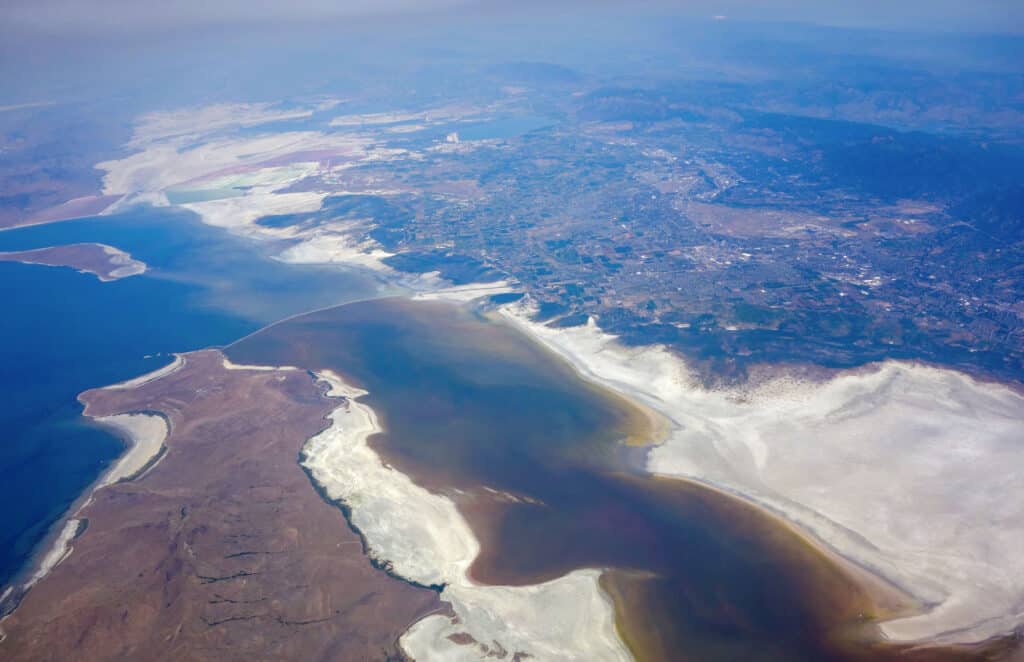
The Great Salt Lake has long been considered one of Earth’s harshest ecosystems.
©Thomas Barrat/Shutterstock.com
At first glance, the discovery of a microscopic worm in the Great Salt Lake might seem like a biological curiosity, a narrow finding with limited relevance beyond nematode taxonomy. In reality, it carries far broader implications, particularly for astrobiology, the study of life beyond Earth.
Planetary scientists routinely look to Earth’s most extreme environments as analogs for other worlds. Antarctica’s dry valleys, deep-sea hydrothermal vents, and hypersaline lakes are used to model how life might persist under intense cold, pressure, chemical stress, or limited energy. The Great Salt Lake has now joined that list in a new and unexpected way.
If complex, multicellular life can survive—and even thrive—in an ecosystem long considered nearly sterile, it challenges our assumptions about what conditions are truly “habitable.” This shift matters when scientists evaluate places like Europa, Jupiter’s ice-covered moon, and one of the most promising targets in the search for life in our solar system.
Europa’s frozen surface conceals a vast subsurface ocean containing more water than all of Earth’s oceans combined. Because the moon orbits the massive gas giant Jupiter, powerful tidal forces continuously stretch and compress Europa’s interior, generating heat that prevents the ocean from freezing solid. Observations of water plumes erupting through fractures in the ice provide strong evidence of ongoing thermal activity beneath the surface.
Researchers believe Europa possesses three essential ingredients for life as we know it: liquid water, a sustained energy source, and complex chemistry. While hydrothermal vents on Europa’s ocean floor were once considered a key component of its potential habitability, recent research suggests that such vents may be absent or far less active than previously believed. On Earth, such vents form when seawater penetrates deep into the crust, is superheated by magma, and becomes chemically altered, leaching minerals from surrounding rock. Those minerals are expelled back into the ocean, where entire ecosystems thrive without sunlight, relying instead on chemical energy.
Scientists have long wondered whether a similar process could occur on Europa. There, heat would not come from magma but from tidal heating, as Jupiter’s gravity flexes the moon and fractures its ocean floor. However, recent studies suggest that Europa’s seafloor may lack the geological activity necessary for hydrothermal vents, making such environments less likely than previously thought.
This is where the Great Salt Lake discovery becomes especially relevant. Hypersaline microbialites were once thought capable of supporting only simple microbial life. The presence of a free-living, multicellular nematode in such an environment suggests that biological complexity does not automatically exclude life from chemically harsh systems.
Astrobiology has traditionally focused on microbes as the most likely form of life beyond Earth. This finding does not overturn that expectation, but it does complicate it. Nematodes demonstrate that adaptability, not simplicity alone, may be the critical factor. The logic is simple but powerful: if life can adapt here, under conditions once considered prohibitive, perhaps it can adapt elsewhere as well. This realization forces scientists to reconsider long-held assumptions about where life might emerge, persist, or even flourish.
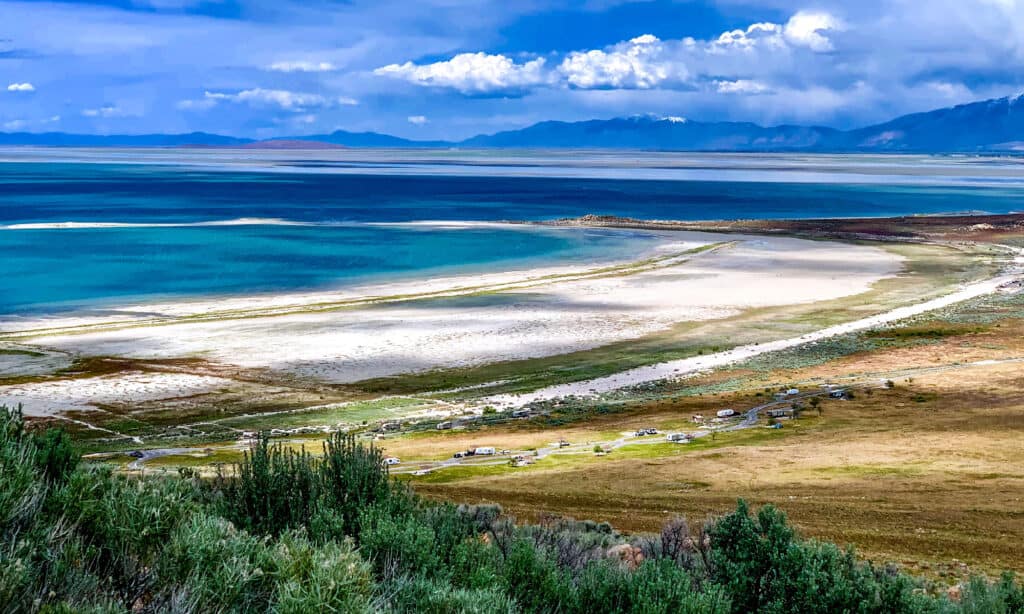
The discovery of the Diplolaimelloides woaabi carries implications far beyond the lake itself.
©iStock.com/Zhi Gong
This discovery also opens a provocative question: how many places on Earth that we casually label as “empty” are anything but? How many ecosystems, too salty, too acidic, too dry, or too toxic, have been dismissed not because life is absent, but because we haven’t looked closely enough, or with the right perspective? The presence of Diplolaimelloides woaabi in the Great Salt Lake reminds us that absence of evidence is not evidence of absence, specifically in environments that defy our expectations of habitability.
The Great Salt Lake nematode is a quiet proof of the provisional quality of scientific certainty. Even in landscapes studied for generations, surprises linger at the edges of what we deem possible. Life is not simply resilient; it is inventive, opportunistic, and remarkably unwilling to be confined by the boundaries humans impose. Life thrives not just by surviving harsh conditions, but by finding ways to exploit niches that, at first glance, seem uninhabitable.
As researchers scan the skies and drill into alien ice in search of life outside Earth, this finding offers a revealing lesson. The challenge may not be that life is rare in the universe, but that our definitions of habitability, as well as our imaginations, are too limited. Restricting our search to environments that mirror Earth’s most comfortable corners risks overlooking life that has taken less conventional paths. Sometimes, increasing our understanding of the galaxy begins much closer to home. And sometimes, it takes a tiny worm, thriving in a salt-scorched lake, to show us just how much we still have to learn.