
Quick Take
- The 2026 Census identified 1,400 new species, and some continue to thrive despite changing weather patterns and landscapes.
- New findings show that urban heat islands actually accelerate speciation rates, contradicting previous models of biodiversity loss.
- Deep-sea scouting has revealed an entire biome of cold-water reefs teeming with life, despite the bleaching of warm-water reefs.
It’s still early in the new year, but 2026 has already brought us some unbelievable new species. Fascinatingly, while planet Earth undergoes dramatic changes in its landscape, some forms of life continue to thrive. Despite climate change, rising global temperatures, and habitat loss, these species are sending a message. In the wild, evolution demands animals either adapt or die.
As details about these discoveries come to light, scientists are seeing more polarized bio-indicators than ever before. And while some believe Earth is nearing its end, some of these species are just getting started.
How One New Species Survives an Inhospitable Lake
Utah’s Great Salt Lake is inhospitable to all but brine fish and brine flies, fed on by passing seabirds. Its salinity level makes it one of the most hostile lakes in North America. Animals that frequent the lake aren’t there to drink its water and are lucky to find a suitable meal. At least, that’s what researchers thought, until a new species was identified in late 2025. The microscopic worm was confirmed to be a species of nematode belonging to the roundworm family. The research team gave it the scientific name Diplolaimelloides woaabi, and its existence indicates several things about its habitat.
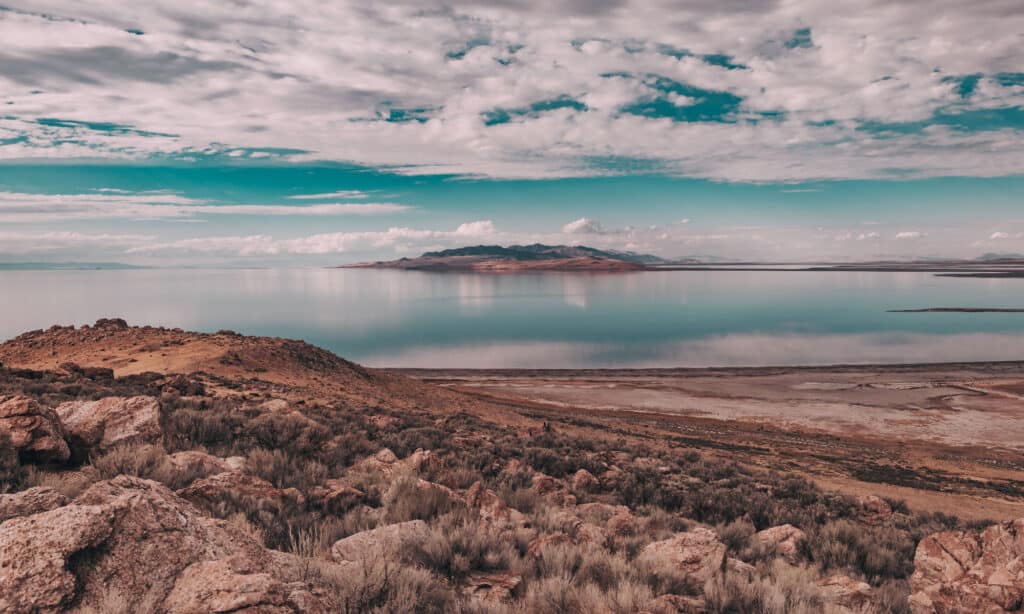
Utah’s Great Salt Lake is inhospitable to most species, except those that have adapted to survive its salinity.
©Bella Bender/Shutterstock.com
The first is its dedication to survival in the Great Salt Lake, where most animals fail. Diplolaimelloides woaabi lives on reef-like microbial mounds, which sustain it and provide protection. Here, the roundworm feeds on bacteria from the mounds. Through feeding, it can withstand harsh UV rays and dehydration. Further evidence shows that these worms have also survived several changes in salinity and water levels. Each time, they’ve evolved to adapt and even thrive in new conditions. More confounding is how the nematodes got into the Great Salt Lake. Experts theorize that passing birds may have transported them unintentionally, further speaking to their incredible ability to evolve.
This species represents hundreds of thousands just like it. While not all have evolved so much, they each continue to thrive and grow in unique, inhospitable conditions. In the face of climate change, this is a striking fact when so many other species struggle to avoid extinction.
While Some Reefs Are Bleaching, Deep Water Ecosystems Thrive
As of February 2026, more than half of the world’s coral reefs are affected by bleaching. Given this statistic, it’s hard to imagine healthy reefs that are still thriving. But that’s exactly what the Schmidt Institute found when they sent the SuBastion ROV down to the Argentine Bay’s continental shelf. Deep in the South Atlantic Ocean, researchers explored the largest known Bathelia candida reef in the world. As they did, they also discovered a treasure trove of new species.
Twenty-eight are now documented, with more to be discovered each day. Researchers were shocked by the reef’s ecosystem, which they described as teeming with marine life. Crustaceans, sea anemones, sea sponges, octopuses, and even sharks were spotted circling the area, which is roughly the size of Vatican City. A whale fall was also discovered nearby, playing host to even more deep-sea marine life. Additionally, samples of the water and surrounding organisms may soon reveal even more information about the reef’s ecosystem. As it continues to thrive, this question remains: How is it possible that it survives while miles of coral reefs are dying?
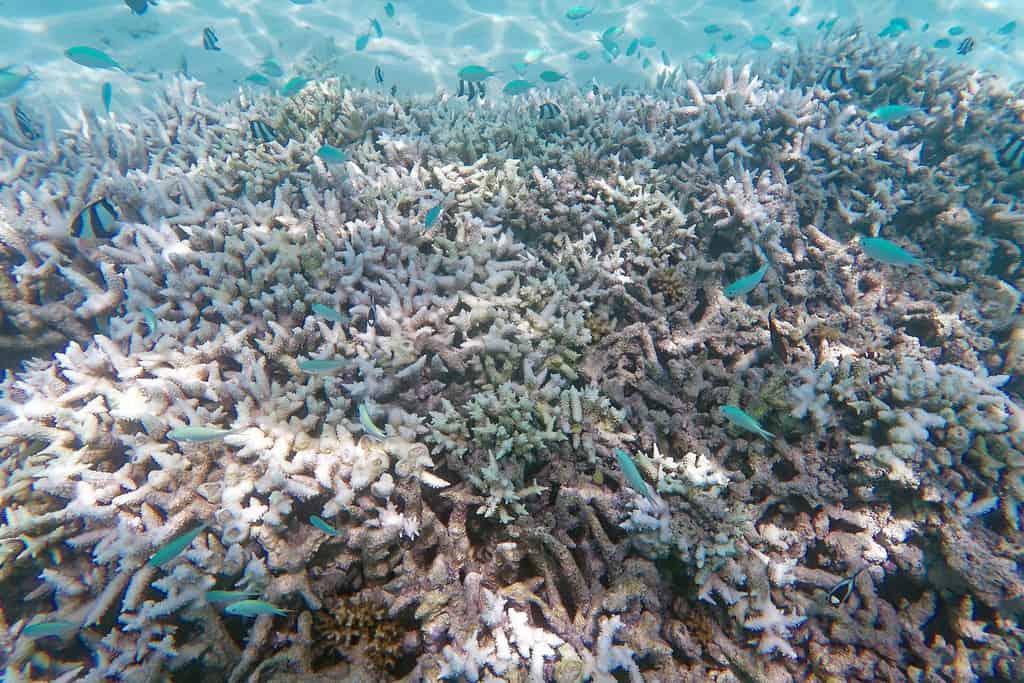
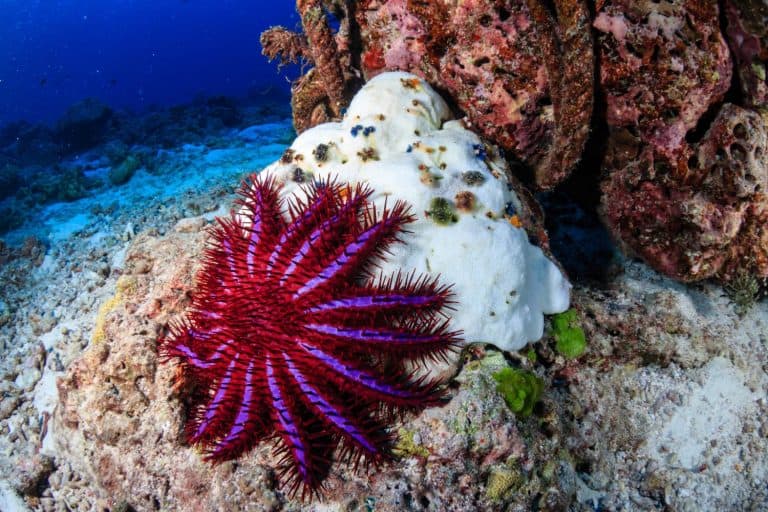
Coral bleaching now affects roughly 51% of reefs worldwide.
©EarthScape ImageGraphy/Shutterstock.com
It turns out that deep-sea reefs don’t have the same temperature or light requirements as warm-water reefs. As climate change intensifies, warm-water reefs are under pressure to adapt in ways they can’t. Rising temperatures kill delicate biomes, while increased UV rays create harsh conditions for algae and microbes. Deep underwater, these conditions do not weigh as heavily on the ecosystems that survive with little surface light. These reefs also lack the symbiotic algae that grow in warm water. This evolutionary adaptation has kept them from being a statistic thus far.
The Bird That Thrives In Volcanic Conditions
As weather patterns change and tectonic plate activity becomes more frequent, one bird remains unbothered. The centuries-old mystery of the lava heron has finally been solved, and it’s a significant win for the Galapagos Islands. In 2025, scientists finally confirmed that the DNA of this bird more closely resembles that of North American herons. This confirmation not only gave the lava heron its scientific name (Butorides sundevalli) but also provided details about its origins, behavior, and survival.
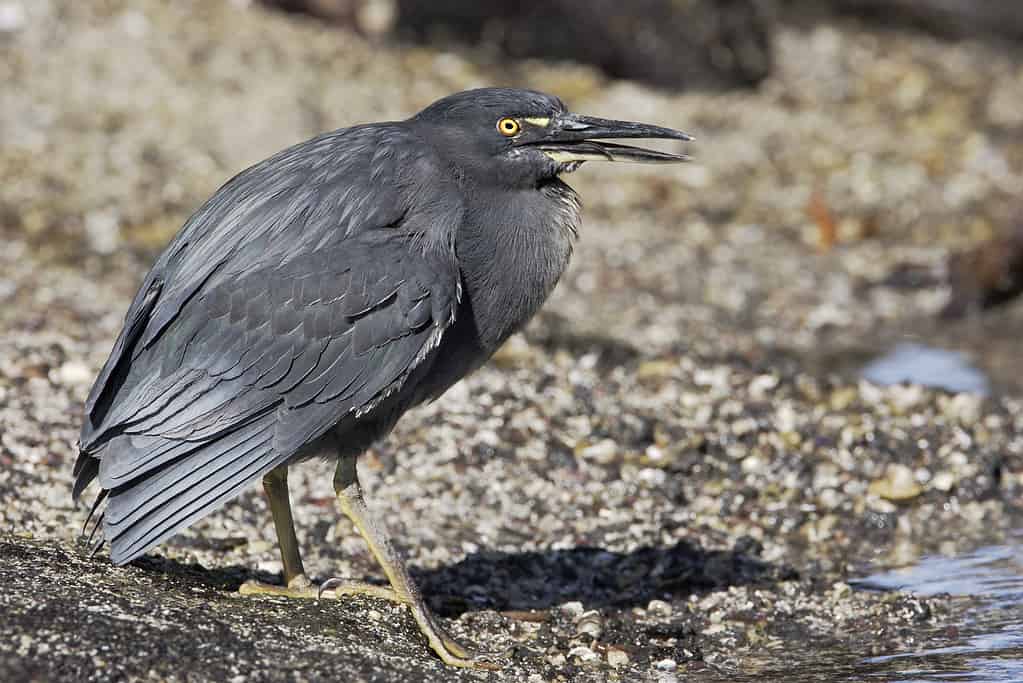
After nearly a century, the lava heron has finally been given a name that reflects its close relation to North American heron species, despite its lava lifestyle.
©WMarissen/iStock via Getty Images
On the remote Galapagos, the lava bird thrives as it darts along cooled lava flows. Its dark gray plumage prevents it from being noticed by the untrained eye. It nests in dark, formerly molten crevices, and catches fish from flows that have reached the ocean. These evolutionary traits speak to how well-adapted the lava heron is to its environment. Its highly specialized camouflage and agility to navigate lava flows make it the perfect Galapagos Island resident.
Currently, the lava heron faces few threats from its native island. Outside threats, such as invasive species and the occasional predatory hawk, may pose a risk, but it’s low. Because of this, it’s considered Least Concern, despite living on an island that hosts so many threatened species.
How Are Animals Changing Their Habits In 2026?
Along with newly discovered species, many well-known animals are being studied by scientists. As climate change threatens native habitats, some species, such as polar bears, are even altering their DNA. Polar bears are once again in the spotlight because of genetic changes that may help them adapt to warming climates. As ice floes disappear in the Arctic, seals and other marine life become harder to hunt. To combat this, a diet of vegetation could, theoretically, support the bears’ caloric needs if their prey ceases to exist. While research is still in its very early phases, the discovery at the end of 2025 was jarring and, potentially, hopeful.
Another species presenting genetic changes is the European tawny owl. Population studies show that brown morphs of tawny owls have become more common in some regions as winters have become milder. As the need to hide among snow becomes less and less, tawny owls are responding with their own evolution in appearance. Warmer temperatures mean mild weather, and the need to camouflage among foliage and underbrush. With no snow-covered trees, the owls find themselves blending in more efficiently by keeping their brown plumage.
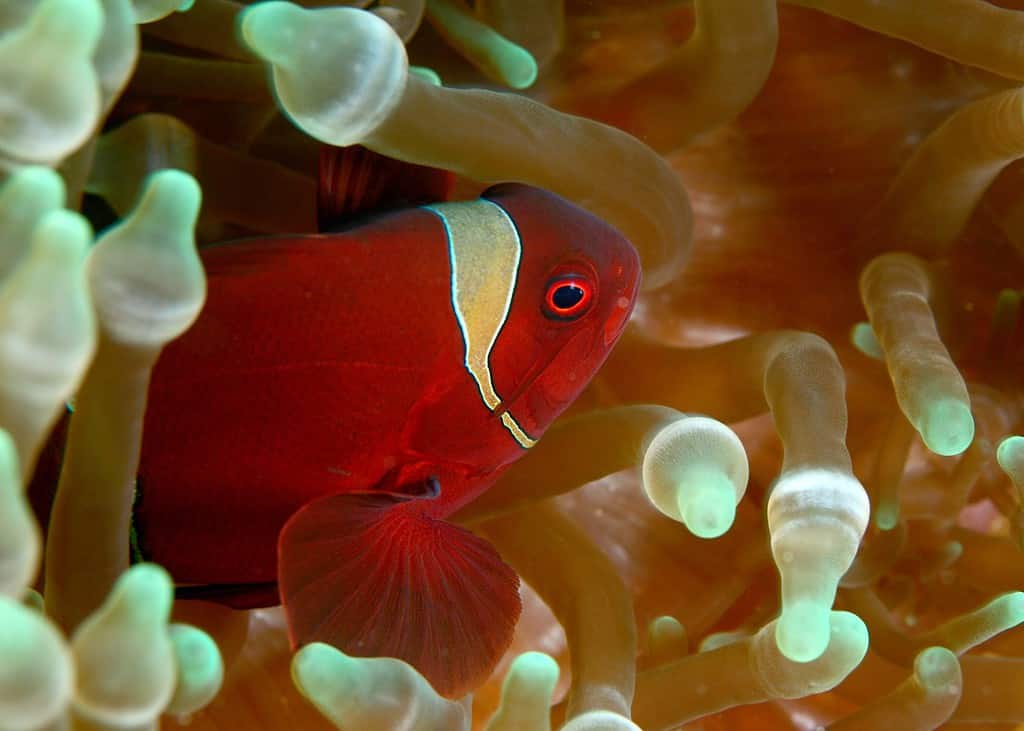
As climate change heats tropical waters faster than ever, clownfish reduce their size to limit oxygen intake and dietary needs to survive.
©MaeManee/Shutterstock.com
Clown fish have thrown another shocking plot twist into their aquatic history. Over time, marine biologists have recorded the fish shrinking in size during heatwaves. As these tropical fish stunt their own growth, they automatically expend less energy. This means they don’t become fatigued while hunting, migrating, or mating, allowing the species to survive extreme temperatures. Their new, smaller bodies also require less sustenance and oxygen, allowing them to survive harsher environments. This 1%-2% decrease in size has increased their survival rate by approximately 78%.