
Quick Take
- New species discoveries in 2025 include over 850 new marine species documented by the Nippon Foundation-Nekton Ocean Census.
- In addition to discovering new species, scientists also found at least one novel insect genera.
- Many newly discovered or described species are already at severe risk of extinction based on climate change and habitat destruction, making conservation initiatives more important than ever.
Ever since I was a child, I’ve been fascinated by the vastness of our planet. I felt it when playing in the forests near my house or when sitting at the beach, staring at the seemingly endless expanse of ocean in front of me. It came as no surprise when I learned that large swathes of the ocean have yet to be explored or mapped. Today, scientists suggest we have only explored 0.001% of the entire sea floor. Given the vast number of life forms that likely make their home on planet Earth, both beneath and above the sea, it stands to reason that there are several creatures we have not discovered yet. Several species have also evolved over time or been mistaken for another species.
With new technology and explorative efforts, we’re only beginning to understand the incredibly diverse planet we live on. In 2025, the trend of discovering new species continued. While we’re still waiting for the final count, we know scientists named thousands of new species this year. The Nippon Foundation-Nekton Ocean Census named over 850 new marine species alone! These new species span across multiple habitats and continents. Recognizing what these species are and where they exist is important, especially since this knowledge can shape conservation efforts.
Were New Amphibians Found in 2025?
Since amphibians first evolved from the lobe-finned fish some 365 million years ago, they have diversified into more than 8,750 different species. Amphibians live in all different landscapes between water and land, from cloud forests to streamside habitats. As climate change continues to affect our world, it will be interesting to see how known species, and newly discovered species, adapt and survive.
Three Ranitomeya Frog Species
Ranitomeya refers to a genus of poison dart frogs, typically found in Central and South America. These frogs share several characteristics, including bold colors (vivid greens, reds, and yellows) and relatively small size.
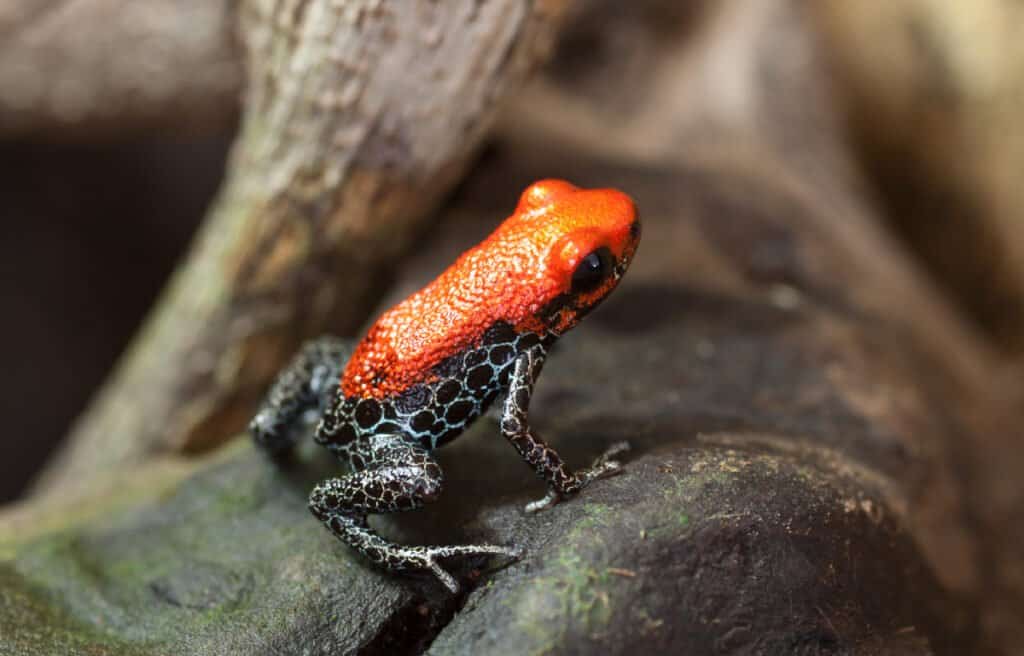
Typically, in nature, bright colors are a warning to predators to stay away.
©Klaus Ulrich Mueller/Shutterstock.com
Three separate species within Ranitomeya have been identified this year, bringing the total number of species to nineteen:
- April: ZooKeys highlighted the first discovery of a new species within this genus in thirteen years: the Metallic Poison Frog (Ranitomeya aquamarina). A research team discovered R. aquamarina during a trip to forests around the Juruá River Basin in Brazil. What sets R. aquamarina apart from other Ranitomeya is its metallic orange chrome limbs, metallic yellow-green and turquoise-green dorsal stripe patterns, and high-pitched advertising call.
- May: Ranitomeya aetherea, also found in the Juruá River Basin, lives in open areas of forest and around rainforest palm trees. The species is diurnal, or active during the day. R. aetherea are small with display bright, eye-catching colors: blue stripes on a reddish body, and metallic copper limbs with dark red spots. Curiously, R. aetherea might only lay one egg at a time. This differs from many frog species who lay hundreds or even thousands of eggs at a time to maximize survival odds.
- September/October: Ranitomeya hwata has been mistakenly considered for years to be another frog within this genus, the Sira poison dart frog (R. sirensis). According to records, R. hwata lives in Brazil and potentially Bolivia. These yellow-striped frogs live and breed in Guadua bamboo, not seeming to travel far beyond these bounds. Unlike some related frogs, R. hwata is not monogamous and males may mate with several females.
Three Species of Tanzanian Tree Toads
A large majority of amphibians lay eggs. Giving birth to live young is rare. But three new species of tree toads from Tanzania’s Eastern Arc Mountains fit within this rare category. Named the Mahenge glandular tree toad (Nectophrynoides saliensis), the Udzungwa glandular tree toad (Nectophrynoides uhehe), and the Luhomero glandular tree toad (Nectophrynoides luhomeroensis), these three frogs were originally all considered to be a singular, separate species called the Southern Highlands glandular tree toad (N. viviparus), which was first identified in 1905.
However, scientists tested Nectophyrnoides museum collections, including live specimens. Their findings showed that N. viviparus and the three new species were phylogenetically and morphologically distinct. The frogs differ in size and body shape, as well as various calls.
Additional Amphibian Species Discovered in 2025
Scientific discoveries continue to abound. Beyond the amphibians that made this list, scientists have also identified:
- Adhaerobufo wokomungensis, a new toad species found in Guyana
- Boeadi’s tree frog (Rhacophorus boeadii), endemic to Sulawesi
- Boulenophrys gutu, a horned toad species found in China
- Brachycephalus lulai, a pumpkin toadlet found in Brazil’s cloud forests
- Callulops gobakula, a frog which lives in boulder cracks on Dauan Island
- Choerophyrne koeypad, a small but loud frog found on Dauan Island
- Crossodactylodes alairi, a frog found Brazil’s Atlantic Forest
- Platypelis efatra, an arboreal frog from Madagascar
- Pristimantis chinguelas, Pristimantis nunezcortezi, and Pristimantis yonke, all named in June 2025
- Sudian odorous frog (Odorrana sudianensis) discovered in China
Arachnids
Admittedly, I’ve always been somewhat afraid of spiders and scorpions. I’m not sure which one creeps me out more: the skuttling way they walk or the possibility they may bite or sting. However, scrolling through Reddit’s arachnid-loving communities has given me an appreciation for these creatures. I never realized the complexity of certain webs or burrows, or how beneficial some arachnids are for pest control. While I’ll probably never love mites or ticks, and my fear of arachnids has only slightly diminished, I am curious how newly discovered arachnids affect the world around us.
Apostichus ramirezae
When it comes to hunting prey, trapdoor spiders are top of their class. Trapdoor spiders burrow into the ground, topping their silk-spun burrows with a “trapdoor.” When prey passes by, trapdoor spiders sense the vibrations. They rapidly pop open the door, ambush their prey, and drag them back to the burrow. In October 2025, scientists published research identifying Apostichus ramirezae, found in sand dunes along the California coastline. These minute spiders are just around 2.5cm long.
Scientists note that the geographical spread of Apostichus ramirezae is unique. Since trapdoor spiders spend a majority of their lives underground in their burrows, the fact that they were found from Monterey to Baja California (approximately 975+ miles) was unexpected.
Torrenticola galaica
Water mites are small arachnids found mostly in freshwater environments. Some are parasitic, but not all water mites are. Others simply feed on plant matter in the water. In November 2025, a study published in Zootaxa described Torrenticola galaica, a novel water mite species out of Portugal. DNA sequencing helped differentiate Torrenticola galaica from other species, like T. ungeri disparilis. T. galaica, found in quickly-moving streams, has a round idiosoma (the main part of the body) and unique color patterns. However, understanding these water mites’ impact on stream health requires more research.
Any Other Newly Named Arachnids?
Several other newly named arachnids were identified and shared in 2025. Some were completely new to science, while others were previously grouped into a singular species. These include:
- 55 new species of wishbone spiders from subtropical and tropical Eastern Australia
- 11 new jumping spider species out of Sumatra
- Androctonus ammoneus, a species of fat-tailed scorpion found in Jordan’s Zarqa province
- Christy Jo goblin spider (Ischnothyreus christyjoae), found on St. Helena, with “armor-like plating on its abdomen”
- Myobia murina, new fur mites found in lab rats
- Newcastle funnel-web spider (Atrax christenseni), once thought to be the Sydney funnel-web spider (Atrax robustus)
- R. cilbizi and R. andrevae, marine mites described in the Canary Islands in May 2025
- Southern Sydney funnel-web spider (Atrax montanus), reclassified in 2025, also once thought to be A. robustus
Birds
Earlier this year, researchers managed to catch what they eventually labeled a “grue-jay” in San Antonio, Texas. Genetic testing showed that the bird, first seen around 2023, was a hybrid between a blue jay and a green jay. Likely the green jay was the mother. The research team leading the study suggests that the pairing is likely a result of climate change, since blue jays and green jays can live in new geographical areas.
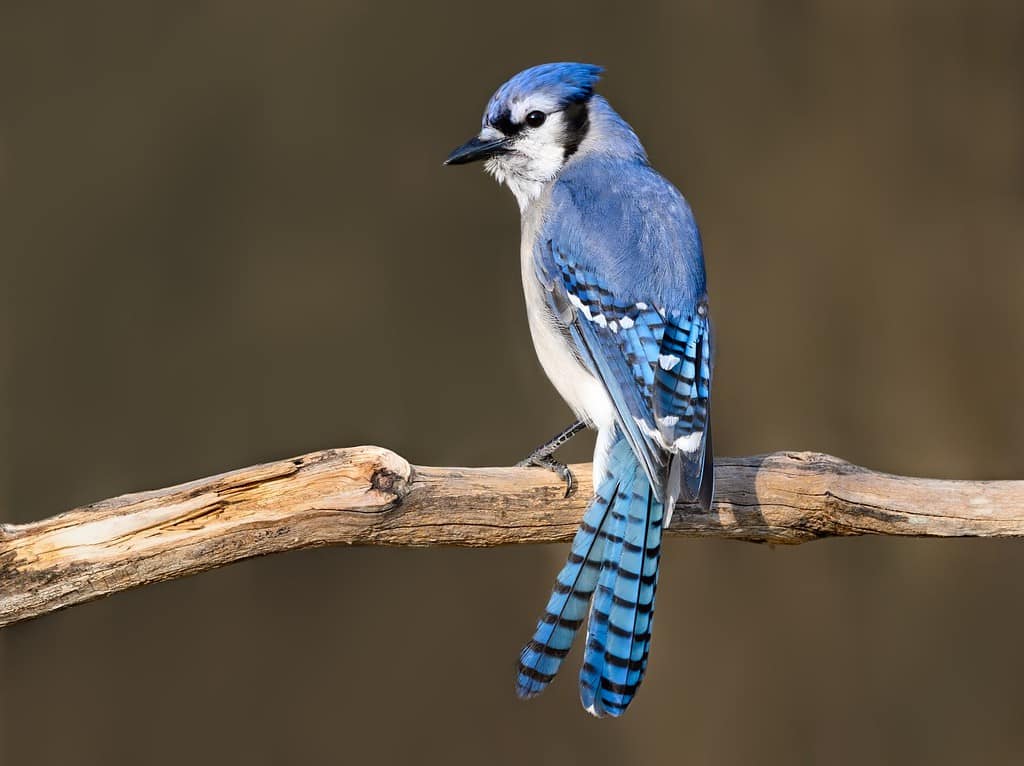
Blue jays’ bright blue coloring is actually a trick of light, with no actual blue pigment, and the color coming from light refraction.
©FotoRequest/Shutterstock.com
You might be wondering if the grue-jay, then, counts as its own distinct species. But the answer, at least for now, is no. The hybrid grue-jay would only be considered a new species if they were mating and establishing new lines and populations.
However, the rest of the bird species that did make our list have been officially confirmed as new species.
Slaty-Masked Tinamou (Tinamus resonans)
Some birds, especially those with limited exposure to humans, are understandably flighty and distrustful. Additionally, smaller birds might see humans as large, dangerous predators. But not the slaty-masked tinamou from Brazil’s Serra do Divisor National Park. The docile, largely flightless birds showed essentially no fear or vigilance responses to humans.
Scientists estimate that the population of slaty-masked tinamous sits around 2,100 individuals. These birds are brownish-gray in color on their backs, a deeper cinnamon on their underbellies, and have a dark gray “mask” on their face, hence the name. Researchers have been searching for the slaty-masked tinamou for years after hearing what the study authors describe as its “long and powerful songs that echo strikingly across the steep montane slopes.” I bet we’d all like to hear that!
Babar Myzomela (Myzomela babarensis)
The Banda Myzomela (Myzomela boiei) is a honeyeater bird found in Indonesia. These birds eat nectar, but are also insectivores, consuming insects as part of their diet. Previously, scientists believed subspecies of the Banda Myzomela lived on the Banda Islands, Babar, and Tanimbar Islands, three different island groups. But new research found that the birds found on each island are actually different Myzomela species: the Banda Myzomela, Babar Myzomela, and Tanimbar Myzomela (Myzomela annabellae). None of the birds respond to songs from any other species. They also differ in size, with the Banda Myzomela having slightly longer wings than the birds on the Tanimbar Islands and the Babar Myzomela having longer tails and more bright, scarlet coloring.
Fish
A recent favorite, Lulu Miller’s Why Fish Don’t Exist, is part memoir and part biography of famed ichthyologist David Starr Jordan. While David Starr Jordan is controversial for understandable reasons, his scientific contributions were huge. He is responsible for naming 1,085 genera and 2,500 different fish. Today, there are over 33,000 fish species, our knowledge building on the foundations of that legacy. Let’s take a look at a few discovered this past year.
Bumpy Snailfish (Careproctus colliculi)
Snailfish, which can be found in waters across the globe, are remarkably versatile creatures. They have adapted to live in extremely deep, cold, and high-pressure waters. In fact, shares the Monterey Bay Aquarium Research Institute, snailfish are record-holders for being the deepest-dwelling fish. Researchers recently collected fish specimens from 13,513 ft. and 10,722 ft. deep respectively in the Pacific Ocean off the coast of California. Through this, they identified three new snailfish species, including the Bumpy snailfish.
Named for the multitude of bumps all over its body, the Bumpy snailfish is pink in color with large, seemingly expressive eyes. Scientists are stumped as to what its bumpy texture might provide, but they hope to find out more in the coming years.
Festucalex rosa
A beautiful light pink in color, Festucalex rosa is a new species of pipefish found near D’Arros Island in Seychelles. So far, only one of its kind has been collected for research, so the actual population of F. rosa is currently unknown. In addition to its coloring, F. rosa has 17 trunk rings and a snout that is nearly as long as its head! The research team also shares that this is only the second Festucalex species recorded in the western Indian Ocean.
Those Fish Species Weren’t Alone
Given the vastness of the ocean, scientists are likely to continue uncovering more species for years to come. Some species, especially those living in the deeper parts of the ocean, may never actually come to light. Luckily, you can learn about the biodiversity in our oceans with these new finds:
- Dark snailfish (Careproctus yanceyi) and Sleek snailfish (Paraliparis em), both found during the same expedition which named the Bumpy snailfish
- Labeo niariensis, an African carp which is set apart from other Labeo fish because of its forked kinethmoid skull bone
- Labeo uru and Labeo chekida, both freshwater carp from India’s biodiverse Western Ghats, identified in April 2025
- Priocharax rex, found in Colombia and described in January 2025, with a small round skin flap in between its pelvic fins
Insects
Insects are by far the most diverse animal group in existence, accounting for around half of all species. If you collected every known insect in the entire world, they’d weigh an estimated 1 billion metric tons, or the weight of all humans and livestock combined. That’s pretty crazy to think about, considering how small many insects are. Even if you include some of the largest insects, like the titan beetle, we’d still be essentially buried under a huge wave of bugs. But this number doesn’t even account for the unknown insect species that scientists continue to discover every day.
Okanagana monochroma
When serpentine rock becomes weathered, it becomes soil that is often harsh and hard for many plants to grow in. As a result, serpentine rock ecosystems are unique in what life can thrive there. Western azalea is one of the plants that does really well in serpentine environments. Researchers believe that a newly identified cicada species, Okanagana monochroma, has adapted to use Western azalea as a host plant, which means O. monochroma uses the plant as both food and habitat (somewhere to lay eggs). Discovered in The Cedars of northern California, these cicadas are black with some lighter markings and have unique calling sounds.
What’s unique about O. monochroma, according to researchers, is that it might have the smallest geographical range of any cicada species on the entire North American continent. At least five other cicada species exist in the same range, but those species all have less specialized host plant needs that allow them to travel.
Platysognathus amazonicus
While identifying a new species is undoubtedly exciting, scientists must be completely overjoyed when identifying a new genus. That’s exactly what happened when Platysognathus amazonicus was found. Scientists collected this railroad-worm beetle in the Colombian Amazon. They quickly realized that these insects were set apart by an oddly shaped mandibular tooth, saw-like reproductive organs, assymetrical genitalia, and comb-like structures on their front and middle legs. Because these features were so different than anything observed in the Phengodidae family, scientists defined Platysognathus as its own genus. Although thousands of new species are discovered every year, it’s much more rare to find new genera.
Additional Insect Species We Learned About in 2025
As climate change has ramped up, many experts have referred to what’s known as the “insect apocalypse,” or the global decline in insect populations. This can have devastating effects on the food chain and environmental health overall.
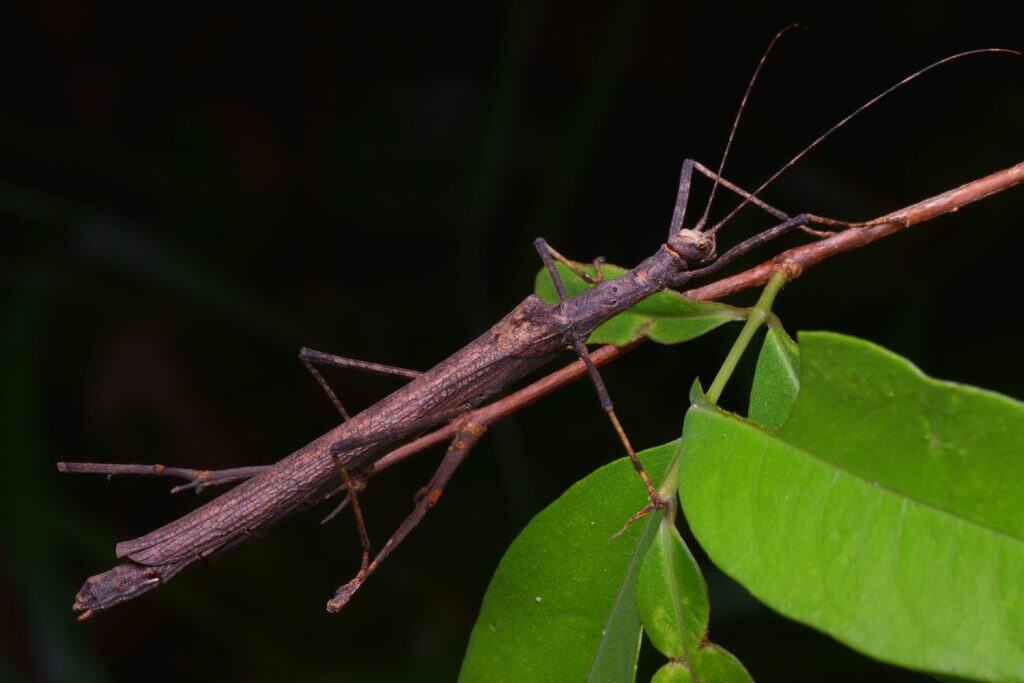
Stick insects’ unique appearance has helped them camouflage against potential predators.
©SIMON SHIM/Shutterstock.com
Here are a handful of newly discovered insect species:
- 14 Microphorella (predatory fly) species, including M. bifida and M. compacta
- 24 new Clistopyga parasitoid wasp species identified in Neotropical geographical areas
- Acrophylla alta, a nearly two-foot-long stick insect that made waves as Australia’s newest and most heaviest insect
- Austrolimnius (Telmatelmis) hintoni, a type of riffle beetle from Mexico
- Batracomorphus ruthae and six other Batracomorphus leafhopper species found in Uganda
- Steleops bolivianus, a type of bark lice, and 19 other potentially novel Steleops species
Mammals
Nearly 6,500 known mammal species exist, ranging from lions and hedgehogs to bats and dolphins. These animals all share several different traits that define them as mammals. For example, mammals are warm-blooded, feed their babies with milk, and usually give birth to live young (although there are some light exceptions there!). It’s interesting to see how newly identified mammals may differ or fall in line with, accepted norms.
Marmosa chachapoya
Although first discovered in 2018, Marmosa chachapoya was not officially named until this past year. Named for the Chachapoya people who used to live in the Andes, Marmosa chachapoya lives in the cloud forests in Abiseo River National Park. Marmosa chachapoya is a tiny mouse opossum that is about four inches long, with a six-inch long tail. The mouse opossum also has dark rings around its eyes.
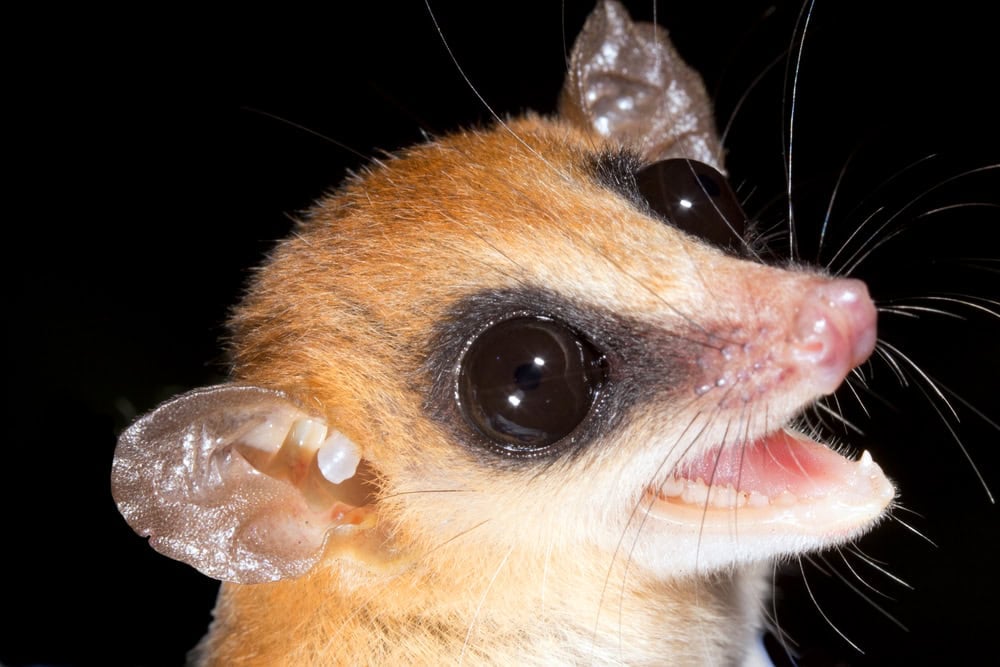
Mouse opossums are nocturnal, or more active at night, so their large eyes are needed to help them navigate.
©Dr Morley Read/Shutterstock.com
So far, researchers have only been able to collect one specimen of Marmosa chachapoya. Beyond its genetic differences from other mouse opossums, researchers still do not know much about how many of these creatures exist, whether they live in other areas, or how they have adapted to their specific locations. Interestingly, Marmosa chachapoya was not the only previously unknown animal collected by researchers on this trip. They note that they also found a semi-aquatic rodent that hasn’t been formally described in scientific literature yet.
Snake River Plains Ground Squirrel (Urocitellus idahoensis)
UNC Greensboro Assistant Professor of Biology Dr. Brian McLean is fascinated by mammalian evolution and the landscape processes that facilitate that evolution, which focuses on within the McLean Lab. McLean’s recent fieldwork played an important part in identifying the Snake River Plains ground squirrel. Previously, this ground squirrel was believed to be a Piute ground squirrel (Urocitellus mollis).
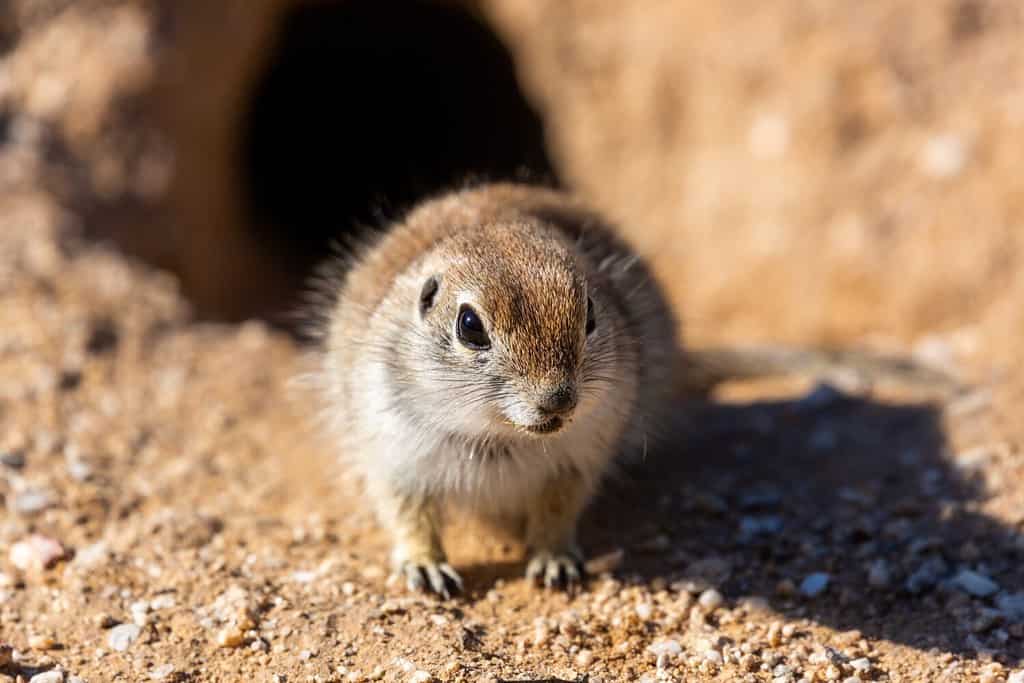
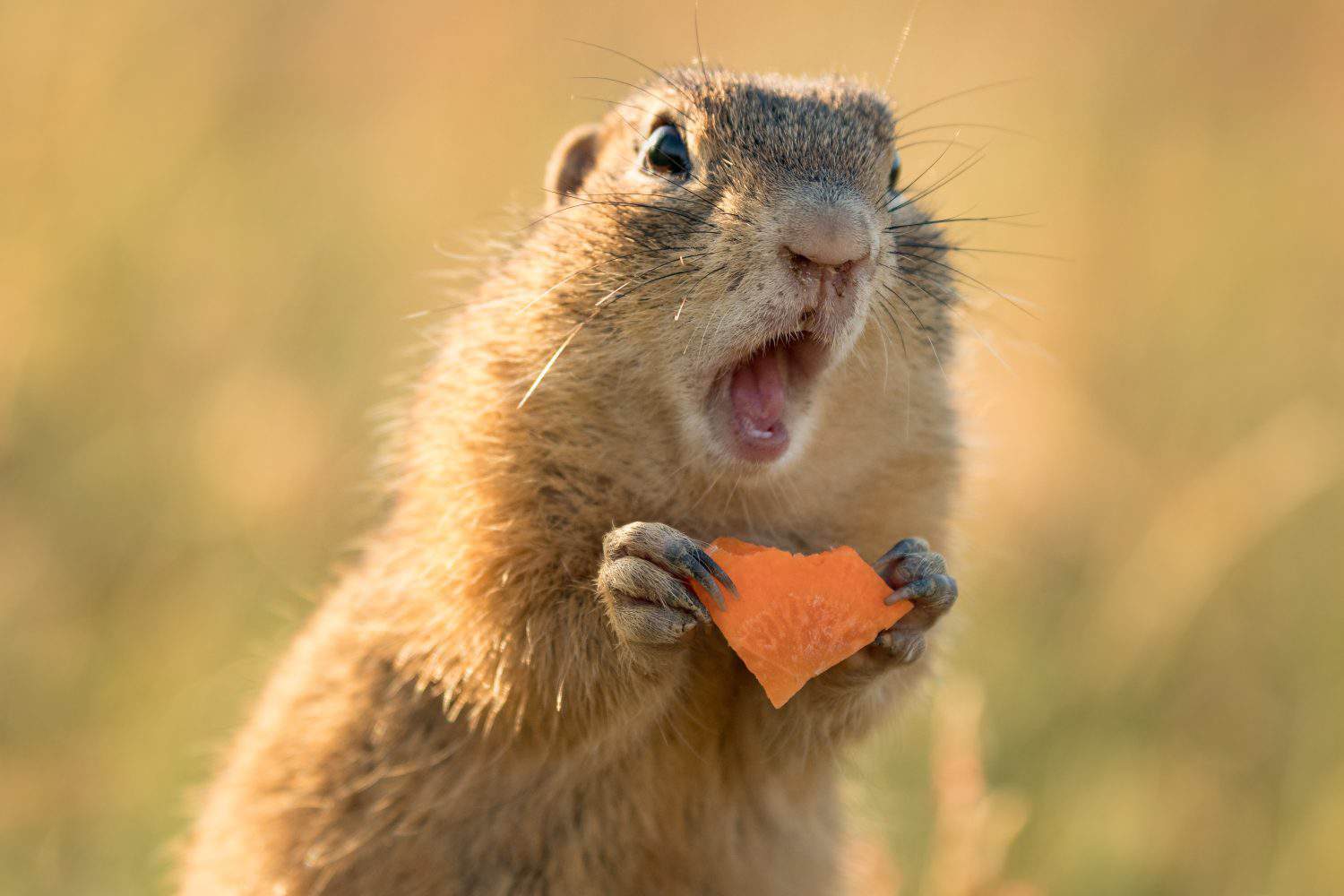
A ground squirrel’s diet is varied, including some fungi, seeds, greens, and, in some cases, insects or small animals.
©Charles T. Peden/Shutterstock.com
However, McLean shared in a UNCG research article that the Piute ground squirrel was not even the closest relative to the Snake River Plains ground squirrel, even though, on a surface level, they look nearly identical.
U. idahoensis, which has two subspecies, is endemic to (only found in) Idaho. These ground squirrels have small ears, tails, and limbs, but long claws that help them burrow and search for food.
Yes, More Mammals Were Discovered This Past Year
While not as many new mammals were found as insects or marine creatures, there were at least two separate mammals found to be their own species this year:
- Crocidura stanleyi, a small shrew found in 2015 but taxonomically recategorized in 2025
- Eastern siberian lemming (Lemmus paulus), now differentiated as its own species
Other Aquatic and Marine Animals
When my fiance and I moved closer to the North Carolina coast last year, we were both extremely excited to be closer to the water. While he’s more of a swimmer, I’m endlessly fascinated by the creatures that rely on our oceans. I’m an avid shark tooth hunter and frequently go pacing up and down the beach during my time off, trying to categorize the jellyfish or crabs I see wash up. Maybe I haven’t found a new species yet. But, considering a 13-year-old student identified one of these new ocean species, there might still be time for me!
Orchistoma integrale
Ryoya Sugimoto was thirteen when he first captured tiny, jellyfish-like creatures from Japan’s Tanabe Bay. He was fascinated by them, which looked like no jellyfish he had ever seen before. Eventually, after raising the creatures until maturity, Sugimoto enlisted the help of Dr. Allen Collins. Molecular, morphological, and genetic testing showed that this was an entirely new species: the integral jellyfish.
The research team notes that the integral jellyfish is a hydrozoan, not a true jellyfish. The integral jellyfish also differs from other hydrozoans because of their integral-shaped reproductive organs, irregular tentacle growth, and more complex mouths and lips.
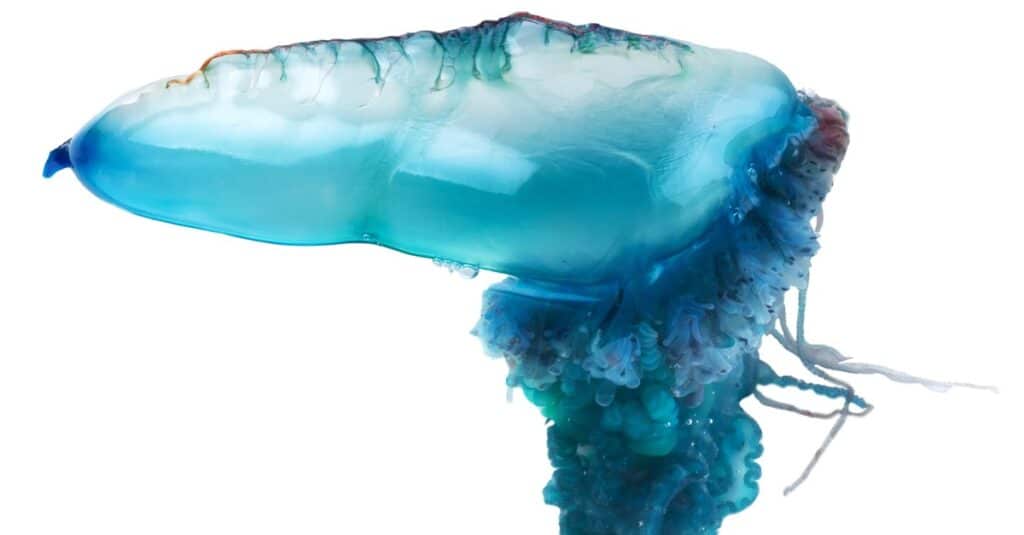
The Atlantic Portuguese man o’ war (Physalia physalis) is another type of hydrozoan. Hydrozoans and jellyfish differ based on their life cycle and physical structure.
©IrinaK/Shutterstock.com
Integral jellyfish are found in shallower waters, but this is actually the first time an Orchistoma species has been found in the Northwest Pacific. Researchers’ next steps? Figuring out how, and why, they got here.
Wadatsumi Limpet (Bathylepeta wadatsumi)
Limpets, aquatic snails with conical (cone-shaped) shells, usually live between the high and low tide lines on rocky shores across the world. But the Wadatsumi limpet, discovered in Japan, was found at a much deeper level: around 5,922 meters (or 3.67 miles) deep. Researchers spotted the limpet while in a submersible, giving them a much better look at its natural habitat. Many limpet species have smaller shell lengths. Again, the Wadatsumi limpet’s shell sets it apart at 40.5mm (1.5~ inches). Although more research is needed, the research team writes that the limpets live on “hard volcanic rock covered by a thin layer of sediment” and suggests that the limpets may even eat that sediment as a large part of its diet.
More Marine Life Discovered in 2025
Although I’d love to give you a full overview of every marine creature discovered in 2025, that would take ages (and literal hundreds of bullet points). But here are some of the incredible discoveries from this past year. Head to the Ocean Census to see some more unique finds:
- Chewbacca coral (Iridogorgia chewbacca), named for its “hairy” appearance that mirrors the famed Star Wars character
- Chondrocladia sp. nov., a carnivorous sponge that is covered in tiny hooks that help it capture prey
- A novel guitar shark species found off the coast of Mozambique and Tanzania, joining less than 40 other guitar shark species worldwide
- Galathea sp., a new type of squat lobster found for the first time in the Pacific Ocean
- Iridogorgia curva, another deep-sea coral found around the same time as I. chewbacca
- Myonera aleutiana, a carnivorous clam that lives at extremely deep parts of the sea
- Streptocephalus warliae, fairy shrimp found in India’s Western Ghats
- Turridrupa magnifico, a gastropod that kills its prey by injecting them with toxins through sharp teeth
Parasites
The extent of parasite biodiversity remains unknown, with some studies suggesting 85% or more parasites have yet to be discovered. While thinking about parasites can give some people the heebie-jeebies, parasites do have ecological benefits, including population control for hosts, providing nutrients for other predators, and even contributing to greater biodiversity. That said, while not all parasites are a net negative for the environment, some newly discovered species can cause devastating health and environmental consequences.
Lobothorax bharat
Did you know that “rolly-pollies,” also known as pillbugs, are not actually bugs at all? In fact, they’re terrestrial crustaceans within the order Isopoda that have evolved to live on land. They are called isopods. Not all isopods are parasitic, but several, like the newly reported Lobothorax bharat, are. Although samples were first collected in 2023, Lobothorax bharat was not officially named until 2025. These small, white parasites were found on the coast of Bahabalpur and Gopalpur. L. bharat was living on largehead hairtail, a long fish sometimes called a cutlassfish or ribbonfish. Similarly to the tongue-eating louse, L. bharat infects the fish by attaching to the tongue.
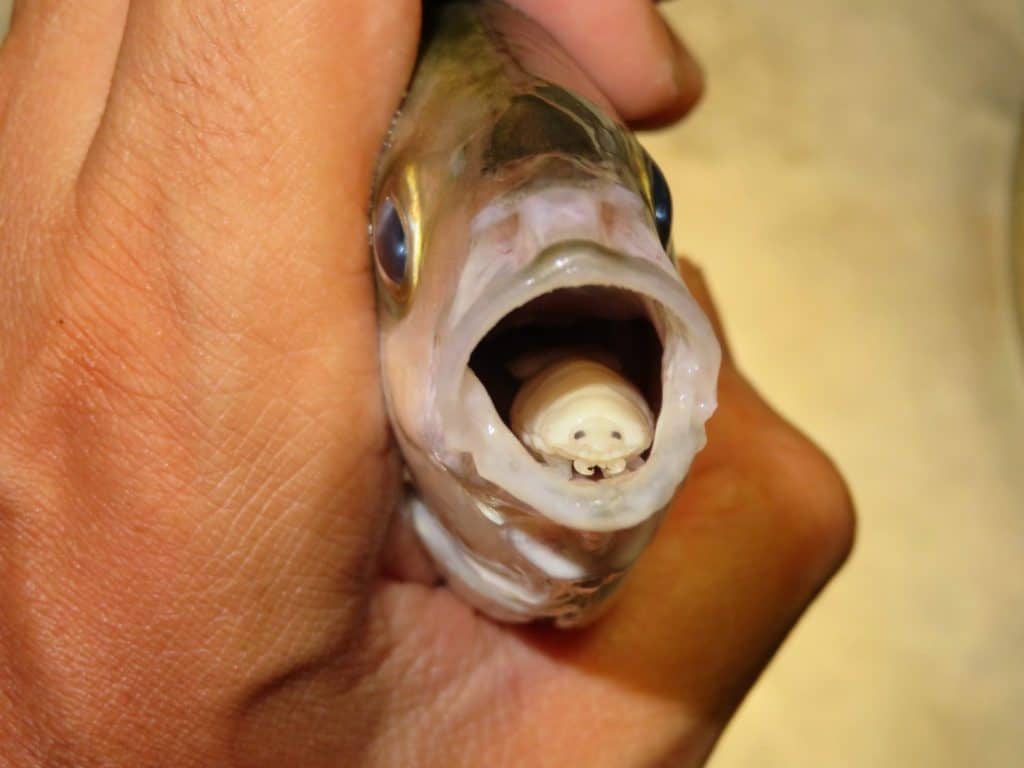
The tongue-eating louse replaces the fish’s tongue, making it potentially more difficult for fish to eat.
©ijimino/Shutterstock.com
DNA testing showed that L. bharat differed from its close relative Lobothorax typus by around 2.5-2.6%. Additionally, L. bharat showed distinct physical features, such as:
- A short, flat front of the head
- Bristles on the mouth area
- A groove in the middle of a body segment
While not harmful to humans, parasitic isopods like L. bharat could significantly damage aquaculture efforts and hurt fish populations.
Loimos everinghami
The previous species of Loimos, a type of parasitic worm, was discovered over 50 years ago in 1972. But Dr. David Vaughan and his team turned that on its head in 2025 when, off the Central Queensland coast, they found Loimos everinghami in the gills of a deceased Australian sharpnose shark. Testing identified distinct DNA separate from other Loimos species. This parasite also has unique reproductive organs.
Loimos everinghami clings to shark gills using a haptor, an attachment organ with hooks, anchors, and suckers. Once attached, the parasite feeds off of the shark’s skin and mucus. Scientists are interested in learning more about the symbiotic (mutually beneficial) relationship between the Australian sharpnose shark and Loimos everinghami. While more research is needed, they believe Loimos everinghami does not harm the shark itself.
This is the first time a Loimos species was identified in Australia or Oceania.
Other Parasite Species Named in 2025
With each new parasitic discovery, we can better understand nutrient cycling in various parts of nature, as well as how to address potential or emergent health threats. Here are several other parasite species discovered this past year:
- Diplolaimelloides woaabi, a microscopic roundworm in Utah’s Great Salt Lake
- Five myxozoan parasites (which can infect fish), identified in Malaysia
- Hybrid schistosome parasite species from the joining of Schistosoma haematobium and S. mattheei, and S. mattheei with S. mansoni, that could cause a disease called schistosomiasis
- Trichuris incognita, a human-affecting whipworm which might be resistant to ivermectin
Reptiles
Over 11,000 known reptile species exist in today’s world. Reptiles play an incredibly important role in our ecosystems. In addition to acting as both predators and prey, feeding others in the food chain while controlling pests, reptiles help humans with our own advancements. For example, certain snake venoms are being explored for their potential cancer-treating properties. Who knows what insights these newly discovered reptiles might yield?
Over 21% of known reptile species are at risk of extinction, and several newly discovered species are as well, underscoring the need for immediate interventions.
Grismer’s Pricklenape Lizard (Acanthosaura grismeri)
The Grismer’s pricklenape lizard is named after the prickly spines that extend from its neck down its back. Male and female Grismer’s princklenape lizards differ in color and size. According to researchers, females are larger and more mottled in color. Females also have orange eyes. Alternately, males are smaller, brighter green, and have brown eyes. The research team also noted that the Grismer’s pricklenape lizard is more active in rainier seasons. Similarly to at least half of all Acanthosaura lizards, the Grismer’s pricklenape lizard is found in Vietnam.
Yadong Green Pit Viper (Trimeresurus pretiosus)
Of the 56 known Trimeserus species, 15 (27%) are found in China and its autonomous regions (like Tibet), including the recently discovered Yadong green pit viper. After collecting five specimens, scientists found that the Yadong green pit viper had genetic differences from other Trimeserus pit vipers.
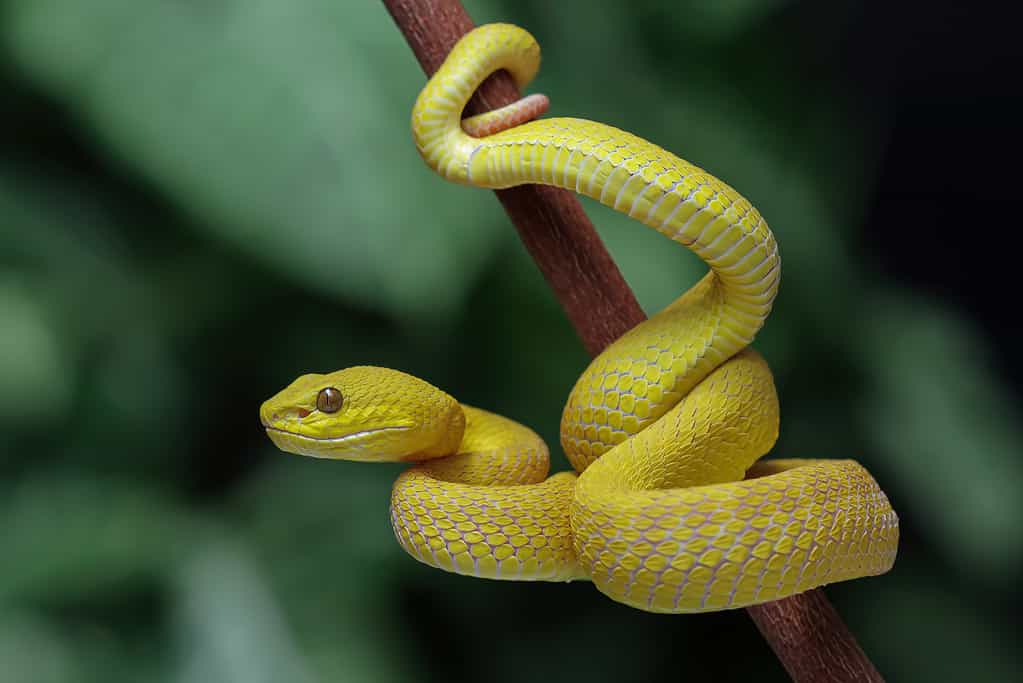
Right now, there are over 150 known species of pit vipers, named for their heat-sensing “pit” organ.
©agus fitriyanto/iStock via Getty Images
The Yadong green pit viper, which is around 1.5-2 feet in length, also shared morphological differences, including a spiny hemipenis, no stripes behind the eye, red-brown tails, and distinct eye colors between males and females. Researchers do not know if the species is endemic to Yadong County. If it is, the Yadong green pit viper may already be in need of conservation support.
Additional Reptile Species Found in 2025
It is mind-blowing to think that, without the tireless efforts of our world’s scientists and researchers, some of these reptiles might have been lost without us ever knowing about them:
- Dauan Island gecko (Nactus simakal)
- Four new snake species (Dendrelaphis anthracina, found on Sudest Island; D. melanarkys, found on Rossel Island; D. atra, found on Misima Island; D. roseni, found on Woodlark Island), already under threat from environmental devastation
- Poyarkov’s big-tooth snake (Lycodon poyarkovi), a nocturnal, non-venomous snake found in Vietnam
- Truong’s smooth skink (Scincella truongi) from Vietnam’s Son La Province
- Venkatadri slender gecko (Hemiphyllodactylus venkatadri), which live in high-altitude areas of India’s Eastern Ghats