
Often referred to as the “forest giraffe,” the okapi (Okapia johnstoni) is one of the world’s most elusive animals, found exclusively in the dense rainforests of the Democratic Republic of Congo (DRC). Despite their ancient lineage and striking appearance, okapis face an increasing number of threats in the wild.
This World Okapi Day, A-Z Animals is celebrating this extraordinary species by speaking with Chelsea Lee, a hoofstock keeper and okapi trainer at the Nashville Zoo.
Lee is the primary trainer for the zoo’s resident okapi, an eight-year-old male named Mosi. While training such a rare animal sounds like a dream job — and it is — she explains that it also presents unique challenges. “Okapis are a challenge, and that’s why I love to work with them,” Lee says. “They are shy by nature and take a lot of hard work to build a relationship with. There’s nothing better than an animal finally becoming comfortable with you!”
Beyond her bond with Mosi, Lee also finds immense satisfaction in sharing her knowledge with others. “It’s the best part of my day when I get to teach people about these amazing animals,” she says.
Home of the “Forest Giraffe”
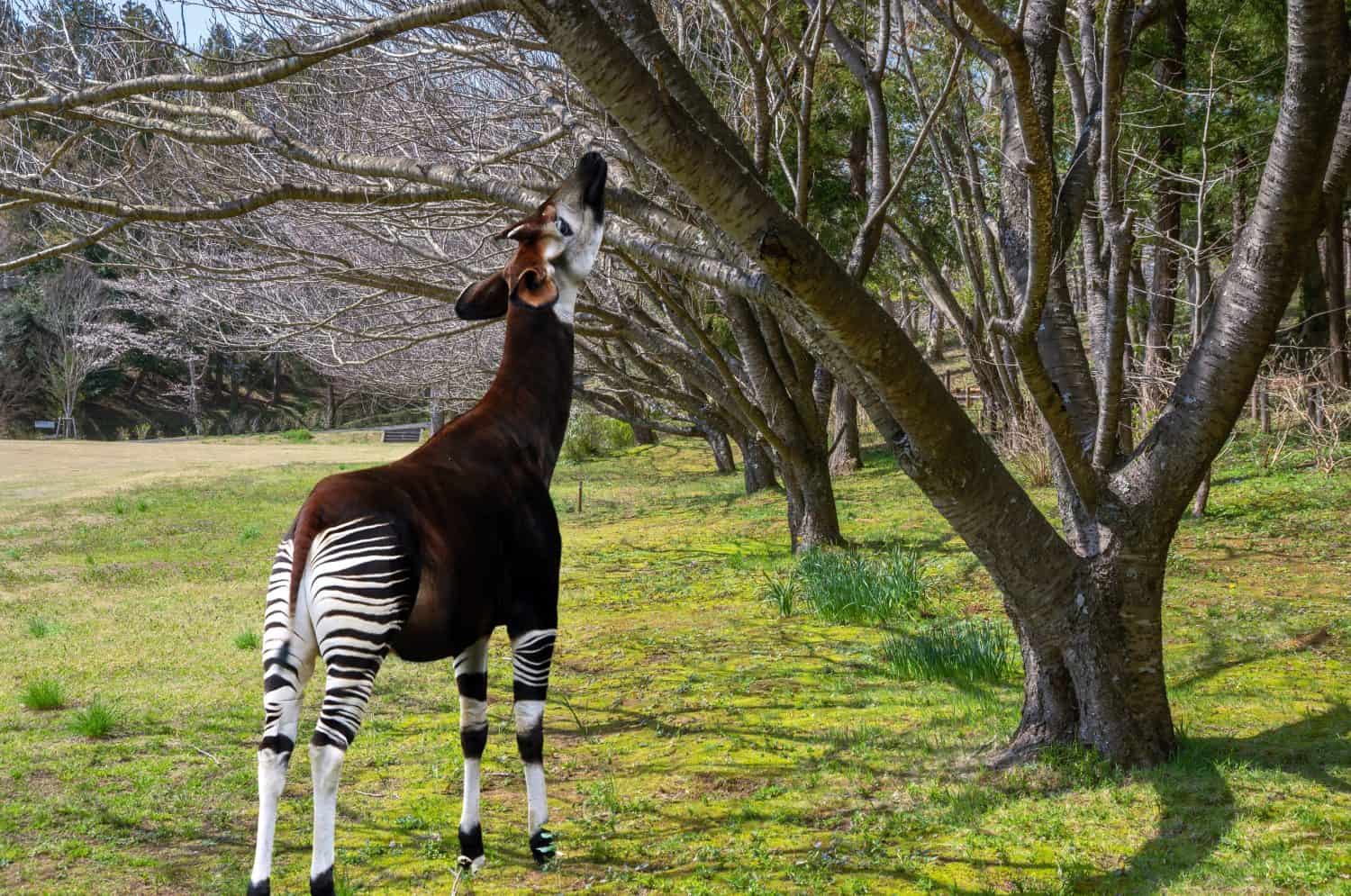
Okapis have prehensile tongues that can grab and hold onto their food.
©Nisansala99/Shutterstock.com
The okapi lives only in the Democratic Republic of Congo (DRC) in Central Africa, where their habitat is specifically limited. Lee explains, “Within the DRC, they are mainly found in the Ituri rainforest, which is about the size of Vermont, Connecticut, and New Hampshire combined. They mainly inhabit primary and older secondary rainforests and do not venture into open areas often.”
This preference for dense, secluded forests is part of why the okapi is so difficult to find. Naturally shy and intensely cautious, okapi have incredible hearing, which allows them to sense danger and quickly disappear.
Not a Zebra, and Not a Giraffe
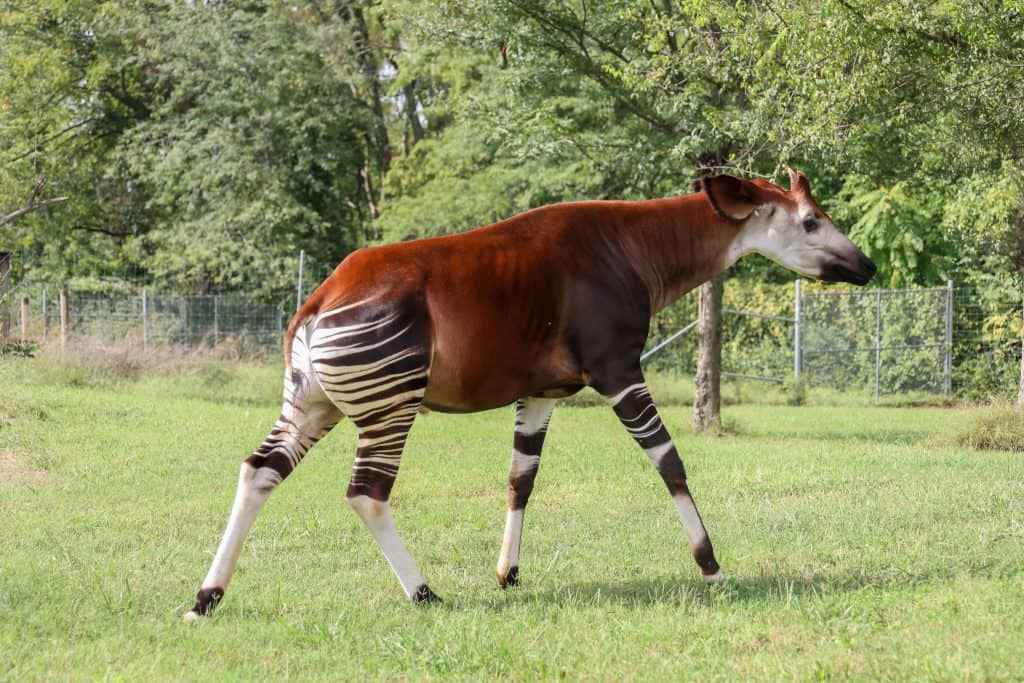
Mosi is a Swahili name meaning “first-born.”
©Courtesy of Nashville Zoo
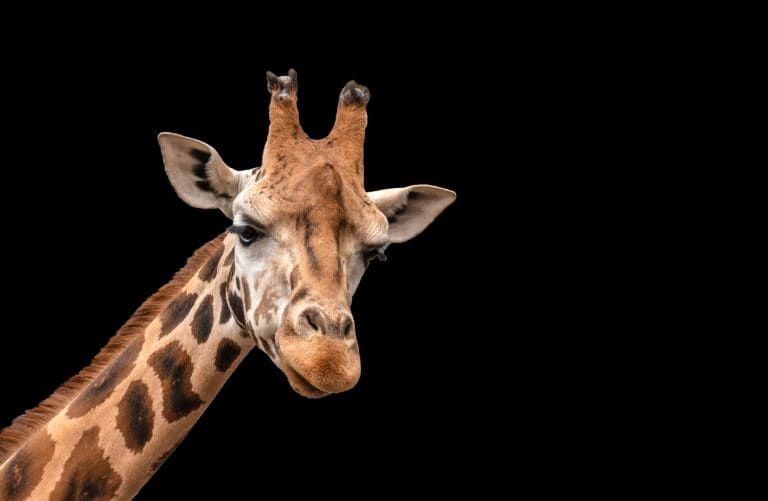
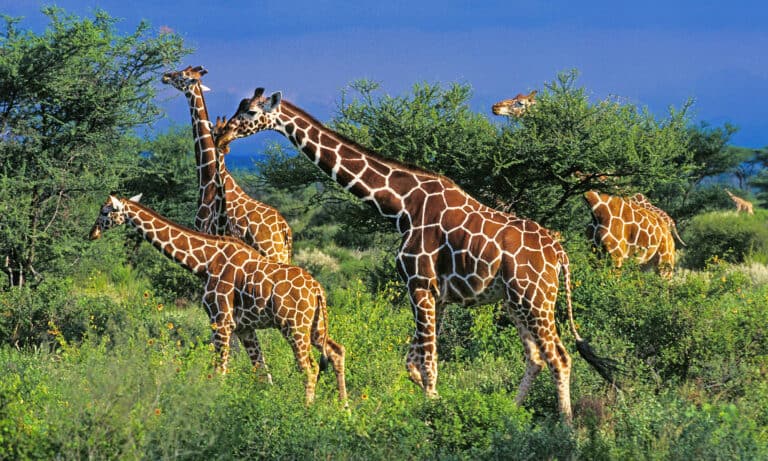
You wouldn’t guess it from its appearance, but the okapi is the giraffe’s only living relative. As Lee notes, “Many people think they’re a zebra hybrid of some sort, not realizing they’re one of the most unique ungulates in the world.”
Like the giraffe, the okapi has a long, purplish tongue that can stretch 14 to 16 inches long. Males also have ossicones (the bony structures on top of the head), similar to giraffes. However, in giraffes, both males and females have ossicones, while in okapis, only males do.
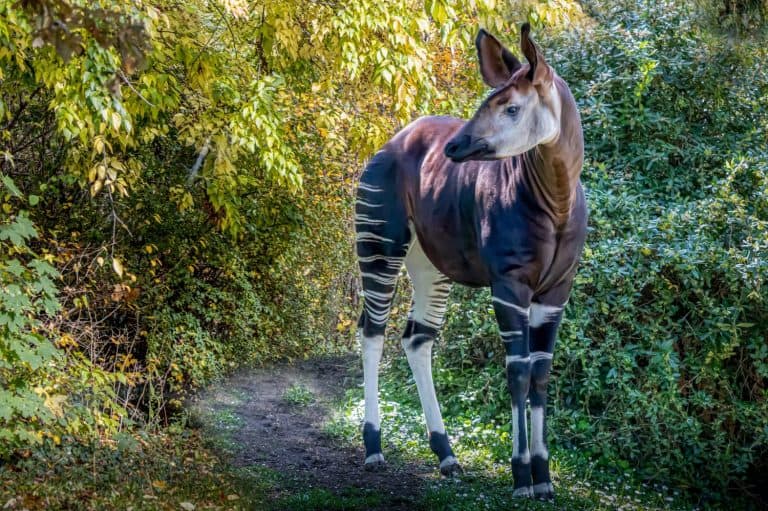
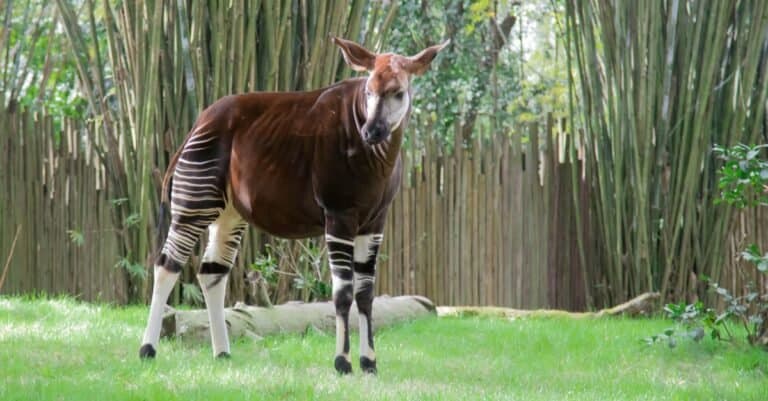
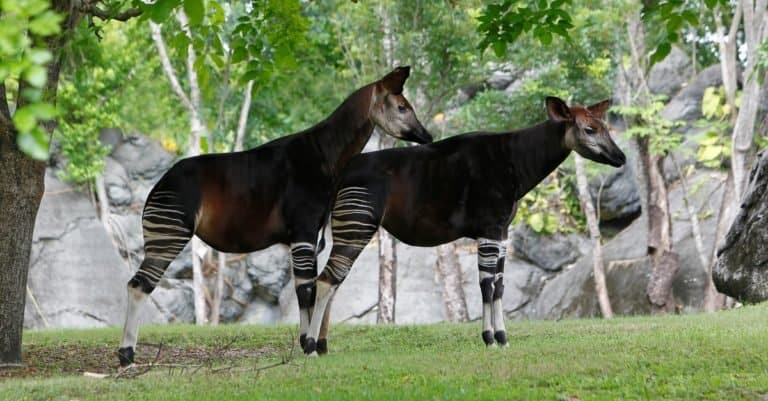
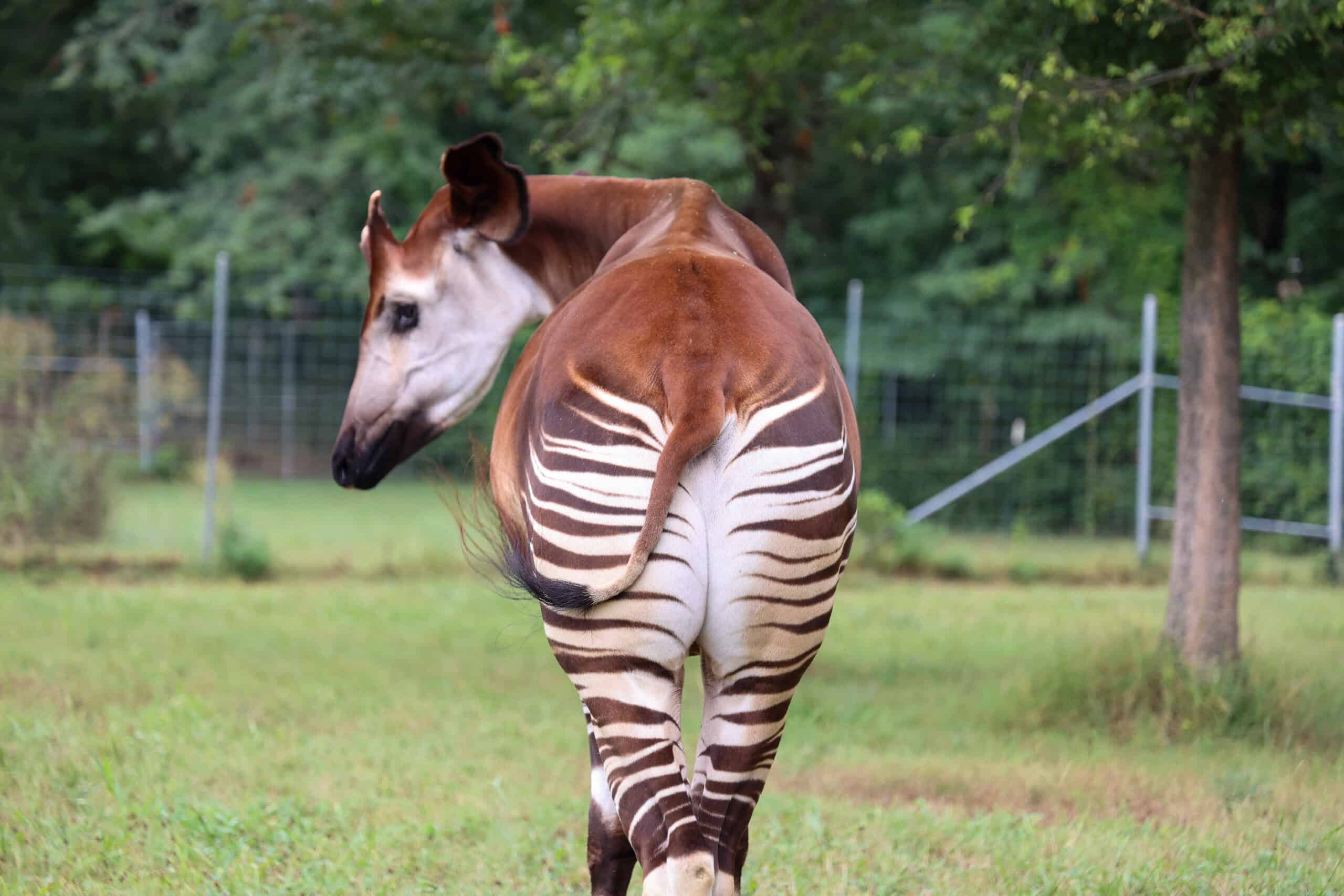
Despite these similarities, okapis are definitely a one-of-a-kind species. Lee explains, “Okapis are the only living relatives of giraffes, but they couldn’t look more different!” The okapi’s dark chestnut coat and sharp black-and-white striped legs and rump may look like a bold fashion statement, but it’s actually expert-level camouflage. Lee continues, “Their coat, although striking to us, serves as cryptic coloration or camouflage in their native rainforest habitats in the DRC. Their dark body and striped legs help conceal their body shape and mimic the dappling sunlight that makes its way to the forest floor.” Their camouflage is so effective that experts often refer to these elusive creatures as ‘ghosts of the forest.’
What Do Okapi Eat?
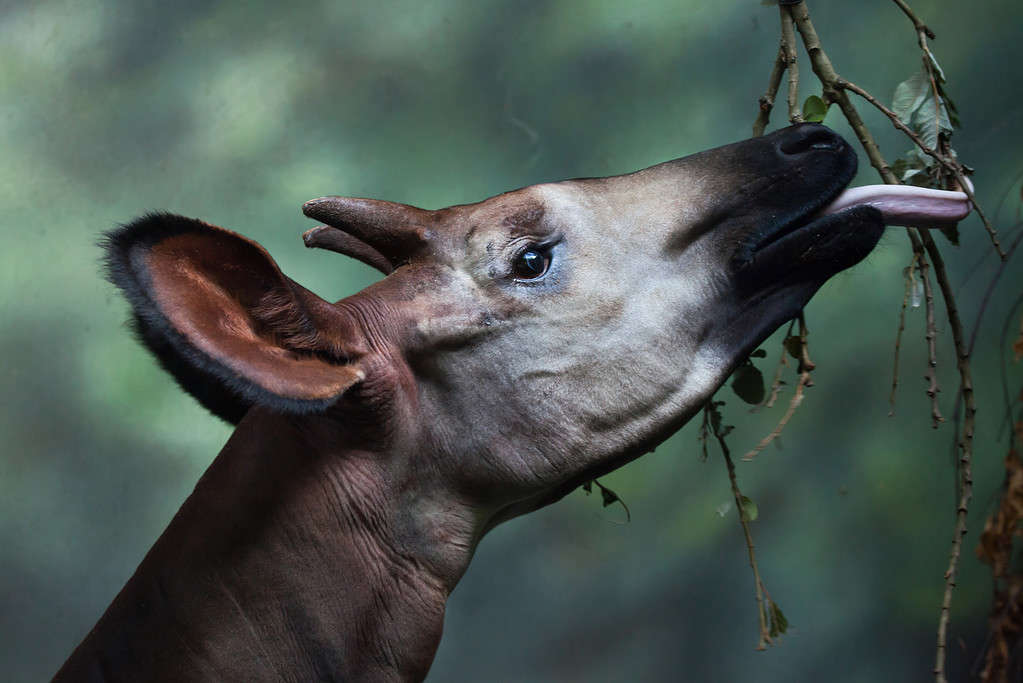
An okapi’s tongue is 14 to 16 inches long!
©wrangel/ via Getty Images
Okapis are mainly browsers, much like their giraffe cousins. They use their long, prehensile tongues to strip leaves, bark, and the occasional fruit from trees and bushes. Their digestive systems are uniquely adapted to handle a surprisingly hazardous diet.
“One of the most amazing things about their diet in the wild is that okapi consume toxic plants quite often,” Lee explains. “They compensate for it by eating charcoal from trees struck by lightning or from areas affected by fire to help neutralize those toxins and add essential minerals to their diet.”
At the Nashville Zoo, Mosi receives a varied menu to ensure he stays healthy. His daily meals include a specialized grain base formulated for wild herbivores along with carrots, sweet potatoes, spinach, and lettuce. Keepers also cut “browse”—branches from edible trees and bushes—several times a day to mimic his natural foraging behavior.
Keeping Mosi Engaged
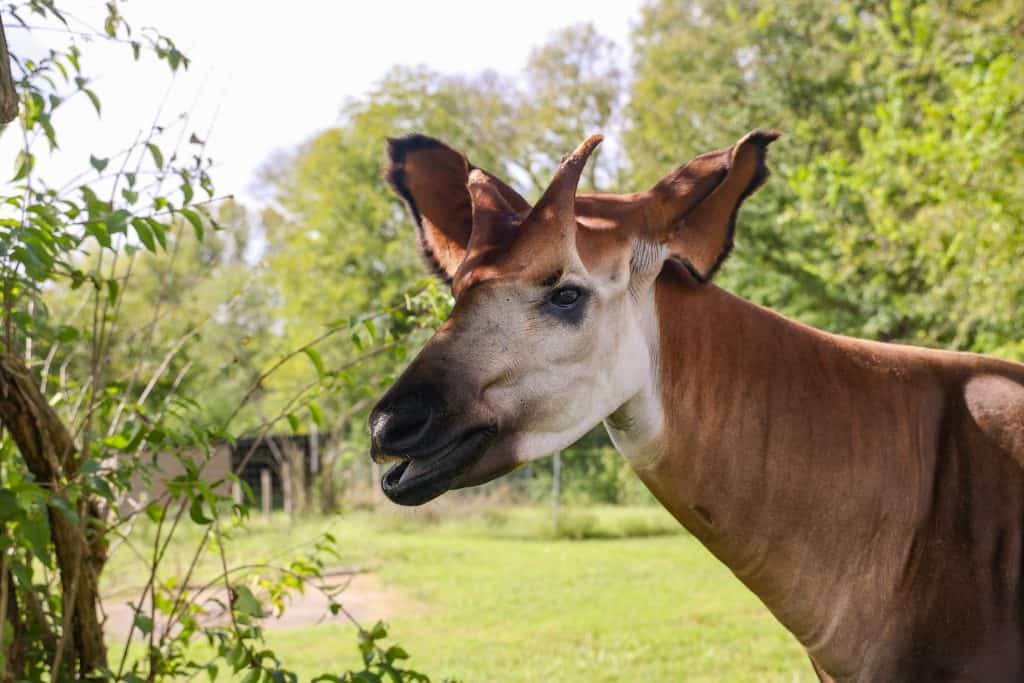
Mosi is a huge fan of bananas.
©Courtesy of Nashville Zoo
In addition to a balanced diet, Mosi enjoys plenty of enrichment during mealtimes. “All of these items make up his standard diet for the day,” Lee explains. “But we don’t let it get boring for him! We have novel food enrichment multiple times a week that includes a food item that is not standard in his daily diet.”
Mosi particularly loves unexpected treats like hummus, cucumbers, and even ketchup. “This helps replicate the variety of different tastes and smells that a wild okapi would be experiencing,” Lee adds. “We prefer variety in our diet, so we make sure our animals get the same treatment!”
In the wild, okapis spend hours foraging for food. To simulate this behavior, Mosi’s keepers use puzzle feeders and scatter his meals throughout the day, feeding him three to four times per day. This keeps Mosi mentally and physically active, mimicking the long hours a wild okapi would spend searching for and eating food.
Many people think they’re a zebra hybrid of some sort, not realizing they’re one of the most unique ungulates in the world.
Chelsea Lee, a hoofstock keeper and okapi trainer at the Nashville Zoo
Predators of the Okapi
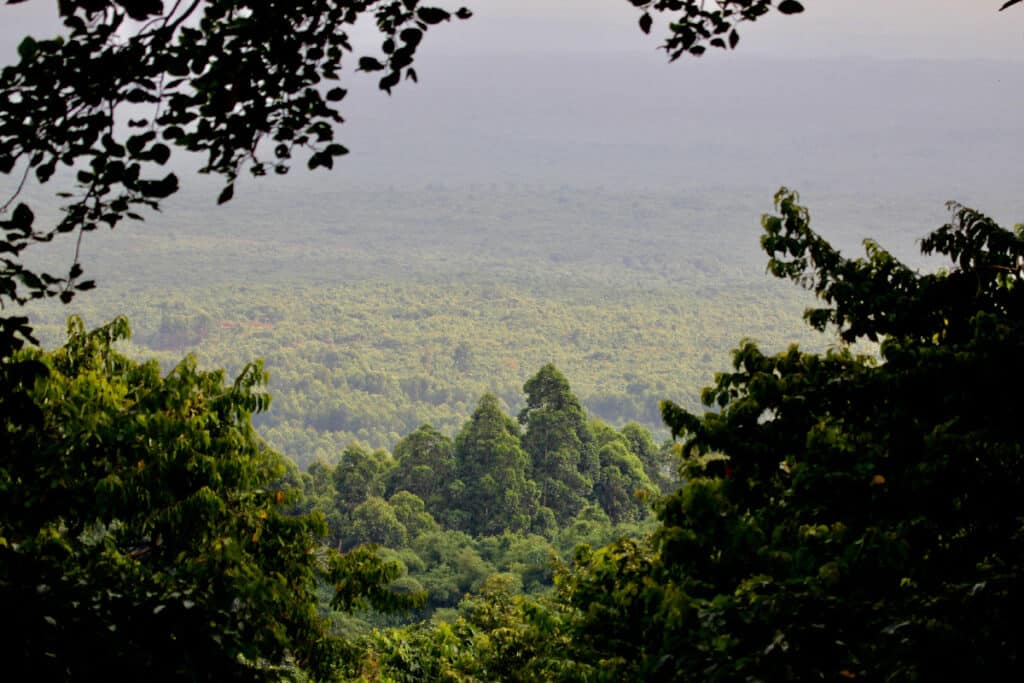
Okapi prefer dense forest habitats with lush vegetation.
©Kiki Dohmeier/Shutterstock.com
Thanks to their unique coloring and relatively small size, okapis are skilled at hiding in their dense rainforest habitats. However, they are still hunted by leopards and humans, and young calves are vulnerable to smaller wild cats.
To avoid detection, okapi rely on a highly specialized form of communication. They make a few audible sounds, mainly using occasional grunts, bleats, or whistles. Instead, they communicate using infrasound — a pitch too low for humans to hear.
A mother okapi, for instance, uses low-pitched sounds to check on her calf while she is out foraging. Even from a distance, she can communicate with her calf incognito, without the worry of predators overhearing and locating the vulnerable young okapi.
Okapis also communicate through scent, using their olfactory senses. “Okapi have scent glands in between their two toes on each foot that secrete a substance other okapi can smell and learn information from, such as the sex of the animal that left the secretion,” Lee explains.
The Okapi’s Fight for Survival
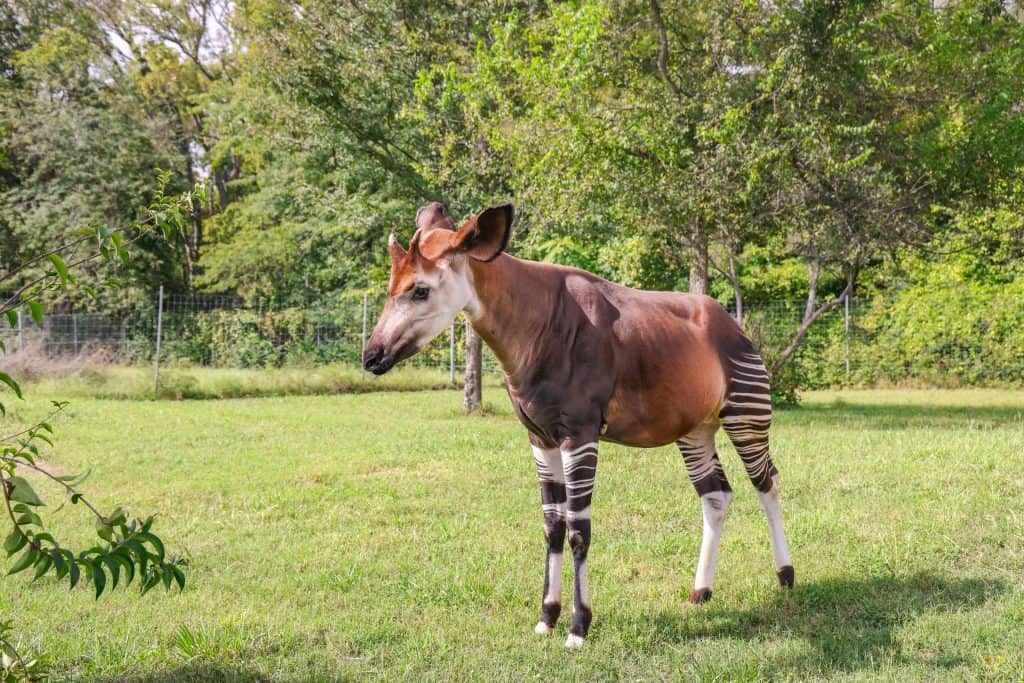
Only male okapi like Mosi sport prominent ossicones.
©Courtesy of Nashville Zoo
Sadly, the okapi is classified as Endangered on the IUCN Red List. Due to the animal’s elusive nature, getting an accurate count in the wild is extremely difficult, but we do know their population has experienced a drastic decline. According to Lee, “The best ‘guesstimates’ researchers have is somewhere between 10,000 and 15,000 individuals.” Lee emphasizes that the okapi’s main threats include poaching, habitat fragmentation and destruction, human encroachment, civil unrest in the DRC, and coltan mining.
Despite these many dangers, however, there is still hope for the okapi’s future. The Okapi Conservation Project (OCP) is the leading organization working on the ground in the DRC. “They are instrumental in protecting these amazing animals,” Lee says. “They protect local okapi populations with anti-poaching units and also engage with the surrounding communities. OCP helps locals set up sustainable farming and empowers those communities to train individuals for special trades like healthcare and teaching, and educates them on how to be strong environmental stewards, not just for okapi, but for all life in the rainforest.”
Supporting Okapi Conservation
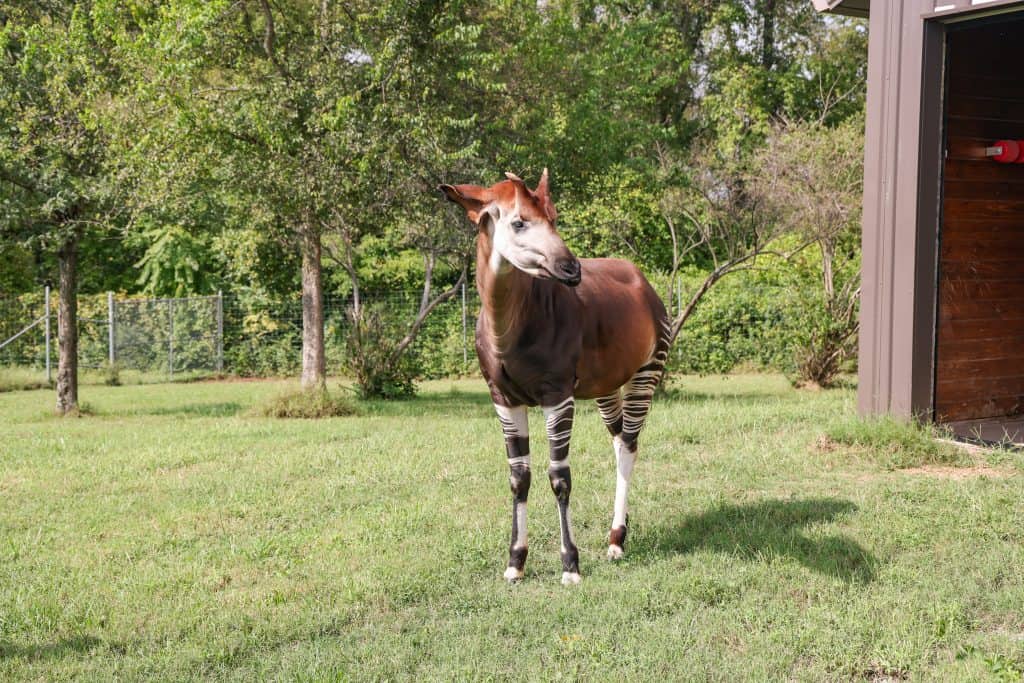
Mosi is an important part of the Okapi Species Survival Plan.
©Courtesy of Nashville Zoo
The Nashville Zoo actively supports vital okapi conservation efforts. “The zoo proudly donates to the Okapi Conservation Project (OCP) annually,” Lee says. “This helps them start more community projects and retain their teams in the DRC.”
In addition to funding field efforts, the Nashville Zoo participates in the Okapi Species Survival Plan (SSP) — a program managed by the Association of Zoos and Aquariums (AZA). The SSP carefully manages breeding in accredited facilities to ensure okapi populations remain healthy and genetically diverse. This work provides a safeguard against extinction and helps maintain a population that could potentially be reintroduced into the wild if needed. As Lee shares, “We are hoping in the coming years we will be recommended to acquire a female and have some bouncing baby okapi!”
Meet Mosi, Nashville’s Okapi Ambassador
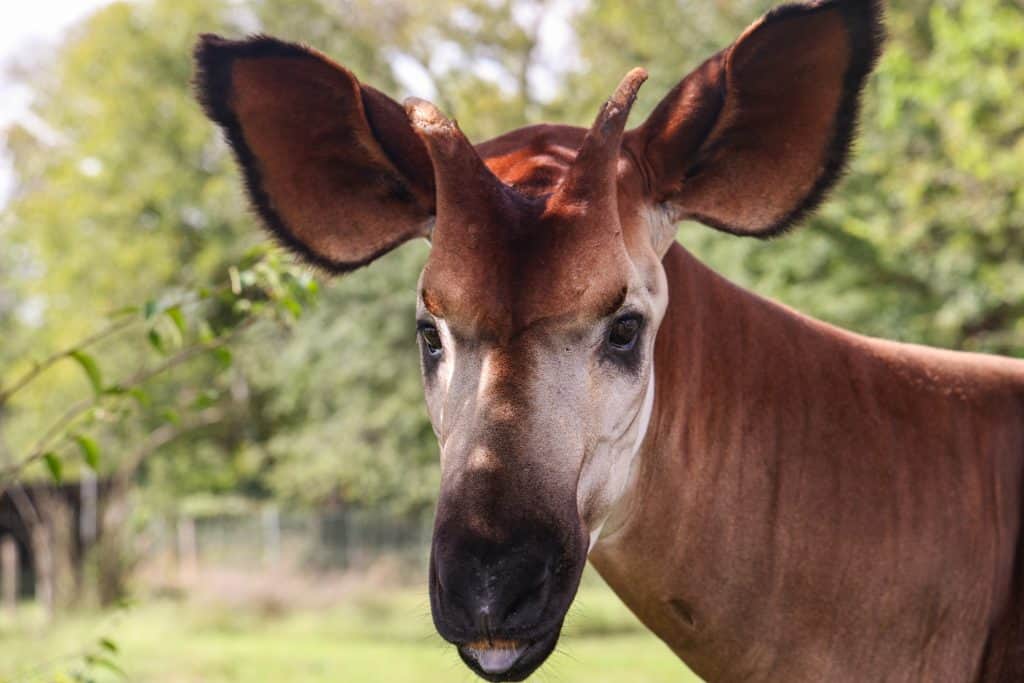
Mosi came to the Nashville Zoo from the Audubon Species Survival Center.
©Courtesy of Nashville Zoo
Visitors can learn about okapi through the Nashville Zoo’s resident male, Mosi, who plays an important role as an ambassador for his species. At eight years old, Mosi is still a youngster — okapi can live up to 30 years in human care — but he’s already full of personality.
“Mosi is a huge goofball,” Lee shares. “He constantly seeks attention, and his favorite thing is a good scratch inside his ear and between his ossicones.” Mosi is also known for perpetually poking his tongue out and will do almost anything for a banana.
Lee especially enjoys how expressive Mosi is. “He will tell you if you’re not scratching him in the right spot,” she says. “He’ll manipulate his head around your hand and actually guide your hand to where he wants scratches.”
Though not always on public display, Mosi sometimes participates in Backstage Pass tours — strictly on his own terms, of course. Visitors may even have the chance to feed him during these encounters. “My personal favorite is the special tours my team and I host through our philanthropy department,” Lee shares. “Being able to talk to people who have never even heard of an okapi before and encourage them to tell others about the species and how to help them in the wild is very important to me.”
How You Can Celebrate World Okapi Day
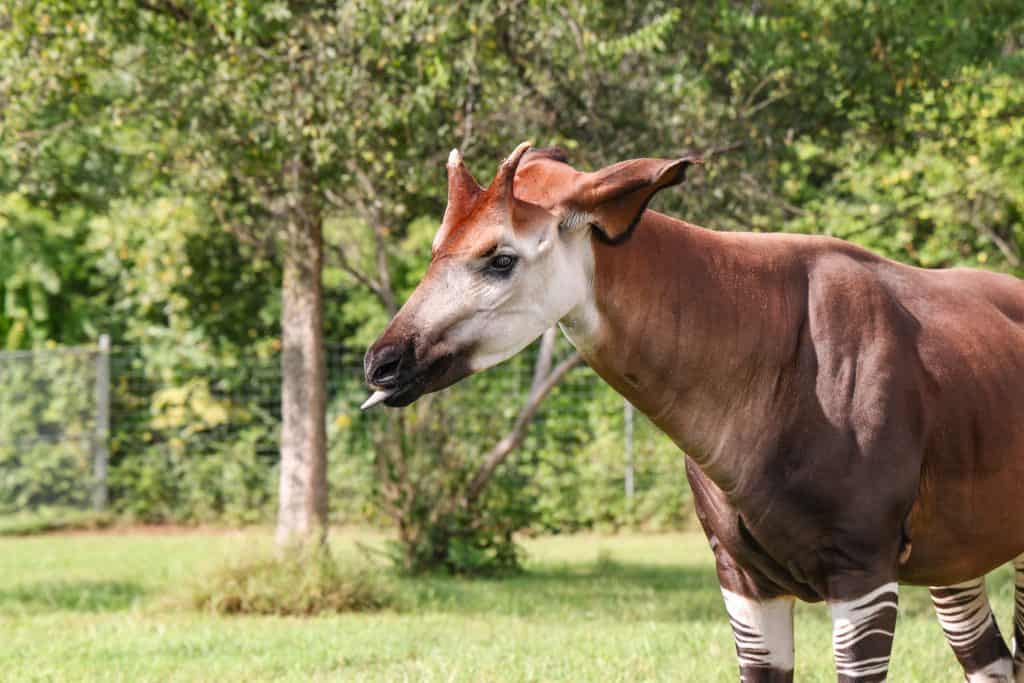
Mosi constantly has the tip of his tongue hanging out of his mouth.
©Courtesy of Nashville Zoo
Every year on October 18, people around the world come together to celebrate World Okapi Day to honor this special species. Founded by the Okapi Conservation Project (OCP), the celebration provides an opportunity to educate and unite local communities. In the DRC, celebrations near the Okapi Wildlife Reserve often involve traditional music, dancing, performances, and tributes to the ICCN rangers who work to protect wild okapi.
However, you don’t have to live in Africa to participate! Zoos across the globe host their own special events and exhibits for World Okapi Day. You can visit okapi at many of these zoos to see them up close and learn more about their conservation.
You can also join the celebration online by sharing photos, stories, or artwork using hashtags like #WorldOkapiDay and #OkapiConservation.
Another meaningful and effective way to help is by recycling old electronics — especially cell phones. “Coltan is an ore that is fundamental to technology, found in smartphones, laptops, and other devices,” Lee explains. “A way that people can help mitigate this threat is by recycling electronics.” Coltan is often sourced from rainforests, including the okapi’s crucial habitat in the DRC. Many zoos across the United States offer easy ways to recycle your old cellphones and other devices.
Beyond recycling, you can also honor World Okapi Day by donating to okapi conservation efforts or by hosting your own celebration to share the wonder of okapis with friends and family. You can spread the news by sharing photos from your festivities on social media or with the Okapi Conservation Project at [email protected].