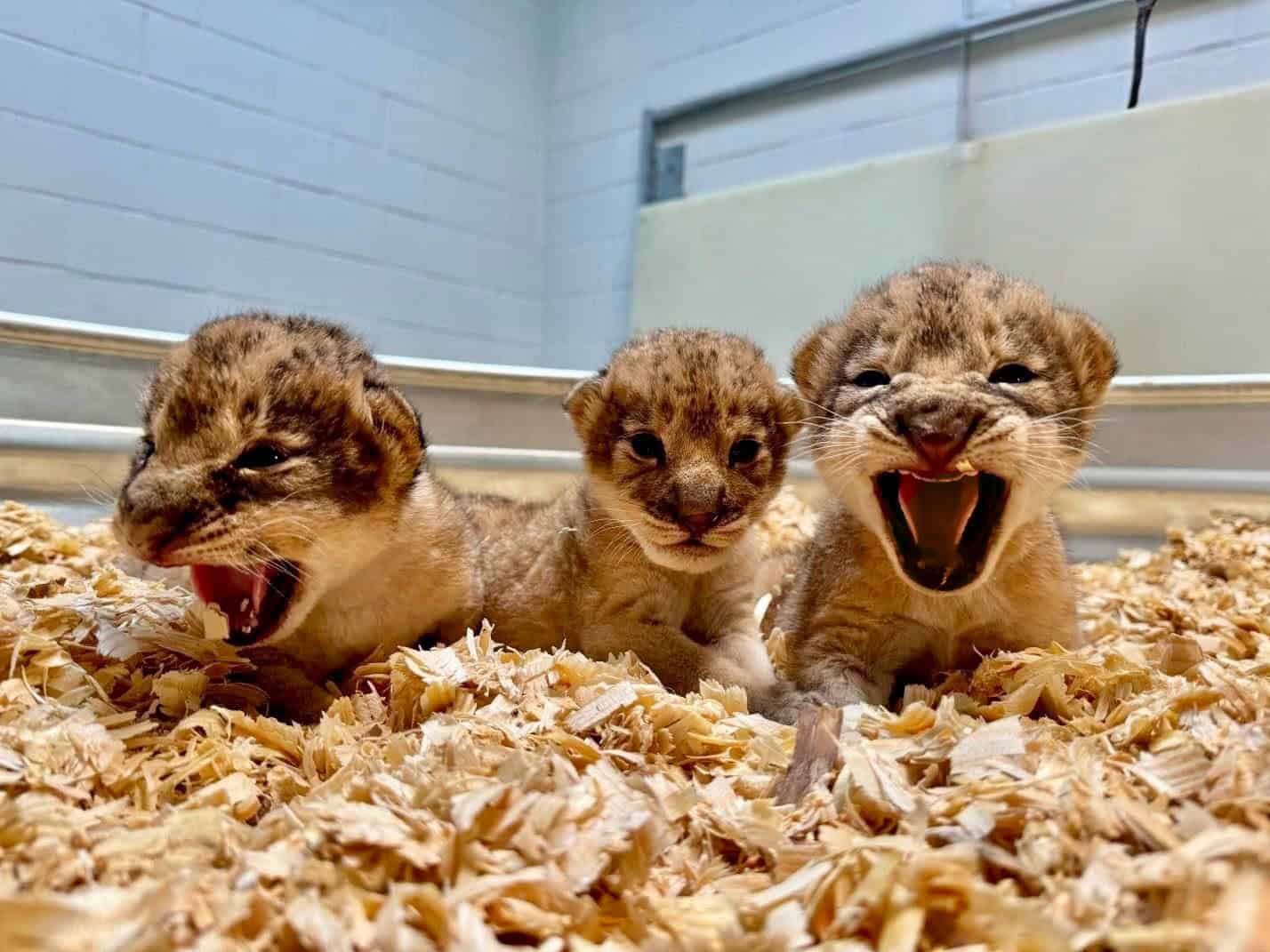

Say hello to the three newest members of the pride at the Audubon Zoo! Born on October 19, 2025, to parents Kali and Arnold, these three African lion cubs are more than just adorable balls of fluff. They are making history, as this is the first time the Audubon Zoo has had three surviving cubs in a litter.
These cute cubs are the second litter for parents Kali and Arnold. Their first litter, born in 2020, consisted of two male cubs that eventually moved to other AZA-accredited zoos to start their own prides. Before that, the zoo hadn’t had lion cubs since 1984’s litter of Asiatic lions.
According to Melissa Lee, VP of Communications for the Zoo, there will be a formal name reveal for the cubs on November 12th.
This yet-to-be-named trio will spend the first 12 weeks of their lives behind the scenes with mom, Kali. This gives the cubs time to be fully vaccinated, bond with mom, and slowly get to know the rest of the pride, including dad, Arnold, and aunts Mia and Zuri.
The cubs are expected to make their public debut sometime in mid- to late-January. Visitors can then enjoy cute cub capers at special times throughout the day, weather permitting. By the summer of 2026, the cubs should be in the lion exhibit full-time.
African Lion Cubs In the Wild
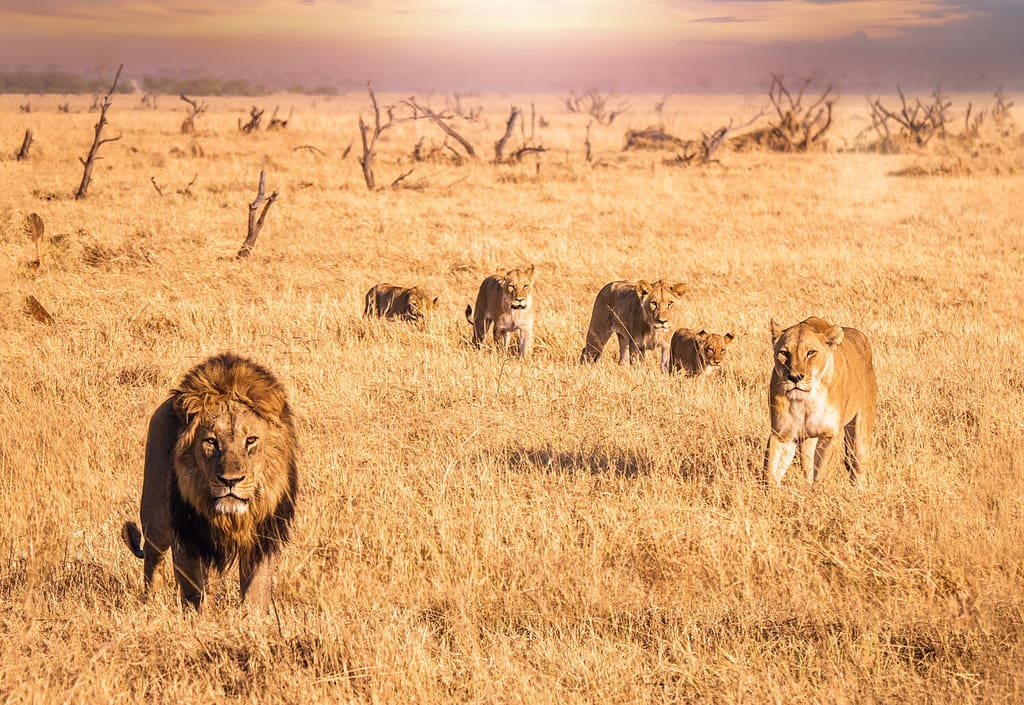
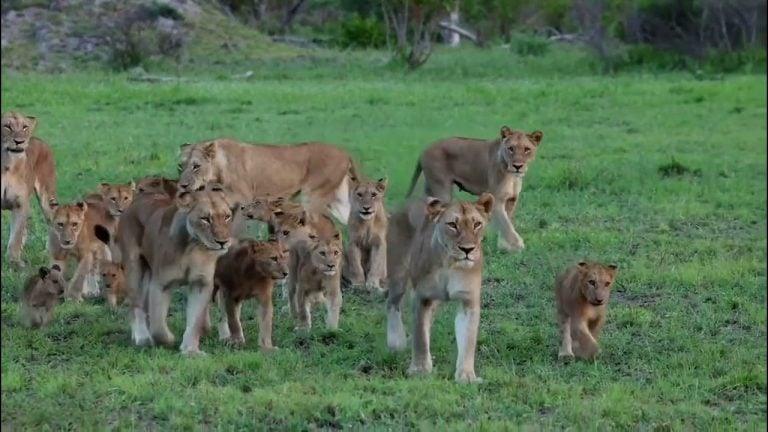
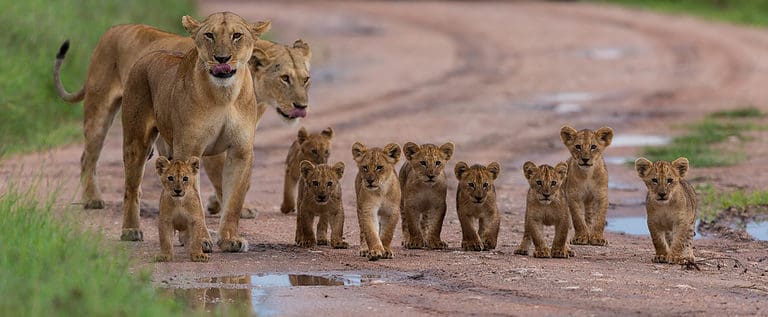
Lionesses in the wild give birth around the same time, then provide communal care to all cubs.
©CherylRamalho/Shutterstock.com
In the wild, African lions typically give birth to litters of one to six cubs every two years. Females in a pride often give birth around the same time, allowing them to share cub care responsibilities. This communal effort offers the most protection for the tiny, vulnerable cubs.
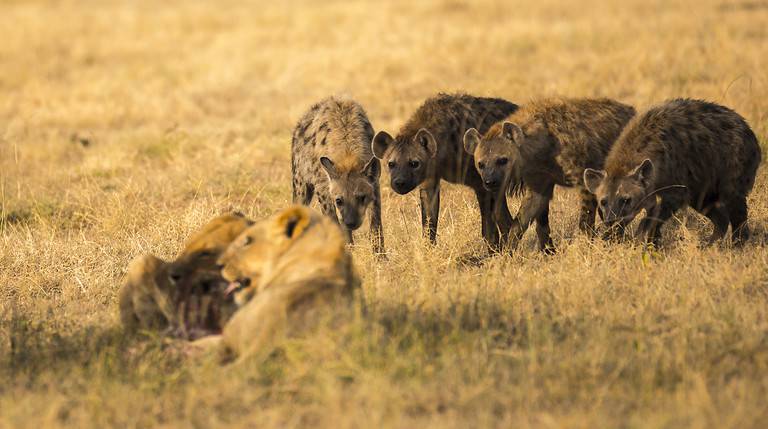
In the wild, more than 50 percent of lion cubs die before their first birthday. Threats include predators like leopards, wild dogs, and hyenas, and even male lions. If a new male lion takes over the pride, one of the first things he often does is eliminate cubs he perceives as a threat. Lionesses group together to reduce these threats. When a solitary lioness in the wild gives birth, her cubs have a lower survival rate than cubs born within a pride.
Over the past 25 years, half of the wild lion population in Africa has been lost due to poaching, habitat loss, and reduced prey opportunities. African lions are now listed as a “vulnerable” species by the International Union for Conservation of Nature (IUCN) and are designated as an Association of Zoos and Aquariums (AZA) SAFE Species.
The Importance of Accredited African Lion Breeding Programs
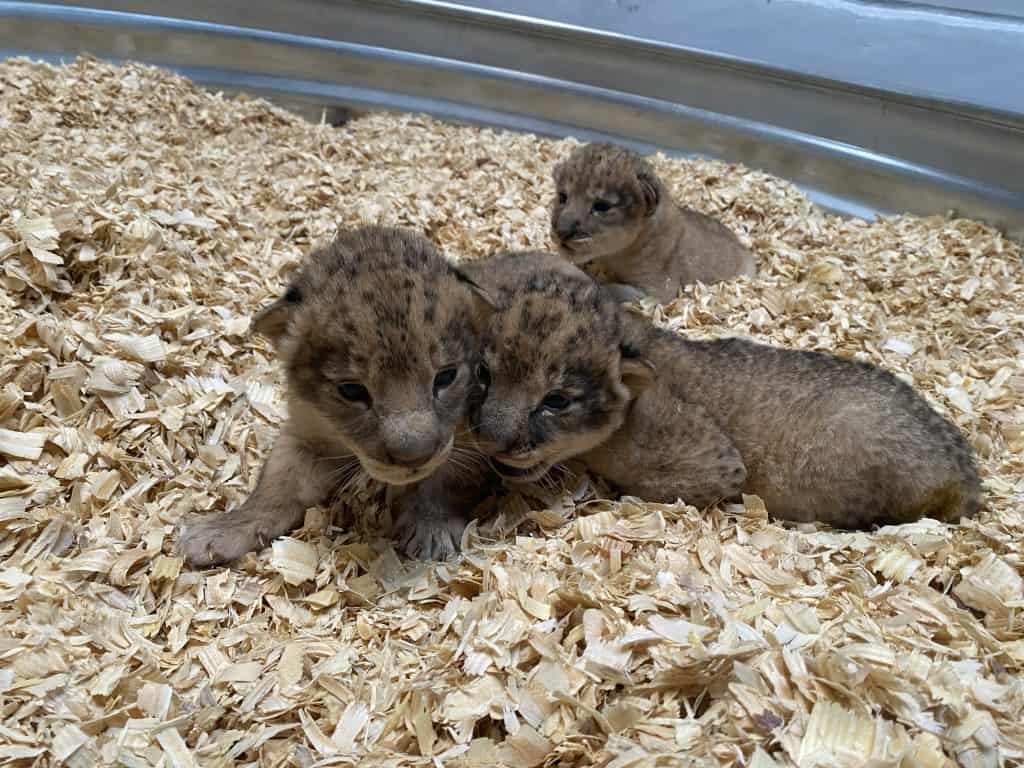
The three new cubs at the Audubon Zoo are part of a planned breeding program to preserve the species.
The Audubon Zoo is an AZA-accredited zoo, and the cubs’ birth was part of a planned litter under the African Lion Species Survival Plan (SSP) Program. The goal of the program is to maintain a genetically diverse and sustainable population. Nearly 300 SSP Programs are working to maintain healthy populations of threatened and vulnerable species.
“Every lion cub birth is vital to the survival of this iconic species,” notes Michael J. Sawaya, Audubon Nature Institute President and CEO and L. Ronald Forman Chair in Conservation Leadership. In fact, Kali and Arnold’s first litter was born under the same program. The two male cubs have since gone to other AZA-accredited zoos to start their own prides.
From Cute Cub to Amazing Adult
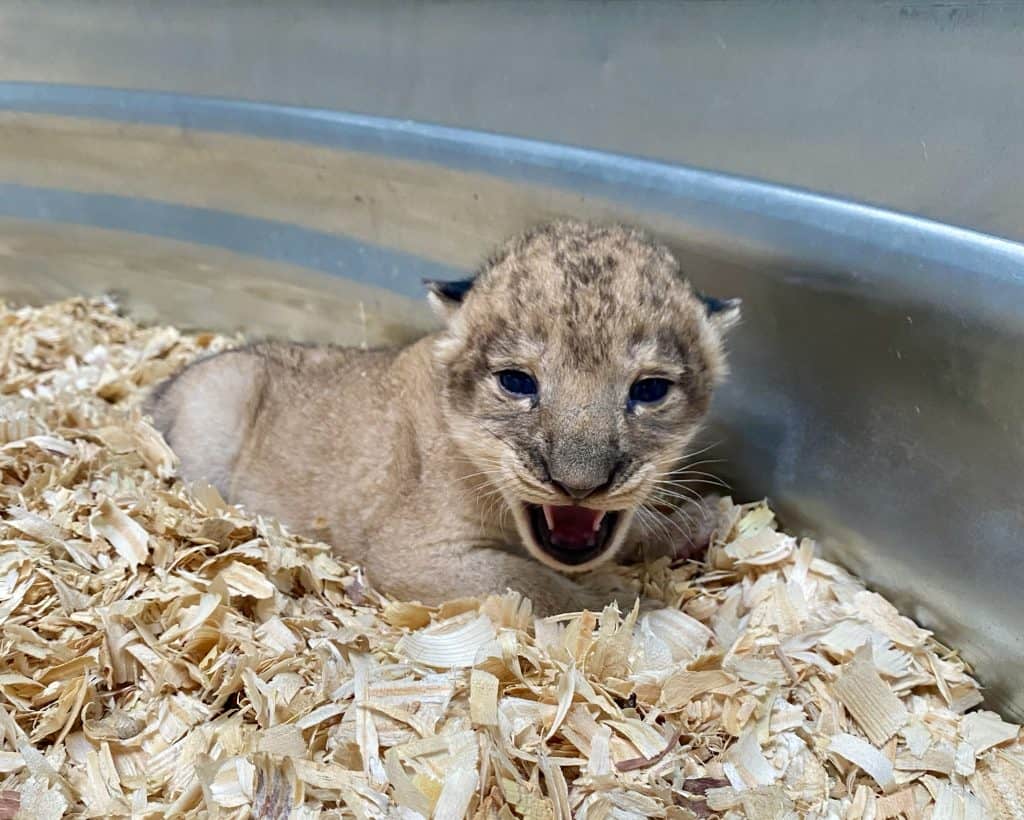
This is one of the three lion cubs (pictured here at one week old) born this year at the Audubon Zoo.
African lion cubs are born blind, with their eyes opening in the first few weeks of life. They typically weigh around three-and-one-half pounds at birth. They’re also born with spots that help camouflage them in the wild.
In the wild, lioness moms hide their cubs for the first several weeks after birth to protect them from predators. During this time, the cub’s main diet is Mom’s milk, but they start eating small amounts of meat provided by her at around 3 months. Cubs are quick learners and start walking around 10 to 15 days after birth.
Every lion cub birth is vital to the survival of this iconic species.
Michael J. Sawaya, Audubon Nature Institute President and CEO and L. Ronald Forman Chair in Conservation Leadership
When cubs are about 10 months old, they are weaned. Then it’s time for them to build the hunting skills they’ll need to survive as adults. Mom does the lion’s share of teaching, taking the cubs on hunts and letting them practice their newfound skills. Cubs refine their hunting skills by observing and playing, and will be fully proficient by the time they are 2 years old.
Lionesses take care of their cubs until the cubs reach about 2 years of age. Then, it is time for the young lions to step into adulthood. The young male lions will usually leave to seek adventure and start their own pride. Young females typically stay and integrate into the pride they’ve always known.
One other interesting fact is that male lions won’t have their full, fluffy manes until they are about eight years old. While a small mane begins to develop when they are cubs, it will take up to two years for a mini version of the full mane to grow. Then it takes another six years to achieve the regal mane of a mature lion.
Lions Like to Sleep
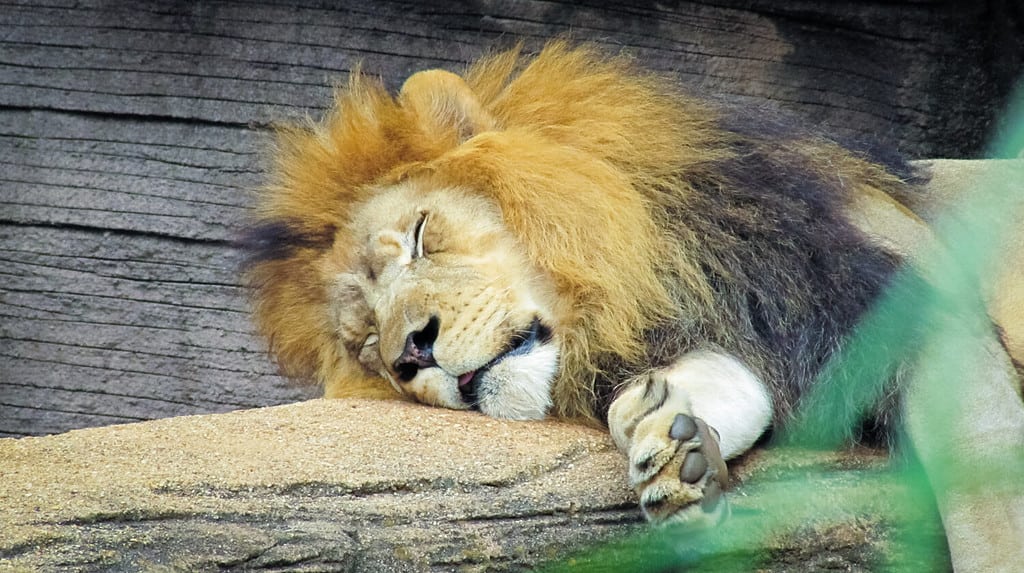
Lions of all ages love to nap.
©Chris Lonsberry/Shutterstock.com
As cubs, lions will sleep up to 20 hours each day. That pattern doesn’t change much as they grow. Adult lions can be found napping or resting between 16 and 20 hours daily. But this isn’t just lion laziness. Lions rest to conserve energy for the short bursts of energy they need to hunt. During their daytime siestas, you’ll often see pride members rubbing heads, grooming each other, and purring in contentment.
No doubt, the three new lion cubs at the Audubon Zoo will be taking plenty of naps during their early weeks behind the scenes with mom, Kali, and plenty more after that. Until the cubs make their public debut, lion lovers can keep up with the cubs’ antics via “CUBdates” on Facebook, TikTok, and Instagram.